
Bay Area
Future Housing Sites on Agenda for March 1
“Residents in the local workforce struggle to find suitable affordable housing close to their Marin jobs, which leads to longer commutes, negatively affects the environment, and erodes quality of life,” said CDA Deputy Director Leelee Thomas. “We see this as a chance to make marked progress with racial and social equity. At this stage, we are asking our residents to participate in this process and help us identify places where we can add housing within our communities.”

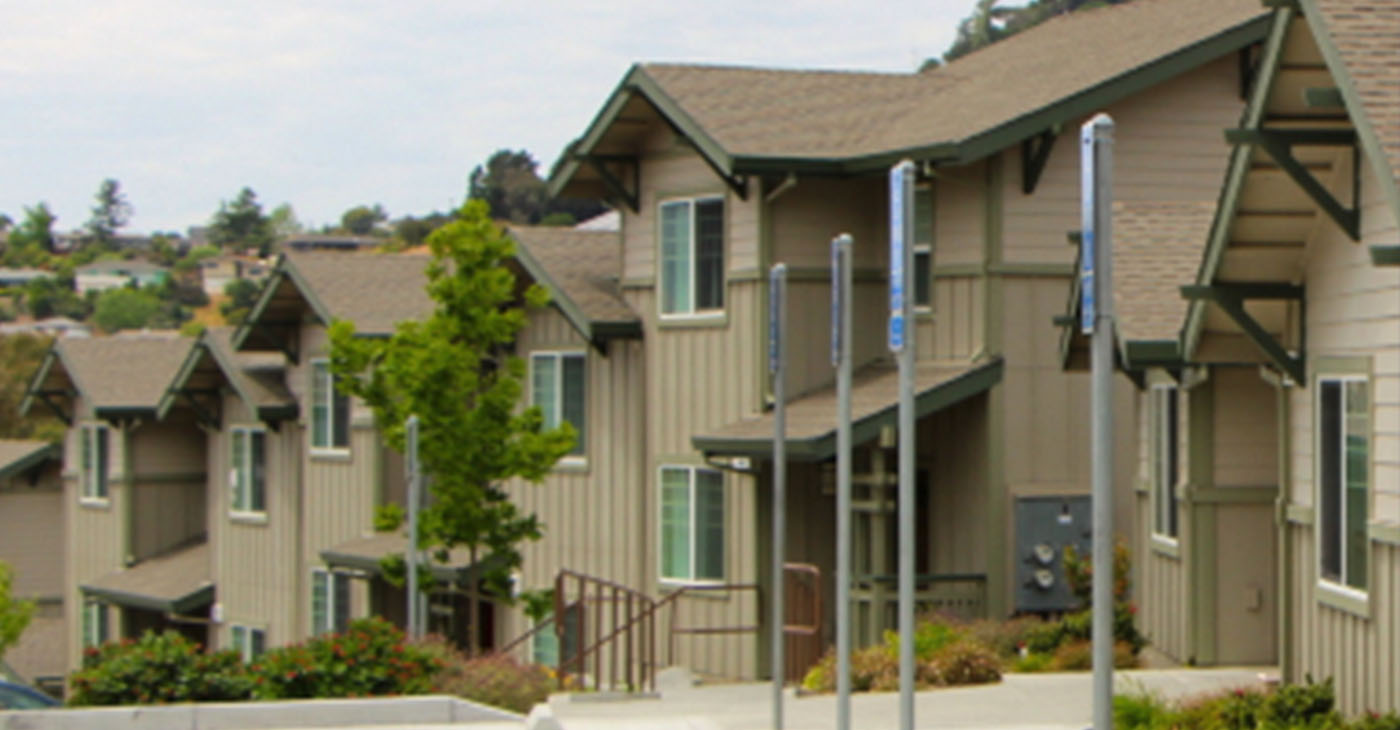
County prepares to update long-term plans to meet needs and state mandates
Courtesy of Marin County
A master list of all potential locations in unincorporated Marin County that are under consideration as future housing sites will be the subject of online-only meetings on March 1 and March 15.
The Board of Supervisors and Planning Commission, which are co-hosting the meetings, will then select sites to be evaluated in an upcoming Housing Element environmental review. During the March meetings, members of the two governing bodies could direct County staff to narrow down the list by eliminating some eligible locations.
Both joint sessions of the Board and Planning Commission will be held as 5 p.m. videoconferences only because of the topic’s high interest in unincorporated neighborhoods and the need to prevent large crowds from congregating because of the COVID-19 virus. The Civic Center’s Board chamber will be closed.
That session will be a follow-up to Dec. 7 and Feb. 1 joint meetings between the two bodies at which staff from the Marin County Community Development Agency (CDA) presented details about the Housing and Safety Elements, which are required plans to accommodate future housing needs and address climate change. Staff has been hosting community meetings throughout the unincorporated county to share information on candidate sites and gather feedback, which will be shared with the Board and Planning Commission.
“Residents in the local workforce struggle to find suitable affordable housing close to their Marin jobs, which leads to longer commutes, negatively affects the environment, and erodes quality of life,” said CDA Deputy Director Leelee Thomas. “We see this as a chance to make marked progress with racial and social equity. At this stage, we are asking our residents to participate in this process and help us identify places where we can add housing within our communities.”
The County has been directed to plan for at least 3,569 new housing units in unincorporated areas during the eight-year cycle that begins in 2023. Those must be distributed among all income categories, from extremely low to above moderate. Parcels have been identified as potential housing sites in all areas of the unincorporated county. Land owned by schools, houses of worship, businesses, nonprofits, private owners and the county government is all open for consideration. While housing is allowed in almost all local zoning districts, including commercial, the update to the Housing Element will increase the maximum number of homes allowed in some areas.
The consequences of noncompliance with housing requirements could be stiff. If a jurisdiction does not meet its housing goals, it becomes ineligible for state funding to serve local transportation needs and may be subject to statewide streamlining rules, which allow for housing development with limited public review process. California Department of Housing and Community Development (HCD) has a new division that is designed to enforce accountability with plans to meet housing needs.
“It behooves us to listen, collaborate, and come with our own locally designed plan rather than risking state reprimand and losing local control on decisions,” Thomas said.
The Housing Element, along with the accompanying Safety Element, needs to be completed by the end of 2022 so it can be submitted to the State of California for approval. This winter, CDA staff is engaging in community discussions, speaking at local homeowners association meetings and design review boards. Three online tools are being used to encourage residents to provide feedback on where housing could be located.
Balancing Act allows residents to select sites on a virtual map and watch the allocation numbers change as allotments are distributed from location to location.
Atlas allows users to see the potential housing sites and how they relate to information such as population density, environmental constraints, and equity data.
The site suggestion map allows the public to suggest a site that is not already on the candidate list. It also displays all candidate sites for public comment.
“Our outreach has received positive feedback, and several thousand people have visited the Balancing Act website,” said CDA Senior Planner Jillian Nameth Zeiger. “The meetings with design review boards and other community organizations have allowed us to describe the process, answer questions, and gather a lot of public comment that will be reported back to the Board of Supervisors and Planning Commission. We have more sites on the candidate list than we need for the plan, so we are looking to the public for guidance on where they think we should be planning for more housing. Balancing Act, public comment at meetings, phone calls, and emails are great ways to get involved.”
Questions and comments can be emailed to staff and phone inquiries can be made to (415) 473-6269. Regular updates can be found on the Housing and Safety Elements update webpage.










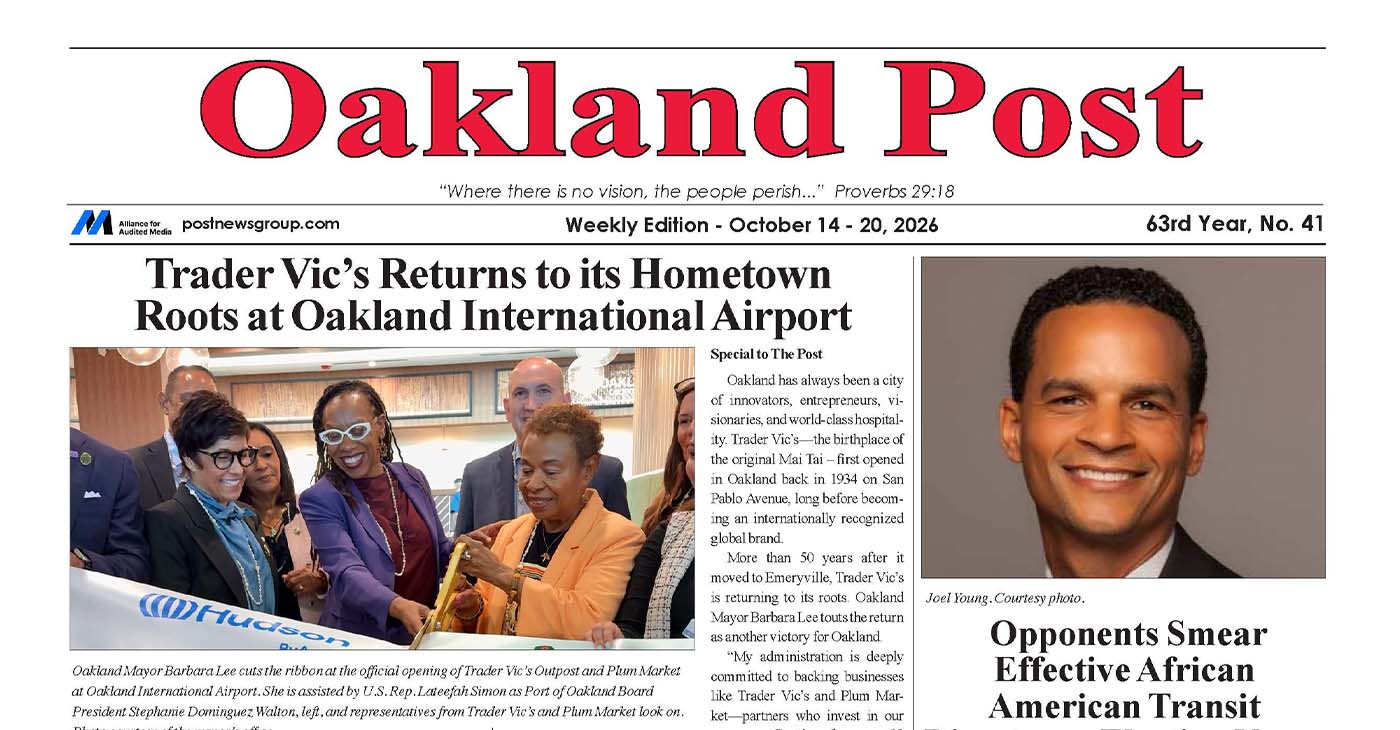
To enlarge your view of this issue, use the slider, magnifying glass icon or full page icon in the lower right corner of the browser window.
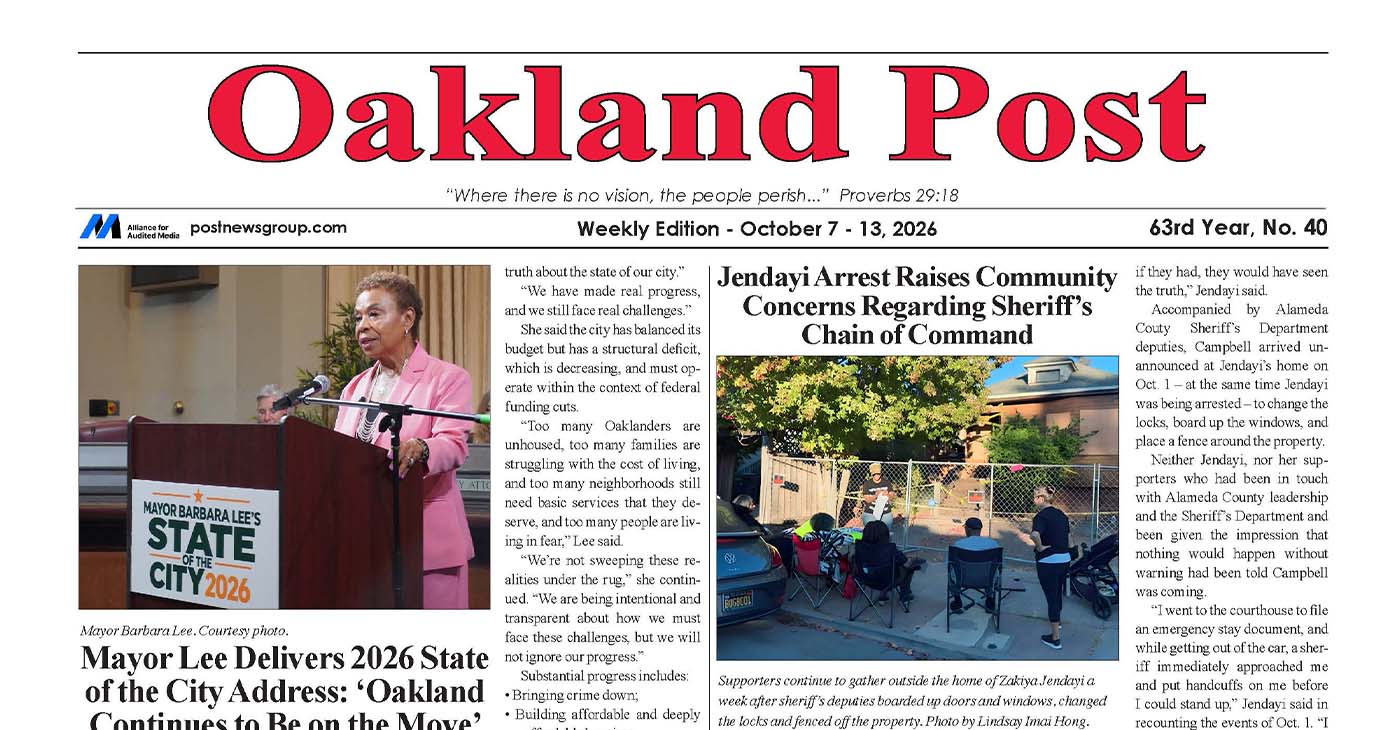
To enlarge your view of this issue, use the slider, magnifying glass icon or full page icon in the lower right corner of the browser window.
Activism
Oakland Post: Week of September 30 – October 6, 2026
The printed Weekly Edition of the Oakland Post: Week of September 30 – October 6, 2026
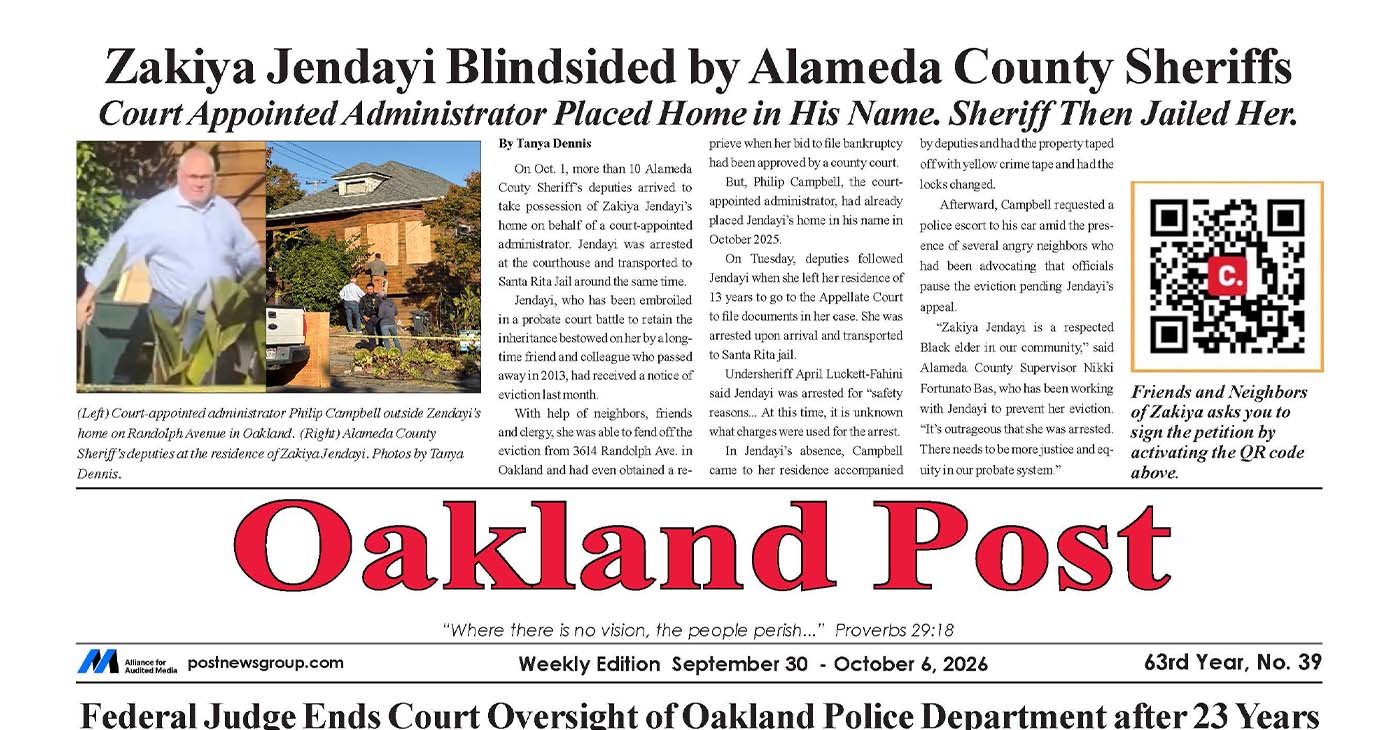
To enlarge your view of this issue, use the slider, magnifying glass icon or full page icon in the lower right corner of the browser window.




Mayor Barbara Lee Holds Special State of the City Address in Deep East Oakland

Practitioners of African Traditional Spirituality Offer Ancestral Reverence Ritual Oct. 31

It’s Time to Lose Weight Before the Holidays

Trader Vic’s Returns to Its Oakland Roots

Oakland Coal Terminal Backed by Trump Would Be Bigger, Dirtier Than Promised, Says Report

Opponents Smear Effective African American Transit Director as Election Nears

Oakland Post: Week of October 14 – 20, 2026

OP-ED: The Black Church Writes AI’s Next Chapter

OP-ED: The Black Church Writes AI’s Next Chapter

WCCUSD Joins Statewide Organic School Food Purchasing Cooperative

Democrats, Community Groups Back Measure EE to Change How Oakland Is Governed

Four Tips to Help You Plan a Holiday “Staycation”

Veterans Housing Project Proposed for South Richmond
PRESS ROOM: Transformative Justice Coalition 2026 Voting Rights Champion Awards Reception ‘Yesterday Is Today: The Battle For Voting Rights

Mayor Lee Delivers 2026 State of the City Address: ‘Oakland Continues to Be on the Move’

Misnamed ‘Parent’ PAC Seeks to Influence Oakland School Board Elections

Oakland Post: Week of September 2 – 8, 2026

Oakland Post: Week of September 9 – 15, 2026

Poll: Becerra Widens His Lead Over Hilton; Californians Split on Wealth Tax

County Office of Education Says OUSD Finances Are Getting Healthier, Materially Stronger

Richmond Tiny House Village Farm & Garden Set to Open Gates on Sept. 26

Latest Massacre in Haiti Reveals Cruelty U.S. Deportations

Mayor Lee Announces $1 Million Kaiser Permanente Grant for Pilot Program to Address Homelessness, Clean Up Public Spaces throughout Oakland

OPINION: Nolan Wells’ Death One of Several Signifying Racial Terror Lives on in U.S. South

Listening as a Lifeline: A Doula’s Witness to Black Maternal Health

BLACspace Cooperative Invites Bay Area to Experience Oakland’s Black Cultural Ecosystem Through a BLAC Map Tour + Party

Zakiya Jendayi Arrested, Locked Out of Home by Sheriff’s Deputies

Democratic Clubs Interview Candidates for Oakland School Board

Oakland Post: Week of September 16 – 22, 2026

Oakland People’s Arms Embargo Coalition Demands End to Military Shipments Thru Oakland

The Conversation With Al McFarlane 6/23/26

Media Monday 6/22/26

LIVE! ASK ALMA! — TUES. 6.23.26 7PM EST

Car Buying Secrets: 4 Hidden Checks Before You Sign!

Is This 550 HP Charger Worth YOUR Money? AutoNetwork Review

Celebrating Juneteenth – Frederick Douglass on education and resistance

LIVE! — ASK ALMA! — TUES. 6.19.26 7PM EST

Hyundai Ioniq 5 Parking, Safety, and 360 View #shorts

2025 Ioniq 5 New Wiper & Powerful Performance! #shorts

Electric SUV Range: Is 259 Miles Enough? #shorts

EV Charging: How Fast Can You Charge an Electric Vehicle? #shorts

Biometric Cooling… Messaging Seats…Come on! 2025 Infiniti QX80 Autograph 4WD

Charged Up: Witness the Magic of a Fully Electric Car! #shorts

Range Rover Sport PHEV Included…: See What’s Inside This Luxury SUV! #shorts

Invisible Hood View: Perfect Parking with X-Ray Vision! #shorts
-
 Economy3 weeks ago
Poll: Becerra Widens His Lead Over Hilton; Californians Split on Wealth Tax
-
 Business3 weeks ago
County Office of Education Says OUSD Finances Are Getting Healthier, Materially Stronger
-
 Business4 weeks ago
Mayor Lee Announces $1 Million Kaiser Permanente Grant for Pilot Program to Address Homelessness, Clean Up Public Spaces throughout Oakland
-
 Black History2 weeks ago
Listening as a Lifeline: A Doula’s Witness to Black Maternal Health
-
 Art3 weeks ago
BLACspace Cooperative Invites Bay Area to Experience Oakland’s Black Cultural Ecosystem Through a BLAC Map Tour + Party
-
 Lead Story2 weeks ago
Zakiya Jendayi Arrested, Locked Out of Home by Sheriff’s Deputies
-
 Activism4 weeks ago
Oakland Post: Week of September 16 – 22, 2026
-
 Uncategorized4 weeks ago
Oakland People’s Arms Embargo Coalition Demands End to Military Shipments Thru Oakland
