
#NNPA BlackPress
FILM REVIEW: New Wave of Black Films Crests at 2019 Toronto International Film Festival
NNPA NEWSWIRE — Black artists, filmmakers and films were a key part of the mix at the 2019 Toronto Film Festival. Big budget movies, small indie films, documentaries and shorts filled out the innovative programming. Check out the best of the best and the most noteworthy.

By Dwight Brown NNPA News Wire Film Critic
Nearly 500,000 film lovers flocked to the 2019 Toronto International Film Festival, screening hundreds of films from all over the world. Artistry and diversity, the hallmarks of TIFF, were on view.
Black artists, filmmakers and films were a key part of the mix. Big budget movies, small indie films, documentaries and shorts filled out the innovative programming. Check out the best of the best and the most noteworthy.
BLACK FILMS & BLACK FILMMAKERS
Atlantics (***)
An ill-fated romance in Senegal takes center stage in this visually stunning ode to passion and yearning. French actress-turned-filmmaker Mati Diop won the Cannes’ Grand Prix for co-writing this love triangle between a young woman (Mama Sané), an out-of-work construction worker (Ibrahima Traoré) she loves, and a wealthy fiancé (Babacar Sylla) she disdains. With Claire Mathon behind the camera, Dakar looks picturesque and the composition of each scene is as perfect as the lighting. Diop tells her story using lots of imagery and long scenes that test patience. The beautiful cast looks like they stepped out of Essence Magazine. Themes of class divide, spirits from beyond and girlfriends who like to party often crowd what could have been a simple love story. Still, the romance in this film prevails.
Clemency (***).
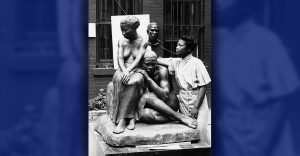
The debate over the death penalty gets a new spark with this very personal look at a humanistic warden (Alfre Woodard) who makes end-of-life experiences as compassionate as possible for those on death row. It’s as if Warden Bernadine Williams goes on cruise-control as she and her staff strap in inmates for that lethal injection. She thinks she’s fully prepared for everything. Then there’s an inevitable catastrophe that magnifies the toll her job takes on her psyche and husband (Wendell Pierce) and sobriety. Writer/director Chinonye Chukwu’s message is that executing criminals is inhumane. Slow steady drama builds and builds. Woodard creates a protagonist who is equally likeable and unapproachable. Her steely performance is complemented by supporting cast members: Aldis Hodge as the cop-killer next in line for death; Richard Schiff as the convict’s hopeful lawyer; Danielle Brooks as a person from the prisoner’s past.
Dolemite Is My Name (****)
When you need encouragement, comedian Rudy Ray Moore (Eddie Murphy) commands, “Put your weight on it.” It’s a mantra he takes to heart as he shifts his talent from struggling comic and spoken-word pioneer to novice DIY indie filmmaker. Moore’s alter-ego is Dolemite, a feisty, martial-arts-loving character he pushes to the front of his first movie. Under the guidance of director Craig Brewer (Hustle & Flow), with a hilarious bio/script by Scott Alexander and Larry Karaszewski, Eddie Murphy makes a splashing film comeback as the outrageously bold and determined artist who became an integral part of the 1970s Blaxploitation era. Never one to take no for an answer, the brash Moore gives Murphy a great opportunity to work his comic genius. And he does, along with a hilarious dream team who milks laughs: Keegan-Michael Key, Craig Robinson, Tituss Burgess, Wesley Snipes, Mike Epps, and the shameless scene stealer Luenell (I Got the Hook Up 2). Add in cameos by T.I. and Snoop Dogg and a plotline that leads to euphoria and this bit of hilarity becomes an amazing crowd-pleaser and an inspiring movie.
Harriet (***)
The responsibility for getting Harriet Tubman’s legacy as an abolitionist and the history of the Underground Railroad told right is a weight few filmmakers could carry. Director Kasi Lemmons (Eve’s Bayou) is up to the task and has a vision. Her efforts are helped by Terence Blanchard’s emotionally charged musical score, John Toll’s evocative cinematography (he makes everyone’s complexion incandescent) and Paul Tazewell’s costumes. The script, by Lemmons and Gregory Allen Howard, pulls the characters into one epic tale of inhumanity, humanity and legendary acts of bravery. Cynthia Erivo (Tony winner The Color Purple; film Widows) plays “Minty” (Tubman’s nickname) with conviction. The evildoers (Joe Alwyn, Jennifer Nettles) and saviors (Leslie Odom Jr., Janelle Monáe) are perfectly portrayed. Lemmons can be heavy on the flashbacks (black and white clips of a family breakup seem redundant), and the footage looks like a cross between an art/indie film and a Lifetime network movie. But overall, she has accomplished a difficult mission that brings the life of an extraordinary liberator into full view. Finally the film medium has produced a public record of Harriet Tubman’s heroism. Now it’s time for Tubman’s image to be on the $20 bill.
Just Mercy (***)
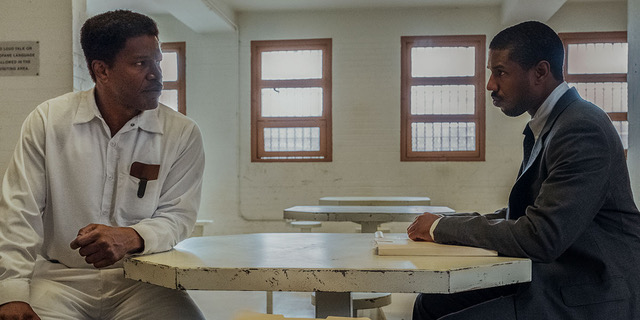
Jamie Foxx and MIchael B. Jordan in Just Mercy
A young Harvard educated lawyer, Bryan Stevenson (Michael B. Jordan), could have his pick of law firms, instead he heads to rural Alabama to set up a small law practice that seeks to reverse death row sentences for wrongfully convicted prisoners. There are many in need, but one of his primary clients is Walter McMillian (Jamie Foxx), who was convicted of killing a white woman. The film is set in 1989 and stars Jordan, but if you close your eyes and imagine a young Sidney Poitier in the lead role, you’ll get a feel for the tone of this well-intentioned but typical crime drama. Director Destin Daniel Cretton’s approach to the genre is formulaic, but gets the job done. Cretton and co-writer Andrew Lanham use the real lawyer Stevenson’s award-winning non-fiction book Just Mercy: A Story of Justice and Redemption as source material to depict poor black men being railroaded into death sentences in the south—well into the late ‘80s. Foxx gives his best performance since Ray. Jordan breaks out of his normal hero-ish mold to play a goodwill attorney, and that’s refreshing. Supporting cast of Brie Larson, Rob Morgan, Tim Blake Nelson, Rafe Spall, O’Shea Jackson Jr., and Karan Kendrick are particularly interesting to watch. A very northern and stiff lawyer learns how to acclimate to a friendlier rural southern black community and it’s a startling juxtaposition that adds depth to the proceedings
Waves (**1/2)
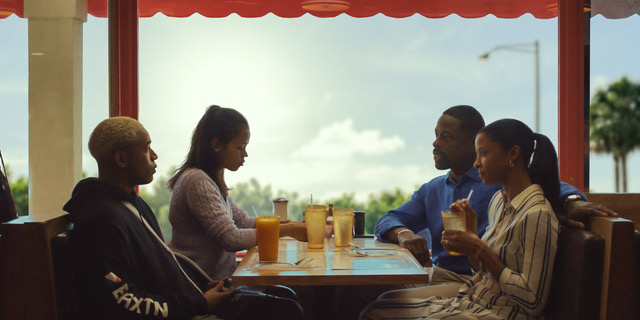
The Cast of Waves
Filmmaker Trey Edward Shults made an impressive directorial debut with the ultra-realistic family drama Krisha. This return to familial themes focuses on a wealthy black household. A dad (Sterling K. Brown) and stepmom (Renée Elise Goldsberry)—helicopter parents—pressure their teenage son (Kelvin Harrison Jr, Assassination Nation), a high-school wrestling champion, to succeed. He, however, is clandestinely living large, beset with injuries and having major girlfriend problems. His younger sister (Taylor Russel) waits in the wings for the attention she deserves. Shults’ script and direction jump-start start this teen saga with a kinetic verve reminiscent of filmmaker Harmony Korine’s wild and debauched Spring Breakers. Quick, flashy MTV-like edits (editors Isaac Hagy and Shults), a heavy-bass musical score (Trent Reznor and Atticus Ross) and an envious playlist of hip artists set the tone. The look of the film is perfect: production design by Elliott Hostetter; set decoration by Adam Willis; cinematography by Drew Daniels; and costume design by Rachel Dainer-Best. The plotline in Acts I and II leads to a clichéd stereotypical interpretation of a young black man’s life, which would be suspect coming from a black filmmaker, and is almost insulting coming from a white one. Act III takes the film in a completely different direction, which is fraught with heavy emotion that doesn’t always ring true. Something like TV’s overly touchy-feely This Is Us. In fact, watching Sterling K. Brown shed tears on screen, like he does incessantly on the TV show, is like watching a rainstorm on a tropical island. It’s an event, but it’s no surprise.
BLACK ARTISTS IN FILMS
The Goldfinch (*1/2) The novel of the same name by author Donna Tartt won the 2014 Pulitzer Prize for Fiction. This weakly developed screen adaptation will likely win a Razzie. Can’t blame the premise: A kid, Theo (Oakes Fegley), and his mom enter the Metropolitan Museum of Art. A bomb ignites. She dies. He is taken in by a friend’s wealthy mother (Nicole Kidman). Theo’s worthless father (Luke Wilson) wrestles him away, eyeing the kid’s money. A missing painting of a goldfinch—worth millions—is lost in the explosion. Who has it? Years later Theo (Ansel Elgort) can’t shake his tragic past. Director John Crowley endeared himself to audiences with his sweet, simple period film Brooklyn. In this muddled and overly complicated interpretation of the book (Peter Straughan screenwriter), a series of preposterous circumstances and an overabundance of characters stymies any plausibility. Fegley’s performance fails to make a lasting impression. The photogenic Elgort is handcuffed by a poorly written character. Veteran actor Jeffrey Wright gives the only spot-on performance, but even he can’t save a silly storyline from itself. And why cast a Canadian actor (Finn Wolfhard) and a Welsh actor (Aneurin Barnard) in a pivotal role as Theo’s “Russian” friend Boris (young and old) if they can’t master the accent? Tech credits are solid. Little else is.
Honey Boy (**) His public meltdowns were documented in the news. And now, it’s as if actor/writer Shia LaBeouf wants the masses to know that his erratic behavior is the result of an irregular childhood. Otis (Noah Jupe as the 12-year-old; Lucas Hedges at the 22-year-old), is a child actor being bullied by his ill-tempered father (LaBeouf). Life ain’t easy. Though first-time feature filmmaker Alma Ha’rel directs what’s on the page pretty well, the story, lead characters and their conflicts never gel. LaBeouf lays the bad dad persona on thick, making him appear cartoonish. Bryon Bowers (TV’s “The Chi)” plays an AA friend. Musical artist FKA Twigs portrays a neighbor in a rundown motel. Cast also includes veteran actors Clifton Collins Jr. and Laura San Giacomo. Well-intentioned project. Iffy results at best.
Hustlers (***) A group of industrious strippers bilk Wall Street men out of thousands of dollars during the money-raining days leading up to the great recession. Writer/director Lorene Scafaria (The Meddler) bases her script on a New York Magazine article that chronicles the con games run by Samantha Barbash, a scheming hostess at New York’s strip club Scores. The women swipe credit cards, charge up clothes, buy houses and set up an enterprise that is quite profitable. Sets (production design by Jane Musky), costumes (Mitchell Travers) and cinematography (Todd Banhazi) provide plenty of eye-candy. The pacing (editor Kayla Emter) is tight too. Your eyeballs will pop out of your head when 50-year-old J. Lo, as ringleader Ramona, shimmies down a stripper pole displaying the abs of a twentysomething. As she leads her robber posse on an excursion filled with peril, joy, riches and life lessons, you will be thoroughly entertained. Constance Wu, Mette Towley, Keke Palmer, Lili Reinhart and a cameo by ex-stripper Cardi B add magic as the women go from self-help, to self-employment, to self-infliction. Enjoy, and don’t forget to tip!
Knives Out (**) Who did it in this whodunit? And, who cares? Writer/director Rian Johnson (Star Wars: The Last Jedi) tries his hand at mystery writing, to little avail, and he must be an ardent Agatha Christee (Murder on the Orient Express) fan. A wealthy, elderly novelist (Christopher Plummer) dies. Suicide? Homicide? A southern sleuth (Daniel Craig) investigates. Johnson’s script is dull until the reading of the will, when family members’ greed and rivalries rage. The ensemble cast is impressive: Chris Evans, Ana de Armas, Jamie Lee Curtis, Michael Shannon, Don Johnson, Toni Collette and Lakeith Stanfield as Lieutenant Elliott. There are plot twists aplenty, but none add up to much. Craig’s Alabama accent is atrocious. Does Johnson get anything right? The novelist’s grandson (Evans) drives a sleek 1960/70s silver BMW that is a work of art.
The Report (****) Tracking down the truth regarding the CIA’s Detention and Interrogation Program and the department’s use of torture is a sobering task for Senate staffer Daniel J. Jones, (Adam Driver). Yet, under the guidance of his boss Senator Dianne Feinstein (Annette Bening), he perseveres. Years of Jones’ research unearth wrongdoing, cover-ups and lies that may never come to light. Writer/director Scott Z. Burns (The Informant!) slowly turns a very wonky, fact-based political story into a thrilling drama that pits reality against deceit and the Senate versus the United States Intelligence Community. It’s a battle of wills. Driver’s very intense performances holds viewer’s attention as a barrage of facts, figures and names rain on them in a way that only CNN could decipher. What will stay with audiences forever is that a few people fought to have the CIA’s machinations exposed. An exceptional cast also includes: Jon Hamm, Corey Stoll, Evander Duck Jr., Maura Tierney and Linda Powell (House of Cards).
Uncut Gems (****) “They say you can see the whole universe in an opal.” That makes perfect sense to Howard Ratner (Adam Sandler), a gregarious, Jewish NYC jeweler who is deep in debt to the wrong kind of people and hoping his next scheme will get him out of trouble. This time, his plan includes selling a massive opal—the size of a baseball. Brothers Benny and Josh Safdie (Good Time), New York City-based writer/directors, have an urban, guerilla style of filmmaking that mirrors Martin Scorsese’s early works. Now, with a big budget in hand, they get to use all the crayons in the box. Sandler strips away his sunny facade and plays an addicted gambler who chums it up with hip black clients (basketball player Kevin Garnett), holds it down at home with his wife (Idina Menzel), and juggles a hush-hush life with a secret lover (Julia Fox). Player! The film aptly captures the mayhem and noisy din of the Diamond District. Rarely do movies chronicle any synergy between Blacks and Jews who are both living on the same edge. Brilliant filmmaking. Sandler deserves an Oscar nod and an apology from past naysayers. Every dog has its day
OTHER FILMS OF NOTE
A Beautiful Day in the Neighborhood (**1/2)
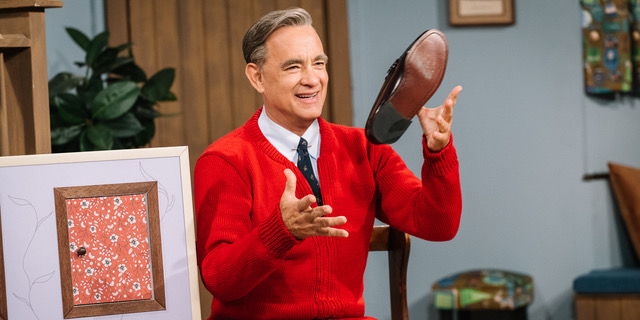
Tom Hanks stars as Mister Rogers in TriStar Pictures’ A BEAUTIFUL DAY IN THE NEIGHBORHOOD. Photo by: Lacey Terrell
Mr. Rogers was loved. Like that uncle who came over for Christmas every year and brought the best presents. Ones you didn’t know you needed ‘til you had them. If you’re expecting a charming biofilm, don’t. If you want to witness how one kind person can positively affect other people’s lives, welcome. The script by Micah Fitzerman-Blue and Noah Harpster takes its cue from a true-life story about an emotionally tarnished Esquire journalist assigned to interview Rogers. IInstead, he becomes the recipient of the cardigan-wearing TV host’s healing powers. Director Marielle Heller (Can You Ever Forgive Me?) sensitively guides the cast through this loving fable. Tom Hanks, Matthew Rhys, Chris Cooper and Wendy Makkena (TV’s Judging Amy) handle their duties well. It’s easy to get caught up in the journalist’s redemption. Not all audiences will be thrilled that they’re getting a “life-coach” movie for the holiday season (release date 11/22/19), instead of the real skinny about the TV icon’s personal life. Some may say, “Where’s the beef?”
Bad Education (****)
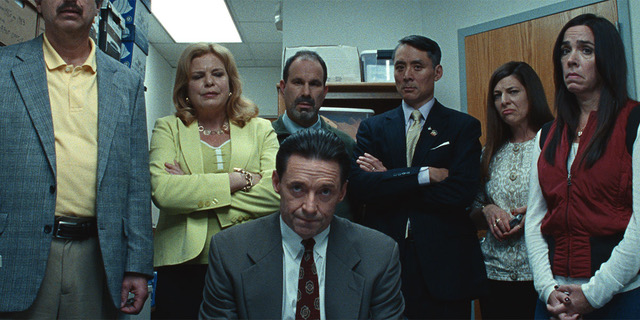
Hugh Jackman in Bad Education
Thou shalt not steal. It’s a commandment that the characters in this true-life tale of debauchery and excess don’t heed. All is going well in Long Island’s Roslyn School District, until a high school newspaper journalist (Geraldine Viswanathan) starts investigating line items on the school district budget that seem, well, fake. Contractors and companies are ghosts. Certainly Pam Gluckin (Allison Janney), who handles the budgets doesn’t see anything wrong. Nor does the easy-going school district superintendent (Hugh Jackman). As the undeterred student continues to dig, the improprieties mount. The plotline (screenwriter Mike Makowsky) unravels in bits and pieces, causing increasing astonishment. Jackman is as wicked as he can be. Janney as the lady with more relatives on the payroll than Trumps in the White House, plays her sociopathic character to a T. Director Cory Finley (Thoroughbreds) doesn’t point fingers, doesn’t pass judgement. Instead he weaves extramarital affairs, weak school boards and betrayals into a web of insanity that is as outrageous as Janney’s other mayhem vehicle, “I, Tonya.” What’s the alternate spelling of embezzlement? P-R-I-S-O-N. A total delight in the most devious way.
Blackbird (***) People deal with their last moments on earth in their own ways. Few, however, decide to throw a weekend party so family members can watch them commit suicide. That’s the premise of director Roger Michell’s (Notting Hill, My Cousin Rachel) warmhearted look at a clan who wrestles with cancer, mortality and conflict. Christian Torpe’s screenplay creates viable characters and sets their actions and reactions in motion. Mom (Susan Sarandon) is the weed-smoking matriarch, dad (Sam Neill) her life partner. Two daughters (Kate Winslet, Mia Wasikowaska) show up with their extended families along with mom’s best friend Liz (Lindsay Duncan). Jealousies, rivalries and inner turmoil brim to the surface as they confront mortality: ‘You’re here now. But tomorrow you’ll be dead,” says one daughter. Some moviegoers may wish the family was more down to earth blue-collar than whiny and rich. The wonderful ensemble acting comes under the guidance of Michell. Poignant life-affirming words by Torpe’s perceptive script endure: “The day’s go by so slowly. The years go by so fast.” Considering the gravity of the subject matter, what’s on view is surprisingly touching and disarming in the best ways.
Coming Home Again (***) The bond between a mother and her son is tested in this warm-hearted story about a young Korean American man (Justin Chon, Gook) who leaves his job and girlfriend behind to take care of his terminally ill mom (Jackie Chung, Grey’s Anatomy) in San Francisco. They connect through food and the recipes she passes on to him. Based on his own experience, director/writer Wayne Wang (Joy Luck Club) creates a very humbling and humanizing story in a low-budget, small-cast movie that is powerful. Chon’s sensitive acting plays well against Chung’s spirited portrayal. Their experience and culture are specifically Asian, but the lifecycle event is universal. Wayne’s illuminating script and restrained direction give a sense of authenticity and clarity to everything. When the camera focuses on Chon trying to putty up a crack in an old wall, it becomes a metaphor for the film’s very rich and gripping premise.
A Hidden Life (****) In this age of neo-fascism, writer/director Terence Malick (Days of Heaven) astutely reminds viewers that they can counteract evil in their own way. Austrian farmer Franz Jägerstätter (August Diehl) becomes a conscientious objector during World War II. His neighbors and town officials in his small village ostracize him, his wife Franziska (Valeri Pachner) and their three young daughters. The Nazis have a plan for him, and its bleak. Malick sets the location perfectly with wondrous shots of the Alps. Scenes of Hitler’s brutal officers committing atrocities reflect the era. The music (James Newton Howard), cinematography (Jôrg Widmer) and production design (Sebastian T. Krawinkel) are exquisite. Eerie parallels to modern times, echo again and again, as vicious leaders pray on the weak and instill fear in the masses. Franz to his spouse: “Oh my wife. What happened to our country, the land we love?” He adds: “If God gives us free will, we’re responsible for what we do.” A masterpiece of storytelling becomes a fitting tribute to those who remain principled and defiant.
Joker (**1/2) Why would a film company give a stand-alone origin project about the comic book villain The Joker to the writer/director of The Hangover series, Todd Phillips? Casting Joaquin Phoenix in the lead role, whose acting is ingeniously mercurial in the villain, is brilliant. Phillips? That’s a question mark. Arthur Fleck (Phoenix), a rent-a-clown loser who lives with his mom, is tormented by a defect that makes him laugh inappropriately and uncontrollably and is bullied by adults—and kids too. It’s no wonder the dude is angry at the world. Phoenix creates a snake of a man with few to no redeeming qualities and along the way he turns in a blistering performance that should get him a front row seat on Oscar night. Strong visuals and imaginative action scenes are absent in this crime thriller. Blame director of photography Lawrence Sher (Hangover) for the lapse in striking images. And Phillips gets no love for a dearth of cool fights and heated battles.
Judy (***1/2) No feature film could capture the entire troubled life of Judy Garland, who went from child actress (The Wizard of Oz), to deceased drug and alcohol-impaired adult in just 47-years. Smartly, director Rupert Goold and screenwriter Tom Edge pull from the stage play End of the Rainbow by Peter Quilter, which recounts the last six months of the star’s increasingly unsteady life. Credit Renée Zellweger for doing her own singing. Does she sound like Garland? No. Does she evoke her spirit? Yes—like a champ! The director, writer and actress make Garland look sociable, self-involved and weary of her superstardom all at once. Judy, knowing the burden she can be on others during her drunken episodes, proudly proclaims to her elementary-school-age son, “It’s wonderful to have a son big enough to carry his mother to the car.” The film’s only questionable element is a parallel storyline about her childhood, when she was groomed to be a pill-popper and emotionally abused by adults. Dramatic scenes, where she argues with an ex-husband at lunch or comes out drunk on stage, will make you wince. This is a solid interpretation of a life everyone knew would be cut short, while garnering millions of fans along the way. Very sweet. Quite tragic. Garland: “I still believe in it. The love you have with an audience.”
Marriage Story (****) As writer/director Noah Baumbach has matured, so has the subject of his films. His 1995 movie Kicking and Screaming reflected his 26-year-old view of life. His 2019 film Marriage Story captures the angst of a 50-year-old who has weathered a divorce. He doesn’t have to say that this story is coming from a very organic place. It’s obvious by the characters on view and the raw emotion they display. Charlie (Adam Driver in his best performance ever) is the head of a Brooklyn theater group. Nicole (Scarlett Johansson) is his wife and the troupe’s star. She’s offered a TV pilot in L.A., and that decision leads the two and their son Henry (Azhy Robertson) on a twisted road through divorce land, which turns them into adversaries with lawyers (Laura Dern for her; Ray Liotta for him.) who bully. There are screaming matches in this marital breakup parable that are as primal as the ones in Who’s Afraid of Virginia Woolf?” In 136 engaging minutes Baumbach relives every tortured moment and slight in the couple’s less than idyllic marriage. D-I-V-O-R-C-E!
The Personal History of David Copperfield (**1/2) No this is not about the magician. Think back further to 1850 and a book written by Charles Dickens: David (Dev Patel), is raised by his widowed mother and a loving housekeeper. Life changes when mom marries a wicked man. Soon after, the boy is kicked out of his house, into boarding schools, factory work and eventually to the loving home of his eccentric Aunt Betsey (Tilda Swinton). David’s refuge is his writing. Director Armando Iannucci (The Death of Stalin) uses Simon Blackwell’s script to form a storybook life that is as winsome and charming as it is boring and too British. Think British director Mike Leigh and his obscure movie Topsy Turvy, and you get the gist. Oscar nominee Patel is as magnetic as Swinton is eccentric. Iannucci’s decision to make 19th century London multicultural is very progressive. Rosalind Eleazar plays David’s love interest, and she and Patel are quite disarming in a film with little appeal other than its acting and tech credits.
The Two Popes (****) It’s surprising to watch a film about two heads of the Catholic Church, who have vehement disagreements and opposing viewpoints yet find common ground. It’s as if Anthony McCarten’s (Darkest Hour) insightful screenplay is trying to teach polarized factions how to bond. Anthony Hopkins plays Pope Benedict, the traditionalist monsignor who is stodgy and not hip to the times. Jonathan Pryce is Pope Francis, a sociable, humble innovator more concerned with the good of the people than the strict rules of the church. The film is strongest when the two actors are center stage giving their diametrically opposed opinions. It’s less interesting, but still good, when it depicts Francis’ backstory. Directed deftly by the brilliant Brazilian filmmaker Fernando Meirelles (City of God), the dignity, humanity and humor of the two characters is quite appealing. Francis: “How does an Argentinian kill himself? He climbs to the top of his ego and jumps off.” Jump Popes. Jump.
These movies and artists, fresh from Toronto, will be on a screen near you before you know it.
Visit NNPA News Wire Film Critic Dwight Brown at DwightBrownInk.com.





#NNPA BlackPress
PRESS ROOM: NBA Hall of Fame Nominee Terry Cummings Joins 100 Black Men of DeKalb County to Launch Victory & Values Initiative
NNPA NEWSWIRE — NBA Hall of Fame nominee and Basketball Legend Terry Cummings was administered the official member’s oath and ceremonially pinned during a special induction ceremony held on Friday, February 20th.

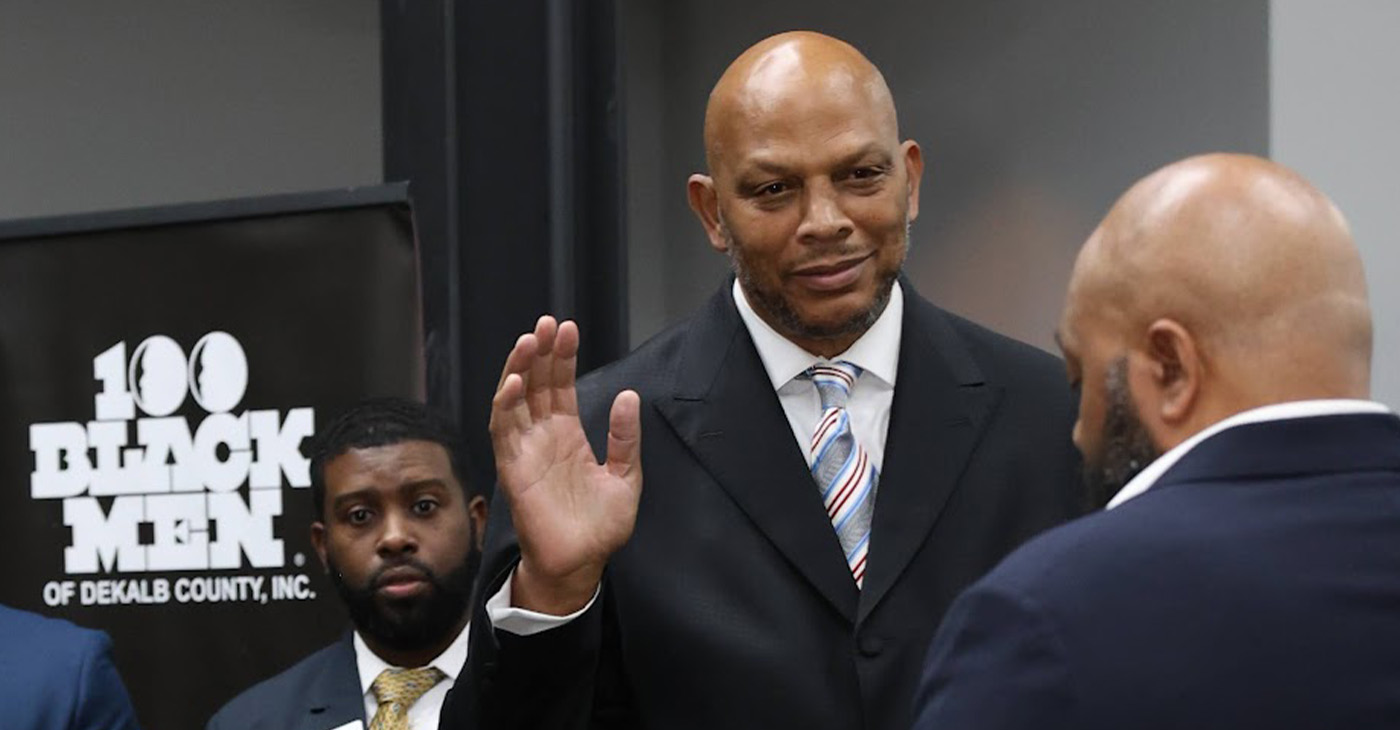
Cummings becomes an honorary member, joining other role model sports stars
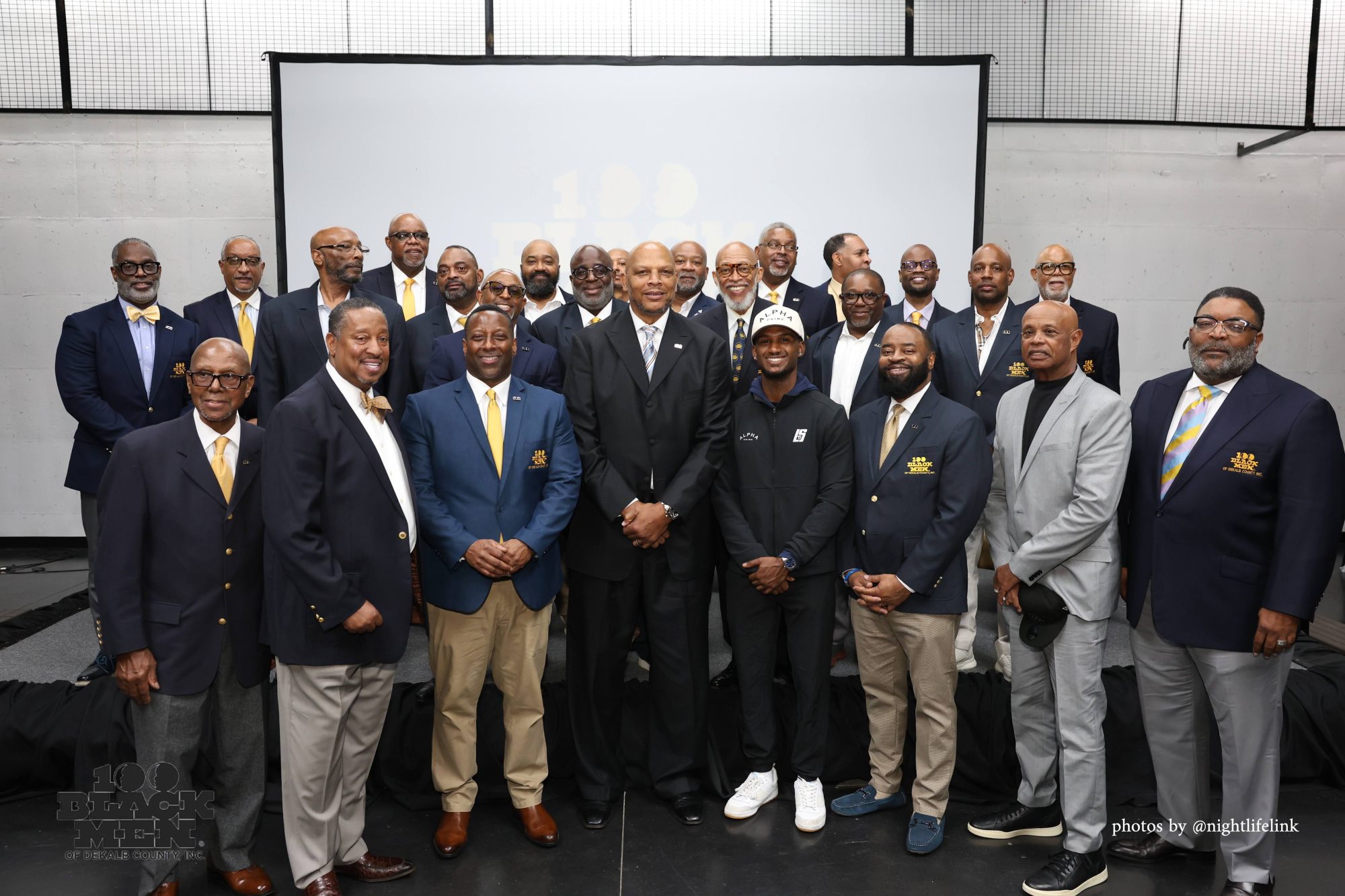
NBA Hall of Fame nominee and Basketball Legend Terry Cummings has officially become an honorary member of the 100 Black Men of DeKalb County, marking a powerful new chapter for the 100 Black Men and youth development across the region.
Cummings was administered the official member’s oath and ceremonially pinned during a special induction ceremony held on Friday, February 20th. The moment signified more than membership — it marked the launch of the organization’s transformative new platform, the Victory & Values Initiative.
The Victory & Values Initiative is a groundbreaking youth development program designed to empower elementary and middle school students through a dynamic blend of sports, mentorship, and STEM exposure. The initiative focuses on building health, discipline, character, leadership, and access to opportunity — creating pathways for long-term academic and personal success.
“This is about more than sports,” said Cummings during the ceremony. “It’s about using the platform of athletics to teach life lessons, create access, and build the next generation of leaders.”
The induction ceremony also featured notable guests including NASCAR’s newest Star Driver, Lavar Scott and NASCAR Director of Athletic Performance, Phil Horton, who joined Cummings for a powerful Victory & Values Town Hall discussion. The Town Hall was moderated by renowned Sports Emcee John Hollins and focused on leadership, resilience, discipline, and the importance of mentorship in shaping young lives.
A “Day at NASCAR” for 75+ Youth

Cummings wasted no time getting to work. On his first full day as an honorary member, he joined his new brothers of the 100 Black Men of DeKalb County to host a “Day at NASCAR,” escorting more than 75 youth to a once-in-a-lifetime experience at EchoPark Motor Speedway (formerly Atlanta Motor Speedway).
The youth participants received behind-the-scenes access including: an exclusive tour of Pit Row, access to the Garage Area and exploration of the interactive Fan Zone.
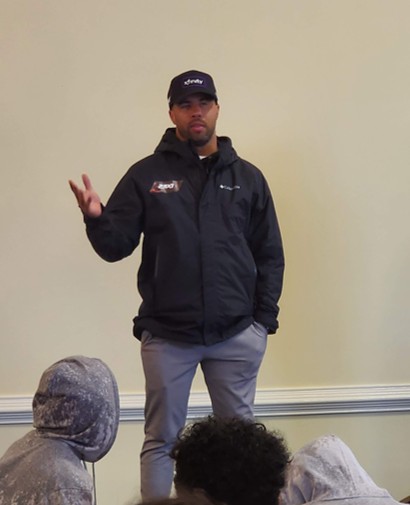
The experience culminated with a surprise meet-and-greet and Q&A session with NASCAR Superstar Bubba Wallace, who shared insights on perseverance, preparation, and breaking barriers in professional sports.
The day served as a living example of the ‘Victory & Values’ Initiative in action — exposing youth to new industries, expanding their vision for the future, and connecting them directly with high- level mentors and role models.
Building Leaders Through Access and Mentorship
The 100 Black Men of DeKalb County – a chapter of the largest, national mentoring organization in the county – continues to expand its footprint with programs focused on academic excellence, economic empowerment, leadership development, and health & wellness.
The launch of ‘Victory & Values’ represents a strategic expansion of the organization’s impact
- intentionally integrating athletics and STEM to engage youth at an early age while reinforcing core principles such as integrity, accountability, teamwork, and perseverance.
“Our mission has always been to mentor the next generation,” said Vaughn Irons, President-Elect of the 100 Black Men of DeKalb County. “With Terry Cummings joining the brotherhood, along with partners in NASCAR and professional sports, we are creating unprecedented access and exposure for our youth. Victory & Values is about turning inspiration into structured opportunity.”
By connecting elementary and middle school students to professional athletes, executives, STEM professionals, and community leaders, the initiative aims to:
- Increase youth exposure to careers in sports business, engineering, and performance science
- Strengthen mentorship pipelines
- Promote physical wellness and mental resilience
- Build character-driven leadership at an early age
Open Invitation to Youth and Families
All youth are invited to participate in the Victory & Values Initiative, along with the other countless, impactful programs offered by the 100 Black Men of DeKalb County.
Parents and guardians seeking mentorship, leadership development, academic enrichment, and transformative exposure opportunities for their children are encouraged to connect with the organization.
As NBA Legend Terry Cummings’ induction demonstrates, Victory & Values is more than a program — it is a movement designed to build champions in life, not just in sports.
For more information about the Victory & Values Initiative or to enroll a student, contact: 100 Black Men of DeKalb County at Phone at 404.241.1338, info@100bmod.org or Tee Foxx at 404.791.6525,

#NNPA BlackPress
Reflecting on Black History Milestones in Birmingham AL
THE BIRMINGHAM TIMES — As we bring Black History Month to a close here’s a look at some historic Birmingham milestones since the city’s founding.

Compiled by The Birmingham Times
As we bring Black History Month to a close here’s a look at some historic Birmingham milestones since the city’s founding.
1871—City of Birmingham founded; now the state’s most populous city, Birmingham was established at the crossing of two rail lines near one of the world’s richest mineral deposits.
1885—Birmingham Barons baseball team originally established as Birmingham Coal Barons.
1890—The Penny Savings Bank, founded by the Rev. William Reuben Pettiford in Birmingham, opens, becoming the first Black-owned and Black-operated financial institution in Alabama.
1902—Woodward Building, construction completed on the first of four steel-frame skyscrapers that would make up Birmingham’s “Heaviest Corner on Earth.”

The Tuggle Institute, a boarding school for African American children in Birmingham Alabama, pictured in 1906. (Public Domain)
1903 —Social worker Carrie A. Tuggle opens the Tuggle Institute and School, the first orphan home in Alabama for African American boys. The Institute operated until Tuggle’s death on Nov. 5, 1924, and was later renamed Tuggle Elementary School in 1936.
1904 —Vulcan Statue, the world’s largest cast-iron statue, created as Birmingham’s entry in the St. Louis World’s Fair, was sculpted by Giuseppe Moretti.
1914—Birmingham’s Lyric Theatre was established as one of the first in the South where Black and white audiences could see the same show for the same price, though Black sat in an isolated section with inferior accommodations
1918—Birmingham College and Southern University merged to establish Birmingham-Southern College.
1925—The Pittsburgh of the South, Birmingham, is the largest cast iron and steel producer in the Southern U.S.

The Slossfield Community Center campus included a health clinic, a maternity ward, a recreational center, and an education building. The complex was built between 1936 and 1939 by ACIPCO (American Cast Iron Pipe Company). (National Archives Record Group 69-N)
1939—Slossfield Health Clinic, located in a neighborhood surrounding ACIPCO’s plant, considered one of Birmingham’s most blighted, opens.
1941—The Sisters of Charity of Nazareth (SCN) assume responsibility for a small health clinic in the predominantly African American community of Ensley near Birmingham, Alabama. The clinic later becomes Holy Family Hospital.
1941—World War II. The demand for steel during the war brought Birmingham out of the Great Depression.
1948—Slossfield’s medical center closes in 1948 after World War II. The rest of the Slossfield Community Center campus closed in 1954.
1951—Birmingham Museum of Art, currently home to one of the finest collections in the Southeast, with extensive holdings from around the globe dating from ancient to modern times, opens.
1954—A.G. Gaston Motel founded by entrepreneur and activist A.G. Gaston to provide higher-class service to Black visitors.
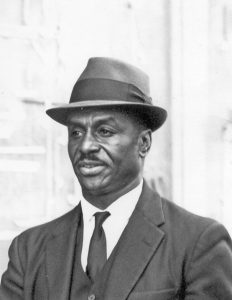
The Rev. Fred L. Shuttlesworth and other local Black ministers established the Alabama Christian Movement for Human Rights (ACMHR) during a mass meeting at Birmingham’s Sardis Baptist Church. (File)
1956—The home of Birmingham minister and Civil Rights leader Fred Shuttlesworth is bombed. Although the structure is severely damaged, Shuttlesworth emerges uninjured.
- During a mass meeting at Birmingham’s Sardis Baptist Church, Shuttlesworth and other local Black ministers establish the Alabama Christian Movement for Human Rights (ACMHR). Founded in response to the State of Alabama’s eight-year ban on the NAACP, ACMHR was central to the civil rights movement in Birmingham.
- The Freedom Riders arrive at the Greyhound bus terminal in Montgomery, where they are attacked by an angry mob. The Freedom Ride, an integrated bus trip from Washington, D.C., through the Deep South, was formed to test the 1960 Supreme Court decision prohibiting segregation in bus and train terminal facilities.
1963—After previously establishing the ACMHR and the Southern Christian Leadership Conference (SCLC), Shuttlesworth invites Rev. Martin Luther King, Jr. to Birmingham to lead what becomes the Birmingham Campaign for Desegregation. King writes Letter From Birmingham Jail.
- Sixteenth Street Baptist Church was bombed, killing four young girls in an attack against the Civil Rights Movement and humanity.
1966—Oscar Adams Jr. becomes the first African American to join the Birmingham Bar Association.
1968—Arthur Shores was appointed to the Birmingham City Council, making him the first African American to serve as a councilman.
1970—The Sisters of Charity of Nazareth (SCNs) transfer ownership of Holy Family Hospital to a local non-profit organization, which was renamed Community Hospital. By 1986, the facility was sold and operated as Medical Park West until its closing in 1988. The facility would briefly reopen in 1989 as Community Hospital with 22 beds, only to close it down for good soon thereafter.
1974—J. Richmond Pearson and U.W. Clemon were the first African Americans elected to the Alabama State Senate since Reconstruction.
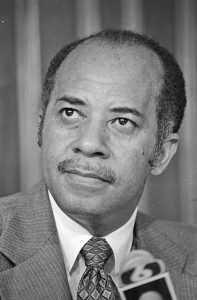
Richard Arrington. (File)
1979—Richard Arrington Jr. was elected as the first African American mayor of Birmingham. Arrington served in that post for nearly 20 years, until his resignation in July 1999.
1980—Oscar Adams Jr. was appointed to the Alabama Supreme Court, making him the first African American justice to hold that office.
1984—J. Mason Davis becomes the first African American president of the Birmingham Bar Association. He is also the first minority adjunct professor at The University of Alabama School of Law, serving from 1972 to 1997.
1986—Reuben Davis and Chris McNair were elected to the County Commission, the first district by district election, and are the first African Americans to serve on the commission.
1991—Carole Smitherman appointed to become the first African American woman to serve as a circuit court judge in Alabama
1992—Birmingham Civil Rights Institute opens its doors at Kelly Ingram Park in the Civil Rights District.

The Birmingham Civil Rights Institute. (File)
1993—Alabama Jazz Hall of Fame opens.
2002—Shelia Smoot elected first Black female Jefferson County Commissioner.
2003—Helen Shores Lee becomes the first African American woman to serve as a judge on the Jefferson County Circuit Court.
2005—Condoleezza Rice, a Birmingham native, is named U.S. Secretary of State.
2008-11—Jefferson County and creditors attempt to reach a settlement of the $3.14 billion sewer debt, but any deal would need to erase $1 billion or more of that debt.
2009—Carole Smitherman becomes Birmingham’s first African American female mayor.
2010—Railroad Park, a 19-acre park, opened, becoming a catalyst for revitalization in downtown Birmingham
2011—A massive storm in April, causing numerous powerful tornadoes, rips through the southeastern United States, killing 250 people in Alabama, including 20 people in Jefferson County communities of Pleasant Grove (10), Concord (6), Cahaba Heights (1), Pratt City (1), Forestdale (1), and McDonald Chapel (1).

In 2012 the Jefferson County Commission voted 3-2 to close the inpatient care unit and emergency room at Cooper Green Mercy Hospital. (File)
2012—Cooper Green Mercy Hospital downsized. The Jefferson County Commission votes 3-2 to close the inpatient care unit and emergency room at Cooper Green following weeks of debate and protests from community leaders who have begged the county to continue operating the facility for the sick and poor.
2016—Lynneice Washington elected District Attorney for the Bessemer Cutoff, the first African American DA in the state of Alabama.
2016—Theo Lawson was named the first African American Jefferson County attorney.
2016—Representative Terri Sewell introduces legislation leading to Birmingham Civil Rights National Monument designation by presidential proclamation one year later.
2017—John Henry joins the Jefferson County Commission Finance Department and becomes the county’s first Black chief financial officer.
2017—Danny Carr and Mark Pettway were elected the county’s first Black district attorney and first Black sheriff, respectively.
2019—Walter Gonsoulin was named the first permanent African American superintendent of the Jefferson County School System
2020—Felicia Rucker-Sumerlin was named the first female Deputy Chief in the 200-year history of the Jefferson County Sheriff’s Office.
2020—Elisabeth French becomes the first woman selected to serve as Presiding Judge in Jefferson County’s 200-year history. She will oversee the 10th Judicial Circuit, the largest in Alabama’s Judicial System.
2021—Ashley M. Jones, founder of the Magic City Poetry Festival, is named Poet Laureate for Alabama, making her the first Black Poet Laureate for the state and the youngest person to hold the position.
2022—Dr. Adolphus Jackson of Birmingham is elected President of the Alabama Dental Association, the first African American to serve as president of the state Association.
2022—Birmingham Mayor Randall Woodfin issues a proclamation declaring March 18 Reverend Fred Shuttlesworth Day, the 100th anniversary of the leader’s birth.
2023—Writer and educator Salaam Green becomes the city’s first poet laureate.
2024—Democrats Yashiba “Red” Blanchard and Jameria Moore on Tuesday became the first Black female judges elected to Probate Court in Jefferson County, Alabama.
2024—Myrna Carter Jackson, a Birmingham civic leader and Foot Soldier who participated in marches, sit-ins, demonstrations, and other Civil Rights activities, dies. She was 82.
2024—Hezekiah Jackson IV, who served as president of the Metro Birmingham NAACP, Birmingham Citizens Advisory Board, and the Inglenook Neighborhood Association, dies. He was 65.
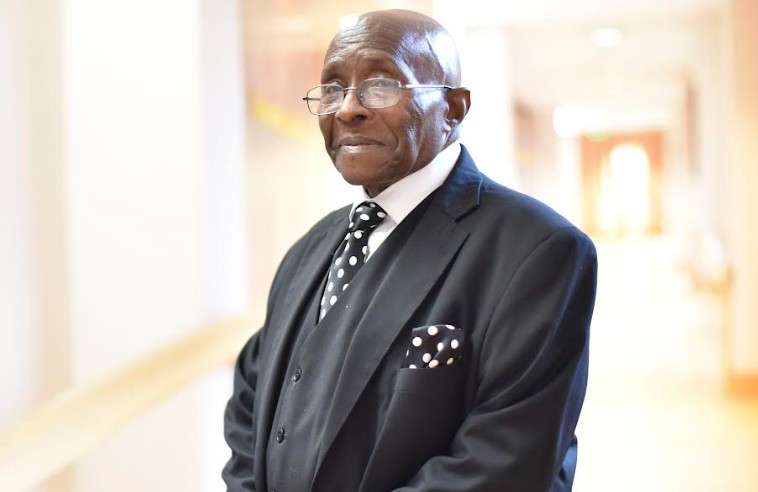
For decades, Bishop Calvin Woods Sr., was one of Birmingham’s leading voices for equality. (File)
2025—Judge Carole Smitherman retires after 50 years in law and politics in Birmingham, including being the first Black woman hired as a deputy district attorney in Jefferson County and becoming the city’s first Black woman municipal and circuit court judge.
2025—Bishop Calvin Woods Sr., distinguished Birmingham Civil Rights leader and longtime pastor of Shiloh Baptist Church in Norwood, dies. He was 91.
2025—Former U.S. Attorney General Eric Holder Jr. accepts the prestigious 202d L. Shuttlesworth Human Rights Award at the downtown Sheraton.
2026—Claudette Colvin, who refused to move to a bus seat at the start of the Civil Rights Movement, dies at 86. Homegoing celebration was held at Greater Shiloh Missionary Baptist Church in SW Birmingham.
Source: The Birmingham Times, 1963: How The Birmingham Civil Rights Movement Changed America and the World; City of Birmingham Public Library; Associated Press; blackpast.org; Politics and Welfare in Birmingham, 1900–1975.
#NNPA BlackPress
OP-ED: One Hundred Years of Black Workers Telling the Truth
NNPA NEWSWIRE — … history provides a framework for understanding what happened in Minnesota this January, when Black journalists Don Lemon and Georgia Fort were arrested after covering a protest inside a church opposing U.S. Immigration and Customs Enforcement activity in the area. The message was unmistakable: documenting dissent can itself be treated as a crime.

By Fred Redmond, Secretary Treasurer AFL-CIO
In 1917, A. Philip Randolph and Chandler Owen launched The Messenger, a pro-labor, anti-war magazine that connected racism to exploitation and demanded justice for Black workers. Two years later, the federal government responded with tactics of targeted censorship—surveillance, harassment and threats of prosecution—and branded a small Black labor magazine “the most dangerous” publication in the country simply for encouraging Black workers to organize.
More than a century later, two highly respected Black journalists—Don Lemon and Georgia Fort—are handcuffed and indicted for filming a protest inside a church. The tools have changed, but the oppressive government playbook has not.
That continuity matters as we mark 100 years since the launch of Negro History Week, founded in February 1926 by Carter G. Woodson. Negro History Week rejected the lie that Black people had no history worth teaching and no role worth remembering. It challenged an education system that erased Black achievement and a public narrative that treated Black people as a problem, not a people. What later became Black History Month grew from that project of memory and resistance. From its earliest days, Black history celebrations were about more than remembrance. They also were acts of resistance, challenging the ongoing use of law, fear and surveillance to silence Black workers and suppress the truth about power in this country.
That pairing matters: The birth of Negro History Week alongside the rise of an apparatus built to monitor and suppress Black labor dissent. The same government that denied Black people their history also treated them as a threat when they spoke collectively as workers. When Black workers asserted their right to organize and be heard, they faced not just employer retaliation, but state repression.
Randolph went on to organize the Brotherhood of Sleeping Car Porters, the first major Black-led union, and was under constant federal surveillance. As Black workers organized in factories, on farms and in service jobs across the country, local police and FBI “Red Squads” and federal counterintelligence programs infiltrated meetings, built massive files, and worked to neutralize leaders who linked racial justice to workplace democracy.
That history provides a framework for understanding what happened in Minnesota this January, when Black journalists Don Lemon and Georgia Fort were arrested after covering a protest inside a church opposing U.S. Immigration and Customs Enforcement activity in the area. The message was unmistakable: documenting dissent can itself be treated as a crime.
At the same time, major media outlets are shrinking their newsrooms and walking away from race coverage. The Washington Post recently laid off some 300 journalists, including race and ethnicity reporters. In late 2025, NBC News shuttered entire teams dedicated to covering Black, Latino and Asian American, Native Hawaiian and Pacific Islander stories. In Pittsburgh, the 240‑year‑old Post‑Gazette is being shut down by its owners, who responded to a court order requiring them to honor The NewsGuild‑CWA (TNG-CWA) journalists’ contract after years of striking. When powerful newsrooms dismantle the very beats created after 2020 to cover racism and inequality, they send a different version of the same message: some truths about power are no longer welcome.
The National Writers Union said the arrests “set a disastrous precedent for press freedom in the United States,” and the National Association of Black Journalists called on the government to “halt all retaliatory posture toward journalists.” SAG‑AFTRA has condemned the arrests of Fort and Lemon, a member, and unions like TNG‑CWA are warning that union‑busting, mass layoffs, and criminal charges against journalists are part of the same effort to make it dangerous for workers to tell the truth.
This Black History Month, the labor movement must be clear: the right to organize and the right to dissent stand or fall together. There is no freedom of association if workers cannot gather, speak and be heard. When Black journalists are criminalized for documenting protest, the real target is the possibility of multiracial worker power. If true worker power and economic dignity are to have a future, it will be because the labor movement continues to refuse that silence.
The AFL-CIO recognizes that the same tactics used to quash Black voices are used to suppress all our voices—on shop floors, in independent media, in the streets, on picket lines and in places of worship. We stand with our union brothers, sisters and siblings in insisting that the First Amendment is a right and a core worker protection, not a luxury.
A century ago, Woodson insisted that Black people had a history worth telling and Randolph told Black workers they deserved more than exploitation. The government tried to silence them. This Black History Month, the question remains the same: Will Black truth tellers be honored or handcuffed?
The labor movement’s answer must be clear. We stand with Black workers and Black journalists in their right to dissent, to document, and to demand a better future.
Fred Redmond, the highest-ranking African American labor official in history, is the secretary-treasurer of the AFL-CIO, the nation’s largest labor federation, representing 64 unions and nearly 15 million workers.

WORK FROM HOME
Home-based business with potential monthly income of $10K+ per month. A proven training system and website provided to maximize business effectiveness. Perfect job to earn side and primary income. Contact Lynne for more details: Lynne4npusa@gmail.com 800-334-0540


PRESS ROOM: NBA Hall of Fame Nominee Terry Cummings Joins 100 Black Men of DeKalb County to Launch Victory & Values Initiative

Reflecting on Black History Milestones in Birmingham AL

OP-ED: One Hundred Years of Black Workers Telling the Truth

PRESS ROOM: Civil Rights TV Launches in Selma as the World’s First 24/7 Civil Rights Television Network

Advancements in solar technology that are changing the way we power the world

U.S. manufacturing rebounds – how foundry services are adapting to rising demand

Why has blood testing become so popular in today’s world?

Ghana Mourns a Son of the African World

OP-ED: Trump’s Policies Hurt Black America—and Everyone Else

OP-ED: Meta Deleted Me. I Still Don’t Know Why. And neither will you.

More than a Mission: Paying It Forward for the Future of Education

Avoid Eviction This Season: Landlord Checklist for Stable Tenancies

How chronic back problems affect Black communities differently

How cancer care is evolving with modern medicine

Diabetes disparity: Understanding Type 2 risks for Black Americans

Life Expectancy in Marin City, a Black Community, Is 15-17 Years Less than the Rest of Marin County

Oakland Post: Week of January 28, 2025 – February 3, 2026

Community Celebrates Turner Group Construction Company as Collins Drive Becomes Turner Group Drive

California Launches Study on Mileage Tax to Potentially Replace Gas Tax as Republicans Push Back

Discrimination in City Contracts

Oakland Post: Week of January 21 – 27, 2026

After Don Lemon’s Arrest, Black Officials Raise Concerns About Independent Black Media

OP-ED: The Dream Cannot be Realized Without Financial Freedom

Travis Scott Teaches Us How to Give Forward

Medi-Cal Cares for You and Your Baby Every Step of the Way

Book Review: Books on Black History and Black Life for Kids

COMMENTARY: The Biases We Don’t See — Preventing AI-Driven Inequality in Health Care

Four Stolen Futures: Will H-E-B Do The Right Thing?

Post Newspaper Invites NNPA to Join Nationwide Probate Reform Initiative

Can You Afford a Mortgage but Not the Down Payment? Dream For All Offers Up to $150K

Hyundai Ioniq 5 Parking, Safety, and 360 View #shorts

2025 Ioniq 5 New Wiper & Powerful Performance! #shorts

Electric SUV Range: Is 259 Miles Enough? #shorts

EV Charging: How Fast Can You Charge an Electric Vehicle? #shorts

Biometric Cooling… Messaging Seats…Come on! 2025 Infiniti QX80 Autograph 4WD

Charged Up: Witness the Magic of a Fully Electric Car! #shorts

Range Rover Sport PHEV Included…: See What’s Inside This Luxury SUV! #shorts

Invisible Hood View: Perfect Parking with X-Ray Vision! #shorts

AI Is Reshaping Black Healthcare: Promise, Peril, and the Push for Improved Results in California

ESSAY: Technology and Medicine, a Primary Care Point of View

Sanctuary Cities

The RESISTANCE – FREEDOM NOW

STATE OF THE PEOPLE: Freddie

ECONOMIC BOYCOTT DAY!!!!!

I told You So
-
 Activism4 weeks ago
Life Expectancy in Marin City, a Black Community, Is 15-17 Years Less than the Rest of Marin County
-
 Activism4 weeks ago
Oakland Post: Week of January 28, 2025 – February 3, 2026
-
 Activism3 weeks ago
Community Celebrates Turner Group Construction Company as Collins Drive Becomes Turner Group Drive
-
 Business3 weeks ago
California Launches Study on Mileage Tax to Potentially Replace Gas Tax as Republicans Push Back
-
 Activism2 weeks ago
Discrimination in City Contracts
-
 Activism3 weeks ago
After Don Lemon’s Arrest, Black Officials Raise Concerns About Independent Black Media
-
 Activism4 weeks ago
Medi-Cal Cares for You and Your Baby Every Step of the Way
-
 Arts and Culture3 weeks ago
Book Review: Books on Black History and Black Life for Kids
