
Activism
ESSAY: The Hidden Toll — Federal Rollbacks Threaten Black Women’s Health in California
Nutrition assistance programs, which many Black women rely on to keep their families healthy and out of the hospital, are similarly endangered. Nearly half of Black women in California receive WIC, and 47% percent use CalFresh. Cuts or cost-shifts in those programs would worsen food insecurity, especially during pregnancy and postpartum. Malnutrition or diet instability can lead to adverse birth outcomes, weakened immunity, and worse recovery from medical interventions.


By Kellie Todd Griffin, Special to California Black Media Partners
If recent proposals in Congress to cut funding for federal social programs succeed, the downstream effects will not be abstract or distant.
They will be immediate and blunt — and felt in every clinic, every hospital, and most homes where Black women are struggling to maintain our health, care for her children, and stay afloat. In California, where Black women already navigate a terrain of deep systemic inequities, these cuts would be catastrophic.
As a lifelong advocate for Black women in California — through my research and lived experience – I’ve seen firsthand the entrenched medical and social disparities that leave too many Black women struggling to live healthy, fulfilling lives.
Across the spectrum of care — from mental, maternal, and perinatal health to chronic diseases like diabetes, hypertension, cancer, and uterine fibroids — Black women in California continue to bear a disproportionate burden.
Implicit bias in maternity care, for example, continues to be a challenge. It is a documented contributor to the fact that, in California, Black women die from pregnancy-related causes at three to four times the rate of White women.
Now, federal proposals on the table to slash funding for the very programs Black women rely on most: Medicaid (Medi-Cal in California) SNAP/CalFresh, WIC, and federal housing and income supports. As reported in the California Budget and Policy Equity on the Line report, about one in three Black women and children in California currently depend on Medi-Cal. If federal cuts were to force reductions in eligibility, benefits, or provider reimbursements, many Black women would lose access to primary care, chronic disease management, reproductive care, mental health and substance-use treatment, cancer screenings, and prenatal/postnatal services.

In a state already grappling with stark racial health disparities, removing coverage is not just harmful — it magnifies injustice. Black women in California face higher rates of poor health overall, lower life expectancy, and worse prenatal care statistics. When the safety net frays, they will be forced into impossible trade-offs: skip medications, delay care, or incur medical debt.
Nutrition assistance programs, which many Black women rely on to keep their families healthy and out of the hospital, are similarly endangered. Nearly half of Black women in California receive WIC, and 47% percent use CalFresh. Cuts or cost-shifts in those programs would worsen food insecurity, especially during pregnancy and postpartum. Malnutrition or diet instability can lead to adverse birth outcomes, weakened immunity, and worse recovery from medical interventions.
Compounding the harm is the assault on social determinants of health. The Equity on the Line analysis shows that housing assistance, income support, and childcare subsidies are already stretched thin. Any rollback will accelerate housing instability, homelessness risk, and family stress — all of which manifest in worse health outcomes: higher hypertension, depression, chronic illness, and reduced ability to adhere to medical regimens.
California has taken important steps to protect Black women’s health. One good example is Assembly Bill, AB 2319, authored by Assemblymember Lori D. Wilson (D-Suisun City). That law strengthens the Dignity in Pregnancy and Childbirth Act by expanding and enforcing implicit bias training for providers in perinatal settings, and requiring reporting and penalties for noncompliance.
The state is also taking legal and policy action to mitigate the impact of cuts to SNAP/CalFresh food stamp benefits – like mobilizing $80 million in state funds to support food banks. It is also taking action to shore up against federal cuts to Medi-Cal.
In our communities, organizations like California Black Women’s Health Project and Black Women for Wellness are already doing the groundwork — advocating for culturally centered care, education, and infrastructure to mitigate harm.
As Californians, we must all roll up our sleeves and amplify and bolster their efforts. These organizations serve as our voice. They are our watchdogs, too, documenting where bias persists, where systems fail, and where state enforcement is weak.
The stakes are too high for complacency. As we strategize to keep Black women healthy, we must also document and share our stories with others — every death, every untreated illness, every delayed pregnancy.
Let us be resolute, organized, hopeful, and persistent. California can be a model of how a state defends Black women’s health amid significant challenges, presenting a full vision to America, and the world, of how we can make health justice a reality and make California healthier for all our communities.
About the Author
Kellie Todd Griffin, President and CEO of the California Black Women’s Collective Empowerment Institute. With a deep commitment to equity and justice, she champions initiatives that amplify the voices and influence of Black women across California. Known for her strategic insight and passion for community empowerment, Kellie is a driving force in fostering systemic change and collective progress.












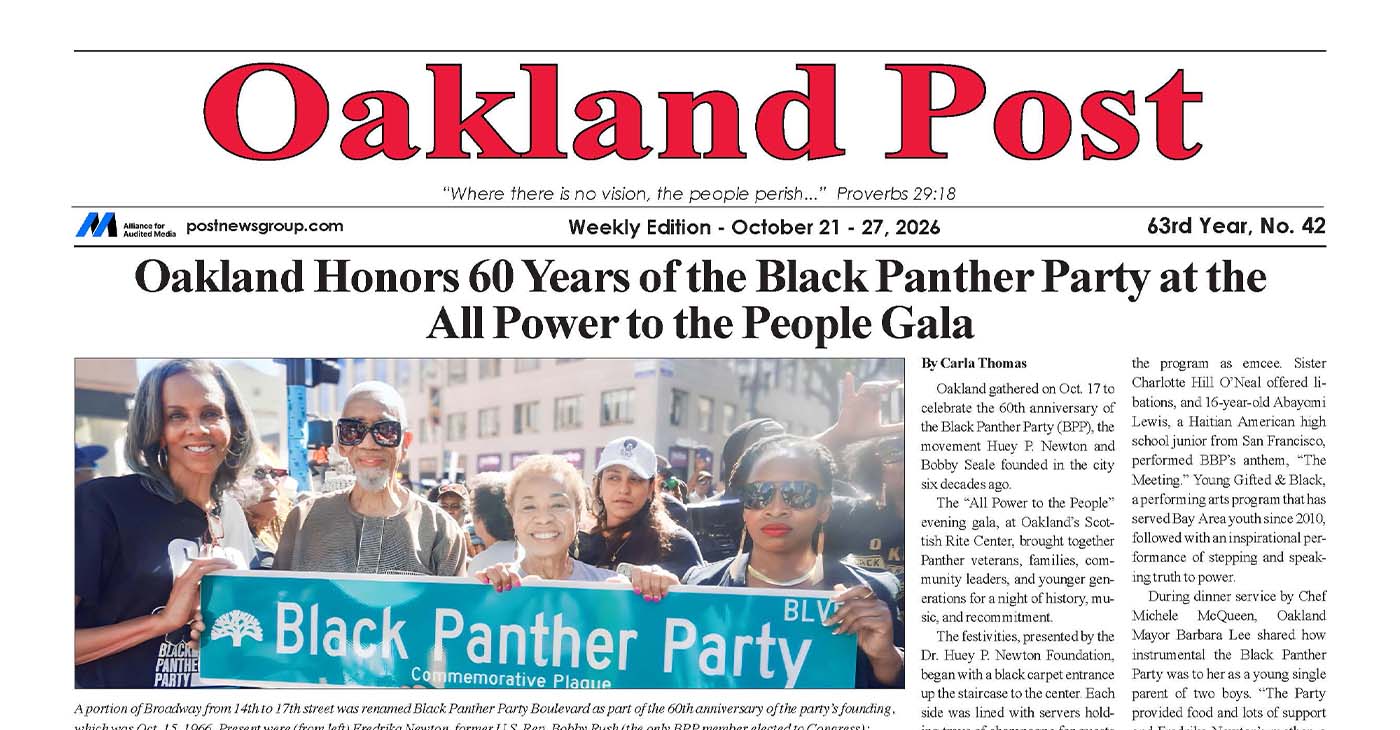
To enlarge your view of this issue, use the slider, magnifying glass icon or full page icon in the lower right corner of the browser window.

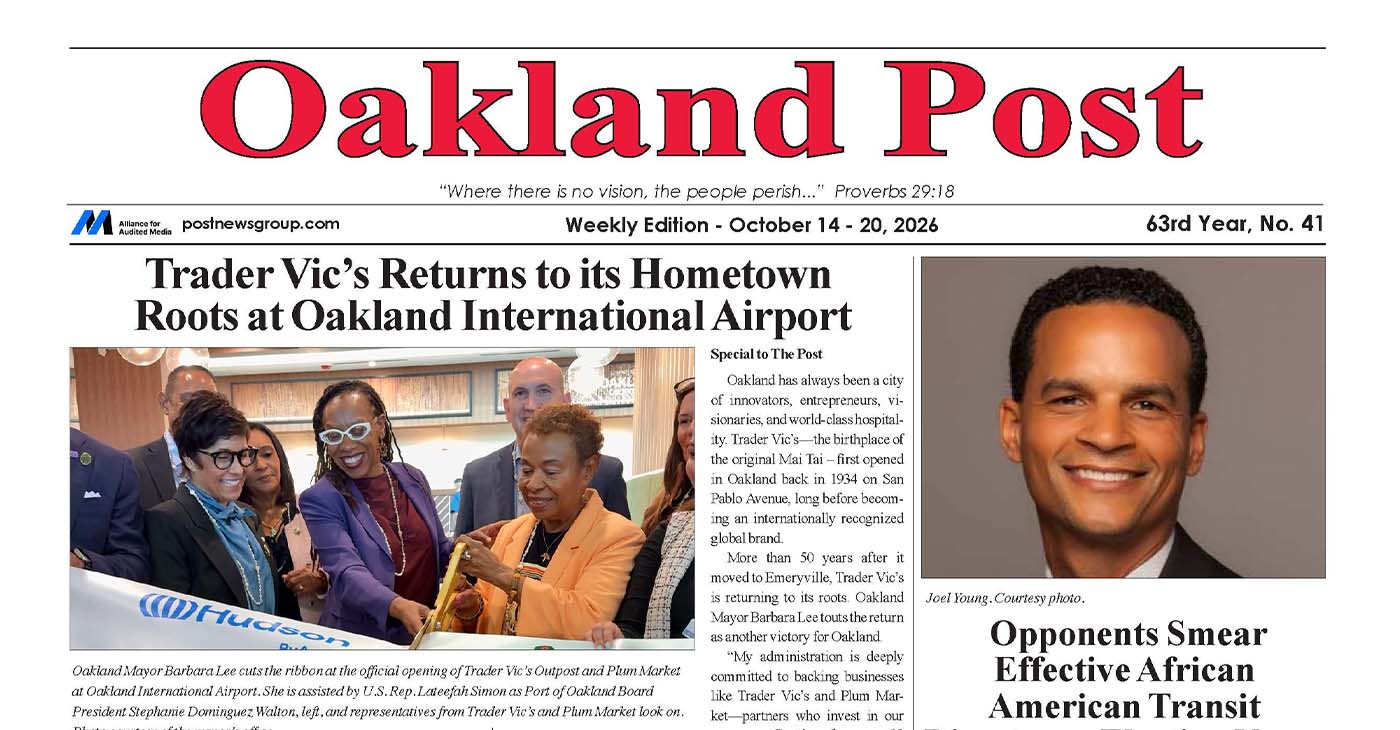
To enlarge your view of this issue, use the slider, magnifying glass icon or full page icon in the lower right corner of the browser window.
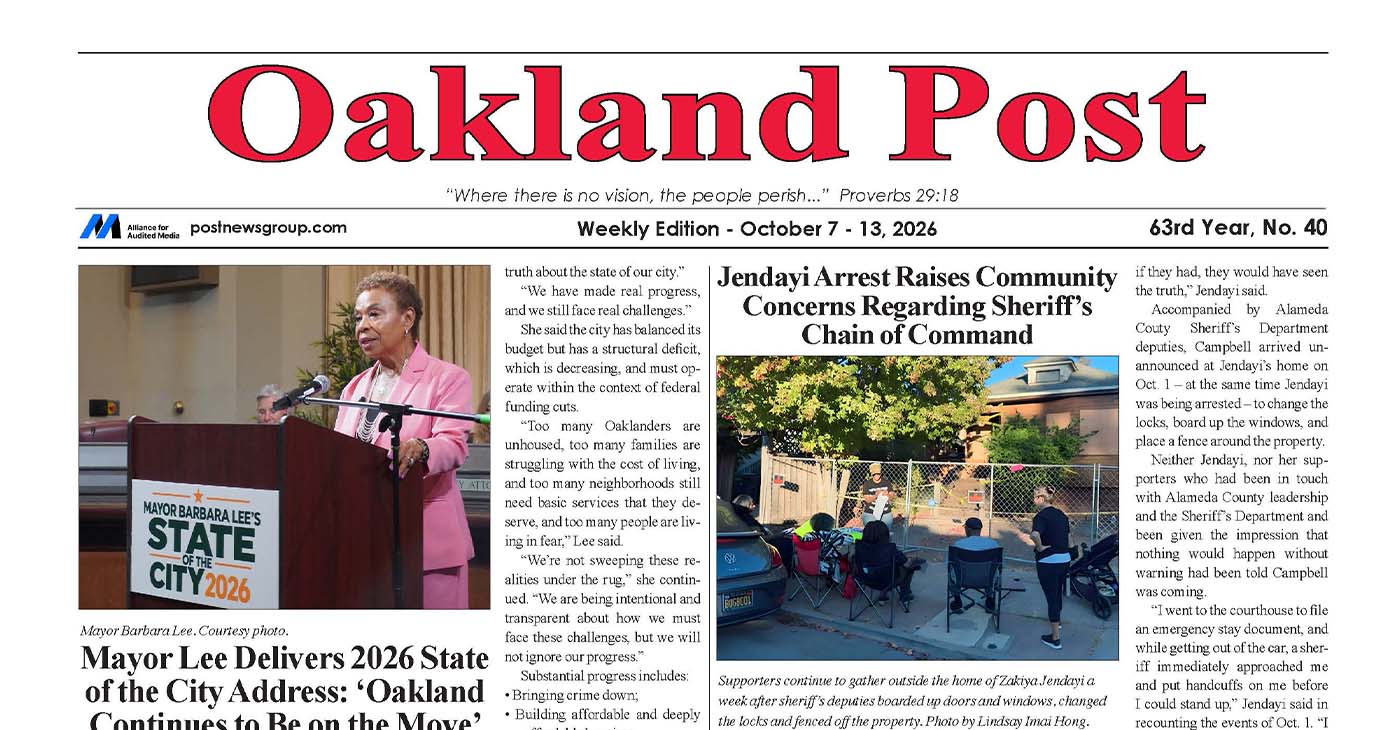
To enlarge your view of this issue, use the slider, magnifying glass icon or full page icon in the lower right corner of the browser window.


Oakland Probate Dispute Raises Questions About Court-Ordered Property Transfer and Missing Notice

‘Raising a Child Shouldn’t Break the Bank’: California Is Helping Families Save on Childcare Costs

Secretary of State Shirley Weber Pushes Back Against DOJ Demands Over California Voter Rolls

Chase Launches Fraud & Scam Prevention Month

U.S. Rep. Simon Secures More Than $1 Million for Public Safety at Mills College at Northeastern University Oakland, Surrounding Neighborhood

COMMENTARY: Valarie Bachelor and Jennfier Brouhard are Excellent School Board Members and Deserve to Be Reelected

Oakland Faith Leaders Gather to Revitalize the Interdenominational Ministerial Alliance of Oakland

Statue of ‘La Catrina,’ a Beloved Symbol of Dia de Los Muertos, Visits Oakland

Oakland Honors 60 Years of the Black Panther Party at the All Power to the People Gala

Fate of Bay Area Public Transit Hinges on Regional Transit Measure

Why AC Transit Director Joel Young is My Choice for AC Transit Board Ward 3

Oakland Post: Week of October 21 – 27, 2026

Mayor Barbara Lee Holds Special State of the City Address in Deep East Oakland

Practitioners of African Traditional Spirituality Offer Ancestral Reverence Ritual Oct. 31

It’s Time to Lose Weight Before the Holidays

Misnamed ‘Parent’ PAC Seeks to Influence Oakland School Board Elections

Listening as a Lifeline: A Doula’s Witness to Black Maternal Health

Poll: Becerra Widens His Lead Over Hilton; Californians Split on Wealth Tax

County Office of Education Says OUSD Finances Are Getting Healthier, Materially Stronger

Doulas Are Helping Black California Moms Navigate Pregnancy–Even as High Mortality Rates Persist

Oakland Post: Week of September 9 – 15, 2026

Zakiya Jendayi Arrested, Locked Out of Home by Sheriff’s Deputies

Mayor Lee Announces $1 Million Kaiser Permanente Grant for Pilot Program to Address Homelessness, Clean Up Public Spaces throughout Oakland

Richmond Tiny House Village Farm & Garden Set to Open Gates on Sept. 26

BLACspace Cooperative Invites Bay Area to Experience Oakland’s Black Cultural Ecosystem Through a BLAC Map Tour + Party

OPINION: Nolan Wells’ Death One of Several Signifying Racial Terror Lives on in U.S. South

Latest Massacre in Haiti Reveals Cruelty U.S. Deportations

Oakland People’s Arms Embargo Coalition Demands End to Military Shipments Thru Oakland

Oakland Post: Week of September 16 – 22, 2026

Democratic Clubs Interview Candidates for Oakland School Board

The Conversation With Al McFarlane 6/23/26

Media Monday 6/22/26

LIVE! ASK ALMA! — TUES. 6.23.26 7PM EST

Car Buying Secrets: 4 Hidden Checks Before You Sign!

Is This 550 HP Charger Worth YOUR Money? AutoNetwork Review

Celebrating Juneteenth – Frederick Douglass on education and resistance

LIVE! — ASK ALMA! — TUES. 6.19.26 7PM EST

Hyundai Ioniq 5 Parking, Safety, and 360 View #shorts

2025 Ioniq 5 New Wiper & Powerful Performance! #shorts

Electric SUV Range: Is 259 Miles Enough? #shorts

EV Charging: How Fast Can You Charge an Electric Vehicle? #shorts

Biometric Cooling… Messaging Seats…Come on! 2025 Infiniti QX80 Autograph 4WD

Charged Up: Witness the Magic of a Fully Electric Car! #shorts

Range Rover Sport PHEV Included…: See What’s Inside This Luxury SUV! #shorts

Invisible Hood View: Perfect Parking with X-Ray Vision! #shorts
-
 Black History3 weeks ago
Listening as a Lifeline: A Doula’s Witness to Black Maternal Health
-
 Economy4 weeks ago
Poll: Becerra Widens His Lead Over Hilton; Californians Split on Wealth Tax
-
 Business4 weeks ago
County Office of Education Says OUSD Finances Are Getting Healthier, Materially Stronger
-
 Lead Story3 weeks ago
Zakiya Jendayi Arrested, Locked Out of Home by Sheriff’s Deputies
-
 Art4 weeks ago
BLACspace Cooperative Invites Bay Area to Experience Oakland’s Black Cultural Ecosystem Through a BLAC Map Tour + Party
-

 Business4 weeks ago
From Historic Memories to New Possibilities: Oakland Celebrates Coliseum 60
-

 Community4 weeks ago
Asm. Corey Jackson Announces Launch of 24-Hour Childcare in His District
-

 Black History4 weeks ago
IN MEMORIAM: The Rev. Leon “Sonny” Clark, Longtime Orange County Pastor and Community Leader, Dies at 72
