
#NNPA BlackPress
Black Women in Rural Areas Grapple with Stark Decline in Obstetric Care
THE AFRO — “The risks facing women in rural communities is due to hardship in receiving routine screenings and also access for treatment if conditions/diseases arise. Also, in rural areas there are few specialists,” Dr. Sonya Buchanan, a preventative medicine physician and Meharry Medical College graduate, told the AFRO.

By Ashleigh Fields, Special to the AFRO
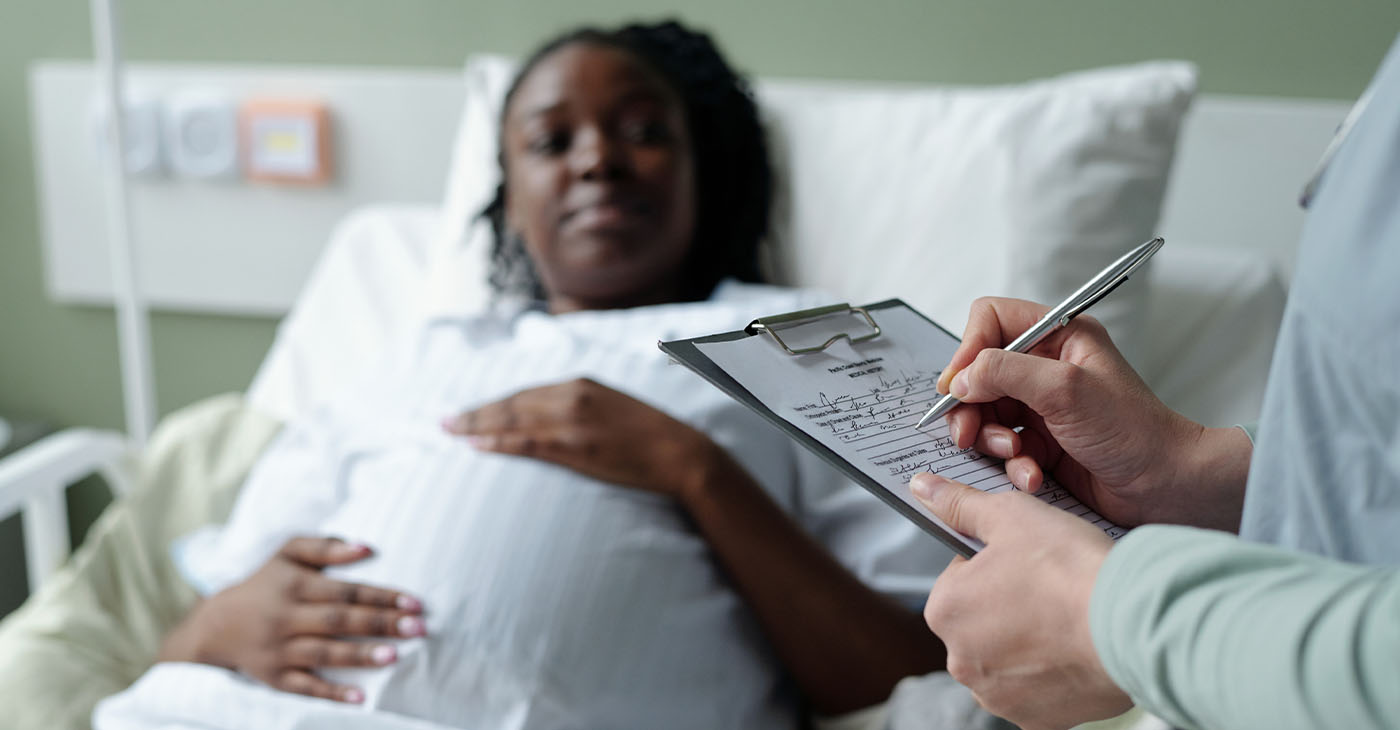
Black women in rural areas are facing the brunt of declining medical services, including access to obstetric care as new policies threaten clinic and hospital closures.
Under the current White House administration’s summer spending package, federal reimbursement for services covered through Medicaid and the Affordable Care Act severely declined leaving rural healthcare providers to fend for themselves amid pressing patient concerns.
“The risks facing women in rural communities is due to hardship in receiving routine screenings and also access for treatment if conditions/diseases arise. Also, in rural areas there are few specialists,” Dr. Sonya Buchanan, a preventative medicine physician and Meharry Medical College graduate, told the AFRO.
“Most specialists practice in larger cities with larger populations. Commuting to and from for treatment of chronic illnesses or cancer may not be possible for a number of reasons including financial, logistics or missing time from work,” she added.
In response to the 47th president’s spending bill, Georgia Rep. Nikema Williams (D) introduced the Maternal Health Equity Under Medicaid Act to raise federal matching rates to 90 percent for Medicaid expenditures on maternal healthcare.
Nearly 1 in 5 or 20 percent of rural adults and 40 percent of rural children rely on Medicaid or Children Health Insurance Program. Amid cost concerns, rural Americans also face geographic challenges that present threats to healthcare.
Most live an average of 10.5 miles from the nearest hospital, versus just 4.4 miles for their urban counterparts, according to the National Rural Health Association.
“Medicaid is the largest payer of maternity care in this country and must be part of the solution to the maternal health crisis. Too many people are still falling through cracks in our healthcare system, especially Black mamas who continue to face a worsening maternal health crisis,” Williams said in a statement noting that 42 percent of births are financed by Medicaid.
Still, women who enroll in Medicaid in their third trimester have a 4.7 times higher likelihood of experiencing maternal mortality and a 1.5 times higher risk for infant mortality, according to her office.
“Raising the federal match for maternal care will give states the resources they need to expand care and save lives. As Republicans threaten devastating Medicaid cuts, this legislation is a clear statement: we must invest in care, not cruelty,” the Georgia lawmaker said.
As of 2022, more than two-thirds of rural hospitals in eight states were without obstetric services, according to a Health Affairs study. From 2010- 2022, 12 states also reported the loss of 25 percent or more obstetric services in rural hospitals.
“The mass closures of obstetric wings in rural hospitals have been a major issue for years now. In North Carolina, 40 percent of our counties have no facilities at all for maternity care. The passage of the Big Beautiful Bill—I like to call it the Big Ugly Bill—is only going to make these issues so much worse. Labor and delivery units are often the first to get cut when hospital budgets get low,” Rep. Alma Adams (D-N.C.) told the AFRO.
“This bill made major cuts to Medicaid dollars, which hospitals rely on to stay afloat. It also created new restrictions making it more difficult to remain eligible for Medicaid,” she added.
The United States remains the only developed country with a rising maternal mortality rate, according to UNICEF, with deaths skewed towards women of color.
Black women are three to four times more likely to die from pregnancy-related complications and twice as likely to lose an infant to premature death. Women in rural communities are threatened the most.
All 50 states were given access to the federal Rural Health Transformation Fund which provides over $100,000 to strengthen and modernize health care in rural communities across the country.
“While it won’t fully alleviate the burden of these Medicaid cuts, our state will be using some of these dollars to keep rural hospitals in business and expand maternity care access in our state, focusing on non-medical barriers to care, too,” Rep. Adams said.
“Let’s be honest, though—this is a band-aid to our country’s Black maternal health crisis. We need comprehensive legislation to address it, like the Momnibus Act, which we’re reintroducing soon with Rep. Underwood and Sen. Booker. We need major action soon, because our country is reaching a boiling point, and our moms deserve better,” Adams continued.
The Momnibus Act is a package of 13-bill acts that address social determinants, mental health, workforce diversification, and data collection, with over $1 billion in proposed investments dedicated to solving the maternal mortality crisis.
While lawmakers address issues through policy, doulas have also been stepping in to bridge the gap by providing travel services to address the lack of care in rural communities.
“Historically, doulas were responsible for assisting those giving birth and midwives, and were often among the few enslaved individuals who were allowed to travel due to the indispensability of their services. However, as births moved into hospitals, the non-clinical support system declined — removing an invaluable service for expectant mothers, particularly those within communities disproportionately affected by maternal mortality rates and limited access to medical care and birthing services,” according to Valerie Rochester, chief health equity officer at Creating Healthier Communities (CHC).
“Increasingly, research suggests that doulas are not only beneficial in better health outcomes, but also in reducing unnecessary medical procedures and, therefore, healthcare costs. A recent study of Medicaid beneficiaries found that women who received doula support had both lower cesarean and preterm birth rates,” she added.
Jacque Souza, a self-employed doula, said families in areas without immediate access to healthcare or concerns about care in hospitals have benefitted from the at-home services doulas provide.
“A birth doula holds space so birth can unfold with dignity. She does not replace medical care but helps mothers make the best decisions when bringing a baby into the world,” Souza told the AFRO.
Doulas also provide extensive treatment after babies are born.
“A postpartum doula also has an important, though often less visible, role. She helps families navigate the unique and delicate time of postpartum. those days when nights are long and the days feel endless. A postpartum doula guides and cares for new mothers during this profound transition,” Souza said.













#NNPA BlackPress
NFL: Week Two Recap | Jalen Hurts did not fold; Caleb Williams exits game with injury
Philadelphia Eagles quarterback Jalen Hurts found Darius Cooper with nine seconds left for the game winning touchdown as his team beat the Tennessee Titans 24-20 in Nashville. Hurts finished the day 26/37 for 264 yards. He threw for two touchdowns and two interceptions. Prior to the final drive, the Eagles ran 25 plays for 45 […]
The post NFL: Week Two Recap | Jalen Hurts did not fold; Caleb Williams exits game with injury appeared first on BlackPressUSA.

Philadelphia Eagles quarterback Jalen Hurts found Darius Cooper with nine seconds left for the game winning touchdown as his team beat the Tennessee Titans 24-20 in Nashville. Hurts finished the day 26/37 for 264 yards. He threw for two touchdowns and two interceptions.
Prior to the final drive, the Eagles ran 25 plays for 45 yards. During the final drive Hurts went 6-8 with 61 passing yards and the touchdown. Titans defensive tackle — and team captain — Jeffery Simmons said this week that the way to defend Jalen Hurts is to make him “play quarterback.”
Hurts said to Simmons after today’s game: “You started that sh**. I had to finish it.”
Running back Saquon Barkley suffered a stinger in the first half but he ultimately finished the game. He had four carries and nine yards and one catch for eleven yards. He will get an MRI for his injury, but admitted to Cameron Wolfe of the NFL Network he was fine.
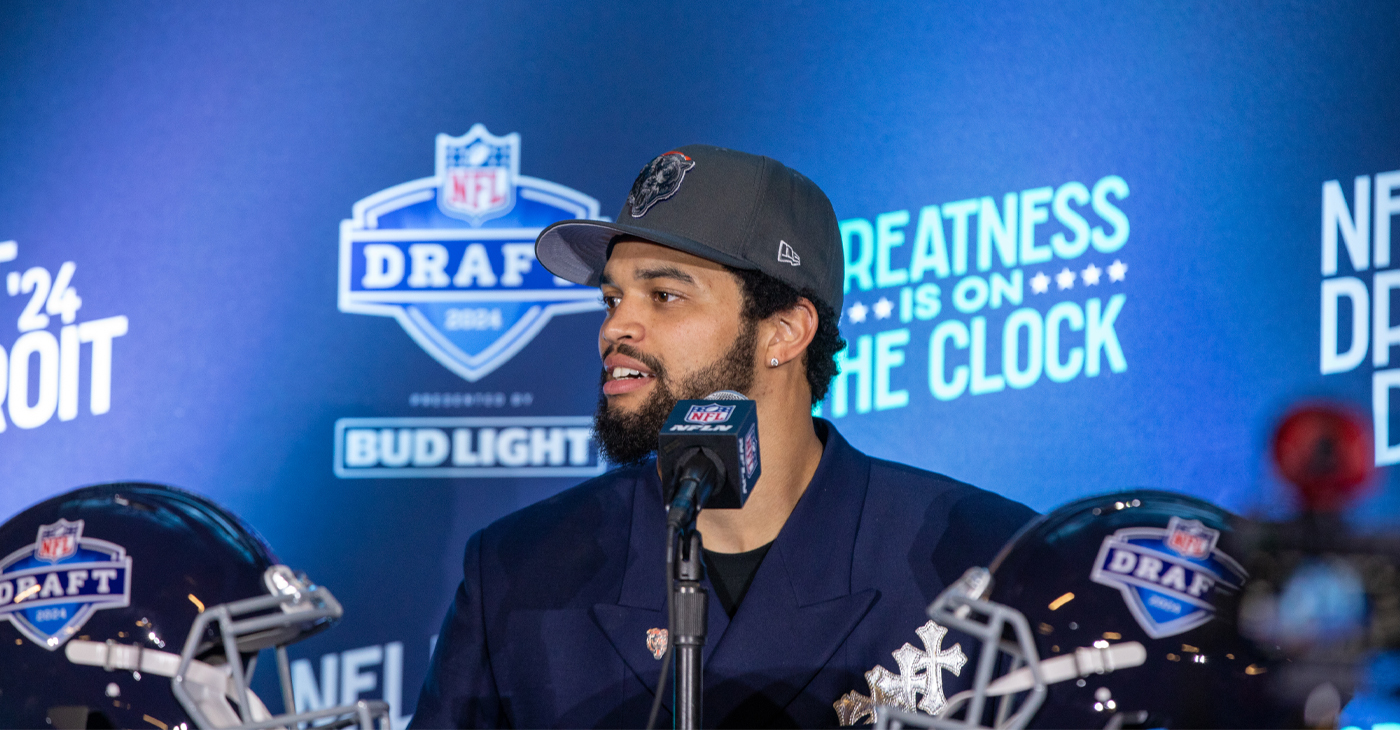
Caleb Williams leaves game against Vikings with apparent lower-body injury
Chicago Bears quarterback Caleb Williams was helped off the field with a right leg injury with 7:42 remaining in the fourth quarter. Williams was down, writhing in pain after scrambling to his left. After departing the injury tent, Williams raised his right fist, acknowledging the crowd while expressing his frustration. Testing will commence on Monday to find out more details about his injury.
“We’ll know tomorrow,” Johnson admitted regarding Williams’ injury. “He’s in good spirits. He’s a team player.”
Williams finished the day with 138 passing yards and one interception.
“I’m actually happy it’s nothing with the knee — that was my first inclination,” Johnson said. “But, a hamstring could be pretty damaging as well. So, we’ll see. We’ll see how bad it is tomorrow and we’ll go from there.”
Bryce Young once again dominated the Falcons
Carolina Panthers quarterback Bryce Young is 5-1 against the Atlanta Falcons and is undefeated at Mercedes-Benz Stadium. Today, Young threw for 287 yards and three touchdowns as he led the Panthers to a 34-3 dismembering of the Atlanta Falcons. Georgia Tech alumnus Darren Waller caught two touchdowns and linebacker Devin Lloyd returned one of his two interceptions for a touchdown.
Cooper Rush started his second straight game for the Falcons and it did not go well. The partisan crowd voiced their displeasure after Rush completed 10/17 passes for 86 yards and two interceptions. Jack Strand entered the game for Rush prompting cheers from the Falcons fans. The rookie threw a pick-six on his first career pass attempt. Strand was the first QB to accomplish that feat since Sam Darnold in 2018 and is the first Falcons player to do that since Brett Favre in 1991. Strand finished the day with 59 passing yards and 16 rushing yards.
According to reports, quarterback Michael Penix, Jr. is expected to make his season debut this Thursday at the Green Bay Packers. His return should help the Falcons. They are the first team since the 2008 Rams to not run any plays in the red zone after the first two games to open a season.
The bright spots for the Falcons today were the Spelman College Jaguarettes performing with the Falcons cheerleaders and Florida A&M’s marching band, The Marching 100, also performed during halftime!
Jayden Daniels gets carted off after apparent arm injury
Washington Commanders quarterback Jayden Daniels appeared to injure his left elbow on the final play of the first half in his game against the Dallas Cowboys. During the play, Daniels got stepped on, braced himself for the fall, and his elbow bent the wrong way. Daniels draped a towel over his head as he exited the field on the cart.
He was later ruled out.
Daniels suffered a dislocated elbow to the same arm during week nine of last season against the Washington Commanders, which led to him being shut down for the remainder of the season.
The post NFL: Week Two Recap | Jalen Hurts did not fold; Caleb Williams exits game with injury appeared first on BlackPressUSA.

#NNPA BlackPress
The Complete Negotiation Framework — Every Stage, Every Tactic, Every Win
Master the complete vehicle-purchase negotiation framework with Roosevelt Gist and Roosevelt. Learn every stage, tactic, and win!
The post The Complete Negotiation Framework — Every Stage, Every Tactic, Every Win appeared first on BlackPressUSA.

Roosevelt Gist and Roosevelt deliver the complete vehicle-purchase negotiation framework in Episode 8 of The Color of Our Money Is Green. This episode covers the three foundations of every effective negotiation, the full seven-stage negotiation sequence with exact language for every stage, and five of the most common dealership tactics with the specific response each one requires.
What You Learn in This Episode:
The three foundations that make every negotiation tactic work
The complete seven-stage car-buying negotiation sequence
Exact language for every stage of the dealership conversation
Five common dealership tactics — the turnover, the four-square, the packed payment, spot delivery, and forced add-ons — and how to counter each one
Why signing preliminary paperwork isn’t the same as signing the final contract
___________________________________________________________________
“The Color of Our Money Is Green: A Buyer’s Guide to What Cars Actually Cost” — stan.store/RGist
____________________________________________________________________
AutoNetwork helps serious car shoppers inspect any new vehicle online before walking into a dealership. I’m Roosevelt — I’ve been reviewing cars and shaping digital car buying and credit union auto leasing since before YouTube car reviews existed.
You’ll find detailed walkaround reviews, POV test drives, and buyer-focused breakdowns covering comfort, space, features, and real-world value.
How to use the channel:
Watch the walkaround of the car you’re considering
Visit AutoNetwork.com for the full review
Check CouponsOffersAndDeals.com for current dealer specials
Walk in already knowing what you want — and what it should cost
 AutoNetwork.com
 CouponsOffersAndDeals.com
Affiliate disclosure: some links earn a small commission at no cost to you and help support the channel. Insta360 is one of those partners.
The post The Complete Negotiation Framework — Every Stage, Every Tactic, Every Win appeared first on BlackPressUSA.
#NNPA BlackPress
Mazda CX-90 Luxury: Heated Seats & Premium Comfort! #shorts
Stay toasty in the CX-90! Plush Nappa leather, heated/ventilated seats, and a memory-equipped heated steering wheel deliver ultimate luxury.
The post Mazda CX-90 Luxury: Heated Seats & Premium Comfort! #shorts appeared first on BlackPressUSA.

Experience ultimate comfort in the CX-90. Nappa leather, heated/ventilated seats, 8-way power adjustments, and memory settings for both front passengers. The heated steering wheel with memory tilt/telescope adds premium convenience.
 Watch the full video: https://youtu.be/EH5A4eQ4ipY
#AutoNetwork
The post Mazda CX-90 Luxury: Heated Seats & Premium Comfort! #shorts appeared first on BlackPressUSA.



Asm. Corey Jackson Announces Launch of 24-Hour Childcare in His District

IN MEMORIAM: The Rev. Leon “Sonny” Clark, Longtime Orange County Pastor and Community Leader, Dies at 72

Poll: Becerra Widens His Lead Over Hilton; Californians Split on Wealth Tax

From Historic Memories to New Possibilities: Oakland Celebrates Coliseum 60

County Office of Education Says OUSD Finances Are Getting Healthier, Materially Stronger

LIVE FREE Sunday Dinner Brings Faith, Fellowship and Civic Conversation to Oakland

Remembering Chauncey Bailey as Student Journalists Face Threats to Truth-Telling

BLACspace Cooperative Invites Bay Area to Experience Oakland’s Black Cultural Ecosystem Through a BLAC Map Tour + Party

In Wake of Death on Doorstep, Williams Chapel Baptist Church Calls for Better Care, Funding for Unhoused

Oakland Centenarian Nuna McKee Honored!

Caribbean Nations Produce Action Plan Calling for UK Reparations Over Slavery

Oakland Post: Week of September 23 – 29, 2026

Doulas Are Helping Black California Moms Navigate Pregnancy–Even as High Mortality Rates Persist

Newsom Signs Addictive Social Media Law to Protect Kids

On Your November Ballot: Prop 38 Would Allocate $8.4 Billion to Immunology and Immunotherapy Funding

Standoff for Justice: Our Homes Are Worth Fighting For

Oakland Post: Week of August 26 – September 1, 2026

Frontier Airlines’ Return to Oakland Airport Brings Flights, Jobs and Opportunity

Gubernatorial Candidate Steve Hilton Blasts California New Tire Rules; Newsom Hits Back

Chef Sharon Lee Blends Culinary Excellence, Education and Empowerment

Jackie Wright Champions Bay Area Stories, Filmmakers and Cultural Institutions

Big City Mayors Ask for “Yes” Vote on Housing Bond Measure; Conservatives Say “No”

Oakland Coliseum Project Opens Door for Small Businesses to Build Bigger

Gov. Newsom’s Latest Appointees Include Sacramento Advocate for Formerly Incarcerated Students; State’s New Tech Chief

Misnamed ‘Parent’ PAC Seeks to Influence Oakland School Board Elections

Longtime BWOPA Member Brendalyn Goodall Appointed to California Workforce Development Board

Gov. Newsom Signs Law Shielding Immigration Aid Workers From Doxing Threats

Secretary of State Shirley N. Weber Urges Californians to Vote Early as Voter ID Battle Intensifies

From Palestine to Oakland: Seeds for Liberation Examines Shared Struggles for Freedom

IN MEMORIAM: Dolly Parton Dead at 80 — How She Built a Legacy of Love and Earned Her Place in Black Culture

The Conversation With Al McFarlane 6/23/26

Media Monday 6/22/26

LIVE! ASK ALMA! — TUES. 6.23.26 7PM EST

Car Buying Secrets: 4 Hidden Checks Before You Sign!

Is This 550 HP Charger Worth YOUR Money? AutoNetwork Review

Celebrating Juneteenth – Frederick Douglass on education and resistance

LIVE! — ASK ALMA! — TUES. 6.19.26 7PM EST

Hyundai Ioniq 5 Parking, Safety, and 360 View #shorts

2025 Ioniq 5 New Wiper & Powerful Performance! #shorts

Electric SUV Range: Is 259 Miles Enough? #shorts

EV Charging: How Fast Can You Charge an Electric Vehicle? #shorts

Biometric Cooling… Messaging Seats…Come on! 2025 Infiniti QX80 Autograph 4WD

Charged Up: Witness the Magic of a Fully Electric Car! #shorts

Range Rover Sport PHEV Included…: See What’s Inside This Luxury SUV! #shorts

Invisible Hood View: Perfect Parking with X-Ray Vision! #shorts
-
 Community2 weeks ago
Misnamed ‘Parent’ PAC Seeks to Influence Oakland School Board Elections
-

 Activism3 weeks ago
Oakland Post: Week of September 2 – 8, 2026
-

 Community2 weeks ago
Richmond Tiny House Village Farm & Garden Set to Open Gates on Sept. 26
-

 Black History2 weeks ago
OPINION: Nolan Wells’ Death One of Several Signifying Racial Terror Lives on in U.S. South
-

 Black History2 weeks ago
Latest Massacre in Haiti Reveals Cruelty U.S. Deportations
-

 Activism2 weeks ago
Oakland Post: Week of September 9 – 15, 2026
-

 Community2 weeks ago
Democratic Clubs Interview Candidates for Oakland School Board
-
 Featured2 weeks ago
‘Ready to See These Bills Become Law’: Sen. Weber’s Package of 15 Bills Advance to Gov. Newsom’s Desk
