Connect with us

Marin County

Dorothy Lee Bolden: Uniting Domestic Workers

Published

on

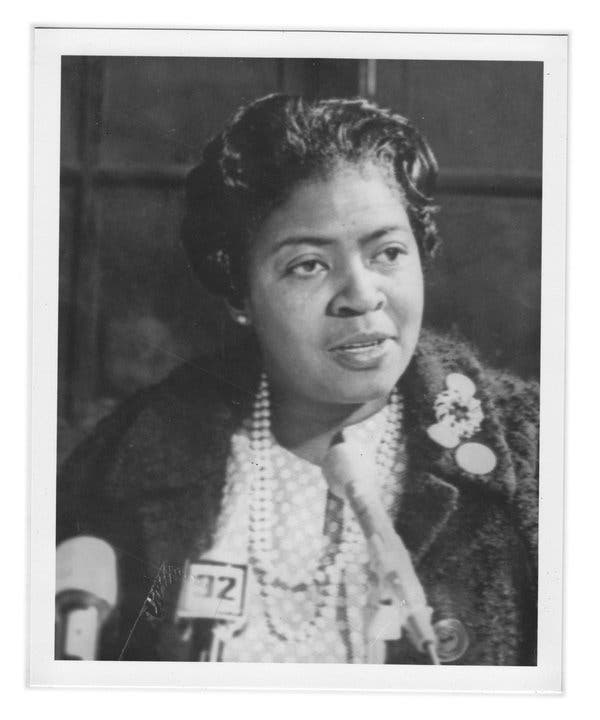
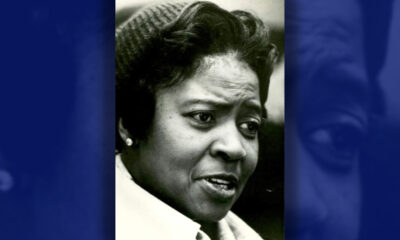
Dorothy Lee Bolden’s first experience with domestic work was at the age of nine where she earned $1.25 per week.

Alabama-born Bolden (1923–2005), alongside her mother, washed soiled diapers for a white employer. Little did anyone know that this profession would spur Bolden to spearhead the movement for basic dignity and respect for generations of domestic workers.

Domestic work followed Bolden beyond high school. According to sources from the New York Times, Bolden said she would wake “at 4 a.m. to leave home by 6:00 a.m., and be on the job by 8:00 a.m., perform all those duties necessary to the proper management of a household for eight hours, leave there by 4:00 p.m. to be home by 6:00 p.m. where I would do the same things I’ve done all over again for my own family.”

It was Bolden’s experiences working as a domestic in 1940s Atlanta that inspired her civil rights activism. A white female employer demanded that Bolden remain beyond her shift and wash dishes. Bolden refused. She was arrested and held in the county jail because “she was crazy.” There was no other reason for disobeying an order from a white person.

Bolden was never sentenced or institutionalized, but this event was the seed that grew into an organization that would protect domestic workers across the United States: the National Domestic Workers Union of America.

Rosa Parks had made public transportation a major breeding ground for civil rights activism, so Bolden began organizing during the long bus rides her peers made to wealthy neighborhoods. Many were fed up, working long hours for little pay, with little to no worker protections.

This organization of women would go on to fight for worker’s rights, create training programs, and teach workers to advocate for themselves. It was also important to Bolden to teach communication skills.

In the book “Household Workers Unite,” Bolden is quoted as saying: “You have to teach each maid how to negotiate…And this is the most important thing — communication. I would tell them it was up to them to communicate.”

But respect for Bolden’s activism was not shared by everyone. Although she consulted presidents Ford, Reagan, and Carter, she received several death threats from the Ku Klux Klan.

The New York Times reported that during the makings of an oral history project, Bolden said that “men claiming to be members of the KKK called her house and spoke about “whipping my behind,” but in coarser terms. “I told them any time they wanted to, come on over and grab it,” Bolden said during the interview. “It didn’t scare me, didn’t bother me. It made me angry, it made me determined to do what I had to do.”

U.S. Rep. John Lewis of Georgia said that Bolden “spoke up, and she spoke out, and when she saw something that wasn’t fair, or just, or right, she would say something.”

The NDWU of America lasted until the mid-1990s, but Bolden’s legacy lives on.

Tamara Shiloh

Tamara Shiloh


About Tamara Shiloh


Tamara Shiloh has published the first two books in her historical fiction chapter book series, Just Imagine…What If There Were No Black People in the World is about African American inventors, scientists and other notable Black people in history. The two books are Jaxon’s Magical Adventure with Black Inventors and Scientists and Jaxon and Kevin’s Black History Trip Downtown. Tamara Shiloh has also written a book a picture book for Scholastic, Cameron Teaches Black History, that will be available in June, 2022.

Tamara Shiloh’s other writing experiences include: writing the Black History column for the Post Newspaper in the Bay area, Creator and Instruction of the black History Class for Educators a professional development class for teachers and her non-profit offers a free Black History literacy/STEM/Podcast class for kids 3d – 8th grade which also includes the Let’s Go Learn Reading and Essence and tutorial program.   She is also the owner of the Multicultural Bookstore and Gifts, in Richmond, California,

Previously in her early life she was the /Editor-in-Chief of Desert Diamonds Magazine, highlighting the accomplishments of minority women in Nevada; assisting with the creation, design and writing of a Los Angeles-based, herbal magazine entitled Herbal Essence; editorial contribution to Homes of Color; Editor-in-Chief of Black Insight Magazine, the first digital, interactive magazine for African Americans; profile creations for sports figures on the now defunct PublicFigure.com; newsletters for various businesses and organizations; and her own Las Vegas community newsletter, Tween Time News, a monthly publication highlighting music entertainment in the various venues of Las Vegas.

She is a member of:

  • Society of Children’s Book Writers and Illustrators (SCBWI)

  • Richmond Chamber of Commerce

  • Point Richmond Business Association

  • National Association of Professional Women (NAPW)

  • Independent Book Publishers Association (IPBA)

  • California Writers Club-Berkeley & Marin

  • Richmond CA Kiwanis

  • Richmond CA Rotary

  • Bay Area Girls Club


Tamara Shiloh, a native of Northern California, has two adult children, one grandson and four great-grand sons. She resides in Point Richmond, CA with her husband, Ernest.

www.multiculturalbookstore.com

About Tamara Shiloh

Tamara Shiloh has published the first two books in her historical fiction chapter book series, Just Imagine…What If There Were No Black People in the World is about African American inventors, scientists and other notable Black people in history. The two books are Jaxon’s Magical Adventure with Black Inventors and Scientists and Jaxon and Kevin’s Black History Trip Downtown. Tamara Shiloh has also written a book a picture book for Scholastic, Cameron Teaches Black History, that will be available in June, 2022. Tamara Shiloh’s other writing experiences include: writing the Black History column for the Post Newspaper in the Bay area, Creator and Instruction of the black History Class for Educators a professional development class for teachers and her non-profit offers a free Black History literacy/STEM/Podcast class for kids 3d – 8th grade which also includes the Let’s Go Learn Reading and Essence and tutorial program.   She is also the owner of the Multicultural Bookstore and Gifts, in Richmond, California, Previously in her early life she was the /Editor-in-Chief of Desert Diamonds Magazine, highlighting the accomplishments of minority women in Nevada; assisting with the creation, design and writing of a Los Angeles-based, herbal magazine entitled Herbal Essence; editorial contribution to Homes of Color; Editor-in-Chief of Black Insight Magazine, the first digital, interactive magazine for African Americans; profile creations for sports figures on the now defunct PublicFigure.com; newsletters for various businesses and organizations; and her own Las Vegas community newsletter, Tween Time News, a monthly publication highlighting music entertainment in the various venues of Las Vegas. She is a member of:
  • Society of Children’s Book Writers and Illustrators (SCBWI)
  • Richmond Chamber of Commerce
  • Point Richmond Business Association
  • National Association of Professional Women (NAPW)
  • Independent Book Publishers Association (IPBA)
  • California Writers Club-Berkeley & Marin
  • Richmond CA Kiwanis
  • Richmond CA Rotary
  • Bay Area Girls Club
Tamara Shiloh, a native of Northern California, has two adult children, one grandson and four great-grand sons. She resides in Point Richmond, CA with her husband, Ernest. www.multiculturalbookstore.com

Continue Reading
Click to comment

Leave a Reply

Your email address will not be published. Required fields are marked *

Activism

Life Expectancy in Marin City, a Black Community, Is 15-17 Years Less than the Rest of Marin County

 “Marin City residents have been fighting for years just to stay here. Residents live with the fear of being forced out, public housing torn down and rebuilt for the wealthy. Due to ongoing issues continually being ignored, residents feel they must be empowered to make their own decisions for the future survival and protection of their community,” said Terrie Green, a lifelong resident and executive director of Marin City Climate Resilience (MCCR).

Published

on

Marin City community leaders (l.-r.): Terrie Green, executive director of Marin City Climate Resilience (MCCR); Wambua Musyoki, Stanford University; Khamil Callahan, Santa Rosa Junior College; Serenity Allen, Xavier University; and Chinaka Green, MCCR associate director.

By Ken Epstein

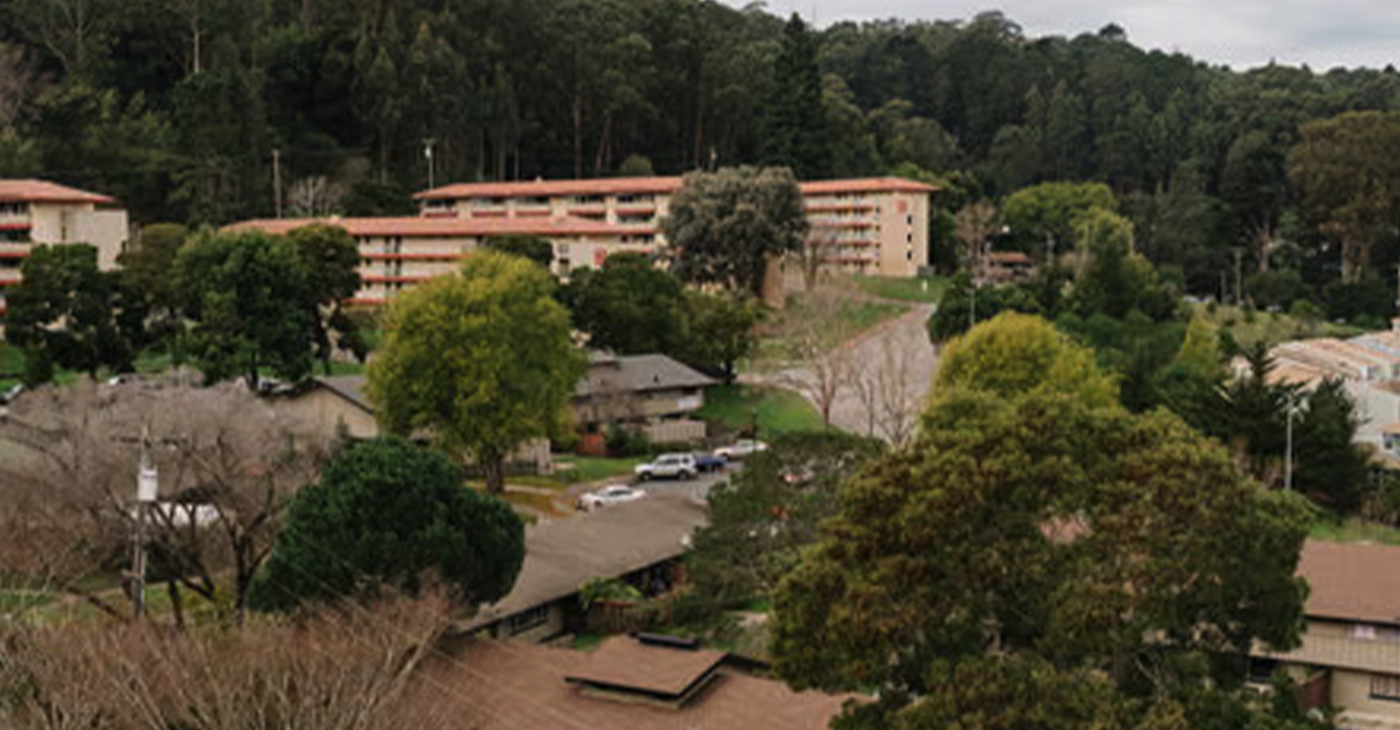
People may be aware of the existence of Marin City and know a little about its history as a center of U.S. resistance to fascism in the World War II. But fewer know of the community’s ongoing struggles to survive potential displacement while facing severe toxic health and environmental conditions on a daily basis.

These conditions cause chronic disease and premature death, dramatically shown in the sharp difference in life expectancy between Black and white people living in households only a few miles apart.

A historically African American enclave, Marin City, occupies a 0.5-square mile area between Mill Valley and Sausalito with its own freeway exit near the Golden Gate Bridge. In contrast, the rest of Marin County rates among the healthiest, wealthiest, and most environmentally friendly counties in the country. However, it is one of the least racially equitable counties in California, with Black residents being the most impacted, according to the Advancement Project, a civil rights organization,.

The community owes its continued existence to the World War II generation that came to the Bay Area from the South to work in the shipyards and to the resiliency of its residents. Despite often facing discriminatory practices, such as redlining and a segregated school district, Marin City residents have continually created a strong community rich in culture, spirituality, and community values.

The current statistics are brutal. At present, Marin City residents face more than a 17-year difference in life expectancy compared to neighboring cities and towns.  Contributing to these conditions are a lack of investment in public housing and infrastructure: unsafe drinking water, air pollution caused by proximity to the U.S. 101 freeway, unsanitary stormwater drainage that produces mold and mildew, as well as old and broken lead pipes and sewage in homes.

As an unincorporated community, Marin City residents must rely primarily on the elected Marin County Board of Supervisors, Department of Public Works, Transportation Authority of Marin and Caltrans for the decisions and investments that impact their lives.

“Marin City residents have been fighting for years just to stay here. Residents live with the fear of being forced out, public housing torn down and rebuilt for the wealthy. Due to ongoing issues continually being ignored, residents feel they must be empowered to make their own decisions for the future survival and protection of their community,” said Terrie Green, a lifelong resident and executive director of Marin City Climate Resilience (MCCR).

MCCR’s focus is on environmental justice. Its purpose is to empower and advocate for individuals to embrace sustainable living, envision a future free of environmental harm and collectively work towards a better Marin City.  MCCR’s motto is “Forever Marin City.”

MCCR has created a unique team of Marin City Youth Environmentalists who have studied and researched environmental issues impacting the health of the community.

Serenity Allen is an MCCR Youth Coordinator/Young Environmentalist studying to be a medical social worker at Xavier University. She has been working in the community for six years. “I strongly believe that where you live should not determine how long you are able to live,” she said.

Allen referred to the work done by former Marin County Public Health Officer Dr. Matt Willis, who stated that Marin City has a 17-year life expectancy difference between residents of Marin City (77 years) and more affluent areas like Ross (94 years).

“The research shows this gap is heavily correlated with race and socioeconomic status. Sausalito, which is not even two miles outside of Marin City, has a life expectancy of 92 years,” Allen said.

“Many elements contribute to this gap,” she said. “A major factor may be the 12 acres of toxic flood waters that pour down off the highway into low-lying Marin City.

In addition, “We do not have a barrier wall protecting us along our highway; the rest of Marin County has 16 barrier walls to protect from noise and air pollution. Marin City has been fighting for a barrier wall since 2008,” she said.

Octavien Green, an MCCR high school environmentalist, spoke about the impact of the absence of recreational facilities on health and wellness, particularly for youth.

“Lack of investment in our recreational facilities means we have fewer spaces and opportunities for physical activity, which contribute to serious health problems like heart disease, diabetes, weak bones and low energy, especially for kids.  We are presently involved in an ongoing struggle just to rebuild a sports ball field for the community that’s been unusable for the last 15 years.”

“Marin City is the center of Black culture for all of Marin County,” said Green. “Historically, though, the county has not invested in the community, and you see it in the life expectancy, the highest chronic disease and disability rates and eight times the amount of asthma.  In the last six weeks, we’ve had three young people in their 40s and 50s die from heart attacks.  This is alarming and must be addressed.”

Looking toward next steps, she said, “The way forward is through incorporation,” which would mean that Marin City would have its own elected leadership to find solutions that determine the future of the community.

This is the first in a series of articles on Marin City, examining conditions in the community and interviewing both community members and public officials.

Continue Reading

Activism

Marin Civic Center Library Marks Black History Month with 3 Events

The Civic Center Library’s Afternoon Book Club will celebrate and commemorate Black History and will meet in person on Thursday, Feb. 20 from 1-2 p.m. to discuss “The Nickel Boys” by Colson Whitehead. (This afternoon book club generally meets on the 3rd Thursday of every month from 1:00 p.m. to 2:00 p.m.)

Published

on

Fauna Solomon, “The Nickel Boys” book cover, Keenan D. Webster. Photos courtesy of Marin County Civic Center Library.

By Godfrey Lee

The Marin County Civic Center Library in San Rafael will be celebrating Black History Month with presentations by Fauna Solomon on the steelpan drum, Keenan D. Webster on West African music and a book club discussion on “The Nickel Boys” by Colson Whitehead.

The library is located at 3501 Civic Center Dr., Room 427, in San Rafael, CA. 94903. Their phone number is (415) 473-6057.

Solomon will be sharing about the history and sounds of the steelpan drum on Friday, Feb. 14, from 12- 12:45 p.m. at the Civic Center Library.

Solomon is a former teacher and professional musician from Guyana, South America, and uses storytelling and performance to explore the complex and dynamic history of the instrument. Having played since age 5, Fauna has performed across the country. Her program traces the steelpan’s evolution from the West Indies to its global recognition, offering insight into its cultural and historical significance.

The Civic Center Library’s Afternoon Book Club will celebrate and commemorate Black History. It will meet in person on Thursday, Feb. 20 from 1-2 p.m. to discuss “The Nickel Boys” by Colson Whitehead. (This afternoon book club generally meets on the 3rd Thursday of every month from 1:00 p.m. to 2:00 p.m.)

A copy of the book can be requested online, or ask at the Info Desk of the Civic Center Library (or call 415-473-6057) for assistance in placing a hold.

“The Nickel Boys” is the story of two boys unjustly sentenced to a hellish reform school in Jim Crow-era Florida and is based on the real story of the Nickel Academy, a reform school that operated for 111 years and warped the lives of thousands of children.

When Elwood Curtis, a Black boy growing up in 1960s Tallahassee, is unfairly sentenced to the Nickel Academy, he finds himself trapped in a grotesque chamber of horrors. Elwood’s only salvation is his friendship with fellow “delinquent” Turner, which deepens despite Turner’s conviction that Elwood is hopelessly naive, that the world is crooked, and that the only way to survive is to scheme and avoid trouble. As life at the academy becomes ever more perilous, the tension between Elwood’s ideals and Turner’s skepticism leads to a decision whose repercussions will echo down the decades.

Later in the afternoon at the Civic Center Library, local musician Keenan D. Webster will be sharing about the traditional instruments of the Mandinka and the Mande-speaking people of West Africa on from 4-5 p.m. on Feb. 20.

Experience the Kora (West African Mandinka harp), the Kamele Ngoni (West African Mande harp), the Balaphone (Mandinka xylophone), and more. Feel the beauty, fire, and energy of this incredible music, and learn how these traditions gave birth to the banjo and influenced blues, jazz, and popular music of today.

Webster was born in Nashville, Tennessee. His love for the blues, spirituals, and gospel and folk music of the South deepened in his youth. As a teenager in Los Angeles, California, he became fascinated with African, Afro-Cuban, reggae, and other music from the African diaspora, and was further inspired to learn about his roots, music, culture and spirituality with the Gullah, Mandinka, Mende and Yoruba people of West Africa.

He started with drums of West Africa and Afro-Cuban roots. Then came jazz and Blues, playing the saxophone and flute, and later the Native American flute. He has a deep appreciation for world music and has familiarized himself with classical music from India, the Middle East, and Southeast Asia. Webster has been on a mission to use music for world peace, healing, to fight against racism, and to bring all people together.

Continue Reading

Activism

Andre Thierry Explores Zydeco Music at Marin City Library

Grammy-nominated Andre Thierry leads the musical program with an interactive, engaging experience that combines traditional and newly composed music.

Published

on

Andre Thierry’s music program for kids. Courtesy photo.

By Godfrey Lee

The “Are You Ready to Learn” music program allows children, families, and adults, to explore the rich Kreole culture and Zydeco music of southwestern Louisiana.

Grammy-nominated Andre Thierry leads the musical program with an interactive, engaging experience that combines traditional and newly composed music.

The program, created by Thierry, showcases a mix of African and Native American Blues and French Kreole dance melodies with elements of Afro-Caribbean music.

Children and families sing and dance while learning about popular Zydeco instruments like vest rub boards, drums, and accordion.

For information on the program, go to https://www.andrethierry.com

The free program will take place on Sunday, Feb. 9, at 1 p.m., at the Marin City Library, 164 Donahue St., in Marin City. For more information, call 415-332-6158.

Thierry will be performing again the Fairfax Library, 2097 Sir Francis Drake Blvd., Fairfax, on Saturday, Feb. 15, at 11 a.m. For more information, call 415-453-8092.

Continue Reading

Subscribe to receive news and updates from the Oakland Post

* indicates required

CHECK OUT THE LATEST ISSUE OF THE OAKLAND POST

ADVERTISEMENT

WORK FROM HOME

Home-based business with potential monthly income of $10K+ per month. A proven training system and website provided to maximize business effectiveness. Perfect job to earn side and primary income. Contact Lynne for more details: Lynne4npusa@gmail.com 800-334-0540

Facebook

#NNPA BlackPress1 month ago

Reflecting on Black History Milestones in Birmingham AL

Activism1 month ago

Oakland Post: Week of February 25 – March 3, 2026

#NNPA BlackPress1 month ago

PRESS ROOM: NBA Hall of Fame Nominee Terry Cummings Joins 100 Black Men of DeKalb County to Launch Victory & Values Initiative

#NNPA BlackPress1 month ago

Trump’s MAGA Allies are Creating Executive Order Plan to Steal the 2026 Midterms

Activism1 month ago

Oakland Post: Week of March 4 – 10, 2026

Bay Area entrepreneurs attend the Alley-Oop Accelerator, a small business incubation program at Chase Oakland Community Center. Photo by Carla Thomas.
Activism1 month ago

Chase Oakland Community Center Hosts Alley-Oop Accelerator Building Community and Opportunity for Bay Area Entrepreneurs

#NNPA BlackPress1 month ago

U.S. manufacturing rebounds – how foundry services are adapting to rising demand

#NNPA BlackPress1 month ago

Poll Shows Support for Policies That Help Families Afford Child Care

#NNPA BlackPress1 month ago

OP-ED: One Hundred Years of Black Workers Telling the Truth

#NNPA BlackPress1 month ago

Advancements in solar technology that are changing the way we power the world

Activism3 weeks ago

Oakland Post: Week of March 11 -17, 2026

#NNPA BlackPress4 weeks ago

Woman’s Search for Family’s Roots Leads to Ancestor John T. Ward – A Successful Entrepreneur and Conductor on the Underground Railroad

#NNPA BlackPress4 weeks ago

COMMENTARY: Women of Color Shape Our Past and Future

#NNPA BlackPress1 month ago

PRESS ROOM: Civil Rights TV Launches in Selma as the World’s First 24/7 Civil Rights Television Network

Activism2 weeks ago

Oakland Post: Week of March 18 – 24, 2026

Trending

Copyright ©2021 Post News Group, Inc. All Rights Reserved.