
Commentary
COVID-19 and Black People

It is often stated in the Black community: “when the country gets a cold, we get pneumonia.”
The genesis of this saying is unclear, but the inference is not, nor is it inaccurate. Black people suffer more from adverse medical conditions, with poorer outcomes. COVID-19, the disease process caused by infection from the pandemic virus SARS-CoV-2 will likely demonstrate its accuracy. We also hare starting from behind being poorer and with less access to basic resources. Pneumonia is more likely than just a cold.
At present, the CDC has noted that those with chronic lung disease, moderate to severe asthma, serious heart conditions, those immunocompromised including cancer treatment, severely obese, diabetic, with renal failure, or liver disease are at higher risk for severe illness. That warning should be clearly heard by the African American community. We are 2.2 times more likely to have diabetes, 20% more likely to have high blood pressure, and 30% more likely to be obese. The incidence of COPD (lung disease) in our women is 34% higher than in white women. Bottom line, if we acquire the virus, bad things are more likely to happen. That’s pass number one.
Let us layer onto that more baggage. It is now known that the social determinants of health (SDoH) play as important a role in a person’s health as genetics or medical treatment. There are, broadly, six SDoH categories: economic stability, physical environment, education, food community and social content and health care systems. Blacks are adversely affected in this arena. For example, with poorer housing we cannot generally socially isolate at home each in a different wing of the house; we may have 6 people in a 2-bedroom apartment. Searching for healthy food or using the bus to get to work (if you have a job and going to work), puts one at higher risk of acquiring the infection. Add the health risk factors above and we see a potential recipe for disaster.
I will separate one out the above-noted SDoHs: economic stability, (or lack thereof). Quoting from a Brookings Institute study, “at $171,000, the net worth of a typical white family is nearly ten times greater than that of a Black family in 2016. Gaps in wealth between Black and White households reveal the effects of accumulated inequality and discrimination, as well as differences in power and opportunity that can be traced back to this nation’s inception. The Black-White wealth gap reflects a society that has not and does not afford equality of opportunity to all its citizens.” Allow an addendum; The Black-White HEALTH gap reflects a society that has not and does not afford equality of opportunity to all its citizens.
So how will we know if this is borne out in the COVID-19 pandemic? Only by data, and this we do not have, nor a plan for to get it. Democratic lawmakers noted an apparent lack of racial data that they say is needed to monitor and address disparities in the national response to the coronavirus outbreak. In a letter to Health and Human Services Secretary Alex Azar, two lawmakers said comprehensive demographic data on people who are tested or treated for the virus that causes COVID-19 does not exist. U.S. cities with large black and brown populations such as Chicago, Detroit, Milwaukee and New Orleans have emerged as hot spots of the coronavirus outbreak. “This lack of information will exacerbate existing health disparities and result in the loss of lives in vulnerable communities,” the letter warned.
So here we are. Blacks are at higher risk of complications from CPOVID-19. Blacks are theoretically more prone to acquire COVID-19, and if we are disproportionately affected we don’t even know. Where does all of this leave us? With pneumonia.

![Zccording to Dr. Oliver Brooks, Chief Medical Officer, Watts Healthcare, “unvaccinated people [account for] 2.4 times more cases, 4.6 times more hospitalizations, 8 times more deaths.”](https://www.postnewsgroup.com/wp-content/uploads/2022/09/bivalent-boosters-featured-web-400x240.jpg)
![Zccording to Dr. Oliver Brooks, Chief Medical Officer, Watts Healthcare, “unvaccinated people [account for] 2.4 times more cases, 4.6 times more hospitalizations, 8 times more deaths.”](https://www.postnewsgroup.com/wp-content/uploads/2022/09/bivalent-boosters-featured-web-80x80.jpg)





Commentary
Oakland Probate Dispute Raises Questions About Court-Ordered Property Transfer and Missing Notice
A legal dispute over an Oakland property has intensified following a tentative ruling that favored occupant Zakiya Jendayi, who claimed she was not properly notified before a judge ordered the property transferred into an estate. After the ruling, the estate’s administrator successfully challenged the presiding judge and requested the case be returned to the judge who signed the original transfer order. The First District Court of Appeal has now intervened to review the disqualification process and recent changes to the court docket. Read more.



Opinion and documentary analysis | Part 2 of 2
A tentative ruling found that Oakland property occupant Zakiya Jendayi had not received notice before a judge ordered its transfer into an estate.
The ruling was not final. Attention shifted to the assigned judge.
The estate’s special administrator, Phillip Campbell, invoked California Code of Civil Procedure Section 170.6 to disqualify Judge Stephanie Sato. The trial court granted the challenge Sept. 9, 2026.
Five days later, Campbell requested reassignment specifically to Judge Sandra Bean, who had signed the property order Jendayi sought to overturn.
The sequence raises questions about procedural fairness.
A Challenge After an Unfavorable Ruling
Sato’s Sept. 8 tentative ruling concluded that California’s notice requirement protected Jendayi as an occupant, regardless of whether Jendayi held a valid ownership interest.
Her proposed decision would have vacated Bean’s Oct. 8, 2025, order.
Section 170.6 permits challenges under certain circumstances. Whether Campbell’s challenge was timely was disputed.
On Sept. 14, Campbell sought Bean’s reassignment, citing her familiarity with related trust litigation, judicial economy and consistency. Jendayi opposed the request the following day.
The timing invites serious public scrutiny but does not establish misconduct.
The Appellate Court Intervenes
In Kaiser Foundation Hospitals v. Superior Court (1987), a California appellate court examined the danger of allowing litigants to learn a judge’s likely decision before seeking disqualification.
The decision also recognized that changed assignments and insufficient notice can affect when a challenge is permissible.
On Sept. 17, 2026, the First District Court of Appeal stayed the order granting Campbell’s challenge and requested briefing addressing Kaiser.
That intervention did not vacate Bean’s property order, restore the invalidated trust or conclusively decide whether Campbell’s challenge was improper.
It did place the reassignment dispute under appellate review.
Questions in the Docket
Two versions of the court docket present another unresolved issue.
A printout preserved through Sept. 15 lacked reassignment entries that appeared in a later version. The later docket listed reassignment to Bean and a clerk’s notice under Sept. 9.
The difference warrants an explanation of when the entries were created, entered and made publicly accessible.
It does not establish deliberate backdating.
Accountability Beyond an Order
Judges generally enjoy immunity from damages claims arising from judicial acts, even when serious error is alleged. That protection does not make their decisions immune from review.
Appellate courts can correct legal errors; California’s Commission on Judicial Performance can investigate misconduct but cannot reverse judgments.
For Jendayi, the central concern remains practical: How much litigation must an occupant undertake to enforce a notice requirement intended to protect participation before property rights are adjudicated?
The U.S. Supreme Court’s decision in Mullane v. Central Hanover Bank & Trust Co. underscores the importance of meaningful notice and an opportunity to object.
The record establishes contested filings, a tentative ruling and appellate intervention, not anyone’s private motives.
The public deserves a transparent, documented explanation of this consequential judicial process.
A judge’s signature should resolve a lawful dispute, not silence legitimate questions about how the decision was reached.
The case is Estate of Laura Dean Head, Alameda County Superior Court case RP20066047. Records are available through the court’s eCourt Public Portal.

Business
Chase Launches Fraud & Scam Prevention Month
JPMorganChase is launching Chase Fraud & Scam Prevention Month this November to help consumers protect their personal information and finances. As the holiday season approaches, the nationwide initiative provides education on avoiding sophisticated tactics used by criminals, such as phishing and impersonation scams. The program features free workshops hosted by community managers across the lower 48 states and builds on existing financial wellness efforts that have reached over one million customers. Read more to learn how these new resources and technologies aim to stop financial crimes.

New initiative builds on Chase’s longstanding commitment to fraud and scam prevention education nationwide.
NEW YORK, Oct. 19, 2026 – Scams can happen to anyone. That’s why Chase is dedicating November to helping consumers protect themselves.
As consumers prepare for the holiday season, criminals are increasingly using sophisticated tactics to pressure people into sending money, sharing personal information and making decisions they’ll later regret.
This November, JPMorganChase is launching Chase Fraud & Scam Prevention Month, a nationwide consumer education initiative designed to help people recognize common scams, avoid in-the-moment mistakes and better protect their money and personal information during the holiday season.
The initiative builds on Chase’s longstanding efforts to help consumers navigate fraud and scams through education, awareness and community-based programming. Through its financial wellness initiatives, Chase has served more than 1 million customers and continues to host more than 1,000 fraud and scam prevention workshops annually across the country.
Throughout November, Chase Community Managers will host free educational workshops in all lower 48 states, as Chase continues to expand digital resources and consumer awareness efforts focused on helping people spot scams and take practical steps to protect themselves. Programming will address scams commonly seen during the holiday season, including impersonation scams, package delivery phishing attempts, gift card scams, fake online deals and fraudulent charity solicitations.
“Scammers are constantly adapting their tactics, making education and awareness more important than ever,” said Jennifer Roberts, CEO of Consumer Banking at Chase. “For years, JPMorganChase has invested in helping consumers recognize scams, understand warning signs and feel empowered to protect themselves. Chase Fraud & Scam Prevention Month builds on that commitment by providing practical guidance that can help people make safer decisions during the holiday season.”
Fraud and scam prevention remains a key component of Chase’s broader commitment to consumer financial wellness. Through educational workshops, local partnerships and community outreach, Chase helps communities build financial confidence and stay informed about evolving fraud and scam threats. The firm also works closely with law enforcement to share scam trends and insights and help drive more effective interventions as agencies work to combat financial crime.
Ongoing Fraud and Scam Prevention Efforts
Beyond consumer education, Chase continues to invest in technology, partnerships and customer protections designed to help prevent fraud and scams before they occur.
Scam prevention is embedded throughout the customer experience, from account opening and authentication to payments and customer service interactions. Chase continues to strengthen protections across the customer journey through targeted warnings, risk-based interventions, behavioral science-informed approaches and frontline employee training. These efforts help employees identify potential scams, recognize warning signs and better support customers who may be at risk of fraud or scams.
In addition, the firm continues to invest in next-generation security tools, including expanded use of passkeys and other authentication technologies designed to help defend against phishing, social engineering and account takeover attempts, as well as Trusted Contact Person, which allows customers to designate a trusted adult who may be notified of certain transactions to help guard against potential fraud or financial exploitation.
Earlier this year, JPMorganChase also announced nearly $14 million in philanthropic investments focused on consumer awareness, real-time prevention and victim support.
For more information about Chase’s fraud and scam prevention efforts and tips, visit Chase.com/security and attend a local fraud and scam prevention workshop.
About Chase
Chase is the U.S. consumer and commercial banking business of JPMorgan Chase & Co. (NYSE: JPM), a leading financial services firm based in the United States of America with operations worldwide, assets of $5 trillion and $375 billion in stockholders’ equity as of June 30, 2026. Chase serves more than 87 million consumers and 7.5 million small businesses with a broad range of financial services, including personal banking, credit cards, mortgages, auto financing, investment advice, small business loans and payment processing. Customers can choose how and where they want to bank: 5,100 branches in 48 states and the District of Columbia, 14,500 ATMs, mobile, online and by phone. For more information, go to chase.com.
Black History
Oakland Honors 60 Years of the Black Panther Party at the All Power to the People Gala
Oakland recently gathered at the Scottish Rite Center for the All Power to the People gala, celebrating the 60th anniversary of the Black Panther Party. Presented by the Dr. Huey P. Newton Foundation, the event brought together movement veterans, community leaders, and elected officials to honor the organization’s history of radical love and community service. Attendees enjoyed performances by youth arts groups and heard testimonials regarding the Party’s enduring influence on local housing and healthcare. The evening featured a keynote address exploring the moral clarity required for activism, click to read more.
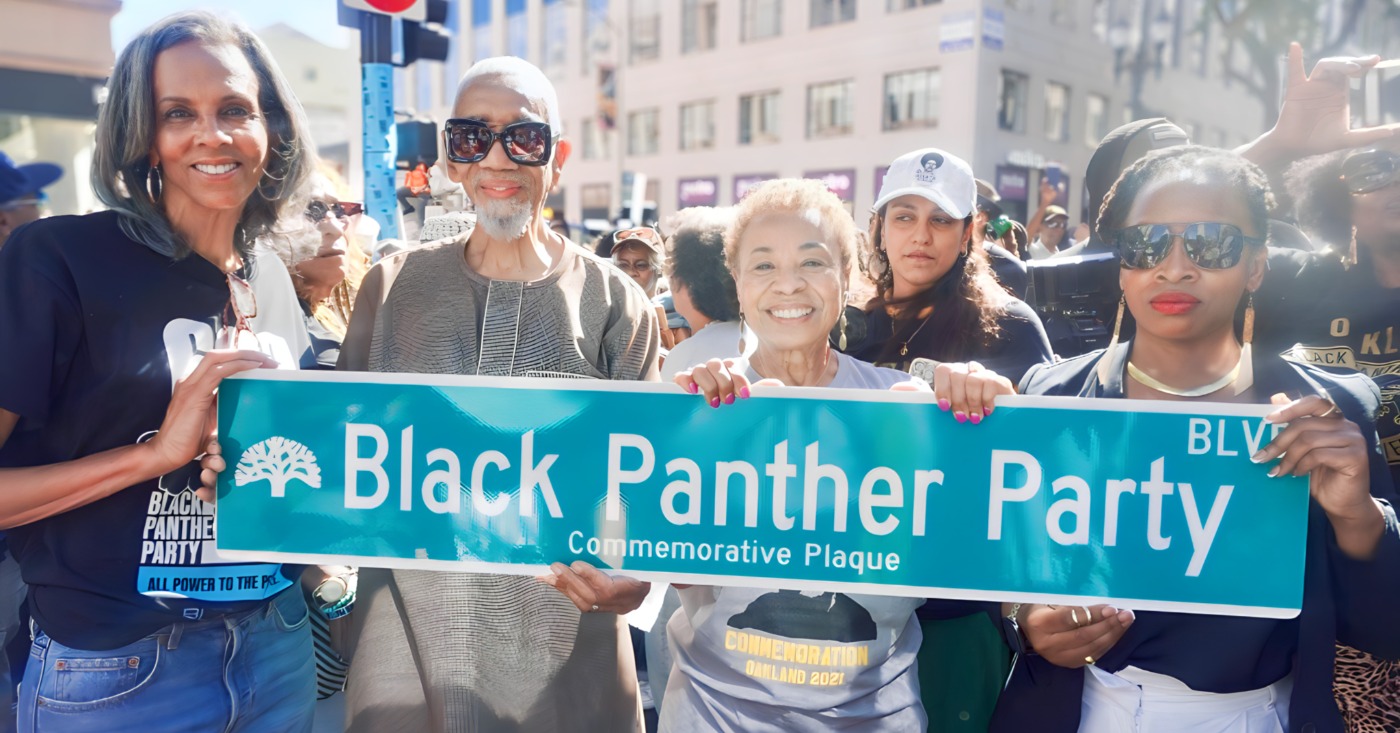
Oakland gathered on Oct. 17 to celebrate the 60th anniversary of the Black Panther Party (BPP), the movement Huey P. Newton and Bobby Seale founded in the city six decades ago.
The “All Power to the People” evening gala, at Oakland’s Scottish Rite Center, brought together Panther veterans, families, community leaders, and younger generations for a night of history, music, and recommitment.
The festivities, presented by the Dr. Huey P. Newton Foundation, began with a black carpet entrance up the staircase to the center. Each side was lined with servers holding trays of champagne for guests to retrieve while walking in.
An energetic U.S. Congresswoman Lateefah Simon opened the program as emcee. Charlotte Hill O’Neal offered libations, and 16-year-old Abayomi Lewis, a Haitian American high school junior from San Francisco, performed BBP’s anthem, “The Meeting.” Young Gifted & Black, a performing arts program that has served Bay Area youth since 2010, followed with an inspirational performance of stepping and speaking truth to power.
During dinner service by Chef Michele McQueen, Oakland Mayor Barbara Lee shared how instrumental the Black Panther Party was to her as a young single parent of two boys. “The Party provided food and lots of support and Fredrika Newton’s mother, a prominent real estate broker and housing rights activist, helped me navigate purchasing my very first home.”
Lee also shared lots of Panther history, including that she was the finance chair for Black Panther Party co-founder, Bobby Seale when he ran for Oakland mayor.
Dr. Xavier Buck, executive director of the Dr. Huey P. Newton Foundation, spoke of how being held at gunpoint by six New York City police officers in Jamaica Queens, reading the autobiography of Assata Shakur, and learning from Fredrika Newton inspired his life’s work.
“I’ve been poured into by Black Panther Party members throughout the country and what I’ve learned the most from them is “radical love.” The same love that created free breakfast programs, free ambulance services, and free sickle cell anemia testing for the Black community.”
Marvel’s Black Panther author and journalist Ta-Nehisi Coates delivered the keynote address.
“The legacy of the Black Panther Party lives on,” said Coates noting the presence of BPP veterans. He further remarked that people often focus narrowly on how to win, but real moral clarity comes from reflecting on what principles you are willing to stand for—and what you are willing to lose for—even in the face of steep odds.
Fredrika Newton, co-founder and president of the Dr. Huey P. Newton Foundation, thanked Panther veterans for “all you gave” and expressed hope that attendees would leave with a renewed commitment to the work that remains.
“Seeing Panther veterans, younger generations, and the community united to honor the Party, reminds me why this work has mattered so much,” said Newton.
Everyone in the room joined in song in tribute to Bobby Seale, wishing the 90-year-old well and took pictures with him.
Cyril Innis Jr., known as “Bullwhip,” addressed the issue of political prisoners and fighting for their freedom. The program booklet listed the dozens of imprisoned Panther members who passed away and honored the sacrifices of those still incarcerated.
A Legacy Award, was presented to Charlotte Hill O’Neal, known affectionately as “Mama C.”
“Mama C” has continued the Party’s work from Tanzania, where she and her husband, Pete O’Neal, founder of the Kansas City chapter, have lived in exile since 1970. Together they established the United African Alliance Community Center and the Leaders of Tomorrow Children’s Home which cares for orphans.
“Mama C” ceremoniously circled each table honoring the ancestors of the movement and encouraged guests to call out the names of loved ones who had passed away.
Marc Philpart of the Black Freedom Fund supported the anniversary and pledged to keep investing in the people and organizations carrying the work forward.
Trust for Public Land also marked the occasion, recalling its collaboration with the Panthers and Oakland residents who turned vacant lots into neighborhood gardens in the 1970s.
The Dr. Huey P. Newton Foundation opened the Black Panther Party Museum in January 2024, and the museum has since held multiple exhibitions and welcomes more than 30,000 visitors a year on the newly named Black Panther Party Boulevard in downtown Oakland. For more information, go to HueyPNewtonFoundation.org


Oakland Probate Dispute Raises Questions About Court-Ordered Property Transfer and Missing Notice

‘Raising a Child Shouldn’t Break the Bank’: California Is Helping Families Save on Childcare Costs

Secretary of State Shirley Weber Pushes Back Against DOJ Demands Over California Voter Rolls

Chase Launches Fraud & Scam Prevention Month

U.S. Rep. Simon Secures More Than $1 Million for Public Safety at Mills College at Northeastern University Oakland, Surrounding Neighborhood

COMMENTARY: Valarie Bachelor and Jennfier Brouhard are Excellent School Board Members and Deserve to Be Reelected

Oakland Faith Leaders Gather to Revitalize the Interdenominational Ministerial Alliance of Oakland

Statue of ‘La Catrina,’ a Beloved Symbol of Dia de Los Muertos, Visits Oakland

Oakland Honors 60 Years of the Black Panther Party at the All Power to the People Gala

Fate of Bay Area Public Transit Hinges on Regional Transit Measure

Why AC Transit Director Joel Young is My Choice for AC Transit Board Ward 3

Oakland Post: Week of October 21 – 27, 2026

Mayor Barbara Lee Holds Special State of the City Address in Deep East Oakland

Practitioners of African Traditional Spirituality Offer Ancestral Reverence Ritual Oct. 31

It’s Time to Lose Weight Before the Holidays

Misnamed ‘Parent’ PAC Seeks to Influence Oakland School Board Elections

Listening as a Lifeline: A Doula’s Witness to Black Maternal Health

Poll: Becerra Widens His Lead Over Hilton; Californians Split on Wealth Tax

County Office of Education Says OUSD Finances Are Getting Healthier, Materially Stronger

Doulas Are Helping Black California Moms Navigate Pregnancy–Even as High Mortality Rates Persist

Oakland Post: Week of September 9 – 15, 2026

Zakiya Jendayi Arrested, Locked Out of Home by Sheriff’s Deputies

Mayor Lee Announces $1 Million Kaiser Permanente Grant for Pilot Program to Address Homelessness, Clean Up Public Spaces throughout Oakland

Richmond Tiny House Village Farm & Garden Set to Open Gates on Sept. 26

BLACspace Cooperative Invites Bay Area to Experience Oakland’s Black Cultural Ecosystem Through a BLAC Map Tour + Party

OPINION: Nolan Wells’ Death One of Several Signifying Racial Terror Lives on in U.S. South

Latest Massacre in Haiti Reveals Cruelty U.S. Deportations

Oakland People’s Arms Embargo Coalition Demands End to Military Shipments Thru Oakland

Oakland Post: Week of September 16 – 22, 2026

Democratic Clubs Interview Candidates for Oakland School Board

The Conversation With Al McFarlane 6/23/26

Media Monday 6/22/26

LIVE! ASK ALMA! — TUES. 6.23.26 7PM EST

Car Buying Secrets: 4 Hidden Checks Before You Sign!

Is This 550 HP Charger Worth YOUR Money? AutoNetwork Review

Celebrating Juneteenth – Frederick Douglass on education and resistance

LIVE! — ASK ALMA! — TUES. 6.19.26 7PM EST

Hyundai Ioniq 5 Parking, Safety, and 360 View #shorts

2025 Ioniq 5 New Wiper & Powerful Performance! #shorts

Electric SUV Range: Is 259 Miles Enough? #shorts

EV Charging: How Fast Can You Charge an Electric Vehicle? #shorts

Biometric Cooling… Messaging Seats…Come on! 2025 Infiniti QX80 Autograph 4WD

Charged Up: Witness the Magic of a Fully Electric Car! #shorts

Range Rover Sport PHEV Included…: See What’s Inside This Luxury SUV! #shorts

Invisible Hood View: Perfect Parking with X-Ray Vision! #shorts
-
 Black History3 weeks ago
Listening as a Lifeline: A Doula’s Witness to Black Maternal Health
-
 Economy4 weeks ago
Poll: Becerra Widens His Lead Over Hilton; Californians Split on Wealth Tax
-
 Business4 weeks ago
County Office of Education Says OUSD Finances Are Getting Healthier, Materially Stronger
-
 Lead Story3 weeks ago
Zakiya Jendayi Arrested, Locked Out of Home by Sheriff’s Deputies
-
 Art4 weeks ago
BLACspace Cooperative Invites Bay Area to Experience Oakland’s Black Cultural Ecosystem Through a BLAC Map Tour + Party
-

 Business4 weeks ago
From Historic Memories to New Possibilities: Oakland Celebrates Coliseum 60
-
 Community4 weeks ago
Asm. Corey Jackson Announces Launch of 24-Hour Childcare in His District
-

 Black History4 weeks ago
IN MEMORIAM: The Rev. Leon “Sonny” Clark, Longtime Orange County Pastor and Community Leader, Dies at 72

1 Comment