
Entertainment
Country Music Acts Quietly Abandon Confederate Flag


In this Nov. 2, 2009 file photo, John Rich of the musical group, Big & Rich, performs at a rally for 23rd Congressional District candidate, Doug Hoffman, in Watertown, N.Y. (AP Photo/Heather Ainsworth, File)
KRISTIN M. HALL, Associated Press
NASHVILLE, Tenn. (AP) — The Confederate flag was once a familiar symbol in country music, representing the rural South and the renegade spirit of artists such as David Allan Coe and Hank Williams Jr.
But the rebel banner that will be removed Friday from the grounds of the South Carolina Capitol has faded from stage and song, with many country artists quietly distancing themselves from the emblem that used to feature prominently in merchandise, lyrics and concerts.
“You won’t find it being used by young country acts today, partly because it doesn’t mean the same thing to them,” said Robert K. Oermann, author and columnist for MusicRow magazine. “Partly because some of them aren’t Southern and partly because if you want to appeal to a national audience, why would you do that?”
Many artists have adopted the American flag instead.
Only a small number of country artists have been willing to speak on the issue in the weeks since nine black churchgoers were fatally shot at a Bible study in Charleston, South Carolina.
Charlie Daniels wrote a long column on his website addressing the most recent controversy over the flag, which he called “a sign of defiance, a sign of pride, a declaration of a geographical area that you were proud to be from.”
“That’s all it is to me and all it ever has been to me,” Daniels wrote, explaining that he opposes racism and believes that every person deserves the same rights and advantages regardless of skin color.
“Unfortunately,” Daniels said on the site, “the Confederate battle flag has been adopted by hate groups — and individuals like Dylann Roof,” who is charged with murder in the church attack.
John Rich, of the duo Big and Rich, told Fox News’ Sean Hannity that he agreed with calls to remove the flag from its pole outside the Statehouse in Columbia. A protest song called “Take Down Your Flag,” written by singer songwriter Peter Mulvey, has been recorded and posted online by hundreds of artists, including Ani DiFranco, bluesman Keb’ Mo and actor Jeff Daniels.
The banner was not commonly used until the late 1960s, when it began to be adopted by some country and rock artists who identified as outlaw musicians appealing to blue-collar fans, Oermann said.
Coe and Williams, the country group Alabama and rockers like Lynyrd Skynyrd all used the flag on stage or in merchandise or referenced the flag or the Confederacy in their lyrics.
The flag continued to appear in some country acts through the 1970s and early 1980s, but it fell out of favor as the genre became more commercial and the industry sought to reach wider audiences in the suburbs and urban areas beyond the South.
Country artists take a big risk in addressing social and political issues. Just two years ago, Brad Paisley was criticized for recording a song called “Accidental Racist,” with rapper LL Cool J, that sought to explore racial tensions but came across as naive and ill-advised.
Diane Pecknold, an associate professor of women and gender studies at the University of Louisville who has written extensively about the history of country music, said country has a strong association with patriotism and with promoting inclusion of all races and cultures. She noted that Paisley, Tim McGraw and Garth Brooks all have songs that are explicitly anti-racist.
“You can criticize them for being naive or being post-racial in a way that ignores contemporary and institutionalized racism,” Pecknold said. “You can criticize them for failing to conceptualize it in a meaningful way, but you still have to say that they are talking about race and an ideal of America that is anti-racist.”
Darius Rucker, a black musician who hails from Charleston, chose to communicate directly to his fans on Twitter: “Incredibly proud of my city for handling this tragedy with love. Thankful to be a part of a community that can come together in a time of need.”
___
Charlie Daniels’ website: www.charliedaniels.com.
___
Follow Kristin M. Hall on Twitter at http:twitter.com/kmhall.
Copyright 2015 The Associated Press. All rights reserved. This material may not be published, broadcast, rewritten or redistributed.








Activism
Oakland Post: Week of April 1 – 7, 2026
The printed Weekly Edition of the Oakland Post: Week of April 1 – 7, 2026
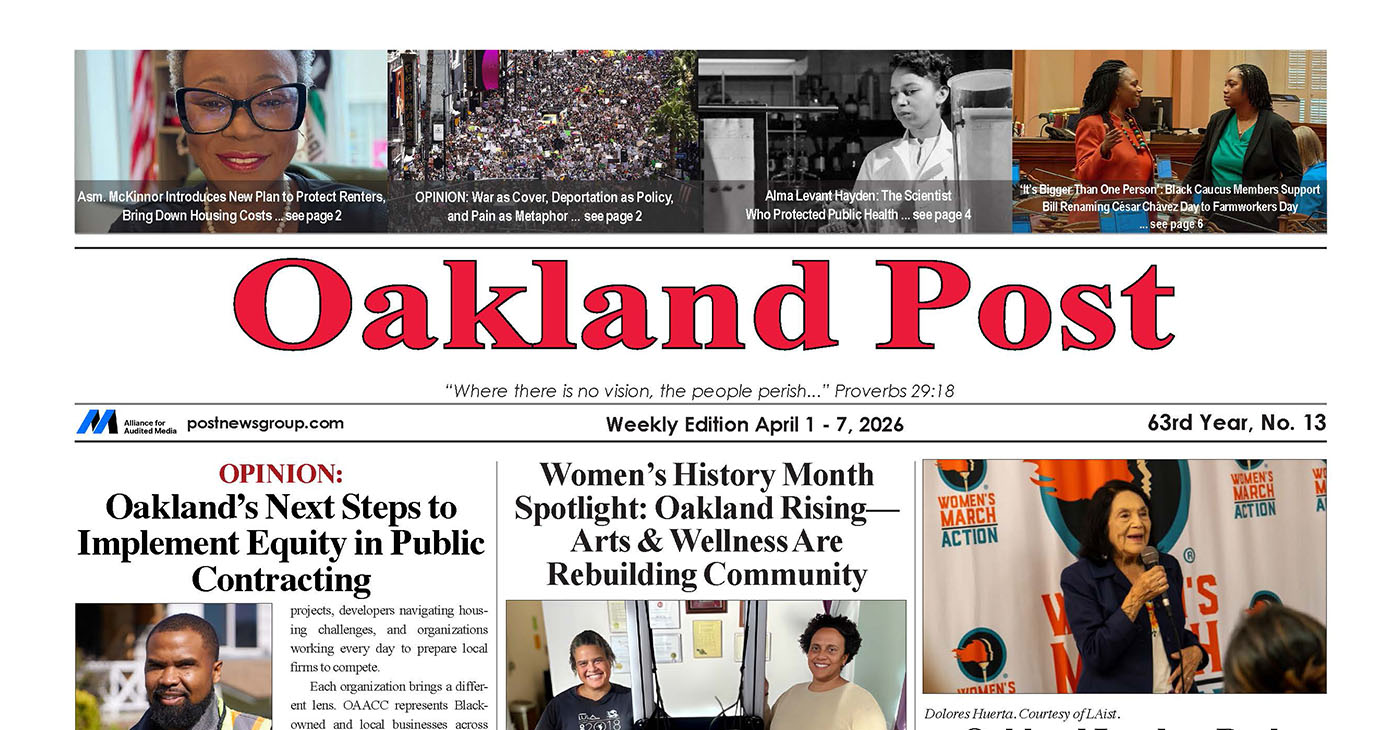
To enlarge your view of this issue, use the slider, magnifying glass icon or full page icon in the lower right corner of the browser window.
Activism
Oakland Post: Week of March 18 – 24, 2026
The printed Weekly Edition of the Oakland Post: Week of March 18 – 24, 2026
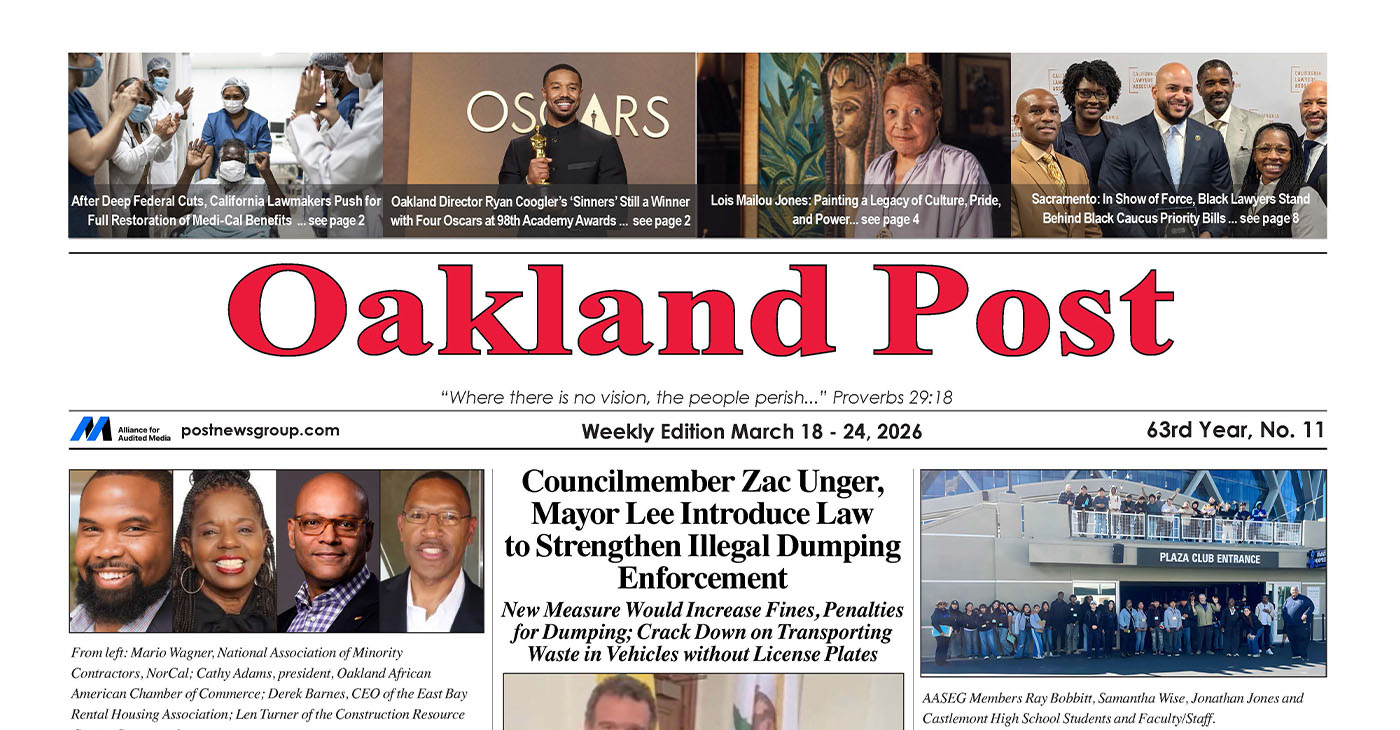
To enlarge your view of this issue, use the slider, magnifying glass icon or full page icon in the lower right corner of the browser window.
Activism
Oakland Post: Week of March 11 -17, 2026
The printed Weekly Edition of the Oakland Post: Week of March 11 – 17, 2026
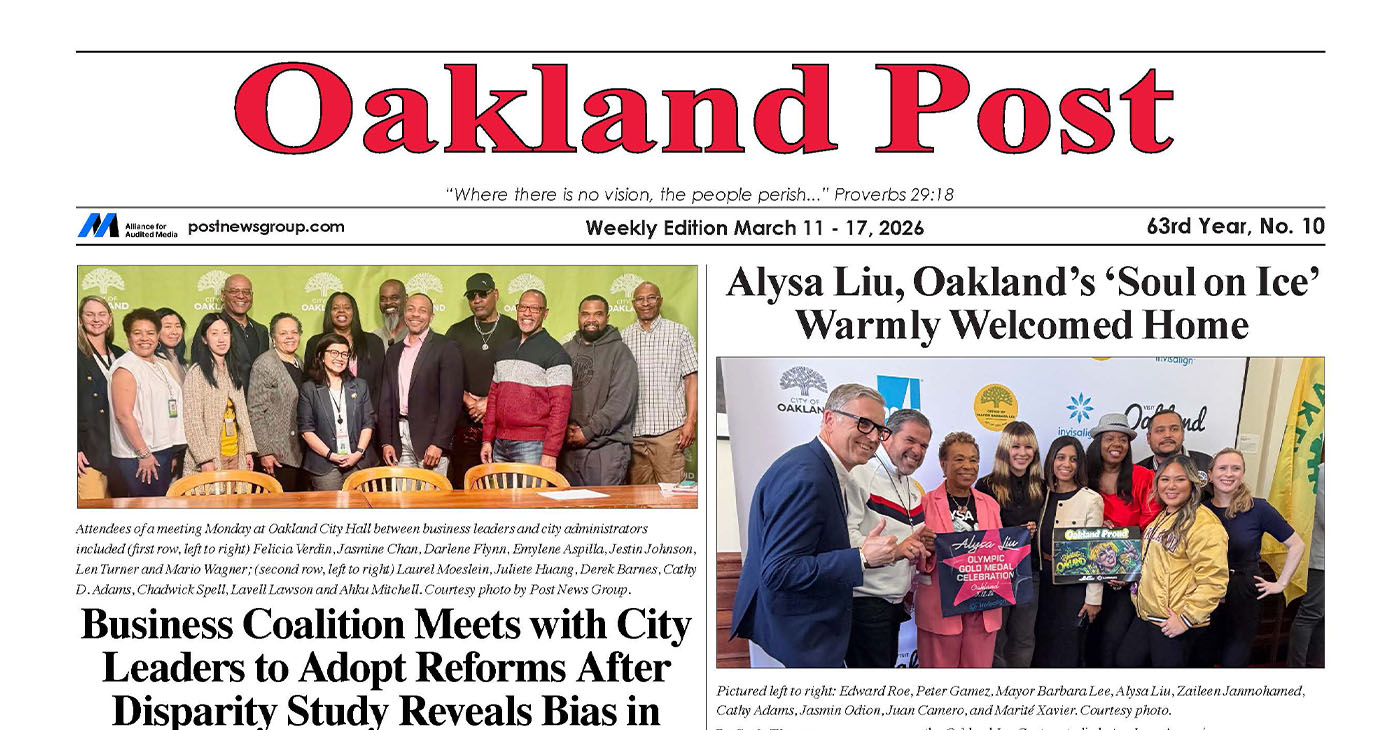
To enlarge your view of this issue, use the slider, magnifying glass icon or full page icon in the lower right corner of the browser window.

WORK FROM HOME
Home-based business with potential monthly income of $10K+ per month. A proven training system and website provided to maximize business effectiveness. Perfect job to earn side and primary income. Contact Lynne for more details: Lynne4npusa@gmail.com 800-334-0540


Oakland Post: Week of April 1 – 7, 2026

Black Artists in America, Installation Three Wraps at the Dixon Gallery and Gardens

Grief, Advocacy, and Education: A Counselor Reflects on Black Maternal Health

Future of Florida’s Black History Museum in Limbo

New Research Shows the Many Benefits of Early Learning

South Hampton K-8 Students Among Top 10 Finalists for Samsung’s ‘Solve for Tomorrow’ Competition

Cuba: No Negotiation with US on the President or Political System

Brooklyn Academy of Music Names Jamaican-Born Tamara McCaw as President

Trinidad & Tobego – U.S. Launches WhatsApp Channel for American Citizens in the Country

Oakland Post: Week of March 18 – 24, 2026

AI Innovation vs. Ethics and Environmental Impact

AI, Web3, and Digital Reparations

What If You Owned Your AI Agent?

Season 7, Episode 3 – January Reporter’s Roundtable 📱

Season 7, Episode 3 – January Reporter’s Roundtable

Reflecting on Black History Milestones in Birmingham AL

Oakland Post: Week of February 25 – March 3, 2026

PRESS ROOM: NBA Hall of Fame Nominee Terry Cummings Joins 100 Black Men of DeKalb County to Launch Victory & Values Initiative

Trump’s MAGA Allies are Creating Executive Order Plan to Steal the 2026 Midterms

Oakland Post: Week of March 4 – 10, 2026

Chase Oakland Community Center Hosts Alley-Oop Accelerator Building Community and Opportunity for Bay Area Entrepreneurs

U.S. manufacturing rebounds – how foundry services are adapting to rising demand

Poll Shows Support for Policies That Help Families Afford Child Care

OP-ED: One Hundred Years of Black Workers Telling the Truth

Advancements in solar technology that are changing the way we power the world

Oakland Post: Week of March 11 -17, 2026

Woman’s Search for Family’s Roots Leads to Ancestor John T. Ward – A Successful Entrepreneur and Conductor on the Underground Railroad
Oakland Post: Week of March 18 – 24, 2026

COMMENTARY: Women of Color Shape Our Past and Future

PRESS ROOM: Civil Rights TV Launches in Selma as the World’s First 24/7 Civil Rights Television Network

Hyundai Ioniq 5 Parking, Safety, and 360 View #shorts

2025 Ioniq 5 New Wiper & Powerful Performance! #shorts

Electric SUV Range: Is 259 Miles Enough? #shorts

EV Charging: How Fast Can You Charge an Electric Vehicle? #shorts

Biometric Cooling… Messaging Seats…Come on! 2025 Infiniti QX80 Autograph 4WD

Charged Up: Witness the Magic of a Fully Electric Car! #shorts

Range Rover Sport PHEV Included…: See What’s Inside This Luxury SUV! #shorts

Invisible Hood View: Perfect Parking with X-Ray Vision! #shorts

AI Is Reshaping Black Healthcare: Promise, Peril, and the Push for Improved Results in California

ESSAY: Technology and Medicine, a Primary Care Point of View

Sanctuary Cities

The RESISTANCE – FREEDOM NOW

STATE OF THE PEOPLE: Freddie

ECONOMIC BOYCOTT DAY!!!!!

I told You So

-
 Activism3 weeks ago
Oakland Post: Week of March 11 -17, 2026
-
 #NNPA BlackPress4 weeks ago
Woman’s Search for Family’s Roots Leads to Ancestor John T. Ward – A Successful Entrepreneur and Conductor on the Underground Railroad
-
 Activism2 weeks ago
Oakland Post: Week of March 18 – 24, 2026
-
 #NNPA BlackPress4 weeks ago
COMMENTARY: Women of Color Shape Our Past and Future
-

 Advice3 weeks ago
Financial Wellness and Mental Health: Managing Money Stress in College
-

 #NNPA BlackPress4 weeks ago
Advocates Raise Alarm Over ICE Operation, MOU and Detention Risks in Baltimore County
-

 #NNPA BlackPress4 weeks ago
Pete Buttigieg to Join Mayor Randall Woodfin for Community Town Hall in Birmingham
-
 #NNPA BlackPress2 weeks ago
Brooklyn Academy of Music Names Jamaican-Born Tamara McCaw as President
