
#NNPA BlackPress
COMMENTARY: Racial profiling remains a daily dilemma for LAPD New report cites evidence of police bias
NNPA NEWSWIRE — Whites are caught with illegal drugs more often. However, according to the new analysis, Whites were more likely to be found with drugs, weapons and other illicit articles, at 20 percent of all searches, whereas Blacks were only at 17 percent and Latinx at 16 percent. The count included both pat-down and vehicle searches. The “Brothers, Sons, Selves” coalition’s manager, David Turner, remembered when his father told him to fear the cops, but didn’t understand why until an officer held a gun to him during a random traffic stop.

By Isabell Rivera, OW Contributor
Although crime in Los Angeles has somewhat decreased over the years, certain areas—such as South Los Angeles—have witnessed an increase. And with high crime comes high police activity.
The issue
Since racial diversity between Whites and persons of color is practically non-existent in certain neighborhoods, the targets of police detainments/arrests are mostly people of color. Being at the wrong place, at the wrong time, and wearing the wrong colored clothes, or just being in the car, waiting for the traffic light to switch, or having broken headlights, might all be reasons to be stopped by the police. However, the color of someone’s skin might just be enough of a reason to look like a suspect.
According to a new LA Times analysis, more than 20 percent of vehicle stops that involved African Americans were for equipment violation, such as a broken taillight or tinted windows were the reasons, compared to 11 percent of Whites who were stopped. Those types of violations can serve as a motive for the Los Angeles Police Department (LAPD) to look for more that isn’t as obvious at first glance. Those so-called “pre-textual traffic stops” are legal but are taken with a grain of salt; since critics say that it gives law enforcement too much freedom to decide based on instinct versus evidence.

Metro Division under scrutiny
One division of the LAPD has been under scrutiny: the elite Metropolitan (Metro) division. They are trained to perform various tasks in regard to diverse crime-fighting duties, such as surveillance, counter terrorism, as well as crowd control. Recently, they’ve been assisting the South Bureau to help fight crimes associated with gangs and drugs.
“We’re trying to stop drive-by shootings,” Capt. Jonathan Tippet of Metro told the LA Times. “If we’re not here, it’s going to have a negative impact and allow people to go back to committing crime. If we’re not here to keep the peace, we’re going to have bloodshed.”
The problem is that the “stop-and-frisk” procedures mostly happen to people of color. In a city that is just 9 percent Black, 49 percent of the drivers stopped by the Metro division were Black.
“African-Americans were not the quote-unquote target. And that’s my concern with the data point and how it’s being interpreted — that we just went out looking for African Americans,” LAPD Chief Michel Moore said. “That’s not what crime suppression was involved in.”
Statistics of other races that were stopped by Metro: Latinx at 44 percent, account for 49 percent of the city’s population. Whites on the other hand, accounted for less than 4 percent of the drivers stopped but are 28-percent city population.
Whites are caught with illegal drugs more often. However, according to the new analysis, Whites were more likely to be found with drugs, weapons and other illicit articles, at 20 percent of all searches, whereas Blacks were only at 17 percent and Latinx at 16 percent. The count included both pat-down and vehicle searches. The “Brothers, Sons, Selves” coalition’s manager, David Turner, remembered when his father told him to fear the cops, but didn’t understand why until an officer held a gun to him during a random traffic stop.
“We’re watching all these movies, all these things that glorify law enforcement, we’re thinking they’re cool, but my dad [told me] ‘We need to be afraid,’” Turner said in an interview. “This is because of the things he experienced here as a Black man in Los Angeles. That trauma he had, he passed to my sister and I.”
According to the LA Times, the LAPD’s former constitutional policing advisor, Arif Alikhan, said that the conducted analysis doesn’t account for the difficulties a police officer has in gauging the situation.
“We don’t pull people over based on race. We’re not supposed to do that,” Alikhan said. “It’s illegal. It’s unconstitutional. And that’s not the basis [on which] we do it.”
Alberto Retana, president of Community Coalition, wasn’t surprised by the data, and gave a statement on behalf of the social justice coalition PUSH-LA, which stands for Promoting Unity Safety & Health Los Angeles, that advocates to reform policing.
“To communities of color across Los Angeles, the article’s data is unfortunately unsurprising and verifies what we know to be true about the racial profiling happening by the LAPD. These vehicle searches are just the tip of the iceberg as the LAPD also has a long track record of aggressively searching the homes and schools of people of color,”
Retana said. “This clear evidence of racial profiling has many harmful implications for Black and Brown families, including emotional and material impact when they get unjustly tangled in the mass incarceration system.
Activists demand ‘real reform’
“The LAPD’s response that they don’t pull over and search people based on race should be met with heavy skepticism, especially given that of the 385,000 stops analyzed by the Times report, three quarters of them involved Black and Latinx people,” Retana continued. “Our community members in South LA and other overpoliced communities are terrified of the police and don’t feel protected or served. We want real reform and
the PUSH LA ‘Reimagine Protect and Serve’ coalition will be sending a letter to Mayor Garcetti and Chief Moore with three key demands.”
The purpose
The first mission that’s on the LAPD’s agenda is the prevention of crime—especially gang-related crimes. In 2015, Mayor Garcetti and then-Chief Charlie Beck executed the “traffic stop and search” method to combat gang violence – mostly shootings – in South LA.
And since most gangs in South LA are Black, people of color become a target automatically. However, Metro said, it’s hard to determine what skin color the drivers have when it’s dark outside and the division only stops drivers if there is a reason for it, such as paper license plates, parking violations or broken headlights. However, if the colors of their clothing indicate gang association, they’ll continue to search the vehicle and passengers for weapons and drugs.
It’s a fine line between following procedures and following instinct, but because the Metro Division has been scrutinized just like the New York City Police Department (NYPD) a few years back when they introduced the stop-and-frisk, Mayor Eric Garcetti wanted to pull them back completely, which resulted in fear in the South Bureau that
crimes will rise – which they did. Shootings in South LA have increased, even before the fatal shooting of rapper Nipsey Hussle (Ermias Asghedom). According to news outlets, the month of March accounted for 26 shootings and 10 homicides.
‘Picking up the pieces’
“That’s 36 families left picking up the pieces,” Moore said via Twitter. “We will work aggressively with our community to quell this senseless loss of life.”
The “stop-and-frisk” tactics in New York City resulted in 50.6 percent of Blacks being stopped, although Blacks only accounted for 25.6 percent of the city’s population. The Latinx population of New York City accounts for 23.7 percent but 33 percent of Hispanics were stopped. Again, Whites had the lowest percentage: accounting for 43.4 percent of the city’s population, yet only 12.9 percent of those who were stopped randomly, according to the American Civil Liberties Union (ACLU).
The “stop-and-frisk” procedures have since been reduced, as a result of a federal lawsuit in 2013, which former federal court Judge Shira Scheindlin ruled to be unconstitutional.” Scheindlin said in an interview that those tactics weren’t effective and that didn’t stop crime.
Deputy Chief Dennis Kato said in an interview that Metro officers stop a large number of Black drivers because many violent crime suspects are Black, the LA Times reported.
Kato told the LA Times that if Black gangs are involved, Metro officers will use traffic violations to stop, “African-American males ages 16 to 24 who dress or look like gang members.”
Social Biases
When it comes to racial profiling—although most of this might just be subconscious—it is deeply embedded in most of society and has something to do with the fact of how people have been raised.
According to researchers at the University of Toronto and the Ontario Institute for Studies in Education, racial bias forms in infancy. Studies found that infants as young as six months old feel more comfortable around the same race if being overwhelmingly exposed, and therefore favor people who look like them. However, the studies also point out that infants who are exposed to people who look different, develop deep-rooted discomfort.
According to the ACLU, in a study conducted by the University of California and the University of Chicago that “recreated the experience of a police officer confronted with a ‘potentially’ dangerous suspect,” the results were interesting.
In the study, “participants fired on an armed target more quickly when the target was African American than White and decided not to shoot an unarmed target more quickly when the target was White than when African-American. Participants failed to shoot an armed target more often when that target was White than when the target was
African American. If the target was unarmed, participants mistakenly shot the target more often when African American than when White. Shooting bias was greater among participants who held a strong cultural stereotype of African Americans as aggressive, violent, and dangerous.”
Chief Moore responds
“There is a conversation… that the current presentation of data we are talking about is having a terribly corrosive effect on people of color, particularly African-Americans, and that concerns me as a chief,” Moore said. “I hear and feel the trauma this has reignited,
the injury, the concern that somehow [the] LAPD is slipping back into its old ways.”
Retana and Moore met in March to discuss the removal of Metro. “What we’re finding is that African-American residents are afraid of police officers, and that break of trust undermines public safety,” Retana said, as the LA Times reported.
Regardless of crime prevention resulting from the “stop-and-frisk” procedures in South LA, for many Blacks who reside there insist that “driving while Black” is a grim reality confirmed by statistics.
“Many police practices may be useful for fighting crime — preventive detention or coerced confession, for example—but because they are unconstitutional, they cannot be used, no matter how effective,” Scheindlin said in the plaintiff against New York City, in the 2013 lawsuit.
Change in sight
After the LA Times investigated and reported that the random traffic stops performed by Metro were considered “bias” at most, the LAPD said to cut back.
Moore issued a statement and told the Times the vehicle stops performed by Metro were not proven successful, accounting for one arrest per 100 cars stopped, as it was adding more stress and tension to drivers who felt like being selected depending on their race.
Officers of the Metro Division, who number approximately 200, will focus on wanted suspects for violent offenses instead, and use other methods besides traffic stops to make arrests.
The new changes will take place in late November of 2019 and were directed by community leaders who criticized the Metro Division’s “stop and search” methods.
Retana told the LA Times that the stop and search methods by the LAPD have caused quite the distress on the Black and Latinx community in South LA.
“These changes to Metro’s policing style in South Los Angeles vindicate what our community has been saying all along about the highly imbalanced use of pre-textual stops on Black and Brown people,” said Retana, on behalf of PUSH LA coalition.” We need to ensure that there’s proof that the stops by Metro are in fact ending, which means
the LAPD must be transparent in its release of real data in regular reports.”
‘Reimagine Protect & Serve’
In 2017, the number of cars stopped and searched by Metro rose from a few thousand cars prior to 63,000, which are about 12 percent of all LAPD traffic stops.
Opponents of the LAPD, and its divisions, criticized Metro saying it reminds of the crucial times of the past where the police targeted mostly minorities.
Moore said in a statement regarding the Times’ analysis that it didn’t cover all aspects, but that the report raised concerns he will take a closer look at.
“We’re aware that the disparate impact on communities of color, particularly in South Los Angeles, raises concerns about trust and confidence that this is a department that’s sensitive to what our interaction with them are,” he said. “I think…what traffic stops
represent is a small area of what our work is. Our work is in many different fronts in regard to public safety, including prevention and intervention efforts.”
Community Coalition, ACLU work in tandem Since the ACLU and CoCo were among the only local social justice organizations that demanded Mayor Garcetti to pull Metro back from South LA completely, or at least cut back on random traffic stops and searches, vehicle stops have been down by 11 percent by all LAPD officers in comparison to the same period last year. In a statement issued by Garcetti to the Times, he said, “I look
forward to our Police Commission and department leaders using this information to improve best practices, and I expect the department to work consciously and evenhandedly to earn the trust of every Angeleno, every day, with every interaction.”









#NNPA BlackPress
NFL: Week Two Recap | Jalen Hurts did not fold; Caleb Williams exits game with injury
Philadelphia Eagles quarterback Jalen Hurts found Darius Cooper with nine seconds left for the game winning touchdown as his team beat the Tennessee Titans 24-20 in Nashville. Hurts finished the day 26/37 for 264 yards. He threw for two touchdowns and two interceptions. Prior to the final drive, the Eagles ran 25 plays for 45 […]
The post NFL: Week Two Recap | Jalen Hurts did not fold; Caleb Williams exits game with injury appeared first on BlackPressUSA.
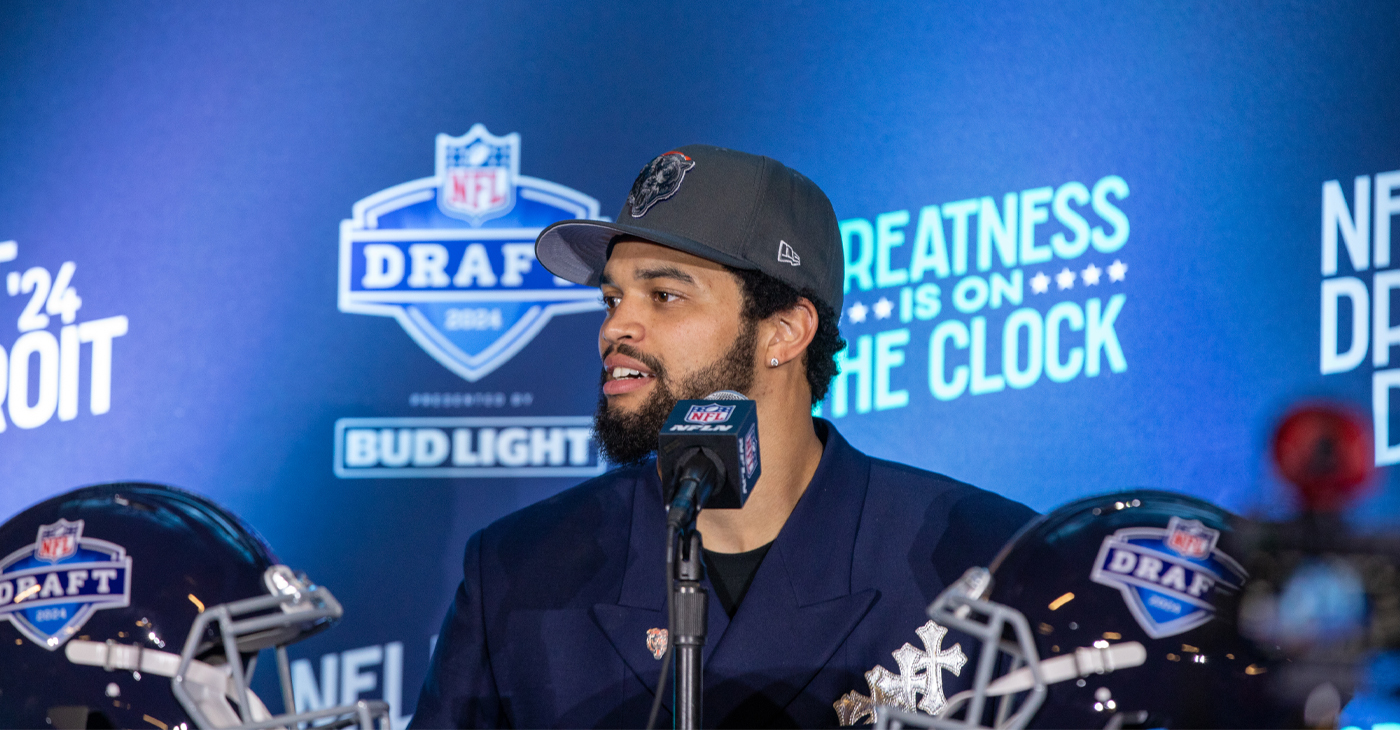
Philadelphia Eagles quarterback Jalen Hurts found Darius Cooper with nine seconds left for the game winning touchdown as his team beat the Tennessee Titans 24-20 in Nashville. Hurts finished the day 26/37 for 264 yards. He threw for two touchdowns and two interceptions.
Prior to the final drive, the Eagles ran 25 plays for 45 yards. During the final drive Hurts went 6-8 with 61 passing yards and the touchdown. Titans defensive tackle — and team captain — Jeffery Simmons said this week that the way to defend Jalen Hurts is to make him “play quarterback.”
Hurts said to Simmons after today’s game: “You started that sh**. I had to finish it.”
Running back Saquon Barkley suffered a stinger in the first half but he ultimately finished the game. He had four carries and nine yards and one catch for eleven yards. He will get an MRI for his injury, but admitted to Cameron Wolfe of the NFL Network he was fine.
Caleb Williams leaves game against Vikings with apparent lower-body injury
Chicago Bears quarterback Caleb Williams was helped off the field with a right leg injury with 7:42 remaining in the fourth quarter. Williams was down, writhing in pain after scrambling to his left. After departing the injury tent, Williams raised his right fist, acknowledging the crowd while expressing his frustration. Testing will commence on Monday to find out more details about his injury.
“We’ll know tomorrow,” Johnson admitted regarding Williams’ injury. “He’s in good spirits. He’s a team player.”
Williams finished the day with 138 passing yards and one interception.
“I’m actually happy it’s nothing with the knee — that was my first inclination,” Johnson said. “But, a hamstring could be pretty damaging as well. So, we’ll see. We’ll see how bad it is tomorrow and we’ll go from there.”
Bryce Young once again dominated the Falcons
Carolina Panthers quarterback Bryce Young is 5-1 against the Atlanta Falcons and is undefeated at Mercedes-Benz Stadium. Today, Young threw for 287 yards and three touchdowns as he led the Panthers to a 34-3 dismembering of the Atlanta Falcons. Georgia Tech alumnus Darren Waller caught two touchdowns and linebacker Devin Lloyd returned one of his two interceptions for a touchdown.
Cooper Rush started his second straight game for the Falcons and it did not go well. The partisan crowd voiced their displeasure after Rush completed 10/17 passes for 86 yards and two interceptions. Jack Strand entered the game for Rush prompting cheers from the Falcons fans. The rookie threw a pick-six on his first career pass attempt. Strand was the first QB to accomplish that feat since Sam Darnold in 2018 and is the first Falcons player to do that since Brett Favre in 1991. Strand finished the day with 59 passing yards and 16 rushing yards.
According to reports, quarterback Michael Penix, Jr. is expected to make his season debut this Thursday at the Green Bay Packers. His return should help the Falcons. They are the first team since the 2008 Rams to not run any plays in the red zone after the first two games to open a season.
The bright spots for the Falcons today were the Spelman College Jaguarettes performing with the Falcons cheerleaders and Florida A&M’s marching band, The Marching 100, also performed during halftime!
Jayden Daniels gets carted off after apparent arm injury
Washington Commanders quarterback Jayden Daniels appeared to injure his left elbow on the final play of the first half in his game against the Dallas Cowboys. During the play, Daniels got stepped on, braced himself for the fall, and his elbow bent the wrong way. Daniels draped a towel over his head as he exited the field on the cart.
He was later ruled out.
Daniels suffered a dislocated elbow to the same arm during week nine of last season against the Washington Commanders, which led to him being shut down for the remainder of the season.
The post NFL: Week Two Recap | Jalen Hurts did not fold; Caleb Williams exits game with injury appeared first on BlackPressUSA.
#NNPA BlackPress
The Complete Negotiation Framework — Every Stage, Every Tactic, Every Win
Master the complete vehicle-purchase negotiation framework with Roosevelt Gist and Roosevelt. Learn every stage, tactic, and win!
The post The Complete Negotiation Framework — Every Stage, Every Tactic, Every Win appeared first on BlackPressUSA.

Roosevelt Gist and Roosevelt deliver the complete vehicle-purchase negotiation framework in Episode 8 of The Color of Our Money Is Green. This episode covers the three foundations of every effective negotiation, the full seven-stage negotiation sequence with exact language for every stage, and five of the most common dealership tactics with the specific response each one requires.
What You Learn in This Episode:
The three foundations that make every negotiation tactic work
The complete seven-stage car-buying negotiation sequence
Exact language for every stage of the dealership conversation
Five common dealership tactics — the turnover, the four-square, the packed payment, spot delivery, and forced add-ons — and how to counter each one
Why signing preliminary paperwork isn’t the same as signing the final contract
___________________________________________________________________
“The Color of Our Money Is Green: A Buyer’s Guide to What Cars Actually Cost” — stan.store/RGist
____________________________________________________________________
AutoNetwork helps serious car shoppers inspect any new vehicle online before walking into a dealership. I’m Roosevelt — I’ve been reviewing cars and shaping digital car buying and credit union auto leasing since before YouTube car reviews existed.
You’ll find detailed walkaround reviews, POV test drives, and buyer-focused breakdowns covering comfort, space, features, and real-world value.
How to use the channel:
Watch the walkaround of the car you’re considering
Visit AutoNetwork.com for the full review
Check CouponsOffersAndDeals.com for current dealer specials
Walk in already knowing what you want — and what it should cost
 AutoNetwork.com
 CouponsOffersAndDeals.com
Affiliate disclosure: some links earn a small commission at no cost to you and help support the channel. Insta360 is one of those partners.
The post The Complete Negotiation Framework — Every Stage, Every Tactic, Every Win appeared first on BlackPressUSA.
#NNPA BlackPress
Mazda CX-90 Luxury: Heated Seats & Premium Comfort! #shorts
Stay toasty in the CX-90! Plush Nappa leather, heated/ventilated seats, and a memory-equipped heated steering wheel deliver ultimate luxury.
The post Mazda CX-90 Luxury: Heated Seats & Premium Comfort! #shorts appeared first on BlackPressUSA.
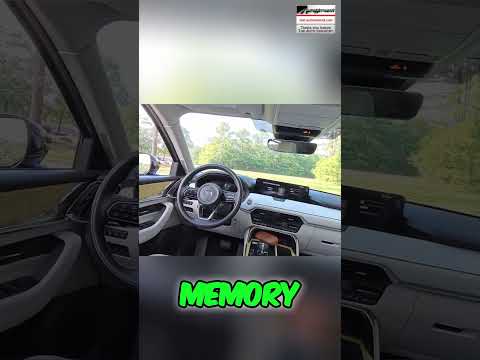
Experience ultimate comfort in the CX-90. Nappa leather, heated/ventilated seats, 8-way power adjustments, and memory settings for both front passengers. The heated steering wheel with memory tilt/telescope adds premium convenience.
 Watch the full video: https://youtu.be/EH5A4eQ4ipY
#AutoNetwork
The post Mazda CX-90 Luxury: Heated Seats & Premium Comfort! #shorts appeared first on BlackPressUSA.


Doulas Are Helping Black California Moms Navigate Pregnancy–Even as High Mortality Rates Persist

Newsom Signs Addictive Social Media Law to Protect Kids

On Your November Ballot: Prop 38 Would Allocate $8.4 Billion to Immunology and Immunotherapy Funding

Ask California: Golden State Releases New AI Chatbot

Asm. Isaac Bryan’s Bill Banning California Police From ICE Side Jobs Reaches Newsom’s Desk

Assemblymember LaShae Sharp-Collins’s Bill Would Pause Law Enforcement’s Use of Shock Gloves Pending Study

BOOK REVIEW: ‘Laws of Solomon’ Reveals Tender Heart of Former Child Soldier

OPINION: The New American Fear – From 9-11 to AI

Passing for White, Fighting for Black America: The Courage of Walter White

Oakland People’s Arms Embargo Coalition Demands End to Military Shipments Thru Oakland

Barbara Lee Mourns Gloria Steinem, Remembers a Friendship Rooted in Equality

Event Preview: ‘Fashion v. Fascism’ – A Runway Revolution Is Coming to the Bay Area

Two Looming Threats Every Alameda County Elder Should Know About

Oakland Mayor Reads to Children at Bookout Block Party at Marcus Books Store

Tradition Comes to the Streets in 11th Annual Black-Eyed Pea Festival at the Freedom Farmers Market

Less Affluent School Districts, Including Sacramento City, Face Threat of State Takeover

ESSAY: California Can Close Its Colorectal Cancer Gap

California Hispanic Chambers of Commerce Unveils: ‘Powering the Future’ Theme for 47th Annual Statewide Convention

Four Candidates, Including Incumbent Barbara Lee, Qualify for Oakland Mayor’s Race

Oakland Post: Week of August 12 – 18, 2026

From Blueprint to Breakthrough: Tackling Affordable Housing in Oakland

Oakland Observes Black August with Block Parties, Film Showings, Workshops

COMMENTARY: Why Local School Tax Measure G1 Will Not Be on the November Ballot

Standoff for Justice: Our Homes Are Worth Fighting For

Returning to Its Roots, the Oakland Black-Eyed Pea Festival Partners with the Freedom Farmers Market Sept. 12

NPRC Scores First Advocacy Victory: David Shaw Finally Gets His Wish to ‘Go Home’

Oakland Post: Week of August 26 – September 1, 2026

Frontier Airlines’ Return to Oakland Airport Brings Flights, Jobs and Opportunity

Gubernatorial Candidate Steve Hilton Blasts California New Tire Rules; Newsom Hits Back

Chef Sharon Lee Blends Culinary Excellence, Education and Empowerment

The Conversation With Al McFarlane 6/23/26

Media Monday 6/22/26

LIVE! ASK ALMA! — TUES. 6.23.26 7PM EST

Car Buying Secrets: 4 Hidden Checks Before You Sign!

Is This 550 HP Charger Worth YOUR Money? AutoNetwork Review

Celebrating Juneteenth – Frederick Douglass on education and resistance

LIVE! — ASK ALMA! — TUES. 6.19.26 7PM EST

Hyundai Ioniq 5 Parking, Safety, and 360 View #shorts

2025 Ioniq 5 New Wiper & Powerful Performance! #shorts

Electric SUV Range: Is 259 Miles Enough? #shorts

EV Charging: How Fast Can You Charge an Electric Vehicle? #shorts

Biometric Cooling… Messaging Seats…Come on! 2025 Infiniti QX80 Autograph 4WD

Charged Up: Witness the Magic of a Fully Electric Car! #shorts

Range Rover Sport PHEV Included…: See What’s Inside This Luxury SUV! #shorts

Invisible Hood View: Perfect Parking with X-Ray Vision! #shorts
-
 Commentary4 weeks ago
Standoff for Justice: Our Homes Are Worth Fighting For
-
 Activism4 weeks ago
Oakland Post: Week of August 26 – September 1, 2026
-
 Business4 weeks ago
Frontier Airlines’ Return to Oakland Airport Brings Flights, Jobs and Opportunity
-
 Business4 weeks ago
Gubernatorial Candidate Steve Hilton Blasts California New Tire Rules; Newsom Hits Back
-
 Business4 weeks ago
Chef Sharon Lee Blends Culinary Excellence, Education and Empowerment
-

 Education4 weeks ago
Gov. Newsom’s Latest Appointees Include Sacramento Advocate for Formerly Incarcerated Students; State’s New Tech Chief
-

 Community4 weeks ago
Big City Mayors Ask for “Yes” Vote on Housing Bond Measure; Conservatives Say “No”
-

 Business4 weeks ago
Oakland Coliseum Project Opens Door for Small Businesses to Build Bigger
