
Activism
COMMENTARY: From Selma to the Supreme Court, We Are Still Making History
A coalition of local and national civil rights groups used this year’s Bloody Sunday commemorations as a time to look forward as well as back. They organized a march and a series of voting rights events along the route of the original Selma to Montgomery march. They are lifting up younger generations of leaders and mobilizing activists around the nation, between voting rights and the broader movement to advance opportunity and economic justice.

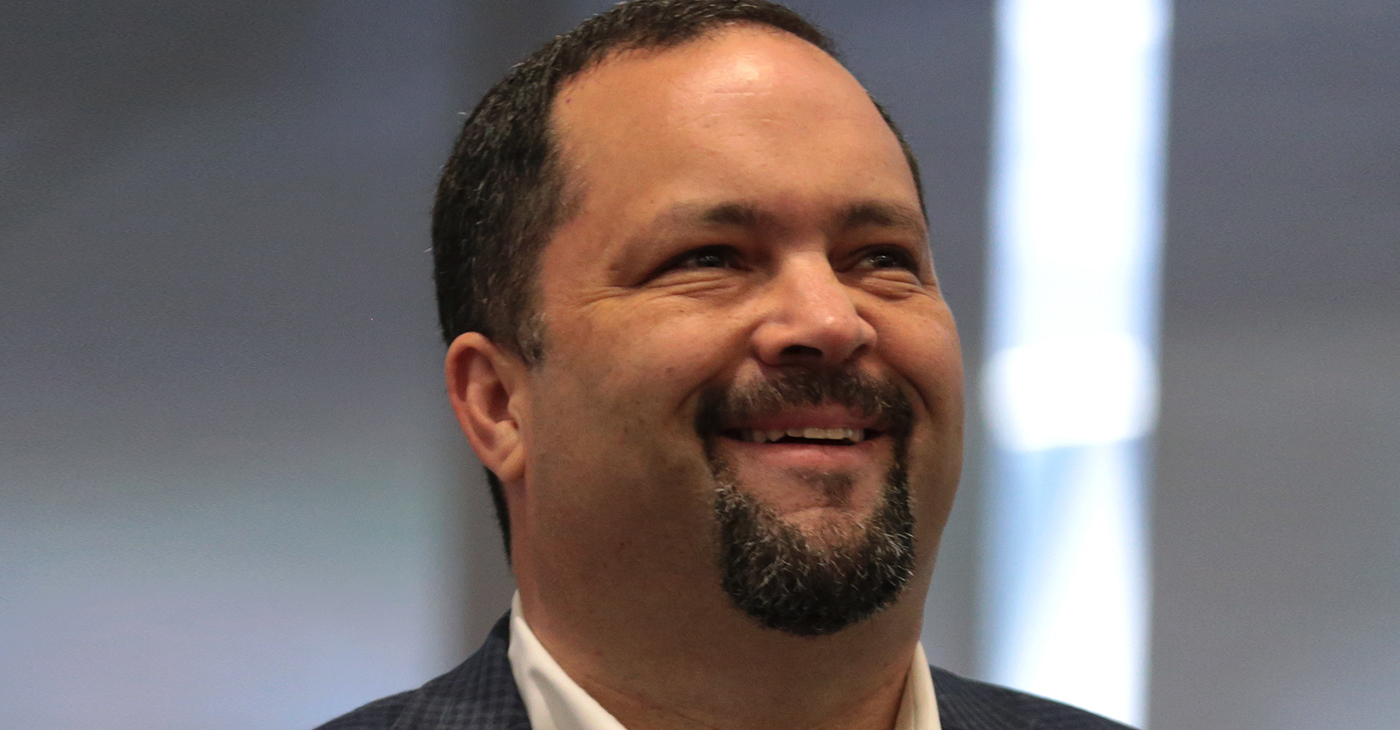
By Ben Jealous

History was made in Selma, Alabama, on March 7, 1965. Alabama state troopers viciously attacked peaceful voting rights marchers at the Edmund Pettus Bridge. The troopers were hoping to stop the voting rights movement in its tracks.
But their violence did the opposite. Televised images of “Bloody Sunday” offended the conscience of people of good faith around the country. The movement was energized. And soon, the federal Voting Rights Act became law.
Voting rights activists were back in Selma this month to commemorate history — and to make it.
Vice President Kamala Harris spoke at the Edmund Pettus bridge. As the first Black woman to hold that high office, she embodies many of the victories of the civil rights movement. From that “hallowed ground,” she spoke truth about the “un-American” laws that have passed in many states to make it harder for Black people and others to vote.
Harris recognized that 2022 is not 1965, as her presence made clear. “We again, however, find ourselves caught in between,” she said.
“Between injustice and justice. Between disappointment and determination. Still in a fight to form a more perfect union. And nowhere is that clearer than when it comes to the ongoing fight to secure the freedom to vote.”
The threat to voting rights today comes most directly from state legislators and governors putting laws in place that make it harder for Black people and others to vote. The threat also comes from a far-right-dominated Supreme Court that has mostly abandoned voting rights in favor of “states’ rights.”
In a 2013 decision in a case that began in Shelby County, Alabama, the court’s majority gutted a section of the Voting Rights Act that prevented states from imposing racially discriminatory changes in voting laws and regulations.
Since then — and especially since historic turnout by Black voters helped defeat Donald Trump’s reelection bid—legislators in state after state have passed new barriers to voting. The Supreme Court is letting them get away with it.
And just recently the Supreme Court’s far-right justices allowed Alabama to hold elections this year using racially gerrymandered congressional maps created by the state Legislature. That was another signal to Black voters and voting rights supporters that the current court majority cannot be counted on to protect our rights.
We must organize. We must elect pro-voting-rights majorities in Congress and state legislatures wherever we can. And we must demand that they take action to protect our democracy.
That brings us back to Selma. As a young man, the late Rep. John Lewis nearly gave his life on the Edmund Pettus bridge to secure voting rights. Activist leaders of this generation are now building on that history and making their own.
A coalition of local and national civil rights groups used this year’s Bloody Sunday commemorations as a time to look forward as well as back. They organized a march and a series of voting rights events along the route of the original Selma to Montgomery march. They are lifting up younger generations of leaders and mobilizing activists around the nation, between voting rights and the broader movement to advance opportunity and economic justice.
At the same time, civil rights activists around the country are organizing to achieve another historical milestone: the confirmation of Judge Ketanji Brown Jackson as the first Black woman to serve as a U.S. Supreme Court justice. As expected, Judge Jackson’s nomination has been met with some resistance and racist commentary. But it is generating even more excitement and enthusiasm.
Our country’s history is in part a history of struggle to achieve hard-won progress toward more universal access to rights and opportunities. That is still our struggle today. Like the work of the activist leaders who are building a movement to protect voting rights and expand access to opportunity, the confirmation of Judge Jackson will move the nation forward toward the ideal of equal justice. It’s our turn to keep our feet on the ground, our shoulders to the wheel, and our eyes on the prize.
Ben Jealous serves as president of People For the American Way and Professor of the Practice in the Africana Studies Department at the University of Pennsylvania where he teaches leadership. Jealous has decades of experience as a leader, coalition builder, campaigner for social justice and seasoned nonprofit executive.








Activism
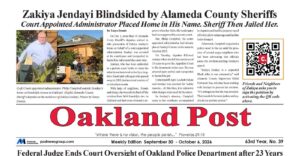
Oakland Post: Week of September 30 – October 6, 2026
The printed Weekly Edition of the Oakland Post: Week of September 30 – October 6, 2026
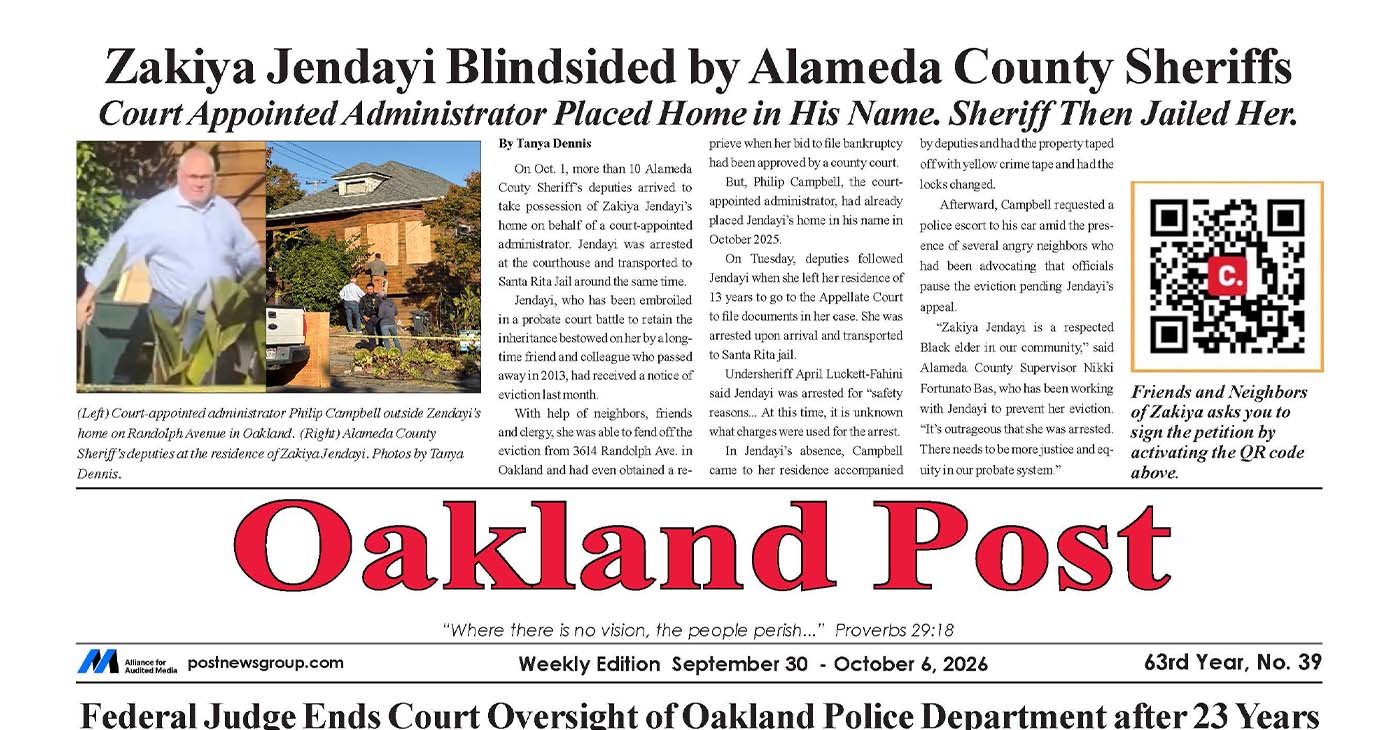
To enlarge your view of this issue, use the slider, magnifying glass icon or full page icon in the lower right corner of the browser window.
Activism
Oakland Post: Week of September 23 – 29, 2026
The printed Weekly Edition of the Oakland Post: Week of September 23 – 29, 2026
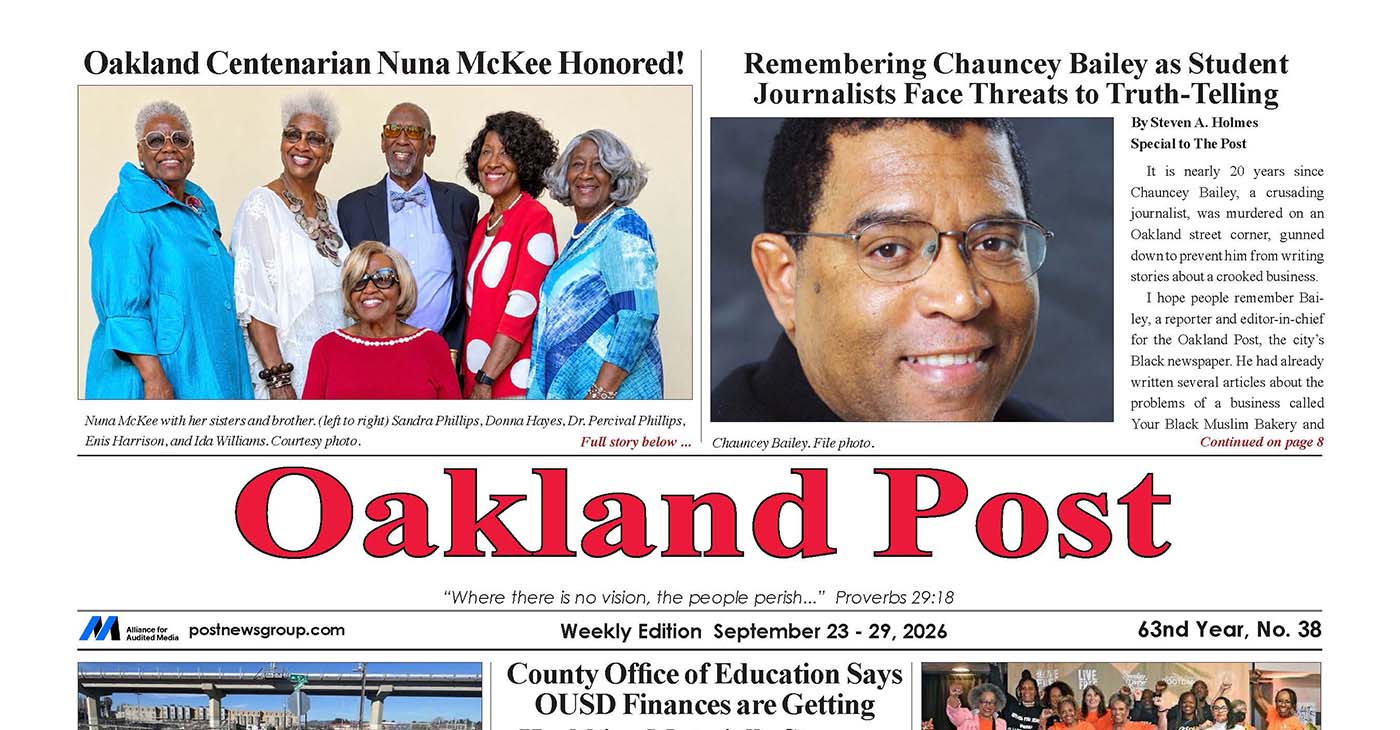
To enlarge your view of this issue, use the slider, magnifying glass icon or full page icon in the lower right corner of the browser window.
Activism
Oakland Post: Week of September 16 – 22, 2026
The printed Weekly Edition of the Oakland Post: Week of September 16 – 22, 2026
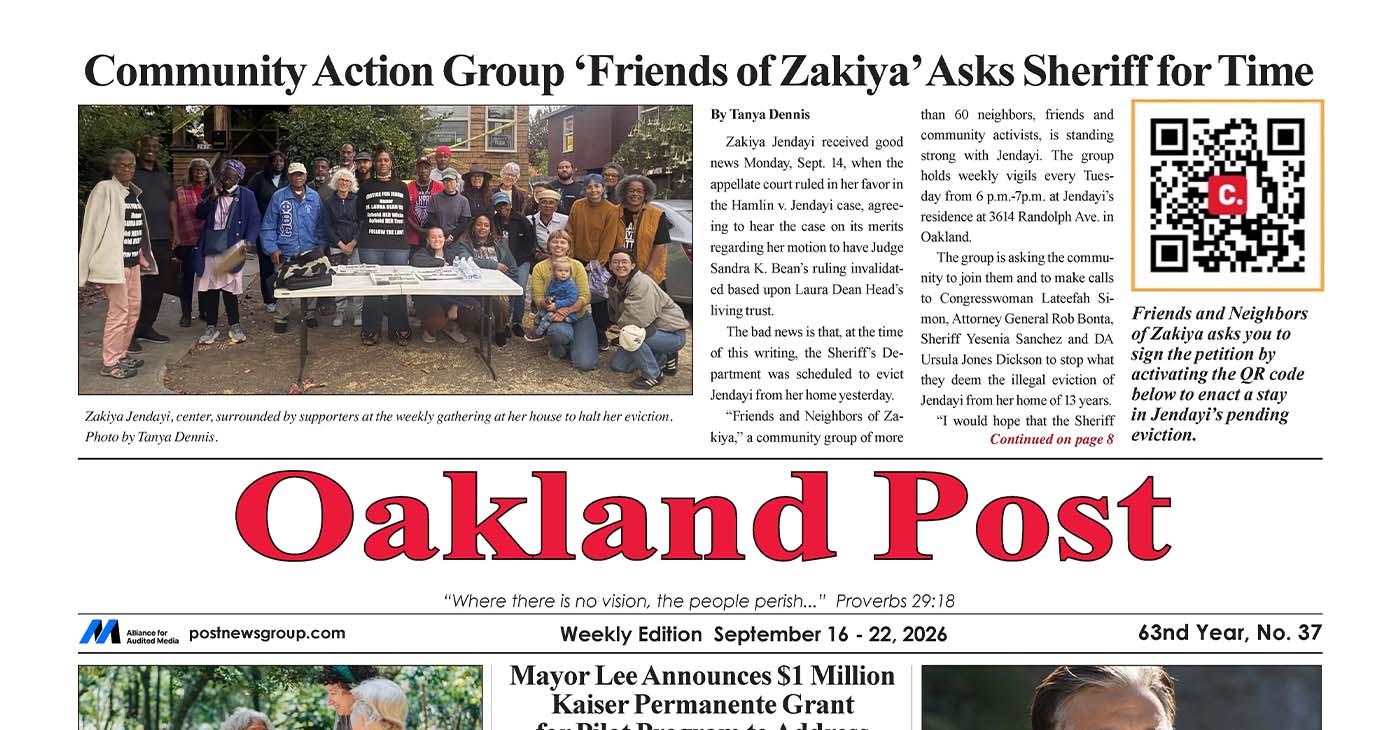
To enlarge your view of this issue, use the slider, magnifying glass icon or full page icon in the lower right corner of the browser window.


OP-ED: Proposition 44 Would Put a Price on Trust

OP-ED: Proposition 40: It’s Time to Play Chess, Not Checkers

Listening as a Lifeline: A Doula’s Witness to Black Maternal Health

New Protections for Ticket Buyers: Gov. Newsom Signs Assemblymember Isaac Bryan’s Bill

‘We Don’t Talk Trash — We Pick Up Trash!’

Zakiya Jendayi Arrested, Locked Out of Home by Sheriff’s Deputies

Oakland Post: Week of September 30 – October 6, 2026

Asm. Corey Jackson Announces Launch of 24-Hour Childcare in His District

IN MEMORIAM: The Rev. Leon “Sonny” Clark, Longtime Orange County Pastor and Community Leader, Dies at 72

Poll: Becerra Widens His Lead Over Hilton; Californians Split on Wealth Tax

From Historic Memories to New Possibilities: Oakland Celebrates Coliseum 60

County Office of Education Says OUSD Finances Are Getting Healthier, Materially Stronger

LIVE FREE Sunday Dinner Brings Faith, Fellowship and Civic Conversation to Oakland

Remembering Chauncey Bailey as Student Journalists Face Threats to Truth-Telling

BLACspace Cooperative Invites Bay Area to Experience Oakland’s Black Cultural Ecosystem Through a BLAC Map Tour + Party

Standoff for Justice: Our Homes Are Worth Fighting For

Oakland Post: Week of August 26 – September 1, 2026

Frontier Airlines’ Return to Oakland Airport Brings Flights, Jobs and Opportunity

Gubernatorial Candidate Steve Hilton Blasts California New Tire Rules; Newsom Hits Back

Chef Sharon Lee Blends Culinary Excellence, Education and Empowerment

Jackie Wright Champions Bay Area Stories, Filmmakers and Cultural Institutions

Misnamed ‘Parent’ PAC Seeks to Influence Oakland School Board Elections

Oakland Coliseum Project Opens Door for Small Businesses to Build Bigger

Gov. Newsom’s Latest Appointees Include Sacramento Advocate for Formerly Incarcerated Students; State’s New Tech Chief

Big City Mayors Ask for “Yes” Vote on Housing Bond Measure; Conservatives Say “No”

Longtime BWOPA Member Brendalyn Goodall Appointed to California Workforce Development Board

Gov. Newsom Signs Law Shielding Immigration Aid Workers From Doxing Threats

Oakland Post: Week of September 2 – 8, 2026

Secretary of State Shirley N. Weber Urges Californians to Vote Early as Voter ID Battle Intensifies

IN MEMORIAM: Dolly Parton Dead at 80 — How She Built a Legacy of Love and Earned Her Place in Black Culture

The Conversation With Al McFarlane 6/23/26

Media Monday 6/22/26

LIVE! ASK ALMA! — TUES. 6.23.26 7PM EST

Car Buying Secrets: 4 Hidden Checks Before You Sign!

Is This 550 HP Charger Worth YOUR Money? AutoNetwork Review

Celebrating Juneteenth – Frederick Douglass on education and resistance

LIVE! — ASK ALMA! — TUES. 6.19.26 7PM EST

Hyundai Ioniq 5 Parking, Safety, and 360 View #shorts

2025 Ioniq 5 New Wiper & Powerful Performance! #shorts

Electric SUV Range: Is 259 Miles Enough? #shorts

EV Charging: How Fast Can You Charge an Electric Vehicle? #shorts

Biometric Cooling… Messaging Seats…Come on! 2025 Infiniti QX80 Autograph 4WD

Charged Up: Witness the Magic of a Fully Electric Car! #shorts

Range Rover Sport PHEV Included…: See What’s Inside This Luxury SUV! #shorts

Invisible Hood View: Perfect Parking with X-Ray Vision! #shorts
-
 Community3 weeks ago
Misnamed ‘Parent’ PAC Seeks to Influence Oakland School Board Elections
-

 Activism4 weeks ago
Oakland Post: Week of September 9 – 15, 2026
-

 Community3 weeks ago
Richmond Tiny House Village Farm & Garden Set to Open Gates on Sept. 26
-

 Black History3 weeks ago
Latest Massacre in Haiti Reveals Cruelty U.S. Deportations
-

 Black History3 weeks ago
OPINION: Nolan Wells’ Death One of Several Signifying Racial Terror Lives on in U.S. South
-

 Business2 weeks ago
Mayor Lee Announces $1 Million Kaiser Permanente Grant for Pilot Program to Address Homelessness, Clean Up Public Spaces throughout Oakland
-

 Community3 weeks ago
Democratic Clubs Interview Candidates for Oakland School Board
-
 Uncategorized3 weeks ago
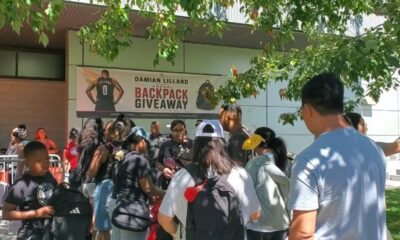
NBA All-Star Damian Lillard Returns Home for 15th Annual Backpack Giveaway
