
Community
Climate-Induced Displacement is a Global Phenomenon, but Not Evenly Experienced
As world leaders presented their plans to combat rising global temperatures at the annual United Nations Climate Change Conference (COP 28) in Dubai from Nov. 30-Dec. 13, 2023, discussions are centered on how countries can cut greenhouse gas emissions and mitigate a dire environmental future. But a UC Berkeley researcher says that future is already here for millions of people displaced by the climate crisis. And those climate refugees are predominantly from formerly colonized countries that are not responsible, in large part, for the factors that exacerbate climate change.


UC Berkeley policy analyst from the Othering and Belonging Institute shares recommendations to protect people displaced from the climate crisis.
By Ivan Natividad
UC Berkeley News
As world leaders presented their plans to combat rising global temperatures at the annual United Nations Climate Change Conference (COP 28) in Dubai from Nov. 30-Dec. 13, 2023, discussions are centered on how countries can cut greenhouse gas emissions and mitigate a dire environmental future.
But a UC Berkeley researcher says that future is already here for millions of people displaced by the climate crisis. And those climate refugees are predominantly from formerly colonized countries that are not responsible, in large part, for the factors that exacerbate climate change.
Those nations — in the global south regions of Africa, Latin America, the Caribbean and much of Asia and Oceania — also lack the wealth and infrastructure to withstand intensifying natural disasters, rising sea levels and the collapse of industries dependent on stable climates, according to a recent Berkeley report.
“There are many examples of how global south countries face the brunt of a crisis they did not produce, due to the activities of countries and industries in the global north,” says report co-author Hossein Ayazi, a senior policy analyst at UC Berkeley’s Othering and Belonging Institute. “So, we want to help protect the most marginalized — climate-induced displaced persons — while targeting the sources of their marginalization.”
That is why the institute’s Global Justice Program recently launched an interactive database that helps both policymakers and impacted communities explore global data on climate-induced displacement. The report also offers strategies to ensure the protection of people displaced by the climate crisis, and climate resilience for them moving forward.
Ayazi said the research shows that sea levels are expected to rise drastically in the coming decades, which will impact nearly 40% of the world’s population that lives in coastal areas. And over 75% of all coastal populations — 90% of the world’s poor rural coastal areas — live in the global south.
Berkeley News spoke with Ayazi about what’s causing climate change displacement and what needs to happen to protect climate refugees and make their communities more resilient.
Berkeley News: Your research unpacks why people in the global south are more vulnerable to being displaced from the impacts of the climate crisis. What are some of the economic dimensions of this vulnerability?
Hossein Ayazi: Many countries in the global south have a relatively large percentage of their gross domestic product (GDP) derived from agriculture, forestry, and fishing — industries that are by nature more vulnerable to a changing climate.
In Ethiopia, for example, agriculture comprises almost 40% of its total GDP. That sector also employs over 80% of its population. So as these countries experience climate extremes — droughts, floods, increased temperatures and so on— their economies are impacted on a deep level.
A defining feature of countries in the global south is that their economies have been organized by, and to the benefit of, the global north — wealthier and powerful nations in North America and Europe. This means agricultural production that’s largely export-oriented, and not diversified, makes these countries especially inflexible and vulnerable to climate impacts.
Berkeley News: What other significant economic or financial factors cause or worsen climate-induced displacement?
Hossein Ayazi: Global south countries have a high external debt burden, with surcharges making things worse. In fact, global south debt payments in 2023 reached their highest level in 25 years.
This high debt burden means a poor sovereign credit rating, and a lack of fiscal space to invest in climate-resilient infrastructure and economies that can adequately respond to disasters. This is true at the individual and household level: When disaster strikes, it’s hard for people to manage when they are struggling financially.
Protecting climate refugees and affording people the right to stay in their communities means addressing such issues.
Berkeley News: While the focus of your data is on the global south, when you talk about climate displacement in this way it seems like it can happen anywhere — even in the United States.
Hossein Ayazi: It certainly can. Consider Hurricane Katrina in 2005. Residential segregation and decades of disinvestment in New Orleans’ levee infrastructure meant that when the storm hit, it would be the city’s poorer Black residents who would be displaced or lose their lives.
In the wildfires in Maui this year, we saw the inequalities in those communities exacerbated. Tourists had the means to reach safety and secure a place to stay, while many Native Hawaiians struggled to flee, save their homes, or recover afterward.
The climate crisis is a global phenomenon, but its impacts are not evenly experienced.
Berkeley News: Your research reveals that industries using extreme amounts of nonrenewable energy sources mostly come from wealthier countries in the global north. How do those industries affect the surrounding communities they inhabit?
Hossein Ayazi: Globally, we have come to be dependent on extractive, exploitative industries that might provide for some, but collectively harm us all, and certainly harm the people in closest proximity to them.
These industries are usually placed in marginalized communities in the global north — and in countries across the global south — and, rife with health and environmental impacts, they become mainstays of the broader economy.
Berkeley News: What is an example of this locally?
Hossein Ayazi: We can look to Richmond, California, and the Chevron oil refinery located there. Nearly 24% of the city’s general fund comes from the refinery, which also provides regional employment.
So, the question is: How do communities and countries become less dependent on these extractive industries that harm them, and us? How are these harms — past and present — addressed?
That’s the point of this work: Protecting peoples most harmed by the climate crisis, targeting the sources of the climate crisis, and building communities and economies that are just, sustainable and resilient against the climate crisis.
Berkeley News: What do world leaders need to do to make this vision a reality?
Hossein Ayazi: World leaders need to recognize the rights of people displaced by the climate crisis and across international borders. They also need to act upon demands for the transformational changes needed to materialize inclusive, just, and climate-resilient communities.
These demands entail ending the exploitation of land, resources and labor, and demilitarizing borders, among other key climate justice demands.
Berkeley News: What type of policy does your research recommend?
Hossein Ayazi: What we conceptualize as the “Right to Stay” is not only the right for climate-displaced people to safely resettle when their lives are uprooted. It is also the right to stay in place amidst the climate crisis, and against the extractive and exploitative structures that are forcing them to move.
To be able to aid the transition to climate-resilient societies and regenerative economies globally — while protecting the world’s most marginalized and exploited people and communities — a Right to Stay policy platform entails:
- Legal rights for all peoples displaced by the climate crisis, within and across national borders
- Climate reparations to countries in the global south, whose vulnerability to the climate crisis follows centuries of global north extractive and exploitative political and economic activity
- Just transitions that democratize, decentralize, and diversify economic activity and (re)distribute resources and power
Berkeley News: Why should the general public care about people displaced by climate change?
Hossein Ayazi: To address the condition of climate displacement is to come at the work of climate justice from multiple angles — from worker protections to migrant rights to prison abolition to reparations for the harms of colonialism and slavery to food sovereignty, and so on.
These struggles for justice and self-determination are all connected, especially under the climate crisis.
It’s that work that we’re trying to hold together through this database, and through the reports and recommendations that accompany it. Our work aims to map and strengthen this global constellation of efforts by helping the public and policymakers understand the structural nature of climate displacement.
Berkeley News: How do we build climate resilience in our own communities?
Hossein Ayazi: It begins with organizing ourselves as renters, as students, as workers, as debtors and so on. It’s about all the ways that we can collectively determine and respond to the sources of hardship in our life, in ways that are connected to these other issues.
And it must be through a hopeful message, a message that we’re going to co-create the future that we all deserve to live in.











Community
Golden State Valkyries Become Bay Area Legends Winning WNBA Championship on Halloween Night
In only their second year as a franchise, the Golden State Valkyries captured the 2026 WNBA Championship with a 68-63 victory over the Atlanta Dream. Playing before a sold-out crowd at Chase Center on Halloween night, Gabby Williams delivered a historic 30-point performance to earn Finals MVP honors. The victory marks a rapid rise for the expansion team, which has already set league attendance records and surpassed a $1 billion valuation. Fans gathered by the hundreds of thousands this week to celebrate the new Bay Area legends, read more.


In only their second year as a franchise, the Golden State Valkyries became the WBNA 2026 Champions, with Gabby Williams named WNBA Finals MVP. A Halloween night movie of magic and there was no surprise that the game was sold out, with more than 18,000 fans inside Chase Center while thousands more packed the open space at Thrive Center from hours preceding the game through the final buzzer.
In the decisive Game 7, Williams delivered a legendary performance, scoring 30 points to lead the Golden State Valkyries to a 68-63 championship victory over the Atlanta Dream. Remarkably, 28 of her 30 points came in the second half, setting a WNBA postseason record for points in a half and earning her Finals MVP honors.
The team celebrated its victory on Wednesday with a rally in Oakland followed by a ferry ride to San Francisco’s Embarcadero and then a two-mile parade that drew about 400,000 fans.
Williams has become a symbol of the Bay Area’s impact on the team. Although born in Nevada, Williams has deep family roots in Oakland and has often said the city’s culture, community, and basketball traditions shaped her identity and playing style.

After signing with the Valkyries, she began calling the city home and noting that “there’s no Golden State without Oakland.”
The Valkyries have several ballers who made an impact on winning this series, including Veronica Burton, Tiffany ‘Tip’ Hayes, Kayla Thornton, Kaila Charles, and Cecilia Zandalasini.
Veteran center Kiah Stokes brought championship experience and defensive leadership when she signed a multi-year free-agent contract with the franchise on April 13. A former first-round draft pick out of UConn and a three-time WNBA champion with the Las Vegas Aces before joining Golden State, Stokes was recruited by head coach Natalie Nakae, with whom she had previously worked in Las Vegas.
Known as one of the league’s premier rim protectors and rebounders, Stokes quickly became a defensive anchor for the expansion franchise and played a major role in leading the Valkyries to their historic championship run.
The Valkyries have accomplished something extraordinary, proving that a new franchise can make an immediate impact both on and off the court. In their first year, the Valkyries became the first WNBA expansion team to reach the playoffs in its inaugural season and set all-time league attendance records. The franchise sold out all home games, reporting 18,064 attendees per game in both seasons — the highest attendance figures in WNBA history. The Valkyries’ success has also translated into extraordinary franchise value. After entering the league by paying a $50 million expansion fee, the organization generated record revenues and rapidly became one of the most valuable franchises in women’s sports, valued at over $! billion.
The WNBA Finals’ deciding game averaged 3.3 million viewers, making it the most-watched WNBA playoff game in league history and the most-watched finals game since 1999.
The record audience reflects the league’s growing popularity and has major implications for its future, including higher media rights value, increased advertising revenue, stronger sponsorship opportunities, rising merchandise sales, and greater ticket demand.
The Finals also featured sold-out arenas and record postseason viewership, demonstrating that the WNBA is expanding its commercial reach, attracting new fans, and strengthening its position as a major professional sports league.

Black History
U.S. Rep. John Garamendi Honors local ‘Women of the Year’ at Annual Awards Ceremony
Congressman John Garamendi recently honored 52 remarkable women during his 13th annual Women of the Year ceremony in Benicia. The event recognized leaders from California’s 8th District for their significant contributions to public service, education, business, and community life. The honorees, including 16 women from West Contra Costa County, were officially commemorated in the Congressional Record for their dedication to the region. The diverse group includes veterans, educators, and community advocates who have shaped the local landscape through decades of service. Read more about these influential leaders.
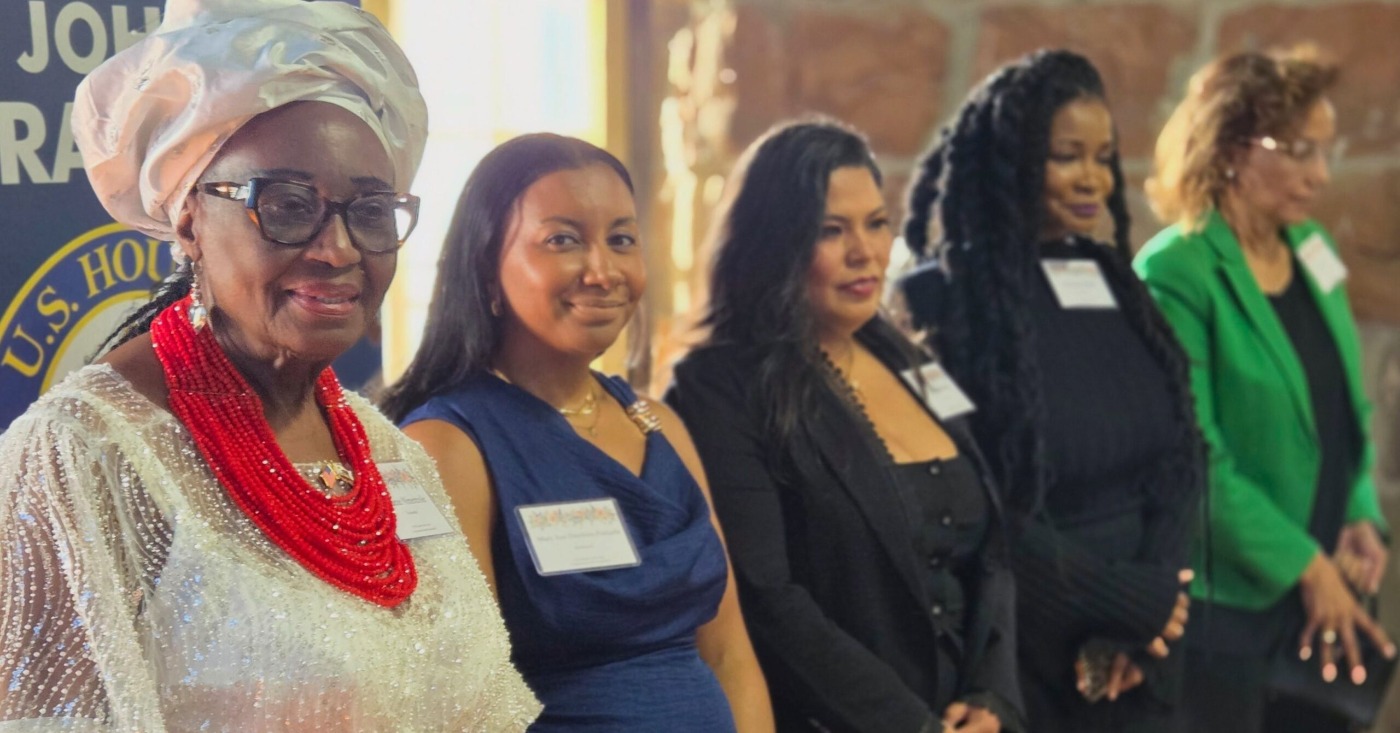
Sixteen women from West Contra Costa County were among 52 honorees recognized by Congressman John Garamendi (D-CA-08) at his 13th annual Women of the Year ceremony in Benicia on Oct. 23.
The 2026 honorees from Solano and Contra Costa counties were recognized for contributions to public service, education, business and community life.
“Every year, I’m honored to recognize the remarkable women of California’s Eighth District who serve as the backbone of our community,” Garamendi said.
Their contributions were also recognized in the Congressional Record. The following profiles summarize the ceremony remarks and supporting biographies.
Richmond
King-Meredith was honored for six decades of community service. An engineer and project manager whose professional career included defense-industry work, she has served organizations including the North Richmond Municipal Advisory Council and Shields-Reid Neighborhood Council. Her contributions also include environmental justice advocacy and artwork addressing social injustice.
Bolds was recognized for supporting Richmond youth and families and organizing community events. She established the annual “Put the Guns Down” event about 20 years ago in response to neighborhood violence. Through her organization, Visions of Hope, she brings together families, service providers, community leaders and public safety partners to address bullying and violence prevention.
Martinez Luna was honored for her work supporting businesses and families along Richmond’s 23rd Street corridor. Born in Guadalajara, Mexico, she became the first person in her family to graduate from high school. A longtime Rigo’s Auto Sales employee and secretary of the 23rd Street Merchants Association, she helps organize community events, supports immigration information forums and works with local partners on neighborhood concerns.
Dawkins-Padigela was recognized for her professional and community leadership. A U.S. Air Force veteran who served seven years as an aircraft mechanic, she later pursued graduate studies in marriage and family therapy and professional clinical counseling. As president of East Bay CAMFT, she supports professional education, networking and collaboration among mental health practitioners.
Padilla, a dean at Contra Costa College, was honored for advancing educational equity and student success. A Richmond High School graduate, she began her higher education at Contra Costa College before earning a bachelor’s degree in applied physics from UC Davis and a doctorate in neuroscience from UC Berkeley. She later returned to CCC to lead initiatives expanding opportunities for students pursuing STEM careers.
Milam was recognized for a public service career that began as a teenager with the East Bay Public Safety Corridor Partnership. As crime prevention manager for the Richmond Police Department, she has worked with government and community partners on violence prevention and homelessness response. Her congressional tribute credits her with helping secure nearly $30 million for outreach, shelter, treatment, encampment resolution and pathways to housing.
Nmereole was honored for supporting immigrant communities, young people and elderly residents throughout Contra Costa County and the greater Bay Area. Her volunteer work includes GED tutoring, vocational nursing exam preparation, computer instruction and youth mentorship. She also helps immigrants navigate services and assists elderly residents with transportation, prescriptions and groceries.
Curl was recognized for more than two decades of service to Richmond, beginning with the city’s redevelopment agency. She became interim city manager in November 2021 and permanent city manager in April 2022 before retiring in 2026. Garamendi credited her with helping secure more than $300 million in grants for infrastructure, housing and education, strengthening city finances and helping Richmond exit the state auditor’s high-risk designation.
Community
Richmond Neighbors Put Pantry Power on the Map
Richmond Area Mutual Aid has released a new digital map identifying Little Free Food Pantries across the city to help residents combat rising grocery costs. These neighborhood outposts operate on a mutual aid model, encouraging community members to leave shelf-stable goods and fresh produce for those in need. While some locations began as small pandemic-era projects, they have evolved into essential hubs supported by local families, retirees, and nonprofit organizations. Organizers are now seeking new hosts to expand this autonomous network further. Read more.
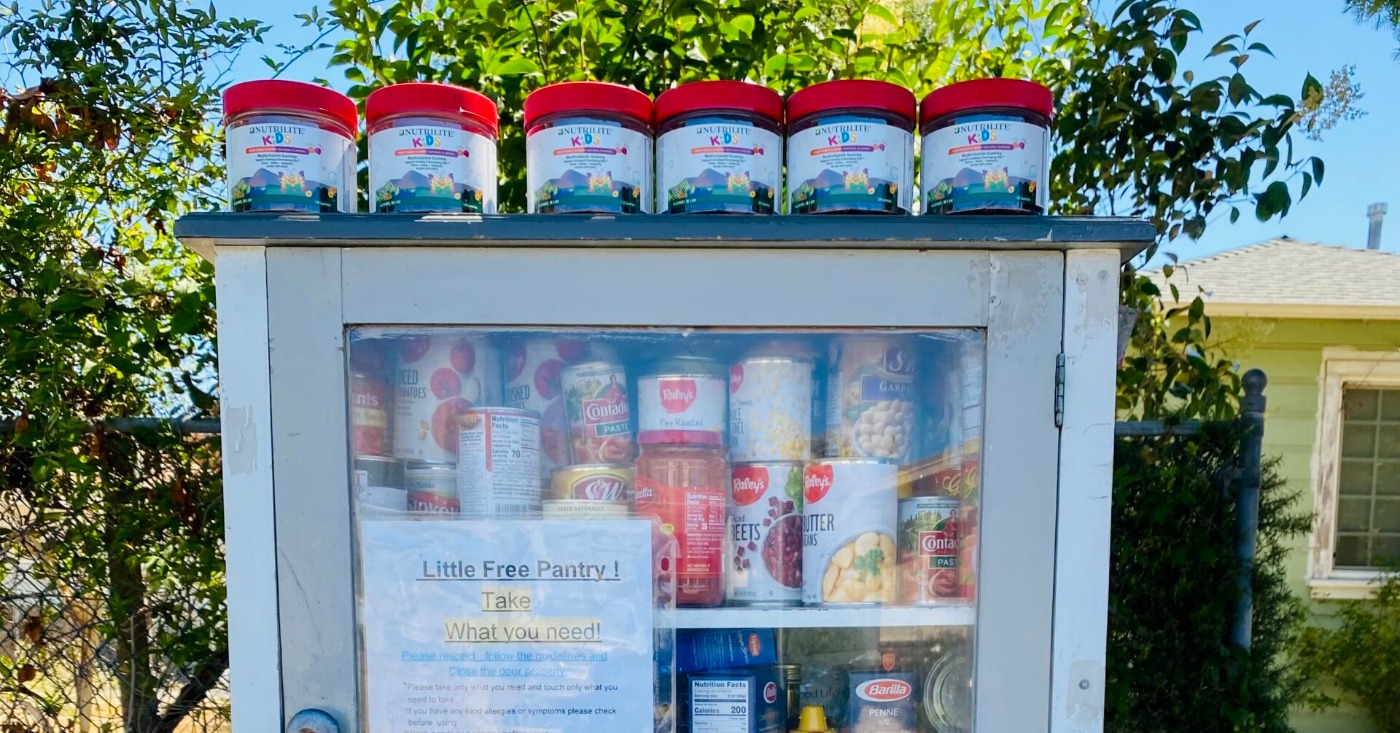
In Richmond, a small cabinet can carry a big message: dinner is here, no questions asked. Richmond Area Mutual Aid (RAMA) has created a map of current Little Free Food Pantries across the city. The neighborhood outposts encourage anyone to take what they need and leave what they can.
The map connects residents with pantries that may be as simple as a shelf, box or cabinet outside a home or business. According to RAMA’s website, the spaces can hold shelf-stable groceries and fresh produce that can safely spend some time outside refrigeration. The operating principle is as clear as the group’s motto: “Give what you can, take what you need.”
One of the map’s sites is near 34th Street and Roosevelt Avenue, where Achala Jayagoda and her family host a pantry that began as a Little Free Food Table during the pandemic. Her son, Eagle, founded it. The pantry has since grown into a lasting neighborhood resource. Amid the high cost of food, Jayagoda said supplies can disappear with startling speed.
“It continues to serve the community with everyone’s support,” Jayagoda toldTthe Richmond Standard. She said the people who contribute are not only nearby neighbors, but donors from elsewhere in Richmond and, at times, beyond the city. A few nonprofit organizations pitch in, too.
Jayagoda has also heard from retirees who collect end-of-day giveaways from grocery stores and bakeries and bring them to the pantry. Sometimes the deliveries include fresh food. At first concerned about leaving perishables out, she said it turns out those items move quickly. It’s a sign, in her view, of how urgently people need the help.
In fact, the pantry can be emptied within hours. Then the same community that uses it swings back into action. “Thankfully, the community helps restock it as quickly as possible so people can continue getting food,” Jayagoda said. As the holidays approach, she hopes that circle of giving will widen to reach more families.
RAMA describes itself on its website as a group of neighbors from Richmond and nearby communities working toward a place that is “safe, joyful and thriving.” The pantry project turns that broad aim into something concrete: a can of beans, a bag of rice, a loaf of bread—and a nearby place to share it.
Keeping each pantry going takes more than a sturdy box. RAMA’s website says every location needs an individual or organization willing to place the pantry on its property, and a team of stewards who can stock and clean it. A host may also serve as a steward. That local team is the point: RAMA wants each pantry to become an autonomous neighborhood hub supported over time by people who live nearby.
For residents ready to start one, RAMA says it can guide or support pantry construction and installation, share reclaimed food and help hosts adapt shelving or other materials into a workable setup. RAMA has announced free pantry build days Nov. 14 and Dec. 12; residents can email Richmondareamutualaid@proton.me for details.
Check out the Richmond pantry map below and get more information from RAMA at https://www.wegotusrichmond.org/pantries/. Visit RAMA on Instagram at @RichmondAreaMutualAid.



How the Sandwich Generation Can Help Protect Aging Parents’ Finances

As Progressive Democrats Celebrate ‘Blue Tsunami,’ Oakland Counts Victories

Golden State Valkyries Become Bay Area Legends Winning WNBA Championship on Halloween Night

IN MEMORIAM: Marcia Ann Gillespie, Editor of Essence and Ms. Magazines, Dies at 82

U.S. Rep. John Garamendi Honors local ‘Women of the Year’ at Annual Awards Ceremony

Richmond Neighbors Put Pantry Power on the Map

Oakland Latino Chamber of Commerce Hosts Statewide Convention, Generating $3 Million in Economic Impact

HISTORY MADE: Keisha Lance Bottoms Becomes First Black Woman Elected Governor in American History

HISTORY MADE: Keisha Lance Bottoms Becomes First Black Woman Elected Governor in American History

Five Hospitals Said No! Who Will Help Annette Henry Recover?

Oakland NAACP, BWOPA Speak Out Against Alleged Harassment of Black Women Political Leaders

COMMENTARY: Oakland’s Black Students Have Gained Ground: We Shouldn’t Stop Now

From Backyard Grilling to Jack London Square: Jamale Carlyle’s Chicken Wing Success Story

SEIU Local 1000 and State of California Will Continue to Negotiate New Labor Contract

OPINION: We Can Restore Checks and Balances on Trump

COMMENTARY: Valarie Bachelor and Jennifer Brouhard are Excellent School Board Members and Deserve to Be Reelected

Listening as a Lifeline: A Doula’s Witness to Black Maternal Health

Doulas Are Helping Black California Moms Navigate Pregnancy–Even as High Mortality Rates Persist

Poll: Becerra Widens His Lead Over Hilton; Californians Split on Wealth Tax

Zakiya Jendayi Arrested, Locked Out of Home by Sheriff’s Deputies

County Office of Education Says OUSD Finances Are Getting Healthier, Materially Stronger
HISTORY MADE: Keisha Lance Bottoms Becomes First Black Woman Elected Governor in American History

From Historic Memories to New Possibilities: Oakland Celebrates Coliseum 60

BLACspace Cooperative Invites Bay Area to Experience Oakland’s Black Cultural Ecosystem Through a BLAC Map Tour + Party

It’s Time to Lose Weight Before the Holidays

Oakland Post: Week of September 23 – 29, 2026

OUSD Receives State Review of District Finances; Outlines Progress Since January

Mayor Barbara Lee Holds Special State of the City Address in Deep East Oakland

Democrats, Community Groups Back Measure EE to Change How Oakland Is Governed

Oakland Post: Week of September 30 – October 6, 2026

The Conversation With Al McFarlane 6/23/26

Media Monday 6/22/26

LIVE! ASK ALMA! — TUES. 6.23.26 7PM EST

Car Buying Secrets: 4 Hidden Checks Before You Sign!

Is This 550 HP Charger Worth YOUR Money? AutoNetwork Review

Celebrating Juneteenth – Frederick Douglass on education and resistance

LIVE! — ASK ALMA! — TUES. 6.19.26 7PM EST

Hyundai Ioniq 5 Parking, Safety, and 360 View #shorts

2025 Ioniq 5 New Wiper & Powerful Performance! #shorts

Electric SUV Range: Is 259 Miles Enough? #shorts

EV Charging: How Fast Can You Charge an Electric Vehicle? #shorts

Biometric Cooling… Messaging Seats…Come on! 2025 Infiniti QX80 Autograph 4WD

Charged Up: Witness the Magic of a Fully Electric Car! #shorts

Range Rover Sport PHEV Included…: See What’s Inside This Luxury SUV! #shorts

Invisible Hood View: Perfect Parking with X-Ray Vision! #shorts
-
 Commentary5 days ago
COMMENTARY: Valarie Bachelor and Jennifer Brouhard are Excellent School Board Members and Deserve to Be Reelected
-
 Black History3 days ago
HISTORY MADE: Keisha Lance Bottoms Becomes First Black Woman Elected Governor in American History
-
 Community3 weeks ago
It’s Time to Lose Weight Before the Holidays
-
 Education5 days ago
OUSD Receives State Review of District Finances; Outlines Progress Since January
-
 Community3 weeks ago
Mayor Barbara Lee Holds Special State of the City Address in Deep East Oakland
-
 Community4 weeks ago
Democrats, Community Groups Back Measure EE to Change How Oakland Is Governed
-

 Featured4 weeks ago
Oakland Awarded More than $14 Million in State Funding
-
 Community4 weeks ago
‘ICE-Free Marin’ Supporters Press Supervisors as County Drafts Enforcement Restrictions
