
Bo Tefu
California’s Largest ICE Detention Center Reopens, Begins Receiving Detainees
“We have begun receiving U.S. Immigration and Customs Enforcement (ICE) detainees at our California City Correctional Facility (CCCF) in response to an immediate need from the federal government for safe, humane and appropriate housing and care for these individuals,” said Ryan Gustin, senior director for public affairs for CoreCivic.

By Bo Tefu, California Black Media
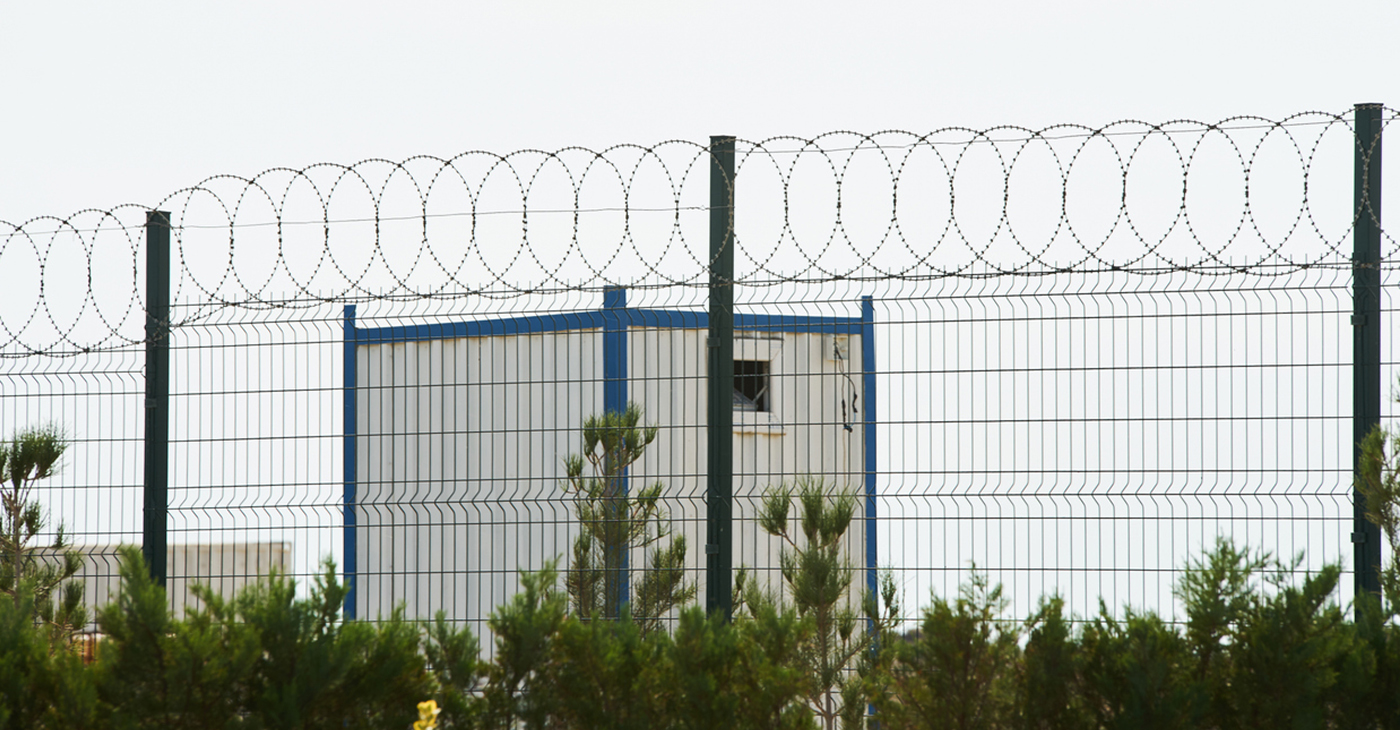
California’s largest federal immigration detention facility has quietly reopened in Kern County and has started receiving detainees, according to the private prison operator CoreCivic. The facility, now known as the California City Immigration Processing Center, is a 2,560-bed U.S. Immigration and Customs Enforcement (ICE) center.
“We have begun receiving U.S. Immigration and Customs Enforcement (ICE) detainees at our California City Correctional Facility (CCCF) in response to an immediate need from the federal government for safe, humane and appropriate housing and care for these individuals,” said Ryan Gustin, senior director for public affairs for CoreCivic.
The facility is the third privately-operated ICE detention center in Kern County and the seventh in California. It originally opened in the late 1990s as a federal facility, later becoming a state prison, and was closed in 2024 after California ended for-profit prison contracts. CoreCivic confirmed that the reopening will create roughly 500 jobs and generate more than $2 million in property taxes for California City.
The reopening has raised legal and community concerns. California law requires a 180-day public notice before opening or reusing detention facilities under SB29. City officials, including Mayor Marquette Hawkins and City Manager Christopher Lopez, did not respond to comment requests, and Lopez said he had “no information” on long-term agreements between ICE and the city.
Advocates warned during a June 24 city council meeting that reopening the facility could lead to increased local ICE arrests.
Nora Zaragoza-Yáñez, manager of the nonprofit Faith in the Valley, said, “We’re troubled by California City turning a deaf ear to the objections voiced by community members and advocates voiced at previous meetings.”
Faith in the Valley estimates that roughly 300 detainees have already been quietly transferred from nearby facilities Golden State Annex and Mesa Verde. City officials have raised safety concerns, citing insufficient emergency communications and building code issues in a July 29 letter to CoreCivic. Gustin said the company has addressed these concerns and maintains “an open line of communication” with city officials.









Activism
California Dem Party Is Holding Its Summer Executive Board Meeting July 31-Aug. 2
The meeting will gather Executive Board members and standing committee members to conduct official party business, including committee meetings, training sessions, and a Sunday General Session where credentialed members will vote on party matters. Party officials say the event is designed to coordinate strategy as Democrats in California look to strengthen voter outreach efforts and support national goals, including efforts to regain control of the U.S. House of Representatives.

By Bo Tefu, California Black Media
The California Democratic Party is set to hold its 2026 Summer Executive Board Meeting from July 31 through Aug. 2 at the Sheraton San Diego Hotel & Resort, bringing together party leaders for three days of organizing, voting, and planning ahead of the November election cycle.
The meeting will bring together Executive Board members and standing committee members to conduct official party business, including committee meetings, training sessions, and a Sunday General Session in which credentialed members will vote on party matters. Party officials say the event is designed to coordinate strategy as Democrats in California look to strengthen voter outreach efforts and support national goals, including efforts to regain control of the U.S. House of Representatives.
Online registration and credentialing for Executive Board attendees is currently open and will close at 5 p.m. on July 8. Observer credential requests for non-board members close earlier, on July 2 at 5 p.m. Party officials are encouraging attendees to complete registration online in advance to streamline on-site credential pickup.
Executive Board members must pick up physical credentials in person during registration hours to be eligible to vote. Registration fees include $85 for Executive Board members, $80 for 2026 DSCC dues, and $165 for combined dues and registration. Standing committee members may also register for $85, while non-board members can attend the Sunday General Session by purchasing a $95 observer pass.
The party is also organizing volunteer opportunities over the weekend, including an in-person phone bank focused on voter outreach. Organizers say the activity is part of broader efforts to mobilize voters ahead of the general election.
Several logistical details remain in progress, including the release of the full executive board agenda, travel accommodations information, and Sunday voting procedures. A proxy submission portal is currently open for members unable to attend in person.
The hotel room block at the Sheraton San Diego Hotel & Resort has already sold out, though attendees can still access discounted parking rates during the event.
Party officials note that caucus meetings, standing committee sessions, and training events will remain open to all Democrats and do not require credentials. However, only credentialed members and approved observers will be allowed to participate in the formal Sunday General Session.
Black History
Report Examines Link Between Low Earnings and Incarceration Rates
Researchers found that low earnings were common throughout the employment histories they examined. Only 28% of people employed before incarceration earned more than the federal poverty threshold in at least one year. Although that share rose to 45% after release, many workers continued to earn too little to achieve lasting financial stability.

By Bo Tefu, California Black Media
Low earnings and unstable employment before incarceration may play a larger role in the cycle of imprisonment than previously understood, according to a new report from the Public Policy Institute of California (PPIC) that tracks the work histories of nearly 170,000 people released from state prisons.
The report, Employment Before, During, and After Prison in California, found that many people entering prison had weak ties to the labor market, often working temporary, low-paying jobs that failed to lift them above the federal poverty line. Researchers said the findings underscore the need for stronger education, workforce development and employment programs to improve long-term economic outcomes and reduce barriers to successful reentry.
The study analyzed employment records for people released from California prisons between 2015 and 2019, examining their work histories before incarceration, jobs held while in prison and employment after release. Researchers found that nearly half of those studied never held a job outside prison during the period examined, while one in four had no recorded employment before, during or after incarceration.
“Policymakers have long sought to promote employment among released prisoners through policies and programs that reduce incarceration and broaden access to the labor market,” researcher Heather Harris stated. “This descriptive report provides previously unavailable information about employment before, during, and after incarceration among released prisoners with the aim of highlighting opportunities for improvement.”

Before incarceration, about one-third of employed individuals worked temporary jobs. After release, that share increased to 42%, suggesting employment remained unstable even after returning to the community. The report also found that prison jobs generally paid about 40% less than the national average, and nearly one-third of incarcerated workers received no wages at all.
Researchers found that low earnings were common throughout the employment histories they examined. Only 28% of people employed before incarceration earned more than the federal poverty threshold in at least one year. Although that share rose to 45% after release, many workers continued to earn too little to achieve lasting financial stability.
The report also identified significant disparities, with Black workers earning an average of 38% less than White workers and women earning about 20% less than men.
Despite those challenges, the report identified several factors associated with stronger employment outcomes. Individuals who worked before incarceration were nine times more likely to find employment after release, while prison jobs, vocational education, college coursework and substance use disorder treatment were all linked to improved employment prospects.
“Our findings suggest that improving access to education, job training and employment opportunities before, during and after incarceration could strengthen labor market outcomes for formerly incarcerated Californians,” Harris stated.
The researchers said expanding evidence-based workforce and education programs could help break the connection between persistent low earnings and incarceration, while improving economic mobility and reducing the likelihood of future justice system involvement.
Activism
Newsom, Legislature Reach Deal on $355.9 Billion Budget That Protects Health Care; Averts Deficits for Two Years
Other major investments include a record $2.4 billion in ongoing funding for special education, $5 billion for TK-12 schools, $500 million in Low-Income Housing Tax Credits, $200 million for affordable multifamily housing, a $100 million Disaster Rebuilding Fund, and new funding to strengthen election security, voter outreach and protections against misinformation. The agreement also preserves free school meals, universal transitional kindergarten, universal preschool, summer school programs and childcare slots.
By Bo Tefu, California Black Media
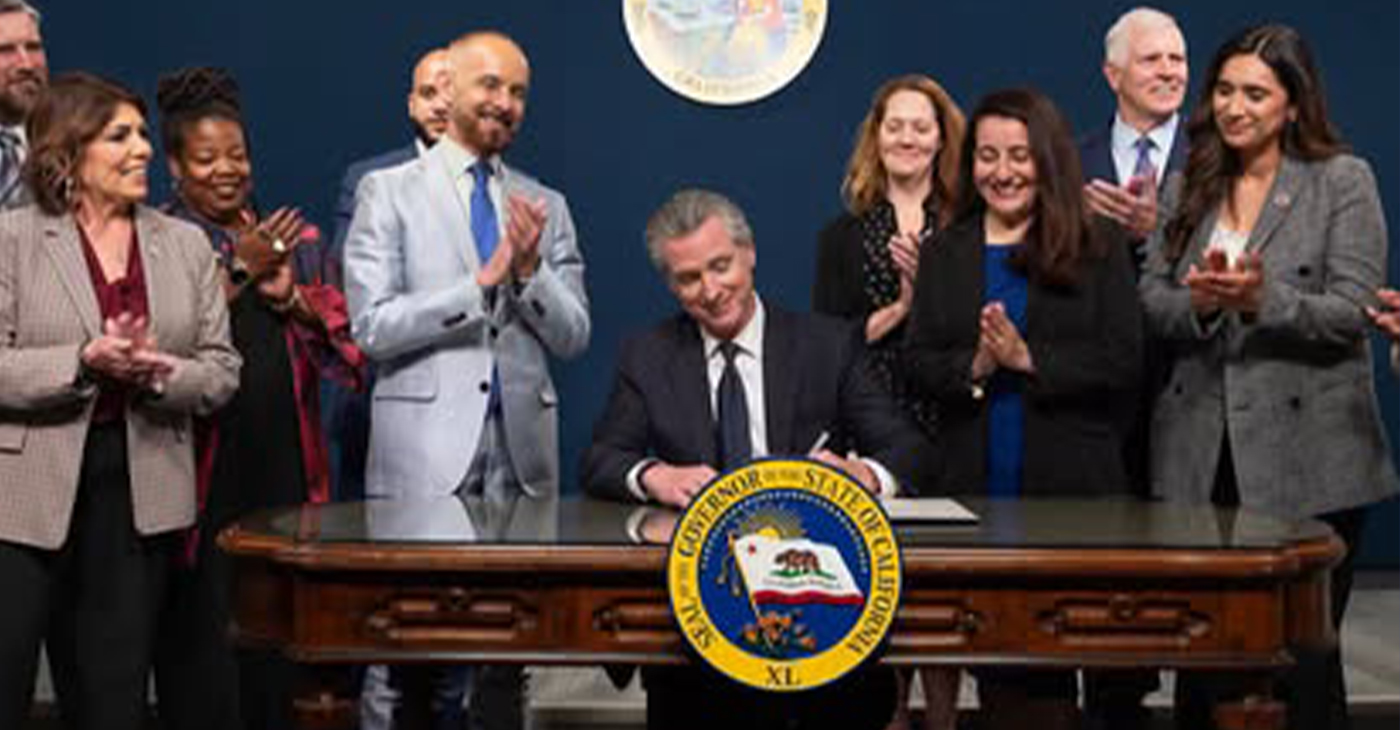
Gov. Gavin Newsom and Democratic legislative leaders announced a final agreement June 26 on California’s $355.9 billion 2026–27 state budget, saying the spending plan preserves health care and other essential services while eliminating projected deficits through the next two fiscal years.
The agreement between Newsom, Senate President Pro Tempore Monique Limón (D-Santa Barbara), and Assembly Speaker Robert Rivas (D-Hollister) balances the budget while maintaining investments in health care, education, housing, public safety and other priorities despite continued economic uncertainty and federal funding challenges.
“A balanced budget isn’t an end in itself — it’s how we deliver for Californians,” Newsom said. “This budget demonstrates responsible choices that protect our fiscal strength while continuing to invest in what matters most. In California, we support working families, create more opportunity, and build safer, healthier communities.”
The budget includes $300 million to lower health care costs, preserves $0 monthly health plans for many lower-income Californians, and helps offset higher insurance premiums resulting from the expiration of enhanced federal Affordable Care Act subsidies. It also protects funding for behavioral health programs and continues implementation of Proposition 1.
Other major investments include a record $2.4 billion in ongoing funding for special education, $5 billion for TK-12 schools, $500 million in Low-Income Housing Tax Credits, $200 million for affordable multifamily housing, a $100 million Disaster Rebuilding Fund, and new funding to strengthen election security, voter outreach and protections against misinformation. The agreement also preserves free school meals, universal transitional kindergarten, universal preschool, summer school programs and childcare slots.

Limón said lawmakers worked to shield Californians from federal spending reductions while strengthening the state’s finances.
“Today’s budget agreement reflects our commitment to protect core programs and address our short and long-term financial future by building up our rainy-day fund and making responsible budgeting choices,” Limón said. “I am also proud that the Senate was able to secure critical funding for childcare slots, safeguard access to care, and take significant steps toward ensuring large corporations pay their fair share.”
Rivas said the budget “protects health care, preserves food programs, invests in housing at record levels and builds reserves to fight back no matter what Trump and Republicans throw at us.”



Port of Oakland, Army Corps Sign Historic Harbor Design Agreement

Democratic Clubs Interview Candidates for Oakland School Board

Nuna Phillips-McKee Celebrates 100 Years: ‘A Century of Faith, Family and God’s Amazing Grace!’

D.A. Ursula Jones Dickson: Terminix to Pay $3.15 Million Over Illegal Disposal of Pesticides, Customer Records

REPORT: Community Level Policy Is Impacting Homelessness and Drug Abuse in California

OPINION: AI Needs to Know Who Is the Boss
Goldi-Locs and Two (or Three) Bears in the Forest in California Hills

Election Watch 2026: 85% of Eligible Voters in California Are Registered

Don’t Let scammers Crash Your School Year

BOOK REVIEW — Curved Air: A Biography of Sickle Cell Anemia and the Quest to Cure the First Molecular Disease

California’s Legal Cannabis Market Hits $8 Billion as State Touts Progress on Fighting Drugs, Crime

Blacks and Latinos Clash Over LA’s Barrio Run; Mayor Karen Bass Calls for Dialogue Across Racial, Neighborhood Lines

Asm. Smallwood-Cuevas’s Bill Repealing ‘Racist’ CalWORKs ‘Man-in-the-House’ Rule Clears Legislature

Asm. Smallwood-Cuevas’s Bill Repealing ‘Racist’ CalWORKs ‘Man-in-the-House’ Rule Clears Legislature

‘Ready to See These Bills Become Law’: Sen. Weber’s Package of 15 Bills Advance to Gov. Newsom’s Desk

Department of Homeland Security Demands California Secretary of State Shirley N. Weber Scrub Voter Rolls

“The Power to See Threats Sooner”: Gov. Newsom, Safety Officials Showcase California’s Investments in Hi-Tech Wildfire Prevention

Alpha Kappa Alpha Sorority, Inc. Celebrates New North Atlantic Regional Director

California Sen. Padilla Joins Colleagues to Introduce Bill Imposing Term Limits on Supreme Court Justices

Less Affluent School Districts, Including Sacramento City, Face Threat of State Takeover

Car Wash Workers Cope with Lingering Impacts of ICE Raids

ESSAY: California Can Close Its Colorectal Cancer Gap

Oakland Post: Week of August 5 – 11, 2026

As Part of Your Back-to- School Checklist, Vaccinate

Oakland ‘Port Serves as a Powerful Engine for Good Jobs and Economic Development

Gov. Newsom Signs New Affordable Housing Legislation

Gov. Newsom Announces $109.6 Million in Funding for 278 Supportive Homes in Bakersfield, Contra Costa, Sacramento and Fresno

California Hispanic Chambers of Commerce Unveils: ‘Powering the Future’ Theme for 47th Annual Statewide Convention

Closing the Gap: What the Data and Frontline Experiences Reveal About Cancer in Black California

Congresswoman Simon Demands Investigation into Trump’s Abuse of Emergency Powers for Coal Export Terminal in West Oakland

The Conversation With Al McFarlane 6/23/26

Media Monday 6/22/26

LIVE! ASK ALMA! — TUES. 6.23.26 7PM EST

Car Buying Secrets: 4 Hidden Checks Before You Sign!

Is This 550 HP Charger Worth YOUR Money? AutoNetwork Review

Celebrating Juneteenth – Frederick Douglass on education and resistance

LIVE! — ASK ALMA! — TUES. 6.19.26 7PM EST

Hyundai Ioniq 5 Parking, Safety, and 360 View #shorts

2025 Ioniq 5 New Wiper & Powerful Performance! #shorts

Electric SUV Range: Is 259 Miles Enough? #shorts

EV Charging: How Fast Can You Charge an Electric Vehicle? #shorts

Biometric Cooling… Messaging Seats…Come on! 2025 Infiniti QX80 Autograph 4WD

Charged Up: Witness the Magic of a Fully Electric Car! #shorts

Range Rover Sport PHEV Included…: See What’s Inside This Luxury SUV! #shorts

Invisible Hood View: Perfect Parking with X-Ray Vision! #shorts
-

 Commentary2 weeks ago
Standoff for Justice: Our Homes Are Worth Fighting For
-

 Business2 weeks ago
Gubernatorial Candidate Steve Hilton Blasts California New Tire Rules; Newsom Hits Back
-

 Activism2 weeks ago
Oakland Post: Week of August 26 – September 1, 2026
-

 Education2 weeks ago
Gov. Newsom’s Latest Appointees Include Sacramento Advocate for Formerly Incarcerated Students; State’s New Tech Chief
-

 Business2 weeks ago
Frontier Airlines’ Return to Oakland Airport Brings Flights, Jobs and Opportunity
-

 Business2 weeks ago
Chef Sharon Lee Blends Culinary Excellence, Education and Empowerment
-

 Business2 weeks ago
Oakland Coliseum Project Opens Door for Small Businesses to Build Bigger
-

 Community2 weeks ago
Big City Mayors Ask for “Yes” Vote on Housing Bond Measure; Conservatives Say “No”
