
California Black Media
Calif. Park Advocates Want More Green Spaces in Black Neighborhoods
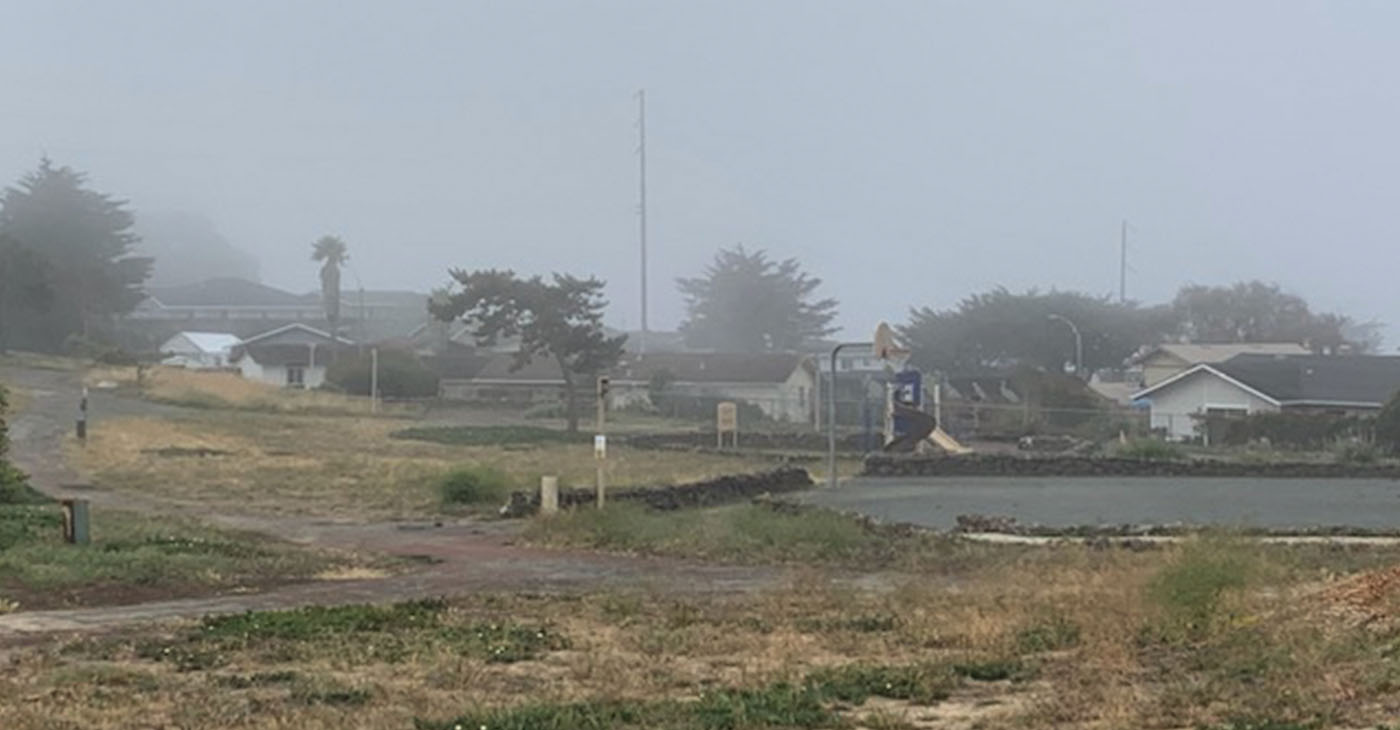
Some advocates say the state is not developing and maintaining community recreational facilities equally. They point out that green spaces in neighborhoods where Black Californians live remain underfunded even though the state has invested billions of dollars over the last decade-and-a-half to improve them.

McKenzie Jackson
California Black Media
Some advocates say the state is not developing and maintaining community recreational facilities equally. They point out that green spaces in neighborhoods where Black Californians live remain underfunded even though the state has invested billions of dollars over the last decade-and-a-half to improve them.
“They need to have a system to get money to the Black communities,” said Danny J. Bakewell, Sr., a Los Angeles-based businessman, civil rights activist, and philanthropist.
“They will tell you they have a system to make sure it’s not unfair, but the way they do the funding is not fair,” continued Bakewell, the only Black member of the California State Park and Recreation Commission. “Black people are not getting that money.”
Bakewell expressed concerns the scoring system employed by the California Department of Parks and Recreation’s Statewide Park Development and Community Revitalization Program (SPP) to determine how funds are distributed does not benefit African American cities and neighborhoods.
Defending its operations and application process, the SPP says giving all Golden State residents access to open outdoor spaces is its main goal.
State Parks Deputy Director for Community Engagement Sedrick Mitchell said SPP has, “placed green spaces in places where they weren’t before.”

SPP’s grants initiative, according to Mitchell, is the largest parks-related program in California history. It has funded $1.16 billion in construction, expansion, or renovation of 299 parks since 2009.
Applications are evaluated in a competitive process. Project approval is determined by a scoring system that awards a maximum of 100 points.
SPP says, the main qualifying criterion for funding is the ratio of park acreage per 1,000 residents living near the park, the median household income of those residents, and the number of residents living below the poverty line.
“If you have zero acres, you are likely to get the most points,” Mitchell explained. “If you have two acres, you are going to get less. The law requires us to look at two things — acres per 1,000 and income,”
Bakewell, who has been a parks commissioner for two years, said Seaside, a small Monterey Bay city with a Black mayor and a significant Black population should have received SPP funds.
Seaside Recreation Services Director Dan Meewis said the city has decades-old parks with deteriorating sidewalks.
“It’s a centralized hub for kids from a variety of neighborhoods,” he explained. “The walking trails throughout the parks are horrendous, tripping hazards.
The city’s two applications for SPP funding, the latest in 2021, were denied.
Mitchell says, state legislation directed the Parks’ initiative to prioritize funding for the creation of new parks over rehabilitations.
Mitchell and his staff met with Bakewell, Meewis, and Seaside Mayor Ian Oglesby to review the city’s denied proposals. Meews said he wished Seaside would have received guidance on how to improve their bid before their second application was rejected.
Mitchell said an area’s racial or ethnic makeup plays no part in how SPP monies are dispersed.
Bakewell wants to do more but said the commission he serves on doesn’t have a say in which projects are funded.
“Black communities at a minimum need stellar parks and recreation,” said Bakewell.








Activism
Oakland Post: Week of February 18 – 24, 2026
The printed Weekly Edition of the Oakland Post: Week of – February 18 – 24, 2026
To enlarge your view of this issue, use the slider, magnifying glass icon or full page icon in the lower right corner of the browser window.
Activism
Oakland Post: Week of February 11 – 17, 2026
The printed Weekly Edition of the Oakland Post: Week of – February 11 – 17, 2026

To enlarge your view of this issue, use the slider, magnifying glass icon or full page icon in the lower right corner of the browser window.
Bo Tefu
Trump’s White House Pushes to Control California Wildfire Recovery
The executive order signed Jan. 27 by President Donald Trump directs federal agencies to explore regulations that could override California and municipal permitting rules for homes and other structures destroyed in the fires. Land-use and rebuilding permits have traditionally been handled by cities and counties, making the move an unprecedented federal intervention into disaster recovery.

By Bo Tefu, California Black Media
The White House is moving to take control of wildfire recovery efforts in the Los Angeles County area, issuing an executive order that would shift rebuilding permit authority from state and local governments to the federal government following the January 2025 Palisades and Eaton fires.
The executive order signed Jan. 27 by President Donald Trump directs federal agencies to explore regulations that could override California and municipal permitting rules for homes and other structures destroyed in the fires. Land-use and rebuilding permits have traditionally been handled by cities and counties, making the move an unprecedented federal intervention into disaster recovery.
“I want to see if we can take over the city and state and just give the people their permits they want to build,” Trump told the media when signing the order.
The Palisades and Eaton fires destroyed about 16,000 homes, businesses, and other structures across Pacific Palisades, Altadena, and surrounding areas. According to local data, roughly 4,700 applications to rebuild have been submitted, with about 2,000 approved so far. Officials say the pace of rebuilding is consistent with recovery timelines from other major wildfires in California, where reconstruction often takes several years.
Gov. Gavin Newsom and Los Angeles Mayor Karen Bass quickly condemned the order, stating that it is unnecessary and legally questionable. Disaster recovery experts echoed those concerns, pointing to constitutional limits on federal authority over land-use decisions.
Trump’s order calls on the Federal Emergency Management Agency (FEMA) and the Small Business Administration to consider allowing builders to self-certify compliance with health and safety regulations to receive federal approval.
The dispute has become another flashpoint in the ongoing political battle between Trump and Newsom. The governor has requested $33 billion in federal disaster aid that has not yet been approved, while survivors continue to face challenges related to insurance payouts, high rebuilding costs, and legal disputes tied to the cause of the fires.
“Instead of finally sending to Congress the federal relief Los Angeles needs to rebuild from last year’s firestorms, Donald Trump continues to live in fantasy land,” Newsom wrote on X.
Bass said the White House could speed recovery by approving disaster aid and pushing insurers and lenders to support affected residents.
Trump’s order calls for draft regulations within 30 days and final rules within 90 days.

WORK FROM HOME
Home-based business with potential monthly income of $10K+ per month. A proven training system and website provided to maximize business effectiveness. Perfect job to earn side and primary income. Contact Lynne for more details: Lynne4npusa@gmail.com 800-334-0540


PRESS ROOM: NBA Hall of Fame Nominee Terry Cummings Joins 100 Black Men of DeKalb County to Launch Victory & Values Initiative

Reflecting on Black History Milestones in Birmingham AL

OP-ED: One Hundred Years of Black Workers Telling the Truth

PRESS ROOM: Civil Rights TV Launches in Selma as the World’s First 24/7 Civil Rights Television Network

Advancements in solar technology that are changing the way we power the world

U.S. manufacturing rebounds – how foundry services are adapting to rising demand

Why has blood testing become so popular in today’s world?

Ghana Mourns a Son of the African World

OP-ED: Trump’s Policies Hurt Black America—and Everyone Else

OP-ED: Meta Deleted Me. I Still Don’t Know Why. And neither will you.

More than a Mission: Paying It Forward for the Future of Education

Avoid Eviction This Season: Landlord Checklist for Stable Tenancies

How chronic back problems affect Black communities differently

How cancer care is evolving with modern medicine

Diabetes disparity: Understanding Type 2 risks for Black Americans

Life Expectancy in Marin City, a Black Community, Is 15-17 Years Less than the Rest of Marin County

Oakland Post: Week of January 28, 2025 – February 3, 2026

Jefferson County (AL) Democrats Open Qualifying for 2026 Primary Elections

Skater Emmanuel Savary Sharpens Routines for the 2026 U.S. Championships

COMMENTARY: With Gratitude and Praise for 2026

Community Celebrates Turner Group Construction Company as Collins Drive Becomes Turner Group Drive

California Launches Study on Mileage Tax to Potentially Replace Gas Tax as Republicans Push Back

Oakland Post: Week of January 21 – 27, 2026

Discrimination in City Contracts

OP-ED: The Dream Cannot be Realized Without Financial Freedom

After Don Lemon’s Arrest, Black Officials Raise Concerns About Independent Black Media

From Civil Rights to ICE Raids, Trump’s Unchecked Power Puts Every Community at Risk

Travis Scott Teaches Us How to Give Forward
From Civil Rights to ICE Raids, Trump’s Unchecked Power Puts Every Community at Risk

Four Stolen Futures: Will H-E-B Do The Right Thing?

Hyundai Ioniq 5 Parking, Safety, and 360 View #shorts

2025 Ioniq 5 New Wiper & Powerful Performance! #shorts

Electric SUV Range: Is 259 Miles Enough? #shorts

EV Charging: How Fast Can You Charge an Electric Vehicle? #shorts

Biometric Cooling… Messaging Seats…Come on! 2025 Infiniti QX80 Autograph 4WD

Charged Up: Witness the Magic of a Fully Electric Car! #shorts

Range Rover Sport PHEV Included…: See What’s Inside This Luxury SUV! #shorts

Invisible Hood View: Perfect Parking with X-Ray Vision! #shorts

AI Is Reshaping Black Healthcare: Promise, Peril, and the Push for Improved Results in California

ESSAY: Technology and Medicine, a Primary Care Point of View

Sanctuary Cities

The RESISTANCE – FREEDOM NOW

STATE OF THE PEOPLE: Freddie

ECONOMIC BOYCOTT DAY!!!!!

I told You So

-
 Activism3 weeks ago
Life Expectancy in Marin City, a Black Community, Is 15-17 Years Less than the Rest of Marin County
-
 Activism3 weeks ago
Oakland Post: Week of January 28, 2025 – February 3, 2026
-
 Activism2 weeks ago
Community Celebrates Turner Group Construction Company as Collins Drive Becomes Turner Group Drive
-
 Business3 weeks ago
California Launches Study on Mileage Tax to Potentially Replace Gas Tax as Republicans Push Back
-
 Activism2 weeks ago
Discrimination in City Contracts
-
 Activism3 weeks ago
After Don Lemon’s Arrest, Black Officials Raise Concerns About Independent Black Media
-

 Activism3 weeks ago
Medi-Cal Cares for You and Your Baby Every Step of the Way
-

 Arts and Culture3 weeks ago
Book Review: Books on Black History and Black Life for Kids
