
Book Reviews
Book Review: “Who Got Game? Basketball”
A little less than two feet. That’s how far you can get your two feet off the floor if you’re an average kid doing an average vertical jump. Not quite twenty-four inches, but don’t worry: the taller you grow, the higher you could be able to jump. Practice some, dribble a little, shoot more three-pointers, and you might jump right into a book like “Who Got Game? Basketball” by Derrick Barnes, illustrated by Jez Tuya.

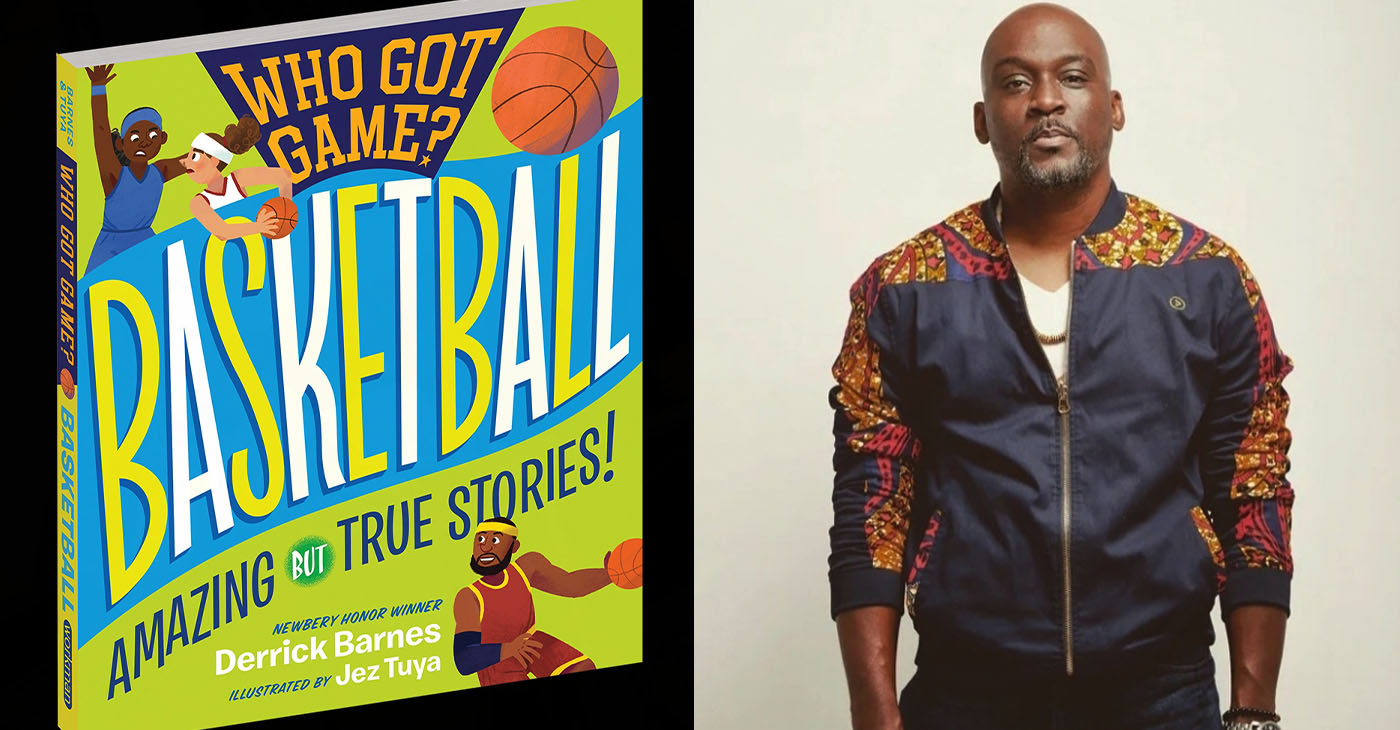
A little less than two feet.
That’s how far you can get your two feet off the floor if you’re an average kid doing an average vertical jump. Not quite twenty-four inches, but don’t worry: the taller you grow, the higher you could be able to jump. Practice some, dribble a little, shoot more three-pointers, and you might jump right into a book like “Who Got Game? Basketball” by Derrick Barnes, illustrated by Jez Tuya.
Here we are, football season’s almost over, and your mind has turned to other things – namely, hoops set high over your head, and a round bouncy basketball. Kids like you who “got game” have had it for more than a century. Yes, the game of basketball was created by Dr. James Naismith in 1891 in Massachusetts.
In the years since, basketball has changed a lot, thanks to what Derrick Barnes calls “pioneers.” Julius “Dr. J” Erving improved the dunk. Before that, in 1950, the NBA first allowed Black basketball players on the teams. There have been super-tall players (Manute Bol and Gheorghe Muregan were both seven feet, seven tall) and smaller b-ballers – five-three Muggsy Bogues had a vertical jump of nearly four feet! – and just two years after the game was invented, America had its first women’s team.

A lot of off-court people poured themselves into the game, too. Barnes writes, for example, about Pat Summitt, hoopster, leader, and “one of the greatest coaches in all of sports history.” Her record of 1,098 wins ranks her at first-place in coaching women’s basketball, and as the coach with the second-most wins overall.
You can probably guess that in a book about buckets, there are bucketfuls of stats. Barnes includes a list of NBA players who jumped to a team right out of high school. He writes about the greatest basketball park ever, he explains why winners cut down the net, how Title IX changed the game, why backboards rarely break into a zillion pieces anymore, high scores, bad injuries, “hoops movies,” and where in the world you can pick up a game today.
So, your 9-to-13-year-old loves basketball so much that they dribble a ball in their sleep? They think their favorite jersey is church wear? Then you’ll be the hero of the day when you bring home “Who Got Game? Basketball.”
But first, there’s one big thing you need to know: this is not a how-to book. There aren’t any instructions inside here, no rules or plays to follow. Instead, author Derrick Barnes makes young b-ballers happy by sharing little-known info about the game they love so much, short lists, great stories about great players, wins and losses, and phrases they should know to talk the talk. All this knowledge is supported by colorful illustrations by Jez Tuya that kids will enjoy alongside the facts.
This book is for die-hard young b-ballers, but don’t be surprised if an adult finds a thing or two to learn here. “Who Got Game? Basketball” is a book any fan will want to jump on.
“Who Got Game? Basketball” by Derrick Barnes, Illustrated by Jez Tuya, c.2023, Workman Publishing, $16.99, 172 pages.





Book Reviews
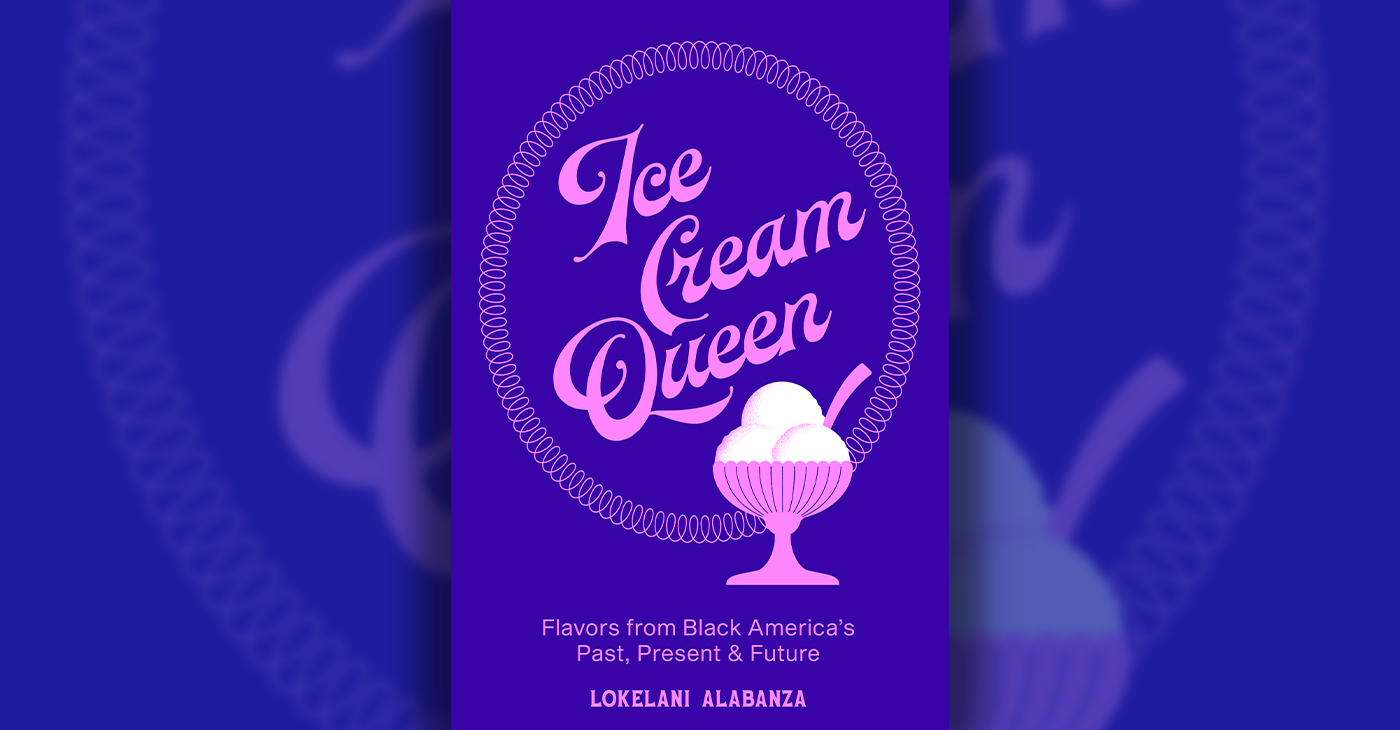
BOOK REVIEW: The Ice Cream Queen: Flavors from Black America’s Past, Present & Future
Sugar is the first ingredient for ice cream, which was first made some 1500 years ago but which didn’t arrive in this country until around 1744. Thirty years after that, America’s first ice cream parlor was opened in New York City, and it was a hit. Take note, though, and stress the word “parlor.” An ice cream shop was a totally unacceptable place for unchaperoned ladies. A parlor was completely fine.
By Terri Schlichenmeyer
Author: Lokelani Alabanza, Copyright: c.2026, Publisher: W.W. Norton, SRP: $29.99, Page Count: 264 pages
Your tongue can barely stay behind your teeth.
Is it Rocky Road that’s tempting you, or Chocolate Chip Cookie Dough? Maybe something with caramel on top, or just plain vanilla, dressed up in a rainbow of sprinkles. Have you ever had a bad ice cream cone on a hot summer’s day? Probably not — so dip into the new book “Ice Cream Queen” by Lokelani Albanza and have a taste.
For nearly three centuries, says Albanza, “African American hands have been touching sugar.” Planting it, harvesting it, processing it, every step was loaded with possible danger, loss of limb, and loss of life.
Sugar is the first ingredient for ice cream, which was first made some 1500 years ago but which didn’t arrive in this country until around 1744. Thirty years after that, America’s first ice cream parlor was opened in New York City, and it was a hit. Take note, though, and stress the word “parlor.” An ice cream shop was a totally unacceptable place for unchaperoned ladies. A parlor was completely fine.
Writing about memories of her grandma’s stash of ice cream, Albanza recalls enjoying it after a good Southern meal cooked by the Tennessean woman. In her career journey, Albanza learned about other Black cooks and Black cookbooks — “And then I found Sarah Estell.”
From roughly 1840 until the Civil War, Estell, a Black woman, owned and ran an ice cream “saloon” in Nashville, serving ice cream she made. Known locally as the “Ice Cream Queen,” Estell seemed to disappear after 1865.
Like her “North Star,” Estell, Albanza makes unusual kinds of ice cream.
In this book, you’ll find a glossary of terms, lists of equipment needed, and directions for different bases to get you started. There are recipes for basic flavors, Parmesan, cream cheese & pepper jelly, burnt almond, and marshmallow. You can have blueberry ice cream, cranberry-cherry vodka, summer corn, and more. But why stop there?
Says Albanza, “I have yet to come across one person who doesn’t like ice cream. Not one.”
So, what’s your preference? A waffle cone, a regular cone, or in a bowl? Sprinkles or not, and okay, now you want some ice cream, but first, check out “Ice Cream Queen.”
The thing you’ll notice about this book is that it’s so happy. From the “birth of ice cream,” to tales of notable people in frozen-concoction history, to recipes for kids and kids-at-heart, this is one of those books that cooks will love, but it’s not just for them. Alabanza satisfies everyone, from historians to foodies, with step-by-step, easy-to-try instructions, so you can create tasty foundations for whatever flavor you might want to try. There’s even some encouragement for a little experimentation of your own. Glossy photos will make your mouth water as you smile big.
Summertime can be a scorcher, and you know what cools you off best? Yep, so find this book, invest in a few tools, and be the hit of the neighborhood. For that, a book like “Ice Cream Queen” can’t be licked.
Advice
Book Review: Books for College-Bound Students
The kind of workday your Grandpa had is probably over, and you can’t count on toiling at the same place for 40 years for a pension and a gold watch. You already know that, and these books will help you decide your next step. You’ll learn what kind of worker you are, what’s stopping you from finding a job or occupation you’ll love, how to determine the purpose you envision for your future, and how to get where you need to be.
By Terri Schlichenmeyer
Authors: Various, Copyright: c.2026, Publishers: Various, SRP: $21.00 – $29.00, Page Counts: Various
The videos and news reports were inspiring.
In them, a hesitant prospective college student became a happy, new college-bound student with the click of a key. They were accepted into the college of their dreams – so how can you get the same feeling next spring, when you’re the one with the highest of hopes?
You can start by reading these great books and sharing them with your family…
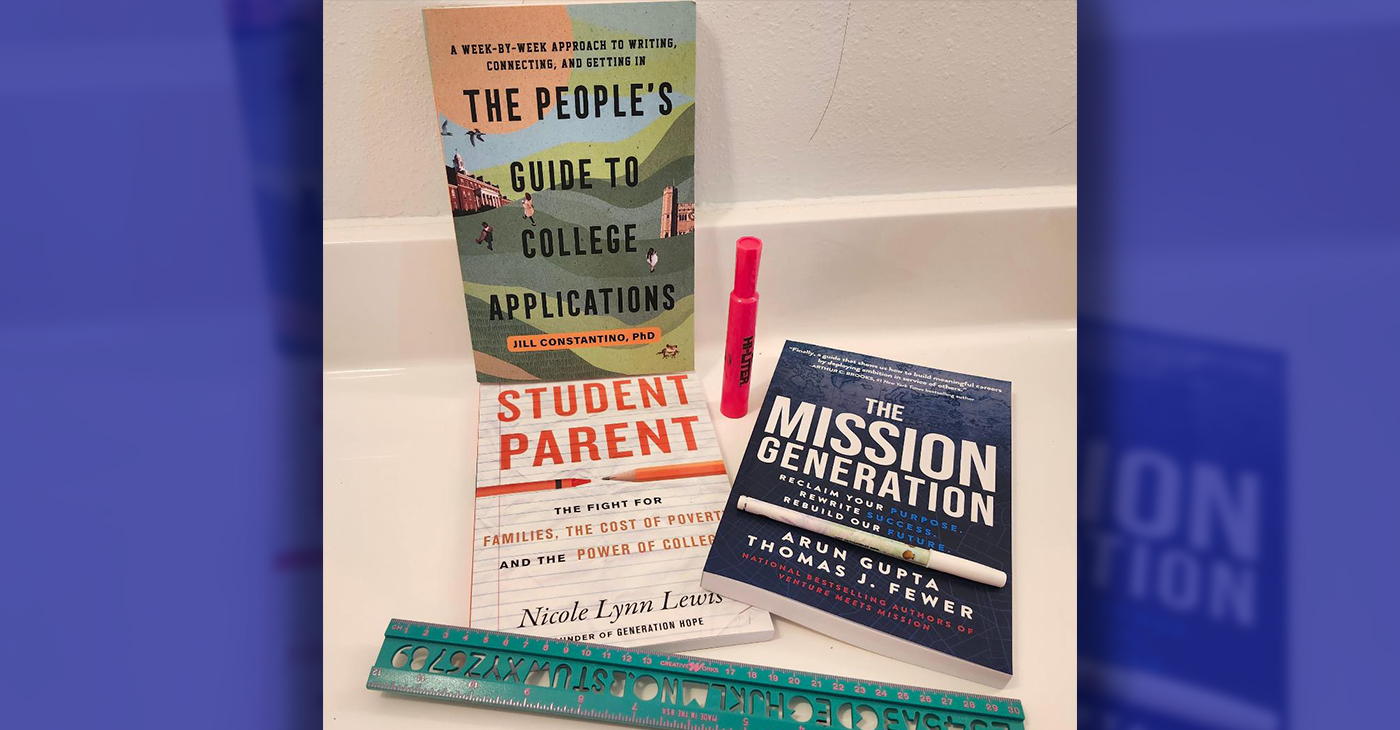
You probably already know that getting into the college of your choice is not something you do last-minute. In “The People’s Guide to College Applications: A Week-by-Week Approach to Writing, Connecting, and Getting in” (Prometheus Books, $ 21.95), Jill Constantino takes you through each step, but not in a frantic way. There’s no pressure here, just easy-to-grasp, makes-sense methods to apply for the college you want. There are reminders here, things you can’t forget and things you can, hints on asking for referrals and writing essays, and plenty of reminders to take a deep breath. Bonus: it’s also a book for parents, who may feel just as much pressure as their child does.

Okay, but let’s say that you’re an adult, a parent who’s sweating those college applications, classes, and the FAFSA for yourself, ugh! Then you’ll want to read “Student Parent: The Fight for Families, the Cost of Poverty, and the Power of College” by Nicole Lynn Lewis (Beacon Press, $26.97). an urgent call meant for nontraditional students who are also Black, Latinx, gay, Moms, or Dads.
Inside this book, you’ll find stats and stories that may already sound familiar, tales of not enough money, not enough support, not enough arms or sleep or resources. If you’re looking for a book of advice, this isn’t it, though. It’s more of a resource that you’ll want to take to your guidance counselor or any local politician.
Alright, but what if you’ve decided that college can wait? Is that okay? Look for “The Mission Generation: Reclaim Your Purpose, Rewrite Success, Rebuild Our Future” by Arun Gupta and Thomas J. Fewer (Wiley, $29.00) because – guess what? – you have many options for your future.
The kind of workday your Grandpa had is probably over, and you can’t count on toiling at the same place for 40 years for a pension and a gold watch. You already know that, and this book will help you decide your next step. You’ll learn what kind of worker you are, what’s stopping you from finding a job or occupation you’ll love, how to determine the purpose you envision for your future, and how to get where you need to be. This book isn’t just for high schoolers, but for anyone ages 16 and beyond who’s feeling restless, ready for change, or who’s thinking about some kind of purposeful retirement.
And if these aren’t the college-based or not-college-bound books you need, then be sure to ask your favorite bookseller or librarian for help on ideas, how-to’s, test prep books, or study guides. They’ll have books for you, and maybe a little inspiration, too.
Arts and Culture
Book Review: Books on Black History and Black Life for Kids
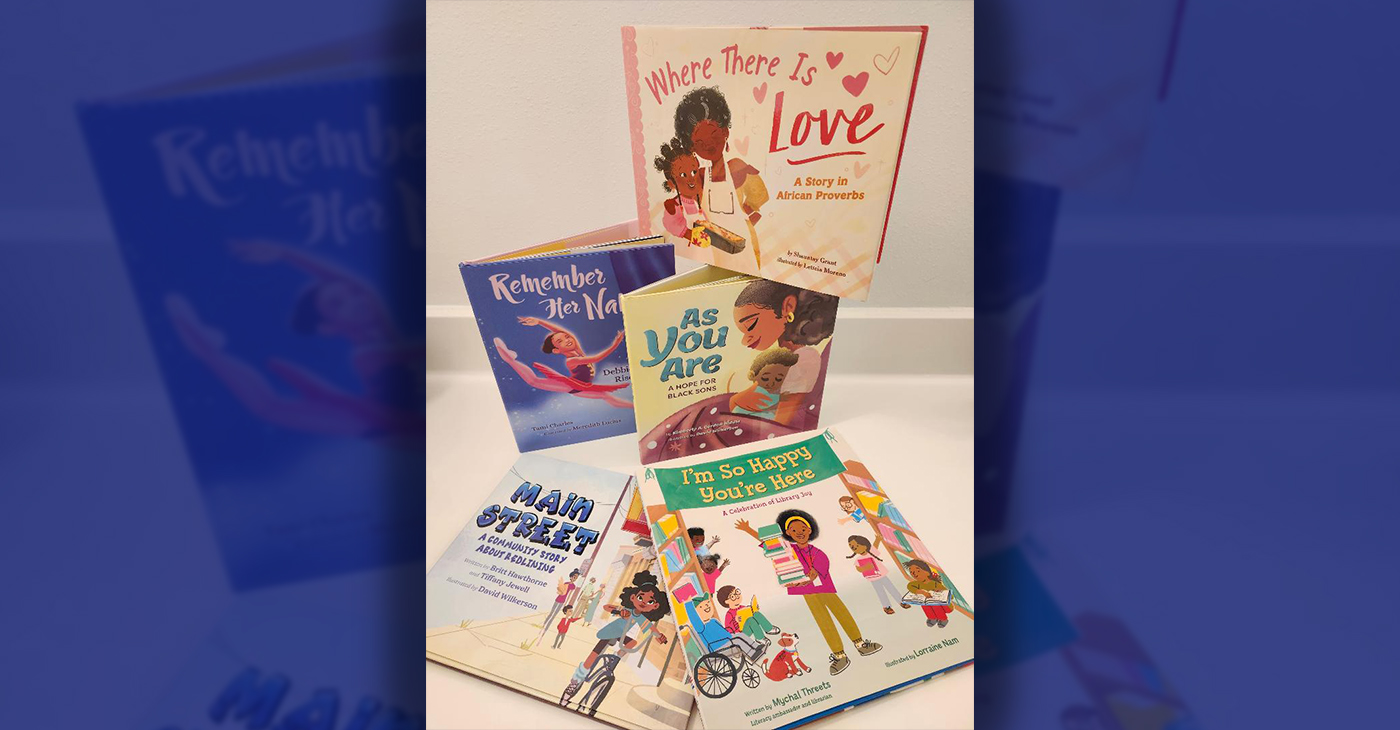
For the youngest reader, “As You Are: A Hope for Black Sons” by Kimberly A. Gordon Biddle, illustrated by David Wilkerson (Magination Press, $18.99) is a book for young Black boys and for their mothers. It’s a hope inside a prayer that the world treats a child gently, and it could make a great baby shower gift.
By Terri Schlichenmeyer
Authors: Various, Copyright: c. 2025, 2026, Publishers: Various, SRPs: $17.99-$18.99, Page Counts: Various,
Everybody in your family has stories to share.
Your parents have told you some, no doubt. Your grandparents have offered a few, too, and aunties and uncles have spun some good tales. But there’s so much more to know, so grab one of these great books and learn about Black History and Black life.
For the youngest reader, “As You Are: A Hope for Black Sons” by Kimberly A. Gordon Biddle, illustrated by David Wilkerson (Magination Press, $18.99) is a book for young Black boys and for their mothers. It’s a hope inside a prayer that the world treats a child gently, and it could make a great baby shower gift.
If someone said you couldn’t do something that you were clearly able to do, would you fight to do it anyhow? In the new book, “Remember Her Name! Debbie Allen’s Rise to Fame” by Tami Charles, illustrated by Meredith Lucius (Charlesbridge, $17.99), a young girl in the Jim Crow South is told that she can’t dance because of the color of her skin.
She didn’t listen, though, and neither did her mother, who took her daughter to Mexico, where the girl soared! This is an inspiration for any 5-to-7-year-old; be sure to check out the back-of-the-book information, if you’re an adult fan.
Do you often hear your elders say things that sound like lessons? They might be, so “Where There is Love: A Story of African Proverbs” by Shauntay Grant, illustrated by Leticia Moreno (Penguin Workshop, $18.99) is a book you’ll like. It’s a quick-to-read collection of short proverbs that you can say every day. Kids ages 4-to-6 will easily remember what they find in this book; again, look in the back for more information.
Surely, you love your neighborhood, which is why the tale inside “Main Street: A Community Story about Redlining” by Britt Hawthorne and Tiffany Jewell, illustrated by David Wilkerson (Penguin Kokila, $18.99) is a book for you.
Olivia’s neighborhood is having a block party, but she’s sad when no one shows up. That’s when she learns that “the government” is discriminating against the people and businesses near where she lives. So, what can she and her neighbors do? The answer might inspire 6-to-8-year-old kids to stand up to wrongs they see, and to help make their neighborhoods stronger and safer.
And finally, if a kid wants a book, where can they go to find it? In “I’m So Happy You’re Here: A Celebration of Library Joy” by Mychal Threets, illustrated by Lorraine Nam (Random House, $18.99) is a good introduction to the best of what a library has to offer. The freedom to walk into a library and borrow a book is the theme here, as is the sheer happiness of being welcomed, no matter who you are. This is an easy book for kids as young as two and as old as five to enjoy.
On that note, if you want more, head to that library, or a nearby bookstore. They’ll be glad to see you. They’ve got stories to share.


Mayor Barbara Lee Holds Special State of the City Address in Deep East Oakland

Practitioners of African Traditional Spirituality Offer Ancestral Reverence Ritual Oct. 31

It’s Time to Lose Weight Before the Holidays

Trader Vic’s Returns to Its Oakland Roots

Oakland Coal Terminal Backed by Trump Would Be Bigger, Dirtier Than Promised, Says Report

Opponents Smear Effective African American Transit Director as Election Nears

Oakland Post: Week of October 14 – 20, 2026

OP-ED: The Black Church Writes AI’s Next Chapter

OP-ED: The Black Church Writes AI’s Next Chapter

WCCUSD Joins Statewide Organic School Food Purchasing Cooperative

Democrats, Community Groups Back Measure EE to Change How Oakland Is Governed

Four Tips to Help You Plan a Holiday “Staycation”

Veterans Housing Project Proposed for South Richmond
PRESS ROOM: Transformative Justice Coalition 2026 Voting Rights Champion Awards Reception ‘Yesterday Is Today: The Battle For Voting Rights

Mayor Lee Delivers 2026 State of the City Address: ‘Oakland Continues to Be on the Move’

Misnamed ‘Parent’ PAC Seeks to Influence Oakland School Board Elections

Oakland Post: Week of September 2 – 8, 2026

Oakland Post: Week of September 9 – 15, 2026

Poll: Becerra Widens His Lead Over Hilton; Californians Split on Wealth Tax

County Office of Education Says OUSD Finances Are Getting Healthier, Materially Stronger

Richmond Tiny House Village Farm & Garden Set to Open Gates on Sept. 26

Latest Massacre in Haiti Reveals Cruelty U.S. Deportations

Mayor Lee Announces $1 Million Kaiser Permanente Grant for Pilot Program to Address Homelessness, Clean Up Public Spaces throughout Oakland

OPINION: Nolan Wells’ Death One of Several Signifying Racial Terror Lives on in U.S. South

Listening as a Lifeline: A Doula’s Witness to Black Maternal Health

Zakiya Jendayi Arrested, Locked Out of Home by Sheriff’s Deputies

BLACspace Cooperative Invites Bay Area to Experience Oakland’s Black Cultural Ecosystem Through a BLAC Map Tour + Party

Oakland Post: Week of September 16 – 22, 2026

Democratic Clubs Interview Candidates for Oakland School Board

Oakland People’s Arms Embargo Coalition Demands End to Military Shipments Thru Oakland

The Conversation With Al McFarlane 6/23/26

Media Monday 6/22/26

LIVE! ASK ALMA! — TUES. 6.23.26 7PM EST

Car Buying Secrets: 4 Hidden Checks Before You Sign!

Is This 550 HP Charger Worth YOUR Money? AutoNetwork Review

Celebrating Juneteenth – Frederick Douglass on education and resistance

LIVE! — ASK ALMA! — TUES. 6.19.26 7PM EST

Hyundai Ioniq 5 Parking, Safety, and 360 View #shorts

2025 Ioniq 5 New Wiper & Powerful Performance! #shorts

Electric SUV Range: Is 259 Miles Enough? #shorts

EV Charging: How Fast Can You Charge an Electric Vehicle? #shorts

Biometric Cooling… Messaging Seats…Come on! 2025 Infiniti QX80 Autograph 4WD

Charged Up: Witness the Magic of a Fully Electric Car! #shorts

Range Rover Sport PHEV Included…: See What’s Inside This Luxury SUV! #shorts

Invisible Hood View: Perfect Parking with X-Ray Vision! #shorts
-
 Economy3 weeks ago
Poll: Becerra Widens His Lead Over Hilton; Californians Split on Wealth Tax
-
 Business3 weeks ago
County Office of Education Says OUSD Finances Are Getting Healthier, Materially Stronger
-
 Business4 weeks ago
Mayor Lee Announces $1 Million Kaiser Permanente Grant for Pilot Program to Address Homelessness, Clean Up Public Spaces throughout Oakland
-
 Black History2 weeks ago
Listening as a Lifeline: A Doula’s Witness to Black Maternal Health
-
 Lead Story2 weeks ago
Zakiya Jendayi Arrested, Locked Out of Home by Sheriff’s Deputies
-
 Art3 weeks ago
BLACspace Cooperative Invites Bay Area to Experience Oakland’s Black Cultural Ecosystem Through a BLAC Map Tour + Party
-
 Activism4 weeks ago
Oakland Post: Week of September 16 – 22, 2026
-
 Uncategorized4 weeks ago
Oakland People’s Arms Embargo Coalition Demands End to Military Shipments Thru Oakland
