
Black History
Black History Month:
NEW ORLEANS DATA NEWS WEEKLY — Again, we are in the month of February which is Black History Month, where the nation observes and celebrates the achievements of African-Americans.

By Data News Staff

Again, we are in the month of February which is Black History Month, where the nation observes and celebrates the achievements of African-Americans.
Data News Weekly, in our role as The People’s Paper in Commemoration with of Black History Month, is doing a 4-part series on the history and legacy of the Historically Black Colleges and Universities (HBCU’s) in New Orleans and the State of Louisiana.
Our 4-Part Series focus on the Southern University System, Xavier University and Dillard University. It will highlight the schools, their rich history, educations they offer distinguished graduates and their impact on the community of New Orleans and the nation.
We believe that spotlighting these beacons on Black Excellence is important in an age where the relevance of these great institutions is of pressing importance. They have been and are where many movements of African-American uplift have taken place. Additionally, they have given opportunities to countless African-Americans to receive quality educations and to be able to compete and be successful in many fields of endeavor.
This is but a snapshot of our series:
Southern University of Louisiana
What began as a dream more than 136 years ago is today a living legacy of determination, commitment, and success. The Southern University and A&M College System is the only Historically Black University System in the United States.

Southern University is a Historically Black University with a main campus located in Baton Rouge, Louisiana. Originally founded in 1880 in New Orleans as Southern University in New Orleans, it began its mission of providing post-secondary education for African-Americans with 12 students and 5 faculty members. In 1890 the school’s name was changed to Southern University, and in 1892 it was recognized as a land grant college. In 1912 the school awarded its first baccalaureate degree, and in 1914 the campus was moved to the State Capitol in Baton Rouge.
The Southern University System also includes another four-year campus in New Orleans, a two-year campus in Shreveport, and a law school in Baton Rouge. The four campuses were united as a system in 1975 by the state legislature, creating the largest Historically Black University in the United States.
Xavier University of Louisiana
Over its nine-decade history Xavier University is recognized as a national leader in the sciences and the liberal arts. It also carries the distinction as being the only Historically Black and Catholic University in the United States.
In a survey of students conducted for The Wall Street Journal/Times Higher Education College Rankings, based on students’ opinions on how well their college or university is preparing them for their career, Xavier received the highest score of any school in the South – in fact, it received the highest score of any of the more than 1,000 schools that were included in the 2017 WSJ/THE rankings.
• Ranked #1 in the nation in awarding bachelor’s degrees to African-American students in the biological and biomedical sciences, the physical sciences, and physics.
• Ranked #1 in the nation in the number of African-American graduates who go on to complete medical school.
• Among the nation’s top four colleges of pharmacy in graduating African-Americans with Doctor of Pharmacy (Pharm D) degrees.
• Ranked#3 in the nation in the number of African-American graduates who go on to earn a Ph.D. in science and engineering disciplines.
• The Department of Physics is #1 in the nation for awarding African-Americans baccalaureate degrees in physics and the physical sciences, according to the latest report from the American Institute of Physics (AIP). Xavier is consistently ranked by the American Chemical Society as one of the top 25 universities in the nation in awarding bachelor’s degrees in chemistry.
• U. S News “Best Colleges” Guide 2018 rates Xavier as the #1 “best value” among southern regional colleges and universities. The same report ranked Xavier No. 5 spot among 70 Historically Black Colleges and Universities and No. 25 among 140 schools in its grouping of the Best Regional Colleges – South. Schools are considered Regional Universities if they offer a full range of undergraduate programs and some master’s programs but few doctoral programs.
• College Consensus, a unique college ratings website that aggregates publisher rankings and student reviews, ranks Xavier as the nation’s #2 HBCU (Historically Black Colleges and Universities) in its newly released publication, Best HBCUs for 2018. It also ranks Xavier as #3 among all Louisiana colleges.
Dillard University
Celebrating its 150th Anniversary this year Dillard University has a rich heritage that will be on full display this year as they commemorate a century and a half of Black Excellence in Education. This is a short history of the early years of Dillard University.
In 1869, with support from the American Missionary Association of the Congregational Church (now the United Church of Christ) and the Freedmen’s Aid Society of the Methodist Episcopal Church (now the United Methodist Church), Straight University and the Union Normal School were founded. They were subsequently renamed Straight College and New Orleans University, respectively. Gilbert Academy, a secondary school, was a unit of New Orleans University.
In 1889, New Orleans University opened a medical department, including a school of pharmacy and a school of nursing. The medical department was named Flint Medical College and the affiliated facility was named the Sarah Goodridge Hospital and Nurse Training School. The medical college was discontinued in 1911, but the hospital, including the nursing school, was continued under the name Flint-Goodridge Hospital. Straight College operated a law department from 1874 to 1886.
In 1935, New Orleans University and Straight College merged to form Dillard University. The trustees of the new university called for the implementation of a co-educational, interracial school, serving a predominantly African-American student body adhering to Christian principles and values. The university was named in honor of James Hardy Dillard, a distinguished academician dedicated to educating African-Americans.
Dillard trustees elected to continue the work of the hospital but not that of Gilbert Academy. The latter continued operation as a separate institution under the sponsorship of the Board of Education of the Methodist Church until 1949. The university operated Flint-Goodridge Hospital of Dillard University from 1932 until 1983.
Will W. Alexander was chosen to be the acting president of Dillard University. He served from 1935 to 1936. At the time of his appointment, he was Director of the Commission on Interracial Cooperation (CIC), which actively campaigned against lynching and conducted research studies of issues pertaining to “Negro Welfare” and other Southern “problems.”
We at Data News Weekly look forward to bringing you this series on HBCU’s in Louisiana in the Month of February as we celebrate Black History Month.









Activism
Oakland Post: Week of February 18 – 24, 2026
The printed Weekly Edition of the Oakland Post: Week of – February 18 – 24, 2026
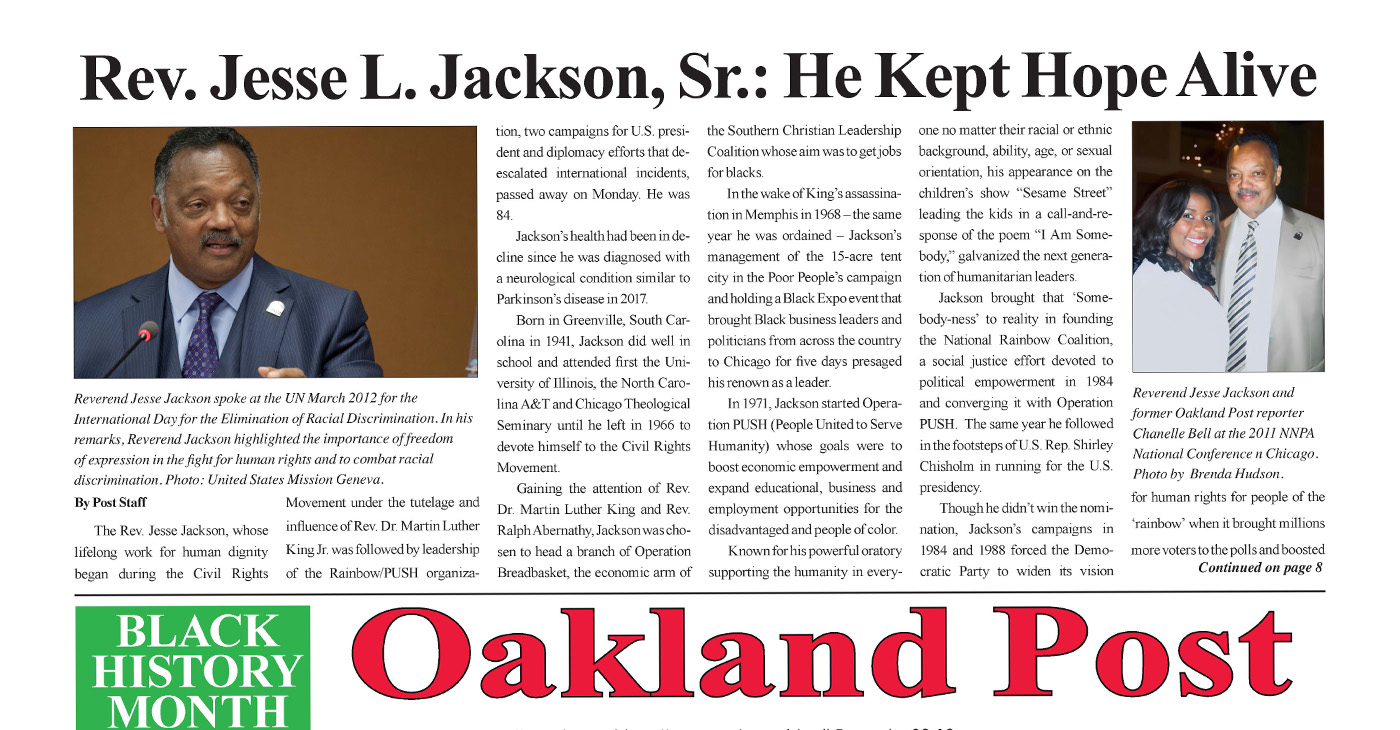
To enlarge your view of this issue, use the slider, magnifying glass icon or full page icon in the lower right corner of the browser window.
Activism
Oakland Post: Week of February 11 – 17, 2026
The printed Weekly Edition of the Oakland Post: Week of – February 11 – 17, 2026

To enlarge your view of this issue, use the slider, magnifying glass icon or full page icon in the lower right corner of the browser window.
#NNPA BlackPress
COMMENTARY: The National Protest Must Be Accompanied with Our Votes
Just as Trump is gathering election data like having the FBI take all the election data in Georgia from the 2020 election, so must we organize in preparation for the coming primary season to have the right people on ballots in each Republican district, so that we can regain control of the House of Representatives and by doing so, restore the separation of powers and balance that our democracy is being deprived of.
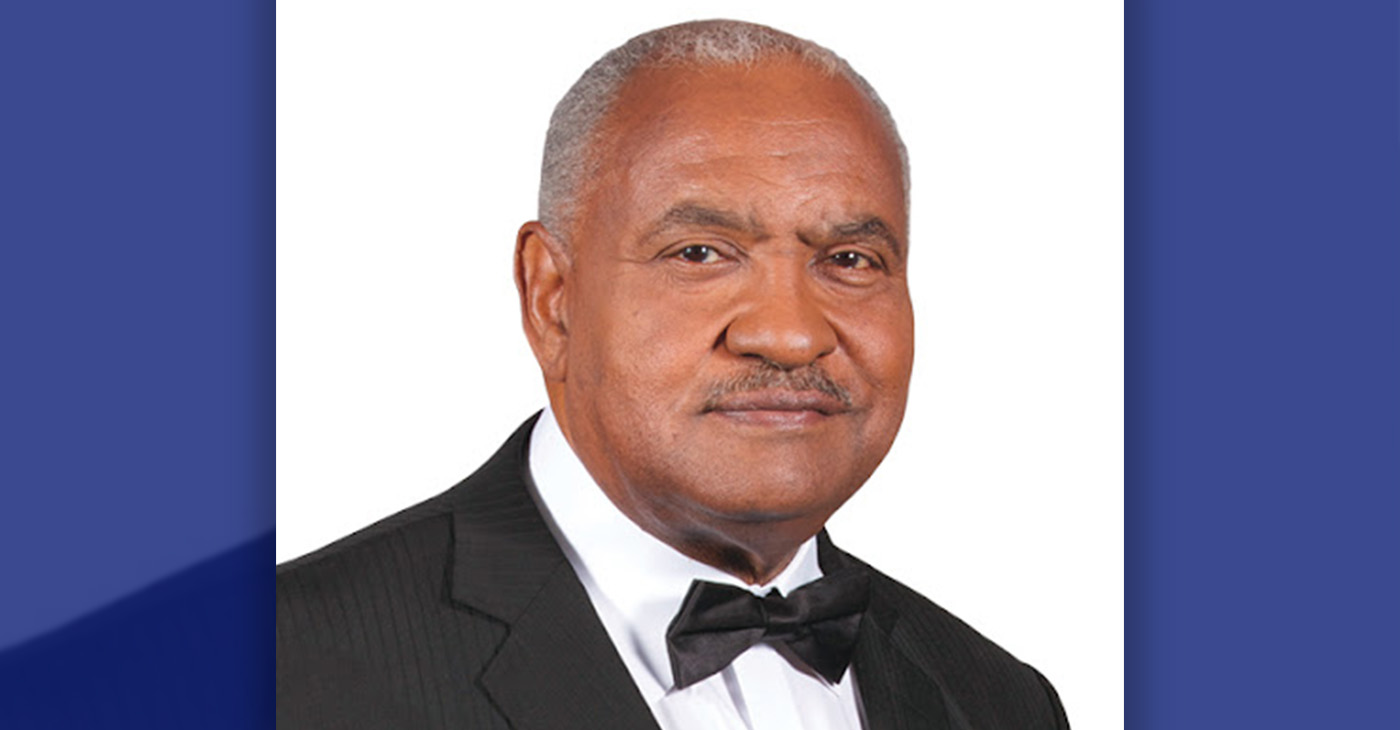
By Dr. John E. Warren, Publisher San Diego Voice & Viewpoint Newspaper
As thousands of Americans march every week in cities across this great nation, it must be remembered that the protest without the vote is of no concern to Donald Trump and his administration.
In every city, there is a personal connection to the U.S. Congress. In too many cases, the member of Congress representing the people of that city and the congressional district in which it sits, is a Republican. It is the Republicans who are giving silent support to the destructive actions of those persons like the U.S. Attorney General, the Director of Homeland Security, and the National Intelligence Director, who are carrying out the revenge campaign of the President rather than upholding the oath of office each of them took “to Defend The Constitution of the United States.”
Just as Trump is gathering election data like having the FBI take all the election data in Georgia from the 2020 election, so must we organize in preparation for the coming primary season to have the right people on ballots in each Republican district, so that we can regain control of the House of Representatives and by doing so, restore the separation of powers and balance that our democracy is being deprived of.
In California, the primary comes in June 2026. The congressional races must be a priority just as much as the local election of people has been so important in keeping ICE from acquiring facilities to build more prisons around the country.
“We the People” are winning this battle, even though it might not look like it. Each of us must get involved now, right where we are.
In this Black History month, it is important to remember that all we have accomplished in this nation has been “in spite of” and not “because of.” Frederick Douglas said, “Power concedes nothing without a struggle.”
Today, the struggle is to maintain our very institutions and history. Our strength in this struggle rests in our “collectiveness.” Our newspapers and journalists are at the greatest risk. We must not personally add to the attack by ignoring those who have been our very foundation, our Black press.
Are you spending your dollars this Black History Month with those who salute and honor contributions by supporting those who tell our stories? Remember that silence is the same as consent and support for the opposition. Where do you stand and where will your dollars go?

WORK FROM HOME
Home-based business with potential monthly income of $10K+ per month. A proven training system and website provided to maximize business effectiveness. Perfect job to earn side and primary income. Contact Lynne for more details: Lynne4npusa@gmail.com 800-334-0540


PRESS ROOM: NBA Hall of Fame Nominee Terry Cummings Joins 100 Black Men of DeKalb County to Launch Victory & Values Initiative

Reflecting on Black History Milestones in Birmingham AL

OP-ED: One Hundred Years of Black Workers Telling the Truth

PRESS ROOM: Civil Rights TV Launches in Selma as the World’s First 24/7 Civil Rights Television Network

Advancements in solar technology that are changing the way we power the world

U.S. manufacturing rebounds – how foundry services are adapting to rising demand

Why has blood testing become so popular in today’s world?

Ghana Mourns a Son of the African World

OP-ED: Trump’s Policies Hurt Black America—and Everyone Else

OP-ED: Meta Deleted Me. I Still Don’t Know Why. And neither will you.

More than a Mission: Paying It Forward for the Future of Education

Avoid Eviction This Season: Landlord Checklist for Stable Tenancies

How chronic back problems affect Black communities differently

How cancer care is evolving with modern medicine

Diabetes disparity: Understanding Type 2 risks for Black Americans

Life Expectancy in Marin City, a Black Community, Is 15-17 Years Less than the Rest of Marin County

Oakland Post: Week of January 28, 2025 – February 3, 2026

Community Celebrates Turner Group Construction Company as Collins Drive Becomes Turner Group Drive

California Launches Study on Mileage Tax to Potentially Replace Gas Tax as Republicans Push Back

Discrimination in City Contracts

Oakland Post: Week of January 21 – 27, 2026

Book Review: Books on Black History and Black Life for Kids

Medi-Cal Cares for You and Your Baby Every Step of the Way

COMMENTARY: The Biases We Don’t See — Preventing AI-Driven Inequality in Health Care

After Don Lemon’s Arrest, Black Officials Raise Concerns About Independent Black Media

Post Newspaper Invites NNPA to Join Nationwide Probate Reform Initiative

OP-ED: The Dream Cannot be Realized Without Financial Freedom

COMMENTARY: The National Protest Must Be Accompanied with Our Votes

Four Stolen Futures: Will H-E-B Do The Right Thing?

Black History Events in the East Bay

Hyundai Ioniq 5 Parking, Safety, and 360 View #shorts

2025 Ioniq 5 New Wiper & Powerful Performance! #shorts

Electric SUV Range: Is 259 Miles Enough? #shorts

EV Charging: How Fast Can You Charge an Electric Vehicle? #shorts

Biometric Cooling… Messaging Seats…Come on! 2025 Infiniti QX80 Autograph 4WD

Charged Up: Witness the Magic of a Fully Electric Car! #shorts

Range Rover Sport PHEV Included…: See What’s Inside This Luxury SUV! #shorts

Invisible Hood View: Perfect Parking with X-Ray Vision! #shorts

AI Is Reshaping Black Healthcare: Promise, Peril, and the Push for Improved Results in California

ESSAY: Technology and Medicine, a Primary Care Point of View

Sanctuary Cities

The RESISTANCE – FREEDOM NOW

STATE OF THE PEOPLE: Freddie

ECONOMIC BOYCOTT DAY!!!!!

I told You So
-
 Activism4 weeks ago
Life Expectancy in Marin City, a Black Community, Is 15-17 Years Less than the Rest of Marin County
-
 Activism4 weeks ago
Oakland Post: Week of January 28, 2025 – February 3, 2026
-
 Activism3 weeks ago
Community Celebrates Turner Group Construction Company as Collins Drive Becomes Turner Group Drive
-
 Business3 weeks ago
California Launches Study on Mileage Tax to Potentially Replace Gas Tax as Republicans Push Back
-
 Activism3 weeks ago
Discrimination in City Contracts
-
 Arts and Culture3 weeks ago
Book Review: Books on Black History and Black Life for Kids
-
 Activism4 weeks ago
Medi-Cal Cares for You and Your Baby Every Step of the Way
-
 Activism3 weeks ago
COMMENTARY: The Biases We Don’t See — Preventing AI-Driven Inequality in Health Care
