
Entertainment
Andrae Crouch, Legendary Gospel Figure, Dies at 72


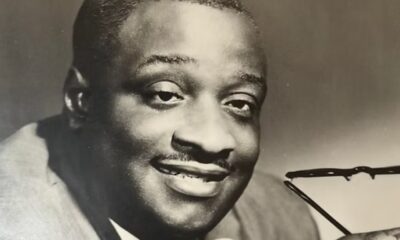
In this Sept. 1, 1996 file photo, Grammy winning gospel singer Andrae Crouch sings during service at the Christ Memorial church in Pacoima, Calif. Crouch, a legendary gospel performer, songwriter and choir director whose work graced songs by Michael Jackson and Madonna and movies such as The Lion King, has died at age 72. His publicist says Crouch died Thursday, Jan. 8, 2015, at a hospital in Los Angeles, where he was admitted Saturday after suffering a heart attack. (AP Photo/Frank Wiese, File)
ROBERT JABLON, Associated Press
LOS ANGELES (AP) — Andrae Crouch, a legendary gospel performer, songwriter and choir director whose work graced songs by Michael Jackson and Madonna and movies such as “The Lion King,” has died. He was 72.

Crouch died Thursday afternoon at Northridge Hospital Medical Center, where he had been admitted Saturday after suffering a heart attack, said his publicist, Brian Mayes.
The Recording Academy, which awarded seven Grammys to Crouch during a career that spanned more than a half-century, said in a statement that he was “a remarkable musician and legendary figure” who was “fiercely devoted to evolving the sound of contemporary, urban gospel music.”
Crouch and his twin sister, Sandra Crouch, also a singer, lived in the Pacoima area of Los Angeles. They were pastors at the New Christ Memorial Church in the Los Angeles suburb of San Fernando.
“Today my twin brother, womb-mate and best friend went home to be with the Lord,” said Pastor Sandra Crouch. “I tried to keep him here but God loved him best.”
Born in San Francisco, Crouch wrote his first gospel tune at age 14.
Crouch wrote dozens of songs, including gospel favorites such as “The Blood Will Never Lose Its Power,” ”My Tribute (To God Be the Glory)” and “Soon and Very Soon,” which was sung at a public memorial to Jackson.
Debuting in 1960, Crouch helped pioneer the burgeoning “Jesus Music” movement from the late 1960s and ’70s that started the spread of contemporary Christian music.
“We’ve lost a true pioneer and he will be missed,” said Jason Crabb, another Grammy-winning gospel singer.
His influence also crossed over into in pop music. Elvis Presley performed his song “I’ve Got Confidence” for a 1972 gospel album, and Paul Simon” recorded “Jesus Is the Answer” for a 1974 live album.
Crouch worked with many other stars, from Diana Ross to Ringo Starr, and his gospel albums sometimes featured performers from other musical genres. His 18th solo album, “The Journey,” released in 2011, featured Chaka Khan, Shelia E., Take 6, Kim Burrell and Marvin Winans.
Crouch was one of only a handful of gospel performers to have a star on the Hollywood Walk of Fame.
His choir, The Disciples, sang background for Madonna’s song “Like a Prayer.” Crouch helped Michael Jackson arrange the King of Pop’s 1987 hit song, “Man in the Mirror.”
He also arranged music for the 1985 film “The Color Purple” — which earned him an Academy Award nomination — and Disney’s “The Lion King” in 1994.
His success came despite a lifelong struggle with dyslexia. To create, he would make drawings that allowed him to grasp the concept. For the Jackson song, he drew a mirror with an image in it.
“I memorized everything through sight, the shape of the word,” Crouch told The Associated Press in 2011. “Some things that I write, you’ll see a page with cartoon pictures or a drawing of a car — like a Ford — or a flag. I still do it on an occasion when a word is strange to me.”
“So when I finish a song, I thank God for bringing me through,” he continued. “You have to press on and know your calling. That’s what I’ve been doing for all my life. I just went forward.”
Crouch had health issues in recent years, including diabetes and cancer. Last month, he was hospitalized for pneumonia and congestive heart failure and had to cancel a tour.
Copyright 2015 The Associated Press. All rights reserved. This material may not be published, broadcast, rewritten or redistributed.






Activism
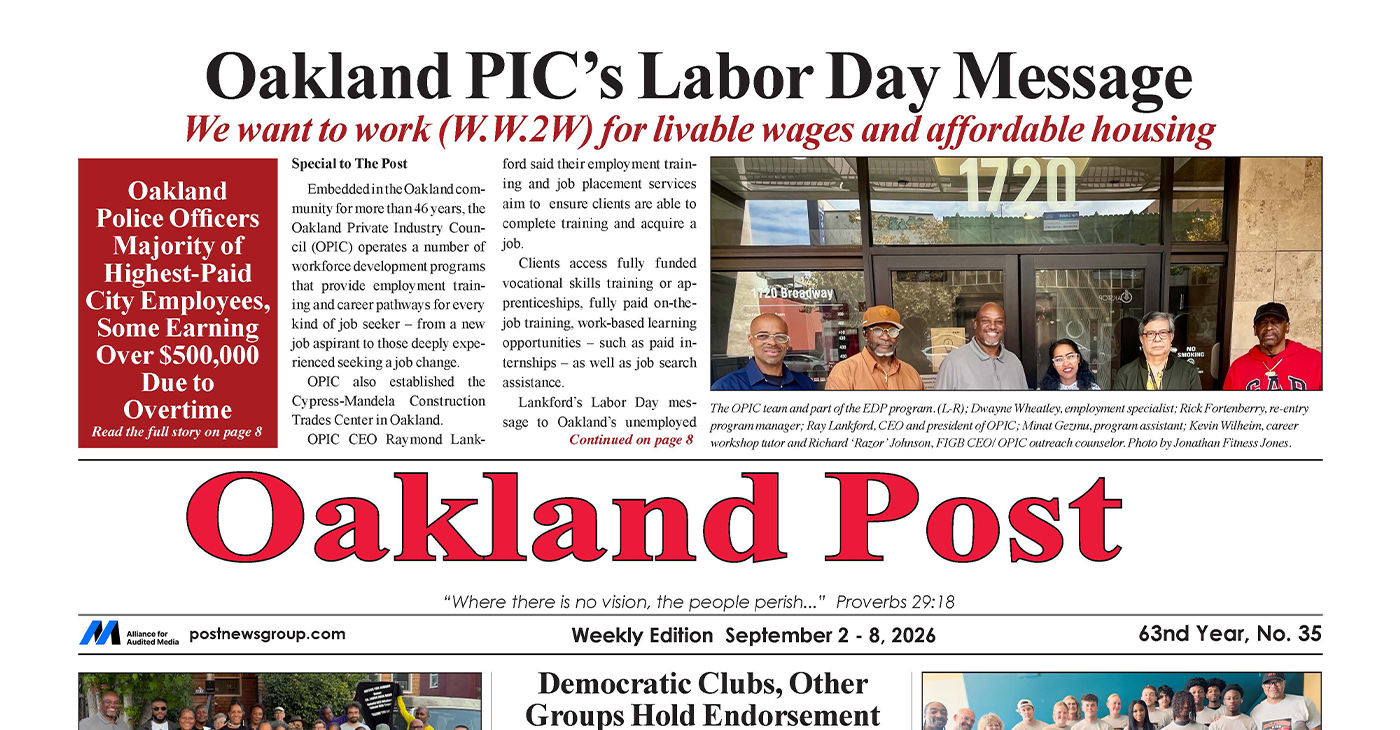
Oakland Post: Week of September 2 – 8, 2026
The printed Weekly Edition of the Oakland Post: Week of September 2 – 8, 2026
To enlarge your view of this issue, use the slider, magnifying glass icon or full page icon in the lower right corner of the browser window.
Black History
Jackie Wright Champions Bay Area Stories, Filmmakers and Cultural Institutions
As an award-winning communications professional, Wright has worked with corporations, nonprofits, government agencies, educational institutions, artists, and community organizations. In 2026, she expanded that work by launching an introductory public relations class for small businesses and nonprofits, offering practical tools for gaining visibility, shaping messages and building productive relationships with the media.

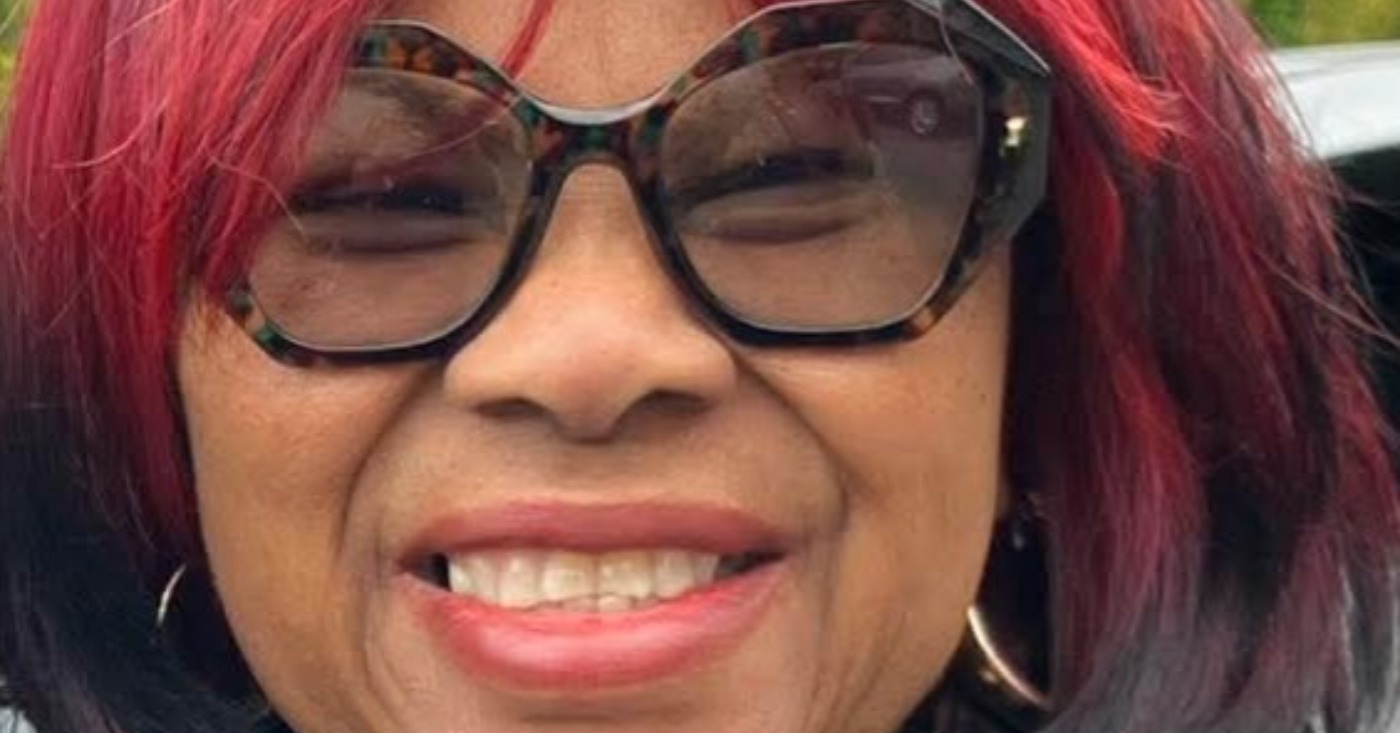
Jackie Wright has spent more than two decades helping people, organizations and communities understand the power of a well-told story.
As founder and president of Wright Enterprises, a San Francisco-based strategic communications and public affairs firm, Wright has built a career spanning journalism, public relations, media relations, crisis communications, community engagement and multimedia storytelling.
As an award-winning communications professional, Wright has worked with corporations, nonprofits, government agencies, educational institutions, artists, and community organizations. In 2026, she expanded that work by launching an introductory public relations class for small businesses and nonprofits, offering practical tools for gaining visibility, shaping messages and building productive relationships with the media.
Wright’s commitment to storytelling is also deeply personal. She wrote and co-directed the 15-minute documentary, “Love Separated in Life…Love Reunited in Honor,” which chronicles the story of her parents, Specialist Five (S5 Wyley Wright Jr. and Ouida Fay McClendon Wright. Her father, a U.S. Army helicopter crew chief, died in Vietnam in 1964 while serving as an honor guard during a visit by then-Secretary of Defense Robert McNamara. Decades later, Wright and her siblings had their father exhumed from a segregated cemetery in Jacksonville, Florida, and their mother moved from her burial place in Georgia so the couple could be reunited at Arlington National Cemetery in 2014.
The family journey later took Wright and her sister to Vietnam, where they discovered the former military compound that had been named in honor of their father and another fallen soldier. The documentary, centered on love, war, family, racial understanding, and remembrance, earned festival recognition at screenings.
“It was quite an honor to learn about my family’s history and share it on film,” said Wright.
That filmmaking experience complements Wright’s longstanding advocacy for independent cinema. She has served as a media partner and brand ambassador for Bay Area film festivals, including the San Francisco Black Film Festival, Oakland International Film Festival, and the Durban International Film Festival in South Africa.
“It’s important to help filmmakers and underrepresented stories reach broader audiences,” said Wright.
Whether promoting a neighborhood organization, championing an independent filmmaker or preserving her own family history, Wright has remained consistent. Through Wright Enterprises, she has turned communications into both a profession and a form of community service, telling stories that might otherwise go unheard.
“Our stories are an integral part of our history, and our history is not only American history, but worldwide,” she said.

Activism
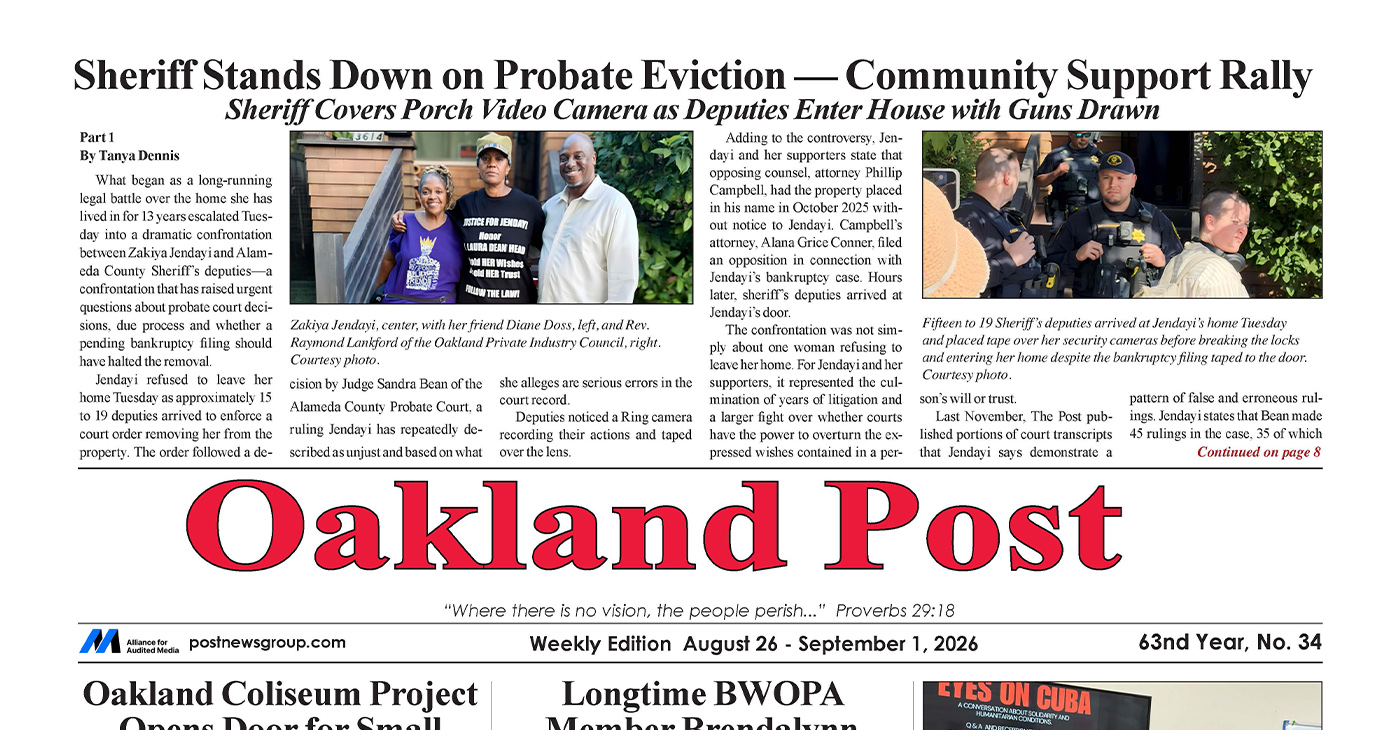
Oakland Post: Week of August 26 – September 1, 2026
The printed Weekly Edition of the Oakland Post: Week of August 26 – September 1, 2026
To enlarge your view of this issue, use the slider, magnifying glass icon or full page icon in the lower right corner of the browser window.



Oakland Post: Week of September 2 – 8, 2026

Longtime BWOPA Member Brendalyn Goodall Appointed to California Workforce Development Board

Jackie Wright Champions Bay Area Stories, Filmmakers and Cultural Institutions

Chef Sharon Lee Blends Culinary Excellence, Education and Empowerment

‘Passing a Law Isn’t The Finish Line’: California Assembly Evaluates Implementation, Results

OPINION: Angie Nixon Will Turn You Into a Democratic Socialist If Donald Trump Hasn’t Already

Gov. Newsom Signs Law Shielding Immigration Aid Workers From Doxing Threats

BOOK REVIEW: Every Inch of a Lady

Big City Mayors Ask for “Yes” Vote on Housing Bond Measure; Conservatives Say “No”

Madeline M. Turner: The Inventor Who Made Juicing Easier

Gubernatorial Candidate Steve Hilton Blasts California New Tire Rules; Newsom Hits Back

Frontier Airlines’ Return to Oakland Airport Brings Flights, Jobs and Opportunity

Secretary of State Shirley N. Weber Urges Californians to Vote Early as Voter ID Battle Intensifies

Gov. Newsom’s Latest Appointees Include Sacramento Advocate for Formerly Incarcerated Students; State’s New Tech Chief

Oakland Coliseum Project Opens Door for Small Businesses to Build Bigger

Department of Homeland Security Demands California Secretary of State Shirley N. Weber Scrub Voter Rolls

New Judge Could Decide if Karmelo Anthony Gets a New Trial

Oakland Children’s Hospital Workers and Patients Rally for Pediatric Medical Care

“The Power to See Threats Sooner”: Gov. Newsom, Safety Officials Showcase California’s Investments in Hi-Tech Wildfire Prevention

Alpha Kappa Alpha Sorority, Inc. Celebrates New North Atlantic Regional Director

Surveillance Pricing Fight: State Senate Debates Bill Banning Retailers from Using AI to Set Prices Based on a Buyer’s Profile

Mount Zion MBC, Church of Jesus Christ of Latter-day Saints Partner to Bring 29,000 Meals to Alameda County

California Sen. Padilla Joins Colleagues to Introduce Bill Imposing Term Limits on Supreme Court Justices

Less Affluent School Districts, Including Sacramento City, Face Threat of State Takeover

Car Wash Workers Cope with Lingering Impacts of ICE Raids

Starting This Summer, California Car Buyers Can Get an Instant $3500 Off the Cost of Electric Vehicles

COMMENTARY: You Are Already Paying for the AI Boom

California Bill Would Let Abuse Victims Use Trauma as Legal Defense for Violent Crime

Fed Court to Decide Landmark First Amendment Case

Oakland Post: Week of July 29 – August 4, 2026

The Conversation With Al McFarlane 6/23/26

Media Monday 6/22/26

LIVE! ASK ALMA! — TUES. 6.23.26 7PM EST

Car Buying Secrets: 4 Hidden Checks Before You Sign!

Is This 550 HP Charger Worth YOUR Money? AutoNetwork Review

Celebrating Juneteenth – Frederick Douglass on education and resistance

LIVE! — ASK ALMA! — TUES. 6.19.26 7PM EST

Hyundai Ioniq 5 Parking, Safety, and 360 View #shorts

2025 Ioniq 5 New Wiper & Powerful Performance! #shorts

Electric SUV Range: Is 259 Miles Enough? #shorts

EV Charging: How Fast Can You Charge an Electric Vehicle? #shorts

Biometric Cooling… Messaging Seats…Come on! 2025 Infiniti QX80 Autograph 4WD

Charged Up: Witness the Magic of a Fully Electric Car! #shorts

Range Rover Sport PHEV Included…: See What’s Inside This Luxury SUV! #shorts

Invisible Hood View: Perfect Parking with X-Ray Vision! #shorts
-
 Featured4 weeks ago
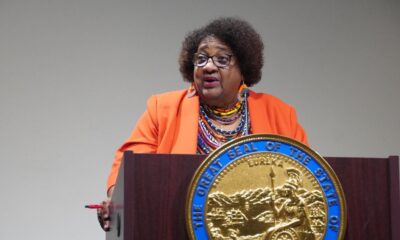
Department of Homeland Security Demands California Secretary of State Shirley N. Weber Scrub Voter Rolls
-
 Environment4 weeks ago
“The Power to See Threats Sooner”: Gov. Newsom, Safety Officials Showcase California’s Investments in Hi-Tech Wildfire Prevention
-
 Featured4 weeks ago
California Sen. Padilla Joins Colleagues to Introduce Bill Imposing Term Limits on Supreme Court Justices
-
 Community3 weeks ago
Less Affluent School Districts, Including Sacramento City, Face Threat of State Takeover
-
 Business4 weeks ago
Car Wash Workers Cope with Lingering Impacts of ICE Raids
-
 Commentary3 weeks ago
ESSAY: California Can Close Its Colorectal Cancer Gap
-

 Community4 weeks ago
As Part of Your Back-to- School Checklist, Vaccinate
-
 Business4 weeks ago
Oakland ‘Port Serves as a Powerful Engine for Good Jobs and Economic Development
