
#NNPA BlackPress
A troubled police force and hope for change
NNPA NEWSWIRE — In a trial where one prosecutor called the officers “gangsters with a badge,” eight cops were indicted, six pled guilty, and four opted to testify in the case as government witnesses. During the trial, Gun Trace Task Force member Detective Maurice Ward testified that officers would use illegal GPS devices to track targets, break into homes to steal money, and keep BB guns in their vehicles “in case we accidentally hit somebody or got into a shootout, so we could plant them.”

By Barrington M. Salmon, Contributing Writer, The Final Call
@bsalmondc
For more than 50 years, the Baltimore Police Department has earned the reputation as a tough, bruising force that leveled most of its rough treatment and casual cruelty on Charm City’s Black residents.
Blacks in their 60s and others in their 30s speak of the brutality visited on them by a police force many came to despise and distrust. They spoke of harassment, beatings, detainment and arrests at the whim of the officers, as well as anger and frustration at having no public official able to force rogue officers to comply with the law and treat Black people humanely.
The Rev. Graylan Hagler, who was born and grew up in Baltimore, recalls the way Black residents were treated.
“I’ve been hearing some stuff (about the changes) on the periphery,” he said. “Historically, the police department was used to enforce segregation even after the Civil Rights Act. We couldn’t go into certain neighborhoods, so they pulled you over on ‘a routine check.’”
Rev. Hagler said his father bought a Lincoln Continental in the late 1960s and he was pulled over regularly. It was also well known in the Black community that initiation for White officers was to snatch a Black person off the street and beat them.

“That was the ‘Blue Code.’ Everyone in the department had to have blood on their hands,” said Rev. Hagler, a veteran civil rights and social justice veteran and senior pastor of Plymouth Congregational Church in Washington, D.C. “There’s always been this really hostile relationship, especially with poor Black communities. You saw it with Freddie Gray. There’s a high crime rate because the police isn’t engaged, and the city is not engaged with the community either.”
Yet, one particular response by recently appointed Police Commissioner Michael Harrison surprised a number of people and held out hope that the department could possibly change. Media reports indicate that Sgt. Ethan Newberg, a 24-year veteran, was running a warrant check when a man passing by criticized him for placing the suspect on a wet street. Sgt. Newberg chased him down, grabbed him, tackled him, handcuffed him and arrested him. The sergeant filed a report saying the passerby “challenged him and became combative and aggressive.” However, after department officials reviewed Sgt. Newberg’s footage from his body camera, the real story came out.
“From what I saw, he did nothing to provoke Sgt. Newberg, whose actions weren’t just wrong but deeply disturbing and illegal,” said Police Commissioner Michael Harrison in a press conference announcing charges against Sgt. Newberg. “I don’t know how something like this would have been handled in the past, but I knew as soon as I saw this video, I knew how I’d be handling it.”
Sgt. Newberg, the second highest paid city employee in 2018, was arrested on June 6, charged with false imprisonment, misconduct and second-degree assault and suspended without pay.
Former Seattle Police Chief Norm Stamper said he was heartened by Commissioner Harrison’s decisive action.
“Given its institutional history, that the Baltimore Police Commissioner moved so quickly, and so decisively is a very positive sign,” Chief Stamper told The Final Call. “Let’s hope that as the story unfolds further, we’ll learn that at least some of Newberg’s superiors and/or peers had also come forward with their own observations of his conduct, past and present.”
“This is an example of major systemic (and workplace culture) failure,” Chief Stamper continued. “Supervisors (and peers) have a responsibility to blow the whistle on alleged wrongdoing of the type you describe. And the department or, preferably, an independent investigative body, has an obligation to conduct timely, accurate, and thorough investigations into all instances of alleged misconduct. Failure to do so sends a message throughout the cop culture: brutality, bigotry, corruption will be excused. It sounds like Newberg’s bosses, and peers, did him no favor by not holding him to account long ago. Although, of course, he had an obligation to conduct himself with dignity, respect, and self-discipline.”
Wake Forest Law School Prof. Kami Chavis said Commissioner Harrison’s decision was unexpected.
“Wow!” she exclaimed. “A little justice. When anyone performs a criminal act, he or she should be punished. To have trust for police officers, violence should not go unpunished. You cannot have people operating above the law. This is a very important step.”
“No longer can an officer tell a different story,” added Prof. Chavis, associate provost for Academic Initiatives and director of the Criminal Justice Program. “The officer committed an egregious act and then lied. It almost tells us a little bit about the morality of some of the officers. We have so long operated in this type of culture in Baltimore where this type of behavior was commonplace.”
Critics of the department and officer behavior would find a great deal with which to agree with Prof. Chavis.
The department has lurched from crisis to crisis for years, with office-involved shootings, harassment of residents and beatings caught on body cams or videos. The depth and breadth of the corruption that grips the department exploded in 2018 during a trial involving seven of eight members of the elite Gun Trace Taskforce. Witnesses testified taskforce members were supposed to be taking illegal guns off the street. Instead, the officers were reselling seized guns and drugs right back onto city streets.

The depth and breadth of the corruption that grips the department exploded in 2018 during a trial involving seven of eight members of the elite Gun Trace Taskforce. Witnesses testified taskforce members were supposed to be taking illegal guns off the street. Instead, the officers were reselling seized guns and drugs right back onto city streets.
In a trial where one prosecutor called the officers “gangsters with a badge,” eight cops were indicted, six pled guilty, and four opted to testify in the case as government witnesses. During the trial, Gun Trace Task Force member Detective Maurice Ward testified that officers would use illegal GPS devices to track targets, break into homes to steal money, and keep BB guns in their vehicles “in case we accidentally hit somebody or got into a shootout, so we could plant them.”
Mr. Ward, who pled guilty, recounted an incident where cops “took a man’s house keys, ran his name through databases to find his address, went into the home without a warrant and found drugs and a safe. The officers cracked open the safe, which had about $200,000 inside. They took $100,000 out, closed the safe back up, then filmed themselves pretending to open it for the first time.”
This corruption case deepened public suspicion that piqued following the 2015 death of Freddie Gray. The 25-year-old Black male was chased, detained by police, taken on a rough ride, suffered severe spinal injuries and died in a hospital. His arrest was captured on video as officers dragged him into a police cruiser and Mr. Gray appeared unable to walk.
Mr. Gray’s death triggered civil unrest, the torching of a number of businesses, looting, arrests of many who’d taken to the streets and dozens of officers being injured.
After the trials and acquittals of three of the six police officers who were charged and indicted, public anger, resentment and frustration ratcheted up.
The riots following Mr. Gray’s death crystallized the divide between both sides.
On Pennsylvania Avenue, a major Black thoroughfare, angry residents burned stores, businesses, and vehicles and shattered glass.
Baltimore activist Rev. C.D. Witherspoon echoed the sentiments of several activists, residents who maintain the city’s entire political structure is compromised by corruption, cronyism and greed, adding that the wishes and desires of Blacks are often ignored.
“I think the current commissioner has a fresh set of eyes and a new perspective, but you can’t put individuals in place to reform a system,” he said. “The department isn’t doing what’s in line with what citizens want and need. Corruption is like an in-grown toenail. We’re talking about a system here, a system not just locally but nationally. The police department needs to be dismantled and reconstructed. Needs to revisit what policing looks like.”
Rev. Witherspoon, an elder at The Light Baptist Church and a former Baltimore City chapter president of the Southern Christian Leadership Conference, said city leaders and policy makers need to stop criminalizing health issues like drug addiction and instead treat it for the problem it is, a public health crisis.
“Public safety should not just be policing, there has to be a public health and mental health component that’s fully funded,” he said. “The people need to take control downtown and invest in schools, recreation and public health versus building on the waterfront.”
“A lot of people benefit from this plight. We know about private prisons and people getting rich. Other non-profits, in some instances, are profiting by offering employment and other opportunities. Yet this should always be community-driven, and residents should be in charge.”
Rev. Witherspoon, who lives in the Sandtown neighborhood, as did Freddie Gray, said little has changed since the young man died after an encounter with police.
“The only thing that has come to the community is a new police station,” said Rev. Witherspoon, who led several demonstrations after Mr. Gray’s death. “There are no new developments, jobs or rec centers. I don’t see how peoples’ minds have been changed since Freddie Gray’s death. The Rev. Dr. Martin Luther King said riots are voices of the unheard. Frustrations could rise. It is like a powder keg.”
He said there have been “meeting of minds” and capacity building among and between grassroots communities.
“Grassroots people are talking but there has to be conversations about systemic and structural racism, the role of police in our communities and jobs beyond redevelopment of the Inner Harbor,” Rev. Witherspoon said.
In 2015, the police department began operating under a consent decree. As explained on the web page of the Consent Decree Monitoring Team, “Following an investigation that began in 2015, the US Department of Justice (DOJ) found reasonable cause to believe that the Baltimore Police Department (BPD) was engaged in a pattern or practice of constitutional violations, which allegedly included making unconstitutional stops, searches and arrests; using enforcement strategies that produced severe, unjustified disparities in stops, searches and arrests of African Americans; using excessive force; and retaliating against people engaging in constitutionally protected expression.”
Baltimore Attorney Kenneth Thompson heads the Consent Decree Monitoring Team which is working to help the police department adopt a number of reforms aimed at ensuring effective, safe and constitutional policing. The team’s work is mandated by U.S. District Court Judge James K. Bredar.
“This (consent decree) is driven by decades of perceived mistreatment. Folks have felt police has always gotten a free pass,” Mr. Thompson said. “Sometimes there are officers with problems. They may have issues, problems at home and domestic problems. The proper technology would red flag officers who need help to supervisors.”
Mr. Thompson said his team is comprised of former police chiefs, other experts in policing and police reform, members of the civil rights community, and academics versed in psychology, social science, organizational change, data and technology and community engagement.
“The personnel in DOJ, to their credit, have been good stewards,” he said. “This is a lawsuit. The plaintiffs are kicking ass. They want change. It’s possible that the department resents us coming in. I don’t know. The city and police department have been true partners. The will is there. They want to save culture. The question is whether they will have money and capacity to do the job but I’m confident we’ll do it.”
He identified three of the biggest challenges that hinder successful implementation of the reforms. They are strengthening Internal Affairs so that the department properly investigates instances of misconduct or other deleterious behavior by police officers; outdated technology and staffing issues.
“The old unit had to be disbanded. It was so dysfunctional,” he said of the Internal Affairs Unit, which has been renamed the Police Integrity Unit. “In the old days, it wasn’t a very hospitable environment. It’s clear that there was favorable environment for those doing wrong. The DOJ saw minimization of charges. Now, it’s easier to file complaints and we’re making sure offenses were filed properly.”
Mr. Thompson said the team is putting in place a classification manual and is revamping the investigation manual.
“The unit is short-staffed and the technology is not up to par,” he said. “And it’s difficult to follow data. We’re making sure that the investigators are trained properly. We’ve made a tremendous amount of progress but we’re still dealing with challenges. The department has indicated a really strong desire to change. But we still have a lot of things to do.”
Dr. Natasha C. Pratt-Harris is the principal investigator collecting data from a survey on community experiences and perceptions of city police that she and her colleagues conducted at the behest of the Consent Decree Monitoring Team.
After plumbing the community’s thoughts over a two-month period, she said she believes that significant and sustained change is coming to Baltimore City. But, she added, a prevailing sentiment from residents’ comments is the feeling that nothing will change. A major finding from the 640 people polled is that the community wants to see the police engaging and engaged with the community, said Dr. Pratt-Harris, an associate professor and coordinator of the Criminal Justice program in the Department of Sociology and Anthropology with Morgan State University in Baltimore.
Chief Stamper and Capt. Joseph Perez said it’s going to be very difficult to transform a department with entrenched bias, suspicion of the people they’re purported to serve and a sense of entitlement that makes certain officers act with impunity.
“The biggest challenge is dealing with the public, mostly because there’s a lack of trust and a lack of community on our part,” Capt. Perez said. “The biggest thing is building that trust. Traditionally, in police departments across the country, they like the heavy-handed officers. You almost never see officers recognized for work in the community. We have to go back to basics, go back to the community. I’m not talking about optics. We have to go into the community, build trust.”
Capt. Lopez, a New Yorker who has been in law enforcement for more than 20 years, said it’s a good move by Commissioner Harrison who has said police officers should go into the community for 20 minutes a shift.
“(But) many officers are resistant. It’s culture and begins in the academy. You can absolutely guarantee that every single person will say they want to help people, serve. But the academy fosters an ‘us vs them’ mentality. They see the community is a threat and they’ve got to have each other’s back. It’s the thin blue line, not reporting each other.”
Rev. Hagler, Prof. Pratt-Harris and longtime Baltimore City resident Nick Dorsey each noted problems in the department reflect problems in the city and the country.
“As with individuals, issues of race and what it means to strive and struggle are playing out. The problems found in BPD are found in the system, every school system, hospitals and elsewhere. The police department is mimicking larger society. We have to accept, acknowledge and address these issues,” argued Dr. Pratt Harris.










#NNPA BlackPress
Smooth Ride! Car Suspension & Comfort Tested #shorts
Smooth suspension meets surprisingly spacious legroom. Experience true comfort on any road!


 Watch the full video: https://youtu.be/l9Z571za5Gc
#NNPA BlackPress
61 years since Selma, Houston leaders say the bridge remains to be crossed
61 years after Selma, Houston leaders say the fight for equality continues. The issues that sparked the marches still impact Black Americans today.
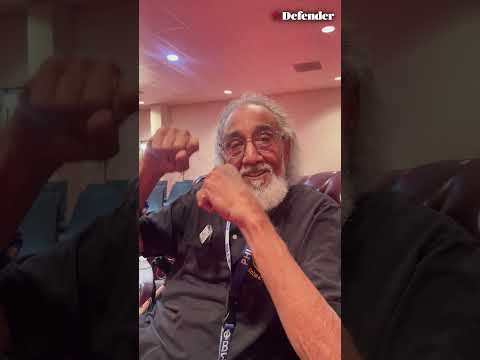
It has been 61 years since the Selma marches. But political leaders in Houston say that the issues protesters were marching for still plague the lives of Black Americans.
Visit Our Website
Read more stories by our team
https://defendernetwork.com/category/news/opinion/
Sign-up for the Top 5 newsletter
Donate/ Support Our Work

#NNPA BlackPress
Here is what you need to know about finding unique white elephant gift ideas that everyone wants to steal
The best white elephant gift ideas are funny enough to get a reaction but useful enough that people actually want to steal them. Look for gifts with a surprise factor, broad appeal, an inside joke, and just enough personality to spark some friendly competition. The wrapping paper comes off, the room goes quiet for half […]

The best white elephant gift ideas are funny enough to get a reaction but useful enough that people actually want to steal them. Look for gifts with a surprise factor, broad appeal, an inside joke, and just enough personality to spark some friendly competition.
The wrapping paper comes off, the room goes quiet for half a second, and suddenly everyone wants the same gift. That is the sweet spot. A great white elephant pick should make people laugh, lean in, and start plotting their next steal before the turn is even over.
Should a White Elephant Gift Be Funny or Useful?
A white elephant gift can be funny or useful, but the strongest choices usually give people a reason to laugh and a reason to keep the item. A practical gift with an odd design, unexpected feature, or playful theme can get a reaction without becoming something the recipient immediately wants to give away.
The right balance depends on the group. Close friends and family members may enjoy a ridiculous gag gift because they already understand one another’s sense of humor.
A workplace exchange, neighborhood party, or mixed-age gathering usually calls for something with broader appeal. In those settings, humor works better when it is built into an item people could still use afterward.
It also helps to think about how quickly the gift will make sense once it is opened. A strangely shaped kitchen tool, oversized mug, quirky desk accessory, or unexpectedly fancy everyday item can create an immediate reaction. Guests understand the joke right away, while the item still has enough practical value to attract a steal.
Pure gag gifts can be harder to pull off. Something that exists only for the punchline may get a big laugh during the reveal and then sit untouched for the rest of the game. If the goal is to bring one of the gifts everyone keeps fighting over, usefulness gives the joke staying power.
Memorable Present Ideas: Creating Inside Joke Gifts
Inside joke gifts can make a white elephant exchange feel much more personal, especially when most of the group shares the same stories. The trick is choosing a reference that people will recognize quickly instead of building the entire joke around something only two guests understand.
You can turn a memorable vacation mishap, office catchphrase, family story, or long-running group joke into the theme of the gift. A personalized comic book can work especially well when it turns familiar people or a ridiculous shared moment into part of the story.
Think carefully about who the joke involves before ordering anything permanent. The gift should make the person feel included in the fun, not singled out for the wrong reason.
Can You Bring Something You Already Own?
Holiday gift exchanges can be a good place to re-gift something you never used, especially if it is unopened and clean.
The following can all work if they still look presentable:
- A duplicate kitchen gadget
- An untouched game
- A decorative item
- A sealed gift set
- An unopened candle
- A new travel accessory
The goal is to give the item a second chance, not use the exchange as an excuse to clear out damaged or unwanted clutter.
Take a close look at the packaging before wrapping it. Faded boxes, missing pieces, visible wear, or anything that looks obviously used can make the gift feel careless.
Wrapping Budget-Friendly Gifts
Wrapping can make gifts more entertaining before anyone even knows what’s inside.
Misdirection works especially well for fun party games. Put a small gift inside a much larger box. Use packaging from an unrelated household item.
Add harmless weight so guests cannot guess what they are holding. The reveal becomes part of the joke without changing the gift itself.
You can also lean into the theme of the exchange. Bright paper, oversized bows, reusable bags, or deliberately over-the-top wrapping can make an ordinary item feel more memorable. If the gift itself is already funny, simple wrapping may work better so the surprise stays hidden until the last second.
Frequently Asked Questions
Is Picking Last an Advantage in White Elephant?
Picking last can be an advantage because you get to see almost every gift before making your move. Instead of choosing blindly from the remaining wrapped presents, you can steal something that has already caught your attention if the rules still allow it.
That advantage depends on the house rules. Some games limit how many times a gift can be stolen.
Others lock an item once it reaches a certain number of steals. If the most popular gifts are already unavailable, the final player may have fewer strong options than expected.
The first player can also get another turn at the end in some versions of the game. That rule can balance things out, since the person who started with the least information may get one final chance to steal.
How Do You Plan White Elephant for a Large Group?
For a large white elephant exchange, set a firm spending limit and establish the stealing rules in advance.
Create a clear turn order before the game begins. Drawing numbers as guests arrive can save time once everyone is ready to start.
Keep the number of steals per gift limited so the game does not drag on. It also helps to have one person track which creative holiday presents have been stolen and when they are locked, especially if dozens of people are participating.
Can You Play White Elephant Virtually?
A virtual white elephant exchange can work over a video call, with one person keeping track of the turn order and each steal. Guests can either mail physical gifts ahead of time or use digital gifts that can be delivered once the game ends.
Set the spending limit and stealing rules before everyone joins. It also helps to decide how gifts will be revealed and who is responsible for sending each one afterward so the exchange does not become confusing.
Choose a Perfect White Elephant Gift in a Snap
Look for a white elephant gift that fits some of these criteria, and everyone will be trying to grab it at your next celebration.
Do you need more gift-giving tips and tricks? Make sure you read some of our other posts.



How the Sandwich Generation Can Help Protect Aging Parents’ Finances

As Progressive Democrats Celebrate ‘Blue Tsunami,’ Oakland Counts Victories

Golden State Valkyries Become Bay Area Legends Winning WNBA Championship on Halloween Night

IN MEMORIAM: Marcia Ann Gillespie, Editor of Essence and Ms. Magazines, Dies at 82

U.S. Rep. John Garamendi Honors local ‘Women of the Year’ at Annual Awards Ceremony

Richmond Neighbors Put Pantry Power on the Map

Oakland Latino Chamber of Commerce Hosts Statewide Convention, Generating $3 Million in Economic Impact

HISTORY MADE: Keisha Lance Bottoms Becomes First Black Woman Elected Governor in American History

HISTORY MADE: Keisha Lance Bottoms Becomes First Black Woman Elected Governor in American History

Five Hospitals Said No! Who Will Help Annette Henry Recover?

Oakland NAACP, BWOPA Speak Out Against Alleged Harassment of Black Women Political Leaders

COMMENTARY: Oakland’s Black Students Have Gained Ground: We Shouldn’t Stop Now

From Backyard Grilling to Jack London Square: Jamale Carlyle’s Chicken Wing Success Story

SEIU Local 1000 and State of California Will Continue to Negotiate New Labor Contract

OPINION: We Can Restore Checks and Balances on Trump

COMMENTARY: Valarie Bachelor and Jennifer Brouhard are Excellent School Board Members and Deserve to Be Reelected

Listening as a Lifeline: A Doula’s Witness to Black Maternal Health

OUSD Receives State Review of District Finances; Outlines Progress Since January
HISTORY MADE: Keisha Lance Bottoms Becomes First Black Woman Elected Governor in American History

Zakiya Jendayi Arrested, Locked Out of Home by Sheriff’s Deputies
SEIU Local 1000 and State of California Will Continue to Negotiate New Labor Contract
Golden State Valkyries Become Bay Area Legends Winning WNBA Championship on Halloween Night

COMMENTARY: Your California Living Trust Could Be Next: When Evidence Isn’t Enough

Fate of Bay Area Public Transit Hinges on Regional Transit Measure

Oakland Post: Week of September 30 – October 6, 2026

It’s Time to Lose Weight Before the Holidays

Mayor Barbara Lee Holds Special State of the City Address in Deep East Oakland

Democrats, Community Groups Back Measure EE to Change How Oakland Is Governed

Oakland Awarded More than $14 Million in State Funding

OP-ED: Proposition 44 Would Put a Price on Trust

The Conversation With Al McFarlane 6/23/26

Media Monday 6/22/26

LIVE! ASK ALMA! — TUES. 6.23.26 7PM EST

Car Buying Secrets: 4 Hidden Checks Before You Sign!

Is This 550 HP Charger Worth YOUR Money? AutoNetwork Review

Celebrating Juneteenth – Frederick Douglass on education and resistance

LIVE! — ASK ALMA! — TUES. 6.19.26 7PM EST

Hyundai Ioniq 5 Parking, Safety, and 360 View #shorts

2025 Ioniq 5 New Wiper & Powerful Performance! #shorts

Electric SUV Range: Is 259 Miles Enough? #shorts

EV Charging: How Fast Can You Charge an Electric Vehicle? #shorts

Biometric Cooling… Messaging Seats…Come on! 2025 Infiniti QX80 Autograph 4WD

Charged Up: Witness the Magic of a Fully Electric Car! #shorts

Range Rover Sport PHEV Included…: See What’s Inside This Luxury SUV! #shorts

Invisible Hood View: Perfect Parking with X-Ray Vision! #shorts
-
 Commentary2 weeks ago
COMMENTARY: Valarie Bachelor and Jennifer Brouhard are Excellent School Board Members and Deserve to Be Reelected
-
 Education2 weeks ago
OUSD Receives State Review of District Finances; Outlines Progress Since January
-
 Black History1 week ago
HISTORY MADE: Keisha Lance Bottoms Becomes First Black Woman Elected Governor in American History
-
 Business2 weeks ago
SEIU Local 1000 and State of California Will Continue to Negotiate New Labor Contract
-
 Community1 week ago
Golden State Valkyries Become Bay Area Legends Winning WNBA Championship on Halloween Night
-
 Business2 weeks ago
COMMENTARY: Your California Living Trust Could Be Next: When Evidence Isn’t Enough
-
 Business3 weeks ago
Fate of Bay Area Public Transit Hinges on Regional Transit Measure
-
 Community4 weeks ago
It’s Time to Lose Weight Before the Holidays

1 Comment