
HBCU
A Series On Health Equity: The Black Church and HBCUs
NEW JOURNAL AND GUIDE — A new minority health initiative sponsored by Providential Credit Care Management, Inc./KareVan aims to educate, inform and impact health disparities among African Americans in the Hampton Roads area. It is in partnership with Norfolk State University Center of Excellence for Minority Health Disparities, Social Innovators Design Group, and the New Journal and Guide.

By New Journal and Guide

#1: Epilepsy and Seizure Disorders Among African-Americans
A new minority health initiative sponsored by Providential Credit Care Management, Inc./KareVan aims to educate, inform and impact health disparities among African Americans in the Hampton Roads area. It is in partnership with Norfolk State University Center of Excellence for Minority Health Disparities, Social Innovators Design Group, and the New Journal and Guide.

Dr. Steve Owens, Vice President of Programs and Services at the Epilepsy Foundation
On Saturday, April 20, Dr. Steve Owens, Senior Vice President, Programs and Services, Epilepsy Foundation, will be the guest speaker at the NSU Center of Excellence where he will address the topic of epilepsy.
The program is free and open to the public and will feature health policy experts and advocates as presenters.
The event is 9:00 a.m. to 1:00 p.m. with registration and a continental breakfast at 8:30 a.m. The Center is located in the Nursing Education Building on the NSU campus.
Following is an interview with Dr. Cynthia Burwell, who heads the NSU Center of Excellence.
Q1: Dr. Burwell, please tell us about the Center of Excellence at Norfolk State University? And what and how does it relate to the importance of health equity?
A1: The Center of Excellence for Minority Health Disparities was developed five years ago as one of Norfolk State University’s strategic initiatives in its Six Year Strategic Plan to help promote health equity and eliminate health disparities. Using the Community-Based Participation Research model, this work includes collaborative research and programming with various community-based health organizations across Hampton Roads and the Commonwealth of Virginia.
In support of The Center’s commitment to reducing health disparities in Hampton Roads and surrounding areas through research, service, and education, five primary strategic goals have been created. These goals focus on increasing The Center’s infrastructure and capacity to conduct research, engage communities, collaborate with key partners, and provide educational opportunities to communities of underserved, underrepresented, and minority populations. The Center is important to providing educational opportunities in order to help reduce health disparities.
Q2: What is the significance of our HBCU in the furtherance of improved Black Health?
A2: It is significant that HBCUs continue to provide the leadership needed in training students to become future healthcare providers. We know that there will be a shortage of minority healthcare professionals in the future and we need to be in the forefront in helping students become the next generation of healthcare professionals to help meet the needs of the community.
Q3: So what about epilepsy and seizure disorders that relate to overall health of African Americans, and why should we all gather at our “Communityveristy” NSU next Saturday morning, April 20? And please tell us about your involvement with Healthy Churches 2020.
A3: According to the literature many social factors have been identified as key drivers of epilepsy care, outcomes, and disparities, but there is a limited understanding of what these factors are and how they translate into disparities.
Key social determinants of health in epilepsy include socioeconomic status, race/ethnicity, age, and gender. For example, low socioeconomic status and minority status have been associated with a higher risk of epilepsy, more hospitalizations and emergency room visits (versus neurology services), and a lower rate of epilepsy surgery.
Such differences in care/treatment and outcomes translate into health disparities, many of which are considered unjust (inequitable) and modifiable through social action.
It’s important that we gather people from the community together to discuss these issues and educate members of the community about epilepsy.
The Center has been involved with the Healthy Churches 2020 conference through the establishment of the Health Churches Coalition of Hampton Roads. This has provided us with the opportunity to educate health ministry leaders about health issues that need to be improved in our community.
Q4: Dr. Steve Owens is the keynote speaker in the morning. Why are you so excited about having our esteemed brother and expert to be with us?
A4: Dr. Steve Owens is the Senior Vice President of Programs and Services with the Epilepsy Foundation, and he is going to be our keynote speaker at the “Faith and Fit. We are excited about him coming to help increase our knowledge about epilepsy, population health and health disparities.
Q5: How and why are community leaders and advocates like Sis. Barbara Wiggins so important in the work we do as Black health equity advocates so important?
A5: We are excited to have Sis. Barbara Wiggins on that same program so that she can share with us information about the valuable resources she and her colleagues can provide for the homeless in our community.
♦♦♦
This project is made possible in part by grant provided by the Epilepsy Foundation.
Please join on us for a prayer service and fellowship at Norfolk State University on April 20th at 9 a.m. We will come together to pray for the community, the sick and shut in, and for those who are living with various health challenges, including seizure disorders. Come and get the love, support and care you desire. Free and open to the community members.
A new minority health initiative sponsored by Providential Credit Care Management, Inc./KareVan aims to educate, inform and impact health disparities among African Americans in the Hampton Roads area. It is in partnership with Norfolk State University Center of Excellence for Minority Health Disparities, Social Innovators Design Group, and the New Journal and Guide.
On Saturday, April 20, Dr. Steve Owens, Senior Vice President, Programs and Services, Epilepsy Foundation, will be the guest speaker at the NSU Center of Excellence where he will address the topic of epilepsy.
The program is free and open to the public and will feature health policy experts and advocates as presenters.
The event is 9:00 a.m. to 1:00 p.m. with registration and a continental breakfast at 8:30 a.m. The Center is located in the Nursing Education Building on the NSU campus.
Following is an interview with Dr. Cynthia Burwell, who heads the NSU Center of Excellence.
Q1: Dr. Burwell, please tell us about the Center of Excellence at Norfolk State University? And what and how does it relate to the importance of health equity?
A1: The Center of Excellence for Minority Health Disparities was developed five years ago as one of Norfolk State University’s strategic initiatives in its Six Year Strategic Plan to help promote health equity and eliminate health disparities. Using the Community-Based Participation Research model, this work includes collaborative research and programming with various community-based health organizations across Hampton Roads and the Commonwealth of Virginia.
In support of The Center’s commitment to reducing health disparities in Hampton Roads and surrounding areas through research, service, and education, five primary strategic goals have been created. These goals focus on increasing The Center’s infrastructure and capacity to conduct research, engage communities, collaborate with key partners, and provide educational opportunities to communities of underserved, underrepresented, and minority populations. The Center is important to providing educational opportunities in order to help reduce health disparities.
Q2: What is the significance of our HBCU in the furtherance of improved Black Health?
A2: It is significant that HBCUs continue to provide the leadership needed in training students to become future healthcare providers. We know that there will be a shortage of minority healthcare professionals in the future and we need to be in the forefront in helping students become the next generation of healthcare professionals to help meet the needs of the community.
Q3: So what about epilepsy and seizure disorders that relate to overall health of African Americans, and why should we all gather at our “Communityveristy” NSU next Saturday morning, April 20? And please tell us about your involvement with Healthy Churches 2020.
A3: According to the literature many social factors have been identified as key drivers of epilepsy care, outcomes, and disparities, but there is a limited understanding of what these factors are and how they translate into disparities.
Key social determinants of health in epilepsy include socioeconomic status, race/ethnicity, age, and gender. For example, low socioeconomic status and minority status have been associated with a higher risk of epilepsy, more hospitalizations and emergency room visits (versus neurology services), and a lower rate of epilepsy surgery.
Such differences in care/treatment and outcomes translate into health disparities, many of which are considered unjust (inequitable) and modifiable through social action.
It’s important that we gather people from the community together to discuss these issues and educate members of the community about epilepsy.
The Center has been involved with the Healthy Churches 2020 conference through the establishment of the Health Churches Coalition of Hampton Roads. This has provided us with the opportunity to educate health ministry leaders about health issues that need to be improved in our community.
Q4: Dr. Steve Owens is the keynote speaker in the morning. Why are you so excited about having our esteemed brother and expert to be with us?
A4: Dr. Steve Owens is the Senior Vice President of Programs and Services with the Epilepsy Foundation, and he is going to be our keynote speaker at the “Faith and Fit. We are excited about him coming to help increase our knowledge about epilepsy, population health and health disparities.
Q5: How and why are community leaders and advocates like Sis. Barbara Wiggins so important in the work we do as Black health equity advocates so important?
A5: We are excited to have Sis. Barbara Wiggins on that same program so that she can share with us information about the valuable resources she and her colleagues can provide for the homeless in our community.
♦♦♦
This project is made possible in part by grant provided by the Epilepsy Foundation.
Please join on us for a prayer service and fellowship at Norfolk State University on April 20th at 9 a.m. We will come together to pray for the community, the sick and shut in, and for those who are living with various health challenges, including seizure disorders. Come and get the love, support and care you desire. Free and open to the community members.
This article originally appeared in the New Journal and Guide.







Activism
How Charles R. Drew University Navigated More Than $20 Million in Fed Cuts – Still Prioritizing Students and Community Health
Named after the pioneering physician Dr. Charles R. Drew, famous for his work in blood preservation, CDU’s mission is to cultivate “diverse health professional leaders dedicated to social justice and health equity for underserved populations through education, research, clinical service, and, above all, community engagement.”

Charlene Muhammad | California Black Media
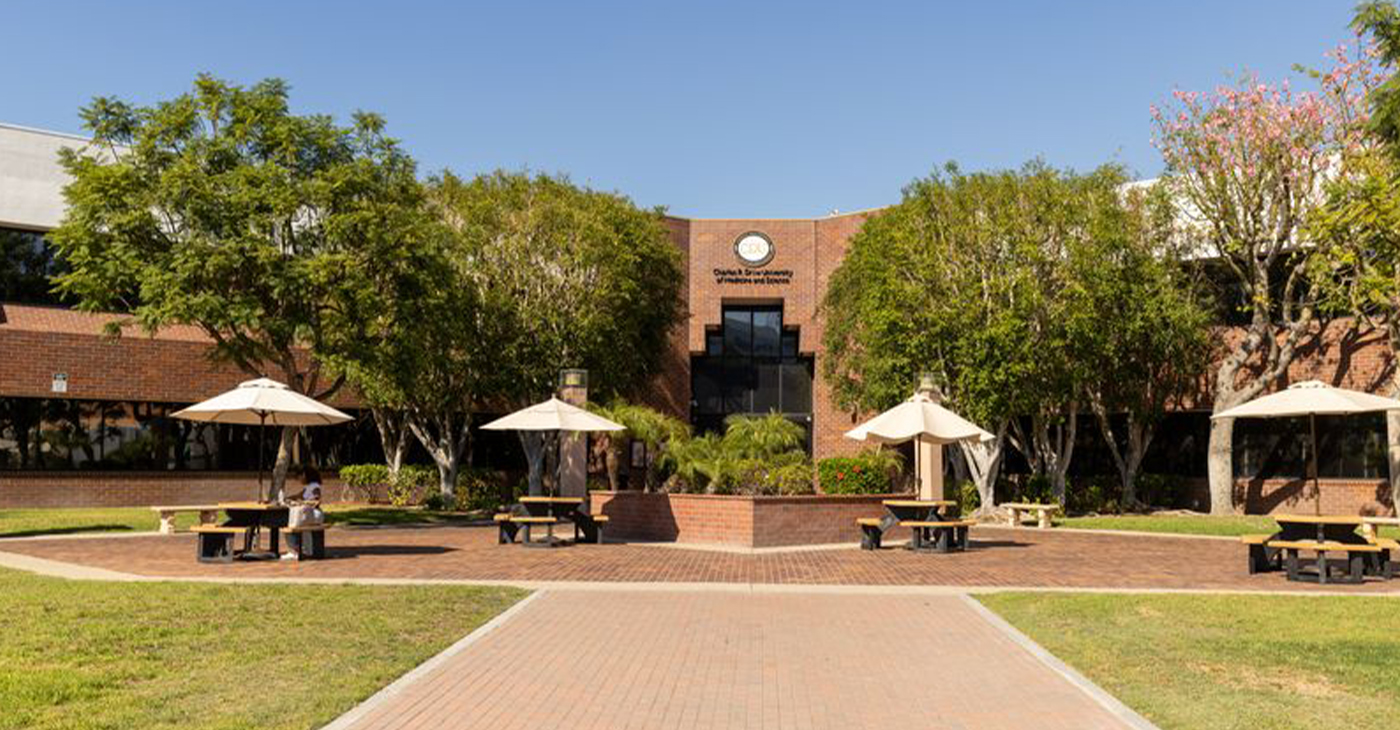
Earlier this year, when the federal government slashed more than $20 million in grants to Charles R. Drew University of Medicine and Science (CDU), the leadership of California’s only historically Black medical school scrambled to stabilize its finances — while protecting its staff and students.
Named after the pioneering physician Dr. Charles R. Drew, famous for his work in blood preservation, CDU’s mission is to cultivate “diverse health professional leaders dedicated to social justice and health equity for underserved populations through education, research, clinical service, and, above all, community engagement.”
The school is widely recognized as a vital pipeline for Black doctors and other health professionals throughout California.

Dr. David Carlisle (center), President of Charles R. Drew University of Medicine and Science (CDU), with two of the university’s students. Photo Courtesy of Charles R. Drew University of Medicine and Science.
Dr. Jose Torres-Ruiz, CDU’s Executive Vice President for Academic Affairs and Provost, said the university—designated as a Historically Black Graduate Institution (HBGI)—was notified in early March 2025 that most of its major grants, including the Research Centers in Minority Institutions (RCMI) award, known at CDU as the “Accelerating Excellence in Translational Science” (AXIS Grant), would be terminated. Initially renewed, the grant was later revoked because its language did not align with the current federal administration’s priorities.
The AXIS Grant provides $4.5 million per year for five years through the National Institutes of Health’s National Institute on Minority Health and Health Disparities. CDU quickly reallocated other funds to protect its scientists, staff, and technicians, though some personnel losses were unavoidable.
“We didn’t want to fire them because these people have expertise that takes years to gain,” Torres-Ruiz said.
The grant is crucial, he added, funding research in cancer, diabetes, and metabolic diseases that affect the Willowbrook community in South Los Angeles, training the next generation of scientists, and supporting community outreach.
Programs at the school, including its youth and teen mentoring programs reach beyond the walls of the university, impacting the lives and quality of health care of people in the surrounding community, one of the most underserved areas in Los Angeles County.
Confronted with the harsh reality of funding cuts, the university’s leadership made an early, strategic choice to honor its foundational commitment and prioritize its students. Dr. Deborah Prothrow-Stith, dean of CDU’s College of Medicine, highlighted the school’s deliberate focus on admitting students from economically disadvantaged backgrounds — many of whom are Pell Grant recipients and graduates of public high schools.
“We are staying true to our mission, finding creative ways to prioritize what’s most important,” she said. “I’m optimistic because of our students—they are dedicated and committed to service.”
In addition, the $2 million-per-year John Lewis NIMHD Research Endowment Program, intended to strengthen CDU’s research infrastructure, was terminated with three years remaining after a February 2025 freeze on nearly all federal grants for public health, education, and infrastructure projects.
Following an appeal, CDU learned in June that the RCMI grant had been fully reinstated, along with all but eight smaller grants. The university’s next priority is restoring the John Lewis Endowment.
“We are working with NIH staff to adjust the language. Certain words like ‘diversity’ and ‘equity,’ which are core values of our institution, are now under scrutiny,” Torres-Ruiz explained.
CDU has also expanded funding sources by targeting foundations and private donors. “This may happen again. We cannot rely solely on federal agencies,” Torres-Ruiz said, emphasizing the importance of building relationships with politicians and private partners.
Prothrow Stith echoed Ruiz’s perspective on cultivating multiple funding sources. “Building bridges with private foundations helps, but it doesn’t erase the disruption,” she said.
Many students rely on federal loans, CDU leaders say. Those loans are now capped at $150,000. So, most medical students graduate with $300,000–$350,000 in debt when accounting for tuition and living expenses.
To lower the burden on students, CDU is exploring options to make education more affordable, including overlapping school years to reduce annual costs.
Students like Isaiah Hoffman and Bailey Moore epitomize CDU’s values.
Hoffman, an aspiring orthopedic surgeon from Inglewood, credits Drew for inspiring his career choice. Out of 12 medical school acceptances, he chose CDU to give back to his community and continue Drew’s legacy. Hoffman also founded H.O.M.I.E.S. Inc., a nonprofit pairing Black K–12 students with mentors to support academic and personal growth.
Moore, 23, from Southeast Washington, D.C., pursued CDU to address maternal health disparities she observed in her own community – an underserved area of the nation’s capital city. “CDU pours into you. It emphasizes service, and I hope for a world without health disparities,” she said. “Drew may be small, but Drew is mighty. It was created out of necessity to save lives and empower communities.”
CDU President and CEO Dr. David Carlisle acknowledged during the Aug. 28 “State of the University” that the institution faces ongoing challenges. Political threats and grant disruptions contributed to a sizable unrestricted budget deficit, despite achievements over the past year.
Successful appeals and alternative sources of funding, led by Vice Provost Dr. Ali Andallibi, have now restored all the monies previously lost in research funding, he said.
Carlisle expressed gratitude to L.A. Care Health Plan and Sutter Health for providing multimillion-dollar scholarships and highlighted that CDU would welcome approximately 1,050 incoming students—near its highest enrollment ever. “I’m deeply grateful for the resolve, diligence, and unwavering commitment of everyone here, even when the path is not easy,” he said.
At the gathering, Carlisle referred to the sounds of ambulances passing by with blaring sirens as- the “music of healthcare,” while students and the school’s leadership attending expressed resilience in their speeches and conversations. The activities of the day captured the institution’s focus on education, service and advancing health care across disadvantaged communities in California – and beyond.
Video Report: How Charles Drew Stayed Strong Amid Federal Funding Cuts

Activism
HBCUC to Host Annual Elegant All White Scholarship Gala in Oakland
This year’s gala will feature a special tribute to 15 women being recognized as trailblazers for their outstanding achievements and community impact. The Mistress of Ceremonies for the evening will be Celebrity Chef Nikki Shaw, wife of Oakland native Brian Shaw, NBA coach for the Los Angeles Clippers. Entertainment will include a live performance by Lionel Burns and the We R1 Band, offering a musical tribute to the late Frankie Beverly.

By Carla Thomas
The Historically Black Colleges and Universities Alumni Coalition of Northern California (HBCUC) will present its annual “Elegant All White Scholarship Gala” on Saturday, September 27, at Scott’s Chandelier Pavilion in Oakland’s Jack London Square.
The HBCUC supports Bay Area students who aspire to attend historic institutions such as Howard University in Washington, D.C. and Spelman College in Atlanta, among others. Proceeds from the gala will fund scholarships for local students who have been accepted into one of the 107 HBCUs across the United States, while also sustaining the association’s ongoing community work.
Guests will include government officials, community leaders, corporate sponsors, and members of the Divine Nine fraternities and sororities. The gala reflects the coalition’s guiding theme and slogan: “The Village – Coming Together for a Common Purpose Through Advancing the Cause of Education.” True to this vision, HBCUC continues to provide hope, college readiness resources, and scholarship opportunities to Bay Area students.
This year’s gala will feature a special tribute to 15 women being recognized as trailblazers for their outstanding achievements and community impact. The Mistress of Ceremonies for the evening will be Celebrity Chef Nikki Shaw, wife of Oakland native Brian Shaw, NBA coach for the Los Angeles Clippers. Entertainment will include a live performance by Lionel Burns and the We R1 Band, offering a musical tribute to the late Frankie Beverly.
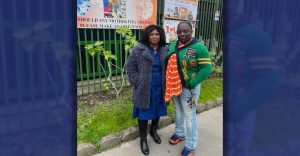
Event producer, Paula Welsh says the gala promises to be “a powerful evening of celebration, unity, and commitment to advancing educational opportunities for future generations.”
What is now the Northern California Historically Black College & University Alumni Associations Coalition (HBCUC) began as a discussion at a series of annual summer barbecues between HBCU alumni in the San Francisco Bay Area. In the 1990s, gatherings of HBCU alumni living in the San Francisco Bay Area became spaces for reconnecting, sharing traditions, and envisioning community action. These informal events laid the foundation for what would soon grow into a structured coalition advancing the legacy and presence of HBCUs in Northern California.
The first official HBCUC meeting was held in 1998 at Skyline College by the following founding HBCU alumni members:
- Aner Ruth Young (Alabama State University)
- Edwyna Elzie (Alabama A&M University)
- Faye Carr (Jackson State University)
- Freddy Burke (Alcorn State University)
- Gaynell Johnson (Southern University)
- Jean Finklin (Jackson State University)
- Lynwood Barr (Central State University)
- Mel Cozwell (Central State University)
- Pat Deamer (Southern University)
- Wanda Scott (University of Arkansas at Pine Bluff)
- The late Ethel Daniels (Prairie View A &M University)
- The late Harold Logwood (Howard University)
- The late Joseph Shields (Alcorn State University)
- The late Ken Coleman (Alcorn State University)
- The late Nathaniel H. Brooks (University of Arkansas at Pine Bluff)
- The late Vernon Clark (Prairie View A & M University)
On March 9, 1998, the second meeting was held, the constitution was created, and executive officers were installed including President, Lynwood Barr (Central State University), an Educator
- Vice President, Joseph Shields, (Alcorn State University) an Educator
- Secretary, Ethel Daniels (Prairie View A &M University) an Educator
- Correspondence Secretary, Edwyna Elzie (Alabama A & M University) an Educator
- Treasurer, Vernon Clarke (Prairie View A &M University) an JROTC Instructor
- Parliamentarian, Harold Logwood (Howard University) a Lawyer.
On January 14, 2000 the HBCUC became incorporated with officers;
- President, Patricia Deamer (Southern University)
- Vice President, Joseph Shields (Alcorn State University)
- Secretary, Ethel Daniels (Prairie View A&M University)
- Treasurer, Vernon Clark (Prairie View A&M University).
Two honorary members included jazz legend John Handy and Governor Emeritus Jerry Brown who was the Mayor of Oakland at that time.
The Northern California Historically Black College and University Alumni Associations Coalition (HBCUC), composed of alumni from HBCU and UNCF institutions, actively recruits and engages students at church centers, schools, community colleges, and expos throughout Northern and Central California. By informing parents, guardians, and students, ranging from middle school to community college, the next generation becomes fully empowered in understanding that four-year college admission is achievable. By providing resources, scholarship information, and essential guidance, HBCUC inspires hope and fosters pathways to higher education.
For more information visit: www.northerncaliforniahbcuc.org/gala
Activism
Dr. Kimberly Mayfield Working to Bring a ‘Black-Affirming University’ (HBCU) to Oakland
The goal, according to Mayfield, is to “create a Black-serving institution in Oakland, which means that 50% or more of the student body would be African American.” The Oakland program could either be an HBCU, which is preferable, or a Black-serving institution unaffiliated with other HBCUs. The program itself could become a stand-alone institution or an assemblage of different programs on a single campus.
By Ken Epstein
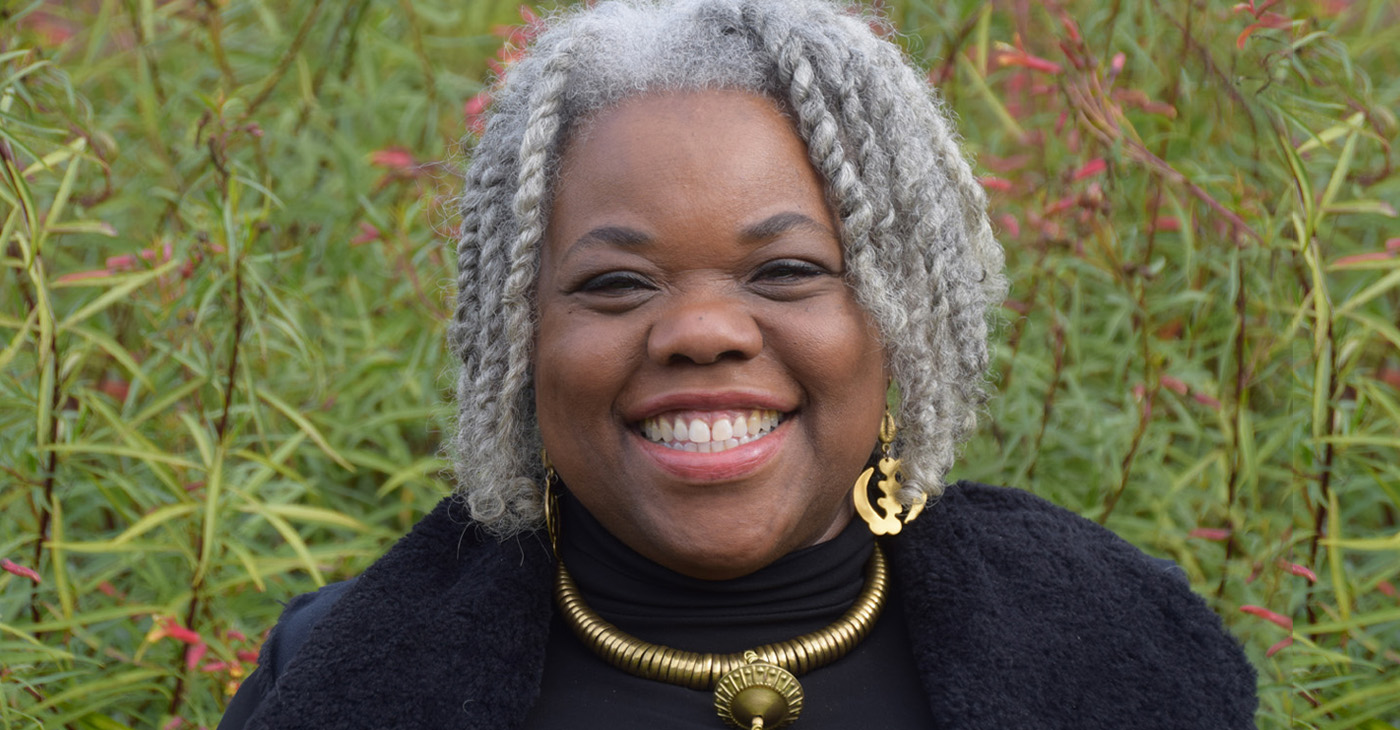
Dr. Kimberly Mayfield, who, until recently served as deputy mayor of Oakland, has been working for several years with educators and community groups to create a Historically Black College and University (HBCU) or other Black-serving institution of higher education in Oakland — potentially on the fully operational campus of Holy Names University in East Oakland, which went out of business in 2023.
The goal, according to Mayfield, is to “create a Black-serving institution in Oakland, which means that 50% or more of the student body would be African American.”
The Oakland program could either be an HBCU, which is preferable, or a Black-serving institution unaffiliated with other HBCUs. The program itself could become a stand-alone institution or an assemblage of different programs on a single campus.
“It could be a consortium model where programs from existing HBCUs locate in Oakland,” similar to the Atlanta Union Center in Georgia, which offers courses from Morehouse, Spelman, Morris Brown, and Clark Atlanta HBCUs, she said.
“There are four different institutions at Atlanta Union, and students can take classes from the different schools. They’re all based in the same place, but the programs are run by different institutions,” said Mayfield.
Key to the program would be the culture of the school, which would be “Black affirming,” offering students a supportive environment that recognizes them as individuals, she said. The program would be campus-based and include online course offerings.

Courses could be offered in downtown Oakland in office buildings in the Black Business and Arts District as well as at the Holy Names site, which was sold to developers for $64 million and is presently for sale.
Holy Names was a private Roman Catholic university in Oakland founded in 1868 by the Canada-based Sisters of the Holy Names of Jesus and Mary with whom the university remained affiliated until it closed after facing several years of budget shortfalls.
Before serving as Deputy Mayor, Dr. Mayfield began her career as an educator in the Oakland Unified School District and served as dean of the School of Education and Liberal Arts and the vice president for external relations and strategic partnerships at Holy Names.
She said she has already found a lot of interest from various sources for donating funds to start the school, she said. “We have reached out to the East Bay Community Foundation, to set up the necessary structures to receive money to help with strategic planning,” and all other aspects investors want to see, including an internet presence.
The team working on the initiative has 16 members and is led by Mayfield, Councilmember Carroll Fife, and retired attorney Kim Thompson. They recently attended a conference of HBCU leaders held by the United Negro College Fund, where the Oakland proposal was greeted with enthusiasm.
Mayfield emphasized that the goal of bringing an HBCU is something that has broad support in Oakland and has been a subject of growing interest for several decades.
“This is a community-driven initiative. While former Mayor Sheng Thao’s support was important and allowed us to get organized in a certain way, it doesn’t end with her leadership” she said, adding that outgoing Congresswoman Barbara Lee and other mayoral candidates have expressed support for this initiative.
Mayfield said she and her team have been in conversations with leaders of some HBCUs, which are interested in expanding to the West Coast but face financial constraints.
“It’s the racial wealth gap, which affects HBCUs,” the same as the rest of Black America, she said. “They just don’t have the same financial resources that predominantly white institutions have. It’s hard for them to think about a completely separate, sustained campus, when they have to deal with preserving the infrastructure on their main campus.”
She said Holy Names University had 1,400 students at its largest enrollment, with no online component. “We could easily have 1,000 students matriculating on campus, and another online population of students, virtually.”
“We’d like all the virtual students to be close enough to come to campus and participate in the campus culture,” because that’s the difference an HBCU makes, Mayfield said. “It cares for students, sees you as a person, not a number, in touch with wraparound services, calling you if you’re not in class.”
“We want to have an institution that knows who the students are,” she said. “You know their brilliance when they walk in, and you’re doing everything possible academically for them to succeed and thrive.”

WORK FROM HOME
Home-based business with potential monthly income of $10K+ per month. A proven training system and website provided to maximize business effectiveness. Perfect job to earn side and primary income. Contact Lynne for more details: Lynne4npusa@gmail.com 800-334-0540


Poll Shows Support for Policies That Help Families Afford Child Care

Oakland Post: Week of February 25 – March 3, 2026

Trump’s MAGA Allies are Creating Executive Order Plan to Steal the 2026 Midterms

PRESS ROOM: NBA Hall of Fame Nominee Terry Cummings Joins 100 Black Men of DeKalb County to Launch Victory & Values Initiative

Reflecting on Black History Milestones in Birmingham AL

OP-ED: One Hundred Years of Black Workers Telling the Truth

PRESS ROOM: Civil Rights TV Launches in Selma as the World’s First 24/7 Civil Rights Television Network

Advancements in solar technology that are changing the way we power the world

U.S. manufacturing rebounds – how foundry services are adapting to rising demand

Why has blood testing become so popular in today’s world?

Ghana Mourns a Son of the African World

OP-ED: Trump’s Policies Hurt Black America—and Everyone Else

OP-ED: Meta Deleted Me. I Still Don’t Know Why. And neither will you.

More than a Mission: Paying It Forward for the Future of Education

Avoid Eviction This Season: Landlord Checklist for Stable Tenancies

Life Expectancy in Marin City, a Black Community, Is 15-17 Years Less than the Rest of Marin County

Oakland Post: Week of January 28, 2025 – February 3, 2026

Community Celebrates Turner Group Construction Company as Collins Drive Becomes Turner Group Drive

California Launches Study on Mileage Tax to Potentially Replace Gas Tax as Republicans Push Back

Discrimination in City Contracts

Oakland Post: Week of January 21 – 27, 2026

Book Review: Books on Black History and Black Life for Kids

Medi-Cal Cares for You and Your Baby Every Step of the Way

COMMENTARY: The Biases We Don’t See — Preventing AI-Driven Inequality in Health Care

Post Newspaper Invites NNPA to Join Nationwide Probate Reform Initiative

After Don Lemon’s Arrest, Black Officials Raise Concerns About Independent Black Media

OP-ED: The Dream Cannot be Realized Without Financial Freedom

COMMENTARY: The National Protest Must Be Accompanied with Our Votes

Black History Events in the East Bay

Art of the African Diaspora Celebrates Legacy and Community at Richmond Art Center

Hyundai Ioniq 5 Parking, Safety, and 360 View #shorts

2025 Ioniq 5 New Wiper & Powerful Performance! #shorts

Electric SUV Range: Is 259 Miles Enough? #shorts

EV Charging: How Fast Can You Charge an Electric Vehicle? #shorts

Biometric Cooling… Messaging Seats…Come on! 2025 Infiniti QX80 Autograph 4WD

Charged Up: Witness the Magic of a Fully Electric Car! #shorts

Range Rover Sport PHEV Included…: See What’s Inside This Luxury SUV! #shorts

Invisible Hood View: Perfect Parking with X-Ray Vision! #shorts

AI Is Reshaping Black Healthcare: Promise, Peril, and the Push for Improved Results in California

ESSAY: Technology and Medicine, a Primary Care Point of View

Sanctuary Cities

The RESISTANCE – FREEDOM NOW

STATE OF THE PEOPLE: Freddie

ECONOMIC BOYCOTT DAY!!!!!

I told You So
-
 Activism4 weeks ago
Life Expectancy in Marin City, a Black Community, Is 15-17 Years Less than the Rest of Marin County
-
 Activism4 weeks ago
Oakland Post: Week of January 28, 2025 – February 3, 2026
-
 Activism3 weeks ago
Community Celebrates Turner Group Construction Company as Collins Drive Becomes Turner Group Drive
-
 Business3 weeks ago
California Launches Study on Mileage Tax to Potentially Replace Gas Tax as Republicans Push Back
-
 Activism3 weeks ago
Discrimination in City Contracts
-
 Arts and Culture3 weeks ago
Book Review: Books on Black History and Black Life for Kids
-
 Activism4 weeks ago
Medi-Cal Cares for You and Your Baby Every Step of the Way
-
 Activism3 weeks ago
COMMENTARY: The Biases We Don’t See — Preventing AI-Driven Inequality in Health Care
