
Activism
Barbara Lee, Other Leaders, Urge Voters to Say ‘No’ to Recalls of D.A. Pamela Price, Mayor Sheng Thao
Alameda County Supervisor Keith Carson also urged a “no” vote on the two recalls. “When voters elect their representatives, they expect them to be given the time necessary to adjust to their roles and deliver on their responsibilities,” he said. “Both of the recall efforts we’re seeing now began within a year of the Alameda County District attorney and the Oakland Mayor assuming office.


‘The voters … not a few a few billionaires – are the ones with the power to ensure our democratic process,’ said Lee
Supervisor Keith Carson, Senator Nancy Skinner, former Assemblymember Sandré Swanson also oppose the recalls
By Ken Epstein

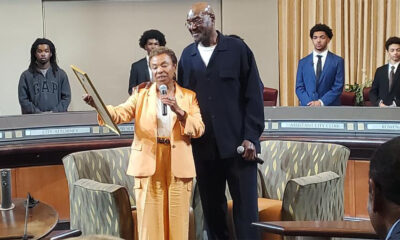
Congresswoman Barbara Lee in a strongly worded statement this week opposed the recalls of both Alameda County District Attorney Pamela Price and Oakland Mayor Sheng Thao in campaigns lavishly funded by a handful of out-of-town billionaires and backed by corporate media.
“Whether it’s two governors or local elected officials, I’ve always opposed recalls, and oppose the recalls on our Nov. 5 ballot,” wrote Lee.
“They’re undemocratic, costly, and chaotic,” she said. “They prevent our officials from governing and deplete badly needed resources from our communities.”
Lee continued: “The voters – through regular elections, not a few a few billionaires – are the ones with the power to ensure our democratic process remains strong and in place.”
“Now is the time to come together and work to address the real and serious issues facing our communities.”
Echoing Lee’s comments, State Senator Nancy Skinner agreed. “As she does on countless other issues, Barbara Lee speaks for me on recalls as well – past & present. I oppose them on principle.
“Except in rare circumstances of serious misconduct, recalls are undemocratic and a waste of public funds. That’s especially true in the case of the Nov. 5 recalls, when the incumbents have only been in office for two years and will be up for reelection just two years from now,” Skinner said.
“Wealthy interests should not be able to circumvent the regular democratic process and pay to put a recall on the ballot. Let’s come together and work on the issues facing our communities,” she said.
Alameda County Supervisor Keith Carson also urged a “no” vote on the two recalls. “When voters elect their representatives, they expect them to be given the time necessary to adjust to their roles and deliver on their responsibilities,” he said. “Both of the recall efforts we’re seeing now began within a year of the Alameda County District attorney and the Oakland Mayor assuming office.
“It’s simply too soon,” he said.
Carson added, “It’s worth noting that 11 states don’t even allow recalls, and in the 39 states that do, malfeasance is generally required for the process to begin.”
Sandré R. Swanson, who served in the California State Assembly from 2006-2012, said, ” I will never support a recall supported and motivated only by political objectives. I believe this runs counter to the Democratic process and the importance of an election by the people.”
Wealthy hedge fund managers and real estate developers have bankrolled the campaigns to unseat both Thao and Price, and many observers expect them to have an outsize influence on local policies and priorities should these campaigns prove successful, and their favored candidates are elected.
Phillip Dreyfuss, who owns a home in Piedmont that is listed as his residence, contributed 4 out of 5 dollars raised by the campaign to oust Thao as of Aug. 1, according to Oaklandside.
Between January and June 2024, a recall group raised $605,000. “Every single dollar came from Dreyfuss, who is a partner in the San Francisco Farallon Capital Management hedge fund,” according to Oaklandside. Contributions helped pay for the company that gathered signatures to place the recall on the ballot.
The campaign against Pamela Price raised $1.1 million in the first three months of 2024 and over $3.3 million since the summer of last year, according to an Oaklandside report in May of this year.
Farallon Capital’s Dreyfuss, along with “Isaac Abid, a real estate investor for HP Investors,” which owns numerous properties in downtown Oakland, established the ‘Supporters of Recall Pamela Price’ committee, which has raised most of the big dollar contributions for the campaign.
Their committee has also paid the signature-gathering bills for the Save Alameda for Everyone (SAFE) committee, which is the public face of the campaign,” the May 8, Oaklandside article said.
Besides the deep pocket funders, the forces lined up to unseat Price and Thao include police unions in Alameda County, who Price says desire to return to the “Good Ole days” when previous district attorneys did not hold them accountable for their actions.
In a press statement released by the Oakland Police Officers Association this week, distributed by public relations operative Sam Singer, the OPOA opposed the sale of the Coliseum, claiming without evidence that the city is heading toward “insolvency” and proposed that hiring fiscal consultants would be a solution.
Singer, who has a long history defending Chevron against environmentalists and the oil pollution impacting indigenous people of the Amazon in Ecuador, currently represents the OPOA.
In a press conference Thursday at Everett and Jones in Jack London Square, Price criticized the “cowardice and opportunism of those who seek to recall rather than solve and fight for second chances.”
She said, “The police unions want to control the justice system and the DA’s function by blaming the prosecutor for the causes of crime and (long-term) failed policies and failed policing tactics.”












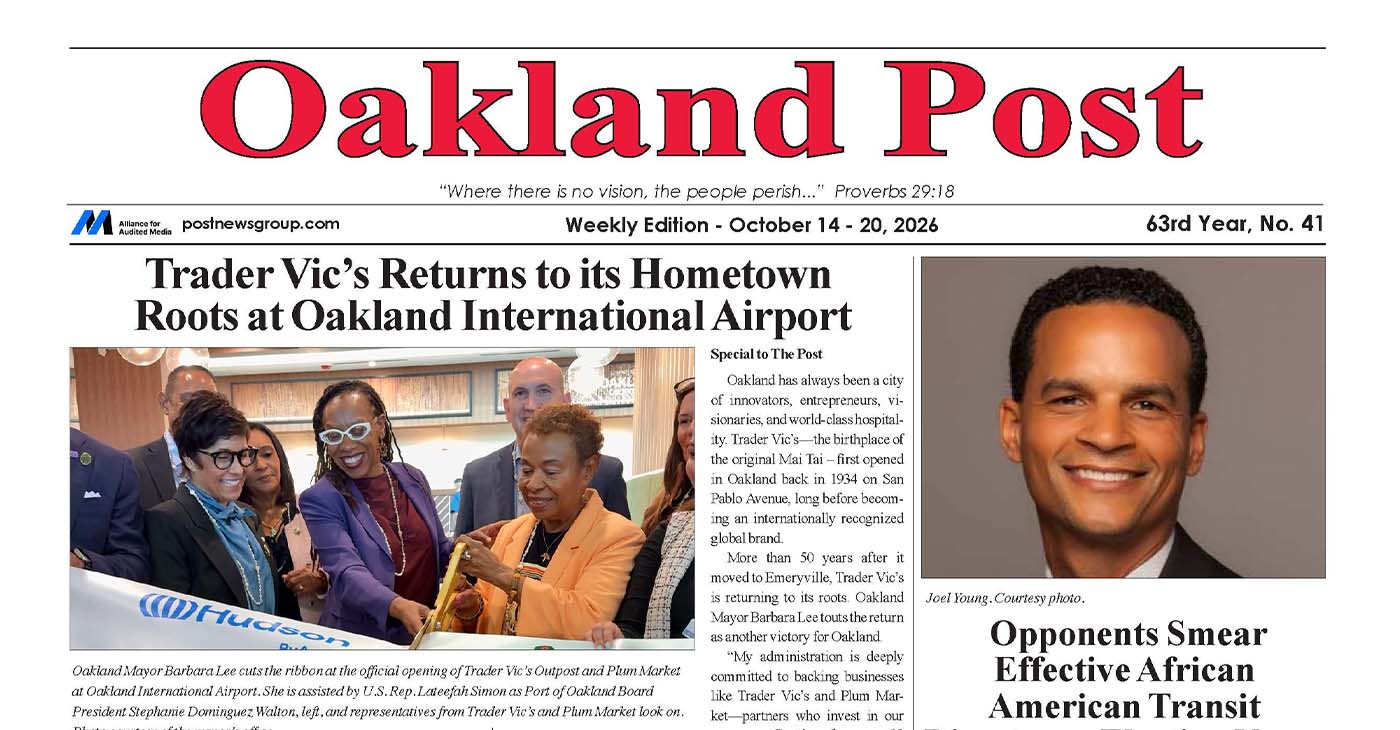
To enlarge your view of this issue, use the slider, magnifying glass icon or full page icon in the lower right corner of the browser window.

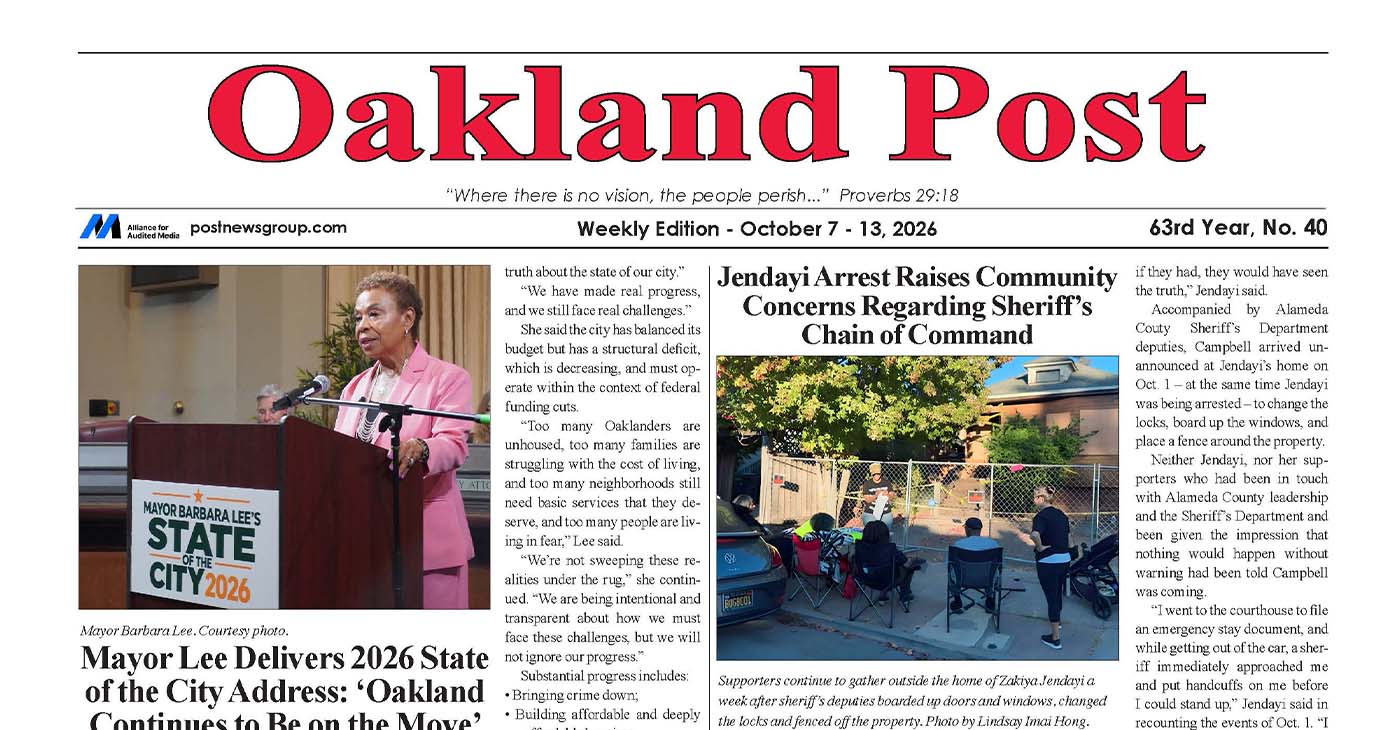
To enlarge your view of this issue, use the slider, magnifying glass icon or full page icon in the lower right corner of the browser window.
Activism
Oakland Post: Week of September 30 – October 6, 2026
The printed Weekly Edition of the Oakland Post: Week of September 30 – October 6, 2026


To enlarge your view of this issue, use the slider, magnifying glass icon or full page icon in the lower right corner of the browser window.



Mayor Barbara Lee Holds Special State of the City Address in Deep East Oakland

Practitioners of African Traditional Spirituality Offer Ancestral Reverence Ritual Oct. 31

It’s Time to Lose Weight Before the Holidays

Trader Vic’s Returns to Its Oakland Roots

Oakland Coal Terminal Backed by Trump Would Be Bigger, Dirtier Than Promised, Says Report

Opponents Smear Effective African American Transit Director as Election Nears

Oakland Post: Week of October 14 – 20, 2026

OP-ED: The Black Church Writes AI’s Next Chapter

OP-ED: The Black Church Writes AI’s Next Chapter

WCCUSD Joins Statewide Organic School Food Purchasing Cooperative

Democrats, Community Groups Back Measure EE to Change How Oakland Is Governed

Four Tips to Help You Plan a Holiday “Staycation”

Veterans Housing Project Proposed for South Richmond
PRESS ROOM: Transformative Justice Coalition 2026 Voting Rights Champion Awards Reception ‘Yesterday Is Today: The Battle For Voting Rights

Mayor Lee Delivers 2026 State of the City Address: ‘Oakland Continues to Be on the Move’

Misnamed ‘Parent’ PAC Seeks to Influence Oakland School Board Elections

Poll: Becerra Widens His Lead Over Hilton; Californians Split on Wealth Tax

Oakland Post: Week of September 9 – 15, 2026

Listening as a Lifeline: A Doula’s Witness to Black Maternal Health

County Office of Education Says OUSD Finances Are Getting Healthier, Materially Stronger

Richmond Tiny House Village Farm & Garden Set to Open Gates on Sept. 26

Mayor Lee Announces $1 Million Kaiser Permanente Grant for Pilot Program to Address Homelessness, Clean Up Public Spaces throughout Oakland

Latest Massacre in Haiti Reveals Cruelty U.S. Deportations

OPINION: Nolan Wells’ Death One of Several Signifying Racial Terror Lives on in U.S. South

Zakiya Jendayi Arrested, Locked Out of Home by Sheriff’s Deputies

BLACspace Cooperative Invites Bay Area to Experience Oakland’s Black Cultural Ecosystem Through a BLAC Map Tour + Party

Doulas Are Helping Black California Moms Navigate Pregnancy–Even as High Mortality Rates Persist

Oakland Post: Week of September 16 – 22, 2026

Oakland People’s Arms Embargo Coalition Demands End to Military Shipments Thru Oakland

Democratic Clubs Interview Candidates for Oakland School Board

The Conversation With Al McFarlane 6/23/26

Media Monday 6/22/26

LIVE! ASK ALMA! — TUES. 6.23.26 7PM EST

Car Buying Secrets: 4 Hidden Checks Before You Sign!

Is This 550 HP Charger Worth YOUR Money? AutoNetwork Review

Celebrating Juneteenth – Frederick Douglass on education and resistance

LIVE! — ASK ALMA! — TUES. 6.19.26 7PM EST

Hyundai Ioniq 5 Parking, Safety, and 360 View #shorts

2025 Ioniq 5 New Wiper & Powerful Performance! #shorts

Electric SUV Range: Is 259 Miles Enough? #shorts

EV Charging: How Fast Can You Charge an Electric Vehicle? #shorts

Biometric Cooling… Messaging Seats…Come on! 2025 Infiniti QX80 Autograph 4WD

Charged Up: Witness the Magic of a Fully Electric Car! #shorts

Range Rover Sport PHEV Included…: See What’s Inside This Luxury SUV! #shorts

Invisible Hood View: Perfect Parking with X-Ray Vision! #shorts
-
 Economy4 weeks ago
Poll: Becerra Widens His Lead Over Hilton; Californians Split on Wealth Tax
-
 Black History3 weeks ago
Listening as a Lifeline: A Doula’s Witness to Black Maternal Health
-
 Business4 weeks ago
County Office of Education Says OUSD Finances Are Getting Healthier, Materially Stronger
-
 Lead Story3 weeks ago
Zakiya Jendayi Arrested, Locked Out of Home by Sheriff’s Deputies
-
 Art4 weeks ago
BLACspace Cooperative Invites Bay Area to Experience Oakland’s Black Cultural Ecosystem Through a BLAC Map Tour + Party
-
 Black History4 weeks ago
Doulas Are Helping Black California Moms Navigate Pregnancy–Even as High Mortality Rates Persist
-

 Business4 weeks ago
From Historic Memories to New Possibilities: Oakland Celebrates Coliseum 60
-

 Community4 weeks ago
Asm. Corey Jackson Announces Launch of 24-Hour Childcare in His District
