
#NNPA BlackPress
Meet Birmingham’s Nicole LaMont: Deaf, Scientist, Social Media Influencer
By Je’Don Holloway-Talley For The Birmingham Times Nicole LaMont was like any typical adolescent—fully functioning limbs, faculties, and all five senses. That changed for her at age 12. “It was roughly 3 a.m. when I woke up deaf. Kind of like when someone suddenly turns the TV off when you’re sleeping, so the sudden silence […]
The post Meet Birmingham’s Nicole LaMont: Deaf, Scientist, Social Media Influencer first appeared on BlackPressUSA.


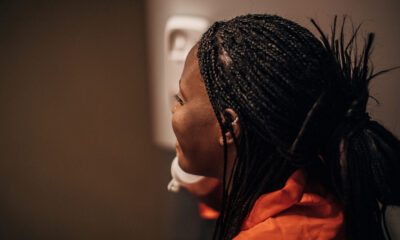
Nicole LaMont, is a medical laboratory scientist with an impressive social media following. She is also a former Miss Deaf Alabama. (Amarr Croskey, For The Birmingham Times)
” data-medium-file=”https://www.birminghamtimes.com/wp-content/uploads/2023/11/NicoleLaMont-7-300×200.jpg” data-large-file=”https://www.birminghamtimes.com/wp-content/uploads/2023/11/NicoleLaMont-7-1024×683.jpg” />
By Je’Don Holloway-Talley
For The Birmingham Times
Nicole LaMont was like any typical adolescent—fully functioning limbs, faculties, and all five senses. That changed for her at age 12.
“It was roughly 3 a.m. when I woke up deaf. Kind of like when someone suddenly turns the TV off when you’re sleeping, so the sudden silence wakes you up, … the silence jolted me,” LaMont recalled. “I first made some clicking sounds with my tongue and couldn’t hear it, so then I knocked on my nightstand and couldn’t hear that either.
“Then I thought perhaps I was dreaming and contemplated trying to go back to sleep and waking up for real—or running screaming to my mom. … Oddly, I wasn’t immediately panicked. I was more confused. I didn’t understand why it was so quiet.”
Doctors did not initially believe LaMont’s claim of deafness. She vividly remembers the trip to the emergency room and the worry etched on her mother’s face. “I saw multiple doctors and had tests done,” she said.
Eight months later and after dozens of tests, the cause behind LaMont’s sudden hearing loss was diagnosed. She had developed a rare autoimmune condition called neurosarcoidosis, which causes inflammation and abnormal cell deposits in any part of the nervous system: the brain, spinal cord, muscles, or peripheral nerves. LaMont’s bout with the condition resulted in bilateral deafness, meaning she was permanently deaf in both ears.
LaMont is a medical laboratory scientist for the Birmingham Veterans Affairs (VA) Medical Center, where she is responsible for performing scientific testing on samples in areas like microbiology, hematology, and urinalysis, as well as for reporting results to physicians. She also has an impressive social media following, with more than 65,000 followers on Instagram, 79,000 on Facebook, and growing audiences on YouTube and TikTok.
“I am still astonished by my following. The most popular videos that seem to get the most views are [the ones teaching] medical signs,” said LaMont, who answered her interview questions for this story via email.
“There are so many nurses and doctors who want to be able to have open communication with their patients,” she explained. “[As a member of the deaf community], it is such a relief when we see our nurses and providers attempting to make our visits less stressful and more inclusive.”
After being asked to teach American Sign Language (ASL) for many years, LaMont decided in October 2022 to post some fun, basic ASL videos on Facebook Instagram, and YouTube for family and friends. “Shortly thereafter, it took off and led me to the following and platform I have now,” she said.
Best of Both Worlds
At age 13, when LaMont learned that she wouldn’t regain her hearing, she had a procedure to get a cochlear implant (CI), which is a surgically implanted neuroprosthesis, or a device that is meant to replace missing biological functionality that might have been damaged as a result of an injury or a disease. It provides a person who has moderate to profound sensorineural hearing loss with sound perception.
“Without CIs, I am profoundly deaf and without any recognition of sound. With my CIs, while I am still considered profoundly deaf, they give me the ability to hear sound in the way I remember sound to be prior to my deafness. I do still miss some words here and there, but I have the best of both worlds,” she said.
Initially, LaMont rejected ASL. Her family tried to teach her at home, as well as encourage her to take classes at Auburn University Montgomery (AUM) and the Vocational Rehabilitation Service Blind and Deaf Division, which is made available through the Alabama Department of Rehabilitation Services (ADRS). Everyone in LaMont’s family took classes—except her.
“I was embarrassed to sign in public,” she said. “I was getting bullied in school. My so-called friends were now mocking me and would throw up fake sign language in my face to tease me.”
To make matters worse, LaMont was also humiliated before a classroom of her peers by her own teacher.
“I had always completed my work early and would doodle and draw while sitting in silence because I was deaf and had no interpreter, and [the teacher] got mad at me for looking down at my notebook. … He complimented my drawing skills and then made me go stand in front of the class.
“[When I got to the front], he covered his mouth with his hand, so I couldn’t read his lips, and said something. Then he uncovered [his mouth] and told me to repeat to the class what he just said. I just stood there mortified, and then I burst into tears. … This was just a few months after I had woken up deaf,” LaMont remembered.
Importance of Representation
Instances such as those taught LaMont the importance of representation and advocacy for those with special needs. She doesn’t remember many positive hearing-impaired role models during her adolescent years, which can be a crucial time for preteens and their sense of identity.
She does, however, recall the impact of Disney’s “The Little Mermaid” series and a three-part episode titled “Wish Upon a Starfish,” during which Ariel, the mermaid and main character in the franchise, meets what LaMont perceived as “a Black mermaid at the time, but she was really Latina. … Her name was Gabriella, she had a purple fin, my favorite color, and she was deaf. She used very accurate ASL in the cartoon, and that was my first time seeing a deaf person, let alone [a deaf] person of color portrayed on TV.”
Eventually, LaMont saw that deaf wasn’t a bad word. She embraced ASL and became fluent in less than four weeks after taking classes at Gallaudet University (GU), a private federally chartered university in Washington, D.C., for the education of the deaf and hard of hearing.
She earned a Bachelor of Science degree in biology, from GU in 2008, a Bachelor of Science degree in medical laboratory science from AUM in 2016, and a Master of Science degree in clinical pathology from the University of Alabama at Birmingham (UAB) in 2020.
During her collegiate years, the Montgomery, Alabama, native would become Miss Deaf Alabama (2009–2011), Miss Black Deaf D.C., and Miss Black Deaf Student Union.
“My platform was to bridge the gap between the deaf and hearing communities,” said LaMont. “[Using my platform], I advocated for accessibility to entertainment and for other public settings to have open [captioning, which are permanently visible on the screen], and closed captioning, [which can be turned off], in movie theaters, waiting rooms. … I also encourage hearing parents of deaf children to strive for open communication for their children using ASL, in addition to whatever hearing devices the family feels fit their child’s needs.”
“Hearing devices are wonderful, but they are technology and man-made,” she added. “ASL is always going to be there and won’t fail. It won’t run out of batteries and does not depend on external energy other than the physical.”
Science and Medicine
LaMont always seemed destined to become a laboratory scientist. The Birmingham resident has a twin sister, Monique, and an older brother, Mikal.
“My older brother was always mixing potions and really into science. He had his own little microscope and everything, and I followed everything he did,” said LaMont. “I’m one of the very few people who can look back at her 5-year-old diary and see that a dream became reality. In my earliest writing, I wrote, ‘I’m going to be a scientist.’ I was naturally drawn to shows like ‘ER’ or anything that had to do with medicine.”
Science and medicine run in the family. LaMont’s mother is a retired psychiatric nurse practitioner, and her twin sister followed in their mother’s footsteps and is a psychiatric nurse practitioner who also has served in the U.S. Air Force. Her maternal uncle is a retired nurse anesthetist, her grandmother is a retired registered nurse, and her cousins on her dad’s side are in the medical field.
“I’ve always been surrounded by those who study medicine,” she said.
In addition to being surrounded with science and medical experts, LaMont was influenced by a law enforcement professional. Her father is a retired controls worker, who operated and maintained the security and integrity at a detention center via the security system located at the central control facility. At retirement, he was a control worker for the juvenile courts in Montgomery.
“That’s why we were such good kids,” she joked.
You can learn more about Nicole LaMont via social media on Instagram (@signingwithnicole) Facebook: (https://www.facebook.com/nictwin1), YouTube (@ndlamont01) and TikTok (@nictwin1).
This article originally appeared in The Birmingham Times.
The post Meet Birmingham’s Nicole LaMont: Deaf, Scientist, Social Media Influencer first appeared on BlackPressUSA.








#NNPA BlackPress
Study: Waiting Lists for Child Care Assistance Nearly Doubled
BLACKPRESS USA NEWSWIRE — “Since the expiration of tens of billions of dollars in federal child care funding in 2023 and 2024, an already fragile child care system has been pushed even closer to the brink.”
The post Study: Waiting Lists for Child Care Assistance Nearly Doubled appeared first on BlackPressUSA.


By National Women’s Law Center
The National Women’s Law Center released its annual State Child Care Assistance Policies report, finding that the number of children placed on waiting lists for federally funded child care assistance nearly doubled between 2024 and 2025 — and that number has only continued to grow.
The report serves as a key resource for state lawmakers, advocates, and policymakers by tracking state child care assistance policies and identifying where states are strengthening support for families and early educators — or falling behind.
“This deeply troubling increase in the number of children on child care waiting lists is the result of a failure to invest in this crucial sector,” said Karen Schulman, senior director of state child care policy and author of the report. “Since the expiration of tens of billions of dollars in federal child care funding in 2023 and 2024, an already fragile child care system has been pushed even closer to the brink.”
Key findings in the report related to waiting lists for child care assistance include:
• 17 states had waiting lists or a freeze on intake for child care assistance in February 2025, up from 13 states in February 2024.
• Approximately 106,700 children nationwide were added to waiting lists between February 2024 and February 2025, bringing the total to 225,500 children in February 2025 — a 90 percent increase compared to February 2024.
• The numbers climbed even further between February 2025 and summer/fall 2025, with more than 175,000 additional children added to state waiting lists in just a few months — a 78 percent increase.
• At least seven states newly began placing families on waiting lists or freezing intake, while at least 10 additional states saw their waiting lists grow, after February 2025.
The report also includes state-by-state data on key child care assistance policies, including income eligibility limits, parent copayments, provider payment rates, and eligibility policies for parents searching for work.
Click the link to learn more: Warning Signs: State Child Care Assistance Policies 2025.
The post Study: Waiting Lists for Child Care Assistance Nearly Doubled appeared first on BlackPressUSA.

#NNPA BlackPress
Venus Williams Calls a Sabalenka Exit a Tragedy
ROLLING OUT — Crucially, Williams did not read the comment as a real farewell. She said she did not believe Sabalenka truly wanted to leave, calling such an outcome a loss for both the player and the sport.
The post Venus Williams Calls a Sabalenka Exit a Tragedy appeared first on BlackPressUSA.
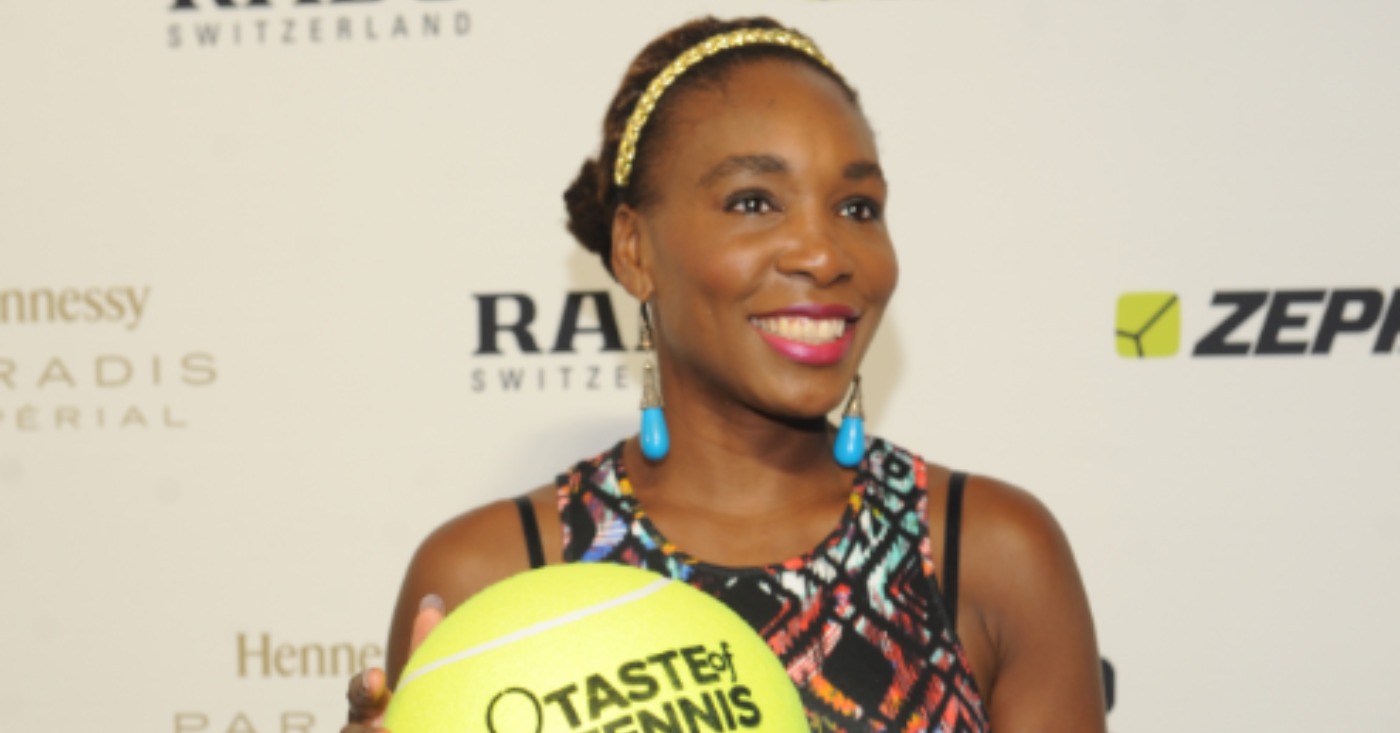
The seven-time major champion read frustration, not a real goodbye, in the world No. 1’s words
By David Kesiena | Rolling Out
When the world’s top-ranked player said she wanted to walk away from the sport, Venus Williams chose empathy over alarm.
Aryna Sabalenka’s blunt remark after her French Open quarterfinal collapse rattled plenty of fans, but Williams heard something different in it. The seven-time Grand Slam champion treated the comment as the raw reaction of a hurting athlete rather than a serious signal about her future.
The collapse that triggered the comment
Sabalenka looked headed for a routine win over Diana Shnaider. She took the opening set 6-3 and built a commanding lead in the second, climbing to 4-1 and later serving for the match at 5-4 while sitting just two points from victory.
Then everything unraveled. Shnaider stormed back to steal the second set 7-5 and bageled the world No. 1 in the third, with Sabalenka dropping 12 of the final 13 games in gusty conditions that reached around 26 mph. The 3-6, 7-5, 6-0 result sent Shnaider into her first Grand Slam semifinal and extended Sabalenka’s long wait for a maiden Roland Garros title.

In the aftermath, Sabalenka did not soften her feelings. She told reporters she had no thoughts and no emotions left and felt like quitting on the spot. She described being stuck in a deep, dark mental hole during the match, unable to find her way back.
What Venus Williams said about Sabalenka
Williams reacted with understanding. She admitted the moment made her sad and said she had been swept up in Sabalenka’s emotions, feeling a surge of empathy for her. She praised the Belarusian for laying everything bare on court, where every feeling shows.
Crucially, Williams did not read the comment as a real farewell. She said she did not believe Sabalenka truly wanted to leave, calling such an outcome a loss for both the player and the sport. Rather than scold her, Williams offered a gentle observation about the rhythm of professional tennis. She suggested players might benefit from a little more time to gather themselves before stepping in front of the cameras, a quiet acknowledgment that athletes are routinely asked to dissect painful defeats before the sting has faded.
Sabalenka walks it back
The story did not end on that bleak note. Within days, Sabalenka signaled she was not actually quitting, framing the press-conference outburst as heat-of-the-moment honesty rather than a plan. At the time of the loss she had also left the door open, saying she would see how she felt in a few days and hoped to get back on track mentally. The walk-back lined up with how Williams had read the situation from the start.
It is not the first time a Paris quarterfinal has pushed Sabalenka to her limit. In 2024 she exited at the same stage and skipped her press conference entirely because of illness, with the tour later releasing her quotes on her behalf. The pattern underscores how heavily this particular tournament has weighed on her despite deep runs in recent years.
For now, attention shifts to the grass. Wimbledon offers Sabalenka a quick chance to reset, and a strong showing there would turn this French Open meltdown into a footnote rather than a turning point.
Originally published by Rolling Out — https://rollingout.com.
The post Venus Williams Calls a Sabalenka Exit a Tragedy appeared first on BlackPressUSA.
#NNPA BlackPress
COMMENTARY: Using Art, Healing, And Community to Transform Mental Health Dialogue
THE CAROLINIAN — Operating at the intersection of the arts and mental health, Darkness RISING uses music, storytelling, wellness programming, and community engagement to inspire healing while addressing barriers that have historically prevented many Black Americans from accessing mental health support.
The post COMMENTARY: Using Art, Healing, And Community to Transform Mental Health Dialogue appeared first on BlackPressUSA.

By Judaea Ingram | Special to The Carolinian
RALEIGH, N.C. – Music filled the air as families danced through the crowd, children gathered around activity stations, and community members explored wellness resources from local organizations. Black-owned businesses lined the streets while people stopped for chair massages, conversations, and moments of connection inside the wellness suite.
At the center of the event stood a simple but powerful reminder:
“You Matter.”
For Darkness RISING, those words represent far more than a slogan. They reflect the organization’s mission to break the stigma surrounding mental health in the Black community while creating spaces centered on healing, honesty, and hope.
Operating at the intersection of the arts and mental health, Darkness RISING uses music, storytelling, wellness programming, and community engagement to inspire healing while addressing barriers that have historically prevented many Black Americans from accessing mental health support.
The organization hosts a variety of programs and events throughout the year, including block parties, wellness workshops, mixers, kickoff events, community classes, and Darkness RISING: Live — a free annual arts and wellness festival now celebrating its ninth year.
The festival combines entertainment with healing-centered resources, featuring live music, dancing, singing, food trucks, Black vendors, children’s activities, mental health resources, wellness spaces, and opportunities for open conversations about mental health.
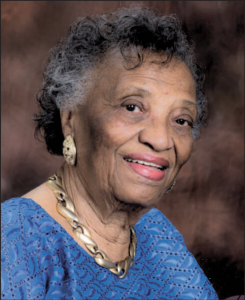
While the events may feel celebratory on the surface, organizers say the deeper purpose is creating safe spaces where people can feel comfortable discussing mental health without fear of judgment.
Darkness RISING also provides free nationwide resources, including a Black Mental Health Resource Packet, a Black Mental Health Provider Database, and its “Find Me a Therapist” initiative, which helps connect individuals with culturally competent care.
The organization’s work is rooted in addressing longstanding inequities that continue impacting mental health access within Black communities.
Historically, segregation, redlining, racial discrimination, incarceration, poverty, and unequal healthcare access have contributed to higher rates of behavioral health challenges while simultaneously limiting access to proper treatment and support. Darkness RISING approaches those issues through what organizers describe as a transformative justice lens, focusing on healing rather than punishment and creating equitable wellness opportunities for marginalized communities.
Its REBUILD program specifically supports justice-involved and formerly incarcerated people of color through free therapy and wellness support, while the REBUILD Youth program focuses on young people impacted by Adverse Childhood Experiences, also known as ACEs.
For Rudolph, therapy became life-changing after decades of incarceration and years of rejection after returning home.
“Came home in 2015, started my own computer company, investing in real estate, did the normal thing and got some jobs here and there and was met with rejection after rejection and people telling me I am not a good person,” Rudolph shared. “Even had a rejection in church.”
He said one of the hardest battles became overcoming the mental barriers created during incarceration.
“I got in touch with a couple of friends, and they explained to me how I had to get over the mental hurdles and get rid of the way my prison mindset was in order to survive and become successful,” he said.
Rudolph later moved to North Carolina hoping for a fresh start, but the struggle continued.
“Things were looking bad,” he said. “Could not get a job. The struggle was real.”
Eventually, therapy and support through organizations like Darkness RISING helped begin his healing process. He said working alongside other justice-involved men through therapy gave him the ability to rebuild mentally while finding community with people who understood his experiences.
Stories like Rudolph’s reflect the foundation behind Darkness RISING’s mission: ensuring people feel seen, supported, and worthy of healing regardless of their background or circumstances.
Community members who attend the organization’s events often describe them as emotionally transformative.
Some participants say Darkness RISING encouraged them to seek therapy for the first time, while others say the organization gave them a safe space to openly discuss struggles they previously kept hidden.
“I have been encouraged by the beautiful, generous, brave and open individuals who come together and use their talents to create art, share personal experiences and provide hope to those who may be struggling with mental health,” one participant shared.
By combining art, wellness, education, and community outreach, Darkness RISING continues changing how mental health conversations happen within the Black community.
Not through silence.
But through healing, honesty, connection, and joy.
Originally published by The Carolinian — https://caro.news.
The post COMMENTARY: Using Art, Healing, And Community to Transform Mental Health Dialogue appeared first on BlackPressUSA.

WORK FROM HOME
Home-based business with potential monthly income of $10K+ per month. A proven training system and website provided to maximize business effectiveness. Perfect job to earn side and primary income. Contact Lynne for more details: Lynne4npusa@gmail.com 800-334-0540


Oakland Director Boots Dazzles Once Again in ‘I Love Boosters’

After 10-Year Wait, Fillmore Heritage Center Reopens in San Francisco

COMMENTARY: Black Music is the Sound of Black Freedom: Let Us Reclaim Both This Juneteenth

Oakland Post: Week of June 3 – 9, 2026

Study: Waiting Lists for Child Care Assistance Nearly Doubled

Venus Williams Calls a Sabalenka Exit a Tragedy

COMMENTARY: Using Art, Healing, And Community to Transform Mental Health Dialogue

Uptown Music Theatre Summer Camp Returns to Inspire the Next Generation of Performers

5 Cleveland Police Officers Injured, Gunfire Erupts During East Side Pursuit

15-YEAR-OLD COLUMBUS GIRL DIES, Community Mourns as Authorities Urge Water Safety Awareness

Let’s Talk Karmelo Anthony!

2026 World Cup is Here and Atlanta is Ready For It

COMMENTARY: What Andrew Young Reminded Me About Baltimore

COMMENTARY: When Politics Intersects with Professional Sports

K4: Crucial Driving Advice BEFORE You Buy! #shorts

Book Review: Books for College-Bound Students

Against All Odds: Mary Jackson’s Journey to NASA Engineer

Q&A with Steven Bradford: Why He Wants Your Vote for California Insurance Commissioner

OPINION: The Fire of Oakland’s Justin Jones

The Marin City Flea Market Is Back

California Launches Free Diaper Program for Newborns Statewide

The Ladies of Delta Sigma Theta Hold Day of Advocacy at the Capitol in Sacramento

EBMUD Enshrines the Legacy of its First Black Board Member William ‘Bill’ Patterson

Oakland Mayor Pushes Charter Overhaul to Clarify Roles in City Government, Increase Accountability and Improve Service Delivery

Mayor Barbara Lee Declares ‘Delroy Lindo Day,’ Presents Acclaimed Actor with Key to the City

Oakland Post: Week of May 6 – 12, 2026

How Is AI Affecting California? The State Wants You to Share Your Story

Rep. Kamlager-Dove Introduces Bill to Protect Women in Custody After Reports Detailing Miscarriages and Neglect

OP-ED: Small Businesses Need Minnesota to Act on Pass-Through Tax Policy

Snoop Dogg Celebrates 10 Til’ Midnight at the Compound

Hyundai Ioniq 5 Parking, Safety, and 360 View #shorts

2025 Ioniq 5 New Wiper & Powerful Performance! #shorts

Electric SUV Range: Is 259 Miles Enough? #shorts

EV Charging: How Fast Can You Charge an Electric Vehicle? #shorts

Biometric Cooling… Messaging Seats…Come on! 2025 Infiniti QX80 Autograph 4WD

Charged Up: Witness the Magic of a Fully Electric Car! #shorts

Range Rover Sport PHEV Included…: See What’s Inside This Luxury SUV! #shorts

Invisible Hood View: Perfect Parking with X-Ray Vision! #shorts

AI Is Reshaping Black Healthcare: Promise, Peril, and the Push for Improved Results in California

ESSAY: Technology and Medicine, a Primary Care Point of View

Sanctuary Cities

The RESISTANCE – FREEDOM NOW

STATE OF THE PEOPLE: Freddie

ECONOMIC BOYCOTT DAY!!!!!

I told You So
-
 Advice4 weeks ago
Book Review: Books for College-Bound Students
-
 Bay Area4 weeks ago
Q&A with Steven Bradford: Why He Wants Your Vote for California Insurance Commissioner
-
 Activism4 weeks ago
OPINION: The Fire of Oakland’s Justin Jones
-
 Activism4 weeks ago
California Launches Free Diaper Program for Newborns Statewide
-
 Activism4 weeks ago
The Ladies of Delta Sigma Theta Hold Day of Advocacy at the Capitol in Sacramento
-
 Bay Area4 weeks ago
Oakland Mayor Pushes Charter Overhaul to Clarify Roles in City Government, Increase Accountability and Improve Service Delivery
-
 Bay Area4 weeks ago
How Is AI Affecting California? The State Wants You to Share Your Story
-
 Activism4 weeks ago
Rep. Kamlager-Dove Introduces Bill to Protect Women in Custody After Reports Detailing Miscarriages and Neglect
