
Activism
COMMENTARY: New Book Examines Life of George Floyd in Context of Racism, Oppression in U.S.
At a time when politicians are making it illegal for educators to acknowledge that systemic racism exists, Samuels and Olorunnipa document in painful detail the ways in which racially discriminatory policies on housing, education, health care, addiction, policing and more contributed to “a life in which Floyd repeatedly found his dreams diminished, deferred, and derailed—in no small part because of the color of his skin.”

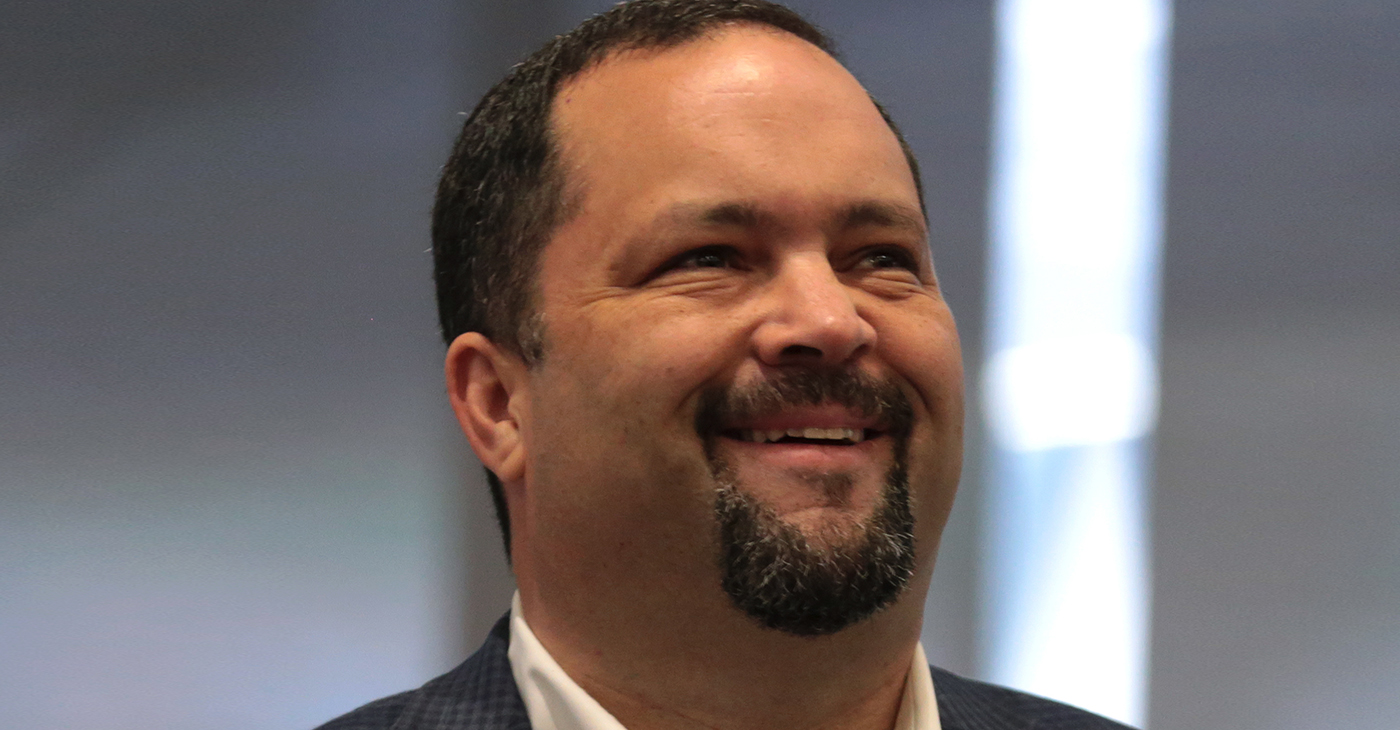
By Ben Jealous
George Floyd was murdered by a Minneapolis police officer just over two years ago. His killing sparked a movement to end unjustified police killings and racist law enforcement practices. Sadly, the killings have not stopped. The George Floyd Justice in Policing Act was blocked by Senate Republicans last year. The struggle continues in communities large and small.
During racial justice protests that sprung up after video of Floyd’s murder spread around the world, millions of people spoke his name as they demanded accountability and justice. Now, a remarkable book examines Floyd’s life and death in the context of our history and what one of the authors calls the “complex, tangled web” created by racism in this country.
“His Name Is George Floyd: One Man’s Life and the Struggle for Racial Justice” was written by Washington Post reporters Robert Samuels and Toluse Olorunnipa. It draws on the reporting of their colleagues and on intimate interviews with Floyd’s family, romantic partners, and circle of friends.
At a time when politicians are making it illegal for educators to acknowledge that systemic racism exists, Samuels and Olorunnipa document in painful detail the ways in which racially discriminatory policies on housing, education, health care, addiction, policing and more contributed to “a life in which Floyd repeatedly found his dreams diminished, deferred, and derailed—in no small part because of the color of his skin.”

“For example,” Samuels says, “you could not disentangle police departments’ disproportionate use of force against African Americans from the junk science that is still taught about Black people being more resistant to pain. We could not ignore that those same instincts led to the inadequate mental health treatment in George Floyd’s life, nor could we separate that society both encouraged George Floyd to bulk up to pursue his athletic dreams and then stereotyped him as dangerous when he was off the field.”
The book doesn’t try to make Floyd a saint. It doesn’t have to. He was a human being. He did nothing to deserve being murdered on the street by an abusive police officer who shouldn’t have been wearing a badge.
“His Name Is George Floyd” is worth reading for many reasons. It gives us a fuller picture of the person George Floyd was. It introduces us to many people who loved him and sought a measure of justice for his murder. And it points to some important facts about policing in this country.
One is the need for accountability. Chauvin had a record of violent behavior. When abusive cops are not held accountable, more people will be subjected to their violence.
Another point is that policing is a local issue requiring local solutions. National policies, like those in the George Floyd Justice in Policing Act, can help. But holding violent cops accountable, getting them off the streets, or better yet, preventing them from getting hired in the first place, all require change at the local level.
People For the American Way spent the two years since Floyd’s murder developing a road map for transforming public safety. We looked at the research. We talked to criminologists, public officials, clergy and other community activists, and members of law enforcement. “All Safe: Transforming Public Safety” is a guide for public officials and community activists seeking to make their communities safer.
Among the essential steps to make policing more just and more effective at the same time: improving recruiting to weed out potentially dangerous cops, holding violent officers accountable, and getting unfit officers off the force. Also, importantly, restructuring public safety systems to reduce the unnecessary involvement of armed officers in situations where they are not needed and for which they are not trained is good for cops as well as communities.
The authors of “His Name Is George Floyd” describe optimism in the face of our history as both a defense mechanism and a means of survival. I am optimistic that we can end unjust police killings. I am optimistic that we can build the uncomfortably large coalitions it will take.
“Our book makes the argument that if we can demonstrate step-by-step how this country’s history with racism continues to shape people today, then we can continue the good work of dismantling systemic racism,” Samuels told me in an e-mail. “We have to connect the theory with the practice.”
That job belongs to all of us. We know what kind of changes will make our communities safer. Let’s organize, city by city and town by town, to make it happen.
Ben Jealous serves as president of People For the American Way and Professor of the Practice at the University of Pennsylvania. A New York Times best-selling author, his next book “Never Forget Our People Were Always Free” will be published by Harper Collins in December 2022.









Activism
Oakland Post: Week of September 16 – 22, 2026
The printed Weekly Edition of the Oakland Post: Week of September 16 – 22, 2026

To enlarge your view of this issue, use the slider, magnifying glass icon or full page icon in the lower right corner of the browser window.
Activism
Oakland Post: Week of September 9 – 15, 2026
The printed Weekly Edition of the Oakland Post: Week of September 9 – 15, 2026

To enlarge your view of this issue, use the slider, magnifying glass icon or full page icon in the lower right corner of the browser window.
Activism
Oakland Post: Week of September 2 – 8, 2026
The printed Weekly Edition of the Oakland Post: Week of September 2 – 8, 2026
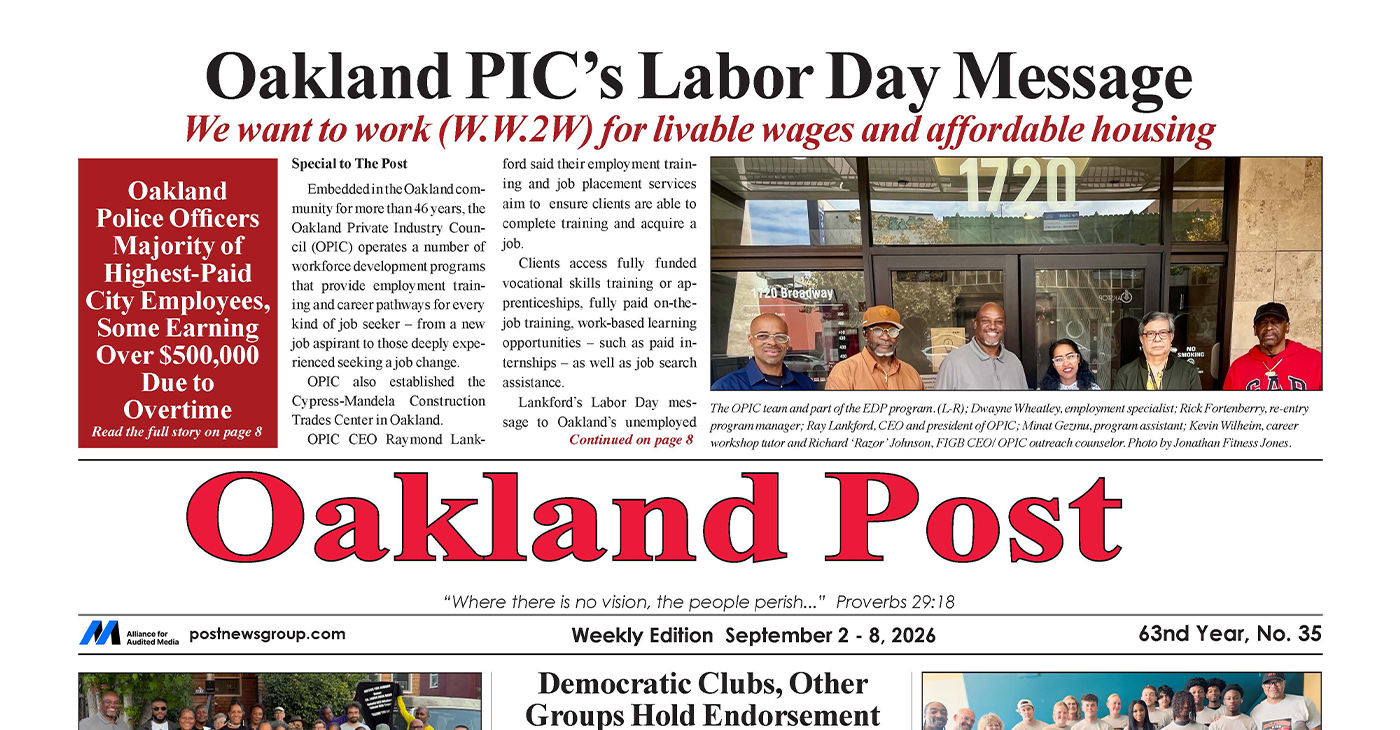
To enlarge your view of this issue, use the slider, magnifying glass icon or full page icon in the lower right corner of the browser window.



Doulas Are Helping Black California Moms Navigate Pregnancy–Even as High Mortality Rates Persist

Newsom Signs Addictive Social Media Law to Protect Kids

On Your November Ballot: Prop 38 Would Allocate $8.4 Billion to Immunology and Immunotherapy Funding

Ask California: Golden State Releases New AI Chatbot

Asm. Isaac Bryan’s Bill Banning California Police From ICE Side Jobs Reaches Newsom’s Desk

Assemblymember LaShae Sharp-Collins’s Bill Would Pause Law Enforcement’s Use of Shock Gloves Pending Study

BOOK REVIEW: ‘Laws of Solomon’ Reveals Tender Heart of Former Child Soldier

OPINION: The New American Fear – From 9-11 to AI

Passing for White, Fighting for Black America: The Courage of Walter White

Oakland People’s Arms Embargo Coalition Demands End to Military Shipments Thru Oakland

Barbara Lee Mourns Gloria Steinem, Remembers a Friendship Rooted in Equality

Event Preview: ‘Fashion v. Fascism’ – A Runway Revolution Is Coming to the Bay Area

Two Looming Threats Every Alameda County Elder Should Know About

Oakland Mayor Reads to Children at Bookout Block Party at Marcus Books Store

Tradition Comes to the Streets in 11th Annual Black-Eyed Pea Festival at the Freedom Farmers Market

Less Affluent School Districts, Including Sacramento City, Face Threat of State Takeover

ESSAY: California Can Close Its Colorectal Cancer Gap

California Hispanic Chambers of Commerce Unveils: ‘Powering the Future’ Theme for 47th Annual Statewide Convention

Four Candidates, Including Incumbent Barbara Lee, Qualify for Oakland Mayor’s Race

Oakland Post: Week of August 12 – 18, 2026

From Blueprint to Breakthrough: Tackling Affordable Housing in Oakland

Oakland Observes Black August with Block Parties, Film Showings, Workshops

COMMENTARY: Why Local School Tax Measure G1 Will Not Be on the November Ballot

Standoff for Justice: Our Homes Are Worth Fighting For

Returning to Its Roots, the Oakland Black-Eyed Pea Festival Partners with the Freedom Farmers Market Sept. 12

NPRC Scores First Advocacy Victory: David Shaw Finally Gets His Wish to ‘Go Home’

Oakland Post: Week of August 26 – September 1, 2026

Frontier Airlines’ Return to Oakland Airport Brings Flights, Jobs and Opportunity

Gubernatorial Candidate Steve Hilton Blasts California New Tire Rules; Newsom Hits Back

Chef Sharon Lee Blends Culinary Excellence, Education and Empowerment

The Conversation With Al McFarlane 6/23/26

Media Monday 6/22/26

LIVE! ASK ALMA! — TUES. 6.23.26 7PM EST

Car Buying Secrets: 4 Hidden Checks Before You Sign!

Is This 550 HP Charger Worth YOUR Money? AutoNetwork Review

Celebrating Juneteenth – Frederick Douglass on education and resistance

LIVE! — ASK ALMA! — TUES. 6.19.26 7PM EST

Hyundai Ioniq 5 Parking, Safety, and 360 View #shorts

2025 Ioniq 5 New Wiper & Powerful Performance! #shorts

Electric SUV Range: Is 259 Miles Enough? #shorts

EV Charging: How Fast Can You Charge an Electric Vehicle? #shorts

Biometric Cooling… Messaging Seats…Come on! 2025 Infiniti QX80 Autograph 4WD

Charged Up: Witness the Magic of a Fully Electric Car! #shorts

Range Rover Sport PHEV Included…: See What’s Inside This Luxury SUV! #shorts

Invisible Hood View: Perfect Parking with X-Ray Vision! #shorts
-
 Commentary4 weeks ago
Standoff for Justice: Our Homes Are Worth Fighting For
-
 Activism4 weeks ago
Oakland Post: Week of August 26 – September 1, 2026
-
 Business4 weeks ago
Frontier Airlines’ Return to Oakland Airport Brings Flights, Jobs and Opportunity
-
 Business4 weeks ago
Gubernatorial Candidate Steve Hilton Blasts California New Tire Rules; Newsom Hits Back
-
 Business4 weeks ago
Chef Sharon Lee Blends Culinary Excellence, Education and Empowerment
-

 Education4 weeks ago
Gov. Newsom’s Latest Appointees Include Sacramento Advocate for Formerly Incarcerated Students; State’s New Tech Chief
-

 Community4 weeks ago
Big City Mayors Ask for “Yes” Vote on Housing Bond Measure; Conservatives Say “No”
-

 Business4 weeks ago
Oakland Coliseum Project Opens Door for Small Businesses to Build Bigger
