
Bay Area
COVID-19 Surge in Marin Fueled By BA.2 Variant
The rise in COVID-19 cases has not been accompanied by a similar rise in hospitalizations for severe illness. Today there are no patients in intensive care for COVID-19 in any Marin hospital, and no deaths have been reported in over one month. Since the start of the pandemic each major variant has been more contagious than the last. At the same time, high vaccination rates, and now access to treatments, have significantly reduced the impact on hospitalizations and deaths.


Public Health focus shifting toward most vulnerable residents
Courtesy of Marin County
Marin County is experiencing a surge in COVID-19 cases fueled by the highly contagious Omicron BA.2 variant. Since the first week of April, when BA.2 became the dominant strain in Marin, case rates have tripled. As with prior surges, this has led to outbreaks in schools, long term care facilities and correctional institutions. Virus levels in wastewater confirm COVID-19 activity is increasing across the county.
Marin County Public Health attributes the current surge to two main factors — the characteristics of the newly emerging Omicron variants and the behavior of the community.
“Each variant is different,” said Dr. Matt Willis, Marin County Public Health Officer. “We’re learning in real time about this new strain, and what it does and doesn’t do. It’s very good at infecting people, including those who are vaccinated. But it’s not sending vaccinated people to the hospital.”
The rise in COVID-19 cases has not been accompanied by a similar rise in hospitalizations for severe illness. Today there are no patients in intensive care for COVID-19 in any Marin hospital, and no deaths have been reported in over one month. Since the start of the pandemic each major variant has been more contagious than the last. At the same time, high vaccination rates, and now access to treatments, have significantly reduced the impact on hospitalizations and deaths. Vaccination reduces risk of death by 90%, and treatment reduces risk an additional 90%. For the first time since the pandemic began, a goal of zero COVID deaths may be within reach.

People who were infected in the past and who are up to date with vaccination have more powerful immunity, acquired from infection and vaccine, and local data shows they are even better protected. This may explain why communities and regions with historically lower infection rates, such as the Bay Area, are seeing more cases now.
Marin County Public Health is committed to a balanced response to this surge and is focused on protecting our most vulnerable residents against severe illness and death. Public Health recommends that those over age 60 who also have a medical condition that increases risk, residents of any age who are immunocompromised, and unvaccinated residents take the following precautions:
- Prevent exposure to the virus: Consider avoiding non-essential indoor gatherings while transmission levels in the community remain high. If attending an indoor gathering, or in any indoor public setting, wear a well fitted KN-95 or N-95 mask.
- Get up to date with your vaccines: Being fully up to date with vaccinations is the most important protection against serious illness.
- Seek treatment if needed: Test for COVID if symptomatic (including allergy-like symptoms). If positive, promptly contact your healthcare provider to determine if you would benefit from COVID-19 treatment. Prescriptions for COVID treatments can be filled at most pharmacies across Marin.
The Omicron BA.2 variant is estimated to be at least 25% more infectious than the BA.1 strain and is better able to evade immune defenses against infection. Still, vaccinated individuals remain highly protected against serious illness. Among Marin County residents’ data show that vaccination reduces risk of hospitalization by 94%.
“The virus is changing, and our approach needs to shift as well,” said Dr. Willis. “It’s increasingly likely most of us will have a date with COVID, if we haven’t yet. The key is to be vaccinated and boosted before that happens, so we don’t end up seriously ill. Plus, we need to rally to prevent infections among the most vulnerable, and make sure they have access to treatment.”
Prior to attending any gathering, Marin County Public Health recommends everyone seek same day rapid antigen testing. People who test positive should stay at home and isolate, which further decreases the risk of asymptomatic or pre-symptomatic transmission to vulnerable residents.
Learn more about current COVID-19 activity in Marin County at Coronavirus.marinhhs.org










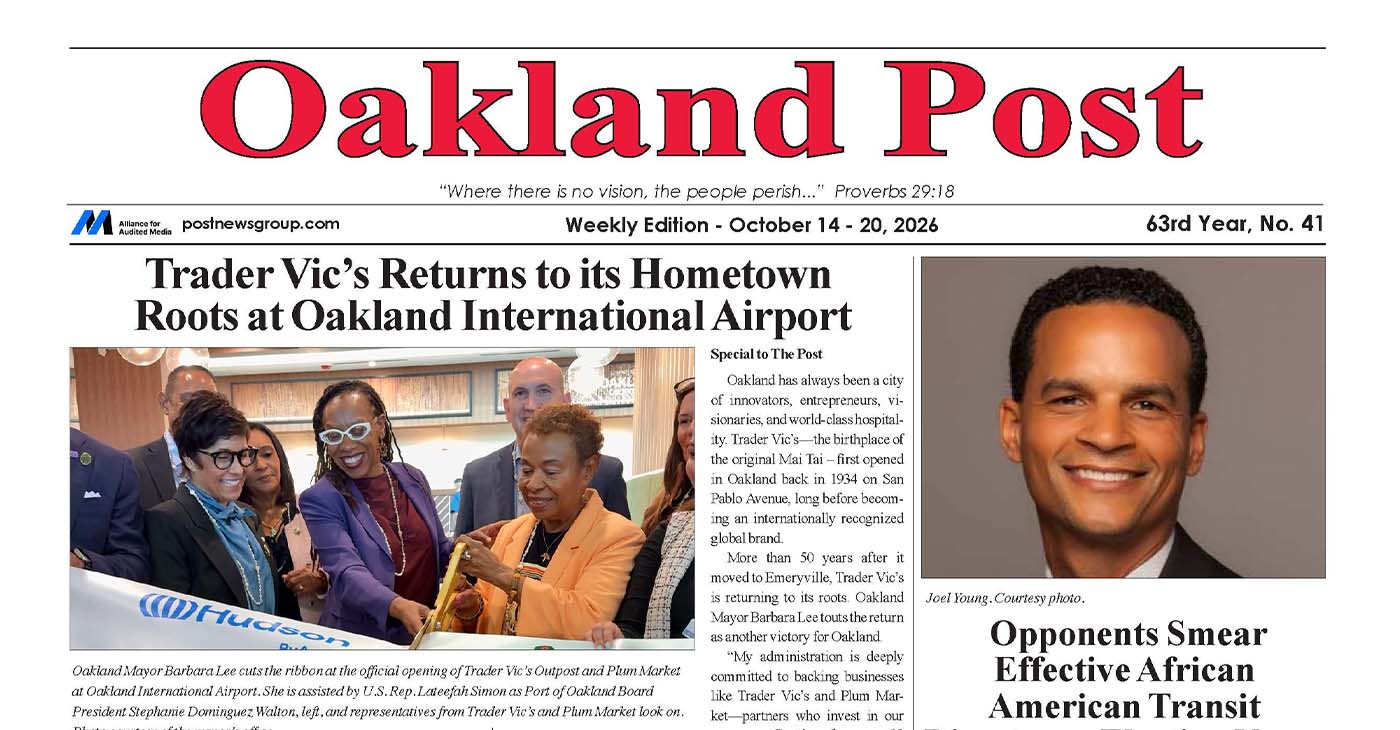
To enlarge your view of this issue, use the slider, magnifying glass icon or full page icon in the lower right corner of the browser window.
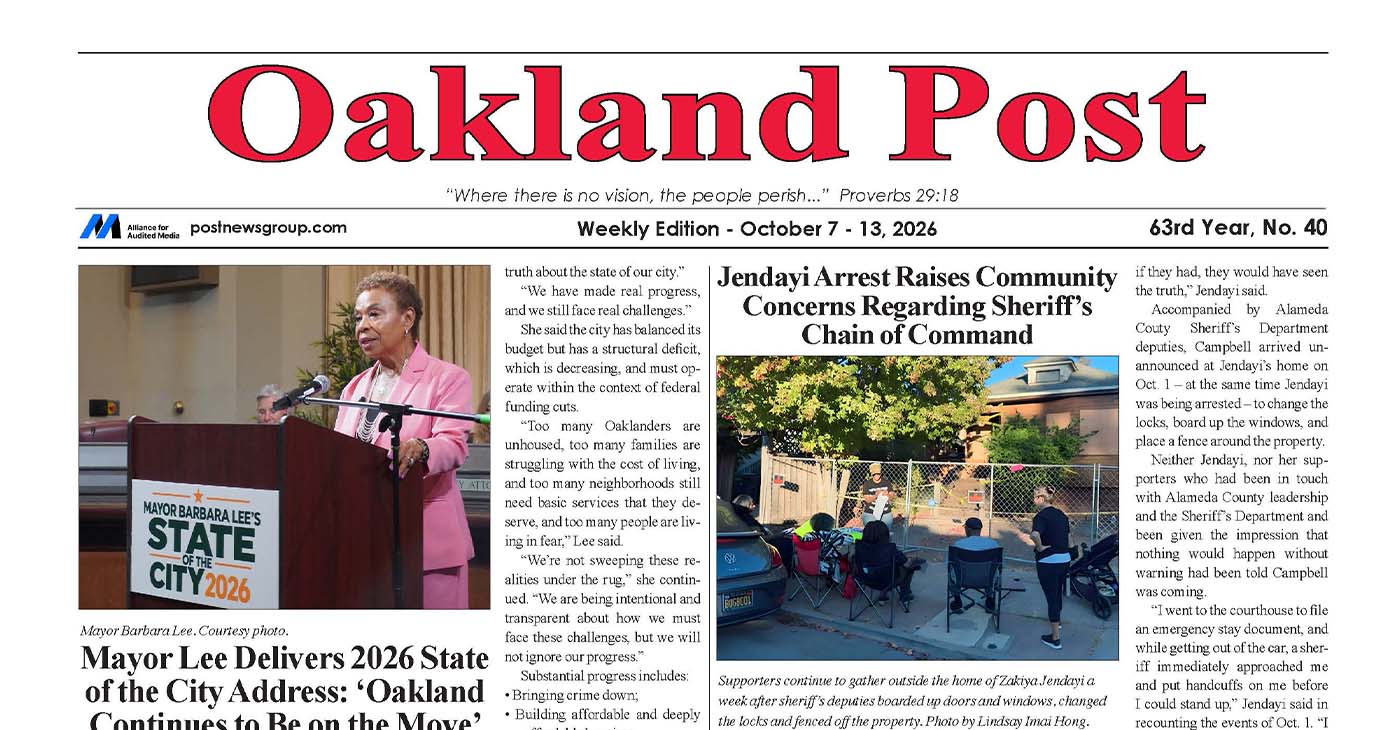
To enlarge your view of this issue, use the slider, magnifying glass icon or full page icon in the lower right corner of the browser window.
Activism
Oakland Post: Week of September 30 – October 6, 2026
The printed Weekly Edition of the Oakland Post: Week of September 30 – October 6, 2026

To enlarge your view of this issue, use the slider, magnifying glass icon or full page icon in the lower right corner of the browser window.



Mayor Barbara Lee Holds Special State of the City Address in Deep East Oakland

Practitioners of African Traditional Spirituality Offer Ancestral Reverence Ritual Oct. 31

It’s Time to Lose Weight Before the Holidays

Trader Vic’s Returns to Its Oakland Roots

Oakland Coal Terminal Backed by Trump Would Be Bigger, Dirtier Than Promised, Says Report

Opponents Smear Effective African American Transit Director as Election Nears

Oakland Post: Week of October 14 – 20, 2026

OP-ED: The Black Church Writes AI’s Next Chapter

OP-ED: The Black Church Writes AI’s Next Chapter

WCCUSD Joins Statewide Organic School Food Purchasing Cooperative

Democrats, Community Groups Back Measure EE to Change How Oakland Is Governed

Four Tips to Help You Plan a Holiday “Staycation”

Veterans Housing Project Proposed for South Richmond
PRESS ROOM: Transformative Justice Coalition 2026 Voting Rights Champion Awards Reception ‘Yesterday Is Today: The Battle For Voting Rights

Mayor Lee Delivers 2026 State of the City Address: ‘Oakland Continues to Be on the Move’

Misnamed ‘Parent’ PAC Seeks to Influence Oakland School Board Elections

Listening as a Lifeline: A Doula’s Witness to Black Maternal Health

Poll: Becerra Widens His Lead Over Hilton; Californians Split on Wealth Tax

Oakland Post: Week of September 9 – 15, 2026

County Office of Education Says OUSD Finances Are Getting Healthier, Materially Stronger

Richmond Tiny House Village Farm & Garden Set to Open Gates on Sept. 26

Mayor Lee Announces $1 Million Kaiser Permanente Grant for Pilot Program to Address Homelessness, Clean Up Public Spaces throughout Oakland

Latest Massacre in Haiti Reveals Cruelty U.S. Deportations

Zakiya Jendayi Arrested, Locked Out of Home by Sheriff’s Deputies

Doulas Are Helping Black California Moms Navigate Pregnancy–Even as High Mortality Rates Persist

OPINION: Nolan Wells’ Death One of Several Signifying Racial Terror Lives on in U.S. South

BLACspace Cooperative Invites Bay Area to Experience Oakland’s Black Cultural Ecosystem Through a BLAC Map Tour + Party

Oakland Post: Week of September 16 – 22, 2026

Oakland People’s Arms Embargo Coalition Demands End to Military Shipments Thru Oakland

Democratic Clubs Interview Candidates for Oakland School Board

The Conversation With Al McFarlane 6/23/26

Media Monday 6/22/26

LIVE! ASK ALMA! — TUES. 6.23.26 7PM EST

Car Buying Secrets: 4 Hidden Checks Before You Sign!

Is This 550 HP Charger Worth YOUR Money? AutoNetwork Review

Celebrating Juneteenth – Frederick Douglass on education and resistance

LIVE! — ASK ALMA! — TUES. 6.19.26 7PM EST

Hyundai Ioniq 5 Parking, Safety, and 360 View #shorts

2025 Ioniq 5 New Wiper & Powerful Performance! #shorts

Electric SUV Range: Is 259 Miles Enough? #shorts

EV Charging: How Fast Can You Charge an Electric Vehicle? #shorts

Biometric Cooling… Messaging Seats…Come on! 2025 Infiniti QX80 Autograph 4WD

Charged Up: Witness the Magic of a Fully Electric Car! #shorts

Range Rover Sport PHEV Included…: See What’s Inside This Luxury SUV! #shorts

Invisible Hood View: Perfect Parking with X-Ray Vision! #shorts
-
 Black History3 weeks ago
Listening as a Lifeline: A Doula’s Witness to Black Maternal Health
-
 Economy4 weeks ago
Poll: Becerra Widens His Lead Over Hilton; Californians Split on Wealth Tax
-
 Business4 weeks ago
County Office of Education Says OUSD Finances Are Getting Healthier, Materially Stronger
-
 Lead Story3 weeks ago
Zakiya Jendayi Arrested, Locked Out of Home by Sheriff’s Deputies
-
 Black History4 weeks ago
Doulas Are Helping Black California Moms Navigate Pregnancy–Even as High Mortality Rates Persist
-
 Art4 weeks ago
BLACspace Cooperative Invites Bay Area to Experience Oakland’s Black Cultural Ecosystem Through a BLAC Map Tour + Party
-

 Business4 weeks ago
From Historic Memories to New Possibilities: Oakland Celebrates Coliseum 60
-

 Community4 weeks ago
Asm. Corey Jackson Announces Launch of 24-Hour Childcare in His District
