
Activism
COMMENTARY: How History Will Be Made Again: Black History Month and the Supreme Court
It won’t be an easy time to be a justice committed to achieving justice for all. The court is now dominated by justices who are committed to a very different view of the Constitution. The Roberts court is the most pro-corporate court in history, ruling consistently to undermine protections for workers and the ability of the federal government to regulate and punish corporate wrongdoing.

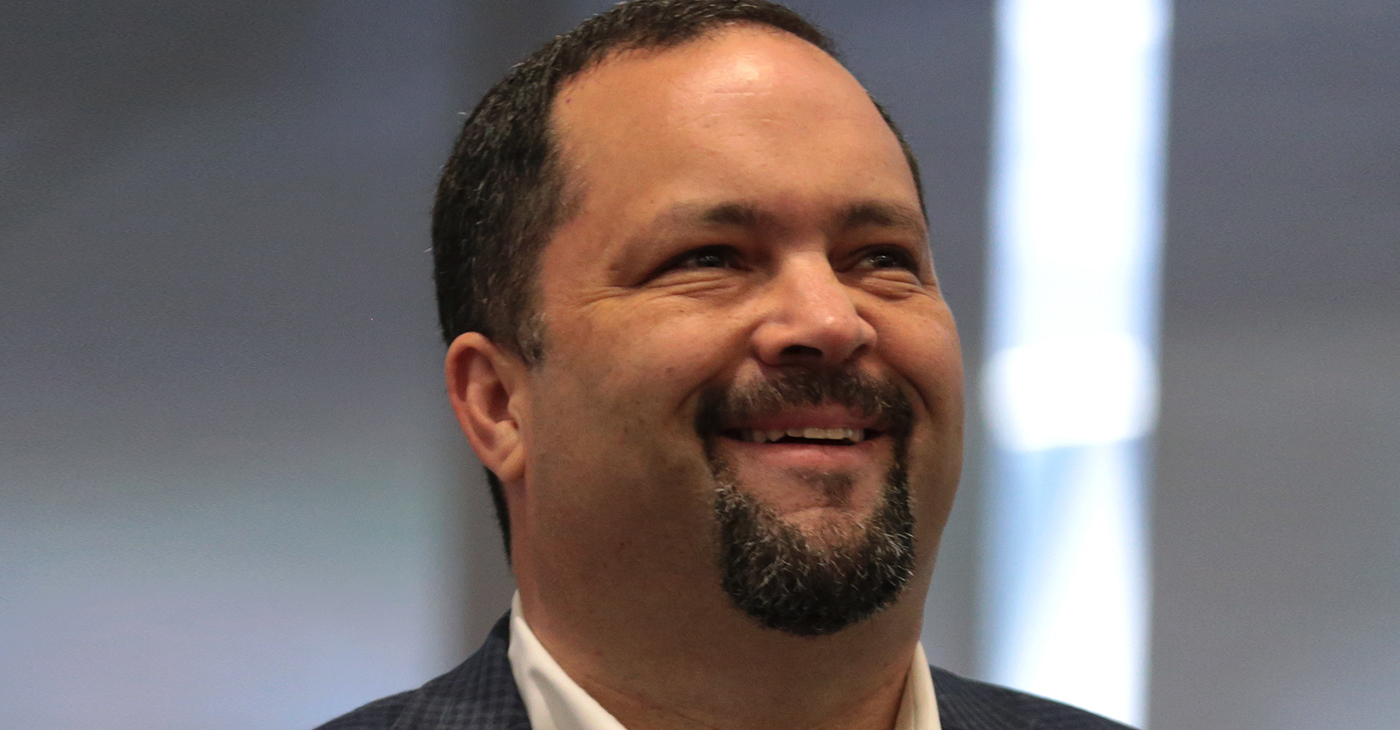
By Ben Jealous

February is Black history month. The news we are making and witnessing right now reflects all the contradictions of our history—American history.
The history of Black people in this country is a story not just of oppression—but of overcoming. It is a story of both savage inequality and hard-won progress. It is a story of discrimination and spectacular accomplishment.
Let’s start with accomplishment. President Joe Biden will soon nominate the first Black woman to serve as a justice of the U.S. Supreme Court—if he hasn’t already by the time you read this. She will be brilliant and accomplished and committed to the constitutional principles of equality under the law and justice for all.
I can say that confidently without knowing who the president will nominate. That’s because the president has already nominated a record number of such Black women as federal district court and appeals court judges. There is a deep bench of impressive, highly qualified Black women judges, lawyers, scholars, and activists. I cannot wait to celebrate the confirmation of one of them as a Supreme Court justice.
It won’t be an easy time to be a justice committed to achieving justice for all. The court is now dominated by justices who are committed to a very different view of the Constitution. The Roberts court is the most pro-corporate court in history, ruling consistently to undermine protections for workers and the ability of the federal government to regulate and punish corporate wrongdoing.
The court’s majority has repeatedly weakened the Voting Rights Act. And that has allowed unprincipled politicians to target Black voters—and weaken our democracy.
The same destructive forces are at work outside the legal arena, too. Allies of former President Donald Trump are putting new voting restrictions in place all across the country. And they are inciting anger among Trump’s followers by repeating the Big Lie that he won the election.
Trump’s allies are also trying to build political power by stoking fear and anger and racial resentment among conservative white parents. They are passing laws that will make it nearly impossible for public school teachers to teach honestly about racism in U.S. history and society—or even engage students in conversations about controversial topics.
They’re taking over local school boards and purging libraries of books that explore the experiences of Black people, Native Americans, and LGBTQ people. One school district in Tennessee has even banned an award-winning graphic novel about the Holocaust and others are already looking to them as a model.
Dealing with racism on an individual level, and watching it play out in our political system, can be painful and discouraging. We can also allow it to motivate us to action.
When we act, when we fight, we can win. After all, we as Black people and we as Americans have overcome far worse than what we are facing today. This year, and in every election year, we have another chance to make history.
We made history in 2020 when we turned out in record numbers to vote. We elected President Joe Biden and Vice President Kamala Harris, the first Black person and first woman vice president. We elected Sens. Raphael Warnock and Jon Ossoff to the U.S. Senate. And that has allowed President Biden to appoint the most personally and professionally diverse set of judges in history, making our courts look more like our country.
In this Black History Month, we will take another step forward with the nomination of our next Supreme Court justice. Later this year we will celebrate her confirmation. And history will be made again.
Ben Jealous serves as president of People For the American Way and Professor of the Practice in the Africana Studies Department at the University of Pennsylvania where he teaches leadership.









Activism
Oakland Post: Week of September 30 – October 6, 2026
The printed Weekly Edition of the Oakland Post: Week of September 30 – October 6, 2026
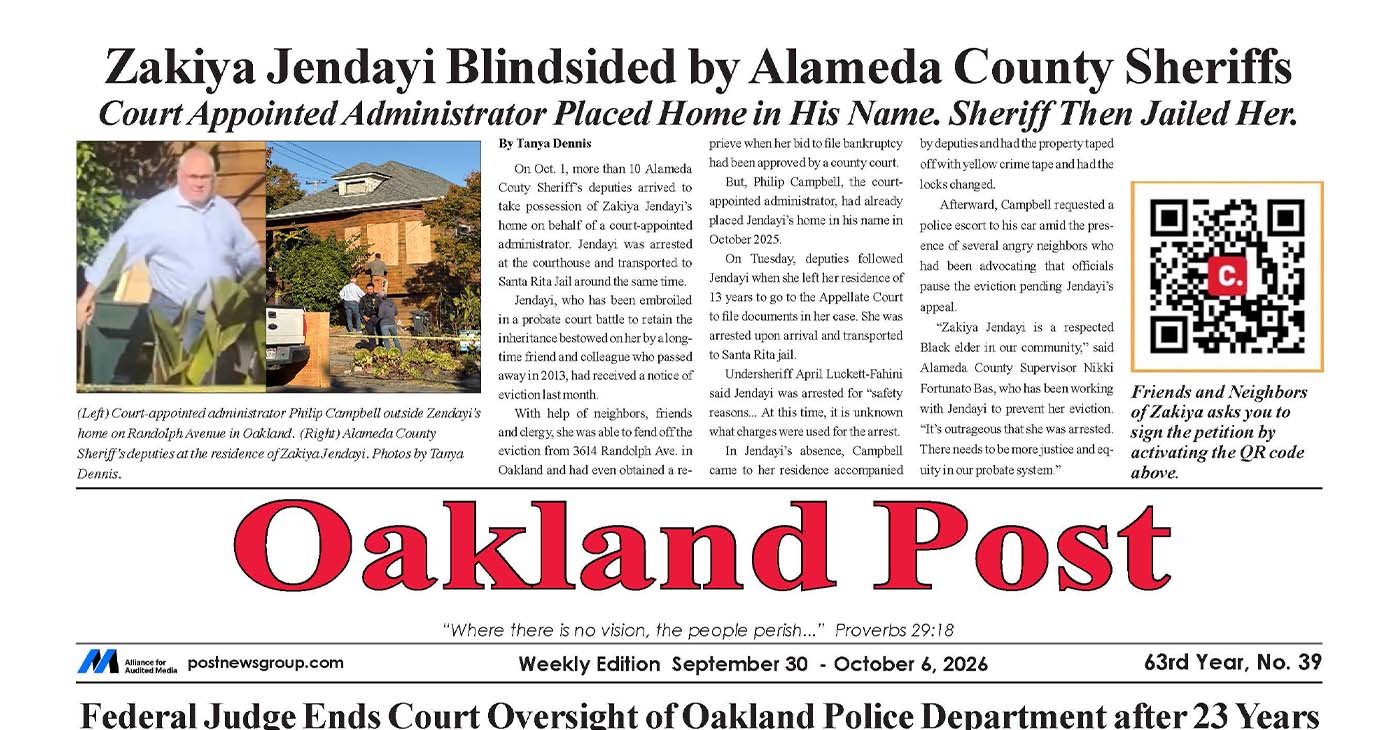
To enlarge your view of this issue, use the slider, magnifying glass icon or full page icon in the lower right corner of the browser window.
Activism
Oakland Post: Week of September 23 – 29, 2026
The printed Weekly Edition of the Oakland Post: Week of September 23 – 29, 2026
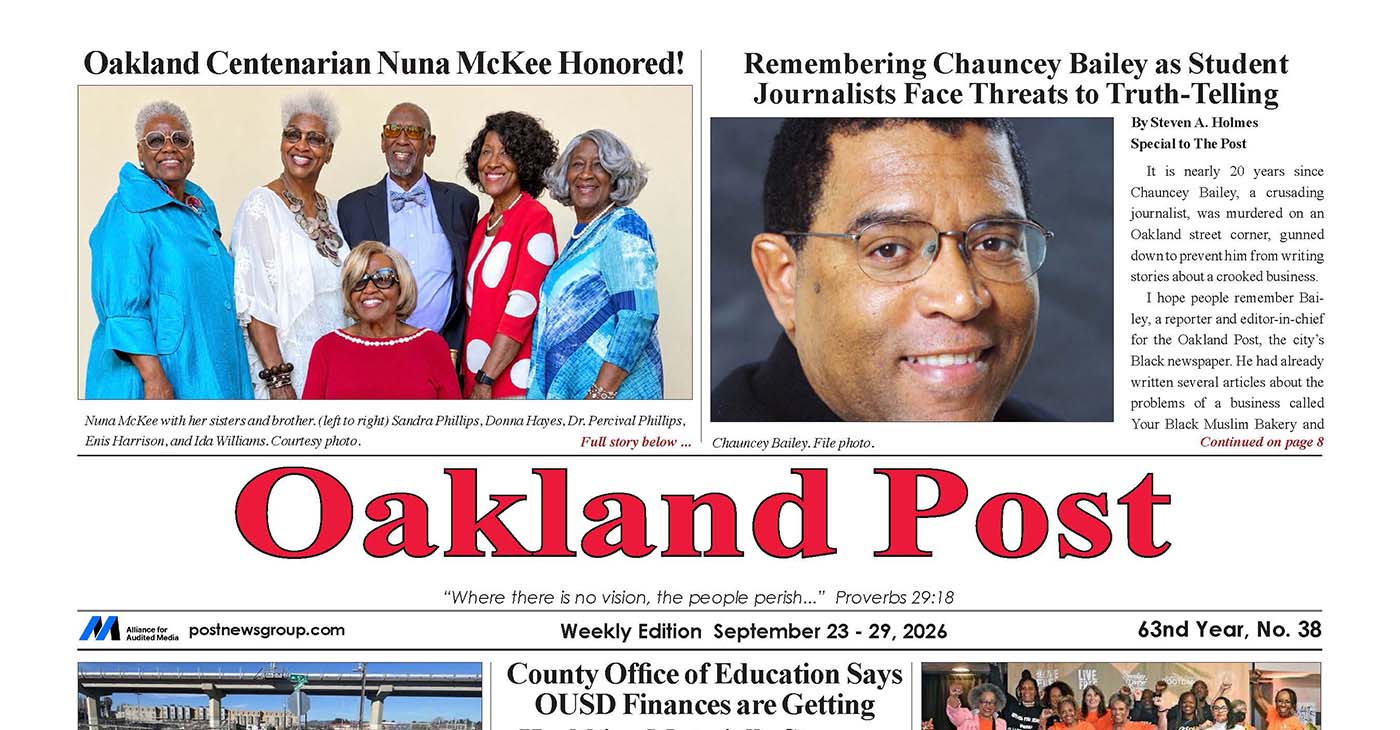
To enlarge your view of this issue, use the slider, magnifying glass icon or full page icon in the lower right corner of the browser window.
Activism
Oakland Post: Week of September 16 – 22, 2026
The printed Weekly Edition of the Oakland Post: Week of September 16 – 22, 2026

To enlarge your view of this issue, use the slider, magnifying glass icon or full page icon in the lower right corner of the browser window.


OP-ED: Proposition 44 Would Put a Price on Trust

OP-ED: Proposition 40: It’s Time to Play Chess, Not Checkers

Listening as a Lifeline: A Doula’s Witness to Black Maternal Health

New Protections for Ticket Buyers: Gov. Newsom Signs Assemblymember Isaac Bryan’s Bill

‘We Don’t Talk Trash — We Pick Up Trash!’

Zakiya Jendayi Arrested, Locked Out of Home by Sheriff’s Deputies

Oakland Post: Week of September 30 – October 6, 2026

Asm. Corey Jackson Announces Launch of 24-Hour Childcare in His District

IN MEMORIAM: The Rev. Leon “Sonny” Clark, Longtime Orange County Pastor and Community Leader, Dies at 72

Poll: Becerra Widens His Lead Over Hilton; Californians Split on Wealth Tax

From Historic Memories to New Possibilities: Oakland Celebrates Coliseum 60

County Office of Education Says OUSD Finances Are Getting Healthier, Materially Stronger

LIVE FREE Sunday Dinner Brings Faith, Fellowship and Civic Conversation to Oakland

Remembering Chauncey Bailey as Student Journalists Face Threats to Truth-Telling

BLACspace Cooperative Invites Bay Area to Experience Oakland’s Black Cultural Ecosystem Through a BLAC Map Tour + Party

Standoff for Justice: Our Homes Are Worth Fighting For

Oakland Post: Week of August 26 – September 1, 2026

Frontier Airlines’ Return to Oakland Airport Brings Flights, Jobs and Opportunity

Gubernatorial Candidate Steve Hilton Blasts California New Tire Rules; Newsom Hits Back

Chef Sharon Lee Blends Culinary Excellence, Education and Empowerment

Jackie Wright Champions Bay Area Stories, Filmmakers and Cultural Institutions

Misnamed ‘Parent’ PAC Seeks to Influence Oakland School Board Elections

Oakland Coliseum Project Opens Door for Small Businesses to Build Bigger

Big City Mayors Ask for “Yes” Vote on Housing Bond Measure; Conservatives Say “No”

Gov. Newsom’s Latest Appointees Include Sacramento Advocate for Formerly Incarcerated Students; State’s New Tech Chief

Longtime BWOPA Member Brendalyn Goodall Appointed to California Workforce Development Board

Gov. Newsom Signs Law Shielding Immigration Aid Workers From Doxing Threats

Oakland Post: Week of September 2 – 8, 2026

Secretary of State Shirley N. Weber Urges Californians to Vote Early as Voter ID Battle Intensifies

IN MEMORIAM: Dolly Parton Dead at 80 — How She Built a Legacy of Love and Earned Her Place in Black Culture

The Conversation With Al McFarlane 6/23/26

Media Monday 6/22/26

LIVE! ASK ALMA! — TUES. 6.23.26 7PM EST

Car Buying Secrets: 4 Hidden Checks Before You Sign!

Is This 550 HP Charger Worth YOUR Money? AutoNetwork Review

Celebrating Juneteenth – Frederick Douglass on education and resistance

LIVE! — ASK ALMA! — TUES. 6.19.26 7PM EST

Hyundai Ioniq 5 Parking, Safety, and 360 View #shorts

2025 Ioniq 5 New Wiper & Powerful Performance! #shorts

Electric SUV Range: Is 259 Miles Enough? #shorts

EV Charging: How Fast Can You Charge an Electric Vehicle? #shorts

Biometric Cooling… Messaging Seats…Come on! 2025 Infiniti QX80 Autograph 4WD

Charged Up: Witness the Magic of a Fully Electric Car! #shorts

Range Rover Sport PHEV Included…: See What’s Inside This Luxury SUV! #shorts

Invisible Hood View: Perfect Parking with X-Ray Vision! #shorts
-
 Community3 weeks ago
Misnamed ‘Parent’ PAC Seeks to Influence Oakland School Board Elections
-

 Activism3 weeks ago
Oakland Post: Week of September 9 – 15, 2026
-

 Community3 weeks ago
Richmond Tiny House Village Farm & Garden Set to Open Gates on Sept. 26
-

 Black History3 weeks ago
Latest Massacre in Haiti Reveals Cruelty U.S. Deportations
-

 Black History3 weeks ago
OPINION: Nolan Wells’ Death One of Several Signifying Racial Terror Lives on in U.S. South
-

 Business2 weeks ago
Mayor Lee Announces $1 Million Kaiser Permanente Grant for Pilot Program to Address Homelessness, Clean Up Public Spaces throughout Oakland
-

 Community3 weeks ago
Democratic Clubs Interview Candidates for Oakland School Board
-

 Uncategorized3 weeks ago
NBA All-Star Damian Lillard Returns Home for 15th Annual Backpack Giveaway
