
Bay Area
A Deep East Oakland Based Grocery Coop is Opening
“The community here deserves life and good health,” said Romo. “And so much of that is literally what we eat.”

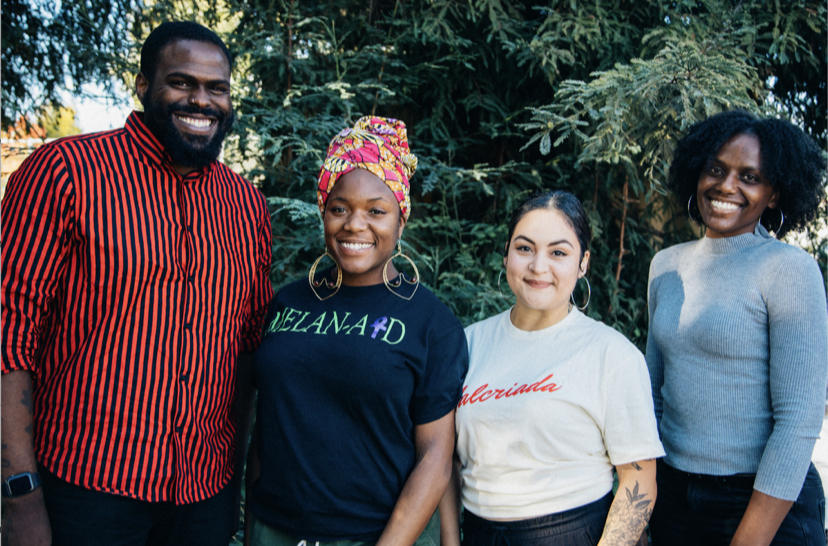
The four worker owners of a new grocery store in deep East Oakland want to bring more healthy food options to the area through a cooperative model. The DEEP Grocery Coop opened for online sales on April 7. By Fall, the worker owners plan to open a storefront.

“We’re coming together for the cause of changing food access in the deep East Oakland community,” said worker owner Daniel Harris-Lucas. “We’re trying to create social change and not necessarily getting into it for profit.”
Deep East Oakland currently has limited options for healthy food. While a large chain grocery store, Foods Co., operates in the area, its organic and fresh foods sections are limited, and the store is still several miles from where many deep East Oakland residents live.
Deep East Oaklanders largely find themselves eating what’s most accessible: highly processed foods sold in the many liquor stores in or near their neighborhoods. Worker owners of the DEEP Grocery Co–op plan to stock lots of healthy foods including fresh, local and organic vegetables and fruits.

All four DEEP Grocery Coop worker owners live in deep East Oakland and are passionate about eating healthy, which can be challenging. Worker owner Yolanda Romo drives out to Berkeley Bowl to buy her groceries. She says she never sees her neighbors there, and is saddened that she has to shop at a business in a more affluent city instead of being able to get healthy foods near her neighborhood.
“The community here deserves life and good health,” said Romo. “And so much of that is literally what we eat.”
The DEEP Grocery Coop’s worker owners acknowledge that price is an important part of making healthy food accessible, and they want their foods to be affordable for local residents.
They have plans to receive grant funding that will allow those with food stamps to buy California grown produce at a 50% discount. As a small cooperative, with no boss that expects a large profit, the worker owners can focus instead on sustaining the store and themselves while keeping prices as low as they can for the community.
They also are making connections with small local Black– and Brown–led farms, like Raised Roots, who find it difficult to get their products into larger chain stores.
Education is key to The DEEP Grocery Coop’s project, as the knowledge of how to eat healthy is less accessible to the largely Black and Brown population of East Oakland, and is falsely associated as only being for white people. As an example, Romo points out quinoa, a whole–grain seed that is high in protein fiber and B vitamin.
“Quinoa is a super–cheap Peruvian necessity and someone branded it,” Romo said. “That branding isn’t catered to communities of color but to white people who have more choices.”
To share knowledge, worker owners have done free cooking demonstrations and informative healthy food discussions. They share knowledge about healthy foods through instagram.
Their instagram account also serves as a place to educate the public about the cooperative model, which worker owners say allows them more autonomy. As they begin to sell foods online and eventually open their in-person store, they hope to serve as a model for other deep East Oakland residents who want to create businesses that better serve their community.
“I hope this inspires others in the community to be worker owners and to make decisions and run their businesses the way they want to do it,” said Romo. “The top–down model that we see everywhere and the huge corporate chains that surround East Oakland haven’t helped.”
Decision making in the DEEP Grocery Coop will be more localized, allowing it to cater to the deep East Oakland Community. Worker owner Jameelah Lane expects the store to be full of “things that resemble East Oakland” like vibrant colors, graffiti painting and good music. She wants the store to have “culturally recognizable foods” like bean pies and tamales.
The DEEP Grocery Coop worker owners are not the only people who helped create the store. Mandela Grocery Cooperative, a non-profit youth urban farm project called Acta Non Verba, and an organization that helps launch Bay Area Black–led cooperatives called Repaired Nation, all acted as a steering committee to help train and guide the worker owners during the project’s formation.
But, as originally planned, all those organizations have given full control to the worker owners at this point. The worker–owner staff are still relatively new to each other, with the full four–person crew not coming together until last summer. They are excited about what they have been able accomplish in such a short time and about starting to bring more healthy foods to deep East Oakland.
“We want to inspire people to be change-makers instead of waiting for it,” said Harris-Lucas. “We’ve been able to really grow something just from the common love for our community.”
Anyone throughout the Bay Area who wants to support the coop can now order food on their website: https://thedeepgrocery.coop, and arrange a curbside pickup. People can also donate to support the project through the store’s gofundme campaign.











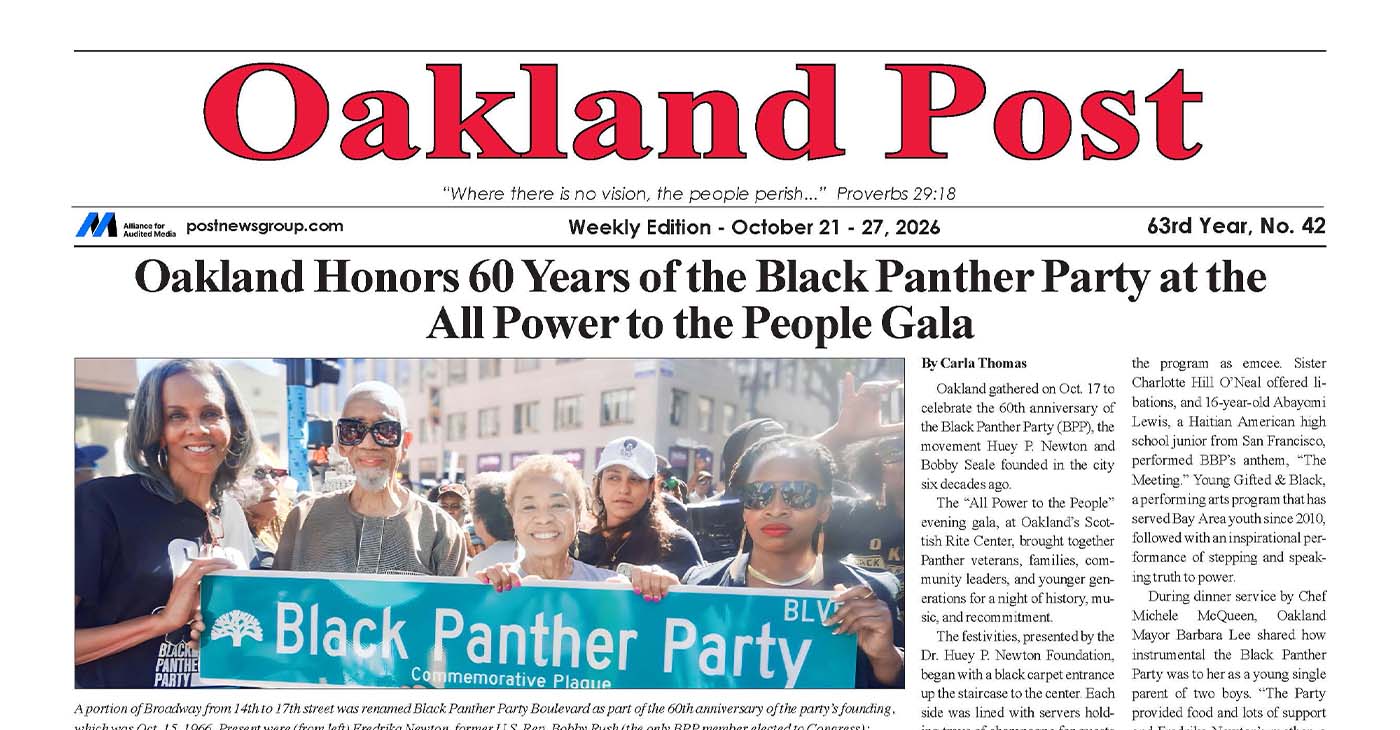
To enlarge your view of this issue, use the slider, magnifying glass icon or full page icon in the lower right corner of the browser window.

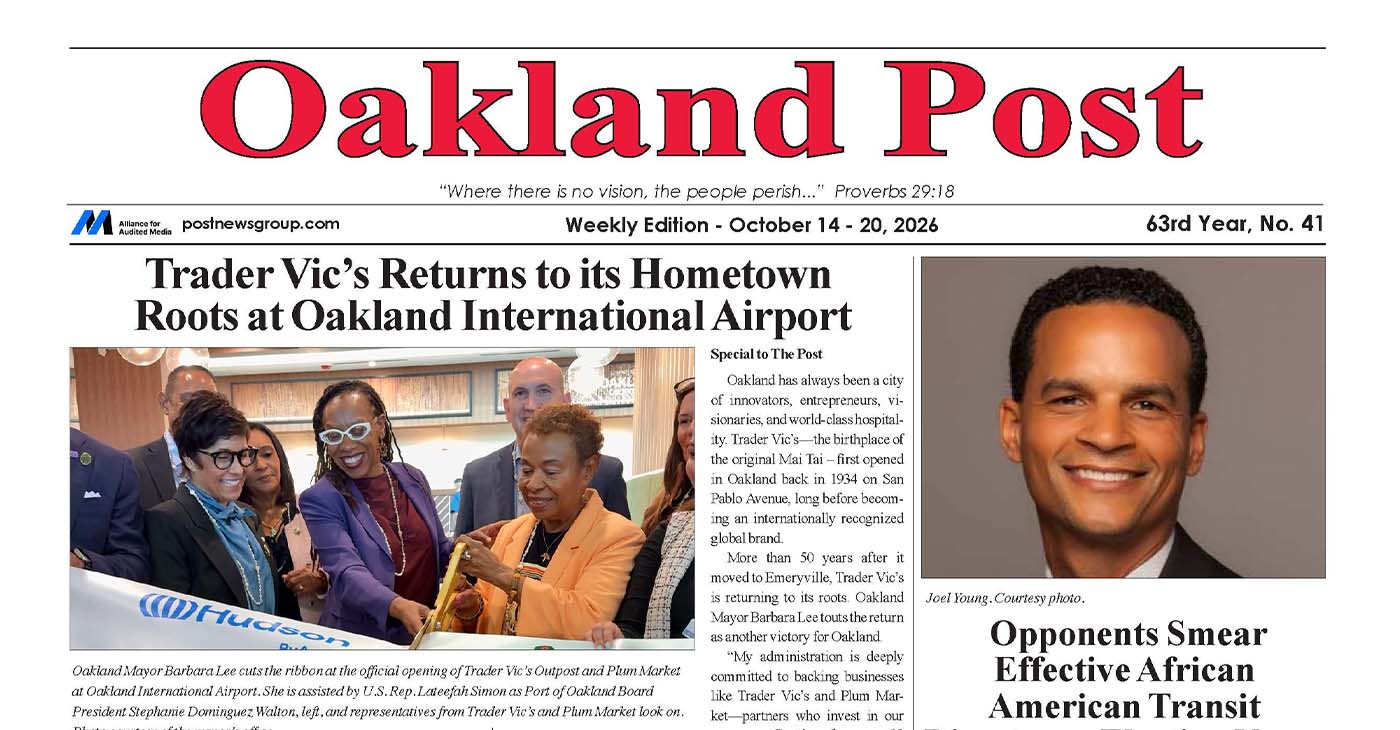
To enlarge your view of this issue, use the slider, magnifying glass icon or full page icon in the lower right corner of the browser window.
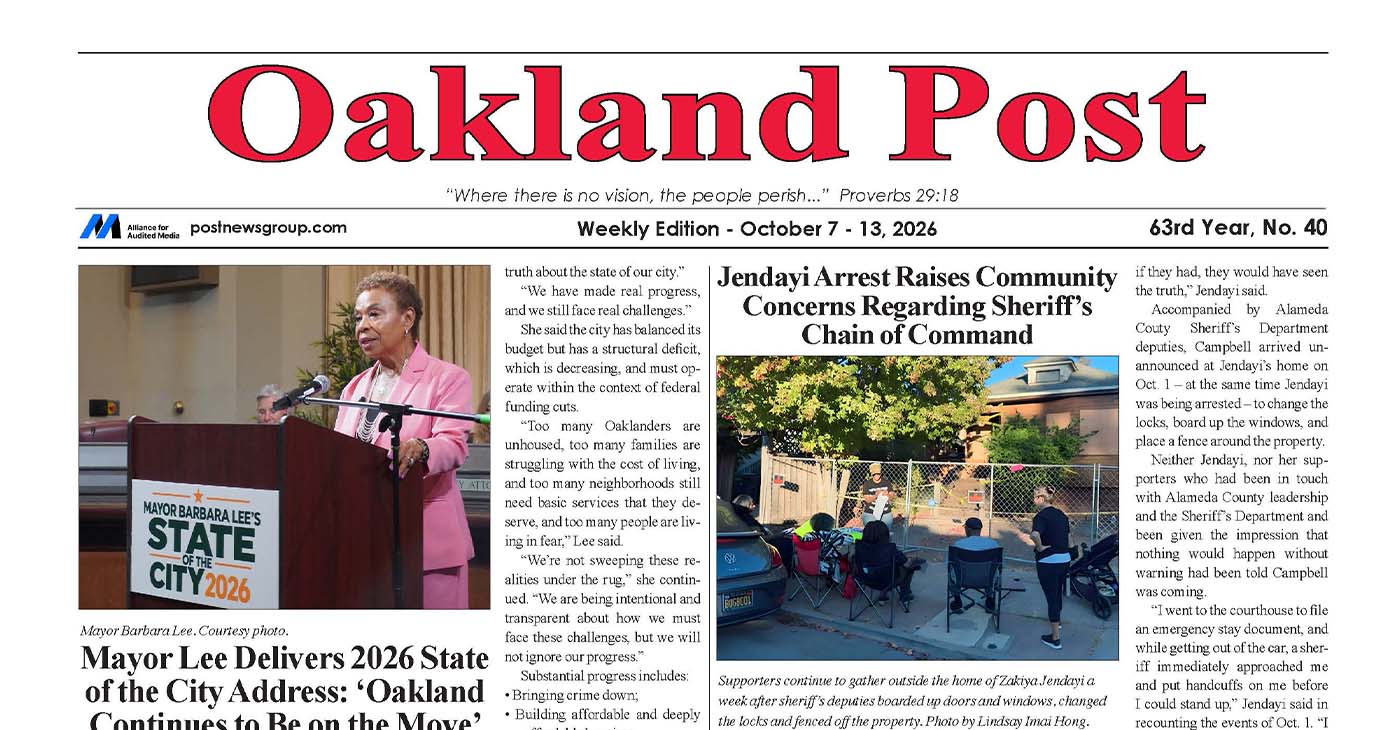
To enlarge your view of this issue, use the slider, magnifying glass icon or full page icon in the lower right corner of the browser window.


Oakland Probate Dispute Raises Questions About Court-Ordered Property Transfer and Missing Notice

‘Raising a Child Shouldn’t Break the Bank’: California Is Helping Families Save on Childcare Costs

Secretary of State Shirley Weber Pushes Back Against DOJ Demands Over California Voter Rolls

Chase Launches Fraud & Scam Prevention Month

U.S. Rep. Simon Secures More Than $1 Million for Public Safety at Mills College at Northeastern University Oakland, Surrounding Neighborhood

COMMENTARY: Valarie Bachelor and Jennfier Brouhard are Excellent School Board Members and Deserve to Be Reelected

Oakland Faith Leaders Gather to Revitalize the Interdenominational Ministerial Alliance of Oakland

Statue of ‘La Catrina,’ a Beloved Symbol of Dia de Los Muertos, Visits Oakland

Oakland Honors 60 Years of the Black Panther Party at the All Power to the People Gala

Fate of Bay Area Public Transit Hinges on Regional Transit Measure

Why AC Transit Director Joel Young is My Choice for AC Transit Board Ward 3

Oakland Post: Week of October 21 – 27, 2026

Mayor Barbara Lee Holds Special State of the City Address in Deep East Oakland

Practitioners of African Traditional Spirituality Offer Ancestral Reverence Ritual Oct. 31

It’s Time to Lose Weight Before the Holidays

Misnamed ‘Parent’ PAC Seeks to Influence Oakland School Board Elections

Listening as a Lifeline: A Doula’s Witness to Black Maternal Health

Poll: Becerra Widens His Lead Over Hilton; Californians Split on Wealth Tax

County Office of Education Says OUSD Finances Are Getting Healthier, Materially Stronger

Doulas Are Helping Black California Moms Navigate Pregnancy–Even as High Mortality Rates Persist

Oakland Post: Week of September 9 – 15, 2026

Zakiya Jendayi Arrested, Locked Out of Home by Sheriff’s Deputies

Mayor Lee Announces $1 Million Kaiser Permanente Grant for Pilot Program to Address Homelessness, Clean Up Public Spaces throughout Oakland

Richmond Tiny House Village Farm & Garden Set to Open Gates on Sept. 26

BLACspace Cooperative Invites Bay Area to Experience Oakland’s Black Cultural Ecosystem Through a BLAC Map Tour + Party

OPINION: Nolan Wells’ Death One of Several Signifying Racial Terror Lives on in U.S. South

Latest Massacre in Haiti Reveals Cruelty U.S. Deportations

Oakland People’s Arms Embargo Coalition Demands End to Military Shipments Thru Oakland

Oakland Post: Week of September 16 – 22, 2026

Democratic Clubs Interview Candidates for Oakland School Board

The Conversation With Al McFarlane 6/23/26

Media Monday 6/22/26

LIVE! ASK ALMA! — TUES. 6.23.26 7PM EST

Car Buying Secrets: 4 Hidden Checks Before You Sign!

Is This 550 HP Charger Worth YOUR Money? AutoNetwork Review

Celebrating Juneteenth – Frederick Douglass on education and resistance

LIVE! — ASK ALMA! — TUES. 6.19.26 7PM EST

Hyundai Ioniq 5 Parking, Safety, and 360 View #shorts

2025 Ioniq 5 New Wiper & Powerful Performance! #shorts

Electric SUV Range: Is 259 Miles Enough? #shorts

EV Charging: How Fast Can You Charge an Electric Vehicle? #shorts

Biometric Cooling… Messaging Seats…Come on! 2025 Infiniti QX80 Autograph 4WD

Charged Up: Witness the Magic of a Fully Electric Car! #shorts

Range Rover Sport PHEV Included…: See What’s Inside This Luxury SUV! #shorts

Invisible Hood View: Perfect Parking with X-Ray Vision! #shorts
-
 Black History3 weeks ago
Listening as a Lifeline: A Doula’s Witness to Black Maternal Health
-
 Economy4 weeks ago
Poll: Becerra Widens His Lead Over Hilton; Californians Split on Wealth Tax
-
 Business4 weeks ago
County Office of Education Says OUSD Finances Are Getting Healthier, Materially Stronger
-
 Lead Story3 weeks ago
Zakiya Jendayi Arrested, Locked Out of Home by Sheriff’s Deputies
-
 Art4 weeks ago
BLACspace Cooperative Invites Bay Area to Experience Oakland’s Black Cultural Ecosystem Through a BLAC Map Tour + Party
-
 Business4 weeks ago
From Historic Memories to New Possibilities: Oakland Celebrates Coliseum 60
-
 Community4 weeks ago
Asm. Corey Jackson Announces Launch of 24-Hour Childcare in His District
-

 Black History4 weeks ago
IN MEMORIAM: The Rev. Leon “Sonny” Clark, Longtime Orange County Pastor and Community Leader, Dies at 72
