Connect with us

Arts and Culture

Victoria Regina Spivey: A Lady Who Sang the Blues – Learning Black History Year Round

Published

on

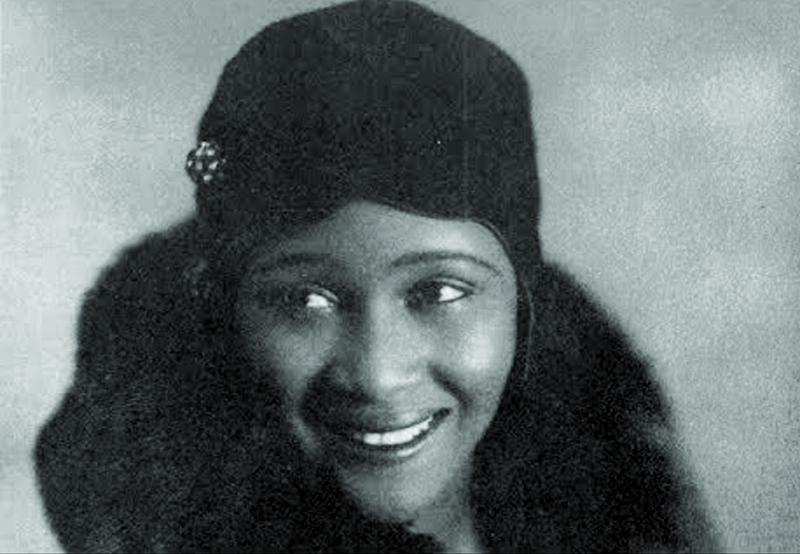
Victoria Spivey (1906–1976) emerged in the world of blues recordings during the 1920s. The Houston, Texas, native was a child singer and actor in vaudeville and later a singer, pianist and composer.

Music, it seemed, was a part of her family’s legacy. Spivey’s mother, a nurse, performed semi-classical and religious songs. Her father and her brothers played in the family band; her sisters were professional singers.

Her professional debut was with her father’s band in Houston. After his passing, 7-year-old Victoria played on her own at local parties. At age 12, she was hired to accompany films at the Lincoln Theater in Dallas.

Later Spivey toured the vaudeville circuit with her sister Addie (1910–1943) and brother Elton (1900–1971). The trio also performed in barrelhouses and theaters. Her career, however, quickly went solo.

As a teenager, Victoria was hired to work alone in bars, nightclubs and buffet flats. On occasions, she was paired with singer-guitarists, one being Blind Lemon Jefferson.

By age 20, she’d relocated to St. Louis, Mississippi There, her first recording, “Black Snake Blues” (1926) was released by Okeh Records.

The song was successful, which allowed Spivey’s relationship with the label to continue, including recording songs in New York City. In 1929, she moved on to the Victor label and later to Vocalion and Decca records. Still, she continued her performance schedule, often backed by legendary musicians such as Louis Armstrong, Lonnie Johnson, and Tempa Red.

Spivey’s career expanded in 1927 when she hit the musical stage (‘Hits and Bits from Africana’) and in 1929 on entering the world of film (‘Hallelujah!’).

Critics described Spivey’s vocal style as being “characterized by angularity, nasality and a type of moan, which she called the “tiger moan,” reminiscent of a style of black church singing.” Some said that Spivey’s work was “filled with sexual overtones, double entendres, and outright pornography.”

Spivey, like many black writers of that time, penned lyrics dealing with drugs, the penal system, capital punishment and lesbianism. It was her way of addressing issues faced daily by her fans. The best known of all of Spivey’s songs that grew from social concerns was “TB Blues” (1926).

Blacks at the time were concerned about the rampant spread of tuberculosis. The disease’s deadly force was hitting urban areas more than any other. Another Spivey song known as “Dirty TB Blues” (1929) was recorded with Luis Russell’s Orchestra.

Spivey was popular as a live performer, touring Europe and the states, especially New York City. Because she established her reputation as a classic blues singer, pianist and composer early on, she was able to perform and record until her retirement in 1952. She then played the pipe organ and led a church choir in Brooklyn.

Spivey returned to secular music in 1961, pairing with Lonnie Johnson to appear on his Prestige Bluesville album ‘Idle Hours.’ Blues had been “discovered” by white audiences and new doors were opening.

Spivey died in New York at the age of 69.

Tamara Shiloh

Tamara Shiloh


About Tamara Shiloh


Tamara Shiloh has published the first two books in her historical fiction chapter book series, Just Imagine…What If There Were No Black People in the World is about African American inventors, scientists and other notable Black people in history. The two books are Jaxon’s Magical Adventure with Black Inventors and Scientists and Jaxon and Kevin’s Black History Trip Downtown. Tamara Shiloh has also written a book a picture book for Scholastic, Cameron Teaches Black History, that will be available in June, 2022.

Tamara Shiloh’s other writing experiences include: writing the Black History column for the Post Newspaper in the Bay area, Creator and Instruction of the black History Class for Educators a professional development class for teachers and her non-profit offers a free Black History literacy/STEM/Podcast class for kids 3d – 8th grade which also includes the Let’s Go Learn Reading and Essence and tutorial program.   She is also the owner of the Multicultural Bookstore and Gifts, in Richmond, California,

Previously in her early life she was the /Editor-in-Chief of Desert Diamonds Magazine, highlighting the accomplishments of minority women in Nevada; assisting with the creation, design and writing of a Los Angeles-based, herbal magazine entitled Herbal Essence; editorial contribution to Homes of Color; Editor-in-Chief of Black Insight Magazine, the first digital, interactive magazine for African Americans; profile creations for sports figures on the now defunct PublicFigure.com; newsletters for various businesses and organizations; and her own Las Vegas community newsletter, Tween Time News, a monthly publication highlighting music entertainment in the various venues of Las Vegas.

She is a member of:

  • Society of Children’s Book Writers and Illustrators (SCBWI)

  • Richmond Chamber of Commerce

  • Point Richmond Business Association

  • National Association of Professional Women (NAPW)

  • Independent Book Publishers Association (IPBA)

  • California Writers Club-Berkeley & Marin

  • Richmond CA Kiwanis

  • Richmond CA Rotary

  • Bay Area Girls Club


Tamara Shiloh, a native of Northern California, has two adult children, one grandson and four great-grand sons. She resides in Point Richmond, CA with her husband, Ernest.

www.multiculturalbookstore.com

About Tamara Shiloh

Tamara Shiloh has published the first two books in her historical fiction chapter book series, Just Imagine…What If There Were No Black People in the World is about African American inventors, scientists and other notable Black people in history. The two books are Jaxon’s Magical Adventure with Black Inventors and Scientists and Jaxon and Kevin’s Black History Trip Downtown. Tamara Shiloh has also written a book a picture book for Scholastic, Cameron Teaches Black History, that will be available in June, 2022. Tamara Shiloh’s other writing experiences include: writing the Black History column for the Post Newspaper in the Bay area, Creator and Instruction of the black History Class for Educators a professional development class for teachers and her non-profit offers a free Black History literacy/STEM/Podcast class for kids 3d – 8th grade which also includes the Let’s Go Learn Reading and Essence and tutorial program.   She is also the owner of the Multicultural Bookstore and Gifts, in Richmond, California, Previously in her early life she was the /Editor-in-Chief of Desert Diamonds Magazine, highlighting the accomplishments of minority women in Nevada; assisting with the creation, design and writing of a Los Angeles-based, herbal magazine entitled Herbal Essence; editorial contribution to Homes of Color; Editor-in-Chief of Black Insight Magazine, the first digital, interactive magazine for African Americans; profile creations for sports figures on the now defunct PublicFigure.com; newsletters for various businesses and organizations; and her own Las Vegas community newsletter, Tween Time News, a monthly publication highlighting music entertainment in the various venues of Las Vegas. She is a member of:
  • Society of Children’s Book Writers and Illustrators (SCBWI)
  • Richmond Chamber of Commerce
  • Point Richmond Business Association
  • National Association of Professional Women (NAPW)
  • Independent Book Publishers Association (IPBA)
  • California Writers Club-Berkeley & Marin
  • Richmond CA Kiwanis
  • Richmond CA Rotary
  • Bay Area Girls Club
Tamara Shiloh, a native of Northern California, has two adult children, one grandson and four great-grand sons. She resides in Point Richmond, CA with her husband, Ernest. www.multiculturalbookstore.com

Continue Reading
Click to comment

Leave a Reply

Your email address will not be published. Required fields are marked *

Alameda County

Bling It On: Holiday Lights Brighten Dark Nights All Around the Bay

On the block where I grew up in the 1960s, it was an unwritten agreement among the owners of those row homes to put up holiday lights: around the front window and door, along the porch banister, etc. Some put the Christmas tree in the window, and you could see it through the open slats of the blinds.

Published

on

Christmas lights on a house near the writer’s residence in Oakland. Photo by Joseph Shangosola.

By Wanda Ravernell

I have always liked Christmas lights.

From my desk at my front window, I feel a quiet joy when the lights on the house across the street come on just as night falls.

On the block where I grew up in the 1960s, it was an unwritten agreement among the owners of those row homes to put up holiday lights: around the front window and door, along the porch banister, etc. Some put the Christmas tree in the window, and you could see it through the open slats of the blinds.

My father, the renegade of the block, made no effort with lights, so my mother hung a wreath with two bells in the window. Just enough to let you know someone was at home.

Two doors down was a different story. Mr. King, the overachiever of the block, went all out for Christmas: The tree in the window, the lights along the roof and a Santa on his sleigh on the porch roof.

There are a few ‘Mr. Kings’ in my neighborhood.

In particular is the gentleman down the street. For Halloween, they erected a 10-foot skeleton in the yard, placed ‘shrunken heads’ on fence poles, pumpkins on steps and swooping bat wings from the porch roof. They have not held back for Christmas.

The skeleton stayed up this year, this time swathed in lights, as is every other inch of the house front. It is a light show that rivals the one in the old Wanamaker’s department store in Philadelphia.

I would hate to see their light bill…

As the shortest day of the year approaches, make Mr. King’s spirit happy and get out and see the lights in your own neighborhood, shopping plazas and merchant areas.

Here are some places recommended by 510 Families and Johnny FunCheap.

Oakland

Oakland’s Temple Hill Holiday Lights and Gardens is the place to go for a drive-by or a leisurely stroll for a religious holiday experience. Wear a jacket, because it’s chilly outside the Church of Jesus Christ of Latter-day Saints, at 4220 Lincoln Ave., particularly after dark. The gardens are open all day from 9 a.m. to 9 p.m. with the lights on from dusk until closing.

Alameda

Just across the High Street Bridge from Oakland, you’ll find Christmas Tree Lane in Alameda.

On Thompson Avenue between High Street and Fernside drive, displays range from classic trees and blow-ups to a comedic response to the film “The Nightmare Before Christmas.” Lights turn on at dusk and can be seen through the first week in January.

Berkeley

The Fourth Street business district from University Avenue to Virginia Street in Berkeley comes alive with lights beginning at 5 p.m. through Jan. 1, 2026.

There’s also a display at one house at 928 Arlington St., and, for children, the Tilden Park Carousel Winter Wonderland runs through Jan. 4, 2026. Closed Christmas Day. For more information and tickets, call (510) 559-1004.

Richmond

The Sundar Shadi Holiday Display, featuring a recreation of the town of Bethlehem with life-size figures, is open through Dec. 26 at 7501 Moeser Lane in El Cerrito.

Marin County

In Marin, the go-to spot for ‘oohs and ahhs’ is the Holiday Light Spectacular from 4-9 p.m. through Jan. 4, 2026, at Marin Center Fairgrounds at 10 Ave of the Flags in San Rafael through Jan. 4. Displays dazzle, with lighted walkways and activities almost daily. For more info, go to: www.marincounty.gov/departments/cultural-services/department-sponsored-events/holiday-light-spectacular

The arches at Marin County Civic Center at 3501 Civic Center Dr. will also be illuminated nightly.

San Francisco

Look for light installations in Golden Gate Park, chocolate and cheer at Ghirardelli Square, and downtown, the ice rink in Union Square and the holiday tree in Civic Center Plaza are enchanting spots day and night. For neighborhoods, you can’t beat the streets in Noe Valley, Pacific Heights, and Bernal Heights. For glee and over-the-top glitz there’s the Castro, particularly at 68 Castro Street.

Livermore

The winner of the 2024 Great Light Flight award, Deacon Dave has set up his display with a group of creative volunteers at 352 Hillcrest Avenue since 1982. See it through Jan. 1, 2026. For more info, go to https://www.casadelpomba.com

Fremont

Crippsmas Place is a community of over 90 decorated homes with candy canes passed out nightly through Dec. 31. A tradition since 1967, the event features visits by Mr. and Mrs. Claus on Dec. 18 and Dec. 23 and entertainment by the Tri-M Honor Society at 6 p.m. on Dec. 22. Chrippsmas Place is located on: Cripps PlaceAsquith PlaceNicolet CourtWellington Place, Perkins Street, and the stretch of Nicolet Avenue between Gibraltar Drive and Perkins Street.

Continue Reading

Advice

COMMENTARY: If You Don’t Want Your ‘Black Card’ Revoked, Watch What You Bring to Holiday Dinners

From Thanksgiving to Christmas to New Year’s Day, whether it’s the dining room table or the bid whist (Spades? Uno, anyone?) table, your card may be in danger.

Published

on

The ‘aunties’ playing cards. iStock photo by Andreswd.

By Wanda Ravernell
Post Staff

From the fourth week of November to the first week in January, if you are of African descent, but particularly African American, certain violations of cultural etiquette will get your ‘Black card’ revoked.

From Thanksgiving to Christmas to New Year’s Day, whether it’s the dining room table or the bid whist (Spades? Uno, anyone?) table, your card may be in danger.

It could take until Super Bowl Sunday for reinstatement.

I don’t know much about the card table, but for years I was on probation by the ‘Aunties,’ the givers and takers of Black cards.

How I Got into Trouble

It was 1970-something and I was influenced by the health food movement that emerged from the hippie era. A vegetarian (which was then considered sacrilegious by most Black people I knew) prepared me a simple meal: grated cheese over steamed broccoli, lentils, and brown rice.

I introduced the broccoli dish at the Friday night supper with my aunt and grandfather. She pronounced the bright green broccoli undone, but she ate it. (I did not, of course, try brown rice on them.)

I knew that I would be allowed back in the kitchen when she attempted the dish, but the broccoli had been cooked to death. (Y’all remember when ALL vegetables, not just greens, were cooked to mush?)

My Black card, which had been revoked was then reattained because they ate what I prepared and imitated it.

Over the decades, various transgressions have become normalized. I remember when having a smoked turkey neck instead of a ham hock in collard greens was greeted with mumblings and murmurings at both the dining room and card tables. Then came vegan versions with just olive oil (What? No Crisco? No bacon, at least?) and garlic. And now my husband stir fries his collards in a wok.

But No Matter How Things Have Changed…

At holiday meals, there are assigned tasks. Uncle Jack chopped raw onions when needed. Uncle Buddy made the fruit salad for Easter. My mother brought the greens in winter, macaroni salad in summer. Aunt Deanie did the macaroni and cheese, and the great aunts, my deceased grandmother’s sisters, oversaw the preparation of the roast beef, turkey, and ham. My father, if he were present, did the carving.

These designations/assignments were binding agreements that could stand up in a court of law. Do not violate the law of assignments by bringing some other version of a tried-and-true dish, even if you call it a new ‘cheese and noodle item’ to ‘try out.’ The auntie lawgivers know what you are trying to do. It’s called a menu coup d’état, and they are not having it.

The time for experiments is in your own home: your spouse and kids are the Guinea pigs.

My mother’s variation of a classic that I detested from that Sunday to the present was adding crushed pineapple to mashed sweet potatoes. A relative stops by, tries it, and then it can be introduced as an add-on to the standard holiday menu.

My Aunt Vivian’s concoctions from Good Housekeeping or Ladies’ Home Journal magazine also made it to the Black people’s tables all over the country in the form of a green bean casserole.

What Not to Do and How Did It Cross Your Mind?

People are, of all things holy, preparing mac ‘n’ cheese with so much sugar it tastes like custard with noodles in it.

Also showing up in the wrong places: raisins. Raisins have been reported in the stuffing (makes no sense unless it’s in a ‘sweet meats’ dish), in a pan of corn bread, and – heresy in the Black kitchen – the MAC ‘n’ CHEESE.

These are not mere allegations: There is photographic evidence of these Black card violations, but I don’t want to defame witnesses who remained present at the scene of the crimes.

The cook – bless his/her heart – was probably well-meaning, if ignorant. Maybe they got the idea from a social media influencer, much like Aunt Viv got recipes from magazines.

Thankfully, a long-winded blessing of the food at the table can give the wary attendee time to locate the oddity’s place on the table and plan accordingly.

But who knows? Innovation always prevails, for, as the old folks say, ‘waste makes want.’ What if the leftovers were cut up, dipped in breadcrumbs and deep fried? The next day, that dish might make it to the TV tray by the card table.

An older cousin – on her way to being an Auntie – in her bonnet, leggings, T-shirt, and bunny slippers and too tired to object, might try it and like it….

And if she ‘rubs your head’ after eating it, the new dish might be a winner and (Whew!) everybody, thanks God, keeps their Black cards.

Until the next time.

Continue Reading

Arts and Culture

Fayeth Gardens Holds 3rd Annual Kwanzaa Celebration at Hayward City Hall on Dec. 28

Kwanzaa celebrates seven principles – Nguzu Saba – that support an ideal of community, beginning from Dec. 26 to Jan. 1. Those principles, in Swahili, are: Umoja (Unity), Kujichagulia (Self-Determination), Ujima (Collective Work & Responsibility), Ujamaa (Collective Economics), Nia (Purpose), Kuumba (Creativity) and Imani (Faith).

Published

on

The Pride and Joy Band performed at the first annual Kwanzaa celebration sponsored by Fayeth Gardens. Courtesy photo.

Entertainment, vendors, and special honors for Sankofa Lifetime Achievement awardees

Special to The Post

Celebrating Ujima, the principle of ‘Collective Work and Responsibility,’ Fayeth Gardens’ 3rd Annual Kwanzaa Celebration will be held on Dec. 28, from 12 noon to 5 p.m.

Kwanzaa celebrates seven principles – Nguzu Saba – that support an ideal of community, beginning from Dec. 26 to Jan. 1.

Those principles, in Swahili, are: Umoja (Unity), Kujichagulia (Self-Determination), Ujima (Collective Work & Responsibility), Ujamaa (Collective Economics), Nia (Purpose), Kuumba (Creativity) and Imani (Faith).

The free event at Hayward City Hall at 777 B St. will feature live entertainment, a guest speaker, awards for community activists whose work reflects the principle of Ujima, vendors and an honoring of the ancestors by Awon Ohun Omnira (Voices of Freedom).

On stage will be the Touch of Class Band, a New Orleans Second-Line Band, and the California Griot Storytellers. Bring the children to have fun in the Kids Korner.

Velda Goe, who has been celebrating Kwanzaa since it started in the 1960s, noticed there was no public celebration of the holiday in Hayward when she moved to the city in 2008.

“I started it a couple of years ago,” she said, “and hopefully it will continue just like the cultural events by other nationalities (in Hayward). The Afro-descendent people of Hayward deserve cultural recognition as well.”

Goe also believes it’s important that Kwanzaa gets its due because “there are so many misconceptions,” particularly by people of other nationalities, who are under the impression “that Kwanzaa is a cult, a religion, or replaces Christmas.”

The celebration, which is open to all, can have the effect of helping guests see that Kwanzaa’a principles and purpose are common to all

This year’s Sankofa Lifetime Awardees are:

  • Mrs. Freddye M. Davis: President of the South Hayward NAACP
    •Baba Arnold X.C. Perkins: Co-founder of the Brotherhood of Elders
    •Frederick Jordan,: Legendary founder of F.E. Jordan & Associates and the Design Engineer for the Charles P. Howard Container Terminal at the Port of Oakland + 1,000 Projects

Come dressed up in your best African wear to enter a raffle for a prize for best-dressed Afrocentric King and Queen.A free, healthy soul food lunch is available with an Eventbrite ticket, which can be found at for free lunch is available from for 11:30 to 12 p.m.

In its third year, the event is the brainchild of Velda Goe, founder of Fayeth Gardens, a community planting site to educate and provide a means for urban dwellers to grow healthy food for their families and develop life-sustaining eating habits.

Interested in being a vendor, volunteer, or sponsor? Reach out to FayethGardens@gmail.com

For tickets, go to: https://www.eventbrite.com/e/fayeth-gardens-3rd-annual-kwanzaa-celebration-at-hayward-city-hall-tickets-1974966953322

Continue Reading

Subscribe to receive news and updates from the Oakland Post

* indicates required

CHECK OUT THE LATEST ISSUE OF THE OAKLAND POST

ADVERTISEMENT

WORK FROM HOME

Home-based business with potential monthly income of $10K+ per month. A proven training system and website provided to maximize business effectiveness. Perfect job to earn side and primary income. Contact Lynne for more details: Lynne4npusa@gmail.com 800-334-0540

Facebook

Trending

Copyright ©2021 Post News Group, Inc. All Rights Reserved.