
City Government
Parent Group Launches Campaign to Recall Oakland School Board President Jody London

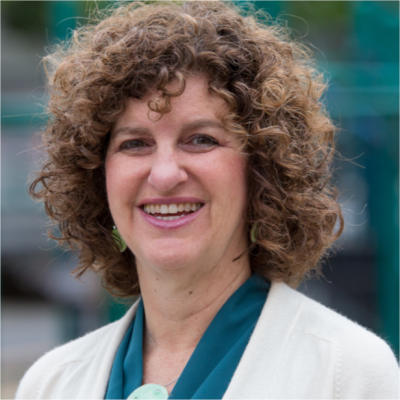
Oakland Not for Sale — a coalition of community members and educators against public school closures — is moving ahead with a campaign to recall Jody London, who serves as president of the Oakland Board of Education this year and represents District 1 on the board.
“The people of Oakland seek to recall Director London for failing to properly perform her oversight duties of OUSD District. 1 and intentionally neglecting district schools, causing under-enrollment, an artificially inflated need for security presence and massive drain of students and funding into charter schools,” according to the legal Notice of Intention to Circulate Recall Petition that Oakland Not for Sale is running as a paid announcement in this week’s Oakland Post.
The announcement alleges that among Director London’s “dereliction of duties,” she has “advocated for school closures as the first remedy to OUSD’s fiscal mismanagement,” failed to “produce evidence that closing schools would save money or produce better outcomes for impacted students, “approved or renewed charters to school that drain students and funding from traditional public schools and “condoned police brutality against peaceful students, teachers, and community members.”
According to the recall organizers, “Oakland families and educators have had enough of public school closures and the proliferation of charters over the past fifteen years. Of all California districts, Oakland has the highest percentage of students attending charter schools, which drained $57 million from the city’s public schools in a single year, according to a study released in 2018.”

Proponents of the recall include Alicia Johnson, Caroline Stern, Susana Benz, Rachel Prince, Rachel Judson, Gerry Mack, Deanna Lee, Derek White, An Thu Tran-lu and Elizabeth DeLuca.
Once the petition has been filed with the City of Oakland Election Office, officials will establish the number of signatures from District 1 that are needed to authorize the recall to go forward, which Oakland Not for Sale organizers estimate will range from 5,000 to 7,000. The signatures must be collected within 120 days from the date the city approves the petition. In addition, a recall election cannot be called within six months of the seat being up in a general election, which takes place this year is in November.
Contacted by email by the Oakland Post, Director London said, “I announced over a year ago that I am not seeking re-election as my younger daughter graduated in May 2019 and I believe a parent of students in OUSD schools should hold the seat.”
In a written statement prepared in response to the recall, she said that during her time as a school board member, “ I have made hard decisions to preserve the financial viability of the school district in a state that funds public schools below the national average per pupil, and at a time when expenses are rising. The costs of a recall election must be borne by OUSD; a recall election is unnecessary given this seat is up for re-election in 2020.”
Director London has represented North Oakland on the Board of Education since 2009. She was re-elected to a second term in 2012. Her third term ends Jan. 4, 2021.
While serving on the board, she led the effort to replace aging portables. She co-chaired the 2006 Measure B campaign, a $435 million bond. She also has helped pass the Measure G (2009) and Measure N (2014) parcel taxes, and Measure J, the 2012 renewal of the general obligation bond for capital projects.
London’s professional experience is in state policy, working with local government and non-profit organizations on strategic planning, communication, and advocacy on environmental sustainability and energy issues. Much of her current work involves state energy regulatory agencies.






Activism
Oakland Post: Week of September 30 – October 6, 2026
The printed Weekly Edition of the Oakland Post: Week of September 30 – October 6, 2026


To enlarge your view of this issue, use the slider, magnifying glass icon or full page icon in the lower right corner of the browser window.

Activism
Oakland Post: Week of September 23 – 29, 2026
The printed Weekly Edition of the Oakland Post: Week of September 23 – 29, 2026

To enlarge your view of this issue, use the slider, magnifying glass icon or full page icon in the lower right corner of the browser window.
Activism
Oakland Post: Week of September 16 – 22, 2026
The printed Weekly Edition of the Oakland Post: Week of September 16 – 22, 2026

To enlarge your view of this issue, use the slider, magnifying glass icon or full page icon in the lower right corner of the browser window.




OP-ED: Proposition 44 Would Put a Price on Trust

OP-ED: Proposition 40: It’s Time to Play Chess, Not Checkers

Listening as a Lifeline: A Doula’s Witness to Black Maternal Health

New Protections for Ticket Buyers: Gov. Newsom Signs Assemblymember Isaac Bryan’s Bill

‘We Don’t Talk Trash — We Pick Up Trash!’

Zakiya Jendayi Arrested, Locked Out of Home by Sheriff’s Deputies

Oakland Post: Week of September 30 – October 6, 2026

Asm. Corey Jackson Announces Launch of 24-Hour Childcare in His District

IN MEMORIAM: The Rev. Leon “Sonny” Clark, Longtime Orange County Pastor and Community Leader, Dies at 72

Poll: Becerra Widens His Lead Over Hilton; Californians Split on Wealth Tax

From Historic Memories to New Possibilities: Oakland Celebrates Coliseum 60

County Office of Education Says OUSD Finances Are Getting Healthier, Materially Stronger

LIVE FREE Sunday Dinner Brings Faith, Fellowship and Civic Conversation to Oakland

Remembering Chauncey Bailey as Student Journalists Face Threats to Truth-Telling

BLACspace Cooperative Invites Bay Area to Experience Oakland’s Black Cultural Ecosystem Through a BLAC Map Tour + Party

Standoff for Justice: Our Homes Are Worth Fighting For

Oakland Post: Week of August 26 – September 1, 2026

Frontier Airlines’ Return to Oakland Airport Brings Flights, Jobs and Opportunity

Gubernatorial Candidate Steve Hilton Blasts California New Tire Rules; Newsom Hits Back

Chef Sharon Lee Blends Culinary Excellence, Education and Empowerment

Jackie Wright Champions Bay Area Stories, Filmmakers and Cultural Institutions

Misnamed ‘Parent’ PAC Seeks to Influence Oakland School Board Elections

Oakland Coliseum Project Opens Door for Small Businesses to Build Bigger

Big City Mayors Ask for “Yes” Vote on Housing Bond Measure; Conservatives Say “No”

Gov. Newsom’s Latest Appointees Include Sacramento Advocate for Formerly Incarcerated Students; State’s New Tech Chief

Longtime BWOPA Member Brendalyn Goodall Appointed to California Workforce Development Board

Gov. Newsom Signs Law Shielding Immigration Aid Workers From Doxing Threats

Oakland Post: Week of September 2 – 8, 2026

Secretary of State Shirley N. Weber Urges Californians to Vote Early as Voter ID Battle Intensifies

IN MEMORIAM: Dolly Parton Dead at 80 — How She Built a Legacy of Love and Earned Her Place in Black Culture

The Conversation With Al McFarlane 6/23/26

Media Monday 6/22/26

LIVE! ASK ALMA! — TUES. 6.23.26 7PM EST

Car Buying Secrets: 4 Hidden Checks Before You Sign!

Is This 550 HP Charger Worth YOUR Money? AutoNetwork Review

Celebrating Juneteenth – Frederick Douglass on education and resistance

LIVE! — ASK ALMA! — TUES. 6.19.26 7PM EST

Hyundai Ioniq 5 Parking, Safety, and 360 View #shorts

2025 Ioniq 5 New Wiper & Powerful Performance! #shorts

Electric SUV Range: Is 259 Miles Enough? #shorts

EV Charging: How Fast Can You Charge an Electric Vehicle? #shorts

Biometric Cooling… Messaging Seats…Come on! 2025 Infiniti QX80 Autograph 4WD

Charged Up: Witness the Magic of a Fully Electric Car! #shorts

Range Rover Sport PHEV Included…: See What’s Inside This Luxury SUV! #shorts

Invisible Hood View: Perfect Parking with X-Ray Vision! #shorts
-
 Community3 weeks ago
Misnamed ‘Parent’ PAC Seeks to Influence Oakland School Board Elections
-
 Activism4 weeks ago
Oakland Post: Week of September 2 – 8, 2026
-

 Activism3 weeks ago
Oakland Post: Week of September 9 – 15, 2026
-

 Community3 weeks ago
Richmond Tiny House Village Farm & Garden Set to Open Gates on Sept. 26
-

 Black History3 weeks ago
Latest Massacre in Haiti Reveals Cruelty U.S. Deportations
-

 Black History3 weeks ago
OPINION: Nolan Wells’ Death One of Several Signifying Racial Terror Lives on in U.S. South
-

 Business2 weeks ago
Mayor Lee Announces $1 Million Kaiser Permanente Grant for Pilot Program to Address Homelessness, Clean Up Public Spaces throughout Oakland
-

 Community3 weeks ago
Democratic Clubs Interview Candidates for Oakland School Board
