
#NNPA BlackPress
During Building Boom, Chair of Housing Advisory Commission Urges Equal Opportunity for Contractors
NNPA NEWSWIRE — Workers of color “often don’t get rained up to be superintendent or foreman, they get dedicated to labor on-site,” Nate McCoy, chair of the Portland Housing Advisory Commission, said. “Construction has not done its best job in marketing itself as a career pathway for all communities. We’ve coined it ‘the FBI,’ because the way to get into construction is through your father or brother-in-law. Most of our businesses on the minority- or majority-owned side have been family-owned businesses. But I’m looking at affordable housing, knowing a lot of minorities live in it. They should see folks who look like them building the projects.”

Nate McCoy wants the city of Portland to be more inclusive of minority-owned firms.
By Saundra Sorenson, The Skanner News
When the Portland City Council voted to re-appoint Nate McCoy as chair of the Portland Housing Advisory Commission earlier this month, it was largely in recognition of his focus on equity in access to affordable housing. But the additional two-year term also draws on McCoy’s specific area of expertise: equity in who is paid to build that affordable housing stock.
McCoy serves as executive director, operations manager and spokesperson for the Oregon chapter of the National Association of Minority Contractors (NAMC-OR), a trade association that advocates for minority contracting professionals. He told The Skanner that it can be hard for smaller, minority-owned firms to compete with larger, more established contractors, even at a time when commercial and residential development is booming. While many recognizable names in construction can boast more than a century in business, the NAMC-OR member with the greatest longevity is only 20 years old. “Mid-point” contracts, like those offered on affordable housing projects, have proved ideal for NAMC-OR members.
“I think just making sure that I’m always holding all of our programs and processes accountable, to make sure there’s always that equity, on how we’re thinking and making decisions, and I’m always that constant reminder at the Housing Bureau,” McCoy said.
The 12-member advisory commission is a public forum for housing policy in Portland, and includes community organizers, representatives from the real estate, legal, construction and banking sectors, as well as many who have worked in affordable housing. McCoy’s education in that field came early.
“I moved in seventh grade alone to three different apartment buildings, all due to price increase in rent,” McCoy, a Portland native, said. “That’s why I have a passion for housing, but also the business and workforce side. If you don’t have a good-paying job, you’re forced to be in those conditions where you can be displaced at any moment.”
A former construction coordinator for the housing bureau and for the Portland Development Commission, McCoy said he had long noticed the economic opportunities in an industry that too often operated as a “good ole boys club.”
Workers of color “often don’t get rained up to be superintendent or foreman, they get dedicated to labor on-site,” McCoy said. “Construction has not done its best job in marketing itself as a career pathway for all communities. We’ve coined it ‘the FBI,’ because the way to get into construction is through your father or brother-in-law. Most of our businesses on the minority- or majority-owned side have been family-owned businesses. But I’m looking at affordable housing, knowing a lot of minorities live in it. They should see folks who look like them building the projects.”
To that end, McCoy praised local pre-apprenticeship programs like Oregon Tradeswomen Inc. and Portland Opportunities Industrialization Center (POIC).
“They do great grasswork work of outreach in schools,” McCoy said. “Too often, it’s been the classic case of older white men telling students of color about the industry. The students have no representation. And no one wants to be in something where they feel they might be the only one. We’ve got to reflect diversity, and that means sending messengers that might look like some of the kids you’re trying to attract to the industry. We do a lot of that. I take a lot of kids to different housing projects as well as other just projects that our members are on, to make sure these kids can see professionals. Not just athletes, but professionals” in attainable careers.
Those careers offer the kind of upward mobility and salary that can lead to homeownership, which then opens up additional affordable units, McCoy added.
Getting Opportunities but Not Work
New NAMC-OR member Devin Coleman owns Aftermath Construction, a commercial and residential construction cleanup business that he established after years working as a safety manager and safety consultant for construction projects.
Coleman, who is African American, told The Skanner of his experience losing business with a large Boise-based contractor that had hired his firm in the past. Nothing had changed except for an in-person courtesy call between Coleman and the contractor’s higher-ups.
“Everything just stopped,” Coleman said. “We lost all of our business, just because they met me. And I’ve had that happen several times. When people talk to me on the phone, they hear a British first name, Irish last name, and then when we meet, they do a double-take.”
Coleman emphasized the value of employing a diverse work crew. For him, that includes the White project manager he often asks to take the lead on communication with clients.
“It’s not that everybody’s racist, but the powers that be, they’re very selective,” Coleman said. “They can give you opportunities, they can ask you for bids, but they don’t give you work. It’s in the rhetoric you hear: ‘It’s just not a good fit,’ or ‘They’re just not seasoned enough.’”
Beyond the Buzzwords
Much of McCoy’s work has focused on building strategic partnerships with larger construction firms.
“The first thing is having a shared value around what diversity, equity, and inclusion really means, not just as buzzwords,” McCoy told The Skanner. “People love to put those buzzwords on proposals, and I think it really starts with intentionality around the relationship, around retention. Are you really advancing these people or just bringing them in, and they find themselves struggling and isolated and taking themselves out of that equation?
“What we try to do at NMAC, we bring all of our members and partners together, build a relationship, and make sure no one feels uncomfortable about asking those questions: ‘How do you guys do equity and inclusiveness on your side?’ A lot of it is just being real with people.”
And that is important, because for McCoy, collaborations between NAMC-OR members and larger partner agencies are key.
“The way you cut into that is to see if people have shared values of partnering together,” he said, giving as an example the “added value” when smaller minority firms partnered with Andersen Construction in the recent Grant High School renovation. “That allows smaller firms to build their systems quicker, to train their younger junior employees and their project managers. We stress that to our (partners), we incentivize them to do that on major projects, because they’re growing other entities that will be viable in the minority contracting community.”
He argues it is in the construction industry’s best interest to be more inclusive.
“The construction industry here is booming, the amount of people they’re able to attract in is not even starting to scratch the surface of the need,” McCoy said. “And when you’re more inclusive and diverse, your bottom line increases versus decreases. (The larger contractors) don’t want to feel like they’re bringing someone along to diminish their profits. We’ve been able to show that in multicultural partnerships, that does occur in a positive way.”
Strength in Partnerships
For a case study in diverse collaboration leading to a successful affordable housing development, McCoy points to the Magnolia in the Eliot neighborhood. McCoy served as construction manager on the project, which was helmed by Innovative Housing, Inc.
“A White-led nonprofit does affordable housing, they do it well, and they do have a lot of minority goals they put and apply on their projects,” McCoy said. “I just remember really trying to incentivize this nonprofit to go high and go bold with minority inclusion. We hit a 30% goal.
They’ve gotten more projects as a result of hiring more inclusive contractors and making sure they’re challenging their projects to go further and go bigger when it comes to diversity.”
Phase two of the development is currently under construction, and amenities include a ground-floor makerspace that will be open to organizations like Oregon Tradeswomen, Inc., as well as tenants themselves.
“That’s the North star for me,” he said. “Going back, I was one of those young people in affordable housing 8 project, I had nothing like that. I couldn’t walk down to that unit to my ground floor to do something crafty with my hands. I can’t name another project in the state that has that.”
He also praised the King + Parks development at the corner of Northeast Martin Luther King Jr. Boulevard and Rosa Parks Way.
“Talk about inclusiveness. Here you have (Portland Community Reinvestment initiatives Inc.), a culturally specific housing provider, led by black and brown people as developers, and then they partnered with a major developer (Colas Construction). It was led and finished with a lot of minority inclusion.”











#NNPA BlackPress
NFL: Week Two Recap | Jalen Hurts did not fold; Caleb Williams exits game with injury
Philadelphia Eagles quarterback Jalen Hurts found Darius Cooper with nine seconds left for the game winning touchdown as his team beat the Tennessee Titans 24-20 in Nashville. Hurts finished the day 26/37 for 264 yards. He threw for two touchdowns and two interceptions. Prior to the final drive, the Eagles ran 25 plays for 45 […]
The post NFL: Week Two Recap | Jalen Hurts did not fold; Caleb Williams exits game with injury appeared first on BlackPressUSA.
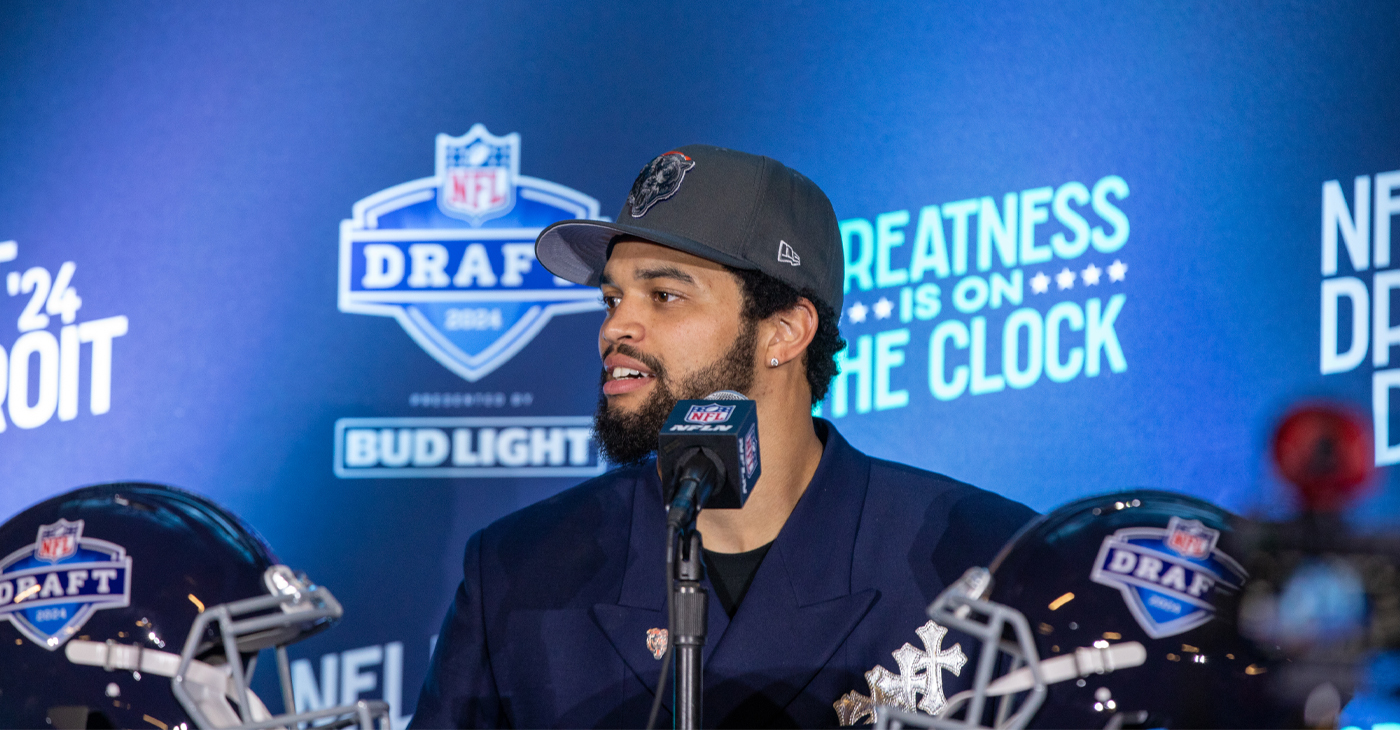

Philadelphia Eagles quarterback Jalen Hurts found Darius Cooper with nine seconds left for the game winning touchdown as his team beat the Tennessee Titans 24-20 in Nashville. Hurts finished the day 26/37 for 264 yards. He threw for two touchdowns and two interceptions.
Prior to the final drive, the Eagles ran 25 plays for 45 yards. During the final drive Hurts went 6-8 with 61 passing yards and the touchdown. Titans defensive tackle — and team captain — Jeffery Simmons said this week that the way to defend Jalen Hurts is to make him “play quarterback.”
Hurts said to Simmons after today’s game: “You started that sh**. I had to finish it.”
Running back Saquon Barkley suffered a stinger in the first half but he ultimately finished the game. He had four carries and nine yards and one catch for eleven yards. He will get an MRI for his injury, but admitted to Cameron Wolfe of the NFL Network he was fine.
Caleb Williams leaves game against Vikings with apparent lower-body injury
Chicago Bears quarterback Caleb Williams was helped off the field with a right leg injury with 7:42 remaining in the fourth quarter. Williams was down, writhing in pain after scrambling to his left. After departing the injury tent, Williams raised his right fist, acknowledging the crowd while expressing his frustration. Testing will commence on Monday to find out more details about his injury.
“We’ll know tomorrow,” Johnson admitted regarding Williams’ injury. “He’s in good spirits. He’s a team player.”
Williams finished the day with 138 passing yards and one interception.
“I’m actually happy it’s nothing with the knee — that was my first inclination,” Johnson said. “But, a hamstring could be pretty damaging as well. So, we’ll see. We’ll see how bad it is tomorrow and we’ll go from there.”
Bryce Young once again dominated the Falcons
Carolina Panthers quarterback Bryce Young is 5-1 against the Atlanta Falcons and is undefeated at Mercedes-Benz Stadium. Today, Young threw for 287 yards and three touchdowns as he led the Panthers to a 34-3 dismembering of the Atlanta Falcons. Georgia Tech alumnus Darren Waller caught two touchdowns and linebacker Devin Lloyd returned one of his two interceptions for a touchdown.
Cooper Rush started his second straight game for the Falcons and it did not go well. The partisan crowd voiced their displeasure after Rush completed 10/17 passes for 86 yards and two interceptions. Jack Strand entered the game for Rush prompting cheers from the Falcons fans. The rookie threw a pick-six on his first career pass attempt. Strand was the first QB to accomplish that feat since Sam Darnold in 2018 and is the first Falcons player to do that since Brett Favre in 1991. Strand finished the day with 59 passing yards and 16 rushing yards.
According to reports, quarterback Michael Penix, Jr. is expected to make his season debut this Thursday at the Green Bay Packers. His return should help the Falcons. They are the first team since the 2008 Rams to not run any plays in the red zone after the first two games to open a season.
The bright spots for the Falcons today were the Spelman College Jaguarettes performing with the Falcons cheerleaders and Florida A&M’s marching band, The Marching 100, also performed during halftime!
Jayden Daniels gets carted off after apparent arm injury
Washington Commanders quarterback Jayden Daniels appeared to injure his left elbow on the final play of the first half in his game against the Dallas Cowboys. During the play, Daniels got stepped on, braced himself for the fall, and his elbow bent the wrong way. Daniels draped a towel over his head as he exited the field on the cart.
He was later ruled out.
Daniels suffered a dislocated elbow to the same arm during week nine of last season against the Washington Commanders, which led to him being shut down for the remainder of the season.
The post NFL: Week Two Recap | Jalen Hurts did not fold; Caleb Williams exits game with injury appeared first on BlackPressUSA.
#NNPA BlackPress
The Complete Negotiation Framework — Every Stage, Every Tactic, Every Win
Master the complete vehicle-purchase negotiation framework with Roosevelt Gist and Roosevelt. Learn every stage, tactic, and win!
The post The Complete Negotiation Framework — Every Stage, Every Tactic, Every Win appeared first on BlackPressUSA.

Roosevelt Gist and Roosevelt deliver the complete vehicle-purchase negotiation framework in Episode 8 of The Color of Our Money Is Green. This episode covers the three foundations of every effective negotiation, the full seven-stage negotiation sequence with exact language for every stage, and five of the most common dealership tactics with the specific response each one requires.
What You Learn in This Episode:
The three foundations that make every negotiation tactic work
The complete seven-stage car-buying negotiation sequence
Exact language for every stage of the dealership conversation
Five common dealership tactics — the turnover, the four-square, the packed payment, spot delivery, and forced add-ons — and how to counter each one
Why signing preliminary paperwork isn’t the same as signing the final contract
___________________________________________________________________
“The Color of Our Money Is Green: A Buyer’s Guide to What Cars Actually Cost” — stan.store/RGist
____________________________________________________________________
AutoNetwork helps serious car shoppers inspect any new vehicle online before walking into a dealership. I’m Roosevelt — I’ve been reviewing cars and shaping digital car buying and credit union auto leasing since before YouTube car reviews existed.
You’ll find detailed walkaround reviews, POV test drives, and buyer-focused breakdowns covering comfort, space, features, and real-world value.
How to use the channel:
Watch the walkaround of the car you’re considering
Visit AutoNetwork.com for the full review
Check CouponsOffersAndDeals.com for current dealer specials
Walk in already knowing what you want — and what it should cost
 AutoNetwork.com
 CouponsOffersAndDeals.com
Affiliate disclosure: some links earn a small commission at no cost to you and help support the channel. Insta360 is one of those partners.
The post The Complete Negotiation Framework — Every Stage, Every Tactic, Every Win appeared first on BlackPressUSA.
#NNPA BlackPress
Mazda CX-90 Luxury: Heated Seats & Premium Comfort! #shorts
Stay toasty in the CX-90! Plush Nappa leather, heated/ventilated seats, and a memory-equipped heated steering wheel deliver ultimate luxury.
The post Mazda CX-90 Luxury: Heated Seats & Premium Comfort! #shorts appeared first on BlackPressUSA.

Experience ultimate comfort in the CX-90. Nappa leather, heated/ventilated seats, 8-way power adjustments, and memory settings for both front passengers. The heated steering wheel with memory tilt/telescope adds premium convenience.
 Watch the full video: https://youtu.be/EH5A4eQ4ipY
#AutoNetwork
The post Mazda CX-90 Luxury: Heated Seats & Premium Comfort! #shorts appeared first on BlackPressUSA.



OP-ED: Proposition 44 Would Put a Price on Trust

OP-ED: Proposition 40: It’s Time to Play Chess, Not Checkers

Listening as a Lifeline: A Doula’s Witness to Black Maternal Health

New Protections for Ticket Buyers: Gov. Newsom Signs Assemblymember Isaac Bryan’s Bill

‘We Don’t Talk Trash — We Pick Up Trash!’

Zakiya Jendayi Arrested, Locked Out of Home by Sheriff’s Deputies

Oakland Post: Week of September 30 – October 6, 2026

Asm. Corey Jackson Announces Launch of 24-Hour Childcare in His District

IN MEMORIAM: The Rev. Leon “Sonny” Clark, Longtime Orange County Pastor and Community Leader, Dies at 72

Poll: Becerra Widens His Lead Over Hilton; Californians Split on Wealth Tax

From Historic Memories to New Possibilities: Oakland Celebrates Coliseum 60

County Office of Education Says OUSD Finances Are Getting Healthier, Materially Stronger

LIVE FREE Sunday Dinner Brings Faith, Fellowship and Civic Conversation to Oakland

Remembering Chauncey Bailey as Student Journalists Face Threats to Truth-Telling

BLACspace Cooperative Invites Bay Area to Experience Oakland’s Black Cultural Ecosystem Through a BLAC Map Tour + Party

Standoff for Justice: Our Homes Are Worth Fighting For

Oakland Post: Week of August 26 – September 1, 2026

Frontier Airlines’ Return to Oakland Airport Brings Flights, Jobs and Opportunity

Gubernatorial Candidate Steve Hilton Blasts California New Tire Rules; Newsom Hits Back

Chef Sharon Lee Blends Culinary Excellence, Education and Empowerment

Jackie Wright Champions Bay Area Stories, Filmmakers and Cultural Institutions

Misnamed ‘Parent’ PAC Seeks to Influence Oakland School Board Elections

Oakland Coliseum Project Opens Door for Small Businesses to Build Bigger

Big City Mayors Ask for “Yes” Vote on Housing Bond Measure; Conservatives Say “No”

Gov. Newsom’s Latest Appointees Include Sacramento Advocate for Formerly Incarcerated Students; State’s New Tech Chief

Longtime BWOPA Member Brendalyn Goodall Appointed to California Workforce Development Board

Gov. Newsom Signs Law Shielding Immigration Aid Workers From Doxing Threats

Oakland Post: Week of September 2 – 8, 2026

Secretary of State Shirley N. Weber Urges Californians to Vote Early as Voter ID Battle Intensifies

IN MEMORIAM: Dolly Parton Dead at 80 — How She Built a Legacy of Love and Earned Her Place in Black Culture

The Conversation With Al McFarlane 6/23/26

Media Monday 6/22/26

LIVE! ASK ALMA! — TUES. 6.23.26 7PM EST

Car Buying Secrets: 4 Hidden Checks Before You Sign!

Is This 550 HP Charger Worth YOUR Money? AutoNetwork Review

Celebrating Juneteenth – Frederick Douglass on education and resistance

LIVE! — ASK ALMA! — TUES. 6.19.26 7PM EST

Hyundai Ioniq 5 Parking, Safety, and 360 View #shorts

2025 Ioniq 5 New Wiper & Powerful Performance! #shorts

Electric SUV Range: Is 259 Miles Enough? #shorts

EV Charging: How Fast Can You Charge an Electric Vehicle? #shorts

Biometric Cooling… Messaging Seats…Come on! 2025 Infiniti QX80 Autograph 4WD

Charged Up: Witness the Magic of a Fully Electric Car! #shorts

Range Rover Sport PHEV Included…: See What’s Inside This Luxury SUV! #shorts

Invisible Hood View: Perfect Parking with X-Ray Vision! #shorts
-
 Community3 weeks ago
Misnamed ‘Parent’ PAC Seeks to Influence Oakland School Board Elections
-
 Activism4 weeks ago
Oakland Post: Week of September 2 – 8, 2026
-

 Activism3 weeks ago
Oakland Post: Week of September 9 – 15, 2026
-

 Community3 weeks ago
Richmond Tiny House Village Farm & Garden Set to Open Gates on Sept. 26
-

 Black History3 weeks ago
Latest Massacre in Haiti Reveals Cruelty U.S. Deportations
-

 Black History3 weeks ago
OPINION: Nolan Wells’ Death One of Several Signifying Racial Terror Lives on in U.S. South
-

 Business2 weeks ago
Mayor Lee Announces $1 Million Kaiser Permanente Grant for Pilot Program to Address Homelessness, Clean Up Public Spaces throughout Oakland
-

 Community3 weeks ago
Democratic Clubs Interview Candidates for Oakland School Board
