Connect with us

Economics

Black Wealth 2020:  New Economic Justice Movement Aims to ‘Turbo Charge’ Black Wealth in America

Published

on

By Hazel Trice Edney
(TriceEdneyWire.com) – According to the following statistics, the economic condition of America’s Black community is in dire straits:
  • A recent study by Harvard University found that homeownership in the Black community stands at only 42.2 percent in the nation’s largest metro areas. That’s below the Latino-American community, which is at 46 percent and well below the White-American community, which is at 72 percent.
  • In addition, the mortgage denial rate for Blacks is more than 25 percent, near 20 percent for Latinos but just over 10 percent for White applicants, according to the Center for Enterprise Development.
  • Likewise, the U.S. Black Chambers, Inc. says the lack of access to capital remains the greatest barrier to the establishment, expansion and growth of Black-owned businesses.
  • Finally, Black-owned banks, which grant an overwhelming majority of their loans to Black people, continue to climb their way out of the disparate hit they took during the great recession while maintaining their historic role in stabilizing Black communities.

These revelations illustrating the economic struggles of African-Americans are the driving forces behind the founding of a new group that’s leading a movement for Black economic
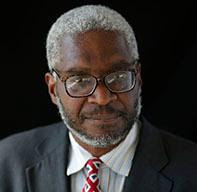
Marie Johns, managing partner, Leftwich LLC

justice across America. Black Wealth 2020, formally established only two years ago, aims to lock arms with some of the most historic national civic and civil rights organizations with a goal to impact economic outcomes in Black America over the next three years. The group’s three-pronged strategy is to increase the number of Black homeowners, strengthen Black-owned businesses and increase deposits in Black banks by the year 2020.
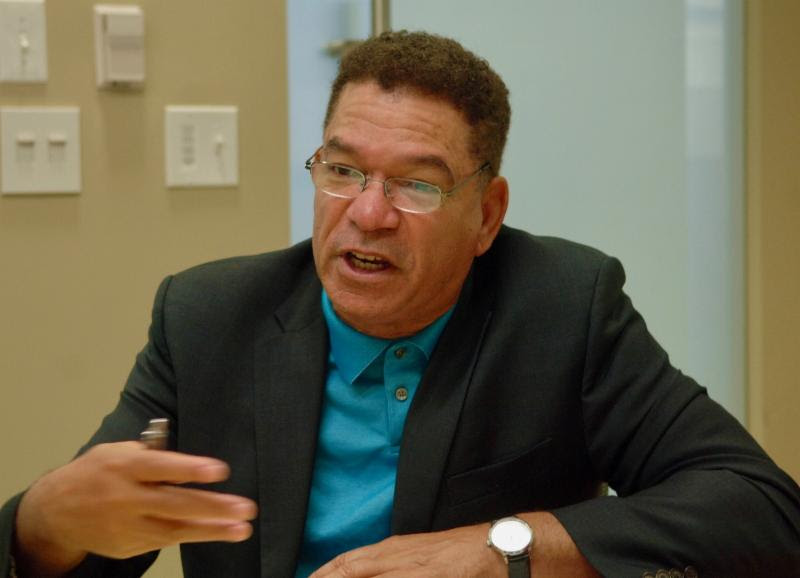
“This is, in my recollection, the first time there’s been a systematic effort to draw our community’s attention to these very critical issues related to wealth-building and economic self-sufficiency. That being the importance of supporting Black banks, the importance of home ownership, the importance of growing Black businesses – those really are the three pillars of economic empowerment,” says Marie Johns, former deputy administrator at the Small Business Administration and retired president of Verizon Washington, who is a member of Black Wealth 2020.
“If you have strong business ownership, strong home ownership and strong financial institutions, that’s freedom. It’s the closest proximity that we’ll get,” says Johns, also chair of the Howard University board of visitors and creator of SBA’s Council on Underserved Communities.
In a nutshell, the seeds of Black Wealth 2020 were initially planted during a fight for economic justice. It started about seven years ago as several like-minded heads of organizations with economic components began regularly discussing the financial plight of Black people.
The group gelled after National Bankers Association President Michael Grant, National Association of Black-owned Broadcasters President Jim Winston and U.S. Black Chamber President Ron Busby joined forces with Congresswoman Maxine Waters (D-Calif.) to push for Black business inclusion in a proposed merger between Comcast and NBC Universal.
 
Winston had asked Waters, ranking Democrat on the House Financial Services Committee, to take action in the situation. Winston then pulled in Grant who pulled in Busby. The Comcast merger ultimately failed. But, “We decided to put together some kind of

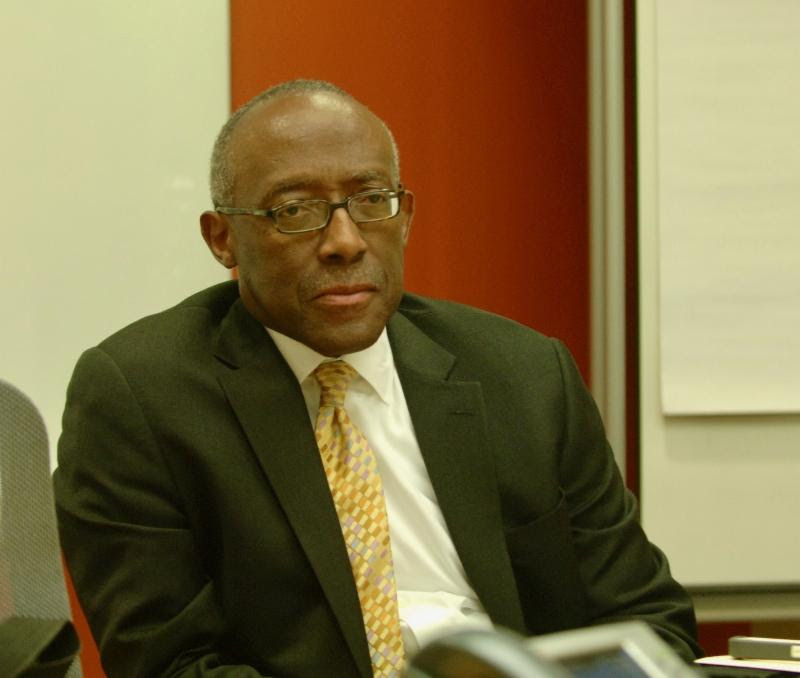
Michael Grant, National Bankers Assoc.

organizational team,” recalls Grant, “So that whenever these issues come up, we’ll have a united front and we’ll have a lot of organizations. That’s how Black Wealth 2020 was formed.” The ultimate goal is to “turbo charge” Black wealth, Grant says.

While Black Wealth 2020 is uniquely economic, it aims to work alongside traditional civil rights organizations, including the National Urban League, the NAACP and others, Winston says.
“We have been concerned that for many years the Black civil rights movement had been the only national voice of the African-American community. Those groups do a great job but there are business and economic battles that the Black community has been fighting. A

nd we don’t believe that the Black community’s voice has been strong enough and effective enough in that regard,” says Winston. “And so we are able to strengthen each other in each other’s activities as well as our collective voice for the Black community.”
Other leaders in Black Wealth 2020 are HomeFree USA President Marcia Griffin; Zenviba Academy of Arts and Science President John William Templeton; Collective Empowerment Group National President Dr. Jonathan Weaver; National Association of Real Estate Brokers President Ron Cooper; Enlightened: Beyond Expectations President Antwanye Ford; and Delta Sigma Theta President Dr. Paulette Walker. At latest count, the group has a total immediate reach of at least 3 million people.

Jim Winston, NABOB

Members of Black Wealth 2020 are quick to point to the historic roots of its economic goals. When Dr. Martin Luther King Jr. was assassinated on April 4, 1968, he had launched a “Poor People’s Campaign,” an economic justice movement that had begun in Memphis.
John William Templeton, co-founder, 14th Annual National Black Business Month
John William Templeton, co-founder of the now 14th Annual National Black Business Month in August, sees the work of Black Wealth 2020 as a continuum of Dr. King’s vision. Templeton contends the prophecy spoken by King the night before his death must still come to fruition.
“King said he wasn’t going to get to the promise land with us. But we as a people will get to the promise land. And people have forgotten that,” Templeton says.
Over the past 49 years since the assassination of Dr. King, other Black economic strategies have popped up and fizzled out. For this movement, Black Wealth 2020 members say the strategy for sustainability is built in, including the following elements:
  • Black America’s current state of affairs: “This current administration is going to force us to look internally because we don’t have any help coming from outside our
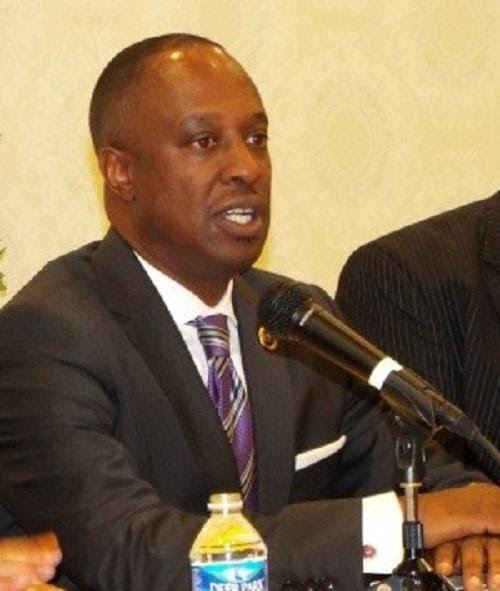
    Ron Busby, USBC Inc.

    community,” says USBC President Ron Busby. “It’s not about one organization or about one individual leading the conversation, but once the mission was set and the three goals were established we can now go back to our collective constituencies and say this is what’s important.”

  • Youth involvement: National Bankers President Grant says the participation of youth is key. Black Wealth 2020 has begun incorporating and mentoring youth economic leaders in their monthly meetings. “In my study of history, going back to ancient times, I can’t think of any major movement that was a societal changing movement that wasn’t driven by the energy of youth,” Grant says.
  • Shared Leadership: “In the past, movements have been tied to one individual. And as soon as there is some issue, and perhaps maybe death, often times what happens on the demise of that individual is the organization goes through a down spin and it in many instances ends up being discarded,” says Dr.
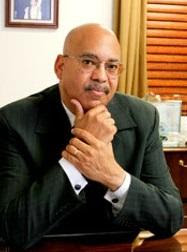
    Dr. Jonathan Weaver, Collective Empowerment Group; pastor, Greater Mount Nebo AME Church 

    Jonathan Weaver. “As a result of this, there is no mindset or mentality among any of us that we want to be the one to be glorified or recognized as the so-called leader. That there is indeed shared leadership within this body and because we are so focused and so intentional about it, we really are just very resolute and determined to make this work.”

  • Unique structure: The umbrella structure of Black Wealth 2020 also lends to unity, accountability and sustainability. “This is not just one organization, but this is a series of organizations that have come under one banner and will be about empowering Black people,” Weaver says.
  • The urgent need for economic growth: “It’s a fact that more than half of all African- Americans in our country rent. It’s a fact that a homeowner’s net worth is 36
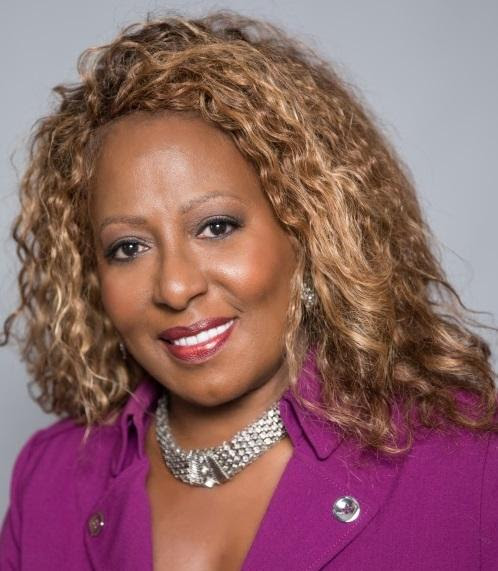
    Marcia Griffin, HomeFree USA

    times that of a renter. And it’s a fact that the median income for an African-American household is $35,000 compared to the national average of $53,000,” says Marcia Griffin of HomeFree USA. “This is an unacceptable situation for our people, and Black Wealth 2020 initiatives are critical in reversing these statistics and rebuilding wealth in the Black community.”

Clear and positive vision: “This is not an anti-White movement, this is not a reactionary movement. This is a very positive affirmation about Black love and Black support and it’s an acceptance of full responsibility of our economic survival,” says Grant.
Despite the name, representatives of the Black Wealth 2020 movement say they have vision well beyond only three years from now.
“One of our founders thought we should call ourselves Black Wealth 2020 and Beyond. While we were definitely in favor of that concept, we felt the name was a little cumbersome,” Jim Winston chuckles. “So our goal, of course, is to continue beyond 2020. Building wealth in the African-American community is not an item that has a time line on it or a deadline on it…We just wanted to give ourselves a target where we can see some substantial improvements in that time frame.”

Continue Reading
Click to comment

Leave a Reply

Your email address will not be published. Required fields are marked *

Bay Area

Oakland Mayor Pushes Charter Overhaul to Clarify Roles in City Government, Increase Accountability and Improve Service Delivery

Under the proposal, the mayor would serve as Oakland’s chief executive, overseeing city departments, implementing policy, proposing the annual budget, and managing day-to-day operations. The measure would also give the mayor veto power over legislation and the budget, though the City Council could override a veto with a two-thirds vote.

Published

on

Oakland Mayor Barbara Lee. File photo.

By Oakland Post Staff

Oakland Mayor Barbara Lee is backing a sweeping proposal to restructure Oakland’s government, arguing the changes would make City Hall more accountable and improve the delivery of basic services like public safety, homelessness response, and infrastructure repairs.

The charter reform measure, introduced April 7 and co-sponsored by Oakland City Council President Kevin Jenkins, would ask voters in November to approve a “strong mayor, strong council” system designed to create clearer lines of authority inside city government.

Under the proposal, the mayor would serve as Oakland’s chief executive, overseeing city departments, implementing policy, proposing the annual budget, and managing day-to-day operations. The measure would also give the mayor veto power over legislation and the budget, though the City Council could override a veto with a two-thirds vote.

The City Council, meanwhile, would maintain legislative authority by adopting ordinances, approving budgets, conducting oversight hearings, and confirming key mayoral appointments. The proposal would also create an Independent Budget and Legislative Analyst Office to provide nonpartisan fiscal and policy analysis for councilmembers.

“I’ve spent months listening to Oaklanders across every neighborhood about what they expect from their city government,” Lee said. “The Charter Reform Working Group’s engagement made clear that residents want a system where there are no questions about who is responsible for delivering results on public safety, homelessness, infrastructure, and basic services.”

Jenkins said the proposal would strengthen both executive leadership and council oversight.

“I’ve long believed Oakland works best when residents have clear lines of accountability and a government structure that aligns responsibility with results,” Jenkins said.

The proposal follows recommendations from the Mayor’s Charter Reform Working Group, co-facilitated by the League of Women Voters of Oakland and SPUR.

Over five months, the group conducted more than 60 interviews, held 14 public meetings across Oakland, and engaged more than 750 residents while reviewing governance models used in other cities.

“The process of engaging residents across Oakland surfaced the governance clarity Oakland needs,” said Sujata Srivastava of SPUR. “The Charter Reform Working Group has produced a thoughtful set of recommendations that if adopted could strengthen accountability and improve service delivery across city government.”

Polling cited by the mayor’s office suggests voters may be open to the changes. A February 2026 poll by the East Bay Polling Institute found 64% of voters support adopting a strong-mayor system. Separate polling conducted by the Oakland Chamber of Commerce and David Binder Research found support ranging from 61% to 63% among likely voters.

The measure is scheduled to be heard by the City Council Rules Committee on May 21. If approved by the council, it would appear on the November 2026 ballot, where Oakland voters would have the final say.

Continue Reading

Activism

More and More, Black Californians Are Worried About Rising Costs of Housing, Energy, Food and Gas 

According to an April 2024 report by the Greenlining Institute, low-income Black Californians are struggling with affordability due to a combination of historical systemic barriers and modern economic pressures. The Greenlining Institute is a California-based policy, research, and advocacy nonprofit founded in 1993 to fight systemic racism and economic injustice.

Published

on

iStock
iStock.

By Antonio‌ ‌Ray‌ ‌Harvey‌, California‌ ‌Black‌ ‌Media‌

Housing, energy, food and gas are four essential household expenses, and their rising costs are forcing residents—especially lower-income households—to make difficult trade-offs, Assemblymember Rhodesia Ransom (D-Stockton) said at a conference on affordability last week in Sacramento.

Ransom, a member of the California Legislative Black Caucus (CLBC), noted a shift in consumer behavior, stating, “Before people used to choose between things that they wanted and things that they needed.”

“Now, what we’re hearing from constituents is they are prioritizing their needs differently,” she said. “Because of the affordability crisis, it’s no longer about choosing between other needs. Our constituents are now saying ‘what needs to be prioritized?’ Gas and food are at the top of the list.”

Ransom made the comments about affordability at Capitol Weekly’s informational conference titled “Affordability: The Cost of Living in California,” which was held on April 30 at the University of California’s Student and Policy Center.

Co-hosted with the University of California Student and Policy Center, the political conversations focused on identifying policy solutions to the state’s extremely high prices for energy, food, and essentials.

The keynote speakers at the conference were former Assemblymember Lorena Gonzalez, president of the California Federation of Labor Unions, and Mike Madrid, a political strategist, author, and senior fellow at UC Irvine.

Conversations about affordability are taking on greater urgency as the election season kicks in, speakers said.

According to an April 2024 report by the Greenlining Institute, low-income Black Californians are struggling with affordability due to a combination of historical systemic barriers and modern economic pressures. The Greenlining Institute is a California-based policy, research, and advocacy nonprofit founded in 1993 to fight systemic racism and economic injustice.

Black households in California experience the highest levels of rent burden; approximately 65% of Black renters, according to the Greenlining report. Historical “redlining” and ongoing discrimination have restricted homeownership. Black families also pay 43% more for energy than White households, partly because they are more likely to live in older, less energy-efficient rentals.

In addition, roughly 1 in 3 Black adults (36.5%) reported household food insecurity in late 2025, more than double the rate for White adults. This is often exacerbated by “food deserts” in predominantly Black neighborhoods.

In March, Assembly Minority Leader Heath Flora (R-Ripon) expressed concerns about affordability in California, describing it as a crisis where families are being “pushed to the edge.”

“Californians should not have to choose between putting food on the table or filling up their car,” Flora stated. “We need to cut costs now. Not tomorrow, not next week, not next month. Now.”

Cuts to the federal Supplemental Nutrition Assistance Program (SNAP) funding are being driven by the Trump Administration’s One Big Beautiful Bill Act (H.R. 1), which is reducing federal spending by approximately $187 billion through 2034.

Those reductions are putting more pressure on the state to help, Ransom said. According to the AAA Gas Prices website, as of May 8, California’s gasoline prices averaged over $6 per gallon in some areas, with various locations experiencing spikes of $7 to $8 per gallon. In California, fuel prices are driven by refinery maintenance and market volatility, while high food prices are linked to rising transportation costs, experts say.

Continue Reading

Activism

The People’s Coalition to Stop Deed Theft Speaks at National Probate Reform Coalition Meeting

Evangeline Byars and Carmella Carrington lead the STOPDEEDTHEFT.org movement, fighting rising deed and title fraud, which disproportionately affects Black and Brown communities nationwide.

Published

on

Left to right:  Evangeline Byars  and Carmella Carrington are gaining nationwide attention with their STOPDEEDTHEFT.org movement.

By Tanya Dennis

The National Probate Reform Coalition (NPRC) has learned that aside from rampant theft of properties occurring through probate court, deed theft extends even further with the support of banks, police, judges, attorneys and “the system” to steal Black and Brown properties.

Deed and title fraud are rising, with FBI data showing over 9,300 complaints and $173.6 million in losses in 2024 alone.

To that end, NPRC invited Evangeline Byars of The People’s Coalition to Stop Deed Theft as their keynote speaker on May 7.

Deed theft victims reach out to Byars because she has a reputation of getting things done.  Introduced to community organizing at Medgar Evers College in 2011, Byars was mentored by Harry Belafonte and gained further movement training in 2012-13 through his “Gathering for Justice.” Byars also trained with the Youth Brigade 32BJ, Union in 2012 where she learned to map, target, and execute actions.

With that knowledge as an advocacy worker, Byars ran for president of TWU Local 100 for transit workers.  During challenges of the union and political changes in New York when unions no longer had friends in government, they organized.

In 2025, deed theft victims approached Byars and told their stories.  Byars investigated, and discovered rampant, unrelenting theft of properties, primarily from Black and brown families, got involved and helped them with their fight, teaching them how to sustain their fight at the grassroots level while remaining politically independent.  This independence gave them the ability to move without co promise.

Deed theft is the taking of someone’s deed through fraudulent mortgages or a stranger that accesses property records, prepares paperwork and files for an owner’s property. New York is a’ first notice’ state, which means whoever appears first on record is the designated deed holder.

Deed theft escalated between 2013-23, the outcome of the subprime market, when people faced mass foreclosure and short sales. By 2014 people, primary Black and Brown, were fighting for their property.

In California, title theft (deed fraud) is a fast-growing threat often targeting high-equity homes, vacant land, and rentals. As of 2024, California leads the nation in real estate fraud with over 1,583 cases costing roughly $24.8 million in losses in a single year, reflecting the state’s prime position for scammers due to high property values, the FBI reports.

Byars says, “Deed theft affects Black and Brown people: it is by design, leading to the erasure of people of color homeownership that is happening nationwide. In every big city across the United States, towns and municipalities, we are witnessing a mass exodus of Black and brown people.  This theft cannot occur without judges, notaries and law enforcement, it is a syndicate of players working together for the removal of people by illegal ejectment or eviction.

The People’s Coalition to Stop Deed Theft does court watch and constantly highlight the inequities in the court system.

Byars says, “This is a human rights crisis.  Because of Wall Street and what New York signifies to the nation, know that no state is safe.  Any person can come and create paper terrorism, slap forgery notes on homes; engage in illegal guardian procedures; initiate foreclosures; apply for fraudulent loan modifications; then there’s outright theft and forgery, just taking people’s homes.  Believe me, it’s happening nationally and on the daily, These predators also target seniors over the age of 60 and women.”

The People’s Coalition to Stop Deed Theft take direct actions against perpetrators and are working with the New York District Attorney to create an office dedicated to gighting deed theft.

“Two ways to protect your deed is to keep a note, never satisfy your mortgage, because the bank is the biggest gangster, but if you’re making a payment, it keeps them in check.  Or put your home in a living trust, once you have a trust, it hides the owner’s name and protects the person from predators.”

Continue Reading

Subscribe to receive news and updates from the Oakland Post

* indicates required

CHECK OUT THE LATEST ISSUE OF THE OAKLAND POST

ADVERTISEMENT

WORK FROM HOME

Home-based business with potential monthly income of $10K+ per month. A proven training system and website provided to maximize business effectiveness. Perfect job to earn side and primary income. Contact Lynne for more details: Lynne4npusa@gmail.com 800-334-0540

Facebook

Oakland Mayor Barbara Lee. File photo.
Bay Area2 weeks ago

Oakland Mayor Pushes Charter Overhaul to Clarify Roles in City Government, Increase Accountability and Improve Service Delivery

Sen. Laura Richardson (D-San Pedro) presents a Senate resolution to the Delta Theta Sigma Sorority Farwest Region at the State Capitol on May 4. Photo courtesy of the Senate Rules Committee.
Activism2 weeks ago

The Ladies of Delta Sigma Theta Hold Day of Advocacy at the Capitol in Sacramento

iStock
Activism2 weeks ago

Rep. Kamlager-Dove Introduces Bill to Protect Women in Custody After Reports Detailing Miscarriages and Neglect

Hon. Steve Bradford, candidate for California Insurance Commissioner.
Bay Area2 weeks ago

Q&A with Steven Bradford: Why He Wants Your Vote for California Insurance Commissioner

Tennessee State Rep. Justin Jones (D-Nashville). File photo.
Activism2 weeks ago

OPINION: The Fire of Oakland’s Justin Jones

iStock
Bay Area2 weeks ago

How Is AI Affecting California? The State Wants You to Share Your Story

iStock
Activism2 weeks ago

California Launches Free Diaper Program for Newborns Statewide

Book covers. Photo courtesy of Terri Schlichenmeyer.
Advice2 weeks ago

Book Review: Books for College-Bound Students

Photo courtesy of the office of Assemblymember Corey Jackson (D-Moreno Valley).
Activism2 weeks ago

Asm. Jackson Bill Requiring Anti-Hate Speech Training for Calif. Public Officials Sent to “Suspense File”

iStock
Activism2 weeks ago

More and More, Black Californians Are Worried About Rising Costs of Housing, Energy, Food and Gas 

Crime Survivors Speak at the California State Capitol was a multi-day advocacy event held May 4–6 that called for increased support, services, and funding for crime victims. Organized by Crime Survivors for Safety and Justice (CSSJ), the gathering brought together more than 200 survivors and family members to advocate for legislative reforms. CBM photo by Antonio Ray Harvey.
Activism2 weeks ago

Advocates Rally at State Capitol to Demand Heat Protections for Incarcerated People; More Funding for DV Survivors

Lecturer Lisa Troseth will speak on "Moving past fear to healing" on May 23 at the Orinda Library Auditorium. Photo courtesy of the Christian Science Board of Lectureship.
Bay Area2 weeks ago

Coming to Orinda: A Lecture on Finding the Strength to Heal and Move Past Fear With Divine Love

William “Bill” Patterson, Jr. Courtesy Peralta College District
Activism2 weeks ago

EBMUD Enshrines the Legacy of  its First Black Board Member William ‘Bill’ Patterson 

Mary Jackson. Public domain.
Arts and Culture2 weeks ago

Against All Odds: Mary Jackson’s Journey to NASA Engineer

Researchers pointed out that the number amounts to 1 in every 50 adults, with 3 out of 4 disenfranchised living in their communities, having completed their sentences or remaining supervised while on probation or parole. (Photo: iStockphoto)
Activism2 weeks ago

Supreme Court Voting Rights Ruling Reverberates From the South to California

Trending

Copyright ©2021 Post News Group, Inc. All Rights Reserved.