
Economics
Black Wealth 2020: New Economic Justice Movement Aims to ‘Turbo Charge’ Black Wealth in America


- A recent study by Harvard University found that homeownership in the Black community stands at only 42.2 percent in the nation’s largest metro areas. That’s below the Latino-American community, which is at 46 percent and well below the White-American community, which is at 72 percent.
- In addition, the mortgage denial rate for Blacks is more than 25 percent, near 20 percent for Latinos but just over 10 percent for White applicants, according to the Center for Enterprise Development.
- Likewise, the U.S. Black Chambers, Inc. says the lack of access to capital remains the greatest barrier to the establishment, expansion and growth of Black-owned businesses.
- Finally, Black-owned banks, which grant an overwhelming majority of their loans to Black people, continue to climb their way out of the disparate hit they took during the great recession while maintaining their historic role in stabilizing Black communities.
 |
 |
|
Marie Johns, managing partner, Leftwich LLC
|
justice across America. Black Wealth 2020, formally established only two years ago, aims to lock arms with some of the most historic national civic and civil rights organizations with a goal to impact economic outcomes in Black America over the next three years. The group’s three-pronged strategy is to increase the number of Black homeowners, strengthen Black-owned businesses and increase deposits in Black banks by the year 2020.
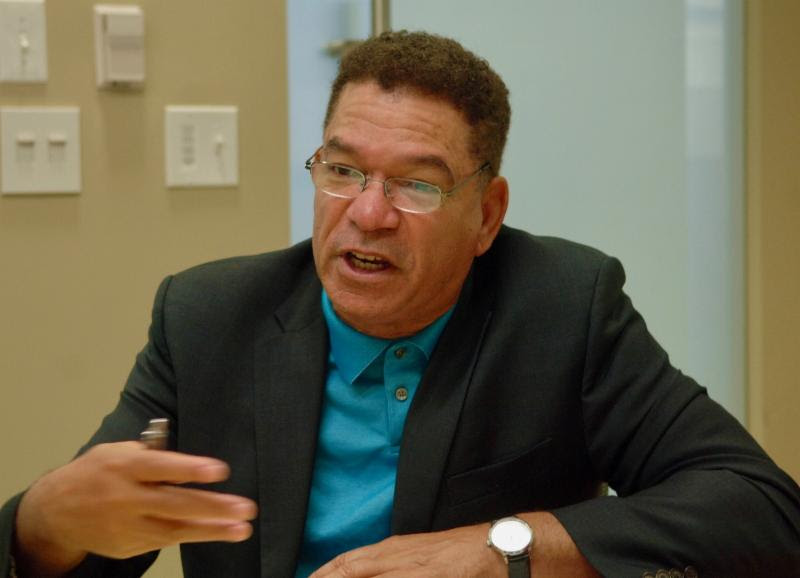 Michael Grant, National Bankers Assoc. |
|
|
organizational team,” recalls Grant, “So that whenever these issues come up, we’ll have a united front and we’ll have a lot of organizations. That’s how Black Wealth 2020 was formed.” The ultimate goal is to “turbo charge” Black wealth, Grant says.
|
nd we don’t believe that the Black community’s voice has been strong enough and effective enough in that regard,” says Winston. “And so we are able to strengthen each other in each other’s activities as well as our collective voice for the Black community.”
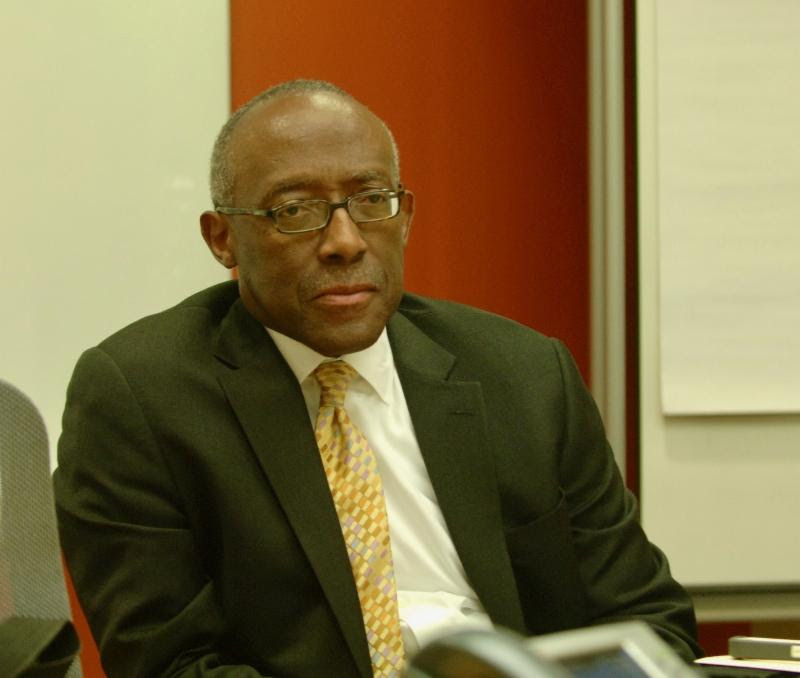
Jim Winston, NABOB
|
 |
|
John William Templeton, co-founder, 14th Annual National Black Business Month
|
- Black America’s current state of affairs: “This current administration is going to force us to look internally because we don’t have any help coming from outside our
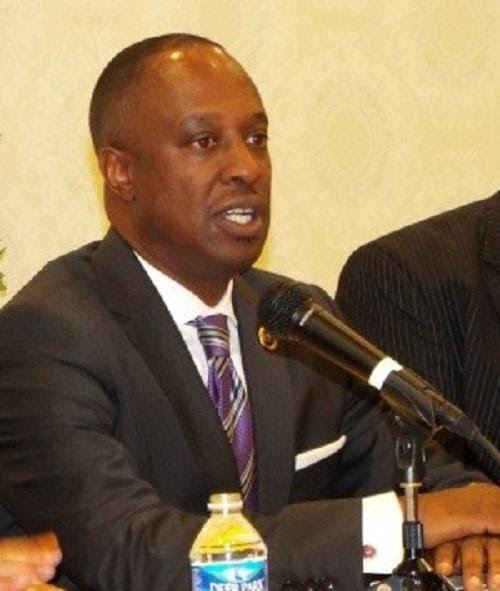 Ron Busby, USBC Inc.
community,” says USBC President Ron Busby. “It’s not about one organization or about one individual leading the conversation, but once the mission was set and the three goals were established we can now go back to our collective constituencies and say this is what’s important.”
- Youth involvement: National Bankers President Grant says the participation of youth is key. Black Wealth 2020 has begun incorporating and mentoring youth economic leaders in their monthly meetings. “In my study of history, going back to ancient times, I can’t think of any major movement that was a societal changing movement that wasn’t driven by the energy of youth,” Grant says.
- Shared Leadership: “In the past, movements have been tied to one individual. And as soon as there is some issue, and perhaps maybe death, often times what happens on the demise of that individual is the organization goes through a down spin and it in many instances ends up being discarded,” says Dr.
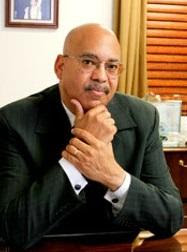 Dr. Jonathan Weaver, Collective Empowerment Group; pastor, Greater Mount Nebo AME Church
Jonathan Weaver. “As a result of this, there is no mindset or mentality among any of us that we want to be the one to be glorified or recognized as the so-called leader. That there is indeed shared leadership within this body and because we are so focused and so intentional about it, we really are just very resolute and determined to make this work.”
- Unique structure: The umbrella structure of Black Wealth 2020 also lends to unity, accountability and sustainability. “This is not just one organization, but this is a series of organizations that have come under one banner and will be about empowering Black people,” Weaver says.
- The urgent need for economic growth: “It’s a fact that more than half of all African- Americans in our country rent. It’s a fact that a homeowner’s net worth is 36
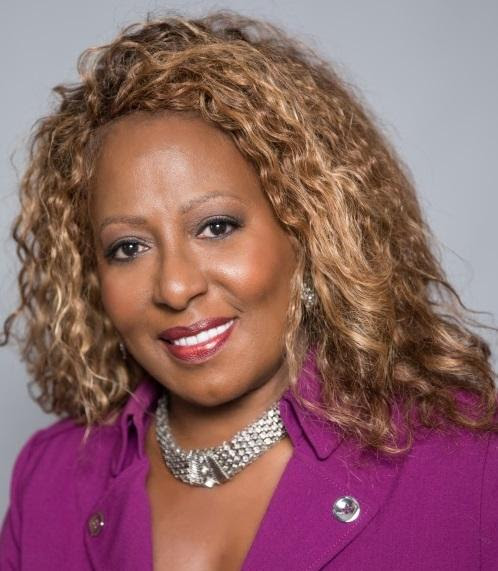 Marcia Griffin, HomeFree USA
times that of a renter. And it’s a fact that the median income for an African-American household is $35,000 compared to the national average of $53,000,” says Marcia Griffin of HomeFree USA. “This is an unacceptable situation for our people, and Black Wealth 2020 initiatives are critical in reversing these statistics and rebuilding wealth in the Black community.”













Activism
Oakland Post: Week of September 9 – 15, 2026
The printed Weekly Edition of the Oakland Post: Week of September 9 – 15, 2026

To enlarge your view of this issue, use the slider, magnifying glass icon or full page icon in the lower right corner of the browser window.
Activism
Oakland Post: Week of September 2 – 8, 2026
The printed Weekly Edition of the Oakland Post: Week of September 2 – 8, 2026
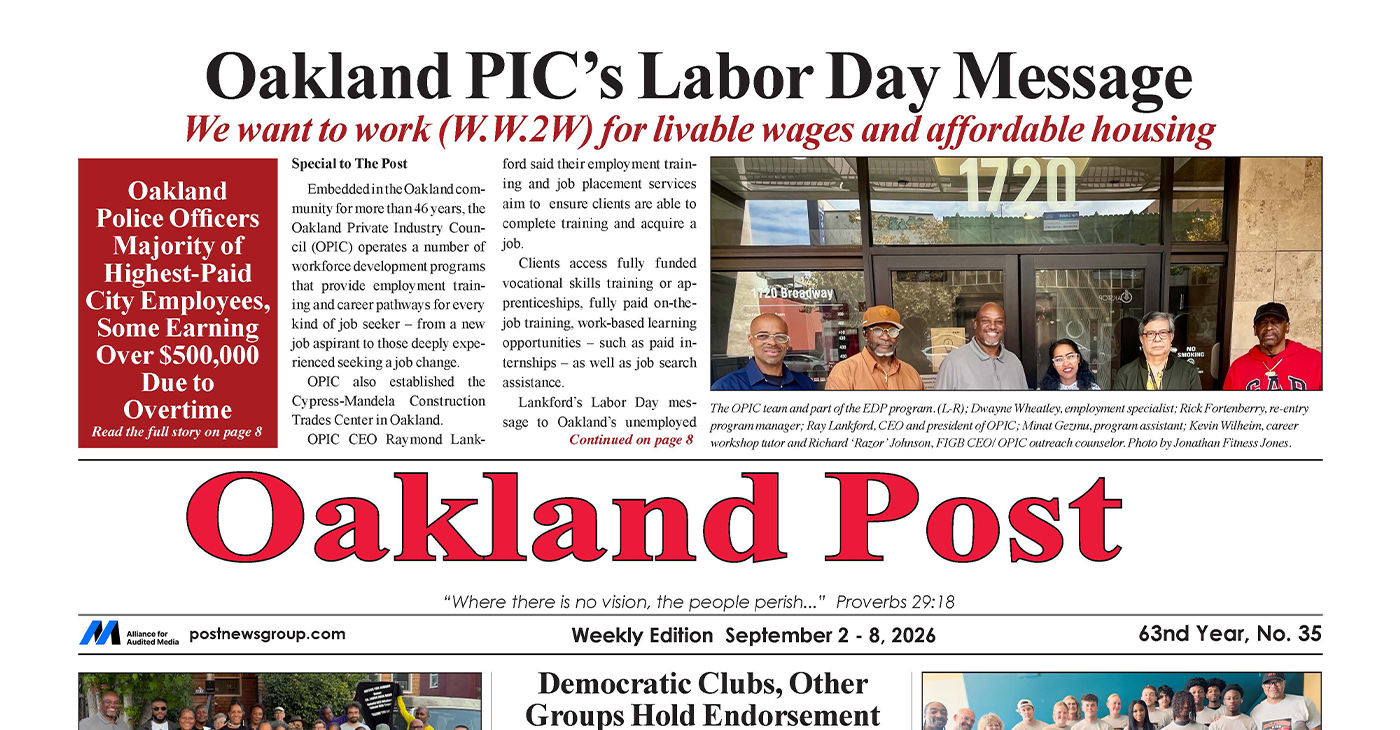
To enlarge your view of this issue, use the slider, magnifying glass icon or full page icon in the lower right corner of the browser window.
Activism
Oakland Post: Week of August 26 – September 1, 2026
The printed Weekly Edition of the Oakland Post: Week of August 26 – September 1, 2026
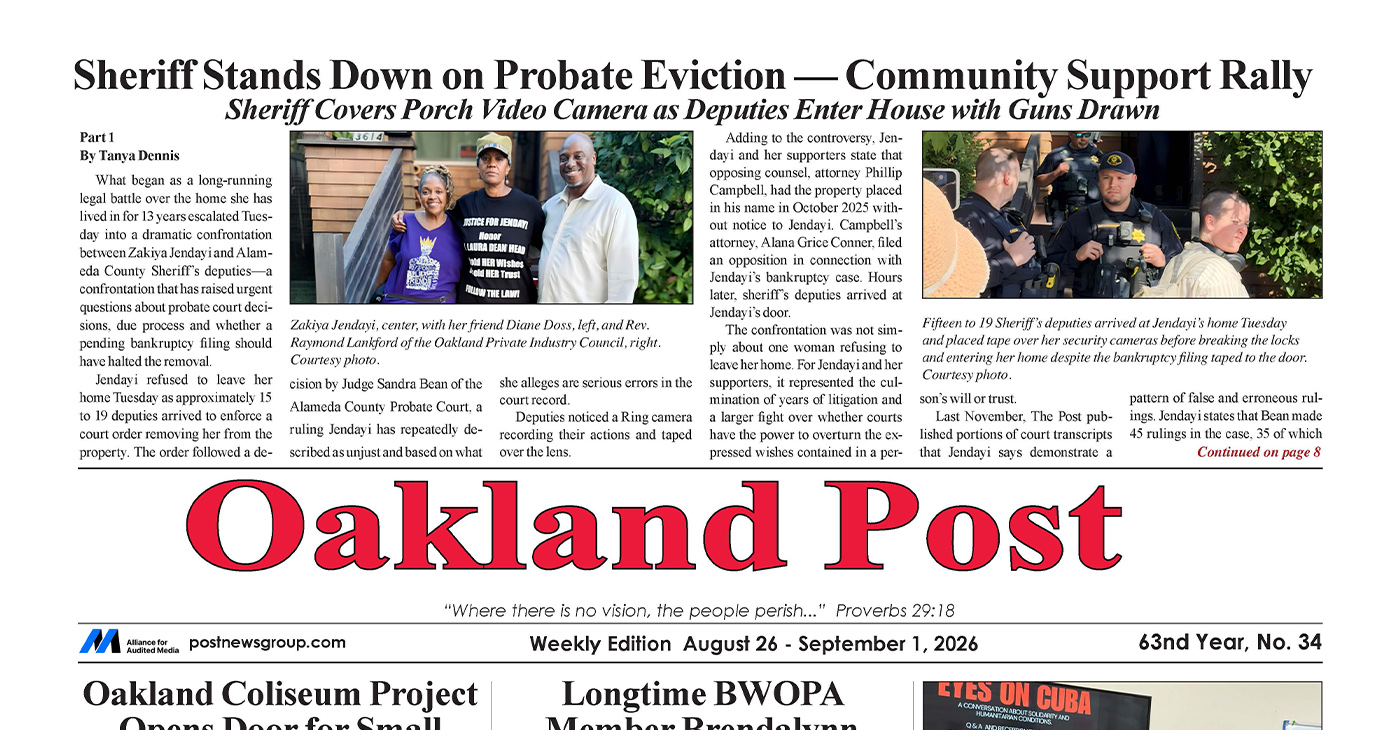
To enlarge your view of this issue, use the slider, magnifying glass icon or full page icon in the lower right corner of the browser window.


Port of Oakland, Army Corps Sign Historic Harbor Design Agreement

Democratic Clubs Interview Candidates for Oakland School Board

Nuna Phillips-McKee Celebrates 100 Years: ‘A Century of Faith, Family and God’s Amazing Grace!’

D.A. Ursula Jones Dickson: Terminix to Pay $3.15 Million Over Illegal Disposal of Pesticides, Customer Records

REPORT: Community Level Policy Is Impacting Homelessness and Drug Abuse in California
OPINION: AI Needs to Know Who Is the Boss
Goldi-Locs and Two (or Three) Bears in the Forest in California Hills

Election Watch 2026: 85% of Eligible Voters in California Are Registered

Don’t Let scammers Crash Your School Year

BOOK REVIEW — Curved Air: A Biography of Sickle Cell Anemia and the Quest to Cure the First Molecular Disease

California’s Legal Cannabis Market Hits $8 Billion as State Touts Progress on Fighting Drugs, Crime

Blacks and Latinos Clash Over LA’s Barrio Run; Mayor Karen Bass Calls for Dialogue Across Racial, Neighborhood Lines

Asm. Smallwood-Cuevas’s Bill Repealing ‘Racist’ CalWORKs ‘Man-in-the-House’ Rule Clears Legislature

Asm. Smallwood-Cuevas’s Bill Repealing ‘Racist’ CalWORKs ‘Man-in-the-House’ Rule Clears Legislature

‘Ready to See These Bills Become Law’: Sen. Weber’s Package of 15 Bills Advance to Gov. Newsom’s Desk

Department of Homeland Security Demands California Secretary of State Shirley N. Weber Scrub Voter Rolls

New Judge Could Decide if Karmelo Anthony Gets a New Trial

“The Power to See Threats Sooner”: Gov. Newsom, Safety Officials Showcase California’s Investments in Hi-Tech Wildfire Prevention

Alpha Kappa Alpha Sorority, Inc. Celebrates New North Atlantic Regional Director

California Sen. Padilla Joins Colleagues to Introduce Bill Imposing Term Limits on Supreme Court Justices

Less Affluent School Districts, Including Sacramento City, Face Threat of State Takeover

Car Wash Workers Cope with Lingering Impacts of ICE Raids

Oakland Post: Week of July 29 – August 4, 2026

How Oakland’s Courtsmith is Scaling its Business and Local Impact

ESSAY: California Can Close Its Colorectal Cancer Gap

Oakland Post: Week of August 5 – 11, 2026

As Part of Your Back-to- School Checklist, Vaccinate

Oakland ‘Port Serves as a Powerful Engine for Good Jobs and Economic Development

Gov. Newsom Signs New Affordable Housing Legislation

Gov. Newsom Announces $109.6 Million in Funding for 278 Supportive Homes in Bakersfield, Contra Costa, Sacramento and Fresno

The Conversation With Al McFarlane 6/23/26

Media Monday 6/22/26

LIVE! ASK ALMA! — TUES. 6.23.26 7PM EST

Car Buying Secrets: 4 Hidden Checks Before You Sign!

Is This 550 HP Charger Worth YOUR Money? AutoNetwork Review

Celebrating Juneteenth – Frederick Douglass on education and resistance

LIVE! — ASK ALMA! — TUES. 6.19.26 7PM EST

Hyundai Ioniq 5 Parking, Safety, and 360 View #shorts

2025 Ioniq 5 New Wiper & Powerful Performance! #shorts

Electric SUV Range: Is 259 Miles Enough? #shorts

EV Charging: How Fast Can You Charge an Electric Vehicle? #shorts

Biometric Cooling… Messaging Seats…Come on! 2025 Infiniti QX80 Autograph 4WD

Charged Up: Witness the Magic of a Fully Electric Car! #shorts

Range Rover Sport PHEV Included…: See What’s Inside This Luxury SUV! #shorts

Invisible Hood View: Perfect Parking with X-Ray Vision! #shorts
-

 Community4 weeks ago
Four Candidates, Including Incumbent Barbara Lee, Qualify for Oakland Mayor’s Race
-
 Activism4 weeks ago
Oakland Post: Week of August 12 – 18, 2026
-
 Black History4 weeks ago
Oakland Observes Black August with Block Parties, Film Showings, Workshops
-

 Commentary4 weeks ago
COMMENTARY: Why Local School Tax Measure G1 Will Not Be on the November Ballot
-

 Commentary2 weeks ago
Standoff for Justice: Our Homes Are Worth Fighting For
-

 Business2 weeks ago
Gubernatorial Candidate Steve Hilton Blasts California New Tire Rules; Newsom Hits Back
-

 Activism2 weeks ago
Oakland Post: Week of August 26 – September 1, 2026
-

 Education2 weeks ago
Gov. Newsom’s Latest Appointees Include Sacramento Advocate for Formerly Incarcerated Students; State’s New Tech Chief
