
Business
In Battle for Coffee Pod Market, it’s Keurig vs. Recyclables


In this photo taken Wednesday, March 4, 2015 John Rogers displays single-serve coffee pods at the Rogers Family Company in Lincoln, Calif. The Rogers company, coffee roasters who among other products, makes biodegradable single-serve coffee pods for use in the Keurig Green Mountain’s single-serve coffee machines. (AP Photo/Rich Pedroncelli)
ELLEN KNICKMEYER, Associated Press
LINCOLN, Calif. (AP) — One measure of how heated the environmental battle has become over coffee giant Keurig Green Mountain’s $5 billion-a-year plastic pods is how often the company’s opponents use galactic comparisons.
Keurig, the single-serve coffee industry’s leader, produced enough plastic coffee pods last year to circle the earth more than 10 times, according to one analyst’s estimate, often cited by Keurig’s critics. A YouTube parody depicts aliens that look like Keurig’s plastic pods invading Earth.
The company introduced a new coffeemaker in time for Christmas that allowed only its pods, and the battle heated up again. It spawned parodies featuring Star Wars-style rebels challenging the “Keurig Empire” by hacking a machine to accept more environmentally friendly pods made by rivals.
More than a dozen coffee manufacturers and other businesses are suing over what they claim is Keurig’s unfair efforts to shut out rival pods.
“We’re under siege,” said Jon Rogers, patriarch of a California-based family coffee company whose soy and corn byproduct-based pods are among those that the new Keurig machine is engineered to reject. “It’s a matter of life and death for me.”
Keurig says the fight boils down to how to make the best cup of coffee, and the company has pledged to come up with a fully recyclable pod of its own by 2020. The throw-away containers, both by Keurig and its competitors, allow coffee drinkers to get a quick cup without messy grounds.
One reason Keurig is locked into plastic right now is that nothing else seems to keep the coffee inside the pods fresh like it does, said Monique Oxender, the company’s chief sustainability officer. Keurig is seeking more environmentally friendly materials, she said.
“We have to do that while protecting the quality of the coffee,” she said.
If this sounds like a tempest in a coffee cup, it might be that you haven’t yet gotten a single-serve coffee-brewer for Christmas, which analysts says is how half the users get their start.
Keurig’s product is reshaping the $40 billion U.S. coffee industry. Its annual report said it accounted for 30 percent of retail coffee sales last year. More than one in five U.S. households had one of Keurig’s single-serve coffee makers.
“In their current form, they’re an environmental disaster,” said Kevin Knox, a coffee-industry veteran and analyst who publishes and blogs on coffee and the global coffee trade.
The controversy heated up when the company introduced its Keurig 2.0 last Christmas. Consumers complained about having to use only Keurig-affiliated brands, and environmentalists fumed about the steady stream of plastic pods to U.S. landfills.
And analysts say holiday sales were disappointing.
Coffee industry experts say Keurig also has stuck with plastic so far because it helps contain the carbon dioxide that roasted beans put off — early K-Cup prototypes had a problem with pods popping open.
Makers of biodegradable and recyclable single-serve pods can deal with both problems by finely timing distribution to retailers, so the pods don’t sit around too long on store shelves, said Knox, the coffee blogger.
Rogers, whose adult children help him run Rogers Family Coffee in Lincoln, California, a half-hour from Sacramento, isn’t waiting for the lawsuits against Keurig to work their way through courts.
His family recently produced a small black gizmo it calls the “Freedom Clip,” which they say lets consumers rig a Keurig 2.0 coffee machine so it accepts rival brands.
Rogers mails them for free to any consumer who asks. Rogers also is about to start distribution of biodegradable coffee pods marked with special ink that he says will fool the lock-out mechanism on the Keurig 2.0.
Ultimately, Knox said, the boom of coffee-pod sales shows how intimidated Americans have become by the long-running gourmet coffee trend — fearing to home-brew java, and feeling coffee-brewing is an art best left to Keurig, Starbucks and other professionals.
If it’s really environmentally friendly coffee you want, Knox said, the argument runs the other way entirely. Instant coffee, he noted, ships easily as a lightweight powder, with minimal packaging, and a recyclable glass jar.
“One good size jar of instant coffee makes hundreds of cups.”
Copyright 2015 The Associated Press. All rights reserved. This material may not be published, broadcast, rewritten or redistributed.





Activism
Oakland Post: Week of July 22 – 28, 2026
The printed Weekly Edition of the Oakland Post: Week of July 22 – 28, 2026

To enlarge your view of this issue, use the slider, magnifying glass icon or full page icon in the lower right corner of the browser window.
Business
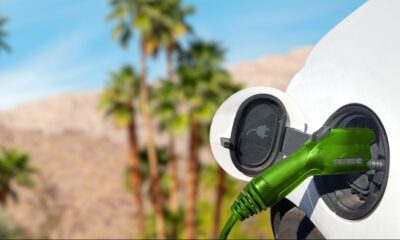
Starting This Summer, California Car Buyers Can Get an Instant $3500 Off the Cost of Electric Vehicles
OAKLAND POST — Beginning later this summer, eligible Californians can receive a $3,500 rebate on new zero-emission vehicles with a manufacturer’s suggested retail price of up to $50,000. Buyers purchasing qualifying used electric vehicles priced at up to $25,000 can receive a $1,750 rebate. The rebate will be applied directly at participating dealerships, allowing buyers to receive the discount immediately instead of waiting for reimbursement.

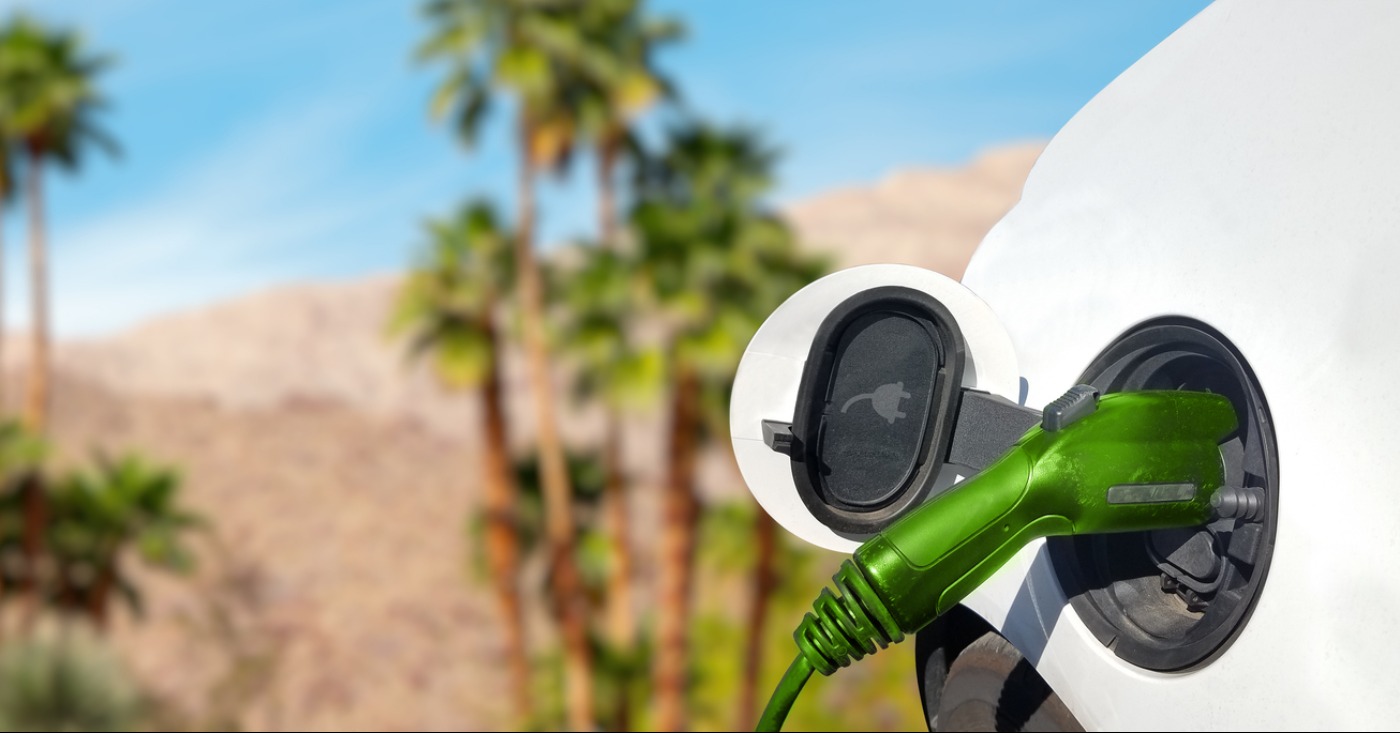
California residents purchasing their first zero-emission vehicle will soon be eligible for an instant rebate of up to $3,500 under a new state program aimed at making electric vehicles more affordable.
Gov. Gavin Newsom signed Senate Bill (SB) 168 on July 16, creating the MyFirstEV program as part of California’s 2026-27 state budget. The initiative dedicates $135.5 million in state funding for point-of-sale rebates, which participating automakers will match dollar for dollar. State officials said the combined investment will provide $270 million in savings for first-time electric vehicle buyers.
Beginning later this summer, eligible Californians can receive a $3,500 rebate on new zero-emission vehicles with a manufacturer’s suggested retail price of up to $50,000. Buyers purchasing qualifying used electric vehicles priced at up to $25,000 can receive a $1,750 rebate. The rebate will be applied directly at participating dealerships, allowing buyers to receive the discount immediately instead of waiting for reimbursement.
“With our new instant rebate program for electric vehicles, we’re making it easier for families to drive clean, breathe clean, and keep more money in their pockets,” Newsom said in a statement.

The MyFirstEV program is part of a broader $600 million investment in California’s clean transportation economy included in the state budget. The funding package also provides $150 million for the Community Air Protection Program, $19.8 million for the Clean Cars 4 All program for lower-income residents, $35 million for clean off-road equipment through the Air Quality Improvement Program, $135.5 million for the Clean Truck and Bus Voucher Incentive Project, and $130 million for the Carl Moyer Program to replace older heavy-duty engines with cleaner alternatives.
According to the governor’s office, the transportation investments are funded through Cap-and-Invest revenue and smog-abatement fees while maintaining a balanced state budget.
California continues to expand its zero-emission transportation network. The state surpassed 2.5 million cumulative zero-emission vehicle sales earlier this year, exceeding its original goal of 1.5 million sales by 2025. Officials also reported that California has more than 200,000 public and shared electric vehicle charging plugs statewide, in addition to an estimated 800,000 home charging stations.

Business
Surveillance Pricing Fight: State Senate Debates Bill Banning Retailers from Using AI to Set Prices Based on a Buyer’s Profile
OAKLAND POST — Currently, there is no precise public data quantifying how many Black residents in California are actively affected by surveillance pricing. However, because the practice leans heavily on ZIP codes and localized demographic tracking, algorithmic pricing models frequently result in higher costs for Black and non-white communities compared to others, according to the Electronic Frontier Foundation (EFF), a leading nonprofit organization defending civil liberties in the digital space
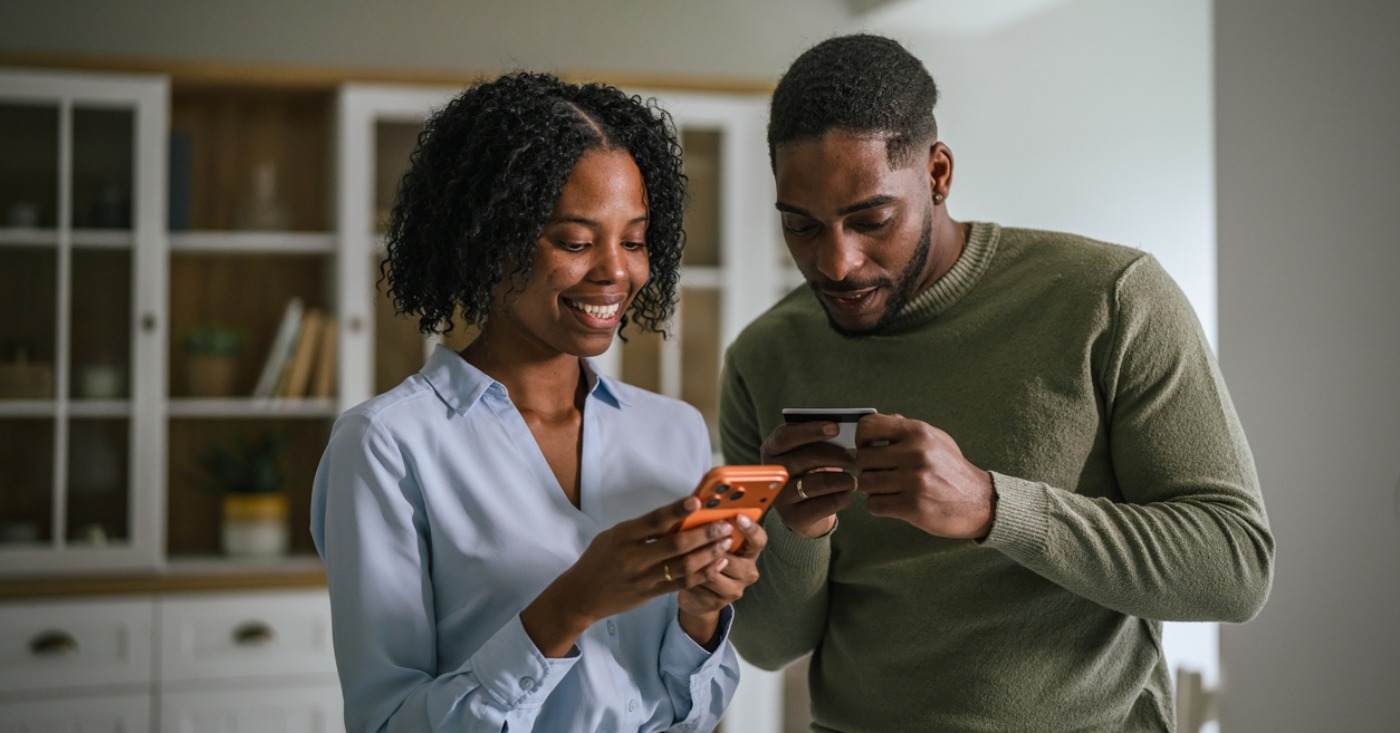
Surveillance pricing—the algorithmic practice of using personal data to determine individualized costs for goods and services—is widespread in California, according to Assemblymember Chris Ward (D-San Diego). He warns that this system is actively impacting consumers across the state, and Black Californians could be specifically targeted.
Ward’s Assembly Bill (AB) 2564, the Surveillance Pricing Act, aims to prohibit businesses from using this practice.
“Surveillance pricing is a growing phenomenon that a lot of people don’t realize is already happening,” Ward told California Black Media (CBM) at the State Capitol on June 29.
On June 22, the bill passed out of the Senate Privacy, Digital Technologies, and Consumer Protection Committee with a 5-2 vote and was re-referred to the Committee on Judiciary for consideration. On May 27, the Assembly voted to advance AB 2564 with a 42-21 vote.
Currently, there is no precise public data quantifying how many Black residents in California are actively affected by surveillance pricing. However, because the practice leans heavily on ZIP codes and localized demographic tracking, algorithmic pricing models frequently result in higher costs for Black and non-white communities compared to others, according to the Electronic Frontier Foundation (EFF), a leading nonprofit organization defending civil liberties in the digital space.
Justin Brookman, a public-interest lawyer, supports AB 2564. His organization is an official sponsor of the bill. He advocates on behalf of Consumer Reports.
“We found that people shopping for the exact same item at the exact same time, and the exact same store, were getting different prices. In some cases, up to 23% higher,” Brookman said. “So, one person looking at a jar of Skippy peanut butter, it was $2.99. Another person, same exact time, it was $3.69.”
AB 2564 is primarily opposed by a coalition of corporations and technology industry associations. They argue that the bill’s language is overly broad, outlaws common consumer-friendly discounts, and creates costly litigation risks for small businesses.
Chamber of Progress – a tech industry association that lobbies for public policies that expand digital commerce and technological advances – says that banning data-driven personalization would wipe away targeted digital coupons that families count on to prolong their budgets.
In a March 18 written letter to the Assembly Committee on Privacy and Consumer Protection, Robert Singleton, senior director of Policy and Public Affairs for California and the U.S. West at the Chamber of Progress, urged the body to oppose AB 2564.
“We share the legislature’s concern about affordability,” Singleton wrote. “The cost of living is the top issue facing American families, and we understand the impulse to ensure consumers are getting a fair deal. But this bill risks backfiring on the families it aims to help.
Assemblymember Lori Wilson (D-Suisun City) supported and voted for the bill in the Assembly on May 27, but she still has questions about a “litigation risk” that could be costly.
“Every business or retailer that is spending their time battling courts is spending resources, which drives the cost up for everyone,” said Wilson, a member of the California Legislative Black Caucus (CLBC).

WORK FROM HOME
Home-based business with potential monthly income of $10K+ per month. A proven training system and website provided to maximize business effectiveness. Perfect job to earn side and primary income. Contact Lynne for more details: Lynne4npusa@gmail.com 800-334-0540


Oakland Post: Week of July 22 – 28, 2026

Fed Court to Decide Landmark First Amendment Case

Jordan Walker Leads Call for More Black Youth in Baseball

How Black WNBA Players Became Collateral Damage in the Caitlin Clark Culture War

NAACP Announces $20m Voter Registration Drive at National Convention in Chicago

Starting This Summer, California Car Buyers Can Get an Instant $3500 Off the Cost of Electric Vehicles

Surveillance Pricing Fight: State Senate Debates Bill Banning Retailers from Using AI to Set Prices Based on a Buyer’s Profile

Oakland Children’s Hospital Workers and Patients Rally for Pediatric Medical Care

Opinion: When Politicians Start Sanitizing One Chapter of History, They’re Coming After The Whole Book

Beyond Politics: California Legislators Across Party Lines Celebrate Lori Wilson at 50

NPRC to Meet with California Attorney General’s Office on to Urge Guardianship Reform

Mount Zion MBC, Church of Jesus Christ of Latter-day Saints Partner to Bring 29,000 Meals to Alameda County

Councilmember Houston Helps Deter Trend to Award Contracts to Suburban Companies

Rep. Garamendi, House Democrats Demand Trump Administration Abandon Illegal Plans to Dismantle Civil Rights, Special Ed Offices

Council Gives Approval for $125 Million Oakland Coliseum Sale to AASEG
Oakland Children’s Hospital Workers and Patients Rally for Pediatric Medical Care
Mount Zion MBC, Church of Jesus Christ of Latter-day Saints Partner to Bring 29,000 Meals to Alameda County
Surveillance Pricing Fight: State Senate Debates Bill Banning Retailers from Using AI to Set Prices Based on a Buyer’s Profile

IN MEMORIAM: Oakland Dance Legend Reginald Ray-Savage, 67

Saving Black Mothers Starts Outside the Hospital

Gov. Gavin Newsom Signs Law Streamlining Affordable Housing Rules

Oakland Celebrates $125 Million Coliseum Sale

NPRC Heads to Washington to Elevate Adult Guardianship Reform at National Whistleblower Summit

Starting This Summer, California Car Buyers Can Get an Instant $3500 Off the Cost of Electric Vehicles

Agricultural Engineer Effie Gant Plans Bay Area Farmers Market Initiative

The Part of Buying a Home That No Real Estate Show Ever Prepares You For

Oakland Post: Week of June 17 – 23, 2026

Oakland Post: Week of July 1 – 7, 2026

NCBW-OBAC Champions Black Women Entrepreneurs at Business en Blaque Expo

The Conversation With Al McFarlane 6/23/26

Media Monday 6/22/26

LIVE! ASK ALMA! — TUES. 6.23.26 7PM EST

Car Buying Secrets: 4 Hidden Checks Before You Sign!

Is This 550 HP Charger Worth YOUR Money? AutoNetwork Review

Celebrating Juneteenth – Frederick Douglass on education and resistance

LIVE! — ASK ALMA! — TUES. 6.19.26 7PM EST

Hyundai Ioniq 5 Parking, Safety, and 360 View #shorts

2025 Ioniq 5 New Wiper & Powerful Performance! #shorts

Electric SUV Range: Is 259 Miles Enough? #shorts

EV Charging: How Fast Can You Charge an Electric Vehicle? #shorts

Biometric Cooling… Messaging Seats…Come on! 2025 Infiniti QX80 Autograph 4WD

Charged Up: Witness the Magic of a Fully Electric Car! #shorts

Range Rover Sport PHEV Included…: See What’s Inside This Luxury SUV! #shorts

Invisible Hood View: Perfect Parking with X-Ray Vision! #shorts
-
 Business2 days ago
Oakland Children’s Hospital Workers and Patients Rally for Pediatric Medical Care
-
 Business2 days ago
Mount Zion MBC, Church of Jesus Christ of Latter-day Saints Partner to Bring 29,000 Meals to Alameda County
-
 Business1 day ago
Surveillance Pricing Fight: State Senate Debates Bill Banning Retailers from Using AI to Set Prices Based on a Buyer’s Profile
-
 Black History6 days ago
Saving Black Mothers Starts Outside the Hospital
-
 Business4 days ago
Gov. Gavin Newsom Signs Law Streamlining Affordable Housing Rules
-
 Black History1 week ago
Oakland Celebrates $125 Million Coliseum Sale
-
 Community1 week ago
NPRC Heads to Washington to Elevate Adult Guardianship Reform at National Whistleblower Summit
-
 Business1 day ago
Starting This Summer, California Car Buyers Can Get an Instant $3500 Off the Cost of Electric Vehicles
