
#NNPA BlackPress
The Transatlantic Slave Trade: 500 Years Later the Diaspora Still Suffers
BLACKPRESSUSA NEWSWIRE — The Transatlantic Slave Trade is not just Black history—it is American history, and Black Americans lived it.



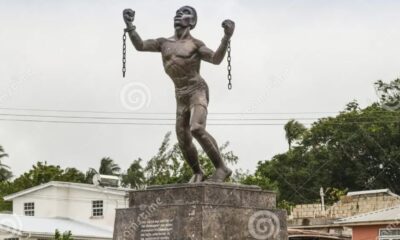
The Transatlantic Slave Trade is not just Black history—it is American history, and Black Americans lived it. Their ancestors were violently torn from their homes, forced into brutal labor, and stripped of basic humanity. That legacy of injustice echoes loudly in every aspect of our society—because the slave trade wasn’t just cruel, it was foundational. Yet today, that truth itself is under attack. President Donald Trump denounced the Smithsonian Institution as allegedly “out of control” for telling the unvarnished history of slavery—claiming museums focus too much on how bad slavery was and not enough on “brightness” or success, even as his administration reviews exhibits and threatens funding cuts to sanitize the narrative. He dismissed honest reflection as “woke,” arguing it undermines national pride. We are re-running this series, which we originally published in 2019, each day because confronting our painful past is urgent—and because critics who erase suffering do so to keep oppression alive.
By Stacy M. Brown
Black Press USA Senior National Correspondent
“Impossible is just a big word thrown around by small men who find it easier to live in the world they’ve been given than to explore the power they have to change it. Impossible is not a fact. It’s an opinion. Impossible is not a declaration. It’s a dare. Impossible is potential. Impossible is temporary. Impossible is nothing.” — Muhammad Ali.
“We need to exert ourselves that much more and break out of the vicious cycle of dependence imposed on us by the financially powerful: those in command of immense market power and those who dare to fashion the world in their own image.” — Nelson Mandela.
The most enduring consequences of the migration for the migrants themselves and for the receiving communities were the development of racism and the corresponding emergence and sustenance of an African American community, with particular cultural manifestations, attitudes, and expressions. The legacy is reflected in music and art, with a significant influence on religion, cuisine, and language, according to Paul E. Lovejoy, a distinguished research professor and Canada Research Chair in African Diaspora History at York University in Toronto. “The cultural and religious impact of this African immigration shows that migrations involve more than people; they also involve the culture of those people,” Lovejoy said in a recent post about the creation of the African diaspora.
American culture is not European or African but its own form, created in a political and economic context of inequality and oppression in which diverse ethnic and cultural influences, both European and African – and in some contexts, Native American – can be discerned, Lovejoy said. “Undoubtedly, the transatlantic slave trade was the defining migration that shaped the African Diaspora. It did so through the people it forced to migrate, and especially the women who were to give birth to the children who formed the new African American population,” he said. These women included many who can be identified as Igbo or Ibibio, but almost none who were Yoruba, Fon, or Hausa.
Bantu women, from matrilineal societies, also constituted a considerable portion of the African immigrants, and it appears that females from Sierra Leone and other parts of the Upper Guinea Coast were also well represented, Lovejoy said. “These were the women who gave birth to African American culture and society,” he said. After many rang in 2019 with celebratory parties and gatherings, there were still others who solemnly recalled the beginning of the transatlantic slave trade that started 400 years ago – 500 years, depending upon the region. For Africans throughout the diaspora, their struggle not only traces back 400 or 500 years, but it continued and was underscored as recently as 135 years ago when the infamous Berlin Conference was held.
The conference led to the so-called “Scramble for Africa” by European powers, who successfully split the continent into 53 countries, assuring a division that remains today. “There isn’t a single thing that was more damaging to Africa than the Berlin Conference,” said African Union Ambassador Dr. Arikana Chihombori-Quao. “Africans weren’t even invited to the conference,” she said. At the conference, which took place over three months in Brazil beginning in February 1884 and attended by 13 European nations and the United States, ground rules were established to split Africa. “Africans still are suffering the consequences,” the ambassador said. Said John W. Ashe, the president of the United Nations General Assembly:
“The Transatlantic slave trade … for 400 years deprived Africa of its lifeblood for centuries and transformed the world forever.” There’s no question that legacies of the slave trade persist today in most of the countries Africans were taken to, said Ayo Sopitan, founder of Pendulum Technologies in Houston, Texas. “I have been thinking about how Africans and the diaspora need to get together – through proxies in the persons of recognized leaders – and have a conversation about the past, the role that African collaborators played, and how we can unite as a people. Then, and only then, will we be able to excel as a people,” Sopitan said.
“I have sat at lectures by Henry Gates and learned about blacks in the Americas. The conclusion is that wherever we are, blacks are usually at the bottom of the totem pole. This does not have to continue,” he said. The transatlantic slave trade was an oceanic trade in African men, women, and children that lasted from the mid-sixteenth century until the 1860s. European traders loaded African captives at dozens of points on the African coast, from Senegambia to Angola and around the Cape to Mozambique.
The great majority of captives were collected from West and Central Africa and from Angola, according to the United Nations Educational, Scientific, and Cultural Organization – UNESCO. The trade was initiated by the Portuguese and Spanish, especially after the settlement of sugar plantations in the Americas, UNESCO officials noted in a 2018 web presentation titled “Slavery and Remembrance.”
European planters spread sugar, cultivated by enslaved Africans on plantations in Brazil, and later Barbados, throughout the Caribbean.
In time, planters sought to grow other profitable crops, such as tobacco, rice, coffee, cocoa, and cotton, with European indentured laborers as well as African and Indian slave laborers. Nearly 70 percent of all African laborers in the Americas worked on plantations that grew sugar cane and produced sugar, rum, molasses, and other byproducts for export to Europe, North America, and elsewhere in the Atlantic world, according to UNESCO. Before the first Africans arrived in British North America in 1619, more than half a million African captives had already been transported and enslaved in Brazil. By the end of the nineteenth century, that number had risen to more than 4 million. Northern European powers soon followed Portugal and Spain into the transatlantic slave trade.
The majority of African captives were carried by the Portuguese, Brazilians, the British, the French, and the Dutch. British slave traders alone transported 3.5 million Africans to the Americas, UNESCO reported. The transatlantic slave trade was complex and varied considerably over time and place, but it had far-reaching and lasting consequences for much of Europe, Africa, the Americas, and Asia. The profits gained by Americans and Europeans from the slave trade and slavery made possible the development of economic and political growth in major regions of the Americas and Europe. Europeans used various methods to organize the Atlantic trade.
Spain licensed (by Asiento agreements) other nations to supply its Spanish American and Caribbean colonies with African captives. France, the Netherlands, and England initially used monopoly companies. In time, the demand for African laborers in the Americas was met by more open trade, which allowed other merchants to engage in the trade with Africans. Thus, formidable private trading companies emerged, such as Britain’s Royal African Company (1660–1752) and the Dutch West India Company of the Netherlands (1602–1792), according to UNESCO.
The profits generated from the Atlantic trade economically and politically transformed Liverpool and Bristol in England, Nantes and Bordeaux in France, Lisbon in Portugal, Rio de Janeiro and Salvador de Bahia in Brazil, and Newport, Rhode Island, in the United States. Each port developed links to a wide hinterland for local and international goods in Asia and capital to sustain the trade in African captives. European merchants and ship captains – followed later by those from Brazil and North America – packed their sailing vessels with local goods and commodities from Asia to trade on the African coast.
Enslaved Africans, their often-violent capture and enslavement out of sight of the European general public, were exchanged for iron bars and textiles, luxury goods, cowrie shells, liquor, firearms, and other products that varied region by region over time. Much of the wealth generated by the transatlantic slave trade supported the creation of industries and institutions in modern North America and Europe. To an equal degree, profits from slave trading and slave-generated products funded the creation of fine art, decorative arts, and architecture that continues to inform aesthetics today, UNESCO officials said.
“European countries – Portuguese, English, French, and Spanish – are most complicit in the transatlantic slave trade. This pernicious form of slavery was driven by European capitalistic countries seeking to expand their nation-states and empires,” said Dr. Jonathan Chism, assistant professor of history and a fellow with the Center for Critical Race Studies at the University of Houston Downtown. The pain continues today. “The fact that slavery was underway for a century in South America before its introduction in North America is not widely taught nor commonly understood,” said Felicia Davis of the HBCU Green Fund.
“It is a powerful historical fact missing from our understanding of slavery, its magnitude, and global impact. Knowledge that slavery was underway for a century [before it began in North America] provides deep insight into how enslaved Africans adapted,” Davis said. “Far beyond the horrific seasoning description, clearly generations had been born into slavery long before introduction in North America. It deepens the understanding of how vast majorities could be oppressed in such an extreme manner for such a long period of time,” Davis said. “It is also a testament to the strength and drive among people of African descent to live free.”
Up Next: UN Observes International Remembrance of Slave Trade










#NNPA BlackPress
Smooth Ride! Car Suspension & Comfort Tested #shorts
Smooth suspension meets surprisingly spacious legroom. Experience true comfort on any road!


 Watch the full video: https://youtu.be/l9Z571za5Gc
#NNPA BlackPress
61 years since Selma, Houston leaders say the bridge remains to be crossed
61 years after Selma, Houston leaders say the fight for equality continues. The issues that sparked the marches still impact Black Americans today.
It has been 61 years since the Selma marches. But political leaders in Houston say that the issues protesters were marching for still plague the lives of Black Americans.
Visit Our Website
Read more stories by our team
https://defendernetwork.com/category/news/opinion/
Sign-up for the Top 5 newsletter
Donate/ Support Our Work

#NNPA BlackPress
Here is what you need to know about finding unique white elephant gift ideas that everyone wants to steal
The best white elephant gift ideas are funny enough to get a reaction but useful enough that people actually want to steal them. Look for gifts with a surprise factor, broad appeal, an inside joke, and just enough personality to spark some friendly competition. The wrapping paper comes off, the room goes quiet for half […]

The best white elephant gift ideas are funny enough to get a reaction but useful enough that people actually want to steal them. Look for gifts with a surprise factor, broad appeal, an inside joke, and just enough personality to spark some friendly competition.
The wrapping paper comes off, the room goes quiet for half a second, and suddenly everyone wants the same gift. That is the sweet spot. A great white elephant pick should make people laugh, lean in, and start plotting their next steal before the turn is even over.
Should a White Elephant Gift Be Funny or Useful?
A white elephant gift can be funny or useful, but the strongest choices usually give people a reason to laugh and a reason to keep the item. A practical gift with an odd design, unexpected feature, or playful theme can get a reaction without becoming something the recipient immediately wants to give away.
The right balance depends on the group. Close friends and family members may enjoy a ridiculous gag gift because they already understand one another’s sense of humor.
A workplace exchange, neighborhood party, or mixed-age gathering usually calls for something with broader appeal. In those settings, humor works better when it is built into an item people could still use afterward.
It also helps to think about how quickly the gift will make sense once it is opened. A strangely shaped kitchen tool, oversized mug, quirky desk accessory, or unexpectedly fancy everyday item can create an immediate reaction. Guests understand the joke right away, while the item still has enough practical value to attract a steal.
Pure gag gifts can be harder to pull off. Something that exists only for the punchline may get a big laugh during the reveal and then sit untouched for the rest of the game. If the goal is to bring one of the gifts everyone keeps fighting over, usefulness gives the joke staying power.
Memorable Present Ideas: Creating Inside Joke Gifts
Inside joke gifts can make a white elephant exchange feel much more personal, especially when most of the group shares the same stories. The trick is choosing a reference that people will recognize quickly instead of building the entire joke around something only two guests understand.
You can turn a memorable vacation mishap, office catchphrase, family story, or long-running group joke into the theme of the gift. A personalized comic book can work especially well when it turns familiar people or a ridiculous shared moment into part of the story.
Think carefully about who the joke involves before ordering anything permanent. The gift should make the person feel included in the fun, not singled out for the wrong reason.
Can You Bring Something You Already Own?
Holiday gift exchanges can be a good place to re-gift something you never used, especially if it is unopened and clean.
The following can all work if they still look presentable:
- A duplicate kitchen gadget
- An untouched game
- A decorative item
- A sealed gift set
- An unopened candle
- A new travel accessory
The goal is to give the item a second chance, not use the exchange as an excuse to clear out damaged or unwanted clutter.
Take a close look at the packaging before wrapping it. Faded boxes, missing pieces, visible wear, or anything that looks obviously used can make the gift feel careless.
Wrapping Budget-Friendly Gifts
Wrapping can make gifts more entertaining before anyone even knows what’s inside.
Misdirection works especially well for fun party games. Put a small gift inside a much larger box. Use packaging from an unrelated household item.
Add harmless weight so guests cannot guess what they are holding. The reveal becomes part of the joke without changing the gift itself.
You can also lean into the theme of the exchange. Bright paper, oversized bows, reusable bags, or deliberately over-the-top wrapping can make an ordinary item feel more memorable. If the gift itself is already funny, simple wrapping may work better so the surprise stays hidden until the last second.
Frequently Asked Questions
Is Picking Last an Advantage in White Elephant?
Picking last can be an advantage because you get to see almost every gift before making your move. Instead of choosing blindly from the remaining wrapped presents, you can steal something that has already caught your attention if the rules still allow it.
That advantage depends on the house rules. Some games limit how many times a gift can be stolen.
Others lock an item once it reaches a certain number of steals. If the most popular gifts are already unavailable, the final player may have fewer strong options than expected.
The first player can also get another turn at the end in some versions of the game. That rule can balance things out, since the person who started with the least information may get one final chance to steal.
How Do You Plan White Elephant for a Large Group?
For a large white elephant exchange, set a firm spending limit and establish the stealing rules in advance.
Create a clear turn order before the game begins. Drawing numbers as guests arrive can save time once everyone is ready to start.
Keep the number of steals per gift limited so the game does not drag on. It also helps to have one person track which creative holiday presents have been stolen and when they are locked, especially if dozens of people are participating.
Can You Play White Elephant Virtually?
A virtual white elephant exchange can work over a video call, with one person keeping track of the turn order and each steal. Guests can either mail physical gifts ahead of time or use digital gifts that can be delivered once the game ends.
Set the spending limit and stealing rules before everyone joins. It also helps to decide how gifts will be revealed and who is responsible for sending each one afterward so the exchange does not become confusing.
Choose a Perfect White Elephant Gift in a Snap
Look for a white elephant gift that fits some of these criteria, and everyone will be trying to grab it at your next celebration.
Do you need more gift-giving tips and tricks? Make sure you read some of our other posts.


Mayor Barbara Lee Holds Special State of the City Address in Deep East Oakland

Practitioners of African Traditional Spirituality Offer Ancestral Reverence Ritual Oct. 31

It’s Time to Lose Weight Before the Holidays

Trader Vic’s Returns to Its Oakland Roots

Oakland Coal Terminal Backed by Trump Would Be Bigger, Dirtier Than Promised, Says Report

Opponents Smear Effective African American Transit Director as Election Nears

Oakland Post: Week of October 14 – 20, 2026

OP-ED: The Black Church Writes AI’s Next Chapter

OP-ED: The Black Church Writes AI’s Next Chapter

WCCUSD Joins Statewide Organic School Food Purchasing Cooperative

Democrats, Community Groups Back Measure EE to Change How Oakland Is Governed

Four Tips to Help You Plan a Holiday “Staycation”

Veterans Housing Project Proposed for South Richmond
PRESS ROOM: Transformative Justice Coalition 2026 Voting Rights Champion Awards Reception ‘Yesterday Is Today: The Battle For Voting Rights

Mayor Lee Delivers 2026 State of the City Address: ‘Oakland Continues to Be on the Move’

Misnamed ‘Parent’ PAC Seeks to Influence Oakland School Board Elections

Oakland Post: Week of September 2 – 8, 2026

Oakland Post: Week of September 9 – 15, 2026

Poll: Becerra Widens His Lead Over Hilton; Californians Split on Wealth Tax

County Office of Education Says OUSD Finances Are Getting Healthier, Materially Stronger

Richmond Tiny House Village Farm & Garden Set to Open Gates on Sept. 26

Latest Massacre in Haiti Reveals Cruelty U.S. Deportations

Mayor Lee Announces $1 Million Kaiser Permanente Grant for Pilot Program to Address Homelessness, Clean Up Public Spaces throughout Oakland

Listening as a Lifeline: A Doula’s Witness to Black Maternal Health

OPINION: Nolan Wells’ Death One of Several Signifying Racial Terror Lives on in U.S. South

Zakiya Jendayi Arrested, Locked Out of Home by Sheriff’s Deputies

BLACspace Cooperative Invites Bay Area to Experience Oakland’s Black Cultural Ecosystem Through a BLAC Map Tour + Party

Oakland Post: Week of September 16 – 22, 2026

Oakland People’s Arms Embargo Coalition Demands End to Military Shipments Thru Oakland

Democratic Clubs Interview Candidates for Oakland School Board

The Conversation With Al McFarlane 6/23/26

Media Monday 6/22/26

LIVE! ASK ALMA! — TUES. 6.23.26 7PM EST

Car Buying Secrets: 4 Hidden Checks Before You Sign!

Is This 550 HP Charger Worth YOUR Money? AutoNetwork Review

Celebrating Juneteenth – Frederick Douglass on education and resistance

LIVE! — ASK ALMA! — TUES. 6.19.26 7PM EST

Hyundai Ioniq 5 Parking, Safety, and 360 View #shorts

2025 Ioniq 5 New Wiper & Powerful Performance! #shorts

Electric SUV Range: Is 259 Miles Enough? #shorts

EV Charging: How Fast Can You Charge an Electric Vehicle? #shorts

Biometric Cooling… Messaging Seats…Come on! 2025 Infiniti QX80 Autograph 4WD

Charged Up: Witness the Magic of a Fully Electric Car! #shorts

Range Rover Sport PHEV Included…: See What’s Inside This Luxury SUV! #shorts

Invisible Hood View: Perfect Parking with X-Ray Vision! #shorts
-
 Economy3 weeks ago
Poll: Becerra Widens His Lead Over Hilton; Californians Split on Wealth Tax
-
 Business3 weeks ago
County Office of Education Says OUSD Finances Are Getting Healthier, Materially Stronger
-
 Business4 weeks ago
Mayor Lee Announces $1 Million Kaiser Permanente Grant for Pilot Program to Address Homelessness, Clean Up Public Spaces throughout Oakland
-
 Black History2 weeks ago
Listening as a Lifeline: A Doula’s Witness to Black Maternal Health
-
 Lead Story2 weeks ago
Zakiya Jendayi Arrested, Locked Out of Home by Sheriff’s Deputies
-
 Art3 weeks ago
BLACspace Cooperative Invites Bay Area to Experience Oakland’s Black Cultural Ecosystem Through a BLAC Map Tour + Party
-
 Activism4 weeks ago
Oakland Post: Week of September 16 – 22, 2026
-
 Uncategorized4 weeks ago
Oakland People’s Arms Embargo Coalition Demands End to Military Shipments Thru Oakland
