
Activism
Mayor and City Staff Plan to Destroy Self-Made Homes, Advocates Raise Funds to Provide Tents


On Sept 11, the Oakland Public Works Department plans to destroy about 20 small homes that residents who can’t afford sanctioned housing have built and currently live in.
“It’s gonna be terrible,” said Manuel Cruz, an Oakland resident of 30 years who’s lived in his small home with his wife, Gail, for about a year and a half. “Our homes give us protection, shelter, and help to keep us away from the wind and the rats.”
The residents won’t have to move and will be allowed to stay in tents. But they claim living in tents will be more dangerous and less comfortable for them. Many of their current homes have locks and some residents expressed concern that if they’re forced to live in tents, it will be impossible to secure their belongings from theft. They’ll have to stay near their belongings all the time or risk losing them.
City workers had originally planned on demolishing the homes, which sit beneath the BART tracks between 81st and 85th Avenues, on Aug 26, but after advocates for the small home residents called and wrote letters expressing anger and dismay, the city administration agreed to delay the destruction for two weeks.
The city administration and representatives for Mayor Libby Schaaf claim the homes are fire code violations. They’re especially concerned that since the homes sit directly beneath the BART tracks, a fire could also harm those that use the transportation system.
“The location adds significantly to safety concerns for the homeless and for the BART system riders,” said Assistant City Administrator Joe DeVries.
Jeffrey Burris, who grew up in the Bay Area and has lived along 81st and 85th Avenues for about six months, agrees that the homes he and others live in are unsafe, but thinks living in a tent would be even more dangerous.
“A tent will burn faster than wood,” he said. “I’ve seen that first hand.”
DeVries disagrees and thinks tents are a safer option.
“These structures are full-on fire fuel,” said DeVries, “wooden pallets and plywood…burn at high temperatures for long periods of time.”
He also pointed out that since the homes aren’t built to code with any fire-resistant sheet rock, it would be easy to get trapped inside during a fire while it’s relatively easy to escape from a tent that’s aflame.
The small home residents have additional safety concerns outside of fire and theft. They’ve experienced or witnessed several violent attacks from those who live outside of the area. Some worry that living in a tent would make them a more easy target.
Candice Elder, the founder and director of The East Oakland Collective, is aware of the danger the homes pose but also thinks they don’t need to be destroyed. She tried to work with the city to find a safer location for the homes and to transport them there.
“The city was definitely dead set on destroying the homes,” said Elder. “There was no budging or negotiating with the city about that.”
Justin Berton, the Director of Communications for Mayor Libby Schaaf’s administration, says the city is hopeful that the residents will dismantle their own homes but has confirmed there will be no further extensions and that the City plans to remove any remaining self-made homes on Sept 11.
Elder described the two-week delay as a “hard compromise,” but thinks it will help the residents of the small homes as it’s allowed her time to set up a gofundme fundraiser that plans to provide large, flame retardant tents, heavy tarps, as well as moving, packing and fire safety supplies and devices.
“The fundraiser is going well but we do need more supporters,” she said. “We are up against a deadline.”
Readers can donate online by visiting gofundme.com/f/eastoaklandtentdrive.











Activism
Chase Oakland Community Center Hosts Alley-Oop Accelerator Building Community and Opportunity for Bay Area Entrepreneurs
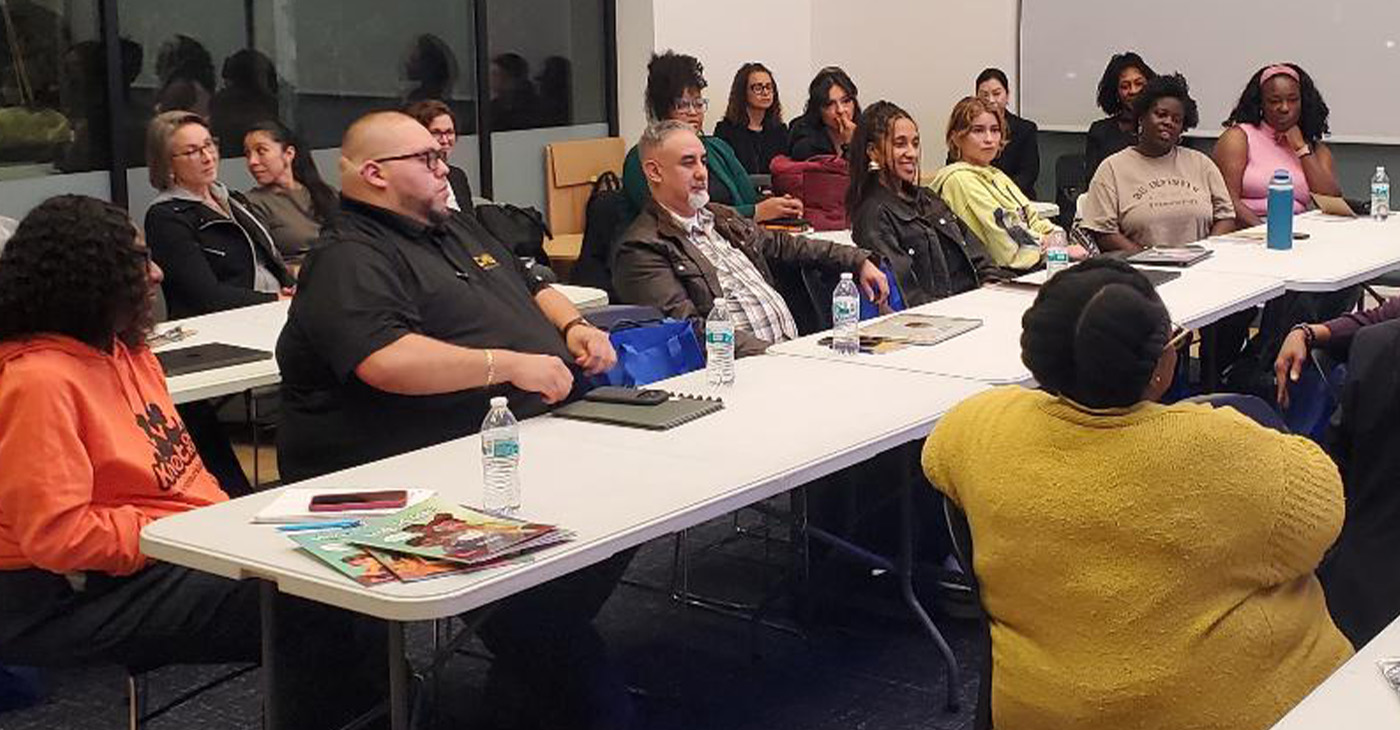
Over the past three years, the Alley-Oop Accelerator has helped more than 20 Bay Area businesses grow, connect, and gain meaningful exposure. The program combines hands-on training, mentorship, and community-building to help participants navigate the legal, financial, and marketing challenges of small business ownership.

By Carla Thomas
The Golden State Warriors and Chase bank hosted the third annual Alley-Oop Accelerator this month, an empowering eight-week program designed to help Bay Area entrepreneurs bring their visions for business to life.
The initiative kicked off on Feb. 12 at Chase’s Oakland Community Center on Broadway Street, welcoming 15 small business owners who joined a growing network of local innovators working to strengthen the region’s entrepreneurial ecosystem.
Over the past three years, the Alley-Oop Accelerator has helped more than 20 Bay Area businesses grow, connect, and gain meaningful exposure. The program combines hands-on training, mentorship, and community-building to help participants navigate the legal, financial, and marketing challenges of small business ownership.
At its core, the accelerator is designed to create an ecosystem of collaboration, where local entrepreneurs can learn from one another while accessing the resources of a global financial institution.
“This is our third year in a row working with the Golden State Warriors on the Alley-Oop Accelerator,” said Jaime Garcia, executive director of Chase’s Coaching for Impact team for the West Division. “We’ve already had 20-plus businesses graduate from the program, and we have 15 enrolled this year. The biggest thing about the program is really the community that’s built amongst the business owners — plus the exposure they’re able to get through Chase and the Golden State Warriors.”

According to Garcia, several graduates have gone on to receive vendor contracts with the Warriors and have gained broader recognition through collaborations with JPMorgan Chase.
“A lot of what Chase is trying to do,” Garcia added, “is bring businesses together because what they’ve asked for is an ecosystem, a network where they can connect, grow, and thrive organically.”
This year’s Alley-Oop Accelerator reflects that vision through its comprehensive curriculum and emphasis on practical learning. Participants explore the full spectrum of business essentials including financial management, marketing strategy, and legal compliance, while also preparing for real-world experiences such as pop-up market events.
Each entrepreneur benefits from one-on-one mentoring sessions through Chase’s Coaching for Impact program, which provides complimentary, personalized business consulting.
Garcia described the impact this hands-on approach has had on local small business owners. He recalled one candlemaker, who, after participating in the program, was invited to provide candles as gifts at Chase events.
“We were able to help give that business exposure,” he explained. “But then our team also worked with them on how to access capital to buy inventory and manage operations once those orders started coming in. It’s about preparation. When a hiccup happens, are you ready to handle it?”
The Coaching for Impact initiative, which launched in 2020 in just four cities, has since expanded to 46 nationwide.
“Every business is different,” Garcia said. “That’s why personal coaching matters so much. It’s life-changing.”
Participants in the 2026 program will each receive a $2,500 stipend, funding that Garcia said can make an outsized difference. “It’s amazing what some people can do with just $2,500,” he noted. “It sounds small, but it goes a long way when you have a plan for how to use it.”
For Chase and the Warriors, the Alley-Oop Accelerator represents more than an educational initiative, it’s a pathway to empowerment and economic inclusion. The program continues to foster lasting relationships among the entrepreneurs who, as Garcia put it, “build each other up” through shared growth and opportunity.
“Starting a business is never easy, but with the right support, it becomes possible, and even exhilarating,” said Oscar Lopez, the senior business consultant for Chase in Oakland.

Activism
Oakland Post: Week of February 18 – 24, 2026
The printed Weekly Edition of the Oakland Post: Week of – February 18 – 24, 2026
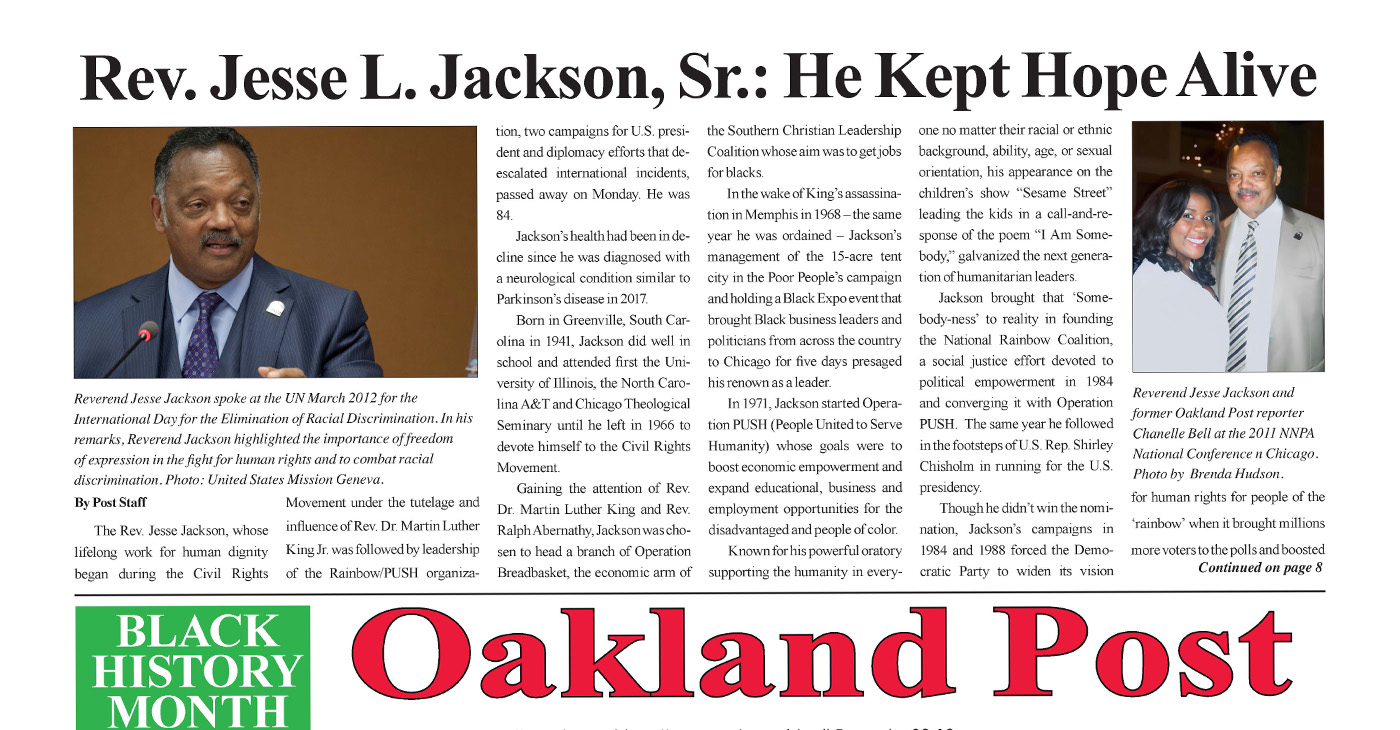
To enlarge your view of this issue, use the slider, magnifying glass icon or full page icon in the lower right corner of the browser window.

Activism
Oakland Post: Week of February 11 – 17, 2026
The printed Weekly Edition of the Oakland Post: Week of – February 11 – 17, 2026

To enlarge your view of this issue, use the slider, magnifying glass icon or full page icon in the lower right corner of the browser window.


WORK FROM HOME
Home-based business with potential monthly income of $10K+ per month. A proven training system and website provided to maximize business effectiveness. Perfect job to earn side and primary income. Contact Lynne for more details: Lynne4npusa@gmail.com 800-334-0540


PRESS ROOM: NBA Hall of Fame Nominee Terry Cummings Joins 100 Black Men of DeKalb County to Launch Victory & Values Initiative

Reflecting on Black History Milestones in Birmingham AL

OP-ED: One Hundred Years of Black Workers Telling the Truth

PRESS ROOM: Civil Rights TV Launches in Selma as the World’s First 24/7 Civil Rights Television Network

Advancements in solar technology that are changing the way we power the world

U.S. manufacturing rebounds – how foundry services are adapting to rising demand

Why has blood testing become so popular in today’s world?

Ghana Mourns a Son of the African World

OP-ED: Trump’s Policies Hurt Black America—and Everyone Else

OP-ED: Meta Deleted Me. I Still Don’t Know Why. And neither will you.

More than a Mission: Paying It Forward for the Future of Education

Avoid Eviction This Season: Landlord Checklist for Stable Tenancies

How chronic back problems affect Black communities differently

How cancer care is evolving with modern medicine

Diabetes disparity: Understanding Type 2 risks for Black Americans

Life Expectancy in Marin City, a Black Community, Is 15-17 Years Less than the Rest of Marin County

Oakland Post: Week of January 28, 2025 – February 3, 2026

Community Celebrates Turner Group Construction Company as Collins Drive Becomes Turner Group Drive

California Launches Study on Mileage Tax to Potentially Replace Gas Tax as Republicans Push Back

Discrimination in City Contracts

Oakland Post: Week of January 21 – 27, 2026

Book Review: Books on Black History and Black Life for Kids

Medi-Cal Cares for You and Your Baby Every Step of the Way

COMMENTARY: The Biases We Don’t See — Preventing AI-Driven Inequality in Health Care

Post Newspaper Invites NNPA to Join Nationwide Probate Reform Initiative

After Don Lemon’s Arrest, Black Officials Raise Concerns About Independent Black Media

OP-ED: The Dream Cannot be Realized Without Financial Freedom

COMMENTARY: The National Protest Must Be Accompanied with Our Votes

Black History Events in the East Bay

Art of the African Diaspora Celebrates Legacy and Community at Richmond Art Center

Hyundai Ioniq 5 Parking, Safety, and 360 View #shorts

2025 Ioniq 5 New Wiper & Powerful Performance! #shorts

Electric SUV Range: Is 259 Miles Enough? #shorts

EV Charging: How Fast Can You Charge an Electric Vehicle? #shorts

Biometric Cooling… Messaging Seats…Come on! 2025 Infiniti QX80 Autograph 4WD

Charged Up: Witness the Magic of a Fully Electric Car! #shorts

Range Rover Sport PHEV Included…: See What’s Inside This Luxury SUV! #shorts

Invisible Hood View: Perfect Parking with X-Ray Vision! #shorts

AI Is Reshaping Black Healthcare: Promise, Peril, and the Push for Improved Results in California

ESSAY: Technology and Medicine, a Primary Care Point of View

Sanctuary Cities

The RESISTANCE – FREEDOM NOW

STATE OF THE PEOPLE: Freddie

ECONOMIC BOYCOTT DAY!!!!!

I told You So

-
 Activism4 weeks ago
Life Expectancy in Marin City, a Black Community, Is 15-17 Years Less than the Rest of Marin County
-
 Activism4 weeks ago
Oakland Post: Week of January 28, 2025 – February 3, 2026
-
 Activism3 weeks ago
Community Celebrates Turner Group Construction Company as Collins Drive Becomes Turner Group Drive
-
 Business3 weeks ago
California Launches Study on Mileage Tax to Potentially Replace Gas Tax as Republicans Push Back
-
 Activism3 weeks ago
Discrimination in City Contracts
-
 Arts and Culture3 weeks ago
Book Review: Books on Black History and Black Life for Kids
-
 Activism4 weeks ago
Medi-Cal Cares for You and Your Baby Every Step of the Way
-
 Activism3 weeks ago
COMMENTARY: The Biases We Don’t See — Preventing AI-Driven Inequality in Health Care
