
Entertainment
Why The ‘Empire’ Emmy Snub Matters


(Forbes) – Considering the vast amounts of quality television airing at any given time, there are bound to be a number of would-be snubs or omissions even in a year then the Academy of Television Arts and Sciences got much right. For every “Constance Wu from Fresh Off the Boat was robbed!,” there is an “Andre Braugher got nominated for Brooklyn Nine-Nine!.” But there is one rather surprising omission yesterday in the form of the almost complete dismissal of Fox’s Empire. The show failed to make the Best Drama cut and received only two Costuming nods along with the all-but-required Best Actress nod for Taraji P. Henson for her show-stealing turn at Cookie Lyon.
It’s not just that the critically-acclaimed and ratings-rich new drama lost out to shows like House of Cards which even its fans will admit had an off-year. It’s not even the whole “diversity loses” since Orange is the New Black got in even with the new rules that unwillingly pushed the one-hour dramedy in the drama category. It’s that a showing for Empire was a chance for the Emmys to acknowledge and reward the notion that network television still matters.
As I’m sure you know, the Terrence Howard/Taraji P. Henson musical drama premiered in January to stellar ratings. But more surprising, those ratings kept going up over pretty much the entire thirteen episode run of the first season. Its premiere had around 9.9 million viewers while its season finale had around 17.6 million viewers. It was basically the most successful run for a new network series since Grey’s Anatomy back in 2005. This kind of growth is unheard of in modern Nielsen tracking times and it is frankly all-but-impossible in today’s fragmented television demographics. It became an instant pop culture item, with a scorchingly popular soundtrack (which debuted at number one on the Billboard charts against a new Madonna album back in March) and the kind of social media buzz usually reserved for HBO shows or AMC dramas.







Business
From Historic Memories to New Possibilities: Oakland Celebrates Coliseum 60
More than 75 people gathered at Youth UpRising in East Oakland on Friday, September 18, for Coliseum 60, an event marking six decades of sports, entertainment, employment, and community memories at the Oakland-Alameda County Coliseum Complex. Held 60 years to the day after the Coliseum first opened, the celebration featured cultural performances and a mini-documentary highlighting its history. Speakers reflected on the venue’s significant role in the community and its future possibilities. Read more to learn about the individuals and stories honored during this special event.

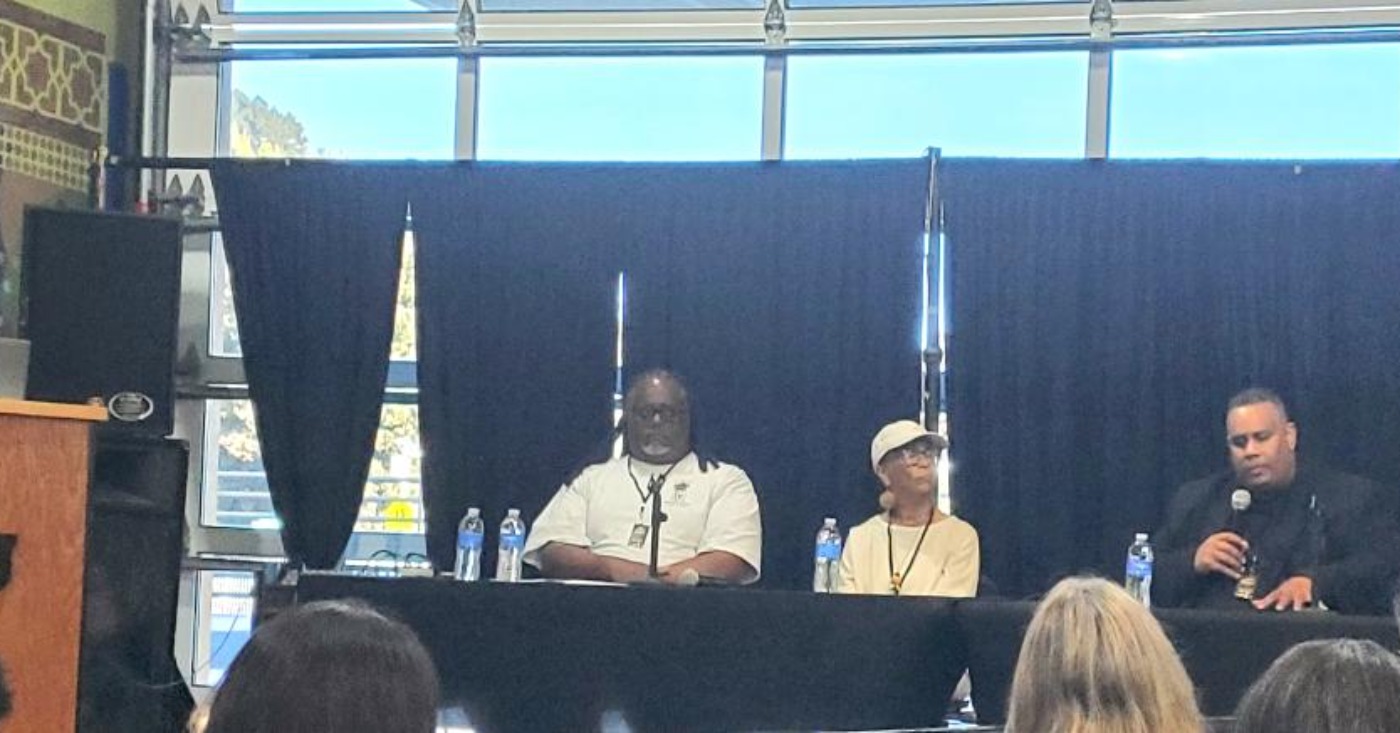
More than 75 people gathered at Youth UpRising in East Oakland on Friday, Sept. 18, for Coliseum 60, a celebration honoring six decades of sports, entertainment, employment and community memories connected to the Oakland-Alameda County Coliseum Complex.
Held 60 years to the day after the Coliseum opened, the event carried the theme, “One Community. One Legacy. One Future. Forward Together.”
The celebration opened with the national anthem performed by sisters Anese Jade, Amina Benjamin and Zaza Benjamin. Diamano Coura West African Dance Company contributed African dance and drumming, bringing movement, rhythm and cultural expression to the program.
A mini documentary highlighted the Coliseum’s sports history and its broader role as an entertainment destination. Archival material recalled performances by Prince and Tina Turner, along with memorable games featuring the Warriors, Oakland A’s and Raiders.
“The Coliseum 60 is about much more than celebrating a building or looking back at 60 years of history,” said event organizer Quixote Atkins of VillageGIVE.
“It’s about the people who made that history possible: the families, workers, athletes, artists, community leaders, fans and generations who gathered there and created memories together.”

A panel exploring that history featured author, historian and former Black Panther Party member Tareka Lewis; stagehand and union representative Keith Brown; and Ray Bobbitt, president of the African American Sports and Entertainment Group AASEG. Lewis described her family as fourth-generation Bay Area pioneers.
“My family and Black families who arrived even earlier helped build the Bay Area, grew businesses and established culture here,” Lewis said. “This should be taught in the public schools.”
Lewis recalled Oakland’s influence on sports, music and literature, from the Raiders’ beginnings at Laney College to stars such as The Pointer Sisters and Rickey Henderson who attended Oakland public schools. She also advocated for school museums, historical timelines, entrepreneurship training and investments benefiting corridors such as Bancroft Avenue and High Street.
Keith Brown, a member of Local 107 of the International Alliance of Theater and Stage Employees (IATSE) who began working at the Coliseum in 2011, remembered the Ringling Bros. and Barnum & Bailey Circus, the Ice Capades, baseball bat giveaways and Nelson Mandela’s 1990 appearance.
“The special events are amazing, but it’s the workers that make the memories real for everyone,” Brown said. “They make the magic happen at the Coliseum.”
The program recognized longtime workers, including beer-stand manager Robert Preston, who served for 40 years, and Kenyatta Gentry, who worked as a vendor for 24 years and used her earnings to purchase her first apartment. Union workers Jose Gonzales and Carmen Sandoval were also honored. Speakers emphasized that Coliseum employment provided generations of residents with union wages and benefits.
Dr. Denise Saddler, the superintendent of the Oakland Unified School District (OUSD) was also honored. Saddler shared her family’s history of working at the Coliseum.
District 7 Oakland City Councilmember Ken Houston discussed the complex ownership arrangements involving the city, county and private interests.
“This was the most complex deal of its kind in the country,” Houston said.
Prior to moving from the East Coast, Alameda County Supervisor and Coliseum Joint Powers Authority Chair Nate Miley recalled learning about Oakland through its three professional sports teams. As an elected official and public servant, Miley fought hard to keep the Golden State Warriors, Oakland As, and the Raiders, but he is hopeful for the future.
“The story is not over for the Coliseum,” Miley said. “We’re entering a new chapter.”
Bobbitt said the departure of three teams had once seemed unimaginable, but he maintained that Oakland’s future remains bright.
“Oakland is a cultural superpower worldwide,” Bobbitt said. “We’re going to write the future where we participate and drive the redevelopment.”
Bobbitt highlighted AASEG’s four-year partnership with Castlemont High School’s architecture program, which engages students in reimagining and creating redevelopment concepts for the Coliseum property. “The youth will always move us forward. They are the future.”
In closing, Atkins said, “September 18 is the celebration, but what we build together afterward is the legacy.”

Activism
Oakland Post: Week of September 23 – 29, 2026
The printed Weekly Edition of the Oakland Post: Week of September 23 – 29, 2026

To enlarge your view of this issue, use the slider, magnifying glass icon or full page icon in the lower right corner of the browser window.
Books
BOOK REVIEW: ‘Laws of Solomon’ Reveals Tender Heart of Former Child Soldier
The monsters that came to him early in his sleep were the easy ones. It was the later demons that stole Solomon Nangobi’s sleep, the spirits of all the people he killed when he was a child soldier in Uganda, and when he was a fixer in New York as an adult. Their ghosts called to him with urgent voices, though he left that life behind long ago.

Author: Eriq La Salle, Copyright: c.2026, Publisher: Poisoned Pen Press, SRP: $18.99, Page Count: 304 pages
Finally, after so much work, you’ve left your past behind.
That’s what you tell yourself: what’s done is done and you can’t undo history. It’s over. You try not to think about last month, last year, a decade back because what does it matter? As in the new novel, “Laws of Solomon” by Eriq La Salle, remembering is too full of pain.
The monsters that came to him early in his sleep were the easy ones. It was the later demons that stole Solomon Nangobi’s sleep, the spirits of all the people he killed when he was a child soldier in Uganda, and when he was a fixer in New York as an adult. Their ghosts called to him with urgent voices, though he left that life behind long ago.
Now, his days were filled working the soil in gardens near Malibu, and he loved the quiet life.
Still, he kept his guns.

And he was glad: when Solomon recognized two Zeta gunmen stalking a well-dressed man, woman, and child through the gardens, he couldn’t walk away. He stopped the gangsters with bullets, but not before the adults and their bodyguards were dead. The child, an 8-year-old boy named Gaby, was safe, but Gaby couldn’t tell Solomon what was going on.
What became quickly certain, however, was that Solomon was now Gaby’s guardian, and the Zeta crime boss wanted them dead, too.
When he was the same age as Gaby, Solomon saw unspeakable things, the murder of his parents, the destruction of his homeland, and the atrocities that Uganda dictator Idi Amin’s soldiers committed. He learned to kill, he observed, and he was hardened, understanding as a small boy that revenge was often necessary and needed, and that blood would shed at those times.
But Gaby was pure, an innocent, a child.
Solomon reached out to his contacts to try to get the boy to safety, but being a contact of a marked man was likewise a dangerous thing: the monsters outside were worse than the ones inside him.
Two words for you: ‘Whoo weee.’ That’s what you’re going to say when you close the back cover of “Laws of Solomon,” knowing that you’ve just been taken on a wild up-and-down, around-and-round ride.
La Salle makes it impossible not to like Solomon, an African man who has, over time, lost nearly everything dear to him and who has no faith in much of anything. Readers get that part of the story eventually, and there’s historical authenticity in some of it, but we never really get to know Solomon, which makes the book feel dark and dangerous. Along the way, we meet and get to know his helpers, which buoys Solomon’s chase to find safety for the boy, and your heart won’t stop pounding.
Keep in mind that this is a thriller partially set in 1970s Uganda, so expect lots of violence but don’t expect a lot of people to live. If you’re up for that, find “Laws of Solomon.” You won’t be able to leave it behind.



From Historic Memories to New Possibilities: Oakland Celebrates Coliseum 60

County Office of Education Says OUSD Finances Are Getting Healthier, Materially Stronger

LIVE FREE Sunday Dinner Brings Faith, Fellowship and Civic Conversation to Oakland

Remembering Chauncey Bailey as Student Journalists Face Threats to Truth-Telling

BLACspace Cooperative Invites Bay Area to Experience Oakland’s Black Cultural Ecosystem Through a BLAC Map Tour + Party

In Wake of Death on Doorstep, Williams Chapel Baptist Church Calls for Better Care, Funding for Unhoused

Oakland Centenarian Nuna McKee Honored!

Caribbean Nations Produce Action Plan Calling for UK Reparations Over Slavery

Oakland Post: Week of September 23 – 29, 2026

Doulas Are Helping Black California Moms Navigate Pregnancy–Even as High Mortality Rates Persist

Newsom Signs Addictive Social Media Law to Protect Kids

On Your November Ballot: Prop 38 Would Allocate $8.4 Billion to Immunology and Immunotherapy Funding

Ask California: Golden State Releases New AI Chatbot

Asm. Isaac Bryan’s Bill Banning California Police From ICE Side Jobs Reaches Newsom’s Desk

Assemblymember LaShae Sharp-Collins’s Bill Would Pause Law Enforcement’s Use of Shock Gloves Pending Study

Less Affluent School Districts, Including Sacramento City, Face Threat of State Takeover

ESSAY: California Can Close Its Colorectal Cancer Gap

California Hispanic Chambers of Commerce Unveils: ‘Powering the Future’ Theme for 47th Annual Statewide Convention

Four Candidates, Including Incumbent Barbara Lee, Qualify for Oakland Mayor’s Race

Oakland Post: Week of August 12 – 18, 2026

From Blueprint to Breakthrough: Tackling Affordable Housing in Oakland

Oakland Observes Black August with Block Parties, Film Showings, Workshops

COMMENTARY: Why Local School Tax Measure G1 Will Not Be on the November Ballot

Standoff for Justice: Our Homes Are Worth Fighting For

Returning to Its Roots, the Oakland Black-Eyed Pea Festival Partners with the Freedom Farmers Market Sept. 12

Oakland Post: Week of August 26 – September 1, 2026

NPRC Scores First Advocacy Victory: David Shaw Finally Gets His Wish to ‘Go Home’

Frontier Airlines’ Return to Oakland Airport Brings Flights, Jobs and Opportunity

Gubernatorial Candidate Steve Hilton Blasts California New Tire Rules; Newsom Hits Back

Chef Sharon Lee Blends Culinary Excellence, Education and Empowerment

The Conversation With Al McFarlane 6/23/26

Media Monday 6/22/26

LIVE! ASK ALMA! — TUES. 6.23.26 7PM EST

Car Buying Secrets: 4 Hidden Checks Before You Sign!

Is This 550 HP Charger Worth YOUR Money? AutoNetwork Review

Celebrating Juneteenth – Frederick Douglass on education and resistance

LIVE! — ASK ALMA! — TUES. 6.19.26 7PM EST

Hyundai Ioniq 5 Parking, Safety, and 360 View #shorts

2025 Ioniq 5 New Wiper & Powerful Performance! #shorts

Electric SUV Range: Is 259 Miles Enough? #shorts

EV Charging: How Fast Can You Charge an Electric Vehicle? #shorts

Biometric Cooling… Messaging Seats…Come on! 2025 Infiniti QX80 Autograph 4WD

Charged Up: Witness the Magic of a Fully Electric Car! #shorts

Range Rover Sport PHEV Included…: See What’s Inside This Luxury SUV! #shorts

Invisible Hood View: Perfect Parking with X-Ray Vision! #shorts
-
 Commentary4 weeks ago
Standoff for Justice: Our Homes Are Worth Fighting For
-
 Activism4 weeks ago
Oakland Post: Week of August 26 – September 1, 2026
-
 Business4 weeks ago
Frontier Airlines’ Return to Oakland Airport Brings Flights, Jobs and Opportunity
-
 Business4 weeks ago
Gubernatorial Candidate Steve Hilton Blasts California New Tire Rules; Newsom Hits Back
-
 Business4 weeks ago
Chef Sharon Lee Blends Culinary Excellence, Education and Empowerment
-

 Community4 weeks ago
Big City Mayors Ask for “Yes” Vote on Housing Bond Measure; Conservatives Say “No”
-

 Black History4 weeks ago
Jackie Wright Champions Bay Area Stories, Filmmakers and Cultural Institutions
-

 Education4 weeks ago
Gov. Newsom’s Latest Appointees Include Sacramento Advocate for Formerly Incarcerated Students; State’s New Tech Chief
Entertainment
Why The ‘Empire’ Emmy Snub Matters
(Forbes) – Considering the vast amounts of quality television airing at any given time, there are bound to be a number of would-be snubs or omissions even in a year then the Academy of Television Arts and Sciences got much right. For every “Constance Wu from Fresh Off the Boat was robbed!,” there is an “Andre Braugher got nominated for Brooklyn Nine-Nine!.” But there is one rather surprising omission yesterday in the form of the almost complete dismissal of Fox’s Empire. The show failed to make the Best Drama cut and received only two Costuming nods along with the all-but-required Best Actress nod for Taraji P. Henson for her show-stealing turn at Cookie Lyon.
It’s not just that the critically-acclaimed and ratings-rich new drama lost out to shows like House of Cards which even its fans will admit had an off-year. It’s not even the whole “diversity loses” since Orange is the New Black got in even with the new rules that unwillingly pushed the one-hour dramedy in the drama category. It’s that a showing for Empire was a chance for the Emmys to acknowledge and reward the notion that network television still matters.
As I’m sure you know, the Terrence Howard/Taraji P. Henson musical drama premiered in January to stellar ratings. But more surprising, those ratings kept going up over pretty much the entire thirteen episode run of the first season. Its premiere had around 9.9 million viewers while its season finale had around 17.6 million viewers. It was basically the most successful run for a new network series since Grey’s Anatomy back in 2005. This kind of growth is unheard of in modern Nielsen tracking times and it is frankly all-but-impossible in today’s fragmented television demographics. It became an instant pop culture item, with a scorchingly popular soundtrack (which debuted at number one on the Billboard charts against a new Madonna album back in March) and the kind of social media buzz usually reserved for HBO shows or AMC dramas.

Business
From Historic Memories to New Possibilities: Oakland Celebrates Coliseum 60
More than 75 people gathered at Youth UpRising in East Oakland on Friday, September 18, for Coliseum 60, an event marking six decades of sports, entertainment, employment, and community memories at the Oakland-Alameda County Coliseum Complex. Held 60 years to the day after the Coliseum first opened, the celebration featured cultural performances and a mini-documentary highlighting its history. Speakers reflected on the venue’s significant role in the community and its future possibilities. Read more to learn about the individuals and stories honored during this special event.
More than 75 people gathered at Youth UpRising in East Oakland on Friday, Sept. 18, for Coliseum 60, a celebration honoring six decades of sports, entertainment, employment and community memories connected to the Oakland-Alameda County Coliseum Complex.
Held 60 years to the day after the Coliseum opened, the event carried the theme, “One Community. One Legacy. One Future. Forward Together.”
The celebration opened with the national anthem performed by sisters Anese Jade, Amina Benjamin and Zaza Benjamin. Diamano Coura West African Dance Company contributed African dance and drumming, bringing movement, rhythm and cultural expression to the program.
A mini documentary highlighted the Coliseum’s sports history and its broader role as an entertainment destination. Archival material recalled performances by Prince and Tina Turner, along with memorable games featuring the Warriors, Oakland A’s and Raiders.
“The Coliseum 60 is about much more than celebrating a building or looking back at 60 years of history,” said event organizer Quixote Atkins of VillageGIVE.
“It’s about the people who made that history possible: the families, workers, athletes, artists, community leaders, fans and generations who gathered there and created memories together.”
A panel exploring that history featured author, historian and former Black Panther Party member Tareka Lewis; stagehand and union representative Keith Brown; and Ray Bobbitt, president of the African American Sports and Entertainment Group AASEG. Lewis described her family as fourth-generation Bay Area pioneers.
“My family and Black families who arrived even earlier helped build the Bay Area, grew businesses and established culture here,” Lewis said. “This should be taught in the public schools.”
Lewis recalled Oakland’s influence on sports, music and literature, from the Raiders’ beginnings at Laney College to stars such as The Pointer Sisters and Rickey Henderson who attended Oakland public schools. She also advocated for school museums, historical timelines, entrepreneurship training and investments benefiting corridors such as Bancroft Avenue and High Street.
Keith Brown, a member of Local 107 of the International Alliance of Theater and Stage Employees (IATSE) who began working at the Coliseum in 2011, remembered the Ringling Bros. and Barnum & Bailey Circus, the Ice Capades, baseball bat giveaways and Nelson Mandela’s 1990 appearance.
“The special events are amazing, but it’s the workers that make the memories real for everyone,” Brown said. “They make the magic happen at the Coliseum.”
The program recognized longtime workers, including beer-stand manager Robert Preston, who served for 40 years, and Kenyatta Gentry, who worked as a vendor for 24 years and used her earnings to purchase her first apartment. Union workers Jose Gonzales and Carmen Sandoval were also honored. Speakers emphasized that Coliseum employment provided generations of residents with union wages and benefits.
Dr. Denise Saddler, the superintendent of the Oakland Unified School District (OUSD) was also honored. Saddler shared her family’s history of working at the Coliseum.
District 7 Oakland City Councilmember Ken Houston discussed the complex ownership arrangements involving the city, county and private interests.
“This was the most complex deal of its kind in the country,” Houston said.
Prior to moving from the East Coast, Alameda County Supervisor and Coliseum Joint Powers Authority Chair Nate Miley recalled learning about Oakland through its three professional sports teams. As an elected official and public servant, Miley fought hard to keep the Golden State Warriors, Oakland As, and the Raiders, but he is hopeful for the future.
“The story is not over for the Coliseum,” Miley said. “We’re entering a new chapter.”
Bobbitt said the departure of three teams had once seemed unimaginable, but he maintained that Oakland’s future remains bright.
“Oakland is a cultural superpower worldwide,” Bobbitt said. “We’re going to write the future where we participate and drive the redevelopment.”
Bobbitt highlighted AASEG’s four-year partnership with Castlemont High School’s architecture program, which engages students in reimagining and creating redevelopment concepts for the Coliseum property. “The youth will always move us forward. They are the future.”
In closing, Atkins said, “September 18 is the celebration, but what we build together afterward is the legacy.”
Activism
Oakland Post: Week of September 23 – 29, 2026
The printed Weekly Edition of the Oakland Post: Week of September 23 – 29, 2026
To enlarge your view of this issue, use the slider, magnifying glass icon or full page icon in the lower right corner of the browser window.
Books
BOOK REVIEW: ‘Laws of Solomon’ Reveals Tender Heart of Former Child Soldier
The monsters that came to him early in his sleep were the easy ones. It was the later demons that stole Solomon Nangobi’s sleep, the spirits of all the people he killed when he was a child soldier in Uganda, and when he was a fixer in New York as an adult. Their ghosts called to him with urgent voices, though he left that life behind long ago.
Author: Eriq La Salle, Copyright: c.2026, Publisher: Poisoned Pen Press, SRP: $18.99, Page Count: 304 pages
Finally, after so much work, you’ve left your past behind.
That’s what you tell yourself: what’s done is done and you can’t undo history. It’s over. You try not to think about last month, last year, a decade back because what does it matter? As in the new novel, “Laws of Solomon” by Eriq La Salle, remembering is too full of pain.
The monsters that came to him early in his sleep were the easy ones. It was the later demons that stole Solomon Nangobi’s sleep, the spirits of all the people he killed when he was a child soldier in Uganda, and when he was a fixer in New York as an adult. Their ghosts called to him with urgent voices, though he left that life behind long ago.
Now, his days were filled working the soil in gardens near Malibu, and he loved the quiet life.
Still, he kept his guns.

And he was glad: when Solomon recognized two Zeta gunmen stalking a well-dressed man, woman, and child through the gardens, he couldn’t walk away. He stopped the gangsters with bullets, but not before the adults and their bodyguards were dead. The child, an 8-year-old boy named Gaby, was safe, but Gaby couldn’t tell Solomon what was going on.
What became quickly certain, however, was that Solomon was now Gaby’s guardian, and the Zeta crime boss wanted them dead, too.
When he was the same age as Gaby, Solomon saw unspeakable things, the murder of his parents, the destruction of his homeland, and the atrocities that Uganda dictator Idi Amin’s soldiers committed. He learned to kill, he observed, and he was hardened, understanding as a small boy that revenge was often necessary and needed, and that blood would shed at those times.
But Gaby was pure, an innocent, a child.
Solomon reached out to his contacts to try to get the boy to safety, but being a contact of a marked man was likewise a dangerous thing: the monsters outside were worse than the ones inside him.
Two words for you: ‘Whoo weee.’ That’s what you’re going to say when you close the back cover of “Laws of Solomon,” knowing that you’ve just been taken on a wild up-and-down, around-and-round ride.
La Salle makes it impossible not to like Solomon, an African man who has, over time, lost nearly everything dear to him and who has no faith in much of anything. Readers get that part of the story eventually, and there’s historical authenticity in some of it, but we never really get to know Solomon, which makes the book feel dark and dangerous. Along the way, we meet and get to know his helpers, which buoys Solomon’s chase to find safety for the boy, and your heart won’t stop pounding.
Keep in mind that this is a thriller partially set in 1970s Uganda, so expect lots of violence but don’t expect a lot of people to live. If you’re up for that, find “Laws of Solomon.” You won’t be able to leave it behind.
-
Commentary4 weeks ago
Standoff for Justice: Our Homes Are Worth Fighting For
-
Activism4 weeks ago
Oakland Post: Week of August 26 – September 1, 2026
-
Business4 weeks ago
Frontier Airlines’ Return to Oakland Airport Brings Flights, Jobs and Opportunity
-
Business4 weeks ago
Gubernatorial Candidate Steve Hilton Blasts California New Tire Rules; Newsom Hits Back
-
Business4 weeks ago
Chef Sharon Lee Blends Culinary Excellence, Education and Empowerment
-
Community4 weeks ago
Big City Mayors Ask for “Yes” Vote on Housing Bond Measure; Conservatives Say “No”
-
Black History4 weeks ago
Jackie Wright Champions Bay Area Stories, Filmmakers and Cultural Institutions
-
Education4 weeks ago
Gov. Newsom’s Latest Appointees Include Sacramento Advocate for Formerly Incarcerated Students; State’s New Tech Chief

Leave a Reply