
Activism
Who are the Alameda County District 4 Supervisor Candidates’ Top Campaign Contributors?
Below, we’ve listed each candidate’s 10 highest campaign contributors. For Miley, two of his top campaign donors also bought their own advertisements to support him and/or oppose Esteen through independent expenditures. Such expenditures, though separate from campaign donations, are also public record, and we listed them. Additionally, the National Organization of Realtors has spent about $70,500 on their own independent expenditures to support Miley.

By Zack Haber
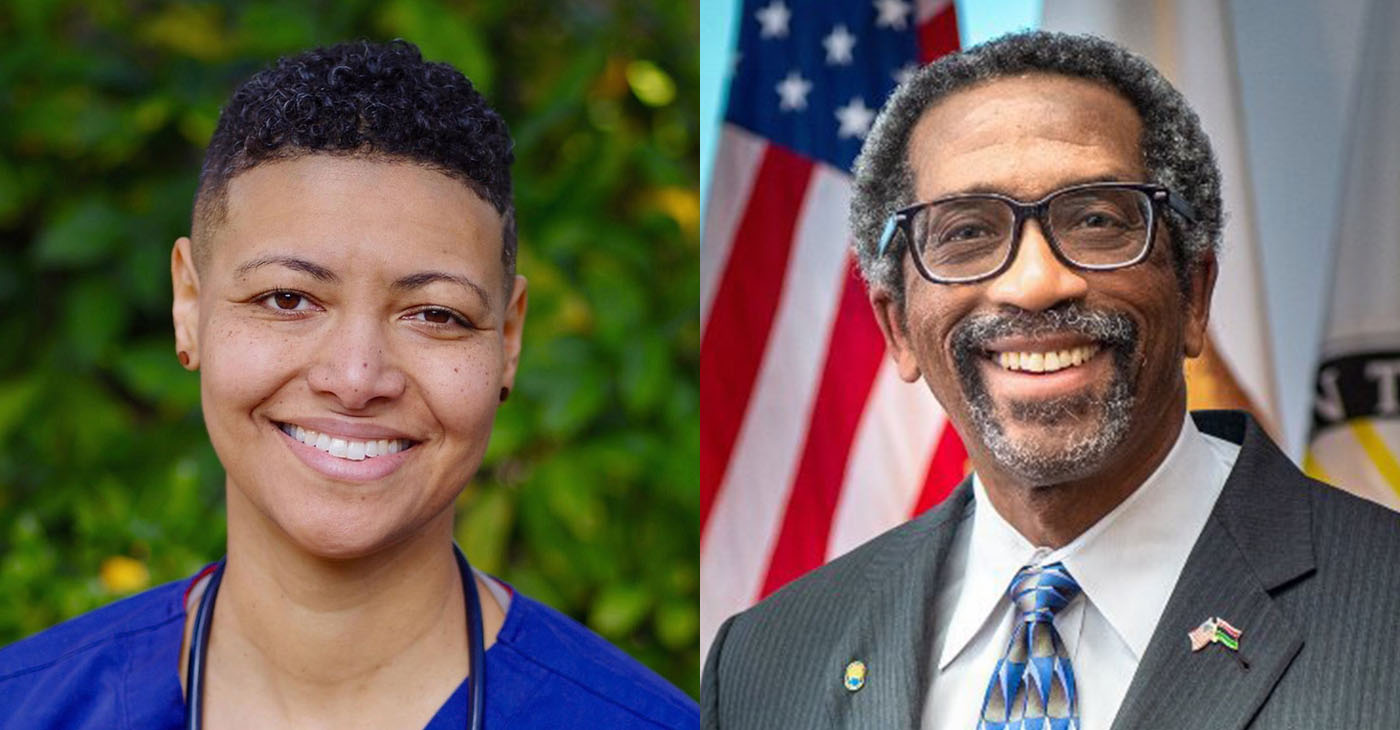
Nate Miley, who has served on Alameda County’s Board of Supervisors since 2000, is running for reelection to the District 4 supervisor seat.
Jennifer Esteen, a nurse and activist, is seeking to unseat him and become one of the five members of the powerful board that sets the county’s budget, governs its unincorporated areas, and oversees the sheriff, Alameda Health System, and mental health system.
District 4 includes most of East Oakland’s hills and flatlands beyond Fruitvale, part of Pleasanton and unincorporated areas south of San Leandro like Ashland and Castro Valley.
Voting is open and will remain open until March 5.
In California, campaign donations of $100 or more are public record. The records show that Miley has received about $550,000 in total campaign donations since he won the previous District 4 election in March 2020. Esteen has raised about $255,000 in total campaign donations since she started collecting them last July. All figures are accurate through Feb. 20.
While Miley has raised more money, Esteen has received donations from more sources. Miley received donations of $100 or more from 439 different sources. Esteen received such donations from 507 different sources.
Below, we’ve listed each candidate’s 10 highest campaign contributors. For Miley, two of his top campaign donors also bought their own advertisements to support him and/or oppose Esteen through independent expenditures. Such expenditures, though separate from campaign donations, are also public record, and we listed them. Additionally, the National Organization of Realtors has spent about $70,500 on their own independent expenditures to support Miley.
Nate Miley’s top campaign contributors:
The California Apartment Association, a trade group representing landlords and investors in California’s rental housing business, has spent about $129,500 supporting Miley’s election bid through about $59,500 in ads against Esteen, $55,000 in ads supporting Miley, and $15,000 in campaign donations.
The independent expenditure committee Preserve Agriculture in Alameda County has spent about $46,025 supporting Miley through about $27,200 in their own ads, and $18,825 in donations to his campaign. Preserve Agriculture has supported reelection efforts for former Alameda County DA Nancy O’Malley, and Sheriff Greg Ahern, a republican. It’s received funding from Chevron, PG&E, and a the California Apartment Association.
Organizations associated with the Laborers’ International Union of North America, or LiUNA, have donated about $35,000 in total. Construction and General Laborers Local 304, a local chapter of the union representing which represents over 4,000 workers, donated $20,000.
Laborers Pacific Southwest Regional Organizing Coalition, which represents 70,000 LiUNA members in Arizona, California, Hawaii and New Mexico, donated $15,000.
William ‘Bill’ Crotinger and the East Oakland-based company Argent Materials have donated $26,000. Crotinger is the president and founder of Argent, a concrete and asphalt recycling yard. Argent’s website says it is an eco-friendly company that diverts materials from landfills. In 2018, Argent paid the EPA $27,000 under a settlement for committing Clean Water Act violations.
Michael Morgan of Hayward, owner of We Are Hemp, a marijuana dispensary in Ashland, has donated $21,500.
Alameda County District 1 Supervisor David Haubert has donated $21,250 from his 2024 reelection campaign. He’s running unopposed for the District 1 seat.
SEIU 1021, which represents over 60,000 workers in local governments, non-profit agencies, healthcare programs, and schools in Northern California, has donated $20,000.
UA Local 342, which represents around 4,000 pipe trades industry workers in Contra Costa and Alameda counties, donated $20,000.
The union representing the county’s deputy sheriffs, Deputy Sheriff’s Association of Alameda County, has donated $17,000.
Becton Healthcare Resources and its managers have donated $14,625. Becton’s mission statement says it provides “behavioral health management services to organizations and groups that serve the serious and persistent mentally ill population.”
Jennifer Esteen’s top campaign contributors:
Mary Quinn Delaney of Piedmont, founder of Akonadi Foundation, has donated $20,000. Akonadi Foundation gives grants to nonprofit organizations, especially focusing on racial justice organizing,
Bridget Galli of Castro Valley has donated $7,000. Galli is a yoga instructor and a co-owner of Castro Valley Yoga.
Rachel Gelman of Oakland has donated $5,000. Gelman is an activist who has vowed to redistribute her inherited wealth to working class, Indigenous and Black communities.
California Worker Families Party has donated $5,000. The organization’s website describes itself as a “grassroots party for the multiracial working class.”
David Stern of Albany has donated $5,000. Stern is a retired UC Berkeley Professor of Education.
Oakland Rising Committee—a collaborative of racial, economic, and environmental justice organizations—has donated about $3,050.
Fredeke Von Bothmer-Goodyear, an unemployed resident of San Francisco, has donated $2,600.
Robert Britton of Castro Valley has donated $2,500. Britton is retired and worked in the labor movement for decades.
Progressive Era PAC has donated about $2,400. Its mission statement says it “exists to elect governing majorities of leaders in California committed to building a progressive era for people of color.”
East Bay Stonewall Democrats Club has donated $2,250. The club was founded in 1982 to give voice to the East Bay LGBTQIA+ communities.









Activism
Oakland Post: Week of September 23 – 29, 2026
The printed Weekly Edition of the Oakland Post: Week of September 23 – 29, 2026

To enlarge your view of this issue, use the slider, magnifying glass icon or full page icon in the lower right corner of the browser window.
Activism
Oakland Post: Week of September 16 – 22, 2026
The printed Weekly Edition of the Oakland Post: Week of September 16 – 22, 2026

To enlarge your view of this issue, use the slider, magnifying glass icon or full page icon in the lower right corner of the browser window.
Activism
Oakland Post: Week of September 9 – 15, 2026
The printed Weekly Edition of the Oakland Post: Week of September 9 – 15, 2026

To enlarge your view of this issue, use the slider, magnifying glass icon or full page icon in the lower right corner of the browser window.



Asm. Corey Jackson Announces Launch of 24-Hour Childcare in His District

IN MEMORIAM: The Rev. Leon “Sonny” Clark, Longtime Orange County Pastor and Community Leader, Dies at 72

Poll: Becerra Widens His Lead Over Hilton; Californians Split on Wealth Tax

From Historic Memories to New Possibilities: Oakland Celebrates Coliseum 60

County Office of Education Says OUSD Finances Are Getting Healthier, Materially Stronger

LIVE FREE Sunday Dinner Brings Faith, Fellowship and Civic Conversation to Oakland

Remembering Chauncey Bailey as Student Journalists Face Threats to Truth-Telling

BLACspace Cooperative Invites Bay Area to Experience Oakland’s Black Cultural Ecosystem Through a BLAC Map Tour + Party

In Wake of Death on Doorstep, Williams Chapel Baptist Church Calls for Better Care, Funding for Unhoused

Oakland Centenarian Nuna McKee Honored!

Caribbean Nations Produce Action Plan Calling for UK Reparations Over Slavery

Oakland Post: Week of September 23 – 29, 2026

Doulas Are Helping Black California Moms Navigate Pregnancy–Even as High Mortality Rates Persist

Newsom Signs Addictive Social Media Law to Protect Kids

On Your November Ballot: Prop 38 Would Allocate $8.4 Billion to Immunology and Immunotherapy Funding

Standoff for Justice: Our Homes Are Worth Fighting For

Oakland Post: Week of August 26 – September 1, 2026

Frontier Airlines’ Return to Oakland Airport Brings Flights, Jobs and Opportunity

Gubernatorial Candidate Steve Hilton Blasts California New Tire Rules; Newsom Hits Back

Chef Sharon Lee Blends Culinary Excellence, Education and Empowerment

Jackie Wright Champions Bay Area Stories, Filmmakers and Cultural Institutions

Big City Mayors Ask for “Yes” Vote on Housing Bond Measure; Conservatives Say “No”

Oakland Coliseum Project Opens Door for Small Businesses to Build Bigger

Gov. Newsom’s Latest Appointees Include Sacramento Advocate for Formerly Incarcerated Students; State’s New Tech Chief

Misnamed ‘Parent’ PAC Seeks to Influence Oakland School Board Elections

Longtime BWOPA Member Brendalyn Goodall Appointed to California Workforce Development Board

Gov. Newsom Signs Law Shielding Immigration Aid Workers From Doxing Threats

Secretary of State Shirley N. Weber Urges Californians to Vote Early as Voter ID Battle Intensifies

From Palestine to Oakland: Seeds for Liberation Examines Shared Struggles for Freedom

IN MEMORIAM: Dolly Parton Dead at 80 — How She Built a Legacy of Love and Earned Her Place in Black Culture

The Conversation With Al McFarlane 6/23/26

Media Monday 6/22/26

LIVE! ASK ALMA! — TUES. 6.23.26 7PM EST

Car Buying Secrets: 4 Hidden Checks Before You Sign!

Is This 550 HP Charger Worth YOUR Money? AutoNetwork Review

Celebrating Juneteenth – Frederick Douglass on education and resistance

LIVE! — ASK ALMA! — TUES. 6.19.26 7PM EST

Hyundai Ioniq 5 Parking, Safety, and 360 View #shorts

2025 Ioniq 5 New Wiper & Powerful Performance! #shorts

Electric SUV Range: Is 259 Miles Enough? #shorts

EV Charging: How Fast Can You Charge an Electric Vehicle? #shorts

Biometric Cooling… Messaging Seats…Come on! 2025 Infiniti QX80 Autograph 4WD

Charged Up: Witness the Magic of a Fully Electric Car! #shorts

Range Rover Sport PHEV Included…: See What’s Inside This Luxury SUV! #shorts

Invisible Hood View: Perfect Parking with X-Ray Vision! #shorts
-
 Community2 weeks ago
Misnamed ‘Parent’ PAC Seeks to Influence Oakland School Board Elections
-

 Activism3 weeks ago
Oakland Post: Week of September 2 – 8, 2026
-

 Community2 weeks ago
Richmond Tiny House Village Farm & Garden Set to Open Gates on Sept. 26
-

 Black History2 weeks ago
Latest Massacre in Haiti Reveals Cruelty U.S. Deportations
-

 Black History2 weeks ago
OPINION: Nolan Wells’ Death One of Several Signifying Racial Terror Lives on in U.S. South
-

 Activism2 weeks ago
Oakland Post: Week of September 9 – 15, 2026
-

 Community2 weeks ago
Democratic Clubs Interview Candidates for Oakland School Board
-

 Featured2 weeks ago
‘Ready to See These Bills Become Law’: Sen. Weber’s Package of 15 Bills Advance to Gov. Newsom’s Desk
