
History
What Reparations for Slavery Might Look Like in 2019

Another civil rights leader, Bayard Rustin, responded, “If my great-grandfather picked cotton for 50 years, then he may deserve some money, but he’s dead and gone and nobody owes me anything.”
The question of reparations, however, extends far beyond the roughly four million people who were enslaved when the Civil War started, as Ta-Nehisi Coates explained in an influential essay published in The Atlantic in 2014. Legalized discrimination and state-sanctioned brutality, murder, dispossession and disenfranchisement continued long after the war ended. That history profoundly handicapped black Americans’ ability to create and accumulate wealth as well as to gain access to jobs, housing, education and health care.
For every dollar a typical white household holds, a Black one has 10 cents. It is this cumulative effect that justifies the payment of reparations to descendants of slaves long dead, supporters say.
“Equality is not likely to be obtained without some form of reparations,” David H. Swinton, an economist and former president of Benedict College, wrote in the 1990 collection “The Wealth of Races.”
Who would be paid?
Nearly 47 million Americans identified themselves as Black or African-American in the latest census. A vast majority are descended from slaves, but others are more recent migrants. So who would qualify for a payment?
William A. Darity Jr., an economist at Duke University and a leading scholar on reparations, suggests two qualifying conditions: having at least one ancestor who was enslaved in the United States, and having identified oneself as African-American on a legal document for at least a decade before the approval of any reparations. The 10-year rule, he said, would help screen out anyone trying to cash in on a windfall.
According to these criteria, Oprah Winfrey, who has traced her DNA to slaves captured in West Africa in the early 19th century, would qualify. Former President Barack Obama, the son of a white American mother and a Kenyan father, would not. Mr. Darity estimates that roughly 30 million Americans would be eligible.
Tracing genealogy back to the slave-owning era is difficult. But the search begins by comparing the 1870 census, when freed slaves were first counted by name, with the one taken in 1860, when they weren’t. Other sources include military service and pension records, slave-ship manifests, and estate and inheritance documents.
As for taking account of current wealth, a reparations program could link potential payouts to income and asset levels.
How much would recipients get?
Attaching a dollar figure to a program of reparations resembles a “Wheel of Fortune” spin, with amounts ranging from the piddling ($71.08 per recipient under Forman’s plan) to the astronomical ($17 trillion in total).
Over the decades, some economists have tried to come up with a quantifiable basis for a fair sum. Mr. Swinton, for example, estimated in 1983 that 40 to 60 percent of the difference between Black and white income could be attributed to past and continuing discrimination, and put the figure at $500 billion.
Some economists evaluated labor’s share of the slave system’s profits in cotton and tobacco. Others have looked at what slaves would have earned if they had been paid wages plus interest, after subtracting housing and food costs. One study looked at 20th-century statistics, estimating how much less blacks earned because of decades of discrimination. Another examined the value of black wealth lost or destroyed after slavery ended, through practices like redlining that denied lending or insurance to African-American communities, or organized riots like the 1921 rampage that leveled the Greenwood neighborhood of Tulsa, known as “Black Wall Street.”
A recurring theme has been to return to that first official action promising 40 acres and a mule. Sherman drew up his order after posing this directive to a group of black ministers and leaders: “State in what manner you think you can take care of yourselves.”
What would Sherman’s promise be worth today?
Mr. Darity has been mulling that question for years, and is writing a book on reparations with Kirsten Mullen, due out next year. He begins with the cost of an acre in 1865: about $10. Forty acres divided among a family of four comes to 10 acres per person, or about $100 for each of the four million former slaves. Taking account of compounding interest and inflation, Mr. Darity has put the present value at $2.6 trillion. Assuming roughly 30 million descendants of ex-slaves, he concluded it worked out to about $80,000 a person.
To get a sense of the scale, consider that the United States budget this year is $4.7 trillion.
Of course, varying any critical assumption can add or subtract billions or trillions of dollars.
Thomas Craemer, an associate professor of public policy at the University of Connecticut, used the same starting point — 40 acres and a mule — but a different method in a study published last year. He used the current average price of agricultural land and figured that 40 acres of farmland and buildings would amount to roughly $123,000. If all of the four million slaves counted in the 1860 census had been able to take advantage of that offer, it would have totaled more than $486 billion today — or about $16,200 for each descendant of slaves.
What form would payment take?
Compensation programs can take many forms. In the United States, after a congressional study, people of Japanese descent who were forced into internment camps during World War II received $20,000 in 1988 and a formal apology.
Since 1952, Germany has paid more than $70 billion in reparations through various programs, primarily to Jewish victims of the Nazi regime, and continues to deliver hundreds of millions of dollars each year. Payments vary from a lump sum distributed to individuals to a monthly pension based on years working in a slave labor camp. Money is also given to organizations to cover home care for older survivors or for grants. A small portion goes for research, education and documentation.
A reparations program in the United States could likewise adopt a single method or several at once. Families could get a one-time check, receive vouchers for medical insurance or college, or have access to a trust fund to finance a business or a home. Mr. Darity argues that “for both substantive and symbolic reasons, some important component must be direct payment to eligible recipients.”
Other scholars have emphasized different features. Roy L. Brooks, a law professor at the University of San Diego and the author of “Atonement and Forgiveness: A New Model for Black Reparations,” has reservations about what he calls the “settlement model,” a legalistic approach that looks backward to compensate victims for demonstrable financial losses. He prefers what he calls the “atonement model,” emphasizing longer-term investments in education, housing and businesses that build up wealth.
What would the economic impact be?
According to the Federal Reserve’s Survey of Consumer Finances, the median wealth of black households is $16,000, compared with $163,000 for whites. Reparations are not likely to eliminate the racial wealth gap, but could narrow it somewhat. Low-income families, with the fewest assets, would benefit the most.
The biggest economic objection is that any meaningful program would be unaffordable. Like other government spending, reparations would ultimately be paid for by some kind of tax or fee, or borrowing, say, through government bonds. Such a program would almost certainly require increasing the federal debt and be structured over time.
Those less worried about a growing deficit could argue that reparations would be a boon over the long run — lifting people out of poverty, and improving their earning potential and buying power.









Activism
Discrimination in City Contracts
The report was made public by Councilmember Carroll Fife, who brought it this week to the Council’s Life Enrichment Committee, which she chairs. Councilmembers, angry at the conditions revealed, unanimously approved the informational report, which is scheduled to go to an upcoming council meeting for discussion and action. The current study covers five years, 2016-2021, roughly overlapping the two tenures of Libby Schaaf, who served as mayor from January 2015 to January 2023.


Disparity Study Exposes Oakland’s Lack of Race and Equity Inclusion
Part 1
By Ken Epstein
A long-awaited disparity study funded by the City of Oakland shows dramatic evidence that city government is practicing a deeply embedded pattern of systemic discrimination in the spending of public money on outside contracts that excludes minority- and woman-owned businesses, especially African Americans.
Instead, a majority of public money goes to a disproportionate handful of white male-owned companies that are based outside of Oakland, according to the 369-page report produced for the city by Mason Tillman Associates, an Oakland-based firm that performs statistical, legal and economic analyses of contracting and hiring.
The report was made public by Councilmember Carroll Fife, who brought it this week to the Council’s Life Enrichment Committee, which she chairs. Councilmembers, angry at the conditions revealed, unanimously approved the informational report, which is scheduled to go to an upcoming council meeting for discussion and action.
The current study covers five years, 2016-2021, roughly overlapping the two tenures of Libby Schaaf, who served as mayor from January 2015 to January 2023.
The amount of dollars at stake in these contracts was significant in the four areas that were studied, a total of $486.7 million including $214.6 million on construction, $28.6 million on architecture, and engineering, $78.9 million on professional services, and $164.6 million on goods and services.

While the city’s policies are good, “the practices are not consistent with policy,” said Dr. Eleanor Ramsey, founder and CEO of Mason Tillman Associates.
There have been four disparity studies during the last 20 years, all showing a pattern of discrimination against women and minorities, especially African Americans, she said. “You have good procurement policy but poor enforcement.”
“Most minority- and women-owned businesses did not receive their fair share of city-funded contracts,” she continued. “Over 50% of the city’s prime contract dollars were awarded to white-owned male businesses that controlled most subcontracting awards. And nearly 65% of the city’s prime contracts were awarded to non-Oakland businesses.”
As a result, she said, “there is a direct loss of revenue to Oakland businesses and to business tax in the city… There is also an indirect loss of sales and property taxes (and) increased commercial office vacancies and empty retail space.”
Much of the discrimination occurs in the methods used by individual city departments when issuing outside contracts. Many departments have found “creative” ways to circumvent policies, including issuing “emergency” contracts for emergencies that do not exist and providing waivers to requirements to contract with women- and minority-owned businesses, Ramsey said.
Many of the smaller contracts – 59% of total contracts issued – never go to the City Council for approval.
Some people argue that the contracts go to a few big companies because small businesses either do not exist or cannot do the work. But the reality is that a majority of city contracts are small, under $100,000, and there are many Black-, woman- and minority-owned companies available in Oakland, said Ramsey.
“Until we address the disparities that we are seeing, not just in this report but with our own eyes, we will be consistently challenged to create safety, to create equity, and to create the city that we all deserve,” said Fife.
A special issue highlighted in the disparity report was the way city departments handled spending of federal money issued in grants through a state agency, Caltrans. Under federal guidelines, 17.06%. of the dollars should go to Disadvantaged Business Enterprises (DBEs).
“The fact is that only 2.16% of all the dollars awarded on contracts (went to) DBEs,” Ramsey said.
Speaking at the committee meeting, City Councilmember Ken Houston said, “It’s not fair, it’s not right. If we had implemented (city policies) 24 years ago, we wouldn’t be sitting here (now) waiving (policies).”
“What about us? We want vacations. We want to have savings for our children. We’re dying out here,” he said.
Councilmember Charlene Wang said that she noticed when reading the report that “two types of business owners that are consistently experiencing the most appalling discrimination” are African Americans and minority females.
“It’s gotten worse” over the past 20 years, she said. “It’s notable that businesses have survived despite the fact that they have not been able to do business with their own city.”
Also speaking at the meeting, Brenda Harbin-Forte, a retired Alameda County Superior Court judge, and chair of the Legal Redress Committee for the Oakland NAACP, said, “I am so glad this disparity study finally was made public. These findings … are not just troubling, they are appalling, that we have let these things go on in our city.”
“We need action, we need activity,” she said. “We need for the City Council and others to recognize that you must immediately do something to rectify the situation that has been allowed to go on. The report says that the city was an active or inactive or unintentional or whatever participant in what has been going on in the city. We need fairness.”
Cathy Adams, president of the Oakland African American Chamber of Commerce, said, “The report in my opinion was very clear. It gave directions, and I feel that we should accept the consultant Dr. Ramsey’s recommendations.
“We understand what the disparities are; it’s going to be upon the city, our councilmembers, and our department heads to just get in alignment,” she said.
Said West Oakland activist Carol Wyatt, “For a diverse city to produce these results is a disgrace. The study shows that roughly 83% of the city contracting dollars went to non-minority white male-owned firms under so-called race neutral policies
These conditions are not “a reflection of a lack of qualified local firms,” she continued. “Oakland does not have a workforce shortage; it has a training, local hire, and capacity-building problem.”
“That failure must be examined and corrected,” she said. “The length of time the study sat without action, only further heightens the need for accountability.”

#NNPA BlackPress
COMMENTARY: The National Protest Must Be Accompanied with Our Votes
Just as Trump is gathering election data like having the FBI take all the election data in Georgia from the 2020 election, so must we organize in preparation for the coming primary season to have the right people on ballots in each Republican district, so that we can regain control of the House of Representatives and by doing so, restore the separation of powers and balance that our democracy is being deprived of.
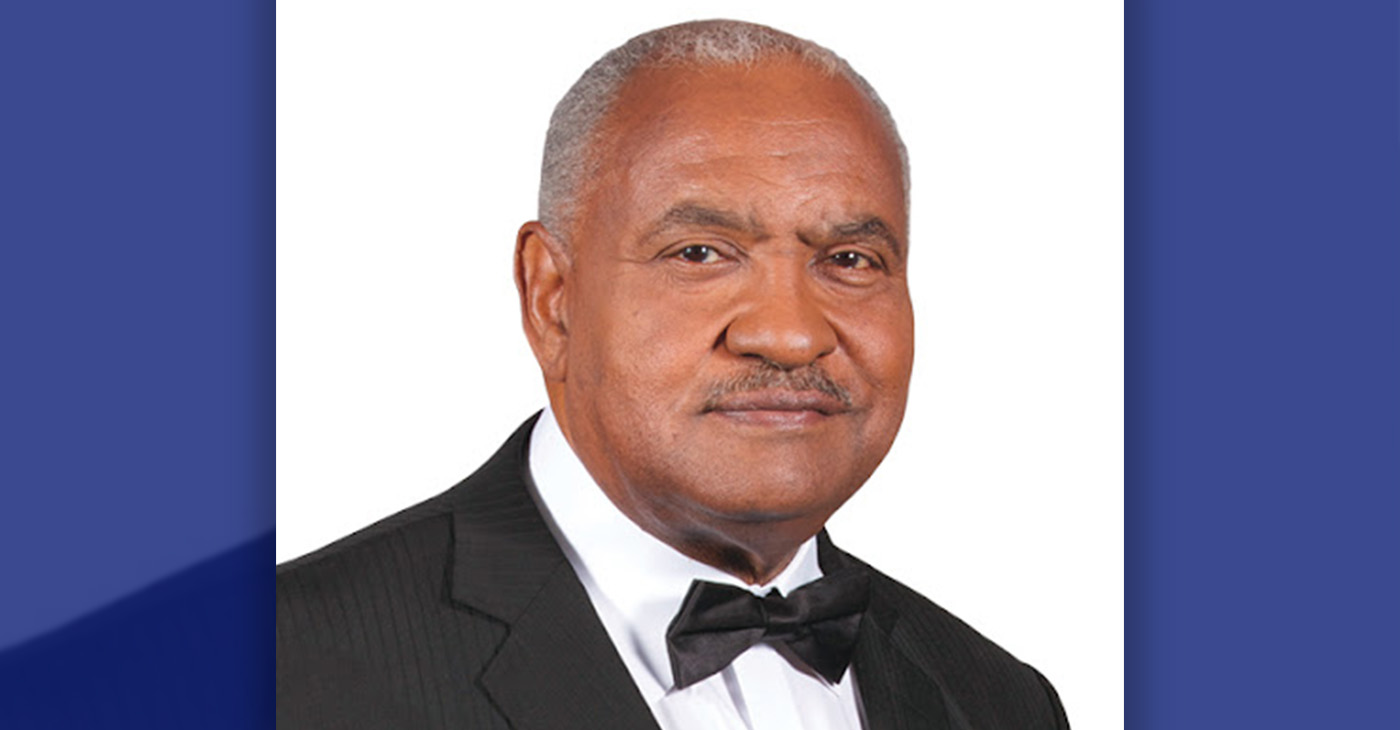
By Dr. John E. Warren, Publisher San Diego Voice & Viewpoint Newspaper
As thousands of Americans march every week in cities across this great nation, it must be remembered that the protest without the vote is of no concern to Donald Trump and his administration.
In every city, there is a personal connection to the U.S. Congress. In too many cases, the member of Congress representing the people of that city and the congressional district in which it sits, is a Republican. It is the Republicans who are giving silent support to the destructive actions of those persons like the U.S. Attorney General, the Director of Homeland Security, and the National Intelligence Director, who are carrying out the revenge campaign of the President rather than upholding the oath of office each of them took “to Defend The Constitution of the United States.”
Just as Trump is gathering election data like having the FBI take all the election data in Georgia from the 2020 election, so must we organize in preparation for the coming primary season to have the right people on ballots in each Republican district, so that we can regain control of the House of Representatives and by doing so, restore the separation of powers and balance that our democracy is being deprived of.
In California, the primary comes in June 2026. The congressional races must be a priority just as much as the local election of people has been so important in keeping ICE from acquiring facilities to build more prisons around the country.
“We the People” are winning this battle, even though it might not look like it. Each of us must get involved now, right where we are.
In this Black History month, it is important to remember that all we have accomplished in this nation has been “in spite of” and not “because of.” Frederick Douglas said, “Power concedes nothing without a struggle.”
Today, the struggle is to maintain our very institutions and history. Our strength in this struggle rests in our “collectiveness.” Our newspapers and journalists are at the greatest risk. We must not personally add to the attack by ignoring those who have been our very foundation, our Black press.
Are you spending your dollars this Black History Month with those who salute and honor contributions by supporting those who tell our stories? Remember that silence is the same as consent and support for the opposition. Where do you stand and where will your dollars go?
Activism
Congresswoman Simon Votes Against Department of Homeland Security, ICE Funding
“They need accountability. Republicans already gave these agencies an unprecedented $170 billion for immigration enforcement, funding they have used to conduct raids at schools, separate families, and deploy a masked paramilitary who refuse to identify themselves on American streets. This bill gives them more funding without a single reform to stop unconstitutional, immoral abuses,” she said.
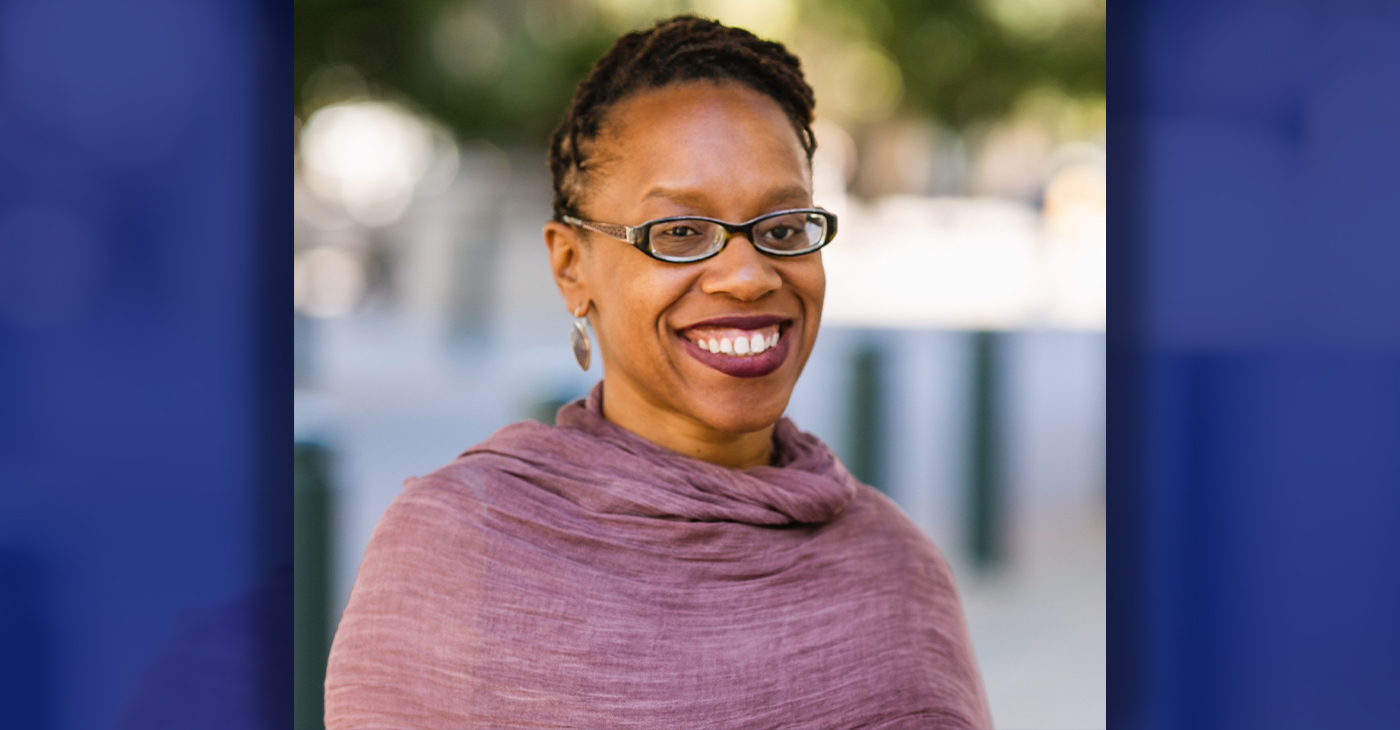
By Post Staff
Congresswoman Lateefah Simon (D-CA-12) released a statement after voting against legislation to fund the Department of Homeland Security (DHS), which supports Immigration and Customs Enforcement (ICE) and U.S. Customs and Border Protection (CPB).
“Today, I voted NO on legislation to fund the Department of Homeland Security through Feb. 13, 2026.
“ICE and CBP do not need more funding to terrorize communities or kill more people,” she said in the media release.
“They need accountability. Republicans already gave these agencies an unprecedented $170 billion for immigration enforcement, funding they have used to conduct raids at schools, separate families, and deploy a masked paramilitary who refuse to identify themselves on American streets. This bill gives them more funding without a single reform to stop unconstitutional, immoral abuses,” she said.
“The American people are demanding change. Poll after poll of Americans’ opinions show overwhelming support for requiring ICE agents to wear body cameras and prohibiting them from hiding their faces during enforcement actions. This is the bare minimum transparency standard, and this funding legislation does not even meet this low bar,” Simon said.
“Republicans in Congress are not serious about reining in these lawless agencies. Their refusal to make meaningful changes to the DHS funding bill has consequences that go beyond immigration enforcement. TSA agents who keep our airports safe and FEMA workers who help our communities recover from disasters are stuck in limbo due to Republican inaction.
“The Constitution does not have an exception for immigrants. Every person on American soil has rights, and federal agencies must respect them. The East Bay has made clear at the Alameda County and city level that we will hold the line against a violent ICE force and support our immigrant communities – I will continue to hold the line and our values with my votes in Congress.”


WORK FROM HOME
Home-based business with potential monthly income of $10K+ per month. A proven training system and website provided to maximize business effectiveness. Perfect job to earn side and primary income. Contact Lynne for more details: Lynne4npusa@gmail.com 800-334-0540


Black Artists in America, Installation Three Wraps at the Dixon Gallery and Gardens

Grief, Advocacy, and Education: A Counselor Reflects on Black Maternal Health

Future of Florida’s Black History Museum in Limbo

New Research Shows the Many Benefits of Early Learning

South Hampton K-8 Students Among Top 10 Finalists for Samsung’s ‘Solve for Tomorrow’ Competition

Cuba: No Negotiation with US on the President or Political System

Brooklyn Academy of Music Names Jamaican-Born Tamara McCaw as President

Trinidad & Tobego – U.S. Launches WhatsApp Channel for American Citizens in the Country

Oakland Post: Week of March 18 – 24, 2026

AI Innovation vs. Ethics and Environmental Impact

AI, Web3, and Digital Reparations

What If You Owned Your AI Agent?

Season 7, Episode 3 – January Reporter’s Roundtable 📱

Season 7, Episode 3 – January Reporter’s Roundtable

AI, Media, and Power | Part 2, Real-World Impacts and Tradeoffs

Oakland Post: Week of February 11 – 17, 2026

Reflecting on Black History Milestones in Birmingham AL

Rising Optimism Among Small And Middle Market Business Leaders Suggests Growth for California

CITY OF SAN LEANDRO STATE OF CALIFORNIA PUBLIC WORKS DEPARTMENT ENGINEERING DIVISION NOTICE TO BIDDERS FOR ANNUAL STREET OVERLAY/REHABILITATION 2019-21 – PHASE III

Oakland Post: Week of February 18 – 24, 2026

PRESS ROOM: NBA Hall of Fame Nominee Terry Cummings Joins 100 Black Men of DeKalb County to Launch Victory & Values Initiative

Oakland Post: Week of February 25 – March 3, 2026

Trump’s MAGA Allies are Creating Executive Order Plan to Steal the 2026 Midterms

U.S. manufacturing rebounds – how foundry services are adapting to rising demand

OP-ED: One Hundred Years of Black Workers Telling the Truth

Advancements in solar technology that are changing the way we power the world

Chase Oakland Community Center Hosts Alley-Oop Accelerator Building Community and Opportunity for Bay Area Entrepreneurs

Poll Shows Support for Policies That Help Families Afford Child Care

PRESS ROOM: Civil Rights TV Launches in Selma as the World’s First 24/7 Civil Rights Television Network

Oakland Post: Week of March 4 – 10, 2026

Hyundai Ioniq 5 Parking, Safety, and 360 View #shorts

2025 Ioniq 5 New Wiper & Powerful Performance! #shorts

Electric SUV Range: Is 259 Miles Enough? #shorts

EV Charging: How Fast Can You Charge an Electric Vehicle? #shorts

Biometric Cooling… Messaging Seats…Come on! 2025 Infiniti QX80 Autograph 4WD

Charged Up: Witness the Magic of a Fully Electric Car! #shorts

Range Rover Sport PHEV Included…: See What’s Inside This Luxury SUV! #shorts

Invisible Hood View: Perfect Parking with X-Ray Vision! #shorts

AI Is Reshaping Black Healthcare: Promise, Peril, and the Push for Improved Results in California

ESSAY: Technology and Medicine, a Primary Care Point of View

Sanctuary Cities

The RESISTANCE – FREEDOM NOW

STATE OF THE PEOPLE: Freddie

ECONOMIC BOYCOTT DAY!!!!!

I told You So
-
 Activism4 weeks ago
Oakland Post: Week of February 25 – March 3, 2026
-
 #NNPA BlackPress4 weeks ago
Poll Shows Support for Policies That Help Families Afford Child Care
-
 Activism3 weeks ago
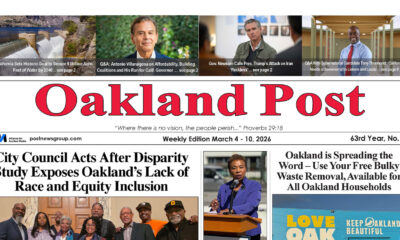
Oakland Post: Week of March 4 – 10, 2026
-

 #NNPA BlackPress3 weeks ago
Woman’s Search for Family’s Roots Leads to Ancestor John T. Ward – A Successful Entrepreneur and Conductor on the Underground Railroad
-

 #NNPA BlackPress3 weeks ago
OP-ED: NNPA Launches 2026 “Leadership Matters” Video Series
-

 #NNPA BlackPress3 weeks ago
Advocates Raise Alarm Over ICE Operation, MOU and Detention Risks in Baltimore County
-

 #NNPA BlackPress3 weeks ago
COMMENTARY: Women of Color Shape Our Past and Future
-

 #NNPA BlackPress3 weeks ago
Pete Buttigieg to Join Mayor Randall Woodfin for Community Town Hall in Birmingham
