
#NNPA BlackPress
WATCH Reparations NOW Resolution Introduced
WASHINGTON, D.C. – May 15, 2025 — Congresswoman Summer L. Lee (PA-12) led her colleagues in reintroducing the Reparations Now Resolution to call on the federal government to provide reparations to the descendants of enslaved Black families. The resolution seeks to advance federal reparations, support existing reparatory justice efforts such as H.R. 40, and provide further momentum […]


WASHINGTON, D.C. – May 15, 2025 — Congresswoman Summer L. Lee (PA-12) led her colleagues in reintroducing the Reparations Now Resolution to call on the federal government to provide reparations to the descendants of enslaved Black families. The resolution seeks to advance federal reparations, support existing reparatory justice efforts such as H.R. 40, and provide further momentum to reparations efforts at the state and local levels. WATCH:
[This post contains video, click to play]
Read the bill here.
The resolution was introduced at a press conference with Congresswoman Rashida Tlaib (MI-12), Congresswoman Ayanna Pressley (MA-07), and a coalition of advocates. Former Congresswoman Cori Bush, who initially introduced the resolution, was also in attendance. The Members were joined by Dreisen Heath of Reparations Strategist and Founder of Why We Can’t Wait Reparations Coalition, Miya Iwataki of Nikkei for Civil Rights & Redress/Nikkei Progressives, Chelsea Higgs Wise, Executive Director of Marijuana Justice, Robin Rue Simmons of First Repair, Kyle Bibby, Co-CEO and Co-Founder of Black Veterans Project, and Marcus Anthony Hunter, Author, Radical Reparations: Healing the Soul of a Nation.
“As a descendant of my enslaved ancestors, I am deeply humbled to reintroduce the Reparations Now Resolution. Black folks are owed more than thoughts and prayers—we are owed restitution and justice to repair the government-sanctioned harm that has plagued our communities for generations,” said Rep. Summer Lee. “While attempts to whitewash, obstruct, and deny Black history are made, we must fight the white supremacy rampant in our country, against the rising authoritarianism, and not allow anyone to deny Black folks the ability to survive and to thrive. I thank former Congresswoman Bush for passing on the torch for this resolution and urge my colleagues to pass it without delay.”
“Today we say what too many are too afraid to say: Reparations Now. For over 400 years, this country has profited off the stolen labor, stolen land, and stolen lives of Black people, and every day that we fail to repair the harm, we compound it. Until there is repair, there will be no justice, and where there is no justice, we will continue to fight. Many thanks to Congresswoman Summer Lee for her leadership and to this movement. Without you all, this would not move forward,” said former Rep. Bush.
“For centuries, our Black neighbors have endured the brutality of slavery, the violence of white supremacy, the dehumanization of Jim Crow, and the systemic racism that has left a lasting impact on the lives of Black families in our communities,” said Rep. Tlaib. “By following through on our promise to provide reparations, Congress can begin to address the racial wealth gap, end the decades of disinvestment in communities of color, and dismantle the racist systems that have oppressed our Black neighbors for far too long.”
“Congress has a duty – an obligation – to confront past wrongs and address the centuries of enslavement, violence, and discrimination against Black people. With Donald Trump and Republicans waging a coordinated, all-out assault on Black communities, we must advance an affirmative agenda for Black America,” said Rep. Ayanna Pressley. “We are in a moment of anti-Blackness on steroids, and we will not back down in our pursuit of reparative justice. I am proud to partner with my sister-in-service, Congresswoman Summer Lee, to continue moving this critical priority forward,” said Rep. Pressley.
“The impact of slavery and generations of racist policies didn’t end with the Civil Rights Movement. We still see the consequences today in wealth inequality, in access to healthcare and education, and in the criminal justice system. That’s why I support the Reparations Now Resolution,” said Rep. Omar. “This bill is about acknowledging the truth of this country’s history and taking meaningful steps to repair the harm. This is one of many ways that we can create real change in the lives of Black families today and for generations to come.”
The Reparations Now Resolution is co-sponsored by Representatives Jasmine Crockett (TX-30), Valerie P. Foushee (NC-04), Al Green (TX-09), Jonathan Jackson (IL-01), Henry “Hank” Johnson (GA-04), LaMonica McIver (NJ-10), Ilhan Omar (MN-05), Ayanna Pressley (MA-07), Delia Ramirez (IL-03), Lateefah Simon (CA-12), Shri Thaneder (MI-13), Rashida Tlaib (MI-12), and Nikema Williams (GA-05).
The resolution is endorsed by #unifyUSA, African American Redress Network (AARN), African Ancestral Society, Alliance for Reparations, Reconciliation, and Truth (ARRT), Amnesty International USA, Athens Reparations Action, Bailey’s Cafe, Benita Raquiba Miller LLC, Black Veterans Project, BlackRoots Alliance, BLIS Collective, Breaking Generational Cycles, California Black Power Network, Campaign For Justice: Redress NOW For Japanese Latin Americans!, Center for LGBTQ Economic Advancement & Research (CLEAR), Center for Reparatory Justice, Transformation and Remediation, Community Rising Project, DC Justice Lab, Democrats Abroad Reparations Task Force (DA RTF), Descendants of Enslaved Communities of Virginia, Drug Policy Alliance, Equal Justice USA, Equality Federation, FirstRepair, FreedomRoad.us, Fund For Reparations NOW! (FFRN!), Get Free, Girls for Gender Equity, Gullah Geechee Group (GGG), Inc., Human Rights Watch, Incarcerated Nation Network, Institute for Justice and Democracy in Haiti, Japanese American Citizens League, Japanese American Citizens League – Portland, Japanese American Citizens League – Twin Cities Chapter, Japanese Peruvian Oral History Project, Metro Organization for Racial and Economic Equity (MORE 2), Make It Plain, Malcolm X Center for Self Determination, Middle Collegiate Church, Minidoka Pilgrimage Planning Committee, National Asian American Pacific Islander Mental Health Association (NAAPIMHA), National Coalition of Blacks for Reparations In America (N’COBRA), National Conference of Black Lawyers Reparations Research Project, National Council of Churches, National LGBTQ Task Force Action Fund, National LGBTQ+ Bar Association, National Black Justice Collective (NBJC), NETWORK Lobby for Catholic Social Justice, Network NOVA & the Virginia Grassroots, Nikkei for Civil Rights & Redress (NCRR), Nikkei Progressives/Nikkei for Civil Rights & Redress, Norml National Care Givers, Not In Our Town Princeton, Parable of the Sower Intentional Community Cooperative, Parents Across America, People’s Organization for Progress, Positive Women’s Network-USA, Progressive Democrats of America, Rebel Noires, Reclaim Roxbury, Reparation Education Project, Reparations Circle Denver, Reparations Interfaith Coalition of Massachusetts (RIC), Reparations Pledge, Reparations4Slavery, Reparatory Justice Commission, SAFES, Samuel DeWitt Proctor Conference, Sanctuary of Hope (SOH), Sistamatictheology, LLC, Soul Child Awakenings LLC, South Carolina Reparations Coalition, The NOTICE Coalition, The Taifa Group, Timelist Group, Inc., Tsuru For Solidarity, UNESCO Inclusive Policy Lab-People of African Descent & the SDGs E-Team, Unitarian Universalist Association, United By Equity, Universal Human Rights Initiative, Virago Strategies, and Why We Can’t Wait National Reparations Coalition.
“At a time when injustice is being codified and where there is an operation to erase public memory, Congresswoman Summer Lee dares to not only remember but repair. She carries forward the visionary and courageous torch lit by former Congresswoman Cori Bush—championing a reparations movement—and its demands—that is as expansive as it is urgent. From education justice to wealth building, from maternal health to environmental equity, this resolution recognizes that repair must meet us at every intersection of harm. The #ReparationsNow Resolution is not just a policy proposal — it is a movement mandate. This resolution is a light in an era of erasure and is a testament to the leadership of Black women who refuse to let this nation forget what it owes,” said Dreisen Heath, Reparations Strategist, Founder, Why We Can’t Wait Reparations Coalition.
“Reparations is more than a check. It is redress for lifetimes of losses brought on our people: loss of property, education, access to medical care, unjust imprisonment. As Japanese Americans who fought for Justice and Reparations, we are committed to work in solidarity to win Reparations for Black Americans, and to pass the Reparations Now Resolution!” said Miya Iwataki, Nikkei Progressives/NCRR Reparations Coalition, Organizer.
“Reparations Now is timely and much needed legislation. We commend and support Congresswoman Summer Lee continuing the mighty efforts inaugurated by former Representative Cori Bush,” said Dr. Marcus Anthony Hunter, Executive Director of United By Equity.
“The National Coalition of Blacks for Reparations in America (N’COBRA) is honored to stand with you during the historic introduction of this resolution, providing reparations to descendants of enslaved Africans and people of African descent,” said Kenniss Henry, National Co-Chair of N’COBRA.
“Human Rights Watch strongly endorses Congresswoman Lee’s reparations resolution and its urgent need to confront the enduring legacy of slavery and systemic racism in the United States. The #ReparationsNow resolution paves the way for reparative justice and addressing past harms and their resonant socioeconomic consequences. As international human rights advocates, we see this as a crucial step towards healing, accountability, and prevention of future racial injustice,” said Bria Nelson, Researcher & Advocate of Human Rights Watch.
“Reparations are not just a matter of policy—they are a matter of the morality of our nation. For too long, the dominant story in this country has denied or distorted the truth about slavery, land theft, and the economic foundations of capitalism. This resolution is a powerful step toward repairing the material harms of state-sanctioned anti-Blackness, but it is also an intervention of public memory. It affirms the truth of our history, the dignity of Black life, and the right to self-determination. At BLIS, we know that shifting public perception is essential to building the political will for reparations. We are proud to stand with Congresswoman Summer Lee and the communities who have long led this fight. Together, we are rewriting the story—and reclaiming the future,” said Trevor Smith, Executive Director, BLIS Collective.
“Reparations Now!” said Nkechi Taifa, President of The Taifa Group.
“Over 35 years ago, our country provided reparations to Japanese Americans who had been unjustly incarcerated during WWII. We are long overdue in fully coming to terms with our government’s complicity in the institution of chattel slavery and continued state sanctioned and enforced racial discrimination against Black people. The Japanese American Citizens League continues the call for our nation to once again correct an historic injustice as it did for Japanese Americans, and seek to truly respond to the harms that our government has inflicted upon the Black community in the form of reparations to bring healing for all Americans,” said David Inoue, Executive Director of Japanese American Citizens League.
“Reparations are about making equality real and creating a better future. There’s never been a more urgent time to support this resolution. While the MAGA regime tries to whitewash our history so they can whitewash our country, we’re demanding our leaders stand in the legacy of civil rights, reckon with the truth, and right longstanding wrongs so we can all get free,” said Nicole Carty, Executive Director of Get Free.
“Unitarian Universalists believe reparations are a moral and spiritual imperative. We cannot ignore the wound that persists from the theft of Black bodies, labor, culture, and dignity. The Reparations Now Resolution is a necessary and faithful step toward the healing that will only come through real repair. Our faith calls us to truth, justice, and liberation—and that means showing up with Black communities to demand accountability and showing up for the promise of a democracy for all the people, by all the people,” said Nicole Pressley, Director of Organizing Strategy.
“Respect Repair Restitution,” said Chief Egunwale Amusan, President of African Ancestral Society.
“We must support this resolution because repairing the enduring harms of slavery and systemic racism is essential to achieving a just, inclusive, and multi-racial democracy. The federal government can no longer remain silent,” said Stair Calhoun, Co-founder Network NOVA.
“May we be guided by the wisdom, love, and freedom fighting spirit of our ancestors. Asé!” said Nicolette Paige, Priestess at Soul Child Awakenings, LLC.
“The U.S. stands at a crossroads. We are choosing our future now. We cannot walk into a future with light and hope until we confess and repent of the original sin of our nation– racialized oppression. The Reparations Now resolution is more than legislation. It is a sacred act with the power to repair what racial hierarchy has wrought in our nation and in the lives of Americans of African descent,” said Lisa Sharon Harper, President and Founder of FreedomRoad.us and author of Fortune: How Race Broke My Family and the World–and How To Repair It All.
“This historic resolution forcefully argues the moral and legal necessity of why the federal government must provide reparations to descendants of enslaved Africans and people of African descent,” said Five Mualimak, Executive Director of Incarcerated Nation Network.
“The long shadow of slavery still looms over the lives of people of African descent who carry with them the transgenerational trauma and who continue to confront marginalization, exclusion and bigotry,” said Dr.Ron Daniels, Norml National Care Givers, CANNABIS, CDJ FASHION FORWARD.
“For centuries, the U.S. government carved injustice into the bones of this nation — sanctioning the theft of Black bodies, lives, and futures to build its wealth and power. The legacy of that violence lives on in every stolen opportunity and deepened divide. True justice demands more than remembrance; it demands repair. A holistic reparations program is not only a moral imperative — it is the first step in healing a wound this country has long refused to close,” said Professor Christian D. Green, National Equity Week Organizer.
“Reparations is restoration of free, sovereign, and independent personhood,” said Efia Nwangaza, Founding Director of South Carolina Reparations Coalition.
“”If I steal from you every day for 400 years, and one day announce that I will stop stealing (or steal less), my debt is not repaid. That theft of wealth, land, safety, and opportunity persists to this day, and it is time for people of privilege, like me, to meaningfully repay our debt,” said Robin A. Lloyd, Founder of Reparations Pledge.
“Gullah Geechee Land Reclaim and Retain (GGLRR) is our continuing demand – Payback Now!” said Sherry Ann Suttles, President of Gullah Geechee Group, Inc.










#NNPA BlackPress
Lock In Car Price: Avoid Dealer Payment Traps!
Watch the long-form video https://youtu.be/YANxGwD2CjI Don’t get swayed by monthly payments! Always settle the out-of-the-door price first, including all fees. Only then discuss monthly payments, terms, and potential add-ons. #AutoNetwork #CarBuyingTips #CarSales #DealershipSecrets #Negotiation
The post Lock In Car Price: Avoid Dealer Payment Traps! appeared first on BlackPressUSA.

Watch the long-form video
Don’t get swayed by monthly payments! Always settle the out-of-the-door price first, including all fees. Only then discuss monthly payments, terms, and potential add-ons. #AutoNetwork #CarBuyingTips #CarSales #DealershipSecrets #Negotiation
The post Lock In Car Price: Avoid Dealer Payment Traps! appeared first on BlackPressUSA.
#NNPA BlackPress
Sell Your Car: Get Offers BEFORE Visiting Dealerships!
Watch the video https://youtu.be/zJF32l2Fz8I. Before you step onto a lot, get a written offer for your trade-in from CarMax, Carvana, or even a competing dealer. Make them beat it, or they lose your business. Get that number on paper, not just in your head. #AutoNetwork #TradeInTips #CarBuying #Negotiation #SmartShopping
The post Sell Your Car: Get Offers BEFORE Visiting Dealerships! appeared first on BlackPressUSA.

Watch the video
Before you step onto a lot, get a written offer for your trade-in from CarMax, Carvana, or even a competing dealer. Make them beat it, or they lose your business. Get that number on paper, not just in your head. #AutoNetwork #TradeInTips #CarBuying #Negotiation #SmartShopping
The post Sell Your Car: Get Offers BEFORE Visiting Dealerships! appeared first on BlackPressUSA.
#NNPA BlackPress
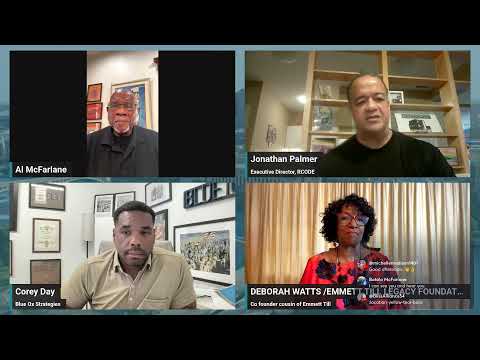
The Conversation With Al McFarlane 6/23/26
The conversation continues.
The post The Conversation With Al McFarlane 6/23/26 appeared first on BlackPressUSA.
The conversation continues.
The post The Conversation With Al McFarlane 6/23/26 appeared first on BlackPressUSA.

WORK FROM HOME
Home-based business with potential monthly income of $10K+ per month. A proven training system and website provided to maximize business effectiveness. Perfect job to earn side and primary income. Contact Lynne for more details: Lynne4npusa@gmail.com 800-334-0540



Oakland Museum Presents Landmark Retrospective Celebrating Beloved Bay Area Artist Mildred Howard

Ferry Fares to Increase July 1 as Ridership Hits Record Highs

Stop the Hate Symposium Brings Oakland Together Through Dialogue, Partnership, and Community Healing

Six Months in, Probate Reform Coalition Marks Progress in Protecting Elders From Financial Abuse

A Long Time Coming: School District Kicks Off Massive $97 Million Renovation of West Oakland’s McClymonds High School

IN MEMORIAM: Oakland Dance Legend Reginald Ray-Savage, 67

UC Berkeley Named Top Public University in the U.S. and No. 7 in the World by ‘U.S. News’

NCBW-OBAC Champions Black Women Entrepreneurs at Business en Blaque Expo

Lock In Car Price: Avoid Dealer Payment Traps!

Sell Your Car: Get Offers BEFORE Visiting Dealerships!

The Conversation With Al McFarlane 6/23/26

Media Monday 6/22/26

LIVE! ASK ALMA! — TUES. 6.23.26 7PM EST

Car Buying Secrets: 4 Hidden Checks Before You Sign!

Book Review: Books for College-Bound Students

Q&A with Steven Bradford: Why He Wants Your Vote for California Insurance Commissioner

Oakland Mayor Pushes Charter Overhaul to Clarify Roles in City Government, Increase Accountability and Improve Service Delivery

The Ladies of Delta Sigma Theta Hold Day of Advocacy at the Capitol in Sacramento

OPINION: The Fire of Oakland’s Justin Jones

How Is AI Affecting California? The State Wants You to Share Your Story

California Launches Free Diaper Program for Newborns Statewide

Rep. Kamlager-Dove Introduces Bill to Protect Women in Custody After Reports Detailing Miscarriages and Neglect

More and More, Black Californians Are Worried About Rising Costs of Housing, Energy, Food and Gas

After 10-Year Wait, Fillmore Heritage Center Reopens in San Francisco

Asm. Jackson Bill Requiring Anti-Hate Speech Training for Calif. Public Officials Sent to “Suspense File”

Oakland Post: Week of May 20 – 26, 2026

Oakland Post: Week of May 27 – June 2, 2026

Oakland Post: Week of June 3 – 9, 2026

Advocates Rally at State Capitol to Demand Heat Protections for Incarcerated People; More Funding for DV Survivors
The Conversation With Al McFarlane 6/23/26
Media Monday 6/22/26
LIVE! ASK ALMA! — TUES. 6.23.26 7PM EST
Car Buying Secrets: 4 Hidden Checks Before You Sign!

Is This 550 HP Charger Worth YOUR Money? AutoNetwork Review

Celebrating Juneteenth – Frederick Douglass on education and resistance

LIVE! — ASK ALMA! — TUES. 6.19.26 7PM EST

Hyundai Ioniq 5 Parking, Safety, and 360 View #shorts

2025 Ioniq 5 New Wiper & Powerful Performance! #shorts

Electric SUV Range: Is 259 Miles Enough? #shorts

EV Charging: How Fast Can You Charge an Electric Vehicle? #shorts

Biometric Cooling… Messaging Seats…Come on! 2025 Infiniti QX80 Autograph 4WD

Charged Up: Witness the Magic of a Fully Electric Car! #shorts

Range Rover Sport PHEV Included…: See What’s Inside This Luxury SUV! #shorts

Invisible Hood View: Perfect Parking with X-Ray Vision! #shorts
-
 Art3 weeks ago
After 10-Year Wait, Fillmore Heritage Center Reopens in San Francisco
-
 Activism3 weeks ago
Oakland Post: Week of June 3 – 9, 2026
-
 #NNPA BlackPress3 weeks ago
5 Cleveland Police Officers Injured, Gunfire Erupts During East Side Pursuit
-

 #NNPA BlackPress3 weeks ago
2026 World Cup is Here and Atlanta is Ready For It
-

 Arts and Culture3 weeks ago
COMMENTARY: Black Music is the Sound of Black Freedom: Let Us Reclaim Both This Juneteenth
-

 Art3 weeks ago
Oakland Director Boots Dazzles Once Again in ‘I Love Boosters’
-

 #NNPA BlackPress3 weeks ago
COMMENTARY: Using Art, Healing, And Community to Transform Mental Health Dialogue
-

 #NNPA BlackPress3 weeks ago
Venus Williams Calls a Sabalenka Exit a Tragedy
