
Technology
US at Odds with Google on Computer Search-Warrant Proposal


In this Feb. 12, 2015 file photo, FBI Director James Comey speaks at Georgetown University in Washington. The Justice Department is at odds with Google and privacy groups over the governments push to make it easier to locate and hack into computers in criminal investigations. (AP Photo/Cliff Owen, File)
ERIC TUCKER, Associated Press
WASHINGTON (AP) — A Justice Department proposal that could make locating and hacking into computers that are part of criminal investigations easier is raising constitutional concerns from privacy groups and Google, who fear the plan could have broad implications.
Federal prosecutors say their search warrant proposal is needed at a time when computer users are committing crimes in online anonymity while concealing their locations. But civil libertarians fear the rule change, under consideration by a federal advisory committee, would grant the government expansive new powers to reach into computers across the country.
The proposal would change existing rules of criminal procedure that, with limited exceptions, permit judges to approve warrants for property searches only in the districts where they serve. The government says those rules are outdated in an era when child pornographers, drug traffickers and others can mask their whereabouts on computer networks that offer anonymity. Such technology can impede or thwart efforts to pinpoint a suspect’s geographic location.
The Justice Department wants the rules changed so that judges in a district where “activities related to a crime” have occurred could approve warrants to search computers outside their districts. The government says that flexibility is needed for cases in which the government can’t figure out the location of a computer and needs a warrant to access it remotely, and for investigations involving botnets — networks of computers infected with a virus that spill across judicial districts.
“There is a substantial public interest in catching and prosecuting criminals who use anonymizing technologies, but locating them can be impossible for law enforcement absent the ability to conduct a remote search of the criminal’s computer,” Justice Department lawyers wrote in one memo explaining the need for the change.
The advisory committee considering the rule change is meeting this month.
The proposal has generated fierce pushback from privacy organizations, including the American Civil Liberties Union, which contend the rule change could violate a constitutional requirement that search warrant applications be specific about the property to be searched. They also argue the proposal is unclear about exactly what type of information could be accessed by the government and fails to guarantee the privacy of those not under investigation who might have had access to the same computer as the target, or of innocent people who may themselves be victims of a botnet.
“What procedural protections are going to be in place when you do these types of searches? How are they going to be limited?” asked Alan Butler, senior counsel at the Electronic Privacy Information Center.
Another critic, Google, says the proposal “raises a number of monumental and highly complex constitutional, legal and geopolitical concerns that should be left for Congress to decide.”
Privacy groups are also concerned that the proposal would lead to more frequent use by the FBI of surveillance technology that can be installed remotely on a computer to help pinpoint its location. Such tactics caught public attention last year when FBI Director James Comey acknowledged that in 2007 an agent posing as an Associated Press reporter had sent to a bomb-threat suspect a link to an article that, once opened, revealed to investigators the computer’s location and Internet address.
“To the extent that the government has been prevented from doing lots of these kinds of searches because they didn’t necessarily have a judge to go to, this rule change raises the risk that the government will start using these dubious techniques with more frequency,” said ACLU lawyer Nathan Freed Wessler.
The Justice Department says such concerns are unfounded. It says the proposal simply ensures that investigators have a judge to go to for a warrant in cases where they can’t find a computer, and that the proposal wouldn’t provide the government with new technological authorities that it doesn’t already have.
It’s hard to quantify the scope of the problem, though the Justice Department says their concerns are more than abstract.
In 2013, a magistrate judge in Texas rejected a request to search a computer that the government said was being used to commit bank fraud but whose location was unknown. Prosecutors sought authority to install software on the machine that would have extracted records and location information.
The judge, Stephen Smith, said he lacked the authority to approve the search for a computer “whose location could be anywhere on the planet” but said “there may well be a good reason to update the territorial limits of that rule in light of advancing computer search technology.”
The proposal is before a criminal procedure advisory committee of the Judicial Conference of the United States. If approved, it will then be forwarded to the Supreme Court and ultimately to Congress, which does not have to approve it but can block it. It would take effect in December 2016.
___
Follow Eric Tucker on Twitter at http://www.twitter.com/etuckerAP
Copyright 2015 The Associated Press. All rights reserved. This material may not be published, broadcast, rewritten or redistributed.





Activism
OP-ED: AB 1349 Puts Corporate Power Over Community
Since Ticketmaster and Live Nation merged in 2010, ticket prices have jumped more than 150 percent. Activities that once fit a family’s budget now take significant disposable income that most working families simply don’t have. The problem is compounded by a system that has tilted access toward the wealthy and white-collar workers. If you have a fancy credit card, you get “presale access,” and if you work in an office instead of a warehouse, you might be able to wait in an online queue to buy a ticket. Access now means privilege.

By Bishop Joseph Simmons, Senior Pastor, Greater St. Paul Baptist Church, Oakland
As a pastor, I believe in the power that a sense of community can have on improving people’s lives. Live events are one of the few places where people from different backgrounds and ages can share the same space and experience – where construction workers sit next to lawyers at a concert, and teenagers enjoy a basketball game with their grandparents. Yet, over the past decade, I’ve witnessed these experiences – the concerts, games, and cultural events where we gather – become increasingly unaffordable, and it is a shame.
These moments of connection matter as they form part of the fabric that holds communities together. But that fabric is fraying because of Ticketmaster/Live Nation’s unchecked control over access to live events. Unfortunately, AB 1349 would only further entrench their corporate power over our spaces.
Since Ticketmaster and Live Nation merged in 2010, ticket prices have jumped more than 150 percent. Activities that once fit a family’s budget now take significant disposable income that most working families simply don’t have. The problem is compounded by a system that has tilted access toward the wealthy and white-collar workers. If you have a fancy credit card, you get “presale access,” and if you work in an office instead of a warehouse, you might be able to wait in an online queue to buy a ticket. Access now means privilege.

Power over live events is concentrated in a single corporate entity, and this regime operates without transparency or accountability – much like a dictator. Ticketmaster controls 80 percent of first-sale tickets and nearly a third of resale tickets, but they still want more. More power, more control for Ticketmaster means higher prices and less access for consumers. It’s the agenda they are pushing nationally, with the help of former Trump political operatives, who are quietly trying to undo the antitrust lawsuit launched against Ticketmaster/Live Nation under President Biden’s DOJ.
That’s why I’m deeply concerned about AB 1349 in its current form. Rather than reining in Ticketmaster’s power, the bill risks strengthening it, aligning with Trump. AB 1349 gives Ticketmaster the ability to control a consumer’s ticket forever by granting Ticketmaster’s regime new powers in state law to prevent consumers from reselling or giving away their tickets. It also creates new pathways for Ticketmaster to discriminate and retaliate against consumers who choose to shop around for the best service and fees on resale platforms that aren’t yet controlled by Ticketmaster. These provisions are anti-consumer and anti-democratic.
California has an opportunity to stand with consumers, to demand transparency, and to restore genuine competition in this industry. But that requires legislation developed with input from the community and faith leaders, not proposals backed by the very company causing the harm.
Will our laws reflect fairness, inclusion, and accountability? Or will we let corporate interests tighten their grip on spaces that should belong to everyone? I, for one, support the former and encourage the California Legislature to reject AB 1349 outright or amend it to remove any provisions that expand Ticketmaster’s control. I also urge community members to contact their representatives and advocate for accessible, inclusive live events for all Californians. Let’s work together to ensure these gathering spaces remain open and welcoming to everyone, regardless of income or background.
Alameda County
OPINION: Argent Materials Oakland CleanTech Community Asset Helps Those In Need
Alameda County Supervisor Lena Tam had this to say about Argent Materials as an Oakland community asset: “Congratulations to Argent Materials and its President and Founder, Bill Crotinger! The company is now fully operational, recycling an impressive 99.99% of concrete and asphalt debris, which helps divert thousands of tons of construction waste from landfills. They are also proud to announce that 50% of their team consists of local hires. In celebration of Thanksgiving, and despite stormy weather last week, the Alameda County Sheriffs, alongside Mr. Crotinger and Argent Materials’ dedicated staff distributed turkeys and pies as a heartfelt gesture of gratitude to the community.”

Zennie Abraham
CEO, Zennie62Media
Argent Materials, the Oakland business that turns old concrete and asphalt into new construction products, generally goes by “Argent Materials Oakland CleanTech” but should be called “Argent Materials East Oakland CleanTech for The Community”. Here’s why.
First, Argent Materials is located at 8300 Baldwin St, right in the Coliseum Industrial Zone, just a three-minute drive from the Oakland-Alameda County Coliseum Complex. That’s in East Oakland, and just a city-block walk from the Oakland Coliseum BART Station.
Second, Argent Materials has been a friend to East Oakland and what some, like the members of the Oakland Private Industry Council, would call a “community asset”. In 2024, Argent Materials founder and President Bill Crotinger was named Leader of the Year by the Oakland Private Industry Council (OPIC) “I was humbled and honored to be named Leader of the Year by the Oakland Private Industry Council. Truly an honor. My heartfelt thanks to my friend and mentor Pastor Raymond Lankford and all the wonderful people at OPIC.”
Alameda County Supervisor Lena Tam had this to say about Argent Materials as an Oakland community asset: “Congratulations to Argent Materials and its President and Founder, Bill Crotinger! The company is now fully operational, recycling an impressive 99.99% of concrete and asphalt debris, which helps divert thousands of tons of construction waste from landfills. They are also proud to announce that 50% of their team consists of local hires. In celebration of Thanksgiving, and despite stormy weather last week, the Alameda County Sheriffs, alongside Mr. Crotinger and Argent Materials’ dedicated staff distributed turkeys and pies as a heartfelt gesture of gratitude to the community.”
ABI Foundry reports that Argent Materials led a community clean up for the residents and businesses of Russett Street as well as San Leandro Street. An ABI Foundry team member said “Bill Crotinger at Argent Materials spearheaded the initiative to clean San Leandro street, from Hegenburger to 98th Ave. along the side of BART. AB&I enjoyed participating along with Acts Full Gospel C.O.G.I.C (Men of Valor), Good Hope Missionary Baptist Church-Oakland (Reverend Michael Jones) and Argent Materials. You should see how it looks now. It is AMAZING! It takes an ambitious mind to make a difference block by block.”
What Is Cleantech And Why Is It Important to Oakland And Argent Materials?
Clean technology (Clean Tech) refers to products, services, and processes that mitigate negative environmental impacts by increasing energy efficiency, promoting resource sustainability, and minimizing waste and pollution, ultimately contributing to a low-carbon, and more sustainable economy.
What is The Clean Tech of Argent Materials of Oakland?
In Argent Materials’ context, “cleantech” refers to their sustainable business model which includes recycling concrete and asphalt into new aggregate materials, diverting waste from landfills, and using renewable diesel for their fleet to achieve carbon neutrality and protect the environment. This business approach Argent Materials uses aligns with the broader definition of cleantech, which involves products, services, and processes that reduce negative environmental impacts through resource efficiency and environmental protection
Clean Tech, or green tech as Argent Materials of Oakland does it, is defined as any technology that minimizes negative environmental impact by reducing human consumption of natural resources and by promoting more sustainable and efficient resource use.
Argent Materials will continue to be a cleantech community asset to Oakland well into the future.
Stay tuned.
Activism
Golden State Warriors Program Is Inspiring Next Generation of Female Engineers
Breaking down barriers and biases that deter young girls from pursuing STEAM subjects is essential for creating a level playing field and ensuring equal opportunities for all. By challenging stereotypes and promoting a culture of inclusivity and diversity in STEAM fields, experts believe young girls can be empowered to pursue their interests and aspirations without limitations confidently. Encouraging mentorship, providing access to resources, and celebrating girls’ achievements in STEAM are all crucial steps in creating a supportive environment that fosters success.
By Y’Anad Burrell
The Golden State Warriors and e-commerce giant Rakuten are joining forces to inspire the next generation of female engineers through Building STEAM Futures, part of The City Calls campaign.
Organizers say the initiative is founded on the idea that science, technology, engineering, arts, and mathematics (STEAM) are crucial fields for innovation and progress, and empowering young girls to pursue careers in these areas is more important than ever. Studies consistently show that girls are underrepresented in STEAM fields, resulting in a gender disparity that limits potential and hinders diversity.
Breaking down barriers and biases that deter young girls from pursuing STEAM subjects is essential for creating a level playing field and ensuring equal opportunities for all. By challenging stereotypes and promoting a culture of inclusivity and diversity in STEAM fields, experts believe young girls can be empowered to pursue their interests and aspirations without limitations confidently. Encouraging mentorship, providing access to resources, and celebrating girls’ achievements in STEAM are all crucial steps in creating a supportive environment that fosters success.
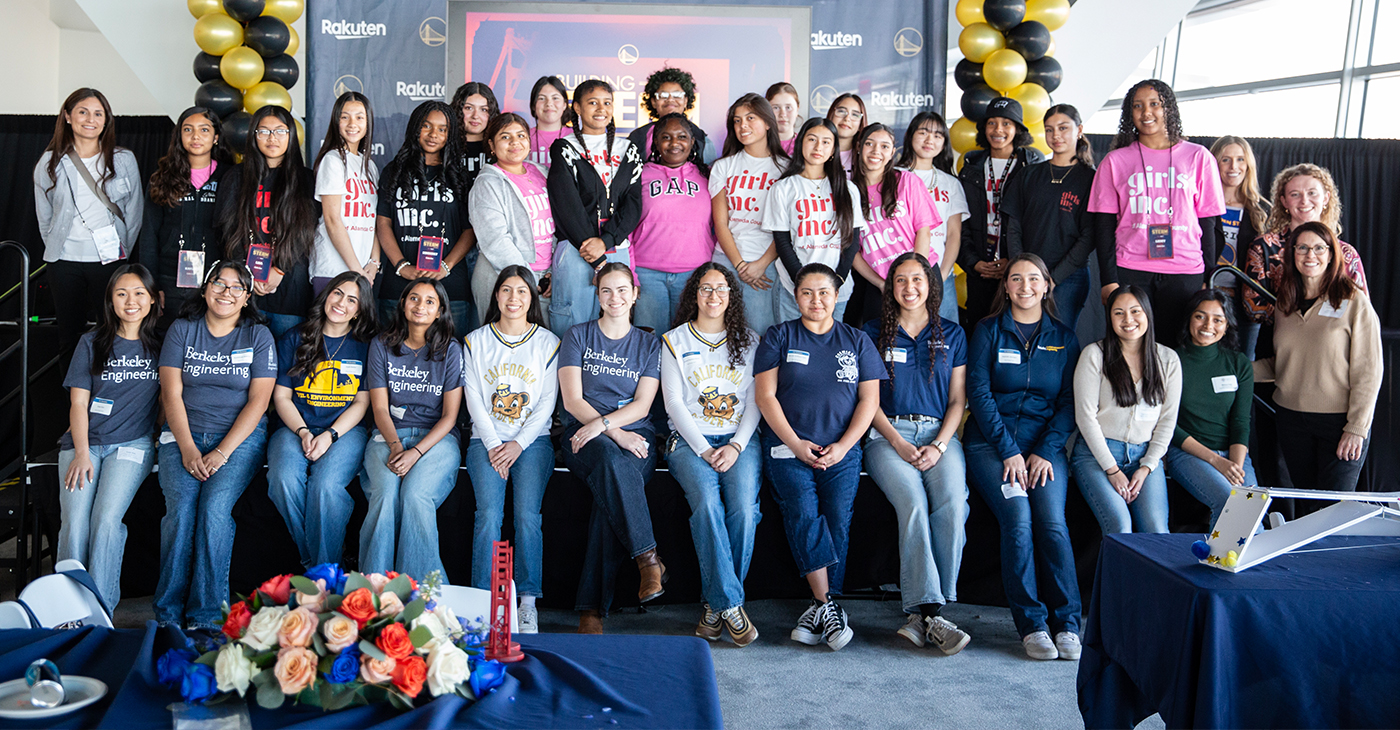
On Saturday, March 8, International Women’s Day, the Warriors and Rakuten hosted 20 middle school girls from Girls Inc. of Alameda County at Chase Center’s Above the Rim for a hands-on bridge-building experience. The young girls from Girls, Inc. of Alameda County had an opportunity to design, build and test their own bridge prototypes and learn the fundamentals of bridge construction from the Engineering Alliance and the UC Berkeley Steel Bridge Team.

This STEAM experience for the girls followed the first session in January, where they took a behind-the-scenes tour of the Golden Gate Bridge, learning about its design and construction from industry experts. The City Calls campaign, tipped off with the unveiling the Warriors’ new bridge-themed City Edition jerseys and court design earlier this year.
WORK FROM HOME
Home-based business with potential monthly income of $10K+ per month. A proven training system and website provided to maximize business effectiveness. Perfect job to earn side and primary income. Contact Lynne for more details: Lynne4npusa@gmail.com 800-334-0540


Financial Wellness and Mental Health: Managing Money Stress in College

Oakland Post: Week of March 11 -17, 2026

Women & Wealth: Tips for Navigating Your Lifelong Financial Journey

COMMENTARY: Women of Color Shape Our Past and Future

Woman’s Search for Family’s Roots Leads to Ancestor John T. Ward – A Successful Entrepreneur and Conductor on the Underground Railroad

Advocates Raise Alarm Over ICE Operation, MOU and Detention Risks in Baltimore County

Pete Buttigieg to Join Mayor Randall Woodfin for Community Town Hall in Birmingham

WATCH: Week One – NNPA’s “Leadership Matters” Video Series

Oakland Post: Week of March 4 – 10, 2026

OP-ED: NNPA Launches 2026 “Leadership Matters” Video Series

PRESS ROOM: PMG and Cranbrook Horizons-Upward Bound Launch Journey Fellowship Cohort 2

Los Angeles Summit Brings Together Leaders to Tackle Poverty and Affordability

Civil Rights TV Launches 24/7 Network Focused on Black History, Education and Equity

REVIEW: The Ultimate Hot Girl Summer Getaway: Sunseeker Resort Florida

COMMENTARY: How You Stop a Prescription Medicine is as Important as How You Start

Book Review: Books on Black History and Black Life for Kids

California Launches Study on Mileage Tax to Potentially Replace Gas Tax as Republicans Push Back

Community Celebrates Turner Group Construction Company as Collins Drive Becomes Turner Group Drive

Discrimination in City Contracts

COMMENTARY: The Biases We Don’t See — Preventing AI-Driven Inequality in Health Care

Black History Events in the East Bay

Post Newspaper Invites NNPA to Join Nationwide Probate Reform Initiative

Art of the African Diaspora Celebrates Legacy and Community at Richmond Art Center

New Bill, the RIDER Safety Act, Would Support Transit Ambassadors and Safety on Public Transit

COMMENTARY: The National Protest Must Be Accompanied with Our Votes

Oakland Post: Week of February 4 – 10, 2026

Oakland Post: Week of February 11 – 17, 2026

Dorothy Lee Bolden: Uniting Domestic Workers

After Don Lemon’s Arrest, Black Officials Raise Concerns About Independent Black Media

Reflecting on Black History Milestones in Birmingham AL

Hyundai Ioniq 5 Parking, Safety, and 360 View #shorts

2025 Ioniq 5 New Wiper & Powerful Performance! #shorts

Electric SUV Range: Is 259 Miles Enough? #shorts

EV Charging: How Fast Can You Charge an Electric Vehicle? #shorts

Biometric Cooling… Messaging Seats…Come on! 2025 Infiniti QX80 Autograph 4WD

Charged Up: Witness the Magic of a Fully Electric Car! #shorts

Range Rover Sport PHEV Included…: See What’s Inside This Luxury SUV! #shorts

Invisible Hood View: Perfect Parking with X-Ray Vision! #shorts

AI Is Reshaping Black Healthcare: Promise, Peril, and the Push for Improved Results in California

ESSAY: Technology and Medicine, a Primary Care Point of View

Sanctuary Cities

The RESISTANCE – FREEDOM NOW

STATE OF THE PEOPLE: Freddie

ECONOMIC BOYCOTT DAY!!!!!

I told You So

-
 #NNPA BlackPress4 weeks ago
Reflecting on Black History Milestones in Birmingham AL
-
 #NNPA BlackPress4 weeks ago
PRESS ROOM: NBA Hall of Fame Nominee Terry Cummings Joins 100 Black Men of DeKalb County to Launch Victory & Values Initiative
-

 #NNPA BlackPress4 weeks ago
U.S. manufacturing rebounds – how foundry services are adapting to rising demand
-

 Activism3 weeks ago
Oakland Post: Week of February 25 – March 3, 2026
-

 #NNPA BlackPress4 weeks ago
Trump’s MAGA Allies are Creating Executive Order Plan to Steal the 2026 Midterms
-

 #NNPA BlackPress4 weeks ago
OP-ED: One Hundred Years of Black Workers Telling the Truth
-

 #NNPA BlackPress4 weeks ago
Advancements in solar technology that are changing the way we power the world
-

 #NNPA BlackPress4 weeks ago
PRESS ROOM: Civil Rights TV Launches in Selma as the World’s First 24/7 Civil Rights Television Network
