
Health
U.S. Court Halts Contentious Law on Contact Lens Price-Fixing


A contact lens is shown in front of a 1-800-Contacts shipping box Wednesday, May 13, 2015, in Salt Lake City. A law banning price-fixing for contact lenses that took effect this week in Utah is a setback for the nation’s largest manufacturers that could have ripple effects across the country amid an increasingly bitter fight with discount retailers. (AP Photo/Rick Bowmer)
Lindsay Whitehurst, ASSOCIATED PRESS
SALT LAKE CITY (AP) — A federal appeals court has halted a new Utah law banning price-fixing for contact lenses that could have wide-ranging implications for the industry amid a fight between manufacturers and discount retailers.
Lens maker Alcon Laboratories cheered the order Thursday. Along with Johnson & Johnson and Bausch & Lomb, the company says the law is an unconstitutional overreach written to benefit Utah-based online discount retailer 1-800 Contacts.

The measure halted by the appeals court would allow 1-800 Contacts, one of the nation’s biggest lens suppliers, to disregard minimum prices set by the manufacturers and sell discount lenses across state lines, according to Steve DelBianco, executive director of the trade group NetChoice.
That would be good for customers because they’d be paying less for their contacts, he says. But the manufacturers argue setting minimum prices protects eye doctors from being undercut.
At stake is control of a roughly $4 billion market with some 38 million American customers.
Many contact lens sales come from eye doctors. But discount retailers have been growing in recent years, and 1-800 Contacts has captured about 10 percent of the national market, according to court papers.
The order issued late Wednesday from the 10th U.S. Circuit Court of Appeals in Denver puts the Utah law on hold as a legal challenge plays out. It reverses a lower court ruling from U.S. District Judge Dee Benson, who found the law is a legal antitrust measure and allowed it to take effect this week.
Utah’s state attorneys declined to comment.
The law targets a pricing program that the manufacturers started using about two years ago. If retailers sell lenses cheaper than the minimum prices, the manufacturers that dominate the market pull their products.
Republican state Sen. Deidre Henderson, who sponsored the measure, has called the pricing minimums predatory and anticompetitive.
Discount giant Costco says the rules forced it to raise prices by more than 20 percent on some brands. The popular Acuvue Oasys brand increased from about $52 for a 12-pack to about $68 last year, according to court papers.
The minimum price rules also have drawn ire elsewhere, sparking 40 class-action lawsuits across the country and scrutiny from Congress since the manufacturers started setting them about two years ago, according to Benson’s ruling. Nine states have considered legislation similar to that passed in Utah.
Henderson said the measure was written to bolster competition rather than help 1-800 Contacts, but he has been vague on whether it will allow Utah-based companies like 1-800 Contacts to sell at discounted rates to customers outside the state. The manufacturers say that would violate interstate commerce regulations.
A constitutional law expert said the law doesn’t appear to violate those rules because it doesn’t give perks to a local company or clash with laws in other states.
But University of Michigan law professor Richard Primus says a provision that allows Utah’s attorney general to sue manufacturers who withhold their product from discount sellers could be on shakier legal ground.
Copyright 2015 The Associated Press. All rights reserved. This material may not be published, broadcast, rewritten or redistributed.
###


Activism
COMMENTARY: The Biases We Don’t See — Preventing AI-Driven Inequality in Health Care
For decades, medicine promoted false assumptions about Black bodies. Black patients were told they had lower lung capacity, and medical devices adjusted their results accordingly. That practice was not broadly reversed until 2021. Up until 2022, a common medical formula used to measure how well a person’s kidneys were working automatically gave Black patients a higher score simply because they were Black. On paper, this made their kidneys appear healthier than they truly were. As a result, kidney disease was sometimes detected later in Black patients, delaying critical treatment and referrals.
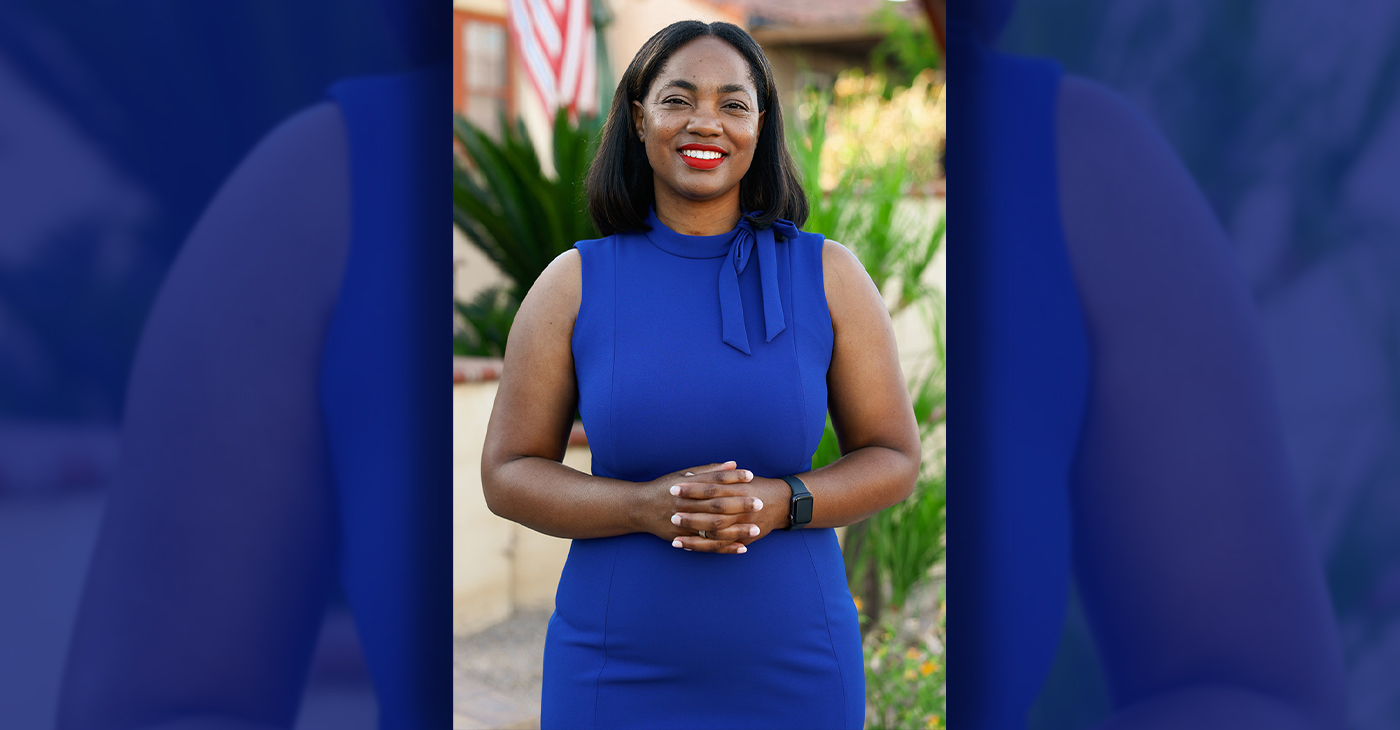
By Sen. Akilah Weber Pierson, M.D., Special to California Black Media Partners
Technology is sold to us as neutral, objective, and free of human flaws. We are told that computers remove emotion, bias, and error from decision-making. But for many Black families, lived experience tells a different story. When technology is trained on biased systems, it reflects those same biases and silently carries them forward.
We have seen this happen across multiple industries. Facial recognition software has misidentified Black faces at far higher rates than White faces, leading to wrongful police encounters and arrests. Automated hiring systems have filtered out applicants with traditionally Black names because past hiring data reflected discriminatory patterns. Financial algorithms have denied loans or offered worse terms to Black borrowers based on zip codes and historical inequities, rather than individual creditworthiness. These systems did not become biased on their own. They were trained on biased data.
Healthcare is not immune.
For decades, medicine promoted false assumptions about Black bodies. Black patients were told they had lower lung capacity, and medical devices adjusted their results accordingly. That practice was not broadly reversed until 2021. Up until 2022, a common medical formula used to measure how well a person’s kidneys were working automatically gave Black patients a higher score simply because they were Black. On paper, this made their kidneys appear healthier than they truly were. As a result, kidney disease was sometimes detected later in Black patients, delaying critical treatment and referrals.

These biases were not limited to software or medical devices. Dangerous myths persisted that Black people feel less pain, contributing to undertreatment and delayed care. These beliefs were embedded in modern training and practice, not distant history. Those assumptions shaped the data that now feeds medical technology. When biased clinical practices form the basis of algorithms, the risk is not hypothetical. The bias can be learned, automated, and scaled.
For us in the Black community, this creates understandable fear and mistrust. Many families already carry generational memories of medical discrimination, from higher maternal mortality to lower life expectancy to being dismissed or unheard in clinical settings. Adding AI biases could make our community even more apprehensive about the healthcare system.
As a physician, I know how much trust patients place in the healthcare system during their most vulnerable moments. As a Black woman, I understand how bias can shape experiences in ways that are often invisible to those who do not live them. As a mother of two Black children, I think constantly about the systems that will shape their health and well-being. As a legislator, I believe it is our responsibility to confront emerging risks before they become widespread harm.
That is why I am the author of Senate Bill (SB) 503. This bill aims to regulate the use of artificial intelligence in healthcare by requiring developers and users of AI systems to identify, mitigate, and monitor biased impacts in their outputs to reduce racial and other disparities in clinical decision-making and patient care.
Currently under consideration in the State Assembly, SB 503 was not written to slow innovation. In fact, I encourage it. But it is our duty must ensure that every tool we in the healthcare field helps patients rather than harms them.
The health of our families depends on it.
About the Author
Sen. Akilah Weber Pierson (D–San Diego) is a physician and public health advocate representing California’s 39th Senate District.
Activism
As California Hits Aging Milestone, State Releases Its Fifth Master Plan for Aging
“California’s Master Plan for Aging started a powerful movement that is shaping the future of aging in our state for generations to come,” Gov. Gavin Newsom said in a statement, calling the initiative a “future-forward” model delivering real results for older adults, people with disabilities, and their families.

By Bo Tefu, California Black Media

On Jan. 27, California released its Fifth Master Plan for Aging Annual Report,titled “Focusing on What Matters Most,” outlining the state’s progress and priorities as its population rapidly grows older.
The report, issued by the California Health and Human Services Agency (CalHHS), provides updates on the Master Plan for Aging’s “Five Bold Goals”: housing, health, inclusion and equity, caregiving, and affordability.
The report comes as Californians aged 60 and older now outnumber those under 18 for the first time, a demographic shift expected to accelerate over the next decade.
“California’s Master Plan for Aging started a powerful movement that is shaping the future of aging in our state for generations to come,” Gov. Gavin Newsom said in a statement, calling the initiative a “future-forward” model delivering real results for older adults, people with disabilities, and their families.
Launched in 2021, the Master Plan for Aging takes a “whole-of- government” and “whole-of-society” approach, coordinating state agencies, local governments, community organizations, and private partners. The annual report highlights significant milestones, including more than 100 California communities joining AARP’s Age-Friendly Network and $4 million in state funding awarded to local organizations to develop aging and disability action plans in 30 communities statewide.
The report also underscores California’s leadership at the national level, noting that dozens of states have followed its example and that federal legislation inspired by the plan was reintroduced in the U.S. Senate in December 2025.
CalHHS Secretary Kim Johnson emphasized the plan’s focus on equity and resilience amid ongoing challenges.
“The Master Plan for Aging continues to provide a vision, a focus, and a platform for collaboration,” Johnson said. “Equity is at the center of all that we do.”
Looking ahead, the report notes that by 2030, one in four Californians will be age 60 or older, positioning the Master Plan for Aging as a central framework for meeting the state’s long-term social, economic, and health needs.
Community
Candidates Vying for Governor’s Seat Debate at Ruth Williams–Bayview Opera House in San Francisco
The gubernatorial debate participants included Antonio Villaraigosa, former Los Angeles mayor; Matt Mahan, San Jose mayor; Betty Yee, former California state controller; Xavier Becerra, former U.S. Secretary of Health and Human Services, and attorney general of California; Steve Hilton, political commentator and political adviser; Tom Steyer, entrepreneur, and Tony Thurmond, California’s superintendent of public instruction.

By Carla Thomas
On Tuesday, Feb. 3, seven candidates took the stage at the historic Ruth Williams–Bayview Opera House in San Francisco for the gubernatorial debate, hosted by the Black Action Alliance (BAA) in partnership with KTVU and sister station KTTV Fox 11 in Los Angeles.
For many voters, it marked a first opportunity to hear directly from several candidates seeking to lead the nation’s most populous state.
The gubernatorial debate participants included Antonio Villaraigosa, former Los Angeles mayor; Matt Mahan, San Jose mayor; Betty Yee, former California state controller; Xavier Becerra, former U.S. Secretary of Health and Human Services, and attorney general of California; Steve Hilton, political commentator and political adviser; Tom Steyer, entrepreneur, and Tony Thurmond, California’s superintendent of public instruction.
Crucial topics and issues addressed throughout the debate included housing, crime, immigration, climate change, health care and homelessness.

The debate was moderated by KTVU political reporter Greg Lee alongside KTVU’s Andre Senior and KTTV Fox 11’s Marla Tellez.
Candidates also addressed inflation and the rising costs across the state, impacting everything from groceries to childcare and health care.
Thurmond vowed to generate 2.3 million units of housing by placing 12 units on each parcel of available land in the 58 counties of California. Steyer agreed that billionaires should pay their fair share of taxes.
Hilton wanted to cut taxes, help working-class families, and end the Democrats “climate crusade and insane regulations.”
Yee offered a more transparent governmental approach with accountability, given the state’s debt.
Gonzalez said, “This debate was a great way to see who has great ideas and who has substance.”
“It’s important to have the debate within a community that requires the most,” said business leader Linda Fadekye.
Attendees included State Controller Malia Cohen, representatives of the National Coalition of 100 Black Women, the National Coalition of 100 Black Men, the San Francisco African American Chamber of Commerce, and Black Women Organized for Political Action, among others.
Event host, the Black Action Alliance (BAA) was established to amplify the voices of the Bay Area’s Black community, whose perspectives have too often been overlooked in politics and public policy.
Loren Taylor, CEO of BAA, said it was important to bring the event to the Bayview in San Francisco and shared his organization’s mission.
“The Black Action Alliance (BAA) stands for practical, community-driven solutions that strengthen public safety, address homelessness, support small businesses, expand affordable housing, and ensure access to quality education—issues at the heart of the Black experience in the Bay Area,” said Taylor.
California’s primary election will take place on June 2 and the general election will take place on Nov. 3.


WORK FROM HOME
Home-based business with potential monthly income of $10K+ per month. A proven training system and website provided to maximize business effectiveness. Perfect job to earn side and primary income. Contact Lynne for more details: Lynne4npusa@gmail.com 800-334-0540


Poll Shows Support for Policies That Help Families Afford Child Care

Oakland Post: Week of February 25 – March 3, 2026

Trump’s MAGA Allies are Creating Executive Order Plan to Steal the 2026 Midterms

PRESS ROOM: NBA Hall of Fame Nominee Terry Cummings Joins 100 Black Men of DeKalb County to Launch Victory & Values Initiative

Reflecting on Black History Milestones in Birmingham AL

OP-ED: One Hundred Years of Black Workers Telling the Truth

PRESS ROOM: Civil Rights TV Launches in Selma as the World’s First 24/7 Civil Rights Television Network

Advancements in solar technology that are changing the way we power the world

U.S. manufacturing rebounds – how foundry services are adapting to rising demand

Why has blood testing become so popular in today’s world?

Ghana Mourns a Son of the African World

OP-ED: Trump’s Policies Hurt Black America—and Everyone Else

OP-ED: Meta Deleted Me. I Still Don’t Know Why. And neither will you.

More than a Mission: Paying It Forward for the Future of Education

Avoid Eviction This Season: Landlord Checklist for Stable Tenancies

Life Expectancy in Marin City, a Black Community, Is 15-17 Years Less than the Rest of Marin County

Oakland Post: Week of January 28, 2025 – February 3, 2026

Community Celebrates Turner Group Construction Company as Collins Drive Becomes Turner Group Drive

California Launches Study on Mileage Tax to Potentially Replace Gas Tax as Republicans Push Back

Discrimination in City Contracts

Oakland Post: Week of January 21 – 27, 2026

Book Review: Books on Black History and Black Life for Kids

COMMENTARY: The Biases We Don’t See — Preventing AI-Driven Inequality in Health Care

Medi-Cal Cares for You and Your Baby Every Step of the Way

Post Newspaper Invites NNPA to Join Nationwide Probate Reform Initiative

Art of the African Diaspora Celebrates Legacy and Community at Richmond Art Center

Black History Events in the East Bay

COMMENTARY: The National Protest Must Be Accompanied with Our Votes

After Don Lemon’s Arrest, Black Officials Raise Concerns About Independent Black Media

New Bill, the RIDER Safety Act, Would Support Transit Ambassadors and Safety on Public Transit

Hyundai Ioniq 5 Parking, Safety, and 360 View #shorts

2025 Ioniq 5 New Wiper & Powerful Performance! #shorts

Electric SUV Range: Is 259 Miles Enough? #shorts

EV Charging: How Fast Can You Charge an Electric Vehicle? #shorts

Biometric Cooling… Messaging Seats…Come on! 2025 Infiniti QX80 Autograph 4WD

Charged Up: Witness the Magic of a Fully Electric Car! #shorts

Range Rover Sport PHEV Included…: See What’s Inside This Luxury SUV! #shorts

Invisible Hood View: Perfect Parking with X-Ray Vision! #shorts

AI Is Reshaping Black Healthcare: Promise, Peril, and the Push for Improved Results in California

ESSAY: Technology and Medicine, a Primary Care Point of View

Sanctuary Cities

The RESISTANCE – FREEDOM NOW

STATE OF THE PEOPLE: Freddie

ECONOMIC BOYCOTT DAY!!!!!

I told You So
-
 Activism4 weeks ago
Life Expectancy in Marin City, a Black Community, Is 15-17 Years Less than the Rest of Marin County
-
 Activism4 weeks ago
Oakland Post: Week of January 28, 2025 – February 3, 2026
-
 Activism3 weeks ago
Community Celebrates Turner Group Construction Company as Collins Drive Becomes Turner Group Drive
-
 Business3 weeks ago
California Launches Study on Mileage Tax to Potentially Replace Gas Tax as Republicans Push Back
-
 Activism3 weeks ago
Discrimination in City Contracts
-
 Arts and Culture3 weeks ago
Book Review: Books on Black History and Black Life for Kids
-
 Activism3 weeks ago
COMMENTARY: The Biases We Don’t See — Preventing AI-Driven Inequality in Health Care
-
 Activism4 weeks ago
Medi-Cal Cares for You and Your Baby Every Step of the Way
