
#NNPA BlackPress
Tri-Caucus Releases Higher Education Act Reauthorization Priorities
LOS ANGELES SENTINEL — The Chairs of the Congressional Tri-Caucus –Congressional Black (CBC) Caucus Chair Karen Bass (CA-37), Congressional Hispanic Caucus (CHC) Chair Joaquin Castro (TX-20), and Congressional Asian Pacific American Caucus (CAPAC) Chair Judy Chu (CA-27) – released their Tri-Caucus Higher Education Priorities for the reauthorization of the Higher Education Act.

By Sentinel News Service
The Chairs of the Congressional Tri-Caucus –Congressional Black (CBC) Caucus Chair Karen Bass (CA-37), Congressional Hispanic Caucus (CHC) Chair Joaquin Castro (TX-20), and Congressional Asian Pacific American Caucus (CAPAC) Chair Judy Chu (CA-27) – released their Tri-Caucus Higher Education Priorities for the reauthorization of the Higher Education Act.
These Tri-Caucus Priorities identify the best way to address educational inequities for students of color. They include strengthening the capacity of Minority Serving Institutions, the quality of education offered at all institutions of higher education, and resources that help students of every income level and background succeed. Finally, they include priorities most important to our communities, like support for undocumented youth and programs that ensure the recruitment and retention of teachers of color.
The priorities were also endorsed by the Tri-Caucus education chairs: CHC Education and Labor Task Force Chair Raúl Grijalva (AZ-3), CAPAC Education Task Force Chair Mark Takano (CA-41), and CBC Education and Labor Task Force Co-Chairs Danny Davis (IL-7), Frederica Wilson (FL-24), and Bonnie Watson Coleman (NJ-12).
“Higher education is the pathway to financial security and professional success for many in our communities of color. The Congressional Tri-Caucus is proud to introduce our Higher Education Priorities and take a stand for students of color across the country,” said the Tri-Caucus Chairs. “Our communities have unique education needs, and we have a proud heritage in our Historically Black Colleges and Universities, Hispanic Serving Institutions, and Asian American and Native American Pacific Islander-Serving Institutions. As we strive for the success of these schools and students of color everywhere, our priorities outline the keys to their success, including supporting their financial needs, strengthening the education they receive, and ensuring they are competitive in the workforce. These priorities will open doors of opportunity for students of every background, from first generation college students to undocumented youth and every community from urban to rural. We hope that, with these guidelines to our federal policy, we will help every student of color attain success and fulfill the promise of the American dream.”
The Tri-Caucus Higher Education Principles are as follows:
Tri-Caucus Priorities for the Reauthorization of the Higher Education Act
in the 116th Congress
Improve College Affordability
Federal Pell Grants and Work Study
- Increase the maximum award level of Pell Grants so they better align with the rising cost of higher education.
- Index Pell Grants to inflation.
- Revise the formula used to allocate work study funds based on student need and Pell Grant aid.
- Provide tuition-free and debt-free colleges and universities by investing in federal-state partnerships to make a four-year college degree possible to achieve without debt.
- Increase funding for Federal Work Study at institutions that enroll high levels of Pell Grant recipients.
- Improve access to work study opportunities aligned with academic study and career interests, including those in community service-learning programs for low-income students.
- Establish additional funding for students that complement Pell Grants. This funding would cover costs of living (food, housing, transportation, etc.) and non-tuition educational costs (books, fees, etc.).
- Restore Pell Grant eligibility for incarcerated people.
- Extend Federal Financial aid eligibility to undocumented students and Temporary Protected Status (TPS) recipients.
- Maintain year-round Pell Grant availability.
- Provide new Pell Grant eligibility for short term training programs offered at community colleges.
- Include language assistance for Free Application for Federal Student Aid (FAFSA) and any other documents related to financial aid.
- Simplify FAFSA by allowing data from other federal agencies (such as IRS) to be used in the application to reduce the number of questions and in addition the following –
-
- Deem students eligible for a zero expected family contribution (EFC) determination if the student or the student’s parents are recipients of a means tested program.
- Increase the income threshold to qualify for zero EFC to $50,000.
- Eliminate the Selective Service registration and prior drug conviction question from the student eligibility criteria for federal student aid.
- Simplify the determination process for homeless and foster care youth.
- Improve information tools, financial literacy and require the Department of Education to partner with institutions to standardize financial aid award letters and terminology.
- Provide small-dollar emergency grants for students to help students continue their education rather than dropping out due to financial concerns.
Federal Student Loans
- Reduce the student loan debt burden for borrower’s past, present, and future.
- Protect the Grad Plus Loans and Parent Plus Loans programs.
- Protect the Income Based Repayment Program.
- Protect the Public Service Loan Forgiveness (PSLF) and the Temporary Expanded Public Service Loan Forgiveness (TEPSLF) programs. Ensure individual borrowers receive clear information about the status of their loans, correct loan repayment plans, and all qualifying PSLF payments. As well as require the ability to seamlessly enroll in PSLF and TEPSLF electronically.
- Improve student loan counseling to help students borrow wisely and manage debt repayment.
- Restructure the Federal Student Aid office to serve students better. Automate recertification of borrowers’ incomes while they are enrolled in income-driven repayment plans using information on file at the Department of Treasury.
- Automate enrollment into income driven plans for borrowers who are severely delinquent on their loans.
- Automatic verification of totally and permanently disabled borrowers’ continued eligibility for a loan discharge during the three-year monitoring period.
- Automatic enrollment of defaulted borrowers in an income-driven repayment plan upon completion of loan rehabilitation.
- Protect students from institutions that engage in predatory practices by codifying the borrowers defense to repayment rule.
- Protect students from low-quality programs by holding institutions accountable and codifying the gainful employment rule.
- Require post-secondary institutions to use language in financial aid offers that clearly indicate which components of the package are loans.
II. Strengthen the Capacity of HBCUs and Minority-Serving Institutions
- Authorize permanent mandatory funding for HCBUs and all MSIs as currently defined in HEA.
- Protect current investments and statutory programs and increase federal funding for MSIs and HBCUs.
- Provide increased and sustainable support and funding for the AANAPISI Program to help underserved students overcome barriers to a college degree, by increasing funding authorization for the AANAPISI Program to $60 million.
- Establish a post-baccalaureate grant program for AANAPISIs that already exists for other MSIs.
- Provide robust and sustainable support and funding for the Native Hawaiian Serving Institutions Program by authorizing an increased level of funding.
- Increase Funding for teacher preparation programs at MSIs.
- Make permanent HSI STEM Articulation Program under Title III, Part F which is scheduled to expire at the end of Fiscal Year 2019.
- Increase Science, Technology, Engineering, Arts & Mathematics (STEAM) resources directed to communities of color.
- Ensure that HBCUs & MSIs have funding for students of color to enter technology fields that will better prepare them for the future of work.
- Update the Strengthening Institutions – Tribal College Program at the Department of Education (HEA Title III Part A &F)
- Ensure funding for the Tribal College & University and American Indian & Alaska Native Language Revitalization and Training Program.
III. Improve Education Quality and Student Success
- Encourage and expand access for low-income students to dual enrollment, early college, and similar programs in high schools.
- Promote improved coordination of community colleges and four-year institutions to ensure ability to transfer credits between institutions.
- Increased funds for K-12 and higher education mentorship programs.
- Consider developing an incentive program within Title IV to reward institutions that increase graduation rates of Pell students, ensuring no penalty to institutions that educate low-income students.
- Increase federal support for first year student retention and success programs.
- Increase college access and improve college completion for service members and veterans.
- Support workforce training programs including those offered at community colleges.
- Maintain provisions that prohibit institutions from engaging in agreements with financial institutions that predatorily market financial products to students.
- Develop accountability metrics that protect students from predatory for-profit educational institutions.
- Address the 90/10 loophole to protect Veterans from predatory for-profit educational institutions by moving the ratio to 85/15.
- Incentivize institutions to create support programs to ensure students graduate on time.
- Encourage institutions to establish an accessibility office to support mental health services for students.
- Allow students with disabilities to use their existing documentation of a disability (IEP, 504 plans) to access accommodations at institutions of higher education.
- Create a program modeled on the federally-funded DC Tuition Assistance Grant providing tuition assistance for graduates of Northern Marianas College and American Samoa Community College who want to pursue a four-year degree at any public university in other parts of the United States.
- Maintain integrity and accountability of gatekeeping system for Federal accreditation and State licensure policies.
- Increase funding for federal Child Care Access Means Parents in School (CCAMPIS) program to meet student-parents’ need for affordable childcare.
- Authorize the creation of Native American language revitalization program that awards grants for Native American language programs appropriate for the population served at institutions that serve American Indians, Alaska Natives, Native Hawaiians or Native American Pacific Islanders.
- Increase resources to Institutes of Higher Education (IHEs) to increase graduation rates.
- Support a $40 million competitive grant to provide funding for school districts across the country to support STEM education for girls, students of color, LGBTQ students, and students with disabilities.
- Improve civil rights enforcement to protect college students from harassment and discrimination: Any HEA reauthorization must strengthen protections from discrimination and harassment through additional reporting under the Clery Act and stronger enforcement penalties for colleges aiming to skirt reporting and accountability.
- Ensure university officials are held accountable for hate crimes and hate-based incidents that occur on their campuses by requiring accreditors to asses’ institutions of higher education campus safety programs during the accreditation process, including the annual dissemination of certain information to students and faculty.
- Protect students from incidents of hazing through educational programs and bolstering reporting requirements.
- Improve access to student voting on college campuses –
-
- Define “good faith effort” to distribute voter registration forms in the Higher Education Act to mean sending correspondence at least twice a year and no less than 30 days before voter registration deadlines for federal and state elections, with links to voter registration information.
- Designate a staff member or office as the “Campus Vote Coordinator” to answer student questions about voter registration.
- Provide a right of action against those institutions that engage in patterns of violating this law.
IV. Promote College Readiness for Students of Color, First Generation Students and Disadvantaged Students
- Increase funding and strengthen GEAR-UP, TRIO, HEP-CAMP as needed and other federal funded college access programs to help minority students, low-income students, students who would be first-generation college students, and students who are English language learners access and complete college.
- Ensure that GEAR-UP, TRIO, HEP/CAMP and other federal funded college access programs are reaching schools predominantly attended by low-income students, minority students, students who would be first-generation college students, and students who are English language learners.
- Maintain GEAR-UP, TRIO, and HEP/CAMP as separate federal programs.
- Reform and streamline the Department of Education’s (ED) grants appeals process to ensure institutions of higher education and other qualified organizations with long-standing, high-quality programs can appeal ED’s decisions with technical assistance and a peer-review process to ensure a continuation of funds that service vulnerable student populations.
- Continue to provide information to low-income high school students through existing federal college access program on how to navigate the financial aid process and estimate actual cost of attendance.
- Continue to support programs that provide financial literacy and financial aid counseling to low-income, minority, first generation, and English Learner students.
- Establish funding that supports English Learner Educators.
- Promote applied experiences for students and support experiential learning.
- Require institutions to provide students with information about the Supplemental Nutrition Assistance Program (SNAP) to ensure students have the information they need to access benefits for which they may be eligible.
V. Increase the Recruitment and Retention of Teachers of Color
- Expand high-quality outreach and recruitment programs for minority teachers at both the undergraduate and graduate levels through financial assistance, including loan forgiveness, and technical support while improving and expanding retention efforts for educators of color.
- Increase support for teacher education and professional development, including special education, teacher quality grants, and teacher residence programs.
- Include language that prioritizes teacher preparation programs that recruit and retain students of color, and programs that recruit students to teach into high-need shortage fields such as English Learner or bilingual teachers.
- Establish grants to fund development of teacher preparation programs to train teachers on evidence-based English Learners instruction
- Require teacher preparation programs to report the pass rate and average score of students taking state teacher performance assessments, and the number of students in the program, by race, ethnicity, and gender.
VI. Support Graduate Student Access, Affordability, Quality, and Student Success
- Support increased funding and strengthen graduate programs at HBCUs, MSIs and Tribal Colleges and Universities.
- Expand eligibility for the Subsidized Stafford Loan Program to students enrolled in graduate programs and allow Pell Grants to be used for graduate programs.
- Reauthorize and strengthen Title III and Title V HBCU and MSI graduate programs and the Patsy Mink Fellowship Program.
VII. Support Access, Participation, and Success for Undocumented Youth
- Allow Dreamers, TPS recipients, otherwise undocumented students to apply for financial aid under FAFSA to protect them from loan servicer and fraud abuse.
- Permit Dreamers , TPS recipients, and otherwise undocumented students to be eligible for Pell Grants, federal student loans, work study and federally funded college access programs.
- Require post-secondary institutions to give in-state tuition to Dreamers, TPS recipients, and otherwise undocumented students who reside in the state of the institution.
- Allow Dreamers, TPS recipients, and otherwise undocumented students to participate in GEAR UP and TRIO programs.
- Strengthen grant programs that assist institutions of higher education (IHEs) in establishing or developing minority student support centers, specifically for undocumented students.
VIII. Improving Data Systems in Postsecondary Education
- Create a student level data network with all racial groups, racial subgroups, and ethnicities as recognized in the U.S. Census Bureau’s American Community Survey to ensure schools are being held accountable to relevant and useful measures.
- Increase data collection, while safeguarding student’s personal information, of student transfers and graduation outcomes by the Department of Education to improve understanding of student completion rates.
- Disaggregate undergraduate, graduate, and professional school enrollment data by all racial groups, racial subgroups, and ethnicities as recognized in the U.S. Census Bureau’s American Community Survey.
Adjust the criteria of students tracked through the Integrated Postsecondary Education Data System (IPEDS) so that it captures more community college students and includes part time students, non-first-time students, and students with an intent other than seeking a degree.
This article originally appeared in The Los Angeles Sentinel.














#NNPA BlackPress
NFL: Week Two Recap | Jalen Hurts did not fold; Caleb Williams exits game with injury
Philadelphia Eagles quarterback Jalen Hurts found Darius Cooper with nine seconds left for the game winning touchdown as his team beat the Tennessee Titans 24-20 in Nashville. Hurts finished the day 26/37 for 264 yards. He threw for two touchdowns and two interceptions. Prior to the final drive, the Eagles ran 25 plays for 45 […]
The post NFL: Week Two Recap | Jalen Hurts did not fold; Caleb Williams exits game with injury appeared first on BlackPressUSA.
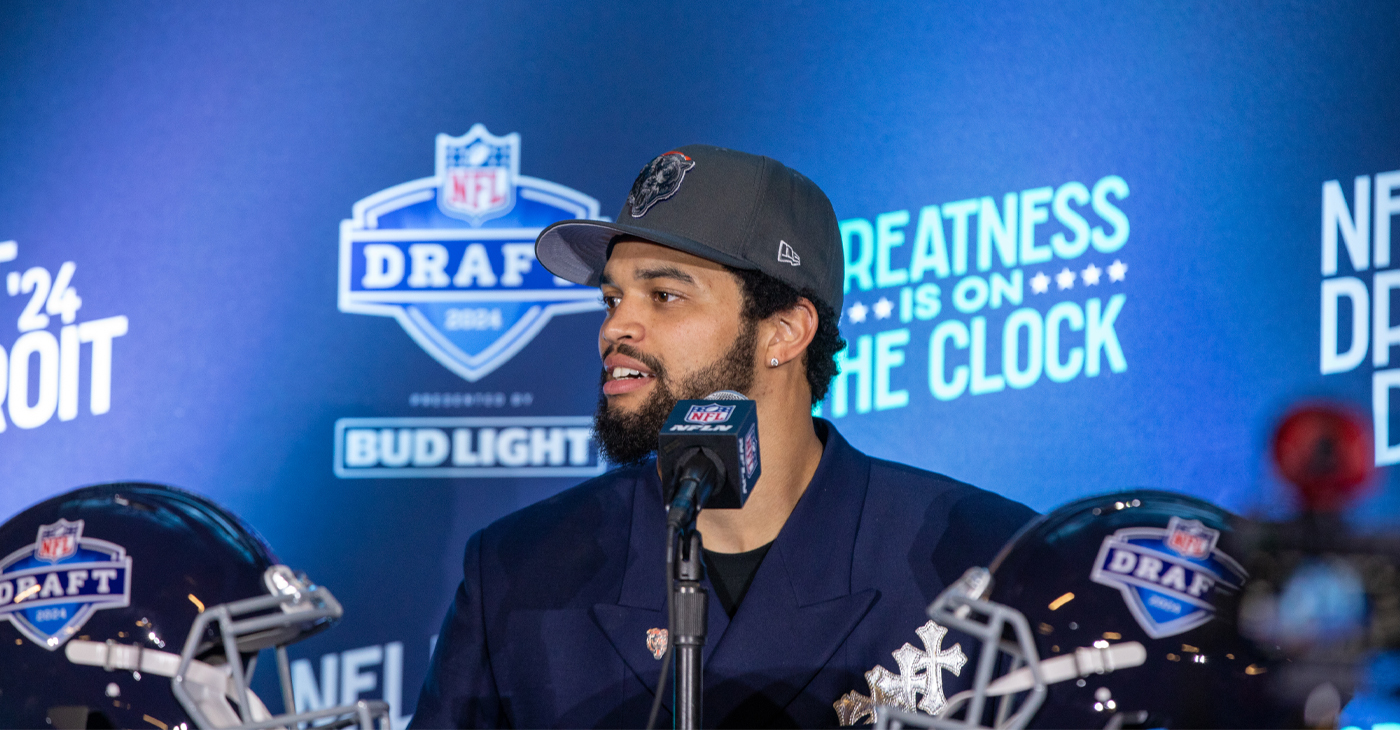
Philadelphia Eagles quarterback Jalen Hurts found Darius Cooper with nine seconds left for the game winning touchdown as his team beat the Tennessee Titans 24-20 in Nashville. Hurts finished the day 26/37 for 264 yards. He threw for two touchdowns and two interceptions.
Prior to the final drive, the Eagles ran 25 plays for 45 yards. During the final drive Hurts went 6-8 with 61 passing yards and the touchdown. Titans defensive tackle — and team captain — Jeffery Simmons said this week that the way to defend Jalen Hurts is to make him “play quarterback.”
Hurts said to Simmons after today’s game: “You started that sh**. I had to finish it.”
Running back Saquon Barkley suffered a stinger in the first half but he ultimately finished the game. He had four carries and nine yards and one catch for eleven yards. He will get an MRI for his injury, but admitted to Cameron Wolfe of the NFL Network he was fine.
Caleb Williams leaves game against Vikings with apparent lower-body injury
Chicago Bears quarterback Caleb Williams was helped off the field with a right leg injury with 7:42 remaining in the fourth quarter. Williams was down, writhing in pain after scrambling to his left. After departing the injury tent, Williams raised his right fist, acknowledging the crowd while expressing his frustration. Testing will commence on Monday to find out more details about his injury.

“We’ll know tomorrow,” Johnson admitted regarding Williams’ injury. “He’s in good spirits. He’s a team player.”
Williams finished the day with 138 passing yards and one interception.
“I’m actually happy it’s nothing with the knee — that was my first inclination,” Johnson said. “But, a hamstring could be pretty damaging as well. So, we’ll see. We’ll see how bad it is tomorrow and we’ll go from there.”
Bryce Young once again dominated the Falcons
Carolina Panthers quarterback Bryce Young is 5-1 against the Atlanta Falcons and is undefeated at Mercedes-Benz Stadium. Today, Young threw for 287 yards and three touchdowns as he led the Panthers to a 34-3 dismembering of the Atlanta Falcons. Georgia Tech alumnus Darren Waller caught two touchdowns and linebacker Devin Lloyd returned one of his two interceptions for a touchdown.
Cooper Rush started his second straight game for the Falcons and it did not go well. The partisan crowd voiced their displeasure after Rush completed 10/17 passes for 86 yards and two interceptions. Jack Strand entered the game for Rush prompting cheers from the Falcons fans. The rookie threw a pick-six on his first career pass attempt. Strand was the first QB to accomplish that feat since Sam Darnold in 2018 and is the first Falcons player to do that since Brett Favre in 1991. Strand finished the day with 59 passing yards and 16 rushing yards.
According to reports, quarterback Michael Penix, Jr. is expected to make his season debut this Thursday at the Green Bay Packers. His return should help the Falcons. They are the first team since the 2008 Rams to not run any plays in the red zone after the first two games to open a season.
The bright spots for the Falcons today were the Spelman College Jaguarettes performing with the Falcons cheerleaders and Florida A&M’s marching band, The Marching 100, also performed during halftime!
Jayden Daniels gets carted off after apparent arm injury
Washington Commanders quarterback Jayden Daniels appeared to injure his left elbow on the final play of the first half in his game against the Dallas Cowboys. During the play, Daniels got stepped on, braced himself for the fall, and his elbow bent the wrong way. Daniels draped a towel over his head as he exited the field on the cart.
He was later ruled out.
Daniels suffered a dislocated elbow to the same arm during week nine of last season against the Washington Commanders, which led to him being shut down for the remainder of the season.
The post NFL: Week Two Recap | Jalen Hurts did not fold; Caleb Williams exits game with injury appeared first on BlackPressUSA.
#NNPA BlackPress
The Complete Negotiation Framework — Every Stage, Every Tactic, Every Win
Master the complete vehicle-purchase negotiation framework with Roosevelt Gist and Roosevelt. Learn every stage, tactic, and win!
The post The Complete Negotiation Framework — Every Stage, Every Tactic, Every Win appeared first on BlackPressUSA.

Roosevelt Gist and Roosevelt deliver the complete vehicle-purchase negotiation framework in Episode 8 of The Color of Our Money Is Green. This episode covers the three foundations of every effective negotiation, the full seven-stage negotiation sequence with exact language for every stage, and five of the most common dealership tactics with the specific response each one requires.
What You Learn in This Episode:
The three foundations that make every negotiation tactic work
The complete seven-stage car-buying negotiation sequence
Exact language for every stage of the dealership conversation
Five common dealership tactics — the turnover, the four-square, the packed payment, spot delivery, and forced add-ons — and how to counter each one
Why signing preliminary paperwork isn’t the same as signing the final contract
___________________________________________________________________
“The Color of Our Money Is Green: A Buyer’s Guide to What Cars Actually Cost” — stan.store/RGist
____________________________________________________________________
AutoNetwork helps serious car shoppers inspect any new vehicle online before walking into a dealership. I’m Roosevelt — I’ve been reviewing cars and shaping digital car buying and credit union auto leasing since before YouTube car reviews existed.
You’ll find detailed walkaround reviews, POV test drives, and buyer-focused breakdowns covering comfort, space, features, and real-world value.

How to use the channel:
Watch the walkaround of the car you’re considering
Visit AutoNetwork.com for the full review
Check CouponsOffersAndDeals.com for current dealer specials
Walk in already knowing what you want — and what it should cost
 AutoNetwork.com
 CouponsOffersAndDeals.com
Affiliate disclosure: some links earn a small commission at no cost to you and help support the channel. Insta360 is one of those partners.
The post The Complete Negotiation Framework — Every Stage, Every Tactic, Every Win appeared first on BlackPressUSA.
#NNPA BlackPress
Mazda CX-90 Luxury: Heated Seats & Premium Comfort! #shorts
Stay toasty in the CX-90! Plush Nappa leather, heated/ventilated seats, and a memory-equipped heated steering wheel deliver ultimate luxury.
The post Mazda CX-90 Luxury: Heated Seats & Premium Comfort! #shorts appeared first on BlackPressUSA.

Experience ultimate comfort in the CX-90. Nappa leather, heated/ventilated seats, 8-way power adjustments, and memory settings for both front passengers. The heated steering wheel with memory tilt/telescope adds premium convenience.
 Watch the full video: https://youtu.be/EH5A4eQ4ipY
#AutoNetwork
The post Mazda CX-90 Luxury: Heated Seats & Premium Comfort! #shorts appeared first on BlackPressUSA.



Asm. Corey Jackson Announces Launch of 24-Hour Childcare in His District

IN MEMORIAM: The Rev. Leon “Sonny” Clark, Longtime Orange County Pastor and Community Leader, Dies at 72

Poll: Becerra Widens His Lead Over Hilton; Californians Split on Wealth Tax

From Historic Memories to New Possibilities: Oakland Celebrates Coliseum 60

County Office of Education Says OUSD Finances Are Getting Healthier, Materially Stronger

LIVE FREE Sunday Dinner Brings Faith, Fellowship and Civic Conversation to Oakland

Remembering Chauncey Bailey as Student Journalists Face Threats to Truth-Telling

BLACspace Cooperative Invites Bay Area to Experience Oakland’s Black Cultural Ecosystem Through a BLAC Map Tour + Party

In Wake of Death on Doorstep, Williams Chapel Baptist Church Calls for Better Care, Funding for Unhoused

Oakland Centenarian Nuna McKee Honored!

Caribbean Nations Produce Action Plan Calling for UK Reparations Over Slavery

Oakland Post: Week of September 23 – 29, 2026

Doulas Are Helping Black California Moms Navigate Pregnancy–Even as High Mortality Rates Persist

Newsom Signs Addictive Social Media Law to Protect Kids

On Your November Ballot: Prop 38 Would Allocate $8.4 Billion to Immunology and Immunotherapy Funding

Less Affluent School Districts, Including Sacramento City, Face Threat of State Takeover

ESSAY: California Can Close Its Colorectal Cancer Gap

California Hispanic Chambers of Commerce Unveils: ‘Powering the Future’ Theme for 47th Annual Statewide Convention

Four Candidates, Including Incumbent Barbara Lee, Qualify for Oakland Mayor’s Race

Oakland Post: Week of August 12 – 18, 2026

From Blueprint to Breakthrough: Tackling Affordable Housing in Oakland

Oakland Observes Black August with Block Parties, Film Showings, Workshops

COMMENTARY: Why Local School Tax Measure G1 Will Not Be on the November Ballot

Standoff for Justice: Our Homes Are Worth Fighting For

Returning to Its Roots, the Oakland Black-Eyed Pea Festival Partners with the Freedom Farmers Market Sept. 12

Oakland Post: Week of August 26 – September 1, 2026

NPRC Scores First Advocacy Victory: David Shaw Finally Gets His Wish to ‘Go Home’

Frontier Airlines’ Return to Oakland Airport Brings Flights, Jobs and Opportunity

Gubernatorial Candidate Steve Hilton Blasts California New Tire Rules; Newsom Hits Back

Chef Sharon Lee Blends Culinary Excellence, Education and Empowerment

The Conversation With Al McFarlane 6/23/26

Media Monday 6/22/26

LIVE! ASK ALMA! — TUES. 6.23.26 7PM EST

Car Buying Secrets: 4 Hidden Checks Before You Sign!

Is This 550 HP Charger Worth YOUR Money? AutoNetwork Review

Celebrating Juneteenth – Frederick Douglass on education and resistance

LIVE! — ASK ALMA! — TUES. 6.19.26 7PM EST

Hyundai Ioniq 5 Parking, Safety, and 360 View #shorts

2025 Ioniq 5 New Wiper & Powerful Performance! #shorts

Electric SUV Range: Is 259 Miles Enough? #shorts

EV Charging: How Fast Can You Charge an Electric Vehicle? #shorts

Biometric Cooling… Messaging Seats…Come on! 2025 Infiniti QX80 Autograph 4WD

Charged Up: Witness the Magic of a Fully Electric Car! #shorts

Range Rover Sport PHEV Included…: See What’s Inside This Luxury SUV! #shorts

Invisible Hood View: Perfect Parking with X-Ray Vision! #shorts
-
 Business4 weeks ago
Frontier Airlines’ Return to Oakland Airport Brings Flights, Jobs and Opportunity
-
 Business4 weeks ago
Gubernatorial Candidate Steve Hilton Blasts California New Tire Rules; Newsom Hits Back
-
 Business4 weeks ago
Chef Sharon Lee Blends Culinary Excellence, Education and Empowerment
-

 Black History4 weeks ago
Jackie Wright Champions Bay Area Stories, Filmmakers and Cultural Institutions
-

 Community4 weeks ago
Big City Mayors Ask for “Yes” Vote on Housing Bond Measure; Conservatives Say “No”
-

 Education4 weeks ago
Gov. Newsom’s Latest Appointees Include Sacramento Advocate for Formerly Incarcerated Students; State’s New Tech Chief
-

 Business4 weeks ago
Oakland Coliseum Project Opens Door for Small Businesses to Build Bigger
-

 Community2 weeks ago
Misnamed ‘Parent’ PAC Seeks to Influence Oakland School Board Elections
