
Bay Area
Three Lawsuits Challenge City of Oakland, A’s Over Proposed Real Estate Project at Port of Oakland
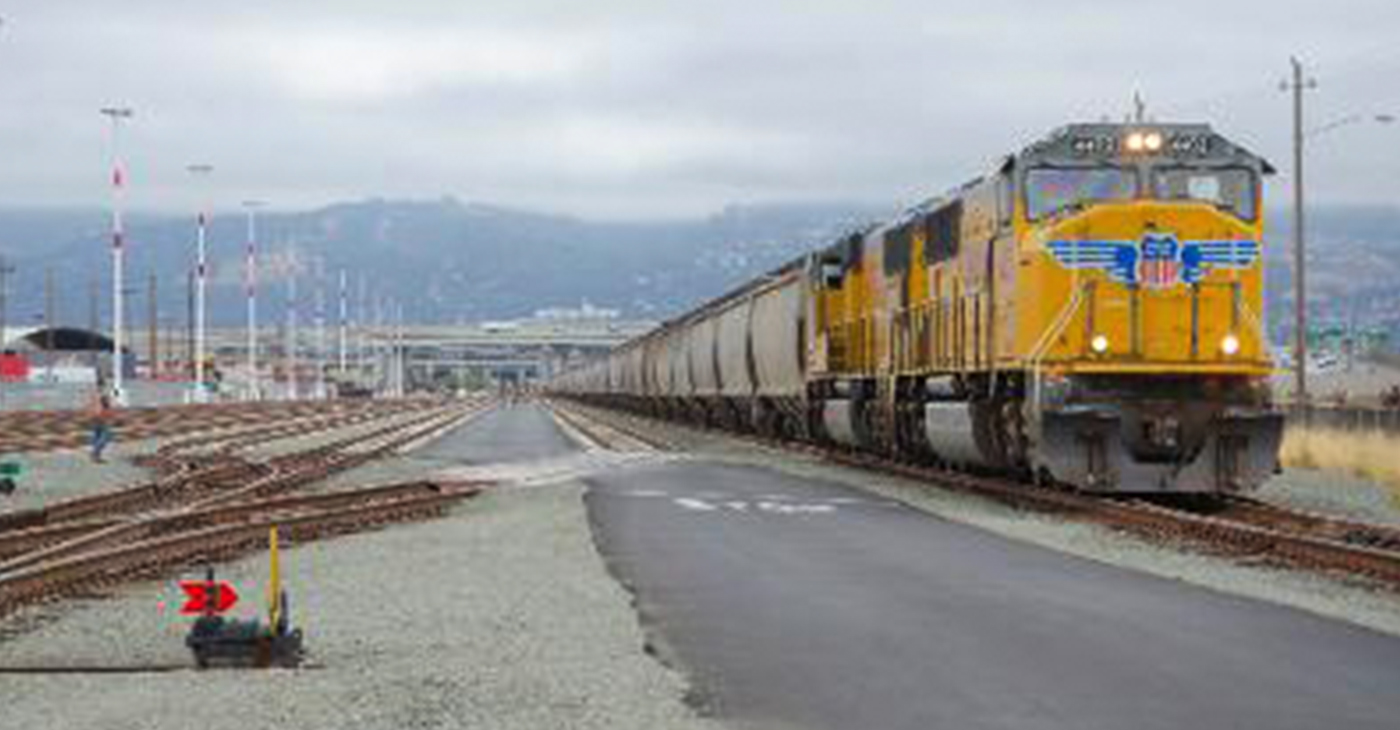
The second lawsuit was filed by Union Pacific Railroad, raising concerns about environmental and public safety risks. In a statement to the San Francisco Chronicle, Robynn Tysver, a spokesperson for Union Pacific, said the company has “serious safety concerns” about the project because, if built, it would be near “two busy railyards and a busy passenger rail station.”

By Ken Epstein
So far, three lawsuits have already been filed challenging efforts by Oakland Mayor Libby Schaaf and John Fisher of the Oakland A’s to move full-steam ahead to win final approval for building a massive $12 billion private real estate project on public land at Howard Terminal at the Port of Oakland.
Two lawsuits were filed on Friday, April 1. Observers say more lawsuits may be forthcoming as those who are opposed to the project or have concerns about how the giveaway of public property and public funding are unfolding as Schaaf and the A’s corporation move forward while ignoring or marginalizing the concerns of port-related businesses and longshore workers, city residents and environmentalists.
Ignoring hundreds of written concerns and many public comments, the Oakland Planning Commissioners — all appointed by Schaaf — unanimously passed the Environmental Impact Report (EIR) on the project. The project has also been approved by Port Commissioners who were also appointed by the mayor.
One lawsuit, which says the EIR does not meet legal environmental requirements, was filed on behalf of the East Oakland Stadium Alliance; Schnitzer Steel, a metal shredding facility; Pacific Merchant Shipping Association; the Harbor Trucking Association; California Trucking Association; and the International Longshore and Warehouse Union (ILWU), which represents dockworkers. Several of these organizations have criticized city officials and the Oakland A’s corporation for refusing to meet with them to negotiate or even inform them about the project proposal.
A spokesperson for the East Oakland Stadium Alliance said the A’s and the City have failed to disclose the negative impacts that the project will have on businesses at the Port and surrounding communities.
“The A’s proposal to build a stadium and luxury condominiums, office and retail development will cause major disruptions and impacts to both the surrounding community and the operations of the Port, yet the EIR did not fully address these concerns or mitigate these well-known issues,” said Mike Jacob, speaking for the Stadium Alliance to KRON4.
“It is simply not proper to ignore or defer analysis or mitigation of so many of the significant impacts identified in the more than 400 comments submitted by community and supply chain stakeholders, and as a result our only alternative is to pursue legal recourse,” Jacob said.
The second lawsuit was filed by Union Pacific Railroad, raising concerns about environmental and public safety risks.
In a statement to the San Francisco Chronicle, Robynn Tysver, a spokesperson for Union Pacific, said the company has “serious safety concerns” about the project because, if built, it would be near “two busy railyards and a busy passenger rail station.”
“Union Pacific believes developing the Howard Terminal without removing rail, vehicle and pedestrian conflicts will exacerbate roadway congestion and create significant safety risks for the public and our employees,” said Tysver. “We are asking that the Oakland A’s and City of Oakland go back and diligently study a grade-separated access plan to properly mitigate the risks.”
A third lawsuit against the EIR was filed on April 4 by the Capitol Corridor Joint Powers Authority. The Capitol Corridor runs 30 weekday and 22 weekend passenger trains weekly on Union Pacific tracks. Union Pacific runs 15 freight trains per day and Amtrak passenger trains.
Responding to the lawsuits, Dave Kaval, president of the A’s, said, “This is just absolutely crazy that these lawsuits are even possible. We are going to prosecute this and defend it and do what we can to demonstrate our project is going to be a huge net benefit,” he said in an interview with the Chronicle.
Kaval was dismissive of the Union Pacific lawsuit, saying the current railway situation at the Port is “completely untenable.”
“One of the key parts of this project is maintaining railroad safety,” Kaval said. “Our project is going to do so much to make Jack London Square safer.”
Of the first lawsuit filed against the EIR, Kaval said, “We think they should drop the lawsuit. It’s an odd way to use an environmental law to prevent the environmental review from being completed.” He said he and city staff were both concerned about the lawsuit.
“We are disappointed collectively about this,” he said.
Kaval said the project is looking at building two bridges, one for pedestrians and another for vehicles, to allow traffic to move safely over multiple train tracks. Other unnamed safety and infrastructure improvements are also being considered.
“We will be very forceful to have this rescinded. We’re at the bottom of the ninth inning, and we need to get the Howard Terminal ballpark approved.”
The A’s project has the support of Democratic political leaders in California who passed a state law that says that lawsuits related to the project must be resolved in less than 270 days.
Schaaf also opposed the lawsuits, defending the Planning Commission approval of the EIR. Justin Berton, a spokesperson for the mayor’s office, gave a statement to KRON, saying:
“The city stands by the integrity of its process and analysis culminating in the certification of the EIR… This particular EIR is exceedingly rigorous, thorough, transparent, and ensures a waterfront ballpark district will be built with only the highest environmental standards.”








Activism
Oakland Post: Week of April 8 – 14, 2026
The printed Weekly Edition of the Oakland Post: Week of April 8 – 14, 2026

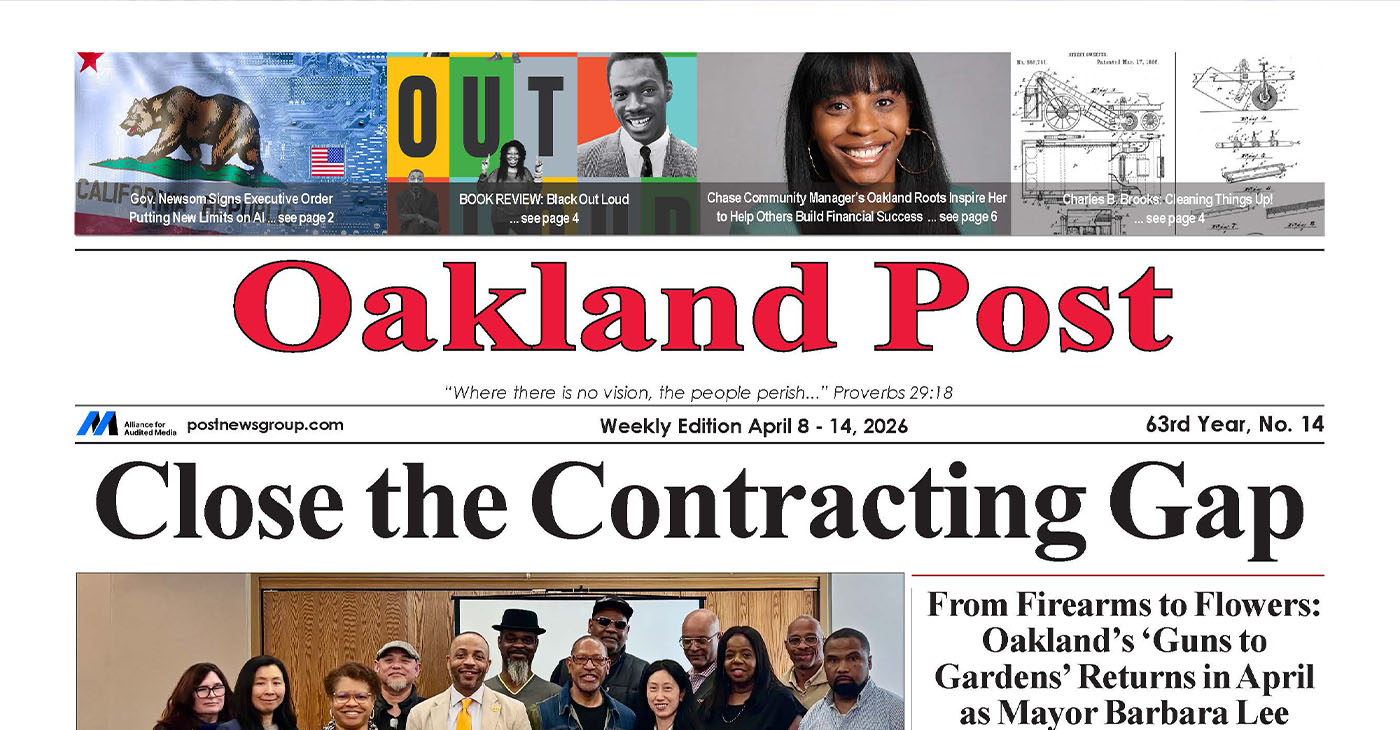
To enlarge your view of this issue, use the slider, magnifying glass icon or full page icon in the lower right corner of the browser window.

Activism
Oakland Post: Week of April 1 – 7, 2026
The printed Weekly Edition of the Oakland Post: Week of April 1 – 7, 2026
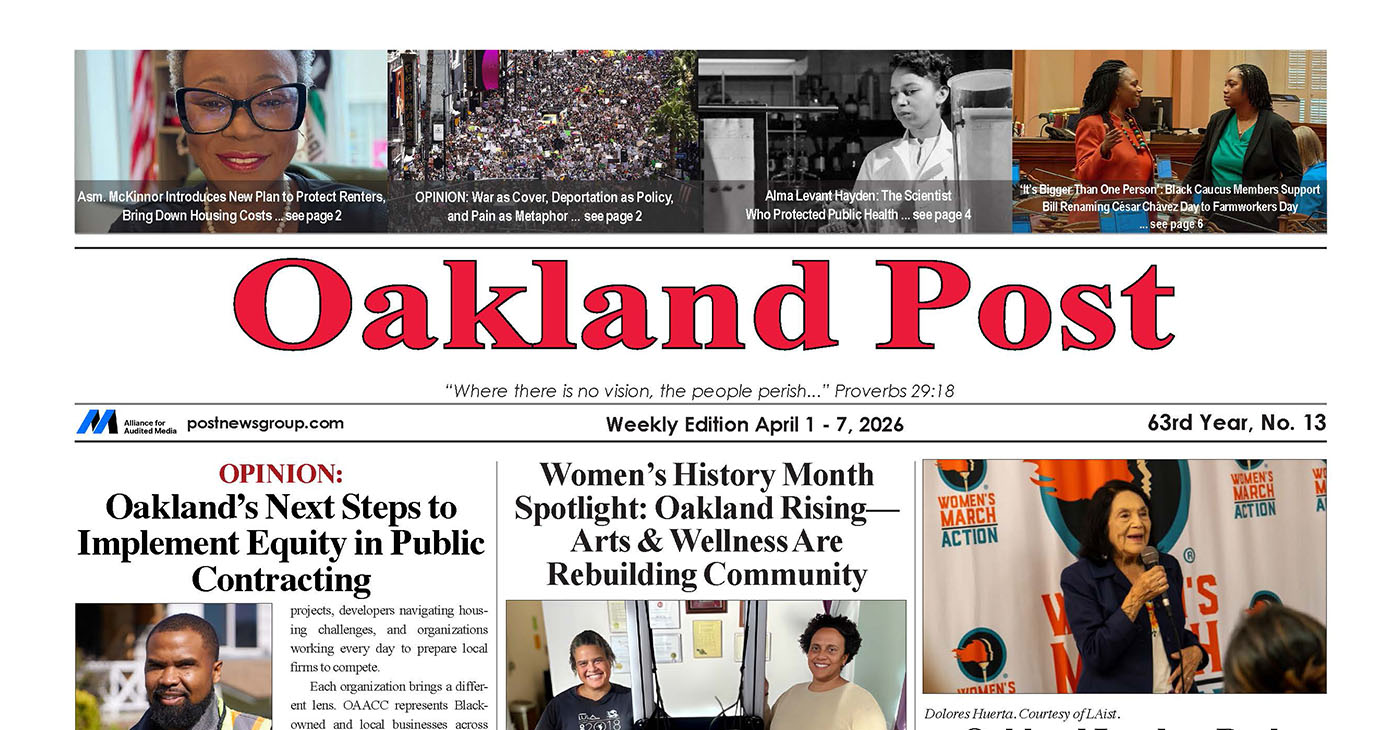
To enlarge your view of this issue, use the slider, magnifying glass icon or full page icon in the lower right corner of the browser window.
Activism
Oakland Post: Week of March 18 – 24, 2026
The printed Weekly Edition of the Oakland Post: Week of March 18 – 24, 2026
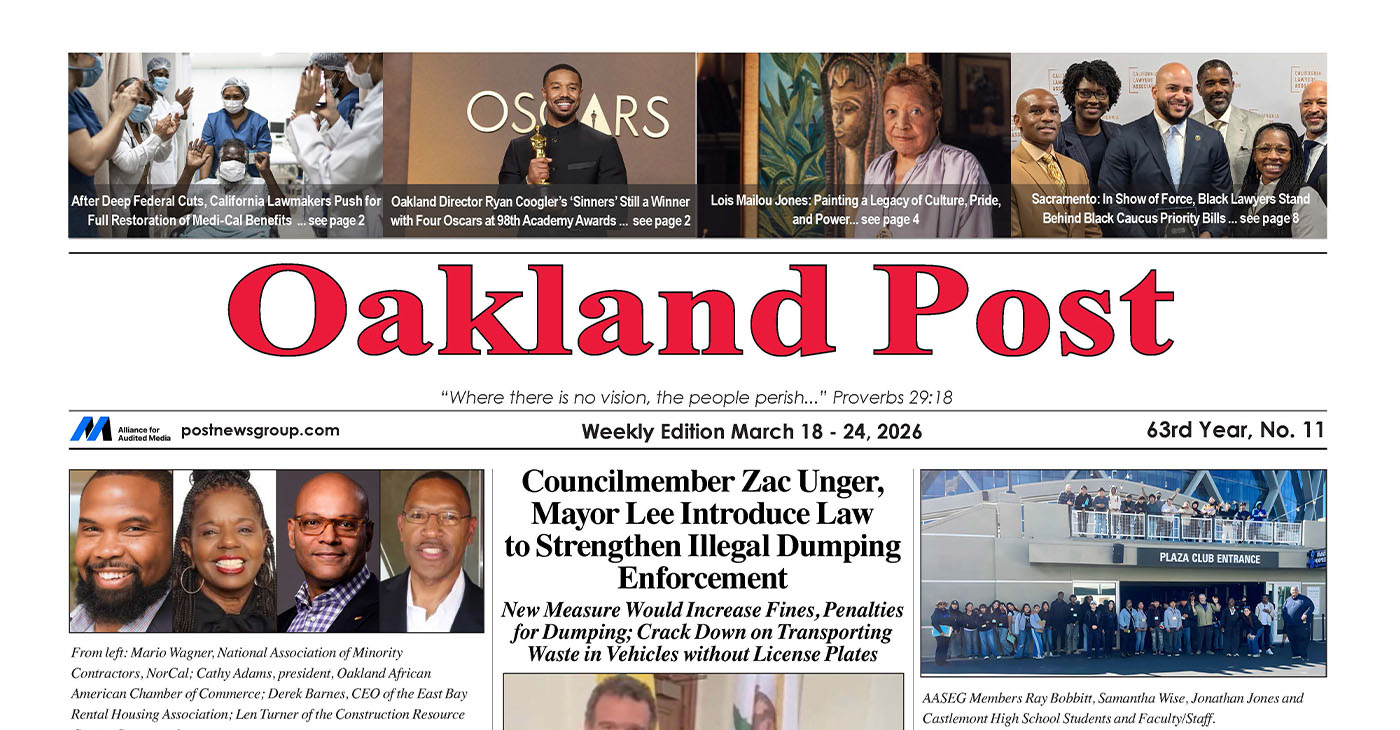
To enlarge your view of this issue, use the slider, magnifying glass icon or full page icon in the lower right corner of the browser window.


WORK FROM HOME
Home-based business with potential monthly income of $10K+ per month. A proven training system and website provided to maximize business effectiveness. Perfect job to earn side and primary income. Contact Lynne for more details: Lynne4npusa@gmail.com 800-334-0540


Oakland Post: Week of April 8 – 14, 2026

Oakland Post: Week of April 1 – 7, 2026

Black Artists in America, Installation Three Wraps at the Dixon Gallery and Gardens

Grief, Advocacy, and Education: A Counselor Reflects on Black Maternal Health

Future of Florida’s Black History Museum in Limbo

New Research Shows the Many Benefits of Early Learning

South Hampton K-8 Students Among Top 10 Finalists for Samsung’s ‘Solve for Tomorrow’ Competition

Cuba: No Negotiation with US on the President or Political System

Brooklyn Academy of Music Names Jamaican-Born Tamara McCaw as President

Trinidad & Tobego – U.S. Launches WhatsApp Channel for American Citizens in the Country

Oakland Post: Week of March 18 – 24, 2026

AI Innovation vs. Ethics and Environmental Impact

AI, Web3, and Digital Reparations

What If You Owned Your AI Agent?

Season 7, Episode 3 – January Reporter’s Roundtable 📱

Reflecting on Black History Milestones in Birmingham AL

Oakland Post: Week of February 25 – March 3, 2026

Oakland Post: Week of March 4 – 10, 2026

PRESS ROOM: NBA Hall of Fame Nominee Terry Cummings Joins 100 Black Men of DeKalb County to Launch Victory & Values Initiative
Oakland Post: Week of March 18 – 24, 2026

Trump’s MAGA Allies are Creating Executive Order Plan to Steal the 2026 Midterms

Oakland Post: Week of March 11 -17, 2026

Poll Shows Support for Policies That Help Families Afford Child Care

Financial Wellness and Mental Health: Managing Money Stress in College
New Research Shows the Many Benefits of Early Learning
Brooklyn Academy of Music Names Jamaican-Born Tamara McCaw as President

Woman’s Search for Family’s Roots Leads to Ancestor John T. Ward – A Successful Entrepreneur and Conductor on the Underground Railroad
Grief, Advocacy, and Education: A Counselor Reflects on Black Maternal Health
Future of Florida’s Black History Museum in Limbo
Black Artists in America, Installation Three Wraps at the Dixon Gallery and Gardens

Hyundai Ioniq 5 Parking, Safety, and 360 View #shorts

2025 Ioniq 5 New Wiper & Powerful Performance! #shorts

Electric SUV Range: Is 259 Miles Enough? #shorts

EV Charging: How Fast Can You Charge an Electric Vehicle? #shorts

Biometric Cooling… Messaging Seats…Come on! 2025 Infiniti QX80 Autograph 4WD

Charged Up: Witness the Magic of a Fully Electric Car! #shorts

Range Rover Sport PHEV Included…: See What’s Inside This Luxury SUV! #shorts

Invisible Hood View: Perfect Parking with X-Ray Vision! #shorts

AI Is Reshaping Black Healthcare: Promise, Peril, and the Push for Improved Results in California

ESSAY: Technology and Medicine, a Primary Care Point of View

Sanctuary Cities

The RESISTANCE – FREEDOM NOW

STATE OF THE PEOPLE: Freddie

ECONOMIC BOYCOTT DAY!!!!!

I told You So
-
 Activism3 weeks ago
Oakland Post: Week of March 18 – 24, 2026
-
 Activism4 weeks ago
Oakland Post: Week of March 11 -17, 2026
-
 Advice4 weeks ago
Financial Wellness and Mental Health: Managing Money Stress in College
-
 #NNPA BlackPress3 weeks ago
New Research Shows the Many Benefits of Early Learning
-
 #NNPA BlackPress3 weeks ago
Brooklyn Academy of Music Names Jamaican-Born Tamara McCaw as President
-
 #NNPA BlackPress3 weeks ago
Grief, Advocacy, and Education: A Counselor Reflects on Black Maternal Health
-
 #NNPA BlackPress3 weeks ago
Future of Florida’s Black History Museum in Limbo
-
 #NNPA BlackPress3 weeks ago
Black Artists in America, Installation Three Wraps at the Dixon Gallery and Gardens
