Activism
The Rise East Project: The 40 x 40 Initiative to Bring New Vision on Quality of Life in Black East Oakland
In 2021, the 40×40 initiative was created by a coalition of community-based organizations, Roots Community Health Clinic, Black Cultural Zone (BCZ), the Brotherhood of Elders Network and East Oakland Youth Development Center (EOYDC) to address systemic issues of racism and displacement of African Americans in a roughly 40×40 block area in East Oakland, an area with the highest concentration of Black folks in the Bay Area.

By Tanya Dennis
Part 2
Rise East is a $100 million privately funded initiative that will rebuild Black neighborhoods in a 40×40 block area is East Oakland over 10 years. Project partners are Oakland Thrives, the 40×40 Council and Blue Meridian Partners.
The number 40 in sacred scripture signifies, new growth, new life, and transformation.
In African American history, the number 40 signifies the broken promise of 40 acres and a mule made by Secretary of War Edwin Stanton and General William T. Sherman at the end of the Civil War in 1865.
On Oct. 15, 1966, The Black Panther Party demanded 40 acres in reparations for Black folks in their party’s ten-point program demanding payment for that overdue debt.
In 2021, the 40×40 initiative was created by a coalition of community-based organizations, Roots Community Health Clinic, Black Cultural Zone (BCZ), the Brotherhood of Elders Network and East Oakland Youth Development Center (EOYDC) to address systemic issues of racism and displacement of African Americans in a roughly 40×40 block area in East Oakland, an area with the highest concentration of Black folks in the Bay Area.

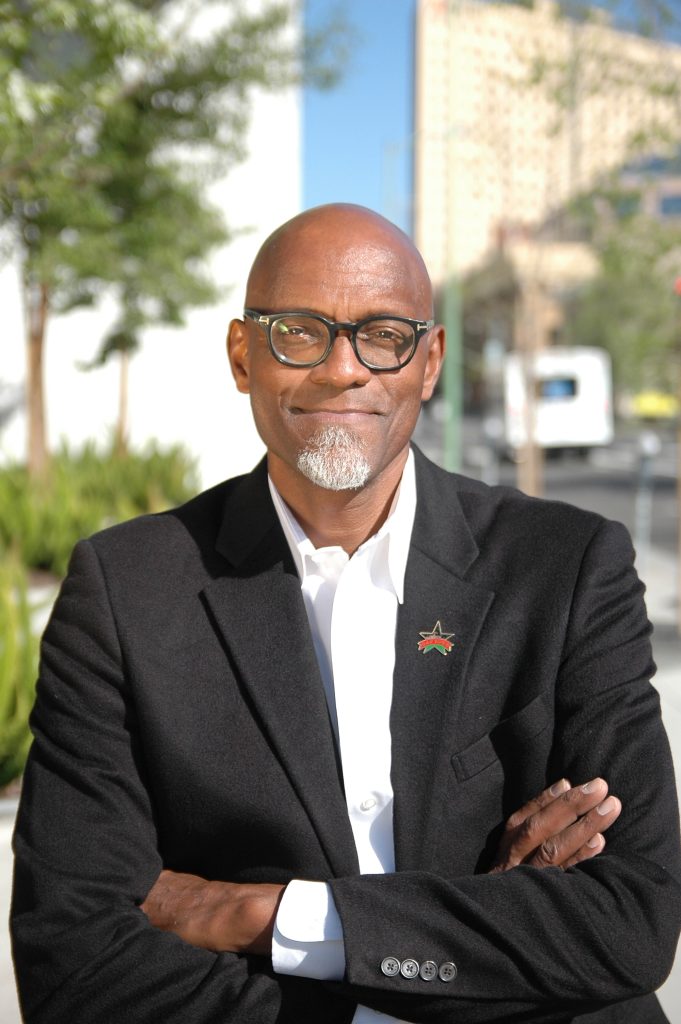
Greg Hodge is CEO of the Brotherhood of Elders Network. Courtesy photo.
Greg Hodge, CEO of the Brotherhood of Elders Network says “Roots was already serving this area under the leadership of Dr. Noha Aboelata when the pandemic hit, hitting the Black population the hardest, the most underserved in the city.
Within this area, household income and life expectancy are lowest among Black residents compared to other racial/ethnic groups. There is a 15-year gap in life expectancy between Black residents in East Oakland (70 years) and white residents of the Oakland Hills (85 years), Hodge said.
Dr. Aboelata and staff questioned how they could further support the nearly 50% of Black families living in poverty and safely address the issues face by the unhoused, the re-entry population and youth.
The Black Cultural Zone has served as the epicenter of growth and activity from the beginning. East Oakland Youth Development Center and the Brotherhood of Elders Network are now committed partners who are working to bring real change to East Oakland.
According to Roots, the vision is to transform the 40×40 block area into a place where people have what they need to heal, thrive, rejoice, and prosper, a vision far different from today’s reality where African Americans experience the worst quality of life indicators, including life expectancy, homelessness, and educational success. As the demographics of Oakland rapidly change, and with the COVID-19 pandemic disproportionately affecting the Black community, Roots members knew time was of the essence in addressing these disparities.
According to Hodge, “The 10-year Rise East plan will make deep and lasting improvements in the 40×40 and will affect 30,000 residents of African descent.”
More than 400 residents contributed their ideas to the Rise East plan. Together, residents and the 40×40 coalition launched the $100 million neighborhood improvement Rise East project with the assistance of the Blue Meridian Group.
For continuing success and growth, investment from the Alameda County, the City of Oakland, and the Oakland Unified School District is required.
As partners in Oakland Thrives, these institutions supported Rise East in concept. “Now it’s time for them to invest resources,” Hodge said. Blue Meridian’s money must be matched for Rise East to be a successful public investment.

