
National
The Loud Silence of Rape Survivors


By Jazelle Hunt
NNPA Washington Correspondent
FOURTH IN A SERIES
WASHINGTON (NNPA) – An online survey of sexual assault survivors conduced as part of this series vividly captures the fear and reluctance Black women rape survivors exhibit about sharing their ordeal with others:
From a young woman, drugged and raped by a man she met at a party at age 21:
“I told someone, but I never gave specifics because I felt like they would think it was my fault.”
From a middle-aged woman, repeatedly raped by a classmate’s father at age 6:
“When it first happened, we told our teacher and the [school] nurse. We were told that we were making it up. He told me that if I told anyone, he’d kill my whole family. I was scared for weeks after telling my family.”
From a young woman, raped by her then-boyfriend’s older brother at age 15:
“I never told anyone, not even my boyfriend, until I started talking to a therapist on campus during my sophomore year of college…to this day he doesn’t know.”
From a mature woman, raped at ages 12 and 13 and fondled by a pastor at age 15:
“I never said a word. Because in the end, I blamed myself. How do you know to blame yourself at 12 years old?”
Data from the Department of Justice shows that Black women are less likely than other women to report rape and assaults to police or tell anyone what happened.
Why?
About 80 percent of rapes happen between people of the same race. For Black women survivors whose assailants are also Black, cultural codes can make it difficult to speak out.

Black men vs. Black women
“We in Black communities don’t talk about [sexual assault] because of this pressure to protect the race,” says Aishah Shahidah Simmons, a survivor, educator, activist, and director of “NO! The Rape Documentary,” an international award-winning film that explores sexual violence within in the Black community.
The Philadelphia native explained, “[Black women] are valuable when we’re concerned about protecting our men and our children and our communities, but when it comes to talking about the violence that we’ve experienced at the hands of the men in our communities, then we’re traitors.”
Many have absorbed this message, including survivors. For example, Tiffany Perry, a native of Jersey City, N.J., was surprised to hear her mother’s opinion on the Bill Cosby sexual assault allegations.
“My mom is in support of Bill Cosby, she thinks he’s being sabotaged. She’s leaning more on the side of politics…. And I told her, ‘I can’t believe you, a person who has experienced a rape, would be in support of him,’” Perry said.
“You hear all of these women, particularly Black women – ‘Oh, they should’ve said something a long time ago. They just this, and gold-digger that.’ But if these women had said something, who’s to say these women wouldn’t have gotten railroaded then like they are getting railroaded now?”
On top of the expectation to be supportive of Black men, beliefs about what constitutes ideal Black womanhood, including inexhaustible emotional strength and perfect sexual respectability, can add to the trauma for Black women.
After Sharita Lee was raped at age 20 by a childhood friend, she didn’t know what to do. He had attacked her after hours of reminiscing and catching up, and immediately after a sudden phone call that brought news of her grandfather’s death. He was so abrupt that he had interrupted his own condolences when he pinned her to the couch.
“A reason in why I never told was because – in his particular case – as he began to rape me, I felt pleasure. And I knew I was not supposed to be feeling pleasure because I was being raped,” she says nervously. “In the moment, I felt confused, I felt stupid, because – you know? It’s almost like, do I just say ‘forget it’ that he’s raping me, to enjoy it, or not? So for me, I couldn’t even admit it. This is probably the first time I’m admitting it out loud, ever.”

Distrust of mainstream systems
There are other reasons Black women are less likely to vocalize their pain, including a deep distrust law of both the criminal justice system and the medical community.
Much has been written, for example, of J. Marion Simms, “The Father of Gynecology” who developed his technique by experimenting on enslaved women, without anesthesia, arguing that they could bear levels of pain that White women could not.
Perhaps the most notable incident that gave African Americans pause was the famous Tuskegee syphilis study from 1932-1947 in which treatment for 399 Black men was intentionally withheld even after it was discovered that penicillin was effective in treating the disease.
And there are other reasons for widespread distrust.
The Institute of Medicine report, “Unequal Treatment: Confronting Racial and Ethnic Disparities in Healthcare,” concluded that “(al)though myriad sources contribute to these disparities, some evidence suggests that bias, prejudice, and stereotyping on the part of healthcare providers may contribute to differences in care.”
Furthermore, the National Alliance on Mental Illness (NAMI), a national advocacy and education organization, notes that Black people are less likely to be accurately diagnosed and receive thorough treatment than their White counterparts; are less likely to receive culturally aware care; and are more likely to harbor stigmas about mental illness and treatment.
When Black women develop mental and emotional trouble after an assault, their strength is called into question, as if the pain is a sign of weakness.
“[The term ‘strong Black woman’] denies us of our humanity,” Simmons explained. “This is something – I’ve observed – that plays a role in Black women being able to be raped without recourse. Because it’s like, ‘We can take it, we’re strong, we’re not vulnerable or fragile.’”
As for law enforcement, Blacks and Latinos are incarcerated at disproportionately higher rates in part because police target them for minor crimes, according a report titled, “Black Lives Matter: Eliminating Racial Inequity in the Criminal Justice System” by the Sentencing Project, a Washington-based organization that works for a fair and effective U.S. criminal justice system by promoting reforms in sentencing policy, addressing unjust racial disparities and practices, and advocating for alternatives to incarceration.
In addition, a recent ACLU report found, “Once arrested, people of color are also likely to be charged more harshly than whites; once charged, they are more likely to be convicted; and once convicted, they are more likely to face stiff sentences – all after accounting for relevant legal differences such as crime severity and criminal history.”
For Tiffany Perry, it was more personal than a philosophical distrust of the criminal justice system. At 21 years old, she was the victim of an attempted rape by a police officer. The married policeman was also her co-worker, and her usual ride home after work. One evening, he cornered her in a secluded makeshift office and pinned on a couch where officers slept between shifts.
“I’m saying, ‘Stop! Stop, get off of me what are you doing? I’m going to scream!’ And he says, ‘Go ahead, who’s going to save you, you’re in a police station.’ When he said that to me I just froze. I was like, ‘Wow, I am. Nobody’s going to do anything,’” she remembered.
After groping her for a few more minutes, her assailant suddenly changed his mind, releasing her.
“The thing is – when we left there, I got in the car with him. And I tried to explain this…I was so afraid of him that I got in the car with him,” Perry says. “To people, that doesn’t make any sense…but when he said, ‘Nobody’s going to hear you, and nobody’s going to believe you,’ I convinced myself that he was right. I felt like I should’ve known better.”
She never reported the incident. Two years later, she was able to tell her mother, who had been raped and had become pregnant with her at age 15.
“I didn’t want to be scrutinized, I didn’t want to be under the limelight. I didn’t want to relive it. I didn’t want to talk about it,” Perry said. “Even now I have feelings of guilt…what if, because I didn’t say nothing, this guy went further with some other young lady? Or, maybe I wasn’t the first…maybe the person before me, she didn’t seem mad either, so that’s what made him think it was okay to do that to me.
“You say to yourself, you don’t know what’s right or wrong. You just do what you can, or know how to do in that moment.”
NEXT WEEK: Life after Rape
Part I: Rape and the Myth of ‘The Strong Black Woman’
Part III: Some Faith Leaders Victimize Survivors Again
(The project was made possible by a grant from the National Health Journalism Fellowship, a program of the University of Southern California Annenberg School for Communication and Journalism.)
###


Business
Port of Oakland, Army Corps Sign Historic Harbor Design Agreement
OAKLAND POST — Oakland Port Commission President Stephanie Dominguez Walton called the agreement a historic milestone that will support thousands of jobs. “Today marks a historic occasion for the Port as we sign the inaugural Design Agreement for the Turning Basin Widening Project, which will keep Oakland competitive,” said Walton.

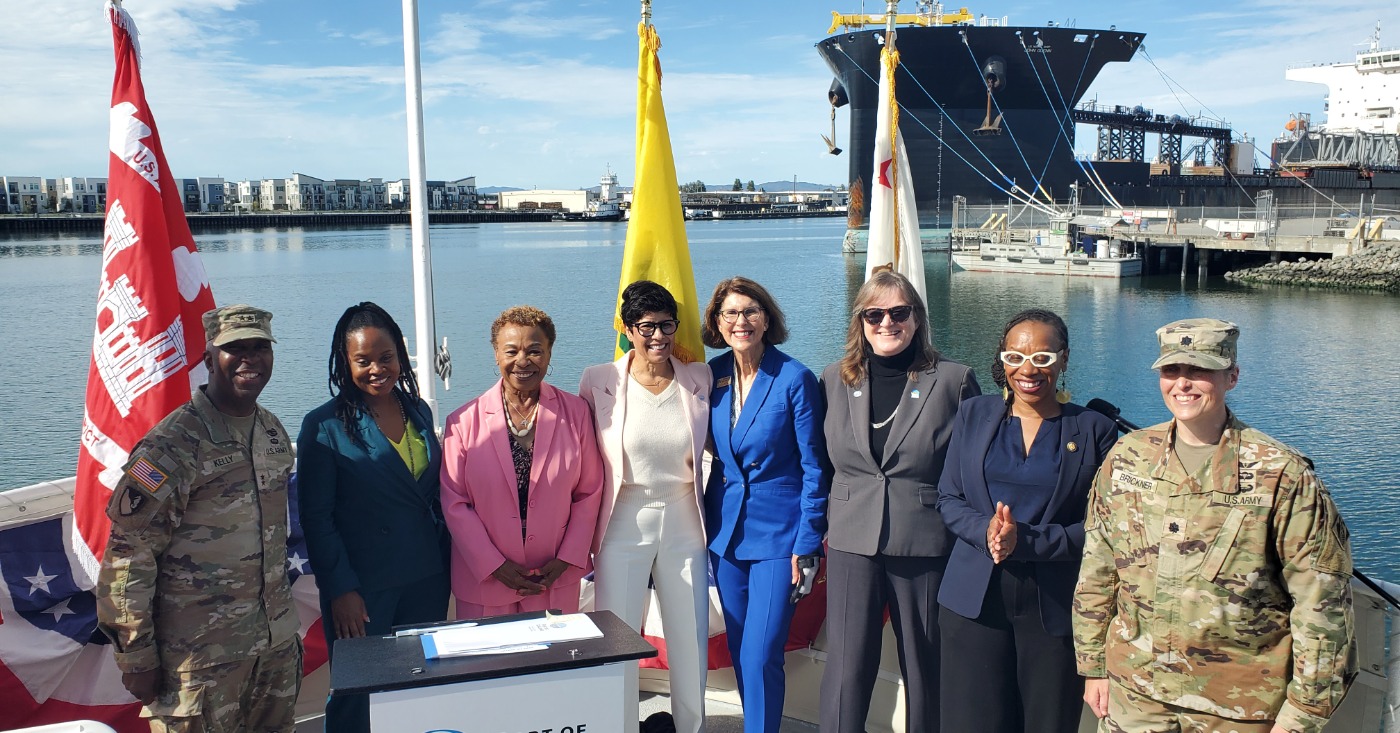
A $642 million project designed to accommodate larger cargo ships and strengthen the Port of Oakland’s position as a major Pacific trade gateway moved a significant step closer to construction on Aug. 27.
The U.S. Army Corps of Engineers (USACE) San Francisco District and the Port of Oakland commemorated the signing of the inaugural Design Agreement for the Oakland Harbor Turning Basins Widening Project during a ceremony aboard the USS Potomac, the presidential yacht once used by President Franklin D. Roosevelt.
The project will widen the Port’s Inner and Outer Harbor turning basins, allowing today’s increasingly larger and longer vessels more space to safely maneuver and turn around. The current basins are narrow, creating delays and operational inefficiencies.
Oakland Port Commission President Stephanie Dominguez Walton called the agreement a historic milestone that will support thousands of jobs.
“Today marks a historic occasion for the Port as we sign the inaugural Design Agreement for the Turning Basin Widening Project, which will keep Oakland competitive,” said Walton.
The agreement advances the project into its preconstruction engineering and design phase following years of planning and collaboration.

Lt. Col. Virginia Brickner, commander of the USACE San Francisco District, said the signing represented tangible progress toward construction.
“We are moving forward. We are showing progress,” Brickner said.
Major General Jason Kelly, USACE Deputy Commanding General for Civil and Emergency Operations, said dredging is critical for maritime dominance, supply chains, and economic competitiveness.
“Dredging sustains our national economic infrastructure,” he said. “The future demands more, the taxpayer deserves more, and together we’re going to deliver.”
For U.S. Representative Congresswoman Lateefah Simon (D-CA-12), the Port project will support jobs beyond its completion. “This will impact workers and businesses, and every shipping container represents multiple jobs.”
Oakland Mayor Barbara Lee described Oakland as a gateway to international markets and spoke on earlier efforts to deepen Oakland’s shipping channel to 50 feet. While serving in the California Legislature, Lee helped bring together labor, business, environmental advocates and Port officials to resolve disputes surrounding dredging and environmental protections.
“We want the Port to remain competitive economically,” Lee said, excited about both protecting the environment and generating sustainable jobs in the region. “We want to make sure that we create good-paying union jobs, and that the Port continues to not just survive, but thrive.”
Port of Oakland Executive Director Kristi McKenney said economic growth is dependent on investments in the Oakland Harbor’s infrastructure.
“This investment and staying competitive will fuel our economy for years to come,” said McKenney.
The Port of Oakland, with its partners, supports more than 98,000 regional jobs and $174 billion in annual economic activity. The Port oversees the Oakland Seaport, the Oakland San Francisco Bay Airport (OAK), and nearly 20 miles of waterfront, including Jack London Square.

Community
Democratic Clubs Interview Candidates for Oakland School Board
OAKLAND POST — For the first time, the interviews were jointly sponsored by the John George Democratic Club, Wellstone Democratic Renewal Club, Oakland East Bay Democratic Club, Black Women Organized for Political Action (BWOPA), Niagara Democratic Club, Block by Block Organizing Network and Oakland African American Chamber of Commerce.
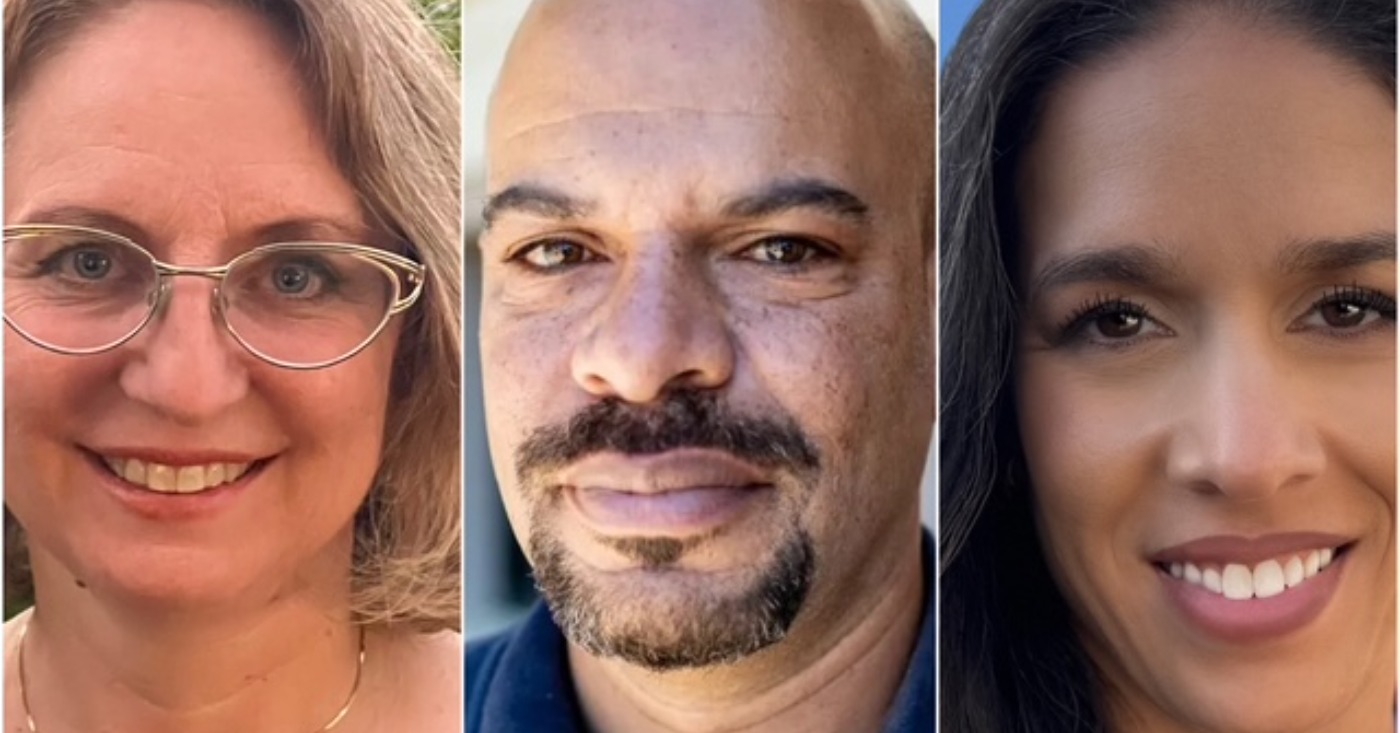
Local Democratic clubs and community organizations interviewed candidates running for Oakland school board in the November elections, including incumbents Jennifer Brouhard in District 2, Mike Hutchinson in District 4 and Valarie Bachelor in District 6.
For the first time, the interviews were jointly sponsored by the John George Democratic Club, Wellstone Democratic Renewal Club, Oakland East Bay Democratic Club, Black Women Organized for Political Action (BWOPA), Niagara Democratic Club, Block by Block Organizing Network and Oakland African American Chamber of Commerce.
The Democratic clubs interviewed only registered Democrats.
John George and Wellstone endorsed Brouhard and Bachelor. Neither endorsed Hutchinson.
In District 4, Wellstone ranked Sylvia Pfeiffer Williams first and Kathryn Camp second. John George ranked Camp first and Williams second.
Hutchinson, an Oakland native and Oakland public schools graduate, highlighted his record.
“I was in board leadership and chaired the Budget and Finance Committee,” he said. “We passed balanced budgets and paid off the state loan early, which allowed us to finally leave state receivership after 22 years.”
Hutchinson said the district faces a financial crisis requiring changes in board leadership and district policies.
“We need a different majority so we can get back on track, end school closures, and manage our resources better,” he said.
Williams taught adult education in Oakland for 18 years.
Williams said her philosophy “comes from the disability justice world, to center the needs of the most vulnerable. When we center the needs of the most vulnerable, we create environments, systems, and learning experiences in which everyone can thrive.”
Williams framed potential school closures as an equity issue.
“Are we thinking about closing schools up in the hills?” she asked. “Or are we thinking about closing schools where communities are in crisis right now?”
Camp, a Bay Area native and Oakland resident of 25 years, has a son in second grade.
“Our kids are only getting one shot at a great education, and I’m running to bring pragmatic, student-centered leadership that restores trust, builds responsibility, and delivers results for every child,” she said.
On her website, Camp pledged accountability and transparency. “As a proud OUSD parent, I know our schools need more than promises – they need fiscal responsibility, equity, and meaningful action guided by long-term strategy,” she said.
“That means protecting classrooms, supporting teachers, using resources wisely, and making decisions that reflect clear priorities and real accountability,” said Camp. “It also means bringing people together and providing the kind of steady leadership that can navigate complex systems, ask hard questions, and stay grounded in what matters most: student outcomes, thriving schools, and a district that works for the communities it serves.”
Wellstone’s Education Committee said it opposed Hutchinson because he frequently challenged the board majority and superintendent.
“He also claims that the teachers’ contract is illegal that a grand jury should be called. He is not endorsed by the teachers’ union; he has been disruptive and non-collaborative at meetings,” and he has been absent 26% of the time, the committee said.
“He claims that the teachers’ contract is illegal and that a grand jury should be called,” the committee said. “He takes individual credit for accomplishments, including paying the state loan, when in fact these changes came from the work of the entire board, or were the result of following through on policy.”
Next week: District 6 school board candidates.
Black History
Nuna Phillips-McKee Celebrates 100 Years: ‘A Century of Faith, Family and God’s Amazing Grace!’
OAKLAND POST — Nuna’s life has been one of Christian service. A longtime member of Wings of Love Maranatha Ministries, now Incredible Church, she serves as director of Community Services and is actively involved in the church’s Food Ministries.
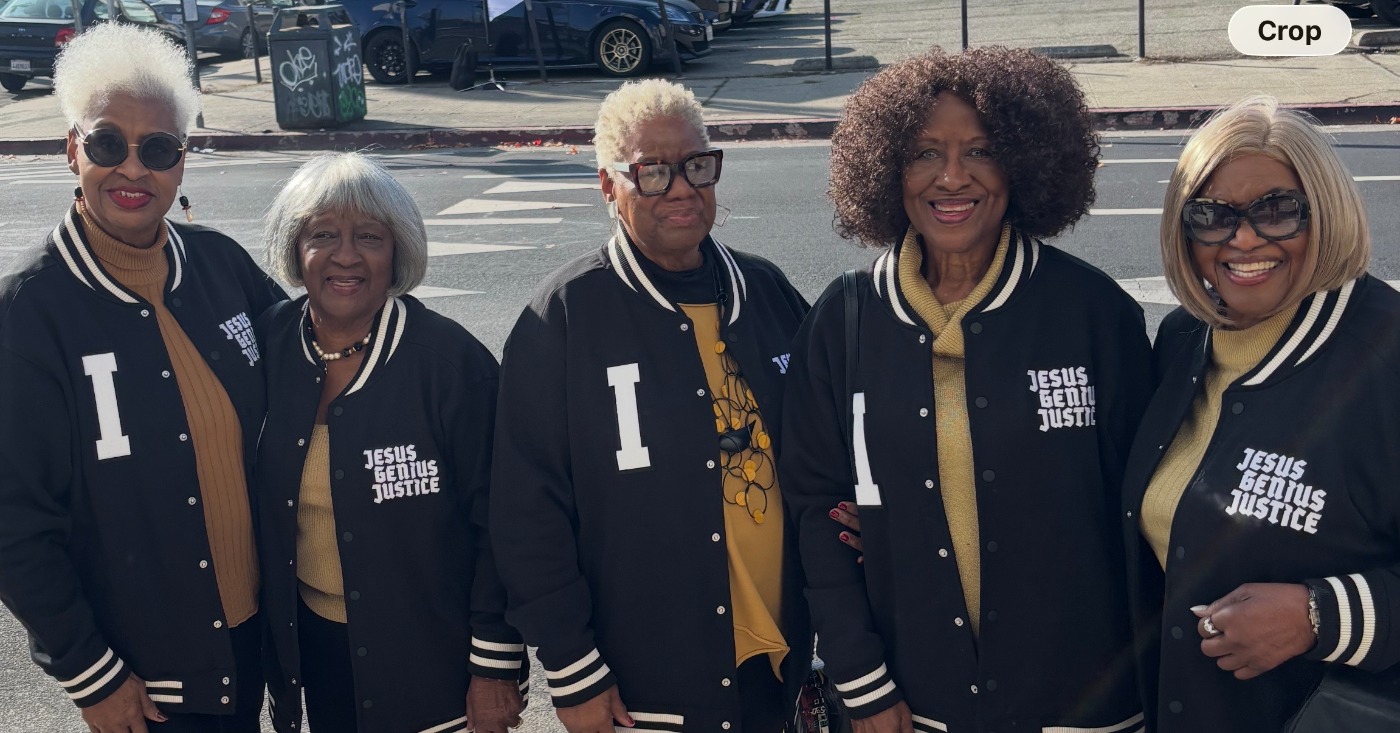
Nuna Phillips-McKee will reach an extraordinary milestone on Sept. 24 —her 100th
birthday, marking a century filled with faith, family, service, laughter and the amazing grace of God.
Born Sept. 14, 1926, in Oakland, Nuna has witnessed a world of change during her lifetime, yet the values that have guided her remain constant: a deep faith in God, devotion to family, a strong work ethic and a heart for serving others.
She enjoyed a distinguished career as a civil servant for more than 40 years, demonstrating the dedication, dependability and strength that have characterized so much of her life.
Nuna’s life has been one of Christian service. A longtime member of Wings of Love Maranatha Ministries, now Incredible Church, she serves as director of Community Services and is actively involved in the church’s Food Ministries.
Through the years, she has continued to help meet the needs of others—not merely with food, but with kindness, compassion and a genuine desire to serve. Her ministry reflects a simple principle by which she lives: when God blesses you, you bless others.
Nuna is the proud mother of one son, whose memory she carries in her heart, and the beloved grandmother of three grandchildren, as well as six great-grandchildren and one great-great-grandchild.
At 100, she has the rare blessing of seeing several generations of her family carrying forward a legacy that began long ago.
She remains the loving, intelligent, witty, and, when the occasion calls for it, delightfully sassy Nuna that her family and friends know so well. Her contagious laugh, quick wit and youthful spirit have endeared her to generations of relatives, church members and friends.
Nuna was born into the large and loving Phillips family of seven sisters and one brother, with bonds that formed in childhood and have remained precious throughout the decades. Their shared love, faith, and family traditions have continued to be a source of joy, strength and countless treasured memories.
As family and friends gather for this special occasion, they will celebrate far more than a number. They will celebrate 100 years of prayers prayed and answered; 100 years of lessons learned and wisdom shared; 100 years of family, faith, laughter and love; 100 years of serving God and serving others.
Most of all, they will celebrate a life that stands as a testimony to God’s faithfulness through every season.
Nuna’s century-long journey can be summed up in the words chosen to commemorate this remarkable occasion: “100 years of God’s amazing grace.”


Port of Oakland, Army Corps Sign Historic Harbor Design Agreement

Democratic Clubs Interview Candidates for Oakland School Board

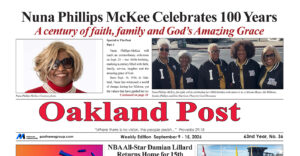
Nuna Phillips-McKee Celebrates 100 Years: ‘A Century of Faith, Family and God’s Amazing Grace!’

D.A. Ursula Jones Dickson: Terminix to Pay $3.15 Million Over Illegal Disposal of Pesticides, Customer Records

REPORT: Community Level Policy Is Impacting Homelessness and Drug Abuse in California

OPINION: AI Needs to Know Who Is the Boss
Goldi-Locs and Two (or Three) Bears in the Forest in California Hills

Election Watch 2026: 85% of Eligible Voters in California Are Registered

Don’t Let scammers Crash Your School Year

BOOK REVIEW — Curved Air: A Biography of Sickle Cell Anemia and the Quest to Cure the First Molecular Disease

California’s Legal Cannabis Market Hits $8 Billion as State Touts Progress on Fighting Drugs, Crime

Blacks and Latinos Clash Over LA’s Barrio Run; Mayor Karen Bass Calls for Dialogue Across Racial, Neighborhood Lines

Asm. Smallwood-Cuevas’s Bill Repealing ‘Racist’ CalWORKs ‘Man-in-the-House’ Rule Clears Legislature

Asm. Smallwood-Cuevas’s Bill Repealing ‘Racist’ CalWORKs ‘Man-in-the-House’ Rule Clears Legislature

‘Ready to See These Bills Become Law’: Sen. Weber’s Package of 15 Bills Advance to Gov. Newsom’s Desk

Department of Homeland Security Demands California Secretary of State Shirley N. Weber Scrub Voter Rolls

“The Power to See Threats Sooner”: Gov. Newsom, Safety Officials Showcase California’s Investments in Hi-Tech Wildfire Prevention

Alpha Kappa Alpha Sorority, Inc. Celebrates New North Atlantic Regional Director

California Sen. Padilla Joins Colleagues to Introduce Bill Imposing Term Limits on Supreme Court Justices

Less Affluent School Districts, Including Sacramento City, Face Threat of State Takeover

Car Wash Workers Cope with Lingering Impacts of ICE Raids

ESSAY: California Can Close Its Colorectal Cancer Gap

Oakland Post: Week of August 5 – 11, 2026

As Part of Your Back-to- School Checklist, Vaccinate

Oakland ‘Port Serves as a Powerful Engine for Good Jobs and Economic Development

Gov. Newsom Signs New Affordable Housing Legislation

Gov. Newsom Announces $109.6 Million in Funding for 278 Supportive Homes in Bakersfield, Contra Costa, Sacramento and Fresno

California Hispanic Chambers of Commerce Unveils: ‘Powering the Future’ Theme for 47th Annual Statewide Convention

Closing the Gap: What the Data and Frontline Experiences Reveal About Cancer in Black California

Congresswoman Simon Demands Investigation into Trump’s Abuse of Emergency Powers for Coal Export Terminal in West Oakland

The Conversation With Al McFarlane 6/23/26

Media Monday 6/22/26

LIVE! ASK ALMA! — TUES. 6.23.26 7PM EST

Car Buying Secrets: 4 Hidden Checks Before You Sign!

Is This 550 HP Charger Worth YOUR Money? AutoNetwork Review

Celebrating Juneteenth – Frederick Douglass on education and resistance

LIVE! — ASK ALMA! — TUES. 6.19.26 7PM EST

Hyundai Ioniq 5 Parking, Safety, and 360 View #shorts

2025 Ioniq 5 New Wiper & Powerful Performance! #shorts

Electric SUV Range: Is 259 Miles Enough? #shorts

EV Charging: How Fast Can You Charge an Electric Vehicle? #shorts

Biometric Cooling… Messaging Seats…Come on! 2025 Infiniti QX80 Autograph 4WD

Charged Up: Witness the Magic of a Fully Electric Car! #shorts

Range Rover Sport PHEV Included…: See What’s Inside This Luxury SUV! #shorts

Invisible Hood View: Perfect Parking with X-Ray Vision! #shorts
-

 Commentary2 weeks ago
Standoff for Justice: Our Homes Are Worth Fighting For
-

 Business2 weeks ago
Gubernatorial Candidate Steve Hilton Blasts California New Tire Rules; Newsom Hits Back
-

 Activism3 weeks ago
Oakland Post: Week of August 26 – September 1, 2026
-

 Education2 weeks ago
Gov. Newsom’s Latest Appointees Include Sacramento Advocate for Formerly Incarcerated Students; State’s New Tech Chief
-

 Business2 weeks ago
Frontier Airlines’ Return to Oakland Airport Brings Flights, Jobs and Opportunity
-

 Business2 weeks ago
Chef Sharon Lee Blends Culinary Excellence, Education and Empowerment
-

 Business2 weeks ago
Oakland Coliseum Project Opens Door for Small Businesses to Build Bigger
-

 Community2 weeks ago
Big City Mayors Ask for “Yes” Vote on Housing Bond Measure; Conservatives Say “No”

Pingback: Some Faith Leaders Victimize Rape Survivors Again | BlackPressUSA
Pingback: Some Faith Leaders Victimize Rape Survivors Again | BlackPressUSA
Pingback: Beyond Survival: Life After Rape | BlackPressUSA
Pingback: Beyond Survival: Life After Rape | BlackPressUSA