
National
Rape’s Other Victims


Tiffany Perry, a child of rape, says that there are no services targeted to people conceived through sexual assault. (Photo by Tiffany Perry)
By Jazelle Hunt
NNPA Washington Correspondent
SECOND IN A SERIES
WASHINGTON (NNPA) – The first time Tiffany Perry learned about her conception, she was too innocent to fully understand the gentle explanation her mother was offering, too young to process such a heavy and complicated behavior.
What she distinctly remembers is watching “Oprah” with her mom a few years later, as a 10-year-old. It was the television episode in which Oprah revealed to the world that she was a rape survivor.
“When [Oprah] said herself, and started crying…my mom just fell apart,” the 39-year-old Jersey City, N.J. native recounted. “I tried to console her, but she was inconsolable. It was just so intense.”
At 15 years old, Perry’s mother was raped by her foster mother’s 21-year-old married son. His wife had invited Perry’s mother into their home to babysit their child and to escape her foster mother’s wrath.
Her foster brother raped her repeatedly for two weeks, sometimes at knifepoint. Despite being a virgin at the time and under the care of the state, few people bothered to inquire about the details of the pregnancy. Plus, the fact that he had threatened to kill her, kept Perry’s mother silent.
“Maybe, as a Black person, they just saw this as another teenage pregnancy, and nobody really asked any questions,” Perry said, trying to explain the unexplainable. “I can’t say with certainty…but I’m thinking that if she was White in a foster home and her belly started to grow, then maybe a flag would’ve went up somewhere and somebody would’ve investigated more as to why this foster child is pregnant.”
In subsequent years, freed by the Oprah episode, Perry’s mother became more forthcoming.
“As I grew up, she told me more details of the attack. It was like she had been carrying this around the whole time.”
But opening that door triggered another set of emotions in Perry.
“I went through different feelings of inadequacy, feeling like I had to overcompensate because I was a child of a rape. Even now, when I say the word ‘inadequate,’ I get choked up,” she said, her voice trembling with emotion.
“My mom was awesome, she never talked down to me….my mom always praised me, always gave me love,” Perry said. “But I felt like…I owed it to her to be perfect so she doesn’t feel like keeping me was a mistake.”
And there was the question of what she would say when asked about her father. Perry chose to say that he was dead, that he had left, or that she didn’t know him, depending on the questioner. But even while denying his existence, there was also a deep craving to know about this man, wherever he was.
Wanted to know her roots
More than anything else, she did not want her mother to feel badly.
“I didn’t rape her, but when I was younger, I used to feel like it was my fault,” she recalled. “The dreams that she probably could have fulfilled – if she had stayed that innocent virgin who wanted to be a lawyer – she wasn’t going to be able to fulfill those because I was here.”
Instead of pursuing her dreams, Perry’s mother had to shift her focus, looking after the needs of an infant rather than look forward to a career as an attorney.
“Sometimes she was a little more paranoid than I would think is regular,” Perry said. “When I was growing up my mom was so strict, or smothering, when it came down to me, particularly.”
Once, her mother sent her to the corner store for a few items. There, she ran into a family friend, an older man. He offered to buy her something – she chose cookies – and they parted ways.
She thought nothing of it – until her mother went into a rage.
“She flew off the handle. She beat me with an extension cord. And she told me, ‘Don’t ever accept anything from a man, they can’t be trusted, you don’t know their intentions.’ I’m six. I don’t have a clue what she is talking about.
“She cried. When I got older and reminded her about the incident, she explained to me that she didn’t trust anybody, she didn’t trust any man. And she wanted me to be extra careful. She wanted to put that fear in me.”
It instilled both fear and confusion, blurring the lines of what was acceptable with the boys and men in her world.
“It’s just assumed whenever a woman gets raped, she never gets pregnant, or if she does get pregnant, the child is automatically aborted or adopted,” she said. “There’s this group of people who’ve been conceived by rape and nobody ever discusses us. I want to talk about it because we exist. I exist.”
Unresolved trauma
Philadelphia-based author, activist, and scholar Ewuare Osayande wasn’t born of this violence, but also grew up in its shadow.
His mother spent her childhood at the mercy of a sexually abusive stepfather. The oldest of eight children, she was the only one who was not his blood-relative. The abuse was the family’s open secret. She grew up to date, marry, and divorce abusive men.
Justice Department data show that Black women are more likely than their White counterparts to be assaulted, sexually and otherwise by strangers and by family members.
“It was never the case where my mother cowered in the face of her abuse. She didn’t hold her tongue, she always spoke her mind,” Osayande said.
Today, Osayande is the creator of Project ONUS: Redefining Black Manhood, a series of anti-sexist workshops for Black men. It took time and life experiences before he was able to connect the dots and realize how his mother’s abuse – some he had witnessed, some he had not – had affected his own development.
“That processing has been life-long,” he explained. “I’m a divorcée. In that relationship, I found myself becoming like the men I swore for years I would never be. It never got to the point where I became physically abusive, but certainly emotionally abusive.”
As the son of a rape and abuse survivor, and as a formerly abusive person, he also realized he had to address his own internal conflicts and beliefs.
“It’s been a very real, clear determination on my part to make sense of the life I’ve experienced as a Black man, in a gendered way,” he explained. “It’s been my desire to become an effective ally in that struggle, in that engagement in the world in which Black women exist, and experience.”
Secondary survivors need help
In the sea of services for survivors, most resources geared toward family and friends coach them on how to best support the survivor in their life. Although crisis centers and hotlines are equipped to aid and counsel family and friends of survivors, few resources address the challenges these relatives face.
The book, I Will Survive: The African American Guide to Healing from Sexual Assault and Abuse, cites a study that draws parallels between the emotions of boyfriends and husbands of women who have been sexually assaulted, and the wives and girlfriends of war veterans.
“Not surprisingly, past or recent sexual trauma can present unique challenges for the survivor’s partner,” writes Lori Robinson, author of the book. “You are a victim too. Some experts call you the secondary victim. After all you are experiencing many of the same emotions sexual assault victims feel.”
Tiffany Perry’s breaking point came about 20 years ago. A probation officer contacted her out of the blue, looking for her father. He had given her name and birthdate as his next-of-kin. She learned that not only did he know about her, but he knew where she lived. To this day, the two live less than an hour apart. She has never contacted him, but has learned a bit about his life via a cousin and aunt on Facebook.
Perry’s mother remains her primary source of support.
“When I went to go look for support groups for children of rape victims or children conceived out of rape, they’re pretty much nonexistent,” Perry says. “[Rape] is so common we don’t even cringe when we hear about it. Rape is inhumane, and people are not treating it like it’s inhumane. They just treat it like ‘Well, it happens.’”
NEXT WEEK: Should we have faith in the faith community?
PART I: Rape and the myth of the “Strong Black Woman”
(The project was made possible by a grant from the National Health Journalism Fellowship, a program of the University of Southern California Annenberg School for Communication and Journalism.)
###


Arts and Culture
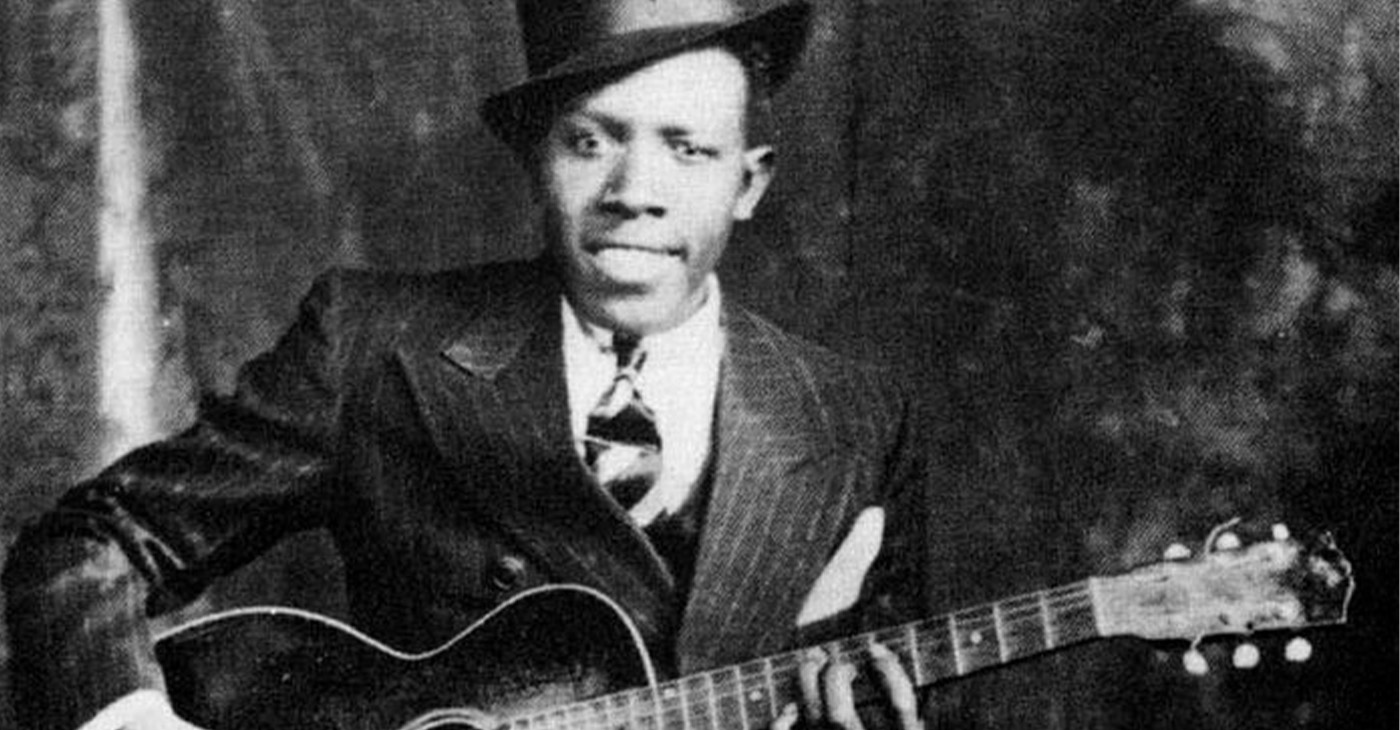
COMMENTARY: Black Music is the Sound of Black Freedom: Let Us Reclaim Both This Juneteenth
Black Music Month started when Black Music Association members Ed Wright, Kenny Gamble and his wife, journalist and radio host Dyanna Williams were able to persuade President Jimmy Carter to establish the observation on June 7, 1979.
By Wanda Ravernell
Black Music Month and Juneteenth are inextricably linked – Black music is the sound of our freedom.
From the plaintive moans of the enslaved Africans’ ‘sorrow songs,’ to the fields of Civil War battle where Black soldiers picked up abandoned bugles, to the upright piano played in juke joints on Saturday night and churches come Sunday morning, our ancestors’ innovation in the face of want, fear, degradation, and hopelessness has yielded genres of music imitated ’round the world.
Black Music Month started when Black Music Association members Ed Wright, Kenny Gamble and his wife, journalist and radio host Dyanna Williams were able to persuade President Jimmy Carter to establish the observation on June 7, 1979.
In 2000, Congress made it official. In 2009, Pres. Barack Obama changed the name to African American Music Heritage Month and in 2023, Pres. Joe Biden changed it back to Black Music Month, two years after he declared Juneteenth a national holiday, the result of a movement led by Opal Lee.
Our ancestors battle for freedom over these last 400 years and the music that allowed them expression of their humanity deserved to be honored.
But we may be losing sight of the value of their sacrifices.
‘Sing a Song Full of the Faith That the Dark past Has Taught Us…’
Along with the long-known exploitation of Black musicians whose recordings were stolen by record companies, the commercialization of Juneteenth feels like another kind of theft.
I had never heard of Juneteenth until I moved to the Bay Area from my hometown of Philadelphia. I didn’t know it was one of many freedom festivals celebrated by descendants of enslaved people in the United States.
Emancipation Day was Jan. 1 in Pennsylvania, April 16 in Wash., D.C., May 20 in Florida, and Aug. 8 in Kentucky. But Juneteenth, June 19, has the most renown, known in Texas as the ‘colored peoples’ Fourth of July.’
It was marked by parades, beauty pageants, rodeos, backyard barbecues and church picnics.
Yes, church.
The formerly enslaved began the day praying in thanks for their freedom just as they had prayed for Jubilee – the day of freedom – when they had chains on their feet and hands. They ‘testified’ about their past suffering and how they had managed to overcome.
And they sang.
Although, we will not hold it this year, Omnira Institute’s Juneteenth Ritual of Remembrance recalled this part of Juneteenth with prayers in the languages of the African captives. In the middle of the ceremony, a soloist would lead us in singing “Many Thousand Gone” while we took turns reciting portions of the Emancipation Proclamation, the news of freedom that took more than two years to reach Texas – two months after the Civil War ended.
“Many Thousand Gone” was famously recorded by Black luminary Paul Robeson in 1947:
“No more auction block for me,
No more, no more
No more auction black for me
Many thousand gone.”
Other verses refer to the ‘pint of salt’ and the ‘driver’s lash,’ the realities of enslavement that they had survived.
‘Sing a Song Full of the Hope That the Present has Brought Us’
All of the genres of African American music have at their root songs like that, the essence being, as Stevie Wonder, wrote, “the joy inside our pain.” So Black music is not just music. It is our story, our history, our very strength.
During the Civil Rights Movement, which peaked 100 years after slavery ended, the people testified that it was the freedom songs – based on spirituals – that gave them the heart to march, face attack dogs, fire hoses, beatings, and shootouts with vigilantes.
The music reminded them that power was in the people. That music, our music, can do so again. We don’t have to accept the commodification of the products of our culture.
The power of those songs is showing a resurgence across the South as we battle again for the right to self-determination through the ballot box.
Those songs are the voices of our ancestors, voices forged in their blood, their sweat, their tears, joy and, above all, faith. Those songs, those prayers live in our blood and our very breath.
This Juneteenth, let us reclaim those holy voices expressed in Black music for ourselves. It is our birthright. It can neither be bought nor sold. No more. Never again.
Wanda Ravernell is the executive director of Omnira Institute, sponsor for 18 years of the Juneteenth Ritual of Remembrance and Oakland’s 11th Annual Black-Eyed Pea Festival, which will take place on Sept. 12.
Activism
Oakland Post: Week of June 3 – 9, 2026
The printed Weekly Edition of the Oakland Post: Week of June 3 – 9, 2026
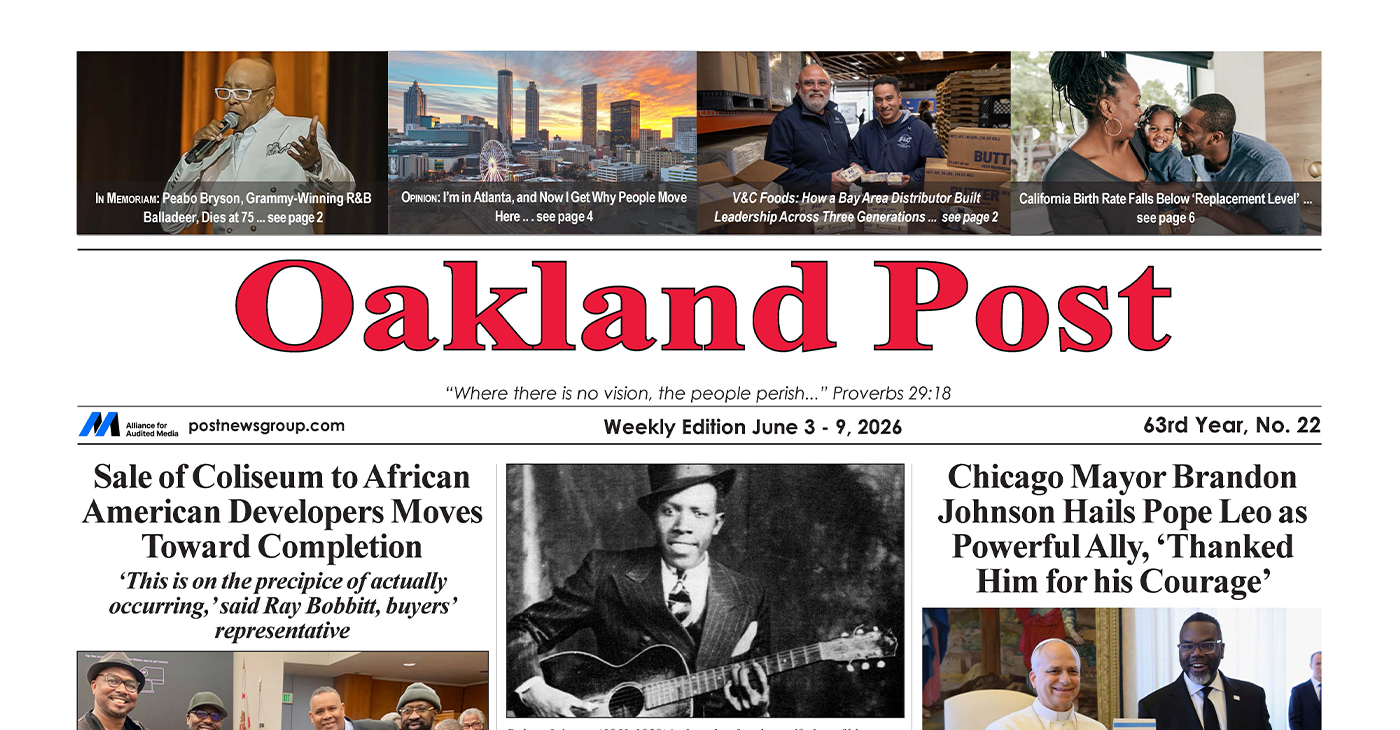
To enlarge your view of this issue, use the slider, magnifying glass icon or full page icon in the lower right corner of the browser window.
#NNPA BlackPress
Study: Waiting Lists for Child Care Assistance Nearly Doubled
BLACKPRESS USA NEWSWIRE — “Since the expiration of tens of billions of dollars in federal child care funding in 2023 and 2024, an already fragile child care system has been pushed even closer to the brink.”
The post Study: Waiting Lists for Child Care Assistance Nearly Doubled appeared first on BlackPressUSA.

By National Women’s Law Center
The National Women’s Law Center released its annual State Child Care Assistance Policies report, finding that the number of children placed on waiting lists for federally funded child care assistance nearly doubled between 2024 and 2025 — and that number has only continued to grow.
The report serves as a key resource for state lawmakers, advocates, and policymakers by tracking state child care assistance policies and identifying where states are strengthening support for families and early educators — or falling behind.
“This deeply troubling increase in the number of children on child care waiting lists is the result of a failure to invest in this crucial sector,” said Karen Schulman, senior director of state child care policy and author of the report. “Since the expiration of tens of billions of dollars in federal child care funding in 2023 and 2024, an already fragile child care system has been pushed even closer to the brink.”
Key findings in the report related to waiting lists for child care assistance include:
• 17 states had waiting lists or a freeze on intake for child care assistance in February 2025, up from 13 states in February 2024.
• Approximately 106,700 children nationwide were added to waiting lists between February 2024 and February 2025, bringing the total to 225,500 children in February 2025 — a 90 percent increase compared to February 2024.
• The numbers climbed even further between February 2025 and summer/fall 2025, with more than 175,000 additional children added to state waiting lists in just a few months — a 78 percent increase.
• At least seven states newly began placing families on waiting lists or freezing intake, while at least 10 additional states saw their waiting lists grow, after February 2025.
The report also includes state-by-state data on key child care assistance policies, including income eligibility limits, parent copayments, provider payment rates, and eligibility policies for parents searching for work.
Click the link to learn more: Warning Signs: State Child Care Assistance Policies 2025.
The post Study: Waiting Lists for Child Care Assistance Nearly Doubled appeared first on BlackPressUSA.

WORK FROM HOME
Home-based business with potential monthly income of $10K+ per month. A proven training system and website provided to maximize business effectiveness. Perfect job to earn side and primary income. Contact Lynne for more details: Lynne4npusa@gmail.com 800-334-0540


COMMENTARY: Black Music is the Sound of Black Freedom: Let Us Reclaim Both This Juneteenth

Oakland Post: Week of June 3 – 9, 2026

Study: Waiting Lists for Child Care Assistance Nearly Doubled

Venus Williams Calls a Sabalenka Exit a Tragedy

COMMENTARY: Using Art, Healing, And Community to Transform Mental Health Dialogue

Uptown Music Theatre Summer Camp Returns to Inspire the Next Generation of Performers

5 Cleveland Police Officers Injured, Gunfire Erupts During East Side Pursuit

15-YEAR-OLD COLUMBUS GIRL DIES, Community Mourns as Authorities Urge Water Safety Awareness

Let’s Talk Karmelo Anthony!

2026 World Cup is Here and Atlanta is Ready For It

COMMENTARY: What Andrew Young Reminded Me About Baltimore

COMMENTARY: When Politics Intersects with Professional Sports

K4: Crucial Driving Advice BEFORE You Buy! #shorts
The Conversation with Al McFarlane – MINNESOTANS ORGANIZING FOR CHANGE
Negotiate Car Add-Ons: Don’t Get Ripped Off! #shorts

Book Review: Books for College-Bound Students

Against All Odds: Mary Jackson’s Journey to NASA Engineer

Q&A with Steven Bradford: Why He Wants Your Vote for California Insurance Commissioner

Up to the Job: How San Francisco’s PRC Is Providing Work Opportunities That Turn Into Lasting Stability

OPINION: The Fire of Oakland’s Justin Jones

The Marin City Flea Market Is Back

California Launches Free Diaper Program for Newborns Statewide

EBMUD Enshrines the Legacy of its First Black Board Member William ‘Bill’ Patterson

The Ladies of Delta Sigma Theta Hold Day of Advocacy at the Capitol in Sacramento

OP-ED: Small Businesses Need Minnesota to Act on Pass-Through Tax Policy

Oakland Post: Week of May 6 – 12, 2026

Snoop Dogg Celebrates 10 Til’ Midnight at the Compound

2026 Lucid Air Grand Touring Review — Is This $136K EV Sedan Worth It?

Oakland Mayor Pushes Charter Overhaul to Clarify Roles in City Government, Increase Accountability and Improve Service Delivery

Marin City Public Housing Residents Demand a Voice in County’s Renovation Plans

Hyundai Ioniq 5 Parking, Safety, and 360 View #shorts

2025 Ioniq 5 New Wiper & Powerful Performance! #shorts

Electric SUV Range: Is 259 Miles Enough? #shorts

EV Charging: How Fast Can You Charge an Electric Vehicle? #shorts

Biometric Cooling… Messaging Seats…Come on! 2025 Infiniti QX80 Autograph 4WD

Charged Up: Witness the Magic of a Fully Electric Car! #shorts

Range Rover Sport PHEV Included…: See What’s Inside This Luxury SUV! #shorts

Invisible Hood View: Perfect Parking with X-Ray Vision! #shorts

AI Is Reshaping Black Healthcare: Promise, Peril, and the Push for Improved Results in California

ESSAY: Technology and Medicine, a Primary Care Point of View

Sanctuary Cities

The RESISTANCE – FREEDOM NOW

STATE OF THE PEOPLE: Freddie

ECONOMIC BOYCOTT DAY!!!!!

I told You So
-
 Advice3 weeks ago
Book Review: Books for College-Bound Students
-
 Arts and Culture4 weeks ago
Against All Odds: Mary Jackson’s Journey to NASA Engineer
-
 Bay Area3 weeks ago
Q&A with Steven Bradford: Why He Wants Your Vote for California Insurance Commissioner
-
 Activism3 weeks ago
OPINION: The Fire of Oakland’s Justin Jones
-
 Alameda County4 weeks ago
The Marin City Flea Market Is Back
-
 Activism3 weeks ago
California Launches Free Diaper Program for Newborns Statewide
-
 Activism3 weeks ago
The Ladies of Delta Sigma Theta Hold Day of Advocacy at the Capitol in Sacramento
-
 Activism4 weeks ago
EBMUD Enshrines the Legacy of its First Black Board Member William ‘Bill’ Patterson

Pingback: Some Faith Leaders Victimize Rape Survivors Again | BlackPressUSA
Pingback: Some Faith Leaders Victimize Rape Survivors Again | BlackPressUSA
Pingback: Rape and the Myth of ‘The Strong Black Woman’ | BlackPressUSA
Pingback: Rape and the Myth of ‘The Strong Black Woman’ | BlackPressUSA