
Opinion
The Lie About Voter Fraud Is The Real Fraud

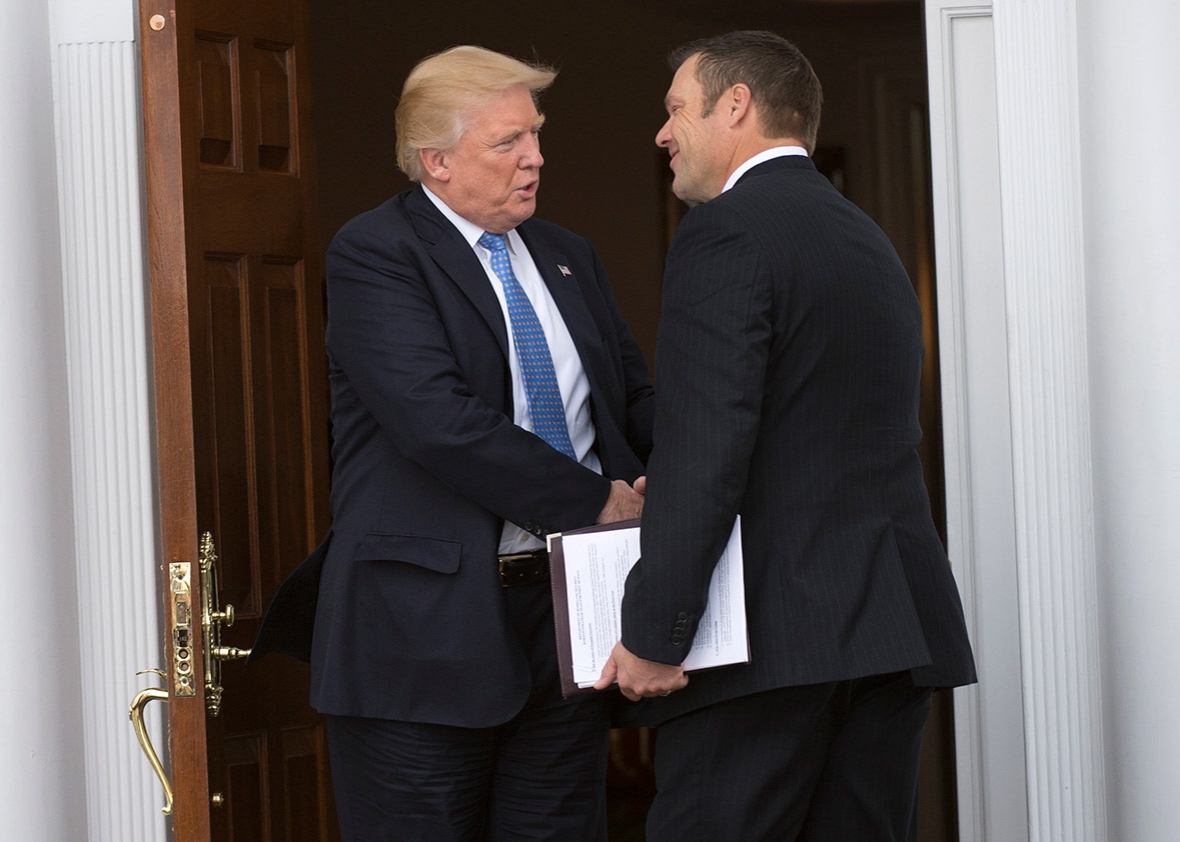
After President Donald Trump fired FBI Director James Comey because of, as Trump admitted, the “Russian thing,” he struck a new blow to American democracy: He created a commission on “election integrity,” stemming from his fantastical claims of voter fraud in the 2016 election.
In reality, fraudulent voting is virtually nonexistent. The claims of widespread voter fraud are a fraud. Voter suppression, on the other hand, is a real, present and increasing threat to our democracy. And all signs are that Trump’s commission will add to that threat.
Trump named Vice President Mike Pence as chair, with Kansas Secretary of State Kris Kobach, a leading advocate of ballot-restricting legislation, as vice chair. Kobach has made a national spectacle of himself as a crazed pursuer of mythical voter fraud. In Kansas, Kobach has led Republican efforts to suppress the vote.
As Ari Berman of the Nation reports, Kobach claimed that “the illegal registration of alien voters has become pervasive,” although he could point to only five alleged cases of noncitizens voting in Kansas during the previous 13 years.
Kobach helped push through a law that required documentary proof of citizenship to register to vote, such as a birth certificate, a passport or naturalization papers. That requirement disproportionately impacts the elderly, the poor and the young, who often don’t have access to such papers. Since the law went into effect in 2013, Berman reports, “one in seven Kansans who attempted to register have had their registrations held ‘in suspense’ by the state.”
To solve the non-problem of voter fraud, in 2015 Kansas gave Kobach the power to prosecute such cases. So far, he’s convicted nine people. Only last month did he convict his first and only noncitizen for voting fraud. The Kansas City Star has noted the paltry results Kobach has to show for his unique prosecutorial powers, mocking him as the “Javert of voter fraud,” a reference to the obsessed police inspector of “Les Miserables.”
Now Kobach will be the driving force leading Trump’s commission. Its purpose, no doubt, will be to cry wolf about voter fraud and push more states to pass harsh legislation to suppress the vote.
Unlike voter fraud — which every independent study shows is essentially a myth — voter suppression is real and growing. The most significant outside factor in the 2016 campaign was not the scattered cases of voter fraud, or Putin’s hacking, or even former FBI Director Comey’s interventions. The most significant factor was the suppression of the vote — particularly the black vote — in North Carolina, Philadelphia, Detroit and Milwaukee. As Berman has argued, federal court records show that “300,000 registered voters, 9 percent of the electorate, lacked strict forms of voter ID in Wisconsin.” A recent study by Priorities USA, a Democratic PAC, estimated that Wisconsin’s harsh voter ID laws “reduced turnout by about 200,000 votes” — disproportionately black votes. Trump won the state by 22,748 votes.
The 2016 election was the first in 50 years without the full protections of the Voting Rights Act. Fourteen states had new voting restrictions in effect for the first time. Now Berman reports, 87 bills to restrict access to the ballot have been introduced in 29 states this year. Arkansas and Iowa have already passed strict voter-ID laws.
Republicans claim these laws are needed to stop voter fraud, but, again, the claims of voter fraud is the fraud. These bills are being pushed because they make it harder for certain communities to vote — and Republicans benefit when they vote in smaller numbers.
When politicians can pick their voters — by voter suppression laws, by gerrymandering, by big money campaigns — rather than voters picking their leaders, democracy is mocked. Political leaders in both parties should be pushing to make it easier, not harder, to vote. Instead, voter suppression has become a partisan weapon. Our very democracy is under assault.










Activism
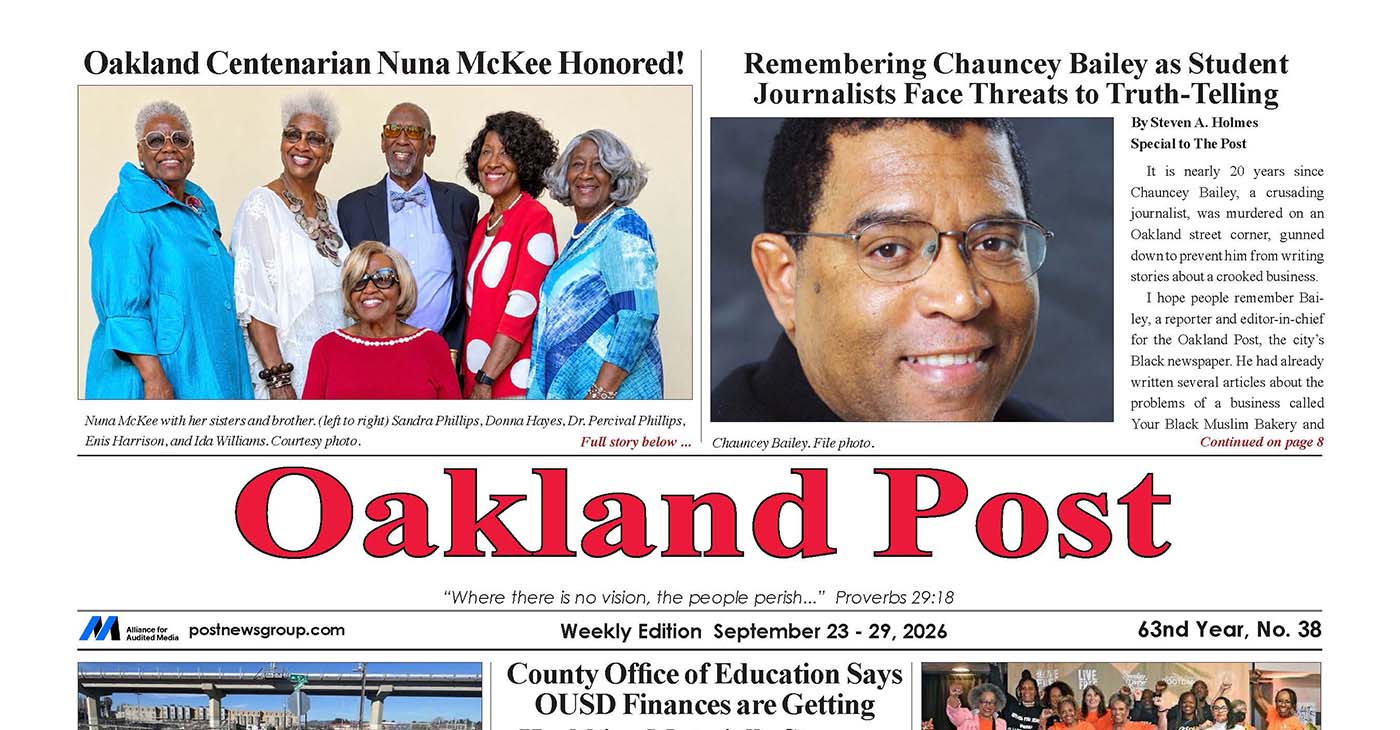
Oakland Post: Week of September 23 – 29, 2026
The printed Weekly Edition of the Oakland Post: Week of September 23 – 29, 2026
To enlarge your view of this issue, use the slider, magnifying glass icon or full page icon in the lower right corner of the browser window.
Activism
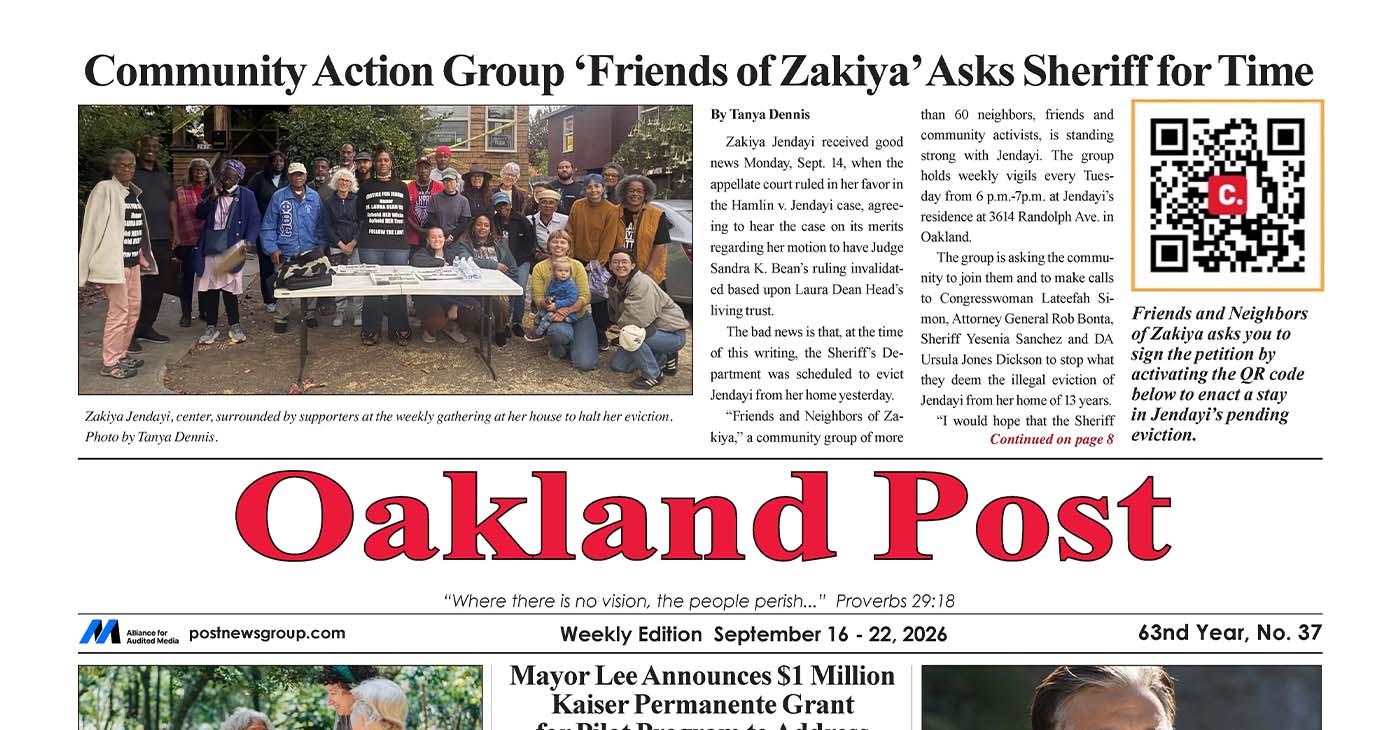
Oakland Post: Week of September 16 – 22, 2026
The printed Weekly Edition of the Oakland Post: Week of September 16 – 22, 2026
To enlarge your view of this issue, use the slider, magnifying glass icon or full page icon in the lower right corner of the browser window.
Activism
Oakland Post: Week of September 9 – 15, 2026
The printed Weekly Edition of the Oakland Post: Week of September 9 – 15, 2026

To enlarge your view of this issue, use the slider, magnifying glass icon or full page icon in the lower right corner of the browser window.


Asm. Corey Jackson Announces Launch of 24-Hour Childcare in His District

IN MEMORIAM: The Rev. Leon “Sonny” Clark, Longtime Orange County Pastor and Community Leader, Dies at 72

Poll: Becerra Widens His Lead Over Hilton; Californians Split on Wealth Tax

From Historic Memories to New Possibilities: Oakland Celebrates Coliseum 60

County Office of Education Says OUSD Finances Are Getting Healthier, Materially Stronger

LIVE FREE Sunday Dinner Brings Faith, Fellowship and Civic Conversation to Oakland

Remembering Chauncey Bailey as Student Journalists Face Threats to Truth-Telling

BLACspace Cooperative Invites Bay Area to Experience Oakland’s Black Cultural Ecosystem Through a BLAC Map Tour + Party

In Wake of Death on Doorstep, Williams Chapel Baptist Church Calls for Better Care, Funding for Unhoused

Oakland Centenarian Nuna McKee Honored!

Caribbean Nations Produce Action Plan Calling for UK Reparations Over Slavery

Oakland Post: Week of September 23 – 29, 2026

Doulas Are Helping Black California Moms Navigate Pregnancy–Even as High Mortality Rates Persist

Newsom Signs Addictive Social Media Law to Protect Kids

On Your November Ballot: Prop 38 Would Allocate $8.4 Billion to Immunology and Immunotherapy Funding

Standoff for Justice: Our Homes Are Worth Fighting For

Oakland Post: Week of August 26 – September 1, 2026

Frontier Airlines’ Return to Oakland Airport Brings Flights, Jobs and Opportunity

Gubernatorial Candidate Steve Hilton Blasts California New Tire Rules; Newsom Hits Back

Chef Sharon Lee Blends Culinary Excellence, Education and Empowerment

Jackie Wright Champions Bay Area Stories, Filmmakers and Cultural Institutions

Big City Mayors Ask for “Yes” Vote on Housing Bond Measure; Conservatives Say “No”

Oakland Coliseum Project Opens Door for Small Businesses to Build Bigger

Gov. Newsom’s Latest Appointees Include Sacramento Advocate for Formerly Incarcerated Students; State’s New Tech Chief

Misnamed ‘Parent’ PAC Seeks to Influence Oakland School Board Elections

Longtime BWOPA Member Brendalyn Goodall Appointed to California Workforce Development Board

Gov. Newsom Signs Law Shielding Immigration Aid Workers From Doxing Threats

Secretary of State Shirley N. Weber Urges Californians to Vote Early as Voter ID Battle Intensifies

Oakland Post: Week of September 2 – 8, 2026

IN MEMORIAM: Dolly Parton Dead at 80 — How She Built a Legacy of Love and Earned Her Place in Black Culture

The Conversation With Al McFarlane 6/23/26

Media Monday 6/22/26

LIVE! ASK ALMA! — TUES. 6.23.26 7PM EST

Car Buying Secrets: 4 Hidden Checks Before You Sign!

Is This 550 HP Charger Worth YOUR Money? AutoNetwork Review

Celebrating Juneteenth – Frederick Douglass on education and resistance

LIVE! — ASK ALMA! — TUES. 6.19.26 7PM EST

Hyundai Ioniq 5 Parking, Safety, and 360 View #shorts

2025 Ioniq 5 New Wiper & Powerful Performance! #shorts

Electric SUV Range: Is 259 Miles Enough? #shorts

EV Charging: How Fast Can You Charge an Electric Vehicle? #shorts

Biometric Cooling… Messaging Seats…Come on! 2025 Infiniti QX80 Autograph 4WD

Charged Up: Witness the Magic of a Fully Electric Car! #shorts

Range Rover Sport PHEV Included…: See What’s Inside This Luxury SUV! #shorts

Invisible Hood View: Perfect Parking with X-Ray Vision! #shorts
-
 Community3 weeks ago
Misnamed ‘Parent’ PAC Seeks to Influence Oakland School Board Elections
-
 Activism4 weeks ago
Oakland Post: Week of September 2 – 8, 2026
-

 Community3 weeks ago
Richmond Tiny House Village Farm & Garden Set to Open Gates on Sept. 26
-

 Activism3 weeks ago
Oakland Post: Week of September 9 – 15, 2026
-

 Black History3 weeks ago
Latest Massacre in Haiti Reveals Cruelty U.S. Deportations
-

 Black History3 weeks ago
OPINION: Nolan Wells’ Death One of Several Signifying Racial Terror Lives on in U.S. South
-

 Community3 weeks ago
Democratic Clubs Interview Candidates for Oakland School Board
-

 Business2 weeks ago
Mayor Lee Announces $1 Million Kaiser Permanente Grant for Pilot Program to Address Homelessness, Clean Up Public Spaces throughout Oakland
