
Lifestyle
‘The Cover Magazine’ Launch Exclusive Reveal and Red Carpet Celebration
THE TENNESSEE TRIBUNE — The Cover magazine will provide you with its compelling content of beauty, fashions, entertainment, real life issues, healthy lifestyles, celebrity news, rising stars and dreamers. The Cover magazine has also been produced to market and promote business owners; especially women own businesses.

MEMPHIS, TN — Welcome to the premier issue of The Cover Magazine.
We are very excited to present this new monthly magazine to you and hope that it is inspiring, motivating, educational and entertaining. The Cover magazine will provide you with its compelling content of beauty, fashions, entertainment, real life issues, healthy lifestyles, celebrity news, rising stars and dreamers. The Cover magazine has also been produced to market and promote business owners; especially women own businesses.
Our vision and main focus will be on the real lifestyles of business owners, models, singers, dancers and others who are in the fashion and entertainment industry that dreamed of one day being on the cover of a magazine.
I would like to take a moment to thank our staff and dream team for their contribution and hard work to launch this magazine.

To our readers, advertisers, subscribers and fans, this magazine has been published and produced with you in mind. It’s for real, a dream magazine that comes alive at your fingertips; when you open the first issue of The Cover magazine it is our sincere hope that you are inspired and motivated to become one of our advertisers, subscribers, fans, supporters or contributors who enjoy reading and dreaming of a dream that can be made a reality.
For more information about Anner J. Echols or Dreamland Productions please visit https://www.ajedreamland.co/ or call (901) 650-4955.
This article originally appeared in The Tennessee Tribune.














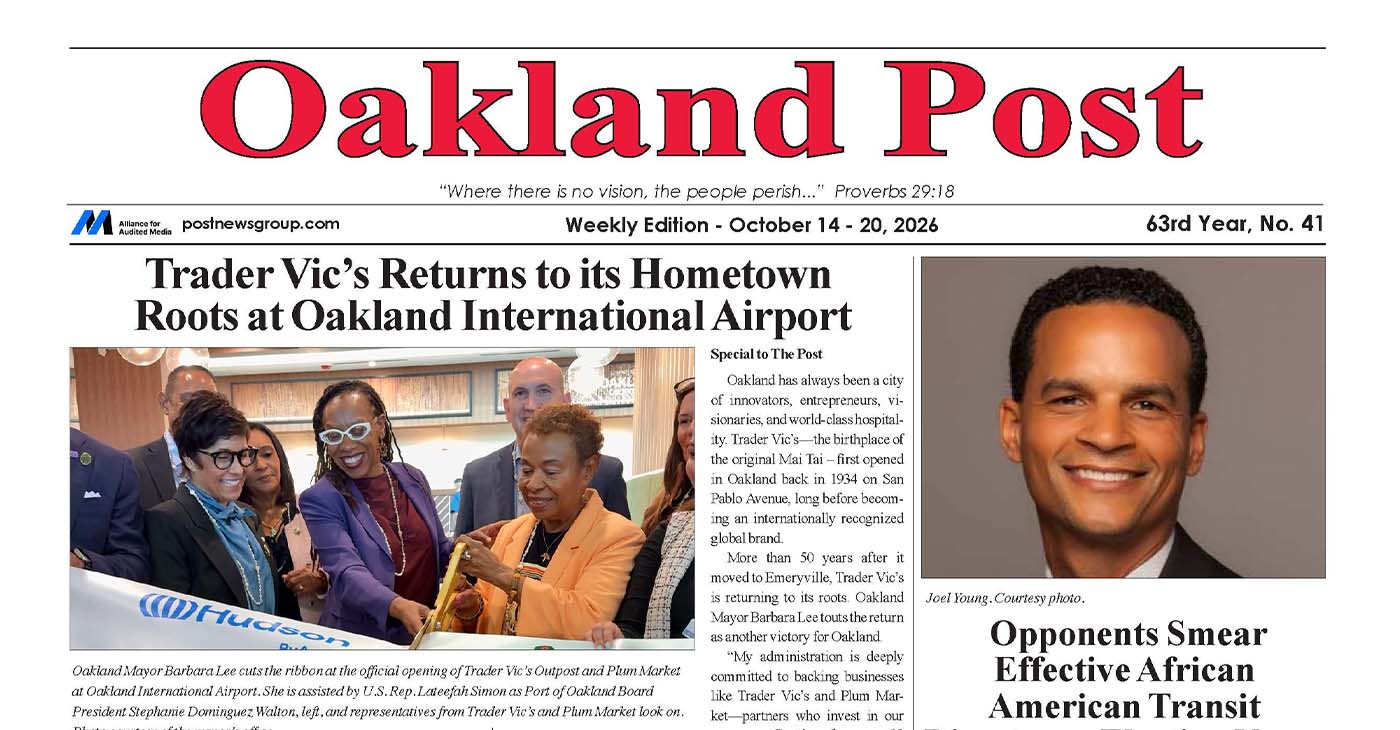
To enlarge your view of this issue, use the slider, magnifying glass icon or full page icon in the lower right corner of the browser window.

Business
Four Tips to Help You Plan a Holiday “Staycation”
“A great staycation starts when you treat your hometown like a destination – book one ‘anchor’ experience, stay somewhere that changes your scenery, and leave room for a little spontaneity,” said Steve Orens, President of FROSCH by Chase Travel, a leading travel agency. “My favorite staycation tip is to make it easy on yourself: choose a walkable area, plan one highlight each day, and let the hotel do the heavy lifting – warm beds, quick breaks, and fewer logistics.”


Holiday travel can be exciting, but between costs, crowded airports and packed schedules, sometimes the idea of staying home can be much more appealing.
If you still want to get away without the hassle of an actual getaway, consider a holiday staycation.
By remaining close to home, you can experience your city from a fresh perspective without the stress of a long trip. Whether you book a night at a local hotel, check out a new neighborhood or just finally get around to seeing that landmark attraction that’s been on your to-do list, you can make staying at home feel like a real getaway.
Here are four tips you can use to create an amazing holiday at home this season:
1. Treat your hometown like a destination
One common theme surrounding area attractions is that they’re more likely to be packed with tourists than locals. If that popular museum, tour or other institution is always “there,” it can be easy to avoid it and say you’ll get there eventually.
A staycation provides a great opportunity to approach those kinds of places like a tourist. Start by making a short list of places or experiences you’ve always wanted to try but never seem to prioritize. You might include a museum, holiday market, historic site, restaurant or neighborhood, or you might attend a holiday-related performance that’s an annual late fall or winter tradition in your area.
“A great staycation starts when you treat your hometown like a destination – book one ‘anchor’ experience, stay somewhere that changes your scenery, and leave room for a little spontaneity,” said Steve Orens, President of FROSCH by Chase Travel, a leading travel agency. “My favorite staycation tip is to make it easy on yourself: choose a walkable area, plan one highlight each day, and let the hotel do the heavy lifting – warm beds, quick breaks, and fewer logistics.”
2. Spend the night away
A hotel stay can provide a change of scenery that makes you feel like you’re enjoying a getaway.
Consider a traditional hotel, bed and breakfast or rental property where you can walk to restaurants, shopping, entertainment or holiday activities. An upscale hotel can also be the centerpiece of your staycation, allowing you to enjoy fine dining, a fitness center, spa services or other on-site experiences.
If you want a quieter, more relaxed experience, find a hotel “off the beaten path,” but still close to home, to enjoy the rhythms and sounds of nature.
3. Be flexible
If your schedule allows, plan your staycation for a weekday or less crowded period — like the days between Christmas and New Year’s Eve — rather than a peak weekend. Hotel rates in the middle of the week tend to be cheaper, and it might be easier to grab a restaurant reservation or performance tickets. Locations might be less crowded as well during the week, making it easier to get around.
Book some experiences in advance to save money but stay open to spontaneous opportunities once you arrive. You might find some great last-minute deals.
4. Try something new
Even if you think you’ve seen everything your hometown has to offer, there’s always something new to explore or discover.
Check out a neighborhood you usually drive through and visit the local shops and other businesses. You can also try a new cuisine at a neighborhood restaurant or kitchen.
Sometimes what’s old can be new again during the holiday season, so if you want to go back to your favorite restaurants and other popular spots, do so with fresh eyes. Order from the eatery’s holiday menu or take a walk when lights, decorations and seasonal programming transform many communities.
Other helpful tips
Although staying at home can eliminate major travel costs, expenses can still add up quickly. Make a staycation budget and then consider ways to help keep costs down.
“A ‘smart’ staycation is one you can pay for comfortably: choose dates with better rates, book flexible options, and keep a small buffer for surprises,” added Orens. “The goal of a staycation is a real reset. Even if you’re close to home, give yourself permission to unplug and find moments to treat yourself – say yes to room service, a spa hour, or a new restaurant you’ve been saving for ‘someday.’”
If you have rewards points from credit cards or loyalty programs, put them toward your hotel to get a free or cheaper night’s stay. Local museums, cultural institutions and attractions often have resident discounts, reduced-price admission days or seasonal offers. Community calendars can provide information about free or low-cost events like holiday concerts, light displays, markets, park activities and other events. If a performance doesn’t normally sell out, wait until the day before or day of to buy tickets, as prices are often reduced and you can find great seats.
With a little creativity, you might find everything you’d want in a holiday vacation. You can enjoy good food, new experiences and an escape from your daily routine – all right at home.
For more financial health tips, visit https://www.chase.com/travel/guide.
For informational/educational purposes only: Views and strategies described in this article or provided via links may not be appropriate for everyone and are not intended as specific advice/recommendation for any business. Information has been obtained from sources believed to be reliable, but JPMorgan Chase & Co. or its affiliates and/or subsidiaries do not warrant its completeness or accuracy. The material is not intended to provide legal, tax, or financial advice or to indicate the availability or suitability of any JPMorgan Chase Bank, N.A. product or service. You should carefully consider your needs and objectives before making any decisions and consult the appropriate professional(s). Outlooks and past performance are not guarantees of future results. JPMorgan Chase & Co. and its affiliates are not responsible for, and do not provide or endorse third party products, services, or other content.
Deposit products provided by JPMorgan Chase Bank, N.A. Member FDIC. Equal Opportunity Lender.
© 2026 JPMorgan Chase & Co.

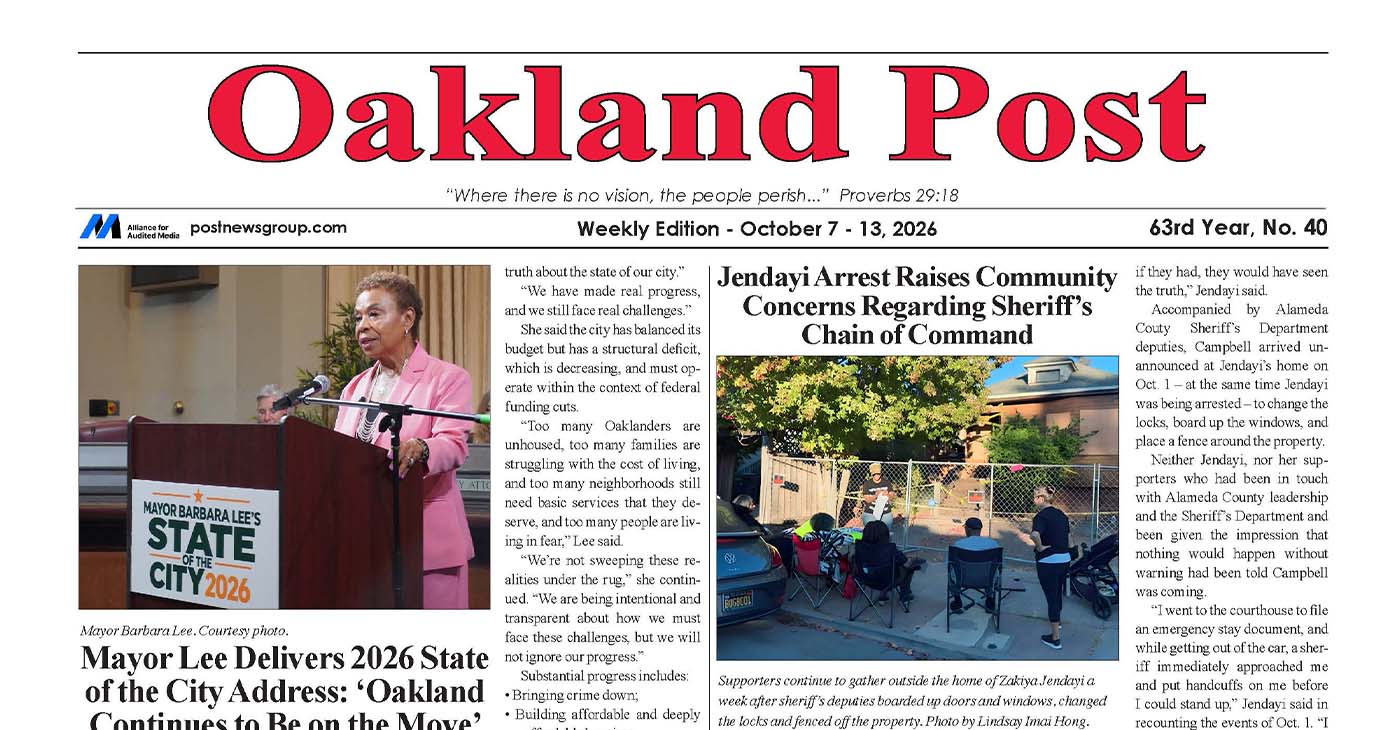
To enlarge your view of this issue, use the slider, magnifying glass icon or full page icon in the lower right corner of the browser window.



Mayor Barbara Lee Holds Special State of the City Address in Deep East Oakland

Practitioners of African Traditional Spirituality Offer Ancestral Reverence Ritual Oct. 31

It’s Time to Lose Weight Before the Holidays

Trader Vic’s Returns to Its Oakland Roots

Oakland Coal Terminal Backed by Trump Would Be Bigger, Dirtier Than Promised, Says Report

Opponents Smear Effective African American Transit Director as Election Nears

Oakland Post: Week of October 14 – 20, 2026

OP-ED: The Black Church Writes AI’s Next Chapter

OP-ED: The Black Church Writes AI’s Next Chapter

WCCUSD Joins Statewide Organic School Food Purchasing Cooperative

Democrats, Community Groups Back Measure EE to Change How Oakland Is Governed

Four Tips to Help You Plan a Holiday “Staycation”

Veterans Housing Project Proposed for South Richmond
PRESS ROOM: Transformative Justice Coalition 2026 Voting Rights Champion Awards Reception ‘Yesterday Is Today: The Battle For Voting Rights

Mayor Lee Delivers 2026 State of the City Address: ‘Oakland Continues to Be on the Move’

Misnamed ‘Parent’ PAC Seeks to Influence Oakland School Board Elections

Poll: Becerra Widens His Lead Over Hilton; Californians Split on Wealth Tax

Listening as a Lifeline: A Doula’s Witness to Black Maternal Health

Oakland Post: Week of September 9 – 15, 2026

County Office of Education Says OUSD Finances Are Getting Healthier, Materially Stronger

Richmond Tiny House Village Farm & Garden Set to Open Gates on Sept. 26

Mayor Lee Announces $1 Million Kaiser Permanente Grant for Pilot Program to Address Homelessness, Clean Up Public Spaces throughout Oakland

Latest Massacre in Haiti Reveals Cruelty U.S. Deportations

Zakiya Jendayi Arrested, Locked Out of Home by Sheriff’s Deputies

OPINION: Nolan Wells’ Death One of Several Signifying Racial Terror Lives on in U.S. South

BLACspace Cooperative Invites Bay Area to Experience Oakland’s Black Cultural Ecosystem Through a BLAC Map Tour + Party

Doulas Are Helping Black California Moms Navigate Pregnancy–Even as High Mortality Rates Persist

Oakland Post: Week of September 16 – 22, 2026

Oakland People’s Arms Embargo Coalition Demands End to Military Shipments Thru Oakland

Democratic Clubs Interview Candidates for Oakland School Board

The Conversation With Al McFarlane 6/23/26

Media Monday 6/22/26

LIVE! ASK ALMA! — TUES. 6.23.26 7PM EST

Car Buying Secrets: 4 Hidden Checks Before You Sign!

Is This 550 HP Charger Worth YOUR Money? AutoNetwork Review

Celebrating Juneteenth – Frederick Douglass on education and resistance

LIVE! — ASK ALMA! — TUES. 6.19.26 7PM EST

Hyundai Ioniq 5 Parking, Safety, and 360 View #shorts

2025 Ioniq 5 New Wiper & Powerful Performance! #shorts

Electric SUV Range: Is 259 Miles Enough? #shorts

EV Charging: How Fast Can You Charge an Electric Vehicle? #shorts

Biometric Cooling… Messaging Seats…Come on! 2025 Infiniti QX80 Autograph 4WD

Charged Up: Witness the Magic of a Fully Electric Car! #shorts

Range Rover Sport PHEV Included…: See What’s Inside This Luxury SUV! #shorts

Invisible Hood View: Perfect Parking with X-Ray Vision! #shorts
-
 Economy4 weeks ago
Poll: Becerra Widens His Lead Over Hilton; Californians Split on Wealth Tax
-
 Black History3 weeks ago
Listening as a Lifeline: A Doula’s Witness to Black Maternal Health
-
 Business4 weeks ago
County Office of Education Says OUSD Finances Are Getting Healthier, Materially Stronger
-
 Lead Story3 weeks ago
Zakiya Jendayi Arrested, Locked Out of Home by Sheriff’s Deputies
-
 Art4 weeks ago
BLACspace Cooperative Invites Bay Area to Experience Oakland’s Black Cultural Ecosystem Through a BLAC Map Tour + Party
-
 Black History4 weeks ago
Doulas Are Helping Black California Moms Navigate Pregnancy–Even as High Mortality Rates Persist
-

 Business4 weeks ago
From Historic Memories to New Possibilities: Oakland Celebrates Coliseum 60
-

 Community4 weeks ago
Asm. Corey Jackson Announces Launch of 24-Hour Childcare in His District
