
Crime
Why Stephon Clark’s Killing Is A Wake Up Call Regarding for Independent Civilian Oversight of Police Departments


Jamilia Land, a relative of Stephon Clark, makes an emotional plea during a “Day of Action” in Sacramento on April 4. Protesters demanded police accountability and justice for Stephon Clark, who was unarmed when shot to death by police in his grandmother’s backyard. Courtesy of the Sacramento Bee.
By Jasmyne A. Cannick and Patrisse Cullors | Special to California Black Media
The tragic fatal shooting of Stephon Clark has captured the nation’s attention and elevated the conversation around whether police can and should investigate themselves, especially when the public’s trust weighs in the balance.
The 22-year-old father of two was an unarmed Black man who was fatally shot on March 18 by Sacramento police officers eight times, mostly in his back, according to an independent autopsy released Friday.
The Clark family has accused the police department of trying to cover up misconduct by its officers and decided to conduct its own autopsy.
In the wake of Stephon Clark’s death, there are deafening calls from the community for more transparency and accountability regarding the investigation into his death. These calls also include answers to the lingering question of why did the officers decide to mute their audio. Ironically, the one group put into place to be a link between the community, City Hall, and the police won’t be able to help.
The 11-member Sacramento Community Police Review Commission was established in 2017 by the City Council last year as part of a package of police reforms after the community complained that a previous version of the commission didn’t have enough oversight capabilities.
But like most citizen watchdog groups established by mayors and city councils in cities in the wake of mounting concern over the question of “Who polices the police?,” the Sacramento Community Police Review Commission is merely advisory.
Most independent oversight commissions lack independence. They are unable to conduct their own investigations, subpoena records or to compel the testimony of police officers and their superiors accused of wrongdoing.
In March, a judge stripped Newark’s Civilian Complaint Review Board of its subpoena and investigatory powers but said it could still conduct oversight of the police department.
The board was conceived following a report released by the U.S. Department of Justice in July 2014 that found Newark police failed to provide sufficient constitutional reason for about 75 percent of pedestrian stops and that despite hundreds of citizen complaints from 2007 to 2012, just one complaint of excessive force was sustained.
In San Diego, a proposed charter amendment would replace their Citizens Review Board on Police Practices with a new commission on police practices that would, among other things, have the power to “subpoena civilian witnesses, compel their attendance, administer oaths and affirmations, take evidence, and require by subpoena the production of any books, papers, records, or other items material.” The amendment also says that the commission “must seek and receive legal advice from independent legal counsel, not the Office of the City Attorney.”
Police reform has been a serious issue in Chicago in the wake of the release of the video showing the fatal shooting of Laquan McDonald. McDonald was a Black teen who was shot 16 times after walking away from police—contradicting the police’s story that he was threatening or had “lunged at” cops. In the aftermath of the video’s release, then-police Superintendent Garry McCarthy was fired, Cook County State’s Attorney Anita Alvarez lost re-election, and officer Jason Van Dyke became the first Chicago cop in decades to be indicted for first-degree murder for a fatal officer-involved-shooting. Currently, community groups are proposing the creation of a civilian board with the power to fire Chicago’s police superintendent and to set Police Department policy. Mayor Rahm Emanuel has not taken a position of support or opposition.
In Los Angeles, efforts have begun to change the charter of the county via ballot measure to provide their Civilian Oversight Commission with subpoena power to effectively investigate deputy misconduct. The Reform L.A. Jails ballot measure also seeks to ensure that the Los Angeles County Board of Supervisors, the governing body for America’s most populous county and largest jail system, invests some of the $3.5 billion planned for building new jails into providing alternatives to incarceration. Proponents need to gather over 150,000 signatures of registered voters to place it on the highly coveted November gubernatorial ballot. Reform L.A. Jails will hold a campaign kickoff for their signature-gathering drive this week.
Civilian oversight bodies are put into place because the public has lost faith in their scandal-ridden beleaguered police departments. But these groups often end up being more of conciliatory gesture from local governments to placate the public in troubled times. They are prevented from doing the very work that both city officials and police departments claim they want to be done–improving public accountability and transparency. To root out misconduct, bring about real criminal justice reform and avoid having Bonnie investigate Clyde, these civilian bodies that hold the trust of the public must have two things—independence and power. Without it, they’re just for show. Oversight with no sight. Overnight with no bite.
For more information the Reform L.A. Jails ballot measure, please visit www.ReformLAJails.com.
Jasmyne Cannick is a nationally known writer and commentator on political, race and social issues. She is a political consultant working on the L.A. County ballot measure to Reform L.A. Jails.
Patrisse Cullors is the New York Times bestselling author of “When They Call You a Terrorist” and the co-founder of Black Lives Matter, Dignity Power and Now and JusticeLA. She is a proponent on the Reform L.A. County ballot measure to provide subpoena power to the Los Angeles County Sheriff’s Department’s Civilian Oversight Commission.














Community
D.A. Ursula Jones Dickson: Terminix to Pay $3.15 Million Over Illegal Disposal of Pesticides, Customer Records
OAKLAND POST — District attorney investigators examining Terminix facilities throughout California between 2021 and 2024 found hundreds of pesticides and other hazardous-waste items that had allegedly been disposed of unlawfully, according to Jones Dickson’s office.


Alameda County District Attorney Ursula Jones Dickson announced a $3.15 million settlement with Terminix International Inc. and Rentokil North America Inc. over allegations that the pest control companies illegally disposed of pesticides and hazardous waste and mishandled confidential customer records.
The settlement was reached by Jones Dickson, 28 other California district attorneys and the Los Angeles city attorney. The companies are collectively identified as Terminix in the settlement.
District attorney investigators examining Terminix facilities throughout California between 2021 and 2024 found hundreds of pesticides and other hazardous-waste items that had allegedly been disposed of unlawfully, according to Jones Dickson’s office.
The investigation also found instances in which Terminix allegedly failed to properly manage and dispose of private customer records, violating California laws intended to protect confidential consumer information.
Terminix cooperated with prosecutors after being notified of the alleged violations, the district attorney’s office said. As part of the settlement, the company agreed to strengthen its policies and procedures governing the handling and disposal of pesticides, hazardous materials and customer records.
The new requirements are intended to prevent prohibited waste from being placed in ordinary trash receptacles or sent to facilities not authorized to receive it. Terminix must also improve safeguards for confidential customer information before records are discarded.

Terminix operates five Alameda County locations under the Terminix and Western Exterminator Company names. The facilities are located in Hayward, Pleasanton and Union City.
Alameda County will receive $160,000 from the statewide settlement for civil penalties and reimbursement of investigative costs.
The agreement resolves the prosecutors’ claims against the companies and requires Terminix to maintain stronger waste-management and privacy protections at its California operations.
Jones Dickson announced the settlement Sept. 4.

Business
California’s Legal Cannabis Market Hits $8 Billion as State Touts Progress on Fighting Drugs, Crime
OAKLAND POST — “We are building a legal cannabis market that generates billions for Californians, and going after the illicit operators who undermine it,” said Newsom. “That’s public safety: protect consumers, support the businesses playing by the rules, and put the revenue to work in our communities.”

California’s legal cannabis market has generated nearly $8.4 billion in tax revenue since 2018 as the state ramps up enforcement against illegal drugs and touts declines in crime, Gov. Gavin Newsom announced on Sept. 2.
The cannabis revenue includes nearly $4.5 billion in excise taxes and nearly $3.4 billion in sales taxes. In the second quarter of 2026 alone, cannabis retailers remitted $261.7 million in cannabis excise and sales tax revenue.
The state uses cannabis revenue to support programs including childcare and early childhood development, youth substance abuse prevention, medical research and environmental recovery.
“We are building a legal cannabis market that generates billions for Californians, and going after the illicit operators who undermine it,” said Newsom. “That’s public safety: protect consumers, support the businesses playing by the rules, and put the revenue to work in our communities.”
California is also targeting illegal intoxicating products outside the regulated cannabis market. State officials have removed more than 15,000 illegal hemp, kratom, and 7-hydroxymitragynine, or 7-OH, products from store shelves.
The enforcement effort resulted in the removal of 7,403 illegal hemp products and 7,888 kratom and 7-OH products. Officials reported compliance rates above 97% among Alcoholic Beverage Control licensees inspected for both categories.
The state has warned that kratom and 7-OH products have been linked to addiction, overdose and other serious health risks.
California is also using its law enforcement resources to target violent crime, drug trafficking and other criminal activity. Since 2023, CHP Crime Suppression Teams have made 15,197 arrests, recovered 7,042 stolen vehicles and seized 656 illicit firearms.
Since the teams expanded to six regions statewide in August 2025, they have also confiscated nearly 1.7 million grams of illegal drugs, including about 108 kilograms of fentanyl.
“Over the past few years, our Crime Suppression Teams have demonstrated the value of proactive, intelligence-driven enforcement,” CHP Commissioner Sean Duryee said.
The Newsom administration says the efforts are part of a broader public safety strategy that combines regulation, enforcement, prevention and partnerships with local agencies.
California has also reported declines in major crime categories since 2024, including an 18.6% drop in homicides and a 25.8% decline in motor vehicle theft.
California officials say the combination of a regulated cannabis market, targeted enforcement and state-local law enforcement partnerships is helping protect consumers, disrupt illicit drug activity and improve public safety across the state.
Black History
Henry O. Flipper: A Trailblazer at West Point and Beyond
OAKLAND POST — Flipper’s promising military career ended abruptly in 1881 when he was accused of embezzling commissary funds. A court-martial acquitted him of embezzlement, but convicted him of conduct unbecoming of an officer. The Army dismissed him in 1882. The circumstances surrounding his punishment would later be widely regarded as unjust and influenced by the racial discrimination of the period.
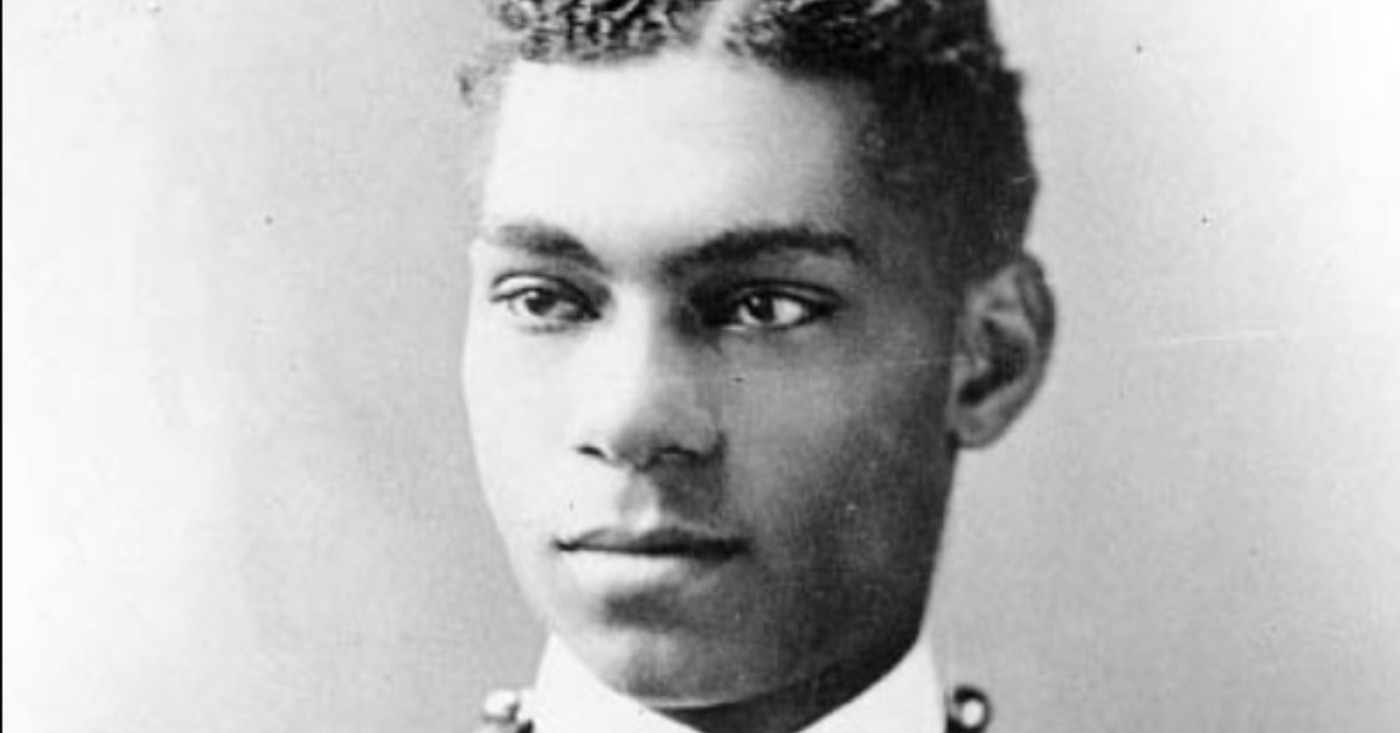
Henry Ossian Flipper’s life is a remarkable story of insistence, achievement, injustice, and ultimately vindication. Born enslaved on March 21, 1856, in Thomasville, Georgia, Flipper rose from the restrictions of slavery to become the first African American to graduate from the United States Military Academy at West Point. His accomplishments extended far beyond military service; he later became a respected engineer, surveyor, author, translator, and government official.
After the Civil War, Flipper’s family settled in Atlanta, where education became central to his future. He attended schools established for African American children by the American Missionary Association and later studied at Atlanta University. In 1873, Congressman James C. Freeman of Georgia nominated Flipper for admission to West Point. He entered the academy that July.
Flipper’s four years at West Point were extremely difficult. Because of racism, he experienced harassment and almost complete social isolation from many of his fellow cadets. Nevertheless, he succeeded academically and graduated on June 14, 1877, ranking 50th in a class of 76. His graduation represented a historic breakthrough for African Americans in the United States military.

Commissioned as a second lieutenant, Flipper was assigned to the 10th U.S. Cavalry, one of the famed African American regiments known as the Buffalo Soldiers. At Fort Sill in Indian Territory, now Oklahoma, Flipper served as an engineer, surveyor, construction supervisor, quartermaster, and commissary officer. One of his most lasting engineering accomplishments was a drainage system that eliminated pools of stagnant water around the fort and helped reduce mosquito-breeding areas. The system became known as “Flipper’s Ditch,” and portions of it remain associated with Fort Sill today.
Flipper’s promising military career ended abruptly in 1881 when he was accused of embezzling commissary funds. A court-martial acquitted him of embezzlement, but convicted him of conduct unbecoming of an officer. The Army dismissed him in 1882. The circumstances surrounding his punishment would later be widely regarded as unjust and influenced by the racial discrimination of the period.
Rather than allowing his dismissal to define his life, Flipper built an extraordinary civilian career. He became a civil and mining engineer and surveyor, working extensively throughout the American Southwest and Mexico. He established an engineering office in Nogales, Arizona, became knowledgeable about Spanish and Mexican land law, and later worked for the federal government, including service connected with the Department of Justice and the Department of the Interior.
Flipper died in Atlanta in 1940, but efforts to restore his reputation continued for decades. In 1976, the Army changed his dismissal to an honorable discharge. Then, on February 19, 1999, President Bill Clinton granted Flipper a posthumous presidential pardon.
Today, Henry Ossian Flipper is remembered because his life helped open doors for generations of African American military officers, engineers, and public servants who followed him.



Port of Oakland, Army Corps Sign Historic Harbor Design Agreement

Democratic Clubs Interview Candidates for Oakland School Board

Nuna Phillips-McKee Celebrates 100 Years: ‘A Century of Faith, Family and God’s Amazing Grace!’

D.A. Ursula Jones Dickson: Terminix to Pay $3.15 Million Over Illegal Disposal of Pesticides, Customer Records

REPORT: Community Level Policy Is Impacting Homelessness and Drug Abuse in California

OPINION: AI Needs to Know Who Is the Boss
Goldi-Locs and Two (or Three) Bears in the Forest in California Hills

Election Watch 2026: 85% of Eligible Voters in California Are Registered

Don’t Let scammers Crash Your School Year

BOOK REVIEW — Curved Air: A Biography of Sickle Cell Anemia and the Quest to Cure the First Molecular Disease

California’s Legal Cannabis Market Hits $8 Billion as State Touts Progress on Fighting Drugs, Crime

Blacks and Latinos Clash Over LA’s Barrio Run; Mayor Karen Bass Calls for Dialogue Across Racial, Neighborhood Lines

Asm. Smallwood-Cuevas’s Bill Repealing ‘Racist’ CalWORKs ‘Man-in-the-House’ Rule Clears Legislature

Asm. Smallwood-Cuevas’s Bill Repealing ‘Racist’ CalWORKs ‘Man-in-the-House’ Rule Clears Legislature

‘Ready to See These Bills Become Law’: Sen. Weber’s Package of 15 Bills Advance to Gov. Newsom’s Desk

Department of Homeland Security Demands California Secretary of State Shirley N. Weber Scrub Voter Rolls

“The Power to See Threats Sooner”: Gov. Newsom, Safety Officials Showcase California’s Investments in Hi-Tech Wildfire Prevention

California Sen. Padilla Joins Colleagues to Introduce Bill Imposing Term Limits on Supreme Court Justices

Less Affluent School Districts, Including Sacramento City, Face Threat of State Takeover

Car Wash Workers Cope with Lingering Impacts of ICE Raids

ESSAY: California Can Close Its Colorectal Cancer Gap

Oakland Post: Week of August 5 – 11, 2026

As Part of Your Back-to- School Checklist, Vaccinate

Oakland ‘Port Serves as a Powerful Engine for Good Jobs and Economic Development

Gov. Newsom Announces $109.6 Million in Funding for 278 Supportive Homes in Bakersfield, Contra Costa, Sacramento and Fresno

California Hispanic Chambers of Commerce Unveils: ‘Powering the Future’ Theme for 47th Annual Statewide Convention

Closing the Gap: What the Data and Frontline Experiences Reveal About Cancer in Black California

Congresswoman Simon Demands Investigation into Trump’s Abuse of Emergency Powers for Coal Export Terminal in West Oakland

Four Candidates, Including Incumbent Barbara Lee, Qualify for Oakland Mayor’s Race

Oakland Post: Week of August 12 – 18, 2026

The Conversation With Al McFarlane 6/23/26

Media Monday 6/22/26

LIVE! ASK ALMA! — TUES. 6.23.26 7PM EST

Car Buying Secrets: 4 Hidden Checks Before You Sign!

Is This 550 HP Charger Worth YOUR Money? AutoNetwork Review

Celebrating Juneteenth – Frederick Douglass on education and resistance

LIVE! — ASK ALMA! — TUES. 6.19.26 7PM EST

Hyundai Ioniq 5 Parking, Safety, and 360 View #shorts

2025 Ioniq 5 New Wiper & Powerful Performance! #shorts

Electric SUV Range: Is 259 Miles Enough? #shorts

EV Charging: How Fast Can You Charge an Electric Vehicle? #shorts

Biometric Cooling… Messaging Seats…Come on! 2025 Infiniti QX80 Autograph 4WD

Charged Up: Witness the Magic of a Fully Electric Car! #shorts

Range Rover Sport PHEV Included…: See What’s Inside This Luxury SUV! #shorts

Invisible Hood View: Perfect Parking with X-Ray Vision! #shorts
-

 Commentary3 weeks ago
Standoff for Justice: Our Homes Are Worth Fighting For
-

 Business3 weeks ago
Gubernatorial Candidate Steve Hilton Blasts California New Tire Rules; Newsom Hits Back
-

 Activism3 weeks ago
Oakland Post: Week of August 26 – September 1, 2026
-

 Business3 weeks ago
Frontier Airlines’ Return to Oakland Airport Brings Flights, Jobs and Opportunity
-

 Business3 weeks ago
Chef Sharon Lee Blends Culinary Excellence, Education and Empowerment
-

 Education3 weeks ago
Gov. Newsom’s Latest Appointees Include Sacramento Advocate for Formerly Incarcerated Students; State’s New Tech Chief
-

 Business3 weeks ago
Oakland Coliseum Project Opens Door for Small Businesses to Build Bigger
-

 Community3 weeks ago
Big City Mayors Ask for “Yes” Vote on Housing Bond Measure; Conservatives Say “No”
