Connect with us

Bay Area

State Sets Bail to Zero for Misdemeanors and Some Lower-Level Felonies

Published

on

In an effort to protect the safety and health of the citizens of California, the state’s Judicial Council set bail to zero for non-violent crimes.  The new rule is one among 11 the council has adapted to avoid filling up jails during the COVID-19 pandemic.

Certain lower-level felonies and misdemeanors will get temporary 90-day reprieves in order to shield attorneys, court staff, judges, law enforcement agents, employees and incarcerated inmates in jail facilities from the deadly effects of the coronavirus.

The action by the policy-making body of the courts was called to help control the spread of the virus among inmates and reduce the number of prisoners from lock-up. The city of Los Angeles first enacted a zero-bail initiative a couple of weeks ago.

Now, the measure is statewide.

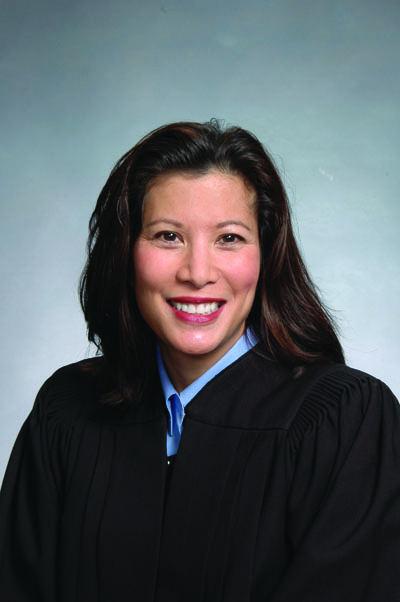
California Chief Justice Tani Cantil-Sakauye, the chairperson of the Judicial Council, said the measure received a lot of input and considerations before approval to reduce the jail population.

“We listened to suggestions from our justice system partners, the public, and the courts, and we greatly appreciate all of the input,” said Cantil-Sakauye in a written statement. “Working with our stakeholders, I’m confident we can preserve the rule of law and protect the right of the victims, the accused, litigants, families and children, and all who seek justice. It’s truly a team effort.”

In mostly overcrowded conditions, African Americans are overrepresented in California’s prison population. Nearly 29%  of the state’s male inmates were Black in 2017, the Public Policy Institute of California reported.

Social justice advocates up and down the state have been pressuring officials about the welfare of inmates in jails and prisons since the onset of the COVID-19 crisis.

Across the state, many inmates, as well as California prison officials, have been diagnosed with the virus. Advocates believe releasing inmates will solve the solution to prevent the spreading of the virus and save lives.

Jamilia Land is an African-American community activist and member of California Families United 4 Justice, a Sacramento-based nonprofit organization that supports families impacted by police-involved shootings and violence. She said the cancellation of bail is a “wonderful idea,” but it is something that should have taken place long before the pandemic.

“It’s something that been needed to happen,” Land told California Black Media. “Unfortunately, when we look at the demographic of people who are incarcerated and overpopulating the jails in general, they look like us. They are Black and Brown people. Also, bail is feeding a lobster that is known as mass incarceration. We need to end it.”

In 2018, when Gov. Gavin Newsom was lieutenant governor in Gov. Jerry Brown’s administration, California passed Senate Bill 10 (SB 10). It was landmark legislation that abolished the cash money bail system for defendants waiting for trial, and also gave judges more discretion to determine who will be sent to jail or not – based on risk.

California was the first state in the nation to do so.

But the bail industry and other opponents of SB 10 rallied against the bill and collected more than 400,000 signatures, preventing the legislation from becoming state law the following year.

Now, it is up for a statewide referendum vote on the California ballot in November 2020.

Antonio Ray Harvey, California Black Media

Antonio Ray Harvey, California Black Media

Bay Area

Oakland Mayor Pushes Charter Overhaul to Clarify Roles in City Government, Increase Accountability and Improve Service Delivery

Under the proposal, the mayor would serve as Oakland’s chief executive, overseeing city departments, implementing policy, proposing the annual budget, and managing day-to-day operations. The measure would also give the mayor veto power over legislation and the budget, though the City Council could override a veto with a two-thirds vote.

Published

on

Oakland Mayor Barbara Lee. File photo.

By Oakland Post Staff

Oakland Mayor Barbara Lee is backing a sweeping proposal to restructure Oakland’s government, arguing the changes would make City Hall more accountable and improve the delivery of basic services like public safety, homelessness response, and infrastructure repairs.

The charter reform measure, introduced April 7 and co-sponsored by Oakland City Council President Kevin Jenkins, would ask voters in November to approve a “strong mayor, strong council” system designed to create clearer lines of authority inside city government.

Under the proposal, the mayor would serve as Oakland’s chief executive, overseeing city departments, implementing policy, proposing the annual budget, and managing day-to-day operations. The measure would also give the mayor veto power over legislation and the budget, though the City Council could override a veto with a two-thirds vote.

The City Council, meanwhile, would maintain legislative authority by adopting ordinances, approving budgets, conducting oversight hearings, and confirming key mayoral appointments. The proposal would also create an Independent Budget and Legislative Analyst Office to provide nonpartisan fiscal and policy analysis for councilmembers.

“I’ve spent months listening to Oaklanders across every neighborhood about what they expect from their city government,” Lee said. “The Charter Reform Working Group’s engagement made clear that residents want a system where there are no questions about who is responsible for delivering results on public safety, homelessness, infrastructure, and basic services.”

Jenkins said the proposal would strengthen both executive leadership and council oversight.

“I’ve long believed Oakland works best when residents have clear lines of accountability and a government structure that aligns responsibility with results,” Jenkins said.

The proposal follows recommendations from the Mayor’s Charter Reform Working Group, co-facilitated by the League of Women Voters of Oakland and SPUR.

Over five months, the group conducted more than 60 interviews, held 14 public meetings across Oakland, and engaged more than 750 residents while reviewing governance models used in other cities.

“The process of engaging residents across Oakland surfaced the governance clarity Oakland needs,” said Sujata Srivastava of SPUR. “The Charter Reform Working Group has produced a thoughtful set of recommendations that if adopted could strengthen accountability and improve service delivery across city government.”

Polling cited by the mayor’s office suggests voters may be open to the changes. A February 2026 poll by the East Bay Polling Institute found 64% of voters support adopting a strong-mayor system. Separate polling conducted by the Oakland Chamber of Commerce and David Binder Research found support ranging from 61% to 63% among likely voters.

The measure is scheduled to be heard by the City Council Rules Committee on May 21. If approved by the council, it would appear on the November 2026 ballot, where Oakland voters would have the final say.

Continue Reading

Activism

The Ladies of Delta Sigma Theta Hold Day of Advocacy at the Capitol in Sacramento

A member of the “Divine Nine,” Delta Sigma Theta Sorority, Inc., was founded on Jan. 13, 1913, at Howard University in Washington, D.C. The organization was established by 22 women who sought to shift the group’s focus from social activities to public service, academic excellence, and social activism.

Published

on

Sen. Laura Richardson (D-San Pedro) presents a Senate resolution to the Delta Theta Sigma Sorority Farwest Region at the State Capitol on May 4. Photo courtesy of the Senate Rules Committee.

By Antonio Ray Harvey, California Black Media

On May 4, members of the Farwest Region of Delta Sigma Theta Sorority, Inc., convened at the California State Capitol for the organization’s 23rd annual Delta Days in Sacramento.

The two-day advocacy event brings together chapters from across California to engage directly in the legislative process, connect with lawmakers, and advocate for policies impacting Black communities.

Members of the sorority were honored on the Senate floor by Sen. Laura Richardson (D-San Pedro), who is also a member of Delta Sigma Theta.

Richardson welcomed the Farwest Region during the presentation of a Senate resolution recognizing outgoing Regional Director Kimberly Usher for her leadership and service.

“In addition to the Far West Region, we are led by a fearless leader, regional director Kimberly Usher. She has now served her full term of what’s allowed,” Richardson said. “We are going to be having our regional conference, but we wanted to give it to her here, officially recognizing her service.”

The resolution was co-authored by Richardson and fellow members of the California Legislative Black Caucus (CLBC) and Delta Sigma Theta, Sen. Akilah Weber Pierson (D-San Diego) and Assemblymember Rhodesia Ransom (D-Stockton).

Usher has served in the leadership role since 2022.

A member of the “Divine Nine,” Delta Sigma Theta Sorority, Inc., was founded on Jan. 13, 1913, at Howard University in Washington, D.C. The organization was established by 22 women who sought to shift the group’s focus from social activities to public service, academic excellence, and social activism.

“We are founded on sisterhood that is deeply rooted in scholarship, service, and social action,” said Weber Pierson, a member of the Gamma Alpha chapter of Delta Sigma Theta Sorority.

“Today, we continue a legacy of empowering communities and upholding the high cultural, intellectual, and moral standards established by our founders over a century ago,” she added.

Continue Reading

Bay Area

Q&A with Steven Bradford: Why He Wants Your Vote for California Insurance Commissioner

Known for his work on issues ranging from energy and public safety to economic development, Bradford has also engaged with insurance policy during his time in the Legislature, serving on the Senate Insurance Committee. 

Published

on

Hon. Steve Bradford, candidate for California Insurance Commissioner.

By Edward Henderson, California Black Media 

As California confronts rising insurance costs, market instability, and growing concerns about access and equity, the race for the state’s top insurance regulator is drawing increased attention.

Among the candidates is Steven Bradford, a veteran public servant with more than two decades of experience in government, including eight years in the State Senate and five years in the State Assembly.

Known for his work on issues ranging from energy and public safety to economic development, Bradford has also engaged with insurance policy during his time in the Legislature, serving on the Senate Insurance Committee.

Now, he is making his case to voters for why his background and perspective best position him for the role of California’s next insurance commissioner.

California Black Media (CBM) spoke with Bradford about his campaign experiences, key issues he plans to solve if elected, and his vision for the insurance commissioner role.

For readers who may not be familiar, what does the Insurance Commissioner do, and how would you use that role to address issues impacting communities in California?

The Insurance Commissioner is both a regulator and an administrator. The office oversees the entire insurance market—approving companies to operate, licensing agents and brokers, and reviewing rate increases or decreases.

This role is about oversight and action. The commissioner should be a watchdog, not a bystander, especially in a state like California, which has the third-largest insurance market in the world.

Last year, you shifted your campaign from running for lieutenant governor to the race for insurance commissioner. What spurred that decision? 

Insurance impacts every part of people’s lives. You can’t buy a home without it—that contributes to the housing crisis. You can’t legally drive without it—that affects people’s ability to work. And businesses can’t operate without it.

For years, insurance has disproportionately impacted low-income communities and people of color. While everyone is feeling the strain now, those communities have long been hit hardest. That’s why it’s critical that insurance is not just available, but affordable.

What sets you apart from the other candidates in this race?

My record: 26 years of public service. I’ve shown up, stood up, and spoke up for Californians.  

A recent Supreme Court decision impacting the Voting Rights Act has raised concerns about representation. What message do you have for voters in California regarding the importance of their vote?

It’s alarming. If people think this doesn’t affect them, they’re mistaken. There’s a real effort to roll back decades of progress and silence voters.

Your vote is your most powerful tool, and we have to use it—every election.

What are you hearing from voters as you campaign across the state?

Affordability and transparency.

People are struggling with rising costs, and many don’t fully understand what their insurance policies cover.

We saw that clearly in places like Altadena and the Palisades—people had insurance but were underinsured. They didn’t realize their coverage wouldn’t meet the cost to rebuild. That’s unacceptable.

We must acknowledge the inequities in the system. The FAIR Plan has roots in discrimination, and today we still see disparities based on ZIP code and income. We need a more competitive and equitable market where consumers have choices.

Continue Reading

Subscribe to receive news and updates from the Oakland Post

* indicates required

CHECK OUT THE LATEST ISSUE OF THE OAKLAND POST

ADVERTISEMENT

WORK FROM HOME

Home-based business with potential monthly income of $10K+ per month. A proven training system and website provided to maximize business effectiveness. Perfect job to earn side and primary income. Contact Lynne for more details: Lynne4npusa@gmail.com 800-334-0540

Facebook

Oakland Mayor Barbara Lee. File photo.
Bay Area1 day ago

Oakland Mayor Pushes Charter Overhaul to Clarify Roles in City Government, Increase Accountability and Improve Service Delivery

Sen. Laura Richardson (D-San Pedro) presents a Senate resolution to the Delta Theta Sigma Sorority Farwest Region at the State Capitol on May 4. Photo courtesy of the Senate Rules Committee.
Activism1 day ago

The Ladies of Delta Sigma Theta Hold Day of Advocacy at the Capitol in Sacramento

iStock
Activism1 day ago

Rep. Kamlager-Dove Introduces Bill to Protect Women in Custody After Reports Detailing Miscarriages and Neglect

Hon. Steve Bradford, candidate for California Insurance Commissioner.
Bay Area1 day ago

Q&A with Steven Bradford: Why He Wants Your Vote for California Insurance Commissioner

Tennessee State Rep. Justin Jones (D-Nashville). File photo.
Activism1 day ago

OPINION: The Fire of Oakland’s Justin Jones

iStock
Bay Area1 day ago

How Is AI Affecting California? The State Wants You to Share Your Story

iStock
Activism1 day ago

California Launches Free Diaper Program for Newborns Statewide

Book covers. Photo courtesy of Terri Schlichenmeyer.
Advice1 day ago

Book Review: Books for College-Bound Students

Photo courtesy of the office of Assemblymember Corey Jackson (D-Moreno Valley).
Activism1 day ago

Asm. Jackson Bill Requiring Anti-Hate Speech Training for Calif. Public Officials Sent to “Suspense File”

iStock
Activism1 day ago

More and More, Black Californians Are Worried About Rising Costs of Housing, Energy, Food and Gas 

Crime Survivors Speak at the California State Capitol was a multi-day advocacy event held May 4–6 that called for increased support, services, and funding for crime victims. Organized by Crime Survivors for Safety and Justice (CSSJ), the gathering brought together more than 200 survivors and family members to advocate for legislative reforms. CBM photo by Antonio Ray Harvey.
Activism1 day ago

Advocates Rally at State Capitol to Demand Heat Protections for Incarcerated People; More Funding for DV Survivors

Lecturer Lisa Troseth will speak on "Moving past fear to healing" on May 23 at the Orinda Library Auditorium. Photo courtesy of the Christian Science Board of Lectureship.
Bay Area3 days ago

Coming to Orinda: A Lecture on Finding the Strength to Heal and Move Past Fear With Divine Love

William “Bill” Patterson, Jr. Courtesy Peralta College District
Activism3 days ago

EBMUD Enshrines the Legacy of  its First Black Board Member William ‘Bill’ Patterson 

Mary Jackson. Public domain.
Arts and Culture3 days ago

Against All Odds: Mary Jackson’s Journey to NASA Engineer

Researchers pointed out that the number amounts to 1 in every 50 adults, with 3 out of 4 disenfranchised living in their communities, having completed their sentences or remaining supervised while on probation or parole. (Photo: iStockphoto)
Activism3 days ago

Supreme Court Voting Rights Ruling Reverberates From the South to California

Trending

Copyright ©2021 Post News Group, Inc. All Rights Reserved.