Connect with us

Entertainment

Snoop Dogg Sues Beer-Maker Pabst Over Sale Profits

Published

on

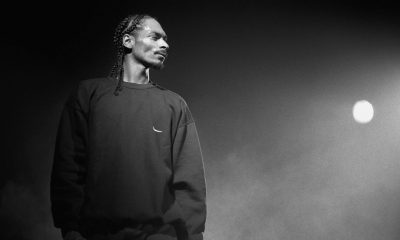
In this March 14, 2015 file photo, Snoop Dogg speaks at the Comedy Central Roast of Justin Bieber at Sony Pictures Studios in Culver City, Calif. Snoop Dogg filed a breach of contract lawsuit against Pabst Brewing Co., in Los Angeles Superior Court on Monday, June 8, 2015, seeking 10 percent of the price paid to the company last year for its Colt 45 malt beer operations. (Photo by Chris Pizzello/Invision/AP, File)

In this March 14, 2015 file photo, Snoop Dogg speaks at the Comedy Central Roast of Justin Bieber at Sony Pictures Studios in Culver City, Calif. Snoop Dogg filed a breach of contract lawsuit against Pabst Brewing Co., in Los Angeles Superior Court on Monday, June 8, 2015, seeking 10 percent of the price paid to the company last year for its Colt 45 malt beer operations. (Photo by Chris Pizzello/Invision/AP, File)

ANTHONY McCARTNEY, AP Entertainment Writer

LOS ANGELES (AP) — Snoop Dogg sued Pabst Brewing Co. on Monday, claiming the beer-maker owes him a portion of its proceeds from the company’s sale last year.

The breach-of-contract lawsuit seeks 10 percent of the net sales price paid to Pabst for its Colt 45 malt beer line, which was included in last year’s sale to beer entrepreneur Eugene Kashper and an investment firm.

Snoop Dogg signed a three-year agreement in 2011 to endorse Colt 45’s fruit-flavored beer called Blast by Colt 45. The lawsuit states his contract called for him to receive a portion of the sale price if Pabst sold its Colt 45 operations before January 2016.

His contract also called on the rapper to consult with Colt 45’s marketing team at least once a year on how he could integrate Blast by Colt 45 into his concerts, interviews and social media posts. Snoop Dogg received an upfront payment of $250,000 and an additional $20,000 for every 10th mention of the beer on social media, TV or during a concert.

The contract also called for the rapper to receive a royalty on each case of Blast by Colt 45 that was sold.

Pabst wrote in a statement that it had not been contacted by Snoop Dogg or his representatives about the proceeds and cited the company’s new management.

“We are investigating the matter and would be happy to talk to Snoop or his representatives to try to get to the bottom of this,” the statement said.

The lawsuit states Pabst told the rapper that the sale didn’t trigger the clause entitling him to sale proceeds.

The deal to sell Pabst to Kashper and San Francisco-based TSG Consumer Partners LLC was finalized in November. No purchase price was announced, but the lawsuit filed by the rapper’s attorney, Alex Weingarten, states Pabst was reportedly sold for $700 million. It is unclear how much of the sale price was for the Colt 45 line of beers.

In addition to Colt 45 and its namesake beer, Pabst Brewing Co. makes Old Milwaukee and Schlitz.

___

Anthony McCartney can be reached at http://twitter.com/mccartneyAP.

___

This story has been corrected to show that Pabst Brewing Co. was acquired by beer entrepreneur Eugene Kashper and an investment firm, not Oasis Beverages.

Copyright 2015 The Associated Press. All rights reserved. This material may not be published, broadcast, rewritten or redistributed.

Continue Reading
Click to comment

Leave a Reply

Your email address will not be published. Required fields are marked *

Art

Oakland Director Boots Dazzles Once Again in ‘I Love Boosters’

Riley’s creative output is influenced by progressive ideals. His work, which includes six albums, the 2018 film “Sorry to Bother You,” and the 2023 comedy series “I’m a Virgo,” always shows that the alienation working-class people feel is inevitable under capitalism, he recently told The Guardian.

Published

on

Naomi Ackie, Taylour Paige, and Keke Palmer star in “I Love Boosters” playing now in theaters. Directed by Oakland resident Boots Riley. Image courtesy of Neon.

“I feel lonely,” Keke Palmer’s character Corvette says in the first few minutes “I Love Boosters,” the new comedy adventure film from Oakland-based director Boots Riley.

“I wish I could feel lonely,” Naomi Ackie’s character Sade responds. “Try having kids.”

“I Love Boosters” teems with kaleidoscopic colors, sharp playful social critique, otherworldly plot twists, and fast-paced action, but it’s grounded in its main characters’ simple and relatable motivations: They want to be less isolated, and more free to pursue their own creative endeavors.

They’d like to design clothes and run a fashion boutique, but, unfortunately, they’re mostly busy surviving. Corvette and Sade, along with Mariah, played by Taylour Page, hustle and scheme through their brilliant scrappy organized crime group, the Velvet Gang. The gang regularly boosts clothes in the Bay Area and sells them at discounted prices.

Riley portrays the gang in a positive light in “I Love Boosters,” echoing the sentiment and title of a song he recorded 20 years ago with his hip-hop band, The Coup, where he praises boosters for providing poor communities with nice clothes they can afford: like a Robin Hood of the ’hood. But while morally righteous, materially, the gang is troubled. Corvette is haunted by unpaid bills and fears getting kicked out of the building where she squats, a shuttered fast-food chicken joint.

One thing that separates Riley’s film from most others about criminal gangs is that the Velvet Gang’s members work for a living. Theirs isn’t a greedy fantasy of becoming filthy rich, or for one last hit: Boosting is a job that still doesn’t pay nearly enough.

Riley’s creative output is influenced by progressive ideals. His work, which includes six albums, the 2018 film “Sorry to Bother You,” and the 2023 comedy series “I’m a Virgo,” always shows that the alienation working-class people feel is inevitable under capitalism, he recently told The Guardian.

Visually, the film is a mix of psychedelia, afro-surrealism, noir, and perhaps a comic book.

The villain, Christie Smith, played by Demi Moore, an evil genius billionaire and fashion designer who runs the expensive clothing company the gang boosts from. She repeatedly appears on the news to put a target on the Velvet Gang members’ backs. When the gang ends up connecting with those who Christie directly exploits –workers here in the Bay Area, but also those in sweatshops overseas– the fight against Christie can commence; and uncoincidentally, Corvette starts to feel less lonely.

I don’t want to say much about that fight, but it’s delightful. Sci-Fi elements (which appear connected to Marxist theory) enter into the narrative to tie what’s become a pretty scatterbrained story together. Grounded by Palmer’s acting, “I Love Boosters” is a total joy and a refreshing break from the typical narratives we see these days. It’s totally over-the-top, but it knows it is.

Continue Reading

Art

After 10-Year Wait, Fillmore Heritage Center Reopens in San Francisco

After serving as the economic and cultural hub of the Fillmore’s historically Black community for more than a decade, the center’s closure ended what was called the “Rebirth of the Cool,” referring to the neighborhood’s role during the height of Black Jazz in the United States.

Published

on

Rev. Amos Brown of Third Baptist Church addresses community members at the Fillmore Heritage Center ribbon cutting. Photo by Linda Parker Pennington.

By Linda Parker Pennington, Special to The Post

Last Saturday morning, the cloudy skies cleared just as the highly anticipated ribbon-cutting ceremony began, marking the reopening of the Fillmore Heritage Center at 1330 Fillmore and Eddy.

The complex – which had once included Yoshi’s Jazz Club, the Lush Life Art Gallery, the Koret Heritage Lobby, a 54-seat microcinema, and the Black-owned 1300 On Fillmore restaurant – shuttered in 2015.

After serving as the economic and cultural hub of the Fillmore’s historically Black community for more than a decade, the center’s closure ended what was called the “Rebirth of the Cool,” referring to the neighborhood’s role during the height of Black Jazz in the United States.

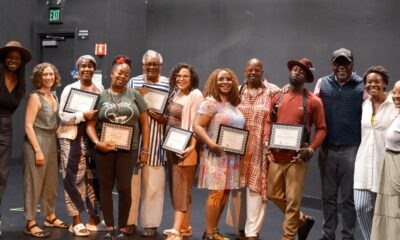
San Francisco Mayor Daniel Lurie announcing the reopening of the Fillmore Heritage Center. Erika Scott, owner of Honey Art Studio, looks on with pride. Photo by Linda Parker Pennington.

San Francisco Mayor Daniel Lurie announcing the reopening of the Fillmore Heritage Center. Erika Scott, owner of Honey Art Studio, looks on with pride. Photo by Linda Parker Pennington.

“The Fillmore is the most important neighborhood in San Francisco’s history for centering Black culture, music, business, and community, and has shaped this City and influenced the entire country,” said San Francisco Mayor Daniel Lurie to the gathering of more than 100 community leaders, business owners, and public officials. “This building reflects the deep roots of the Fillmore. Urban renewal left deep scars that are still felt today. This Center celebrates a strong Black community that continues to shape San Francisco. I am proud to join the community as we reopen the Fillmore Heritage Center.”

Although the previous stakeholders will not be returning to the center, spaces are available for nonprofit organizations and ventures, such as Fillmore native Ericka Johnson’s Honey Art Studio.

“This Center will be an economic engine and a thriving venue that shines a light on the Black-owned businesses in this neighborhood and lifts the entire district,” Lurie continued. “Our City is committed to this community for the long term.”

“We’re excited to collaborate with the City to finally reopen these doors,” said Ken Johnson, a videographer and community leader who’d been lobbying for the reopening of the center. “It’s an opportunity to showcase the entrepreneurship and creative spirit of this ‘Harlem of the West’ and the ‘Rebirth of the Cool,’ grounded in our uniquely gifted Fillmore community.”

This month, through its Office of Economic and Workforce Development, the city will begin renting the building’s noncommercial spaces for pop-up events celebrating local talent, arts, and entertainment primarily centered in the Fillmore.

Continue Reading

Arts and Culture

COMMENTARY: Black Music is the Sound of Black Freedom: Let Us Reclaim Both This Juneteenth

Black Music Month started when Black Music Association members Ed Wright, Kenny Gamble and his wife, journalist and radio host Dyanna Williams were able to persuade President Jimmy Carter to establish the observation on June 7, 1979.

Published

on

Robert Johnson (1911-1938) is thought of as the godfather of blues music, especially Delta blues. The 29 songs recorded by him during his short life have been of massive inspiration to guitarists and musicians over the last 80 years. Public domain photo.

By Wanda Ravernell

Black Music Month and Juneteenth are inextricably linked – Black music is the sound of our freedom.

From the plaintive moans of the enslaved Africans’ ‘sorrow songs,’ to the fields of Civil War battle where Black soldiers picked up abandoned bugles, to the upright piano played in juke joints on Saturday night and churches come Sunday morning, our ancestors’ innovation in the face of want, fear, degradation, and hopelessness has yielded genres of music imitated ’round the world.

Black Music Month started when Black Music Association members Ed Wright, Kenny Gamble and his wife, journalist and radio host Dyanna Williams were able to persuade President Jimmy Carter to establish the observation on June 7, 1979.

In 2000, Congress made it official. In 2009, Pres. Barack Obama changed the name to African American Music Heritage Month and in 2023, Pres. Joe Biden changed it back to Black Music Month, two years after he declared Juneteenth a national holiday, the result of a movement led by Opal Lee.

Our ancestors battle for freedom over these last 400 years and the music that allowed them expression of their humanity deserved to be honored.

But we may be losing sight of the value of their sacrifices.

‘Sing a Song Full of the Faith That the Dark past Has Taught Us…’

Along with the long-known exploitation of Black musicians whose recordings were stolen by record companies, the commercialization of Juneteenth feels like another kind of theft.

I had never heard of Juneteenth until I moved to the Bay Area from my hometown of Philadelphia. I didn’t know it was one of many freedom festivals celebrated by descendants of enslaved people in the United States.

Emancipation Day was Jan. 1 in Pennsylvania, April 16 in Wash., D.C., May 20 in Florida, and Aug. 8 in Kentucky. But Juneteenth, June 19, has the most renown, known in Texas as the ‘colored peoples’ Fourth of July.’

It was marked by parades, beauty pageants, rodeos, backyard barbecues and church picnics.

Yes, church.

The formerly enslaved began the day praying in thanks for their freedom just as they had prayed for Jubilee – the day of freedom – when they had chains on their feet and hands. They ‘testified’ about their past suffering and how they had managed to overcome.

And they sang.

Although, we will not hold it this year, Omnira Institute’s Juneteenth Ritual of Remembrance recalled this part of Juneteenth with prayers in the languages of the African captives. In the middle of the ceremony, a soloist would lead us in singing “Many Thousand Gone” while we took turns reciting portions of the Emancipation Proclamation, the news of freedom that took more than two years to reach Texas – two months after the Civil War ended.

“Many Thousand Gone” was famously recorded by Black luminary Paul Robeson in 1947:

“No more auction block for me,

No more, no more

No more auction black for me

Many thousand gone.”

Other verses refer to the ‘pint of salt’ and the ‘driver’s lash,’ the realities of enslavement that they had survived.

‘Sing a Song Full of the Hope That the Present has Brought Us’

All of the genres of African American music have at their root songs like that, the essence being, as Stevie Wonder, wrote, “the joy inside our pain.” So Black music is not just music. It is our story, our history, our very strength.

During the Civil Rights Movement, which peaked 100 years after slavery ended, the people testified that it was the freedom songs – based on spirituals – that gave them the heart to march, face attack dogs, fire hoses, beatings, and shootouts with vigilantes.

The music reminded them that power was in the people. That music, our music, can do so again. We don’t have to accept the commodification of the products of our culture.

The power of those songs is showing a resurgence across the South as we battle again for the right to self-determination through the ballot box.

Those songs are the voices of our ancestors, voices forged in their blood, their sweat, their tears, joy and, above all, faith.  Those songs, those prayers live in our blood and our very breath.

This Juneteenth, let us reclaim those holy voices expressed in Black music for ourselves. It is our birthright. It can neither be bought nor sold.  No more. Never again.

Wanda Ravernell is the executive director of Omnira Institute, sponsor for 18 years of the Juneteenth Ritual of Remembrance and Oakland’s 11th Annual Black-Eyed Pea Festival, which will take place on Sept. 12.

Continue Reading

Subscribe to receive news and updates from the Oakland Post

* indicates required

CHECK OUT THE LATEST ISSUE OF THE OAKLAND POST

ADVERTISEMENT

WORK FROM HOME

Home-based business with potential monthly income of $10K+ per month. A proven training system and website provided to maximize business effectiveness. Perfect job to earn side and primary income. Contact Lynne for more details: Lynne4npusa@gmail.com 800-334-0540

Facebook

Trending

Copyright ©2021 Post News Group, Inc. All Rights Reserved.