Connect with us

Arts and Culture

Sissieretta Jones: Not Without Roadblocks – Learning Black History Year Round

Published

on

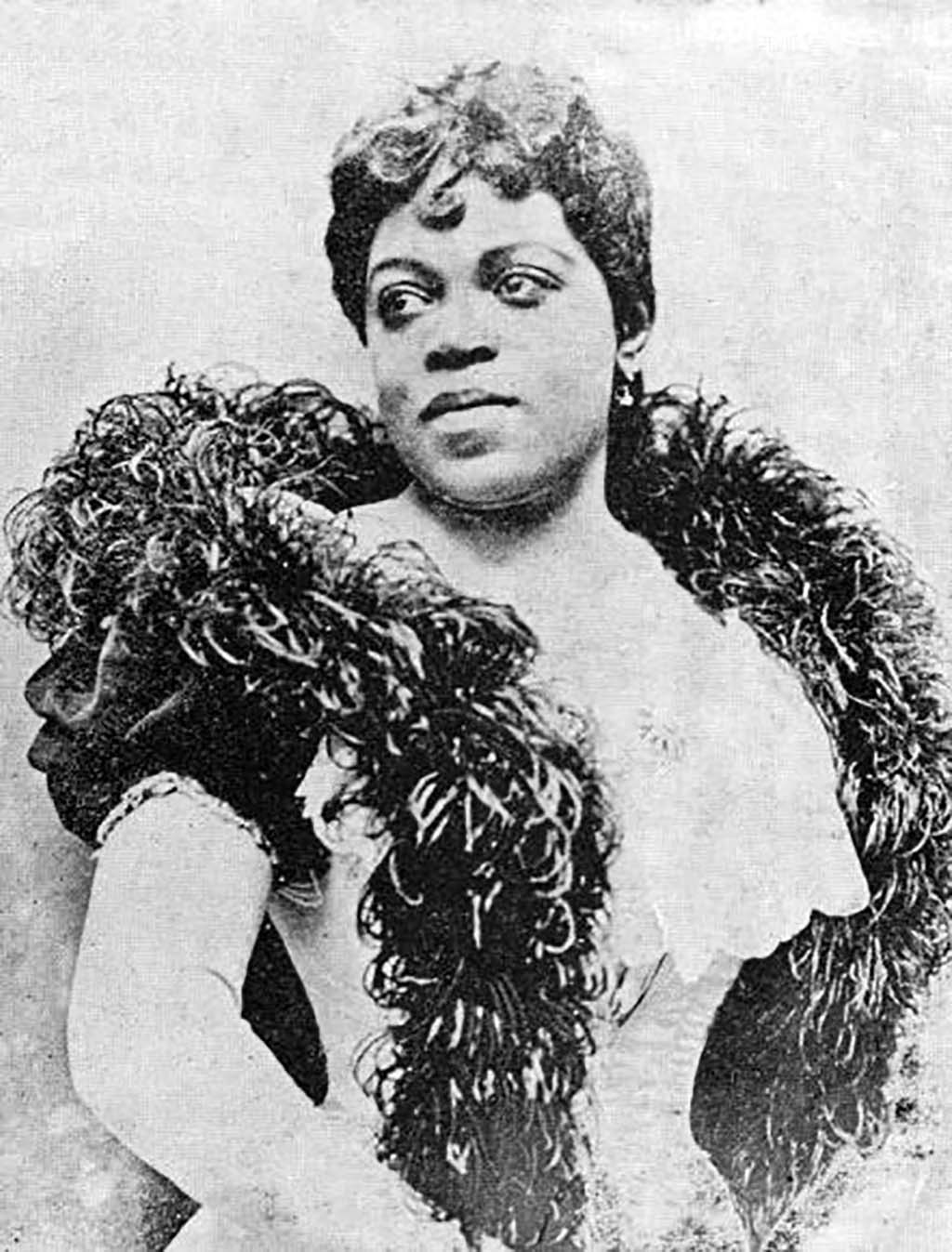
Sissieretta Jones. Image from blackpast.org

The world recognized her as having possessed one of the greatest singing voices of her era. An Opera News reviewer for the Washington Post wrote: “The compass and quality of her registers surpass the usual limitations and seem to combine the height and depth of both soprano and contralto.” A distinguished African American soprano during the late 19th and early 20th centuries, Sissieretta Jones (1869–1933) enjoyed a successful career as a concert and variety performer.

Born in Portsmouth, Virginia, Jones, whose nickname “the Black Patti” likened her to the well-known Spanish-born opera star Adelina Patti, sang classical opera and performed in musical comedies. She was the first African American to perform at Carnegie Hall and sing before four US presidents. Her successes, however, were not without roadblocks.

Opportunities for Blacks in the classical world during Jones’ era were virtually nonexistent. Talent, vocal ability and professional standing didn’t matter. There were a few, however, who despite the obstacles, succeeded. Jones was among them.

Both white music critics and audiences were accustomed to Blacks on stage performing in negative and stereotypical roles. A serious performer on the classical music stage was unheard of. Jones, therefore, shaped her musical career within the limited professional options available to Blacks. Many performers did the same to avoid bias while building a career.

Jones would eventually settle for headlining the Black Patti Troubadours, which in essence was a minstrel show. Even so, touring for Black performers was an extremely difficult life during that time.

About the troupe’s travels, New York Times journalist Michael Cooper wrote: “Segregated hotels turned her away, and not only in the South… when Jones’s young company tried to tour Hartford, [Conn.] every hotel refused them … She eventually got a private railcar to live in while on the road.”

Author Rosalyn M. Story wrote that Jones “struggled as an artist, fighting daily for dignity and artistic survival in a world that viewed her as, at best, a freakish imitation of a white ideal.… [Adelina] Patti was the idol of millions, demanded at least $4,000 nightly, and retired to her opulent Welsh castle…. Jones rarely earned more than $300 for one appearance and retired, largely forgotten, to a life of poverty.”

Eventually, Jones was able to overcome the obstacles of racial bias in the music world and build a successful 28-year career. She then performed in hundreds of opera houses and theaters throughout North America and Europe.

Shortly after the Black Patti Troubadours dissolved (1915) Jones retired to Providence, Rhoda Island. to care for her aging mother. In succeeding years, she sold her valuables to support herself and taught music to local students. On her death, she was buried in an unmarked grave paid for by a local businessman.

Of Jones’ life, biographer Maureen Lee wrote that Jones “taught white Americans that black people could sing classical music and popular standards and sound as elegant and breathtaking as white vocalists, and she showed them that African Americans could achieve fame and prosperity.”

Tamara Shiloh

Tamara Shiloh


About Tamara Shiloh


Tamara Shiloh has published the first two books in her historical fiction chapter book series, Just Imagine…What If There Were No Black People in the World is about African American inventors, scientists and other notable Black people in history. The two books are Jaxon’s Magical Adventure with Black Inventors and Scientists and Jaxon and Kevin’s Black History Trip Downtown. Tamara Shiloh has also written a book a picture book for Scholastic, Cameron Teaches Black History, that will be available in June, 2022.

Tamara Shiloh’s other writing experiences include: writing the Black History column for the Post Newspaper in the Bay area, Creator and Instruction of the black History Class for Educators a professional development class for teachers and her non-profit offers a free Black History literacy/STEM/Podcast class for kids 3d – 8th grade which also includes the Let’s Go Learn Reading and Essence and tutorial program.   She is also the owner of the Multicultural Bookstore and Gifts, in Richmond, California,

Previously in her early life she was the /Editor-in-Chief of Desert Diamonds Magazine, highlighting the accomplishments of minority women in Nevada; assisting with the creation, design and writing of a Los Angeles-based, herbal magazine entitled Herbal Essence; editorial contribution to Homes of Color; Editor-in-Chief of Black Insight Magazine, the first digital, interactive magazine for African Americans; profile creations for sports figures on the now defunct PublicFigure.com; newsletters for various businesses and organizations; and her own Las Vegas community newsletter, Tween Time News, a monthly publication highlighting music entertainment in the various venues of Las Vegas.

She is a member of:

  • Society of Children’s Book Writers and Illustrators (SCBWI)

  • Richmond Chamber of Commerce

  • Point Richmond Business Association

  • National Association of Professional Women (NAPW)

  • Independent Book Publishers Association (IPBA)

  • California Writers Club-Berkeley & Marin

  • Richmond CA Kiwanis

  • Richmond CA Rotary

  • Bay Area Girls Club


Tamara Shiloh, a native of Northern California, has two adult children, one grandson and four great-grand sons. She resides in Point Richmond, CA with her husband, Ernest.

www.multiculturalbookstore.com

About Tamara Shiloh

Tamara Shiloh has published the first two books in her historical fiction chapter book series, Just Imagine…What If There Were No Black People in the World is about African American inventors, scientists and other notable Black people in history. The two books are Jaxon’s Magical Adventure with Black Inventors and Scientists and Jaxon and Kevin’s Black History Trip Downtown. Tamara Shiloh has also written a book a picture book for Scholastic, Cameron Teaches Black History, that will be available in June, 2022. Tamara Shiloh’s other writing experiences include: writing the Black History column for the Post Newspaper in the Bay area, Creator and Instruction of the black History Class for Educators a professional development class for teachers and her non-profit offers a free Black History literacy/STEM/Podcast class for kids 3d – 8th grade which also includes the Let’s Go Learn Reading and Essence and tutorial program.   She is also the owner of the Multicultural Bookstore and Gifts, in Richmond, California, Previously in her early life she was the /Editor-in-Chief of Desert Diamonds Magazine, highlighting the accomplishments of minority women in Nevada; assisting with the creation, design and writing of a Los Angeles-based, herbal magazine entitled Herbal Essence; editorial contribution to Homes of Color; Editor-in-Chief of Black Insight Magazine, the first digital, interactive magazine for African Americans; profile creations for sports figures on the now defunct PublicFigure.com; newsletters for various businesses and organizations; and her own Las Vegas community newsletter, Tween Time News, a monthly publication highlighting music entertainment in the various venues of Las Vegas. She is a member of:
  • Society of Children’s Book Writers and Illustrators (SCBWI)
  • Richmond Chamber of Commerce
  • Point Richmond Business Association
  • National Association of Professional Women (NAPW)
  • Independent Book Publishers Association (IPBA)
  • California Writers Club-Berkeley & Marin
  • Richmond CA Kiwanis
  • Richmond CA Rotary
  • Bay Area Girls Club
Tamara Shiloh, a native of Northern California, has two adult children, one grandson and four great-grand sons. She resides in Point Richmond, CA with her husband, Ernest. www.multiculturalbookstore.com

Continue Reading
Click to comment

Leave a Reply

Your email address will not be published. Required fields are marked *

Arts and Culture

IN MEMORIAM: Oakland Dance Legend Reginald Ray-Savage, 67

Savage lived his life as tribute to the teachers who had shared their wisdom on art and life with him. With a palpably genuine enthusiasm and desire to bring out the best in people, and pass the torch to the next generation, he poured into his students, as his teachers and mentors had into him. His infectious energy, love of life, and generosity of spirit inspired countless souls, both inside and outside the dance studio.

Published

on

Reginald Ray-Savage brought the old-school teaching techniques he learned in the Katherine Dunham Dance Company to the youth at the Oakland School for the Arts in 2003. Courtesy photo.

Special to The Post

Reginald Ray-Savage – dancer, choreographer, and beloved teacher, mentor, and inspiration to many – passed away on May 17. The Oakland School for the Arts dance instructor was 67.

Born Reginald Ray, Jr. in St. Louis, Missouri, on Sept. 5, 1958, he formally adopted the name ‘Savage,’ to honor the great Archie Savage, his mentor at Katherine Dunham’s Performing Arts Training Center where his dance training journey began in East St. Louis, Illinois.

He soon started dancing professionally with Katherine Dunham Dance Company, making dance a way of life. His grit, tenacity, and notorious work ethic brought him scholarships to train at multiple prestigious dance institutions, including The Ailey School (NYC) and Ruth Page School of Dance (Chicago), under the direction of acclaimed ballet instructor Larry Long and Dolores Lipinski-Long.

He danced with several companies including Joel Hall Dance Company, Ruth Page Ballet Chicago, Lyric Opera, Chicago City Ballet, American Festival Ballet, and touring productions of “Music Man” and “A Chorus Line”.

In 1989, Savage moved to Oakland where he started teaching seven days a week, amassing a devoted following that was attracted to his no-nonsense, impassioned, and effective old-school teaching style.

In 1992, at the insistence of his committed core of students, he founded Savage Jazz Dance Company (SJDC). Over a span of 30 years, Savage produced more than 100 original works, and tour SJDC nationally and internationally, performing at Casa del Jazz in Rome to a packed house and rave reviews—the first dance company to receive such an invitation.

Savage built SJDC into one of the Bay Area’s most respected dance companies, creating a signature style known for its combination of disciplined training, blended with rich artistic musical expression, and raw energy.

In 2003, Savage joined the Oakland School for the Arts as chair of the School of Dance. Over the next two decades, he created, built, and maintained a strong dance program, recognized, and respected by other dance institutions for forging well-trained and resilient dancers and human beings.

The depth of Savage’s tough love and care, and the skill of his teaching and mentoring are reflected in the careers of his students who have gone on to dance with the San Francisco Ballet, Martha Graham Dance Company, Mark Morris Dance Group, Janet Jackson, Ariana Grande, and companies across the globe.

Savage lived his life as tribute to the teachers who had shared their wisdom on art and life with him. With a palpably genuine enthusiasm and desire to bring out the best in people, and pass the torch to the next generation, he poured into his students, as his teachers and mentors had into him. His infectious energy, love of life, and generosity of spirit inspired countless souls, both inside and outside the dance studio.

Mark Kitaoka, a photographer hired by Savage in 2016, posted a living eulogy on the dance instructor.

“When I see the self-pride he builds in his students I am constantly impressed that people like Savage still exist in our ‘meme’ society,” Kitaoka wrote. “The kids he mentors are fiercely loyal to one another and I’m certain his methods teach each of those kids to put aside social status, race and gender and is replaced by solid loyalty for other souls.

“What Savage contributes to our world cannot be completely summed up in a few meager paragraphs but can be seen in the countless lives of those he has touched. Because of him, our world, and the world of the future is both a richer and better place.

Reginald Ray-Savage will forever be missed, remembered, and lovingly quoted. He is survived by his beloved wife, Alison Hurley, his sister, Sonia, and his brothers, Pierre, and Andre. May his inextinguishable spirit and impact live on in all the lives he touched.

Continue Reading

Arts and Culture

COMMENTARY: Black Music is the Sound of Black Freedom: Let Us Reclaim Both This Juneteenth

Black Music Month started when Black Music Association members Ed Wright, Kenny Gamble and his wife, journalist and radio host Dyanna Williams were able to persuade President Jimmy Carter to establish the observation on June 7, 1979.

Published

on

Robert Johnson (1911-1938) is thought of as the godfather of blues music, especially Delta blues. The 29 songs recorded by him during his short life have been of massive inspiration to guitarists and musicians over the last 80 years. Public domain photo.

By Wanda Ravernell

Black Music Month and Juneteenth are inextricably linked – Black music is the sound of our freedom.

From the plaintive moans of the enslaved Africans’ ‘sorrow songs,’ to the fields of Civil War battle where Black soldiers picked up abandoned bugles, to the upright piano played in juke joints on Saturday night and churches come Sunday morning, our ancestors’ innovation in the face of want, fear, degradation, and hopelessness has yielded genres of music imitated ’round the world.

Black Music Month started when Black Music Association members Ed Wright, Kenny Gamble and his wife, journalist and radio host Dyanna Williams were able to persuade President Jimmy Carter to establish the observation on June 7, 1979.

In 2000, Congress made it official. In 2009, Pres. Barack Obama changed the name to African American Music Heritage Month and in 2023, Pres. Joe Biden changed it back to Black Music Month, two years after he declared Juneteenth a national holiday, the result of a movement led by Opal Lee.

Our ancestors battle for freedom over these last 400 years and the music that allowed them expression of their humanity deserved to be honored.

But we may be losing sight of the value of their sacrifices.

‘Sing a Song Full of the Faith That the Dark past Has Taught Us…’

Along with the long-known exploitation of Black musicians whose recordings were stolen by record companies, the commercialization of Juneteenth feels like another kind of theft.

I had never heard of Juneteenth until I moved to the Bay Area from my hometown of Philadelphia. I didn’t know it was one of many freedom festivals celebrated by descendants of enslaved people in the United States.

Emancipation Day was Jan. 1 in Pennsylvania, April 16 in Wash., D.C., May 20 in Florida, and Aug. 8 in Kentucky. But Juneteenth, June 19, has the most renown, known in Texas as the ‘colored peoples’ Fourth of July.’

It was marked by parades, beauty pageants, rodeos, backyard barbecues and church picnics.

Yes, church.

The formerly enslaved began the day praying in thanks for their freedom just as they had prayed for Jubilee – the day of freedom – when they had chains on their feet and hands. They ‘testified’ about their past suffering and how they had managed to overcome.

And they sang.

Although, we will not hold it this year, Omnira Institute’s Juneteenth Ritual of Remembrance recalled this part of Juneteenth with prayers in the languages of the African captives. In the middle of the ceremony, a soloist would lead us in singing “Many Thousand Gone” while we took turns reciting portions of the Emancipation Proclamation, the news of freedom that took more than two years to reach Texas – two months after the Civil War ended.

“Many Thousand Gone” was famously recorded by Black luminary Paul Robeson in 1947:

“No more auction block for me,

No more, no more

No more auction black for me

Many thousand gone.”

Other verses refer to the ‘pint of salt’ and the ‘driver’s lash,’ the realities of enslavement that they had survived.

‘Sing a Song Full of the Hope That the Present has Brought Us’

All of the genres of African American music have at their root songs like that, the essence being, as Stevie Wonder, wrote, “the joy inside our pain.” So Black music is not just music. It is our story, our history, our very strength.

During the Civil Rights Movement, which peaked 100 years after slavery ended, the people testified that it was the freedom songs – based on spirituals – that gave them the heart to march, face attack dogs, fire hoses, beatings, and shootouts with vigilantes.

The music reminded them that power was in the people. That music, our music, can do so again. We don’t have to accept the commodification of the products of our culture.

The power of those songs is showing a resurgence across the South as we battle again for the right to self-determination through the ballot box.

Those songs are the voices of our ancestors, voices forged in their blood, their sweat, their tears, joy and, above all, faith.  Those songs, those prayers live in our blood and our very breath.

This Juneteenth, let us reclaim those holy voices expressed in Black music for ourselves. It is our birthright. It can neither be bought nor sold.  No more. Never again.

Wanda Ravernell is the executive director of Omnira Institute, sponsor for 18 years of the Juneteenth Ritual of Remembrance and Oakland’s 11th Annual Black-Eyed Pea Festival, which will take place on Sept. 12.

Continue Reading

Advice

Book Review: Books for College-Bound Students

The kind of workday your Grandpa had is probably over, and you can’t count on toiling at the same place for 40 years for a pension and a gold watch. You already know that, and these books will help you decide your next step. You’ll learn what kind of worker you are, what’s stopping you from finding a job or occupation you’ll love, how to determine the purpose you envision for your future, and how to get where you need to be.

Published

on

Book covers. Photo courtesy of Terri Schlichenmeyer.

By Terri Schlichenmeyer

Authors: Various, Copyright: c.2026, Publishers: Various, SRP: $21.00 – $29.00, Page Counts: Various

The videos and news reports were inspiring.

In them, a hesitant prospective college student became a happy, new college-bound student with the click of a key. They were accepted into the college of their dreams – so how can you get the same feeling next spring, when you’re the one with the highest of hopes?

You can start by reading these great books and sharing them with your family…

You probably already know that getting into the college of your choice is not something you do last-minute. In “The People’s Guide to College Applications: A Week-by-Week Approach to Writing, Connecting, and Getting in” (Prometheus Books, $ 21.95), Jill Constantino takes you through each step, but not in a frantic way. There’s no pressure here, just easy-to-grasp, makes-sense methods to apply for the college you want. There are reminders here, things you can’t forget and things you can, hints on asking for referrals and writing essays, and plenty of reminders to take a deep breath. Bonus: it’s also a book for parents, who may feel just as much pressure as their child does.

Okay, but let’s say that you’re an adult, a parent who’s sweating those college applications, classes, and the FAFSA for yourself, ugh!  Then you’ll want to read “Student Parent: The Fight for Families, the Cost of Poverty, and the Power of College” by Nicole Lynn Lewis (Beacon Press, $26.97). an urgent call meant for nontraditional students who are also Black, Latinx, gay, Moms, or Dads.

Inside this book, you’ll find stats and stories that may already sound familiar, tales of not enough money, not enough support, not enough arms or sleep or resources. If you’re looking for a book of advice, this isn’t it, though. It’s more of a resource that you’ll want to take to your guidance counselor or any local politician.

Alright, but what if you’ve decided that college can wait? Is that okay? Look for “The Mission Generation: Reclaim Your Purpose, Rewrite Success, Rebuild Our Future” by Arun Gupta and Thomas J. Fewer (Wiley, $29.00) because – guess what? – you have many options for your future.

The kind of workday your Grandpa had is probably over, and you can’t count on toiling at the same place for 40 years for a pension and a gold watch. You already know that, and this book will help you decide your next step. You’ll learn what kind of worker you are, what’s stopping you from finding a job or occupation you’ll love, how to determine the purpose you envision for your future, and how to get where you need to be. This book isn’t just for high schoolers, but for anyone ages 16 and beyond who’s feeling restless, ready for change, or who’s thinking about some kind of purposeful retirement.

And if these aren’t the college-based or not-college-bound books you need, then be sure to ask your favorite bookseller or librarian for help on ideas, how-to’s, test prep books, or study guides. They’ll have books for you, and maybe a little inspiration, too.

Continue Reading

Subscribe to receive news and updates from the Oakland Post

* indicates required

CHECK OUT THE LATEST ISSUE OF THE OAKLAND POST

ADVERTISEMENT

WORK FROM HOME

Home-based business with potential monthly income of $10K+ per month. A proven training system and website provided to maximize business effectiveness. Perfect job to earn side and primary income. Contact Lynne for more details: Lynne4npusa@gmail.com 800-334-0540

Facebook

Trending

Copyright ©2021 Post News Group, Inc. All Rights Reserved.