
Activism
Sheng Thao Sworn in as New Mayor of Oakland, Pledges New Direction for the City
Mayor Thao provided a few minutes on the program to introduce to the community Dr. Kimberly Mayfield, the newly appointed deputy mayor, who has served as vice president of external affairs and dean of the school of education at Holy Names University, a leader of the Black Women Organized for Political Action (BWOPA) and a member of the sorority Alpha Kappa Alpha, Inc.

Mayor Thao appoints HNU’s Dr. Kimberly Mayfield as deputy mayor
By Ken Epstein
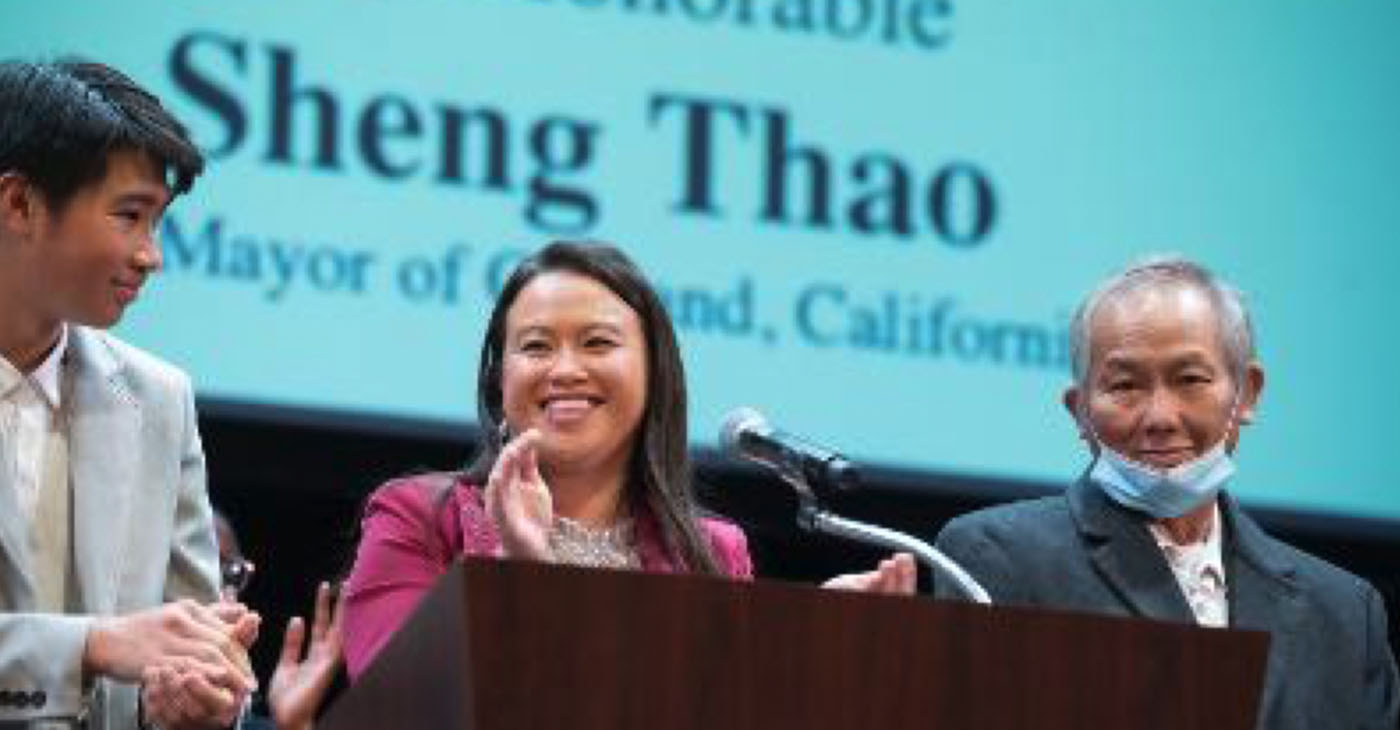
Sheng Thao, a daughter of Hmong refugees who overcame homelessness and domestic abuse to attend university and build a life for herself and her family in Oakland, received the official oath of office Monday afternoon as the new mayor of the City of Oakland.
Sworn in at the Paramount Theatre in downtown Oakland by California Attorney General Rob Bonta, she stood on stage surrounded by friends, family, and staff members. She was flanked by her son Ben Ventura, who performed a musical piece on the cello, and her father “Richard” Nou My Thao.
The mayor called on Oaklanders to join with her to create a more humane, inclusive, and just city. She spoke about her commitment as a progressive to significantly improve the quality of life for residents, making the city safer and cleaner, building 30,000 units of truly affordable housing, fostering jobs, promoting economic development, supporting small businesses and providing solutions to homelessness that recognize the dignity of the unsheltered.
“I know what we can do together, Oakland,” she said. “Our city’s’ best days are still to come. The Oakland that we all know is possible and within our reach.”

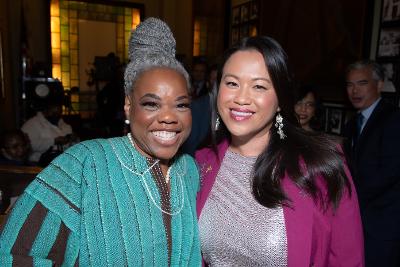
Newly appointed Deputy Mayor Kimberly Mayfield (left) with Mayor Sheng Thao. Photo courtesy of Alain McLaughlin Photography.
Mayor Thao provided a few minutes on the program to introduce to the community Dr. Kimberly Mayfield, the newly appointed deputy mayor, who has served as vice president of external affairs and dean of the school of education at Holy Names University, a leader of the Black Women Organized for Political Action (BWOPA) and a member of the sorority Alpha Kappa Alpha, Inc.
In her remarks, the mayor focused on the city’s long fight to become more inclusive and equitable.
“We believe everyone deserves a seat at the table, not just a few, not just the wealthy, not just the well-connected,” she said.
“Sometimes, we take our shared progressive values for granted, our advances toward justice and equality,” said Mayor Thao.
She reminded people that “a…century ago, our city was dominated by members of the Ku Klux Klan (where) Klan members burned crosses in our hills and marched through our streets. As recently as the1970s, freeways were made possible by tearing down thriving Black, Latino, and Asian communities,” she continued.
“We recognize what we have overcome together to remember what is worth fighting for every day…(and) to take stock of how far we still have to go.”
Promising a “comprehensive” approach to public safety to make all neighborhoods in the city safer, she said she would bolster anti-crime programs like Ceasefire and “we will fill (police) vacancies with home-grown police officers who know our community, who look like us.”
At the same time, she said, the city must increase opportunities for young people, reinvigorating the summer jobs program (for youth) and enhance the school-to-work pipeline so young people can gain experience and job skills.
She said she would beef up the many city departments that are currently operating on skeleton staffing, promising to fill the staffing vacancies that “plague our city.”
Mayor Thao said she herself is a renter, and that she “will fiercely protect Oakland renters. If you are a renter in Oakland, you’ve got a mayor who’s got your back.”
Speaking about the Oakland A’s proposed waterfront real estate development promoted by former Mayor Libby Schaaf, Mayor Thao said the city will continue negotiations to keep the team “rooted in Oakland.”
“Working closely with the A’s, I’m hopeful we can reach a good deal, (based) on our Oakland values,” she said.
The former mayor’s plan for building the proposed waterfront real estate development at the Port of Oakland was dealt a major setback this week when Oakland failed to secure more than $180 million in federal funds to help pay for infrastructure development for the project.
Speaking of the importance of the appointment of Mayfield as deputy mayor, the Mayor’s Office explained her role in the new administration:
“Mayor Thao was thrilled Kimberly Mayfield agreed to join her team because of her tremendous and longstanding leadership in Oakland. In recognition of her vast experience, it was decided that the best role for her would be as deputy mayor where she will be an instrumental part of the leadership of both the Office and Oakland.”
In her introduction at the Paramount Theatre, Mayfield said, “Today is not about political agendas…It’s about the power of the people…it’s a recognition of the rejection of the status quo. This new chapter begins with a mayor that understands how to build a culture that works for everyone. Thank you, Mayor Thao for the opportunity to serve.”













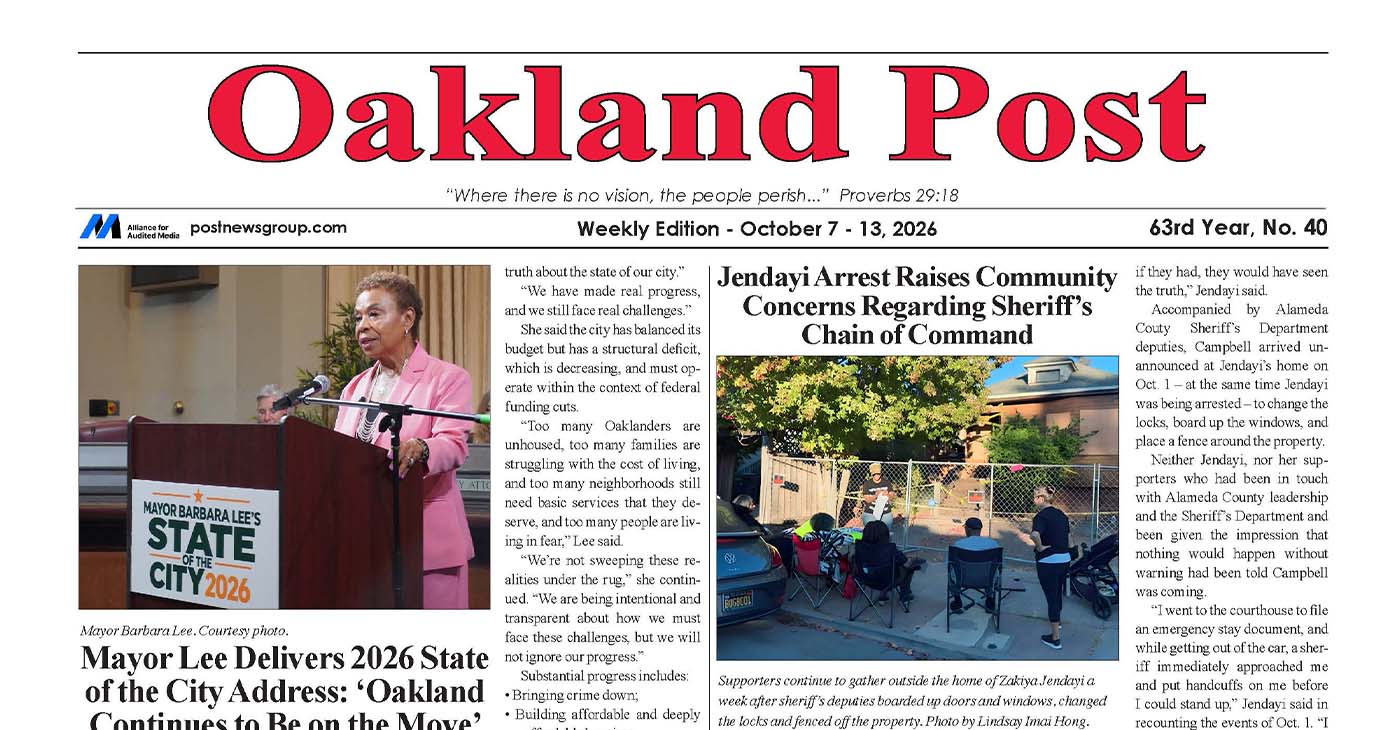
To enlarge your view of this issue, use the slider, magnifying glass icon or full page icon in the lower right corner of the browser window.

Activism
Oakland Post: Week of September 30 – October 6, 2026
The printed Weekly Edition of the Oakland Post: Week of September 30 – October 6, 2026


To enlarge your view of this issue, use the slider, magnifying glass icon or full page icon in the lower right corner of the browser window.
Activism
Oakland Post: Week of September 23 – 29, 2026
The printed Weekly Edition of the Oakland Post: Week of September 23 – 29, 2026

To enlarge your view of this issue, use the slider, magnifying glass icon or full page icon in the lower right corner of the browser window.


WCCUSD Joins Statewide Organic School Food Purchasing Cooperative

Democrats, Community Groups Back Measure EE to Change How Oakland Is Governed

Four Tips to Help You Plan a Holiday “Staycation”

Veterans Housing Project Proposed for South Richmond
PRESS ROOM: Transformative Justice Coalition 2026 Voting Rights Champion Awards Reception ‘Yesterday Is Today: The Battle For Voting Rights

Mayor Lee Delivers 2026 State of the City Address: ‘Oakland Continues to Be on the Move’

Oakland Awarded More than $14 Million in State Funding

Jendayi Arrest Raises Community Concerns Regarding Sheriff’s Chain of Command

Marin County Supes Expand Small Business Options with Home Kitchen Pilot Program

Allen Temple Baptist Church Hosts Free Prostate Cancer Screenings on Oct. 17

AC Transit Labor Unions Back Director Joel Young

Locals Can Get Locally Grown Produce Delivered Through Urban Tilth

‘ICE-Free Marin’ Supporters Press Supervisors as County Drafts Enforcement Restrictions

Oakland Post: Week of October 7 – 13, 2026

Ghana’s Ministry of Foreign Affairs Publishes Global Circle’s Vatican Reparations Call in Special Edition Alongside Heads of State

Misnamed ‘Parent’ PAC Seeks to Influence Oakland School Board Elections

Oakland Post: Week of September 2 – 8, 2026

Oakland Post: Week of September 9 – 15, 2026

Richmond Tiny House Village Farm & Garden Set to Open Gates on Sept. 26

Latest Massacre in Haiti Reveals Cruelty U.S. Deportations

OPINION: Nolan Wells’ Death One of Several Signifying Racial Terror Lives on in U.S. South

Poll: Becerra Widens His Lead Over Hilton; Californians Split on Wealth Tax

Mayor Lee Announces $1 Million Kaiser Permanente Grant for Pilot Program to Address Homelessness, Clean Up Public Spaces throughout Oakland

County Office of Education Says OUSD Finances Are Getting Healthier, Materially Stronger

Democratic Clubs Interview Candidates for Oakland School Board

Oakland People’s Arms Embargo Coalition Demands End to Military Shipments Thru Oakland

Oakland Post: Week of September 16 – 22, 2026

BLACspace Cooperative Invites Bay Area to Experience Oakland’s Black Cultural Ecosystem Through a BLAC Map Tour + Party

Two Looming Threats Every Alameda County Elder Should Know About

Zakiya Jendayi Arrested, Locked Out of Home by Sheriff’s Deputies

The Conversation With Al McFarlane 6/23/26

Media Monday 6/22/26

LIVE! ASK ALMA! — TUES. 6.23.26 7PM EST

Car Buying Secrets: 4 Hidden Checks Before You Sign!

Is This 550 HP Charger Worth YOUR Money? AutoNetwork Review

Celebrating Juneteenth – Frederick Douglass on education and resistance

LIVE! — ASK ALMA! — TUES. 6.19.26 7PM EST

Hyundai Ioniq 5 Parking, Safety, and 360 View #shorts

2025 Ioniq 5 New Wiper & Powerful Performance! #shorts

Electric SUV Range: Is 259 Miles Enough? #shorts

EV Charging: How Fast Can You Charge an Electric Vehicle? #shorts

Biometric Cooling… Messaging Seats…Come on! 2025 Infiniti QX80 Autograph 4WD

Charged Up: Witness the Magic of a Fully Electric Car! #shorts

Range Rover Sport PHEV Included…: See What’s Inside This Luxury SUV! #shorts

Invisible Hood View: Perfect Parking with X-Ray Vision! #shorts
-
 Economy3 weeks ago
Poll: Becerra Widens His Lead Over Hilton; Californians Split on Wealth Tax
-
 Business3 weeks ago
Mayor Lee Announces $1 Million Kaiser Permanente Grant for Pilot Program to Address Homelessness, Clean Up Public Spaces throughout Oakland
-
 Business3 weeks ago
County Office of Education Says OUSD Finances Are Getting Healthier, Materially Stronger
-
 Uncategorized3 weeks ago
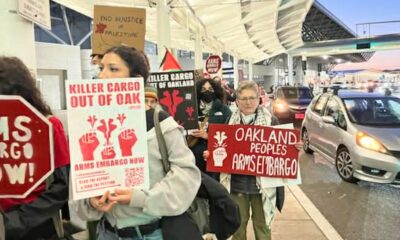
Oakland People’s Arms Embargo Coalition Demands End to Military Shipments Thru Oakland
-
 Activism3 weeks ago
Oakland Post: Week of September 16 – 22, 2026
-
 Art3 weeks ago
BLACspace Cooperative Invites Bay Area to Experience Oakland’s Black Cultural Ecosystem Through a BLAC Map Tour + Party
-
 Community3 weeks ago
Two Looming Threats Every Alameda County Elder Should Know About
-
 Lead Story2 weeks ago
Zakiya Jendayi Arrested, Locked Out of Home by Sheriff’s Deputies
