
City Government
S.F. Mayor London Breed Announces $50 Million in Tax Credits to Support San Francisco Non-Profits, Businesses in Disadvantaged Communities
The New Markets Tax Credit program creates a pathway for local businesses and non-profits to activate underutilized buildings in San Francisco’s most high-need neighborhoods, create local jobs, and provide lasting community services.


Mayor London N. Breed announced on September 7 that the United States Treasury has awarded $50 million in tax credits to support local non-profit organizations and projects in historically underserved neighborhoods.
This allocation will help move forward critical investments in San Francisco while also creating new economic activity and jobs as San Francisco continues its economic recovery from the pandemic.
The New Market Tax Credits are distributed from the United States Treasury to the San Francisco Community Investment Fund (SFCIF), a non-profit that is tasked with helping to fund projects with substantial and sustainable community benefits in low-income San Francisco neighborhoods.
Previous credits helped fund the construction of projects such as the Meals on Wheels San Francisco food distribution center in the Bayview, SF Jazz and the Boys & Girls Club San Francisco in the Western Addition, and the ACT Strand Theatre on Central Market, the Manufacturing Foundry located at 150 Hooper Street sponsored by PlaceMade, and the renovation of the Geneva Car Barn located in the Excelsior district.
“The neighborhoods that were hit hardest by the pandemic were the same neighborhoods that had lacked access to resources and investment for generations—that is not a coincidence.

“That’s why it’s so important that our economic recovery focus on investing in these communities and creating new jobs in these communities, so we can create a more equitable city.
“The investments that these tax credits have helped advance in the past have had a meaningful impact on our city and I’m excited that this new allocation, the largest that San Francisco has ever received, will continue that progress,” Breed said.
In 2010, the City’s former Redevelopment Agency established the San Francisco Community Investment Fund to make qualified low-income community investments in the City. This program targets construction and capital improvement projects in low-income neighborhoods that deliver strong community outcomes, including job creation for low-income people, commercial and community services, healthy foods, environment sustainability, and flexible lease rates.
The New Markets Tax Credit program creates a pathway for local businesses and non-profits to activate underutilized buildings in San Francisco’s most high-need neighborhoods, create local jobs, and provide lasting community services.
Since 2010, the SFCIF has supported 12 projects across five neighborhoods that created over 1,000 construction jobs, and deployed $163.6 million in New Markets Tax Credit allocations.
“Investing in jobs and supporting opportunities for our underserved communities is critical, especially as we begin emerging from of this pandemic,” said City Administrator Carmen Chu, who serves on the SFCIF Board of Directors. “This allocation of New Market Tax Credits is significant because it means extra dollars in our hands to fully fund and bring so many worthy neighborhood projects to completion.”
“Meals on Wheels San Francisco opened a new $41 million state of the art kitchen in the Bayview neighborhood in November of 2020. Our project could not have moved forward on time and received full financing without the support of the San Francisco Community Investment Fund’s New Markets Tax Credit program,” said Ashley McCumber, CEO and executive director of Meals on Wheels San Francisco.
“Their lead investment attracted additional partners like Community Vision, Community Impact Partners, and Chase Bank to deliver a net of $8.1 million to our project. With this new facility, we have created more than 30 new jobs and expanded our production capabilities from 8,000 meals per day to as much as 30,000 meals per day when needed.”
Applications are received and reviewed on a rolling basis. For more information on the San Francisco Community Investment Fund, visit SFCIF.org.
This story comes from the San Francisco Mayor’s Office of Communication.












To enlarge your view of this issue, use the slider, magnifying glass icon or full page icon in the lower right corner of the browser window.

To enlarge your view of this issue, use the slider, magnifying glass icon or full page icon in the lower right corner of the browser window.
Activism
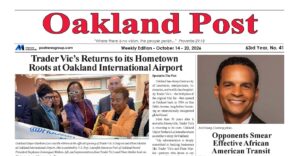
Oakland Post: Week of September 30 – October 6, 2026
The printed Weekly Edition of the Oakland Post: Week of September 30 – October 6, 2026


To enlarge your view of this issue, use the slider, magnifying glass icon or full page icon in the lower right corner of the browser window.


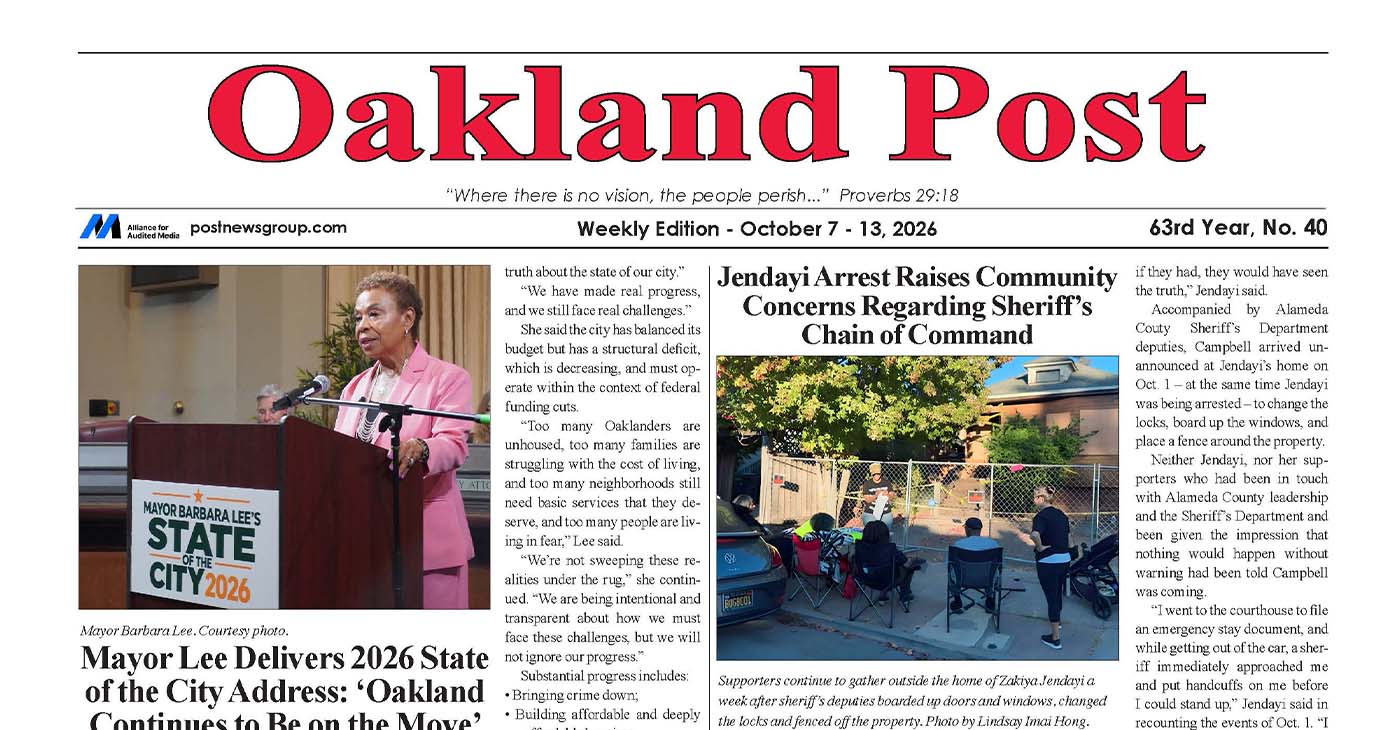
Mayor Barbara Lee Holds Special State of the City Address in Deep East Oakland

Practitioners of African Traditional Spirituality Offer Ancestral Reverence Ritual Oct. 31

It’s Time to Lose Weight Before the Holidays

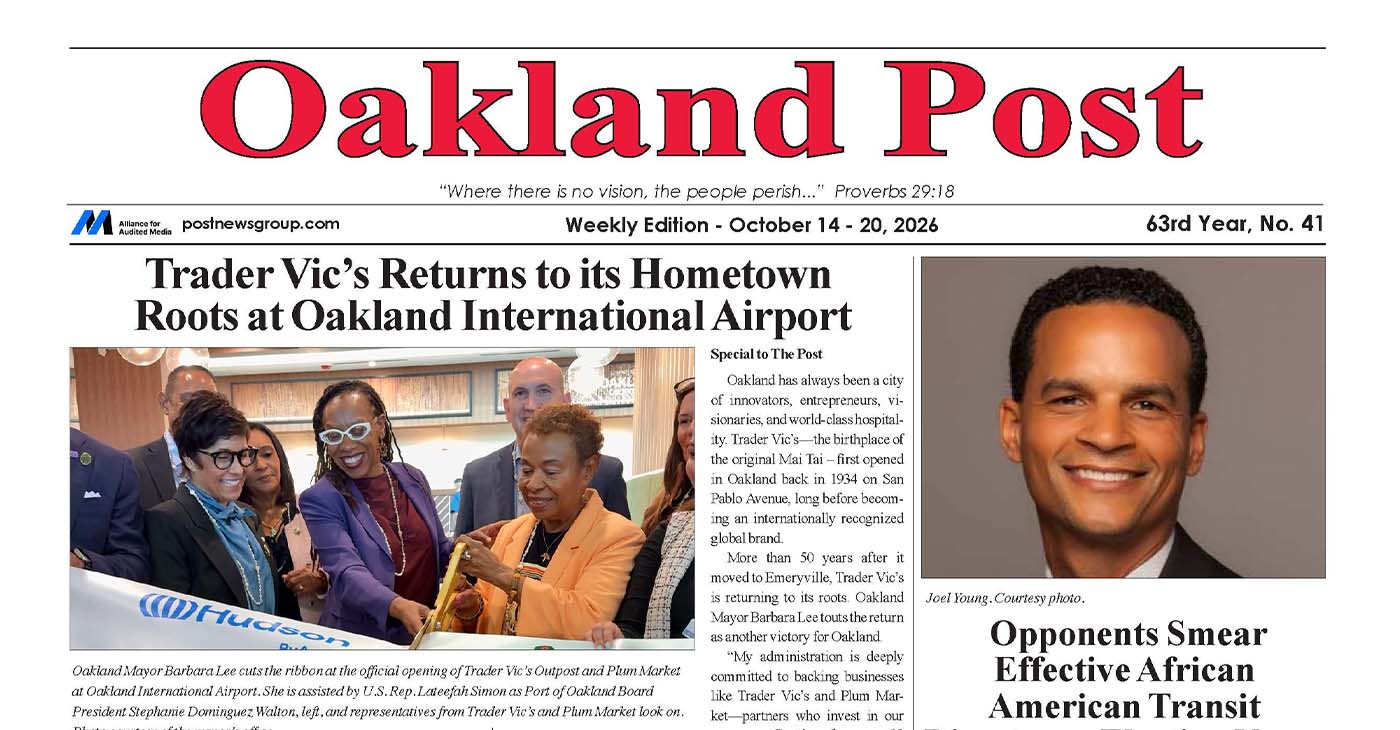
Trader Vic’s Returns to Its Oakland Roots

Oakland Coal Terminal Backed by Trump Would Be Bigger, Dirtier Than Promised, Says Report

Opponents Smear Effective African American Transit Director as Election Nears

Oakland Post: Week of October 14 – 20, 2026

OP-ED: The Black Church Writes AI’s Next Chapter

OP-ED: The Black Church Writes AI’s Next Chapter

WCCUSD Joins Statewide Organic School Food Purchasing Cooperative

Democrats, Community Groups Back Measure EE to Change How Oakland Is Governed

Four Tips to Help You Plan a Holiday “Staycation”

Veterans Housing Project Proposed for South Richmond
PRESS ROOM: Transformative Justice Coalition 2026 Voting Rights Champion Awards Reception ‘Yesterday Is Today: The Battle For Voting Rights

Mayor Lee Delivers 2026 State of the City Address: ‘Oakland Continues to Be on the Move’

Misnamed ‘Parent’ PAC Seeks to Influence Oakland School Board Elections

Listening as a Lifeline: A Doula’s Witness to Black Maternal Health

Poll: Becerra Widens His Lead Over Hilton; Californians Split on Wealth Tax

County Office of Education Says OUSD Finances Are Getting Healthier, Materially Stronger

Oakland Post: Week of September 9 – 15, 2026

Doulas Are Helping Black California Moms Navigate Pregnancy–Even as High Mortality Rates Persist

Mayor Lee Announces $1 Million Kaiser Permanente Grant for Pilot Program to Address Homelessness, Clean Up Public Spaces throughout Oakland

Richmond Tiny House Village Farm & Garden Set to Open Gates on Sept. 26

Zakiya Jendayi Arrested, Locked Out of Home by Sheriff’s Deputies

OPINION: Nolan Wells’ Death One of Several Signifying Racial Terror Lives on in U.S. South

Latest Massacre in Haiti Reveals Cruelty U.S. Deportations

BLACspace Cooperative Invites Bay Area to Experience Oakland’s Black Cultural Ecosystem Through a BLAC Map Tour + Party

Oakland Post: Week of September 16 – 22, 2026

Democratic Clubs Interview Candidates for Oakland School Board

Oakland People’s Arms Embargo Coalition Demands End to Military Shipments Thru Oakland

The Conversation With Al McFarlane 6/23/26

Media Monday 6/22/26

LIVE! ASK ALMA! — TUES. 6.23.26 7PM EST

Car Buying Secrets: 4 Hidden Checks Before You Sign!

Is This 550 HP Charger Worth YOUR Money? AutoNetwork Review

Celebrating Juneteenth – Frederick Douglass on education and resistance

LIVE! — ASK ALMA! — TUES. 6.19.26 7PM EST

Hyundai Ioniq 5 Parking, Safety, and 360 View #shorts

2025 Ioniq 5 New Wiper & Powerful Performance! #shorts

Electric SUV Range: Is 259 Miles Enough? #shorts

EV Charging: How Fast Can You Charge an Electric Vehicle? #shorts

Biometric Cooling… Messaging Seats…Come on! 2025 Infiniti QX80 Autograph 4WD

Charged Up: Witness the Magic of a Fully Electric Car! #shorts

Range Rover Sport PHEV Included…: See What’s Inside This Luxury SUV! #shorts

Invisible Hood View: Perfect Parking with X-Ray Vision! #shorts
-
 Black History3 weeks ago
Listening as a Lifeline: A Doula’s Witness to Black Maternal Health
-
 Economy4 weeks ago
Poll: Becerra Widens His Lead Over Hilton; Californians Split on Wealth Tax
-
 Business4 weeks ago
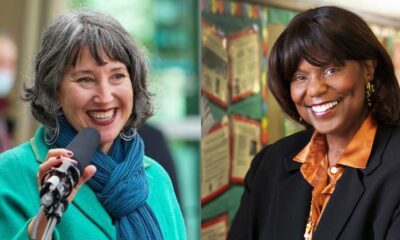
County Office of Education Says OUSD Finances Are Getting Healthier, Materially Stronger
-
 Lead Story3 weeks ago
Zakiya Jendayi Arrested, Locked Out of Home by Sheriff’s Deputies
-
 Art4 weeks ago
BLACspace Cooperative Invites Bay Area to Experience Oakland’s Black Cultural Ecosystem Through a BLAC Map Tour + Party
-
 Business4 weeks ago
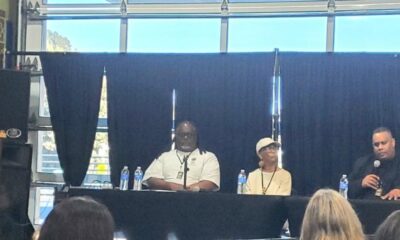
From Historic Memories to New Possibilities: Oakland Celebrates Coliseum 60
-
 Community4 weeks ago
Asm. Corey Jackson Announces Launch of 24-Hour Childcare in His District
-

 Black History4 weeks ago
IN MEMORIAM: The Rev. Leon “Sonny” Clark, Longtime Orange County Pastor and Community Leader, Dies at 72
